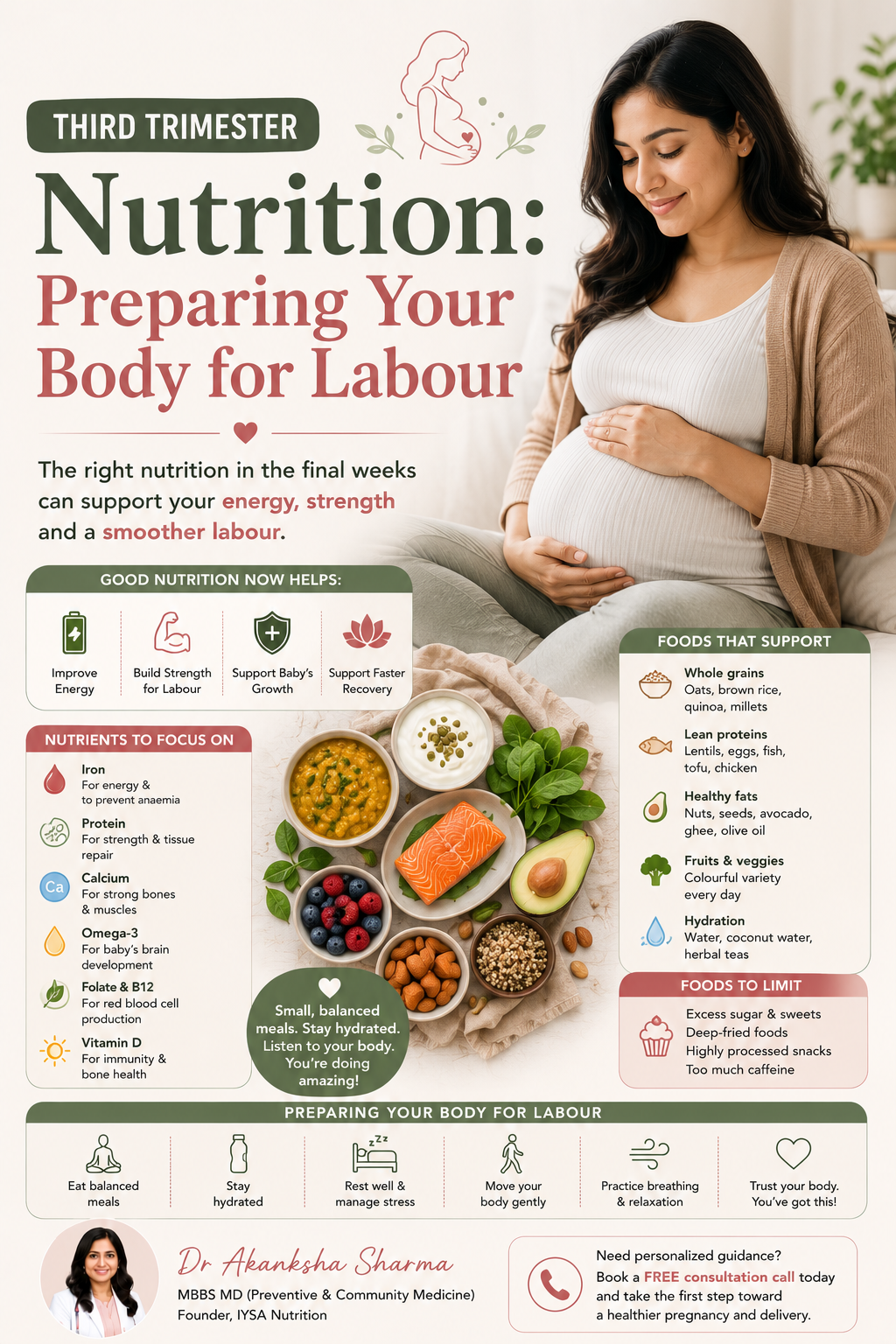
Written & reviewed by Dr Akanksha Sharma, MBBS, MD (Preventive & Community Medicine) | Founder, IYSA Nutrition, Singapore
The third trimester, weeks 28 through 40, is the final sprint of pregnancy. Your baby is growing at its fastest rate: gaining approximately 200–250g per week in the final weeks, accumulating fat stores, maturing organ systems, and laying down iron and other nutrient reserves for the first months of postnatal life. Your body is simultaneously preparing for one of the most physically demanding events it will ever experience, labour and delivery.
The nutritional demands of the third trimester are the highest of any stage of pregnancy. Caloric requirements increase further. Iron needs increase as your baby accumulates its own iron stores. Calcium demands peak as foetal bone mineralisation accelerates. DHA incorporation into the foetal brain reaches its maximum rate. And protein requirements remain elevated as both foetal growth and maternal tissue preparation for labour and breastfeeding continue.
At the same time, the physical realities of the third trimester, a uterus pressing against the stomach and diaphragm, worsening reflux, significant constipation, swollen feet, difficulty sleeping, and the general exhaustion of late pregnancy, make eating well more challenging than at any earlier stage. This guide gives you the nutritional roadmap for weeks 28–40, the evidence on labour preparation foods, and practical strategies for eating well when your stomach has effectively been relocated to your ribcage.
Related reading:
👉 Balanced Pregnancy Diet at 6 Months
👉 10 Foods Pregnant Woman Should Eat for a Healthy Pregnancy
👉Second Trimester Nutrition: Step by step guide
How Nutritional Needs Escalate in the Third Trimester
Calories: The Peak Demand
ICMR-NIN 2020 recommends an additional 350–500 kcal per day above pre-pregnancy maintenance needs in the third trimester, slightly higher than the second trimester’s 350 kcal. For a typical Indian woman, this means approximately 2200–2400 kcal/day. The challenge is that the growing uterus compresses the stomach, reducing its capacity, making it physically difficult to eat large enough portions to meet this caloric requirement at standard meal frequencies.
The solution: move from three meals to five to six smaller meals and substantial snacks. This also helps manage the third trimester’s near-universal companions, heartburn and reflux, which worsen significantly with large meals.
Protein: Foetal Growth and Tissue Preparation
Protein requirements remain elevated at approximately 1.2–1.5 g per kg of body weight per day through the third trimester. In the final weeks, a proportion of dietary protein goes toward the breast tissue development that is preparing for lactation; the mammary gland undergoes significant structural expansion in the third trimester in anticipation of milk production.
Iron: Your Baby Is Building Its Own Stores
This is the most critical nutritional fact of the third trimester that most Indian women do not know: your baby accumulates the majority of its iron stores in the final 10–12 weeks of pregnancy. These foetal iron stores, typically 200–250 mg of iron in a term infant, are the baby’s sole iron source for the first 4–6 months of life, as breast milk is a poor iron source and supplemental foods have not yet been introduced.
A baby born prematurely, or to an iron-deficient mother, enters the world with depleted iron stores, at higher risk of iron deficiency anaemia in infancy, with direct consequences for brain development, immune function, and developmental outcomes. Ensuring adequate maternal iron in the third trimester is therefore not just about the mother’s health; it is a direct investment in the infant’s neurodevelopmental trajectory.
The ICMR-NIN recommendation of 35 mg of iron per day during pregnancy is most critical in the third trimester. Most women require both dietary iron optimisation and supplemental iron to meet this requirement. Ensure you are taking your prescribed iron supplement consistently and not skipping doses due to gastrointestinal side effects (discuss switching to ferrous bisglycinate if ferrous sulphate is intolerable).
Calcium and Vitamin D: Peak Bone Mineralisation
Foetal bone mineralisation is most intense in the third trimester. The foetus accumulates approximately 250–350 mg of calcium per day in the final 10 weeks, drawing entirely from the maternal supply. If maternal calcium intake is inadequate, the foetus takes what it needs from the mother’s bones, reducing maternal bone density.
ICMR-NIN 2020 recommends 1200 mg of calcium per day throughout pregnancy, with this requirement being most critical in the third trimester. Continue the three-source daily calcium strategy from my previous post on calcium sources: dairy or fortified alternatives + ragi + calcium-rich vegetables and seeds.
Vitamin D supplementation continues at the dose established in your second trimester testing, typically 1000–2000 IU/day or as prescribed. Without adequate Vitamin D, the calcium you consume cannot be efficiently absorbed.
DHA: The Brain’s Final Structural Sprint
DHA incorporation into the foetal brain and retina reaches its peak rate in the third trimester, approximately 67 mg per day of DHA is incorporated into new brain tissue in the final trimester. The hippocampus (memory and learning centre) and cerebral cortex are among the most rapidly developing structures in this period. Adequate maternal DHA in the third trimester is associated with better infant cognitive outcomes, visual acuity, and even sleep quality.
Continue your fatty fish (2–3 servings per week) or algae-based DHA supplement (200–300 mg/day) throughout the third trimester and breastfeeding.
Related reading:
👉 Best Indian Vegetarian Sources of Omega-3 During Pregnancy
👉Best Dals and Lentils for Pregnancy: ICMR 2024 Guide
👉Safe Fish to Eat During Pregnancy in Singapore: A Mercury Guide
Vitamin K: Preparing for Delivery Blood Loss
Vitamin K is essential for blood clotting. Adequate maternal Vitamin K stores, and the Vitamin K administered to all newborns at birth protect against haemorrhagic disease of the newborn, a rare but serious bleeding condition. Increasing Vitamin K-rich foods in the third trimester is prudent: dark leafy greens (palak, methi, moringa), broccoli, and fermented foods (particularly natto, if accessible) are the richest sources.
👉 Pregnancy & Postpartum Nutrition: A Doctor-Reviewed Guide
👉First Trimester Nutrition: A Week-by-Week Food Guide for Indian Mums
If you are a woman struggling with optimising your diet during pregnancy:
👉 Join my program Nourish Nine: Doctor-Led Pregnancy Nutrition & Care Program (Trimester-Wise, 3 months)
📥 Want a Printable Food & Nausea Tracker?
🎁 Download my FREE “Anti-Nausea Food List + Tracker” to keep by your bedside or fridge
👉 Click here to download or DM “NAUSEA” on Instagram @iysanutrition.doctor
Managing Third Trimester Eating Challenges
Heartburn and Gastro-Oesophageal Reflux
By the third trimester, virtually every pregnant woman experiences heartburn. The growing uterus pushes the stomach upward, reducing its capacity and increasing intra-abdominal pressure. Progesterone relaxes the lower oesophageal sphincter. Stomach acid refluxes into the oesophagus with increasing frequency.
Nutritional strategies:
- Eat six small meals rather than three large ones — smaller portions reduce stomach distension and reflux pressure
- Do not lie down for at least 2 hours after eating — gravity helps keep stomach contents down
- Eat your largest meal at lunch, not dinner — reduce evening meal size significantly
- Avoid spicy, oily, and fried foods in the evening — they relax the lower oesophageal sphincter further
- Avoid large amounts of citrus, tomato, coffee, and chocolate at dinner
- Cold milk or plain dahi (taken in small quantities) provides temporary alkaline relief
- Coconut water is alkaline and generally well tolerated for heartburn relief
- Elevate the head of the bed by 15–20 cm to reduce nocturnal reflux
Constipation
Constipation intensifies in the third trimester, the growing uterus compresses the bowel, progesterone slows motility, and iron supplementation adds to the problem. Straining at stool increases the risk of haemorrhoids, which are themselves common in late pregnancy.
Nutritional strategies:
- Isabgol (psyllium husk) — one teaspoon in warm water before a meal daily; one of the safest and most effective remedies for pregnancy constipation
- Prunes — 3–5 daily; natural sorbitol content has a mild laxative effect. Prune juice is also effective, but check the sugar content.
- Maintain fluid intake at 3 litres per day — fibre without adequate fluid worsens constipation
- Daily walking (even 20 minutes) significantly improves bowel motility
- Switch from ferrous sulfate to ferrous bisglycinate if iron supplements are worsening constipation — discuss with your doctor
Reduced Stomach Capacity
The compressed stomach of the third trimester means that even modest portions may feel uncomfortably full. Strategies to maintain adequate nutrition within reduced capacity:
- Prioritise nutrient density in every mouthful — choose foods that deliver maximum nutrition per calorie consumed
- Eat protein and iron-rich foods first in each meal — before filling up on rice or roti
- Liquid nutrition counts: thick dal soup, warm milk, dahi-based smoothies, and coconut water all contribute significantly to caloric and nutrient intake without taking up much stomach space
- Energy-dense snacks: a small handful of mixed nuts, a date with almond butter, a glass of warm milk with jaggery. These deliver significant calories and nutrients in small volumes
Swelling (Oedema)
Ankle and foot swelling is extremely common in the third trimester, driven by the weight of the uterus compressing pelvic veins and reducing venous return. Mild physiological oedema is normal; sudden, severe facial swelling or rapid weight gain warrants urgent medical evaluation for pre-eclampsia.
For normal physiological oedema: reduce sodium intake (limit salt in cooking, avoid pickles and papads in large quantities), ensure adequate protein intake (low protein worsens oedema by reducing oncotic pressure), and maintain good hydration (counterintuitively, adequate fluid intake reduces fluid retention by preventing the body’s compensatory water-hoarding response to dehydration). Elevate feet when resting and wear compression stockings if recommended by your midwife or doctor.
👉Gestational Diabetes Diet: Indian Foods That Keep Sugar Stable
👉How Much Weight Gain During Pregnancy is Normal According to Singapore Guidelines?
Foods That Help Prepare Your Body for Labour
This is a topic that generates significant interest and deserves an honest, evidence-based assessment. Some traditional and evidence-supported foods may genuinely support labour preparation; others are folklore without scientific backing.
Dates (Khajur) — The Most Evidence-Supported Labour Preparation Food
Dates (Phoenix dactylifera) are one of the most well-studied foods for labour preparation, with a growing body of clinical trial evidence that is genuinely compelling.
A landmark 2011 RCT published in the Journal of Obstetrics and Gynaecology (Al-Kubaisy et al.) found that women who consumed 6 dates per day from 36 weeks of gestation had:
- Significantly higher cervical dilation at admission (mean 3.52 cm vs 2.02 cm)
- Higher rates of intact membranes at admission
- Higher spontaneous labour rates (96% vs 79%)
- Shorter first-stage labour (mean 8.5 hours vs 15.2 hours)
- Significantly lower rates of oxytocin augmentation required
A 2017 meta-analysis confirmed these findings across multiple studies: women consuming dates in late pregnancy had significantly shorter first-stage labour and higher rates of spontaneous labour. The proposed mechanisms: dates contain compounds that bind to oxytocin receptors in the uterus (similar to the mechanism of oxytocin itself), may stimulate prostaglandin production (which ripens the cervix), and contain tannins that have been shown to facilitate contractions.
Dates are also nutritionally valuable: rich in iron (3.3 mg per 100g), potassium, magnesium, fibre, and natural sugars that provide quick energy for labour. They are widely available across India and Singapore, affordable, and deeply culturally familiar in South Asian households.
Recommendation: 6 dates per day from 36 weeks of gestation. Choose Medjool dates (sweeter, softer) or any variety available. Eat them as a snack, add to a smoothie, or consume them with a small amount of nut butter to prevent a blood sugar spike from the concentrated natural sugars. Women with gestational diabetes should discuss with their obstetrician before consuming 6 dates daily, monitor blood glucose and adjust the quantity if needed.
Evening Primrose Oil — Limited Evidence
Evening primrose oil is rich in gamma-linolenic acid (GLA), a precursor to prostaglandins involved in cervical ripening. It is sometimes recommended by midwives from 36 to 38 weeks. However, the clinical evidence is mixed; some studies show no difference in labour outcomes, and one study found a higher rate of prolonged rupture of membranes in women who took evening primrose oil. The evidence is insufficient to make a strong recommendation either way. Discuss with your midwife or obstetrician before using.
Red Raspberry Leaf Tea — Traditional, Limited Evidence
Red raspberry leaf tea is a traditional uterine tonic recommended in the final weeks of pregnancy by many traditional birth practitioners. It is proposed to tone the uterine muscles, potentially shortening the second stage of labour. The clinical evidence is limited to a small number of studies with mixed results. A 2009 Cochrane review found insufficient evidence to recommend or discourage its use. It is generally considered safe from 32–36 weeks at recommended doses (1–2 cups daily); avoid in early pregnancy as it may stimulate uterine contractions. Not widely available in Indian grocery stores, but stocked at health food stores in Singapore.
Coconut Water and Electrolytes for Labour
This is less about labour preparation and more about labour itself: coconut water is an excellent natural electrolyte drink to have available during early labour at home or as a hospital bag essential. It provides potassium, sodium, magnesium, and natural glucose, a functional alternative to commercial sports drinks for maintaining hydration and energy during the demanding early stages of labour.
High-Energy, Easy-to-Eat Labour Snacks to Prepare
Labour is physically exhausting. Many women stop eating when contractions begin, but adequate energy is necessary to sustain the muscular work of labour, particularly the uterus, which is contracting for many hours. Prepare a small bag of easily digestible, high-energy foods to have available during early labour:
- Dates (continuing your 36-week habit)
- Bananas
- A small thermos of warm ragi or oat porridge
- Coconut water
- Honey sachets or glucose tablets for quick energy if needed
- A small portion of lightly toasted bread with almond butter
Nutrients to Focus on in the Final Weeks (Weeks 36–40)
Iron — Final Reserve Filling
Continue iron-rich foods and supplementation diligently through week 40. The baby’s iron accumulation is most intense in the final month. Do not stop iron supplementation in late pregnancy, thinking your delivery is imminent, your baby needs every week of iron accumulation it can get.
Vitamin K — For Post-Delivery Clotting
Increase Vitamin K-rich foods from week 36: daily palak, methi, or broccoli; moringa sabzi; fresh green herbs generously used as garnish.
Magnesium — For Muscle Preparation and Sleep
Magnesium supports uterine muscle function, reduces leg cramps (which peak in the third trimester), and improves sleep quality, increasingly disrupted in late pregnancy. Bajra roti, dark leafy greens, almonds, pumpkin seeds, and magnesium glycinate supplementation at night (200–300 mg) are all valuable in the final weeks.
B Vitamins — For Energy and Nerve Function
The physical demands of the final trimester and the preparation for labour increase B vitamin requirements. Ensure consistent dietary sources of B1 (thiamine, from whole grains and dal), B6 (pyridoxine, from banana, potato, chickpeas), B12 (from dairy and eggs), and continue folate supplementation throughout.
👉Nausea in Third Trimester: Causes and Nutritional Fixes
A Sample One-Day Third Trimester Meal Plan (Indian Vegetarian)
Note: Six small meals rather than three large ones to manage reflux and compressed stomach capacity.
- Breakfast (7:30 am): Ragi porridge (2 tbsp ragi flour in milk with jaggery and ghee) + one soft-boiled egg + a cup of warm milk. Iron ~3mg, Calcium ~450mg, Protein ~16g.
- Mid-morning (10:00 am): 6 dates (from 36 weeks) + a small handful of mixed nuts (almonds, walnuts, cashews) + a glass of coconut water. Iron ~2mg, Omega-3, Magnesium.
- Lunch (12:30 pm): One generous cup of thick masoor dal + 1–2 jowar rotis + palak sabzi with lime + a small salad. No chai or dairy for 60 minutes after this meal. Iron ~6mg, Folate, Protein ~20g.
- Afternoon snack (3:30 pm): A glass of warm milk with a pinch of haldi and kesar + one ragi laddoo or til laddoo. Calcium ~350mg, Iron ~2mg.
- Dinner (6:30 pm — early, small): Moong dal khichdi (light, easy to digest) with vegetables + a small bowl of plain dahi + a cup of moringa sabzi. Keep this meal small to reduce reflux at night. Protein ~16g, Calcium ~250mg, Folate.
- Bedtime snack (9:00 pm): A glass of warm milk with isabgol (one teaspoon) stirred in — addresses both calcium needs and constipation simultaneously. Calcium ~300mg, Fibre ~3g.
- Daily totals (approximate): Calories ~2250 kcal | Iron ~16mg from food + supplement | Calcium ~1600mg | Protein ~70g | Omega-3 (from supplement) ~200–300mg DHA
If you are a woman struggling with optimising your diet during pregnancy:
👉 Join my program Nourish Nine: Doctor-Led Pregnancy Nutrition & Care Program (Trimester-Wise, 3 months),
customised for Indian diets and Singapore lifestyles.
👉Book a consultation call (FREE) to discuss your concerns
Printable Pregnancy & Postpartum Nutrition Checklist (Free)
Mother’s Nutrition Support Checklist
(Educational guidance only)
During pregnancy
☐ Regular meals with adequate protein
☐ Iron-rich foods included
☐ Calcium intake addressed
☐ Prenatal supplements taken as advised
☐ Hydration adequate
Postpartum recovery
☐ Protein intake sufficient
☐ Warm, nourishing meals
☐ Iron repletion addressed
☐ Fluids adequate
☐ Regular meals despite busy schedule
Red flags to address
☐ Persistent fatigue
☐ Dizziness or weakness
☐ Low milk supply concerns
☐ Mood changes
☐ Poor appetite or restrictive eating
If you are checking multiple boxes in the red flags checklist, please visit your obstetrician for a check-up.
Frequently Asked Questions
Is it safe to eat spicy food in the third trimester?
Spicy food does not harm the baby and does not trigger labour, the popular belief that spicy food induces labour has no scientific support. However, spicy food reliably worsens heartburn and acid reflux in the third trimester, when reflux is already at its worst due to the elevated stomach from the growing uterus. The question is not safety but comfort: if spicy food makes your reflux unbearable, reducing spice levels in the third trimester is a practical concession rather than a nutritional necessity. Your baby will not be harmed either way.
Should I eat papaya to prepare for labour?
This is a common suggestion in traditional South and Southeast Asian birth practices, and it requires careful clarification. Raw (unripe, green) papaya contains high concentrations of papain and latex-like compounds that have uterotonic (uterine-contracting) properties. Raw papaya is genuinely contraindicated throughout pregnancy and should be avoided. Ripe papaya (fully orange, soft flesh) has much lower papain content and is generally considered safe in moderate amounts. It does not reliably induce labour at normal dietary quantities. The evidence-supported food for labour preparation is dates, not raw papaya.
How do I manage iron supplementation with severe constipation in the third trimester?
This is one of the most common complaints I hear in late pregnancy. Several strategies help: switch from ferrous sulphate to ferrous bisglycinate (gentler on the bowel, comparable absorption, discuss with your obstetrician or midwife); take iron at night rather than in the morning (slightly reduces GI side effects for some women); try alternate-day iron supplementation (emerging evidence suggests this may improve absorption while reducing constipation); increase isabgol fibre and hydration; and increase probiotic-rich foods (dahi, fermented foods) which support bowel regularity. Never stop iron supplementation in the third trimester due to constipation without discussing an alternative protocol with your doctor; the baby’s iron stores are being built right now, and the window cannot be reclaimed.
What should I eat to help my perineum heal after delivery?
Perineal healing, whether from an episiotomy or natural tearing, requires adequate protein (for tissue repair), Vitamin C (for collagen synthesis), zinc (for wound healing), and Vitamin A (for epithelial tissue regeneration). These are exactly the nutrients provided by the postnatal recovery diet outlined in our Day 5 post on postpartum hair loss. Protein at every meal, Vitamin C-rich foods with every iron-rich meal, zinc from pumpkin seeds and legumes, and Vitamin A from egg yolk, liver, and dark orange and yellow vegetables are the foundational healing nutrients for the postnatal period.
I am 38 weeks, and my baby has not engaged yet. Are there nutritional ways to help?
Foetal engagement (when the baby’s head descends into the pelvis in preparation for birth) is primarily determined by pelvic anatomy and foetal position rather than maternal nutrition. Walking and upright positioning (hands and knees, sitting on a birthing ball) are the most evidence-supported strategies for encouraging foetal engagement. Nutrition does not directly influence engagement. Continue your dates, maintain excellent iron and protein intake, and discuss foetal position with your midwife or obstetrician, they can advise on optimal positioning strategies for your specific situation.
The Bottom Line
The third trimester is the final, most nutritionally demanding chapter of pregnancy, and also the most physically challenging one in which to execute good nutrition. The twin demands of your rapidly growing baby (building iron stores, mineralising bones, laying down brain DHA, accumulating fat) and your own body (preparing for labour, storing energy for breastfeeding, maintaining bone density) are at their peak.
The practical response is not perfection, it is consistency across the fundamentals. Iron and calcium every day, through the foods and supplements that have sustained you through the second trimester. DHA through fish or algae. Protein at every meal. Six small meals to manage reflux. Dates from 36 weeks. Isabgol for constipation. And the deep knowing that every nutritious meal you eat in these final weeks is building the foundation not just for a healthy delivery, but for the first months of your baby’s brain, immune system, and bone development outside the womb.
If you are a woman struggling with optimising your diet during pregnancy:
👉 Join my program Nourish Nine: Doctor-Led Pregnancy Nutrition & Care Program (Trimester-Wise, 3 months),
👉Book a consultation call (FREE) to discuss your concerns
Disclaimer: This article is for educational purposes only. Always consult your obstetrician, midwife, or healthcare provider for personalised advice regarding your pregnancy nutrition and labour preparation.
References:
- Al-Kubaisy W et al. Date fruit consumption at term: effect on labour and delivery. J Obstet Gynaecol. 2011;31(1):29-31. PubMed
- Rezaeipour M et al. Comparing low calorie versus normal calorie diet with dates on labor progress. J Midwifery Reprod Health. 2017. JMRH
- ICMR-NIN Expert Group. Recommended Dietary Allowances for Indians. 2020. nin.res.in
- Scholl TO. Iron status during pregnancy: setting the stage for mother and infant. Am J Clin Nutr. 2005;81(5):1218S-1222S. PubMed
- WHO. Nutrition during pregnancy. who.int

Akanksha Sharma
Dr Akanksha Sharma (MBBS, MD) is a physician and women’s health nutrition specialist, and the founder of IYSA Nutrition. She provides evidence-based, doctor-led nutrition guidance for pregnancy, postpartum recovery, PCOS, child nutrition, and family health, helping women make calm, informed decisions about their health and their children’s well-being.