Written & reviewed by Dr Akanksha Sharma, MBBS, MD (Preventive & Community Medicine) | Founder, IYSA Nutrition, Singapore
You thought you had left nausea behind in the first trimester. And for most of the second trimester, you had appetite returned, food was enjoyable, and you could eat the varied, nutritious meals your baby needed. Then, somewhere around week 28 or 30, it crept back: the queasiness after meals, the inability to eat more than a few mouthfuls before feeling full, the reflux that makes lying down uncomfortable, and sometimes outright nausea that is reminiscent of those difficult early weeks.
Third-trimester nausea and digestive difficulties are more common than most women expect, affecting a significant proportion of pregnancies, particularly in the final four to eight weeks. Unlike first-trimester nausea (which is driven primarily by hCG), third-trimester nausea has different causes and requires different nutritional management strategies. This post explains what is happening and what to do about it, with the same culturally grounded, clinically practical approach I use with my patients.
Related reading:
👉 Balanced Pregnancy Diet at 6 Months
👉 10 Foods Pregnant Woman Should Eat for a Healthy Pregnancy
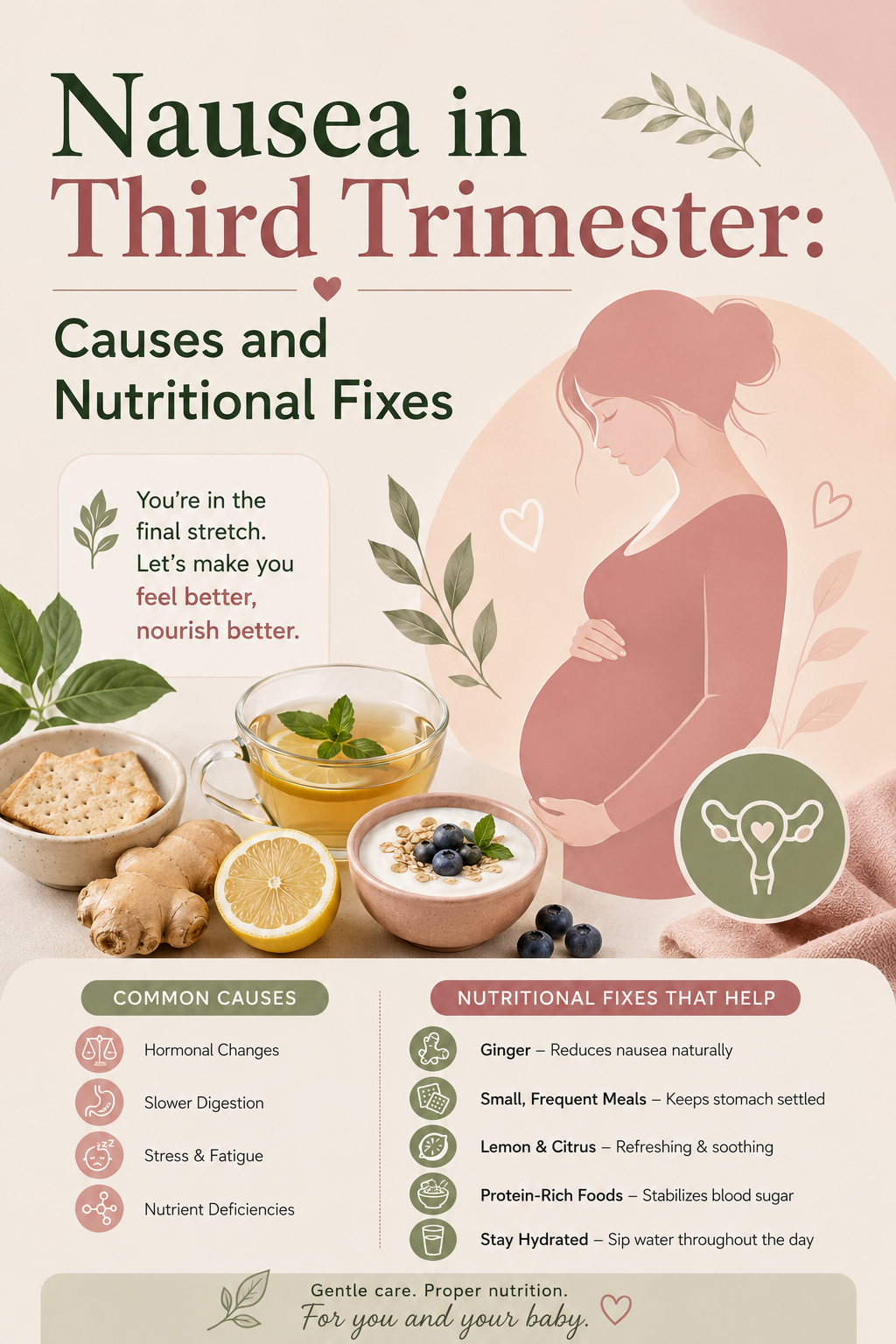
Why Nausea Returns in the Third Trimester: The Causes
1. Mechanical Compression of the Stomach
This is the most direct and common cause. By the third trimester, the uterus has grown to fill most of the abdominal cavity, pushing the stomach upward and significantly reducing its capacity. A stomach that normally holds 1–1.5 litres of food is now compressed to a fraction of its former volume. The result: eating even a moderate meal fills the stomach rapidly, creating pressure, nausea, bloating, and the uncomfortable fullness that makes continuing to eat impossible.
This mechanical compression also exacerbates gastro-oesophageal reflux (GERD). When the stomach is compressed upward, and the lower oesophageal sphincter is already relaxed by progesterone, even small meals can trigger acid reflux that reaches the throat, causing burning, sour taste, and nausea that is compounded by acid irritation.
2. Progesterone-Induced Gastric Slowing
Progesterone, which remains high throughout pregnancy, relaxes smooth muscle throughout the body, including the smooth muscle of the gastrointestinal tract. This slows gastric motility (the muscular contractions that move food through the digestive system), causing delayed gastric emptying. Food sits in the stomach longer than normal, creating persistent fullness, bloating, and nausea even hours after a meal.
3. Pressure on the Diaphragm and Vagus Nerve
The enlarged uterus presses on the diaphragm and the vagus nerve, the primary parasympathetic nerve that regulates gastrointestinal motility. Vagus nerve compression can trigger nausea directly, independently of gastric fullness or acid reflux.
4. Iron Supplement-Related Nausea
Iron supplementation, which is critically important in the third trimester for foetal iron store accumulation, is notorious for causing nausea, particularly with ferrous sulphate. In the third trimester, when gastric tolerance is already reduced by mechanical compression, iron tablet nausea becomes more pronounced. Many women who tolerated iron supplements well in the second trimester find them increasingly difficult in the third.
5. Heartburn Triggering Nausea
Third-trimester heartburn is near-universal. The burning and acid taste of significant reflux can directly trigger nausea, creating a cycle where eating causes reflux, reflux causes nausea, and nausea reduces appetite, potentially compromising the nutritional intake that remains critical in the final trimester.
6. Anxiety and Psychological Anticipation of Labour
As the due date approaches, anxiety about labour, delivery, and the transition to parenthood is common and completely normal. Anxiety activates the enteric nervous system (the “gut brain”), directly affecting gastric motility and nausea through the gut-brain axis. Stress-related nausea compounds the physical causes described above.
👉12 Ways to Find Relief From Morning Sickness
👉 Pregnancy & Postpartum Nutrition: A Doctor-Reviewed Guide
👉First Trimester Nutrition: A Week-by-Week Food Guide for Indian Mums
If you are a woman struggling with optimising your diet during pregnancy:
👉 Join my program Nourish Nine: Doctor-Led Pregnancy Nutrition & Care Program (Trimester-Wise, 3 months)
When Third-Trimester Nausea Warrants Urgent Attention
Most third-trimester nausea is mechanical and manageable. However, some causes require urgent medical evaluation. Seek medical attention promptly for:
- Nausea with sudden severe upper-right abdominal or shoulder pain: May indicate pre-eclampsia or HELLP syndrome (Haemolysis, Elevated Liver enzymes, Low Platelets), a serious pregnancy complication. If accompanied by headache, visual changes, or swelling, seek immediate medical assessment.
- Nausea with fever: May indicate infection (urinary tract infection, chorioamnionitis, appendicitis), all of which require medical evaluation.
- Inability to keep any fluid down for more than 12–24 hours: Risk of dehydration, warrants medical attention and potentially IV fluids.
- Vomiting blood or material that looks like coffee grounds: Requires immediate emergency assessment.
- Nausea with decreased foetal movement: Assess foetal wellbeing promptly.
The nausea managed by the nutritional strategies in this post is the common, mechanical, hormonally-driven nausea of normal late pregnancy, not these warning signs.
👉What is High-Risk Pregnancy: 10 Things You Should Know
👉Iron Deficiency in Pregnant Women in Singapore: An Doctor’s Complete Guide
Nutritional Strategies for Third-Trimester Nausea
1. Small, Frequent Meals — The Non-Negotiable Foundation
This is the most important structural change for third-trimester nausea management. The compressed stomach cannot accommodate large meals, and attempting to eat three full meals as before creates the pressure and nausea that makes eating miserable. Moving to five or six small eating occasions, each with modest portions, distributes the food intake across the day in amounts the compressed stomach can manage.
What “small” means in the third trimester: approximately one cup of combined solid food per eating occasion. Not a full plate, a moderate bowl. This requires accepting that you will need to eat more frequently and that each meal will look smaller than before. The total daily nutritional intake remains adequate; it is the distribution that changes.
Practical daily structure for third-trimester nausea:
- 7:00am: Small breakfast (half the previous portion)
- 10:00am: Mid-morning snack (nutritious, protein-containing)
- 1:00pm: Small lunch (half the previous portion, lightest on starch)
- 4:00pm: Afternoon snack
- 6:30pm: Small early dinner (the most important timing change)
- 8:30–9:00pm: Very light pre-bed snack if needed (protein-based)
2. Separate Fluids and Solids
Drinking large amounts of fluid with meals overfills the already-compressed stomach significantly faster than solids alone. This is one of the most impactful single changes for third-trimester nausea. Drink fluids between meals, 30 minutes before or 60 minutes after eating, rather than during. Replace the glass of water at the dinner table with sips only, and take the main fluid intake between meals.
This strategy reduces nausea substantially in most women because it prevents the overfilling that triggers the pressure-nausea response. Maintain total daily fluid intake (3 litres) through the between-meal windows rather than reducing it.
3. Eat Upright and Stay Upright
Eating in a fully upright position, sitting straight rather than reclining, allows gravity to assist gastric emptying and reduces acid reflux. After eating, remain upright (sitting or walking slowly) for at least 30–45 minutes before lying down. The common Indian habit of resting horizontally after a meal is particularly problematic in the third trimester, it dramatically increases reflux and nausea. An evening walk after an early dinner is one of the most effective late-pregnancy nausea strategies available, combining upright posture with the gentle gastric motility stimulation of movement.
4. Cool and Mild Foods Over Hot and Strongly Spiced
Hot food releases more aromatic compounds, and strong cooking smells are a reliable nausea trigger even in the third trimester. Additionally, very hot food exacerbates reflux; the heat further relaxes the lower oesophageal sphincter. In the third trimester, allow food to cool slightly before eating, and reduce the chilli heat in cooking (without eliminating all spices; mild turmeric, cumin, and coriander are fine and beneficial).
Cold foods like cold dahi, cold buttermilk, cold coconut water, cold ragi porridge, are often better tolerated than freshly cooked hot preparations for this reason.
5. Ginger — Continued Effectiveness in the Third Trimester
Ginger’s anti-nausea mechanism (5-HT3 receptor blockade and acceleration of gastric emptying) remains relevant and effective in the third trimester. Fresh ginger in warm water, ginger chai (one cup), ginger laddoos, and adrak incorporated into cooking all provide meaningful nausea relief. The dose-response for ginger’s anti-nausea effect peaks at approximately 1–2 teaspoons of fresh grated ginger equivalent per day, achievable through normal culinary use.
6. Ajwain (Carom Seeds) — The Indian Digestive for Pregnancy Nausea
Ajwain is one of the most underutilised anti-nausea digestive aids in Indian pregnancy nutrition. Its active compound, thymol, reduces gastric spasms and stimulates digestive enzyme secretion, directly addressing the delayed gastric emptying that worsens third-trimester nausea. A traditional preparation: half a teaspoon of ajwain in a glass of warm water, sipped slowly after meals. Alternatively, ajwain added to khichdi, dal, or paratha dough provides both digestive and aromatic benefit.
7. Jeera (Cumin) Water and Saunf (Fennel) Water
Both cumin and fennel have carminative properties; they reduce bloating, gas, and the gastric distension that worsens nausea. Jeera water (one teaspoon of cumin seeds boiled in 500ml of water, cooled and sipped throughout the day) and saunf water (fennel seeds prepared similarly) are traditional Indian digestive remedies that have genuine benefit for the bloating and gas-related nausea of the third trimester. Both are safe throughout pregnancy at culinary doses.
8. Protein Before Starch — The Meal Sequencing Rule
In the compressed stomach of the third trimester, the sequence in which food is eaten influences how comfortable the meal feels and how well it is tolerated. Eating protein (dal, dahi, egg, paneer) before starchy carbohydrates (roti, rice) means the most nutritionally important component is eaten when appetite is highest. Starchy carbohydrates eaten first fill the stomach quickly without proportionate nutritional value.
Additionally, protein slows gastric emptying (generally a problem in the third trimester, but here, the very slow emptying of a large starchy meal is what creates prolonged nausea; a smaller, protein-first meal empties more appropriately). Start with a few spoonfuls of dal or a piece of paneer before eating roti or rice.
9. Avoid Fatty and Fried Foods — They Worsen Gastroparesis
Fat is the macronutrient that most significantly delays gastric emptying. In normal pregnancy, this is not ideal. In the third trimester with already-delayed gastric emptying and a compressed stomach, fatty and fried foods, paratha drenched in ghee, deep-fried snacks, and heavily oiled curries dramatically worsen the sitting-in-stomach feeling that precedes nausea. Use minimal ghee (half a teaspoon rather than a teaspoon) on rotis, choose steamed or lightly sautéed preparations over deep-fried, and avoid pakoras, puri, or heavily oiled dishes at main meals in the final trimester.
10. Dates as an Iron-Stable Energy Source
Dates deserve specific mention in the third-trimester nausea context. They provide quick energy (natural glucose and fructose), iron, potassium, and magnesium, and crucially, they are easy to eat even at peak nausea because they require minimal chewing effort, are self-contained, and have a mild, sweet flavour that is rarely nauseating. Three to six dates per day (from 36 weeks) provide meaningful nutrition in a form that is accessible even when proper meals are difficult.
📥 Want a Printable Food & Nausea Tracker?
🎁 Download my FREE “Anti-Nausea Food List + Tracker” to keep by your bedside or fridge
👉 Click here to download or DM “NAUSEA” on Instagram @iysanutrition.doctor
Managing Iron Supplement Nausea in the Third Trimester
Iron supplements are non-negotiable in the third trimester; the foetal iron accumulation that occurs in the final ten weeks is critical for the infant’s neurological development. But managing iron supplement nausea requires strategy:
- Switch from ferrous sulfate to ferrous bisglycinate: Ferrous bisglycinate (iron glycinate chelate) has comparable iron absorption but significantly better GI tolerability, dramatically less nausea, constipation, and gastric discomfort. Discuss this switch with your obstetrician if you are struggling with ferrous sulphate nausea.
- Take iron at night rather than morning: Taking iron after the evening meal (when nausea tends to be lower in many women and when the stomach has some food buffer) reduces nausea for many women compared to morning dosing.
- Take iron with a small amount of Vitamin C-rich food: A few slices of tomato, a piece of guava, or a small glass of lime water alongside the tablet enhances absorption and can reduce gastric irritation.
- Discuss alternate-day dosing: Emerging research suggests alternate-day iron supplementation maintains absorption efficiency while significantly reducing GI side effects. Discuss this approach with your obstetrician.
- Never take iron on a completely empty stomach: This reliably worsens nausea. Always take with or just after a small amount of food.
👉Third Trimester Nutrition: Preparing Your Body for Labour
The Third-Trimester Nausea Meal Plan: A Practical Day
- 7:00am (small): Plain dahi (100g) + a few soaked almonds and walnuts + one small roti or a slice of whole grain toast. No large quantities. Eat slowly.
- 9:30am (between meals — fluids): A glass of jeera or saunf water. Sip slowly.
- 10:30am (small snack): 3–4 dates + a small bowl of dahi
- 1:00pm (small lunch): Half cup of thin, easily digestible moong dal (protein first) + one small roti + one small portion of vegetable sabzi (not too oily). Cold dahi on the side. No liquid with the meal. Remain upright for 45 minutes after eating.
- 3:00pm (fluids + snack): Coconut water or jeera water. A small handful of makhana or roasted chana.
- 5:00pm (small snack): One ragi laddoo or two dates + a cup of ginger tea (sipped slowly, not gulped)
- 6:30pm (small dinner — the most important timing): Moong dal khichdi (rice and moong dal together, the most digestible third-trimester meal) cooked with minimal oil and mild spices + a small portion of sabzi. Keep dinner small, this is the key to reducing nocturnal reflux and nausea.
- 8:30pm (very light pre-bed): A small bowl of cold plain dahi or a cup of warm milk (if reflux is not severe). Iron tablet taken now if switching to evening dosing.
- Do not lie down until 9:30–10pm — maintain upright posture for at least 90 minutes after dinner.
👉 Best Indian Vegetarian Sources of Omega-3 During Pregnancy
👉Best Dals and Lentils for Pregnancy: ICMR 2024 Guide
👉Safe Fish to Eat During Pregnancy in Singapore: A Mercury Guide
Frequently Asked Questions
Is third-trimester nausea normal or does it mean something is wrong?
Gradual-onset nausea related to mechanical stomach compression, heartburn, and progesterone effects is normal in the third trimester, particularly from weeks 28–30 onwards and worsening as the due date approaches. It is not a sign that something is wrong with the baby. It is a sign that the uterus has grown significantly and is compressing the gastrointestinal tract. The management strategies in this post address this normal physiology. However, sudden severe nausea, especially with upper abdominal pain, headache, visual changes, or swelling, warrants urgent medical evaluation as described above.
Can I take anti-nausea medication in the third trimester?
Yes — several anti-nausea medications are considered safe in the third trimester for women with significant nausea that is not managed by dietary strategies alone. These include vitamin B6 (pyridoxine), doxylamine (available as Unisom in some markets, prescribed as Diclegis/Bonjesta), and ondansetron (though the safety data for ondansetron in the third trimester is more limited than for the other options). The decision to use medication for third-trimester nausea should involve your obstetrician, who can assess the severity and recommend appropriate treatment. Do not self-medicate with anti-nausea drugs in the third trimester without medical guidance.
Will eating small meals affect my baby’s growth in the third trimester?
No — provided total daily caloric and nutritional intake remains adequate across all the small meals and snacks. The key is total intake over 24 hours, not individual meal size. Five or six small eating occasions that collectively provide 2200–2400 kcal, 70–80g of protein, adequate iron, calcium, and DHA produce equivalent or better nutritional outcomes than three large meals that cause nausea and are therefore partially rejected. Track your approximate daily protein and iron intake to ensure they remain on target despite the smaller individual meals.
I cannot eat enough in the third trimester because of nausea. Will my baby be okay?
The foetus is remarkably resilient in the short term and can draw on maternal stores when maternal dietary intake is temporarily reduced. However, sustained inadequate nutrition in the third trimester — particularly inadequate iron (which directly affects foetal iron stores) and inadequate protein (which affects foetal growth) — can affect outcomes. If you are consistently unable to eat enough despite the strategies above, discuss this with your obstetrician. Nutritional supplementation and anti-nausea medication may be appropriate. Ensure your prenatal vitamin is taken consistently even when food intake is reduced, as it provides a nutritional safety net for days when eating is very difficult.
Heartburn is causing most of my nausea. What helps most?
For heartburn-driven third-trimester nausea, the most effective dietary strategies are: eat small portions, remain upright after eating, do not eat within 2–3 hours of lying down, avoid spicy and fatty foods in the evening, sleep with the head of the bed elevated by 15–20cm (using extra pillows or a wedge pillow), avoid cold acidic drinks on an empty stomach, and try small amounts of cold milk or cold dahi for temporary alkaline relief. If heartburn is severe enough to prevent adequate nutrition, discuss antacid options with your obstetrician — several are safe in pregnancy including calcium-based antacids (Tums/calcium carbonate) and Gaviscon.
The Bottom Line
Third-trimester nausea is common, has specific and understandable causes, and is very manageable with the right strategies. The most impactful changes are structural: small meals, fluids separate from solids, an early dinner by 6:30–7pm, upright posture after eating, and cool or mild food over hot and heavily spiced. The most impactful food choices are ginger, ajwain, jeera water, plain dahi, dates, moong dal khichdi, and ragi porridge — all culturally familiar, all easy to prepare, and all genuinely effective for the specific digestive physiology of late pregnancy.
Your baby needs iron, DHA, calcium, and protein in the final trimester more than at any earlier stage. These strategies exist not to restrict your eating but to enable it — making it possible to consume adequate nutrition even when the compressed, slow-emptying late-pregnancy stomach makes eating a challenge.
If you are a woman struggling with optimising your diet during pregnancy:
👉 Join my program Nourish Nine: Doctor-Led Pregnancy Nutrition & Care Program (Trimester-Wise, 3 months),
customised for Indian diets and Singapore lifestyles.
👉Book a consultation call (FREE) to discuss your concerns
Disclaimer: This article is for educational purposes only. If you experience severe nausea in the third trimester, particularly with any of the warning signs described above, seek medical assessment promptly.
References:
- Lee NM, Saha S. Nausea and vomiting of pregnancy. Gastroenterol Clin North Am. 2011;40(2):309-334. PMC
- Matthews A et al. Interventions for nausea and vomiting in early pregnancy. Cochrane Database Syst Rev. 2015. PubMed
- ICMR-NIN Expert Group. Recommended Dietary Allowances for Indians. 2020. nin.res.in
- WHO. Nutrition during pregnancy. who.int

Akanksha Sharma
Dr Akanksha Sharma (MBBS, MD) is a physician and women’s health nutrition specialist, and the founder of IYSA Nutrition. She provides evidence-based, doctor-led nutrition guidance for pregnancy, postpartum recovery, PCOS, child nutrition, and family health, helping women make calm, informed decisions about their health and their children’s well-being.