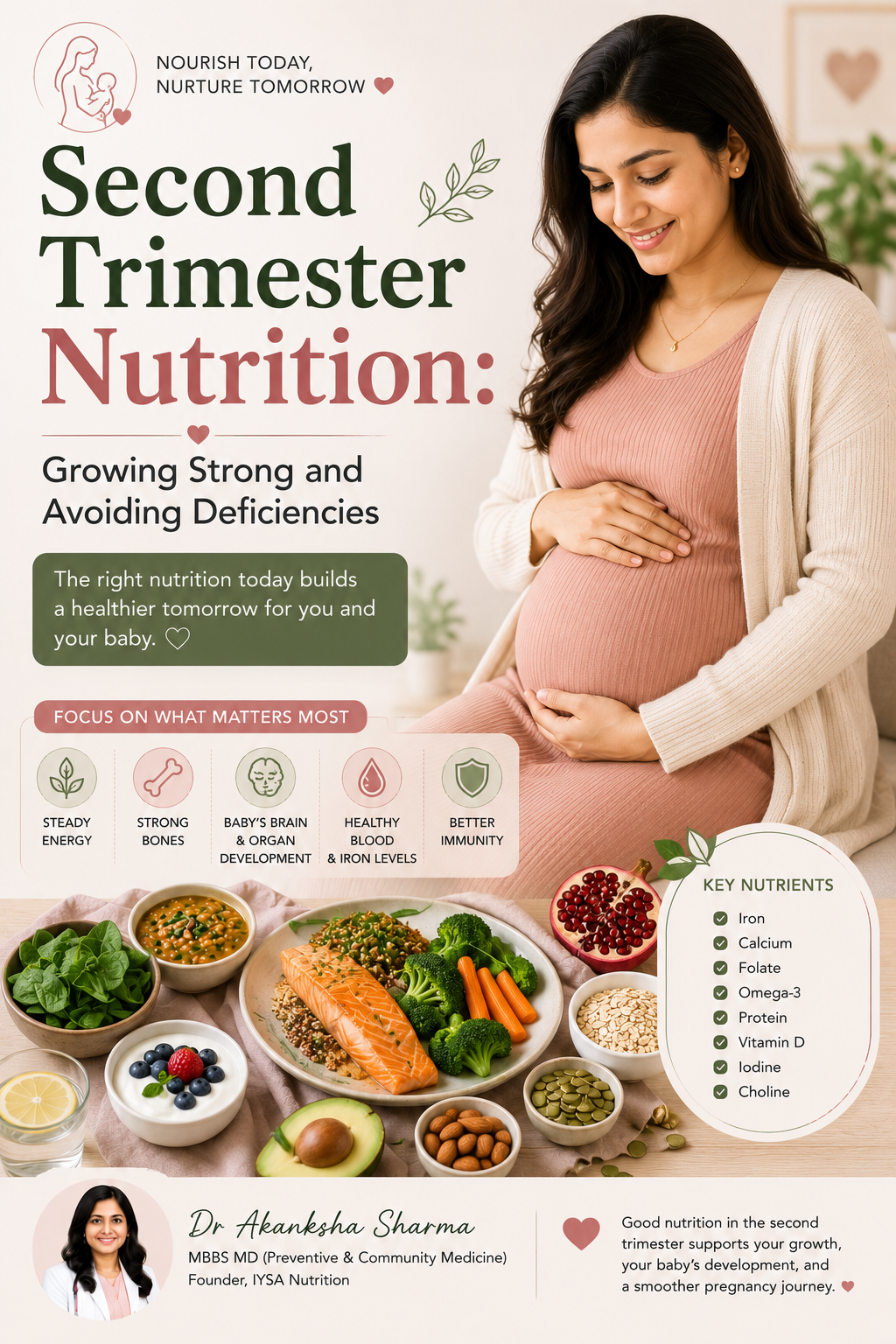
Written & reviewed by Dr Akanksha Sharma, MBBS, MD (Preventive & Community Medicine) | Founder, IYSA Nutrition, Singapore
The second trimester, weeks 14 through 27, is frequently called the “golden trimester” of pregnancy. For most women, the relentless nausea of the first trimester has eased, energy is returning, and the overwhelming anxiety of the early weeks is settling into something more like cautious excitement. The bump is becoming visible, foetal movements begin, and for the first time in months, eating feels like a pleasure rather than a survival strategy.
This is also when your body’s nutritional demands shift significantly. The first trimester was about quality over quantity, ensuring critical developmental nutrients were available while managing nausea. The second trimester is when your baby enters a period of rapid growth and organ maturation that requires a meaningfully increased caloric and nutrient supply, and when the nutritional gaps that are most likely to cause problems become apparent if they have not been addressed.
Blood volume expansion accelerates. Your baby’s skeleton hardens with calcium. The brain enters a period of rapid neuronal proliferation. The liver begins storing iron. The immune system develops. Every one of these processes is nutrition-dependent, and your job in the second trimester is to provide the building materials consistently across every meal.
This guide gives you a complete, practical, evidence-based nutrition roadmap for weeks 14–27, with specific nutrient targets, the best Indian foods to meet them, and practical meal strategies for real Indian households.
Related reading:
👉 Balanced Pregnancy Diet at 6 Months
👉 10 Foods Pregnant Woman Should Eat for a Healthy Pregnancy
👉Third Trimester Nutrition: Preparing Your Body for Labour
How Your Nutritional Needs Change in the Second Trimester
Calories: Now Is When You Actually “Eat for Two” — But Not Literally
The phrase “eating for two” is nutritionally inaccurate, but it becomes slightly more applicable in the second trimester than in the first. ICMR-NIN 2020 recommends an additional 350 kcal per day above pre-pregnancy maintenance in the second trimester, compared to only 50–85 kcal/day in the first.
For a typical Indian woman with a pre-pregnancy requirement of 1800–1900 kcal/day, this means approximately 2150–2250 kcal/day in the second trimester, increasing further to 2200–2350 kcal/day in the third trimester.
This additional caloric need is best met through nutrient-dense foods rather than empty-calorie additions. The extra 350 kcal can easily come from:
- An additional cup of dal at a meal (+100 kcal, plus 9g protein, iron, folate)
- A glass of whole milk (+150 kcal, plus calcium, protein, iodine)
- A small handful of mixed nuts (+100 kcal, plus omega-3, zinc, magnesium)
This is not a licence to eat anything in large quantities; the quality of calories matters enormously at this stage. Every extra calorie should ideally bring with it a meaningful nutrient payload.
Protein: The Structural Backbone of Growth
Protein requirements increase to approximately 1.2–1.5 g per kg of body weight per day in the second trimester, compared to 0.8–1.0g in early pregnancy. For a 55 kg woman, this means 66–82g of protein daily.
This increased requirement reflects your baby’s accelerating growth; every new cell added to the growing body requires amino acids from dietary protein. It also reflects the expansion of maternal tissues: the uterus, placenta, breast tissue, and blood all grow significantly during the second and third trimesters, all requiring protein.
For Indian vegetarian women, meeting this requirement consistently requires deliberate planning, protein at every meal, rather than relying on one large protein meal per day. See the food guide below for specific strategies.
Iron: The Blood Volume Emergency
Blood volume increases by 40–50% during pregnancy, with the largest expansion occurring in the second and third trimesters. This is physiologically necessary; the growing placenta and baby require an enormous and constantly increasing blood supply. But it also means that maternal iron requirements increase dramatically.
ICMR-NIN 2020 recommends 35 mg of iron per day during pregnancy, nearly double the pre-pregnancy requirement of 21 mg/day. Meeting this through diet alone is extremely difficult for most Indian vegetarian women, which is why iron supplementation during pregnancy is standard of care. However, dietary iron still matters significantly; it determines how much supplemental iron is actually needed, how well stores are maintained between doses, and how severe the deficiency becomes before it is identified and corrected.
The second trimester is when iron deficiency anaemia most commonly becomes symptomatic and diagnosable. A haemoglobin level below 11 g/dL in the second trimester is the definition of anaemia in pregnancy and is associated with preterm birth, low birth weight, and impaired foetal brain development, risks that are entirely preventable with appropriate nutritional and supplementation management.
Calcium: Skeletal Hardening Begins
During the second trimester, your baby’s bones begin hardening through the deposition of calcium phosphate crystals, a process called ossification. This accelerates through the third trimester. The foetus accumulates approximately 250–350 mg of calcium per day in the third trimester, all of which comes from the mother.
If maternal calcium intake is inadequate, the foetus draws calcium from the mother’s bones, a process that can reduce maternal bone density by 3–5% over the course of pregnancy and breastfeeding. This is reversible in most women, but only if adequate calcium is consumed during and after pregnancy.
ICMR-NIN 2020 recommends 1200 mg of calcium per day during pregnancy, significantly higher than the non-pregnant requirement of 800 mg.
👉 Pregnancy & Postpartum Nutrition: A Doctor-Reviewed Guide
👉First Trimester Nutrition: A Week-by-Week Food Guide for Indian Mums
The Key Nutrients of the Second Trimester — And the Best Indian Sources
1. Iron — Daily, At Every Meal
The iron strategy for the second trimester is built on three pillars: consistent food sources, vitamin C pairing, and avoidance of absorption inhibitors.
Best Indian iron-rich foods for the second trimester:
- Ragi (finger millet): Approximately 3.9 mg iron per 100g, one of the richest plant iron sources in Indian cuisine. Ragi porridge for breakfast, ragi roti at lunch, and ragi laddoos as a snack. Ragi should appear in the diet daily.
- Masoor dal: Approximately 3.3 mg per 100 g cooked, the highest-iron dal. Make thick masoor dal a daily staple.
- Moong dal: Approximately 1.9 mg per 100g, easily digestible; excellent for women whose digestive system remains sensitive in the second trimester
- Rajma and chana: Both provide 2.5–3 mg per 100g cooked; soak overnight to improve absorption
- Palak (spinach) with lime: Approximately 2.7 mg per 100g cooked; always pair with vitamin C to maximise non-haem iron absorption
- Methi (fenugreek leaves and seeds): Very high iron (5 mg iron per 100 g raw methi leaves; 35 mg iron per 100 g methi seeds); methi paratha, methi dal, and methi sabzi are all excellent
- Sesame seeds (til): Approximately 10 mg per 100g, a remarkably high iron density; til chutney, til laddoos, and seasame-coated snacks are all valuable
- Dried fruits: Dates (3.3 mg per 100g), raisins (1.9 mg per 100g), and apricots (2.7 mg per 100g) are useful snacks that combine iron with natural sugars for energy
- For non-vegetarians: Chicken liver (13 mg per 100g, extraordinarily rich), lean mutton (3.5 mg per 100g), eggs (1.2 mg per egg)
The vitamin C pairing rule — non-negotiable: Non-haem iron (from plant foods) absorbs at 2–20% efficiency. Adding vitamin C to the same meal increases this absorption by 2–4 times. Practical ways to implement this at every iron-rich meal:
- A squeeze of lime or lemon over dal, sabzi, or salads
- Tomatoes in the cooking of iron-rich vegetables
- A small portion of guava, amla, kiwi, or orange alongside the meal
- Fresh coriander and green chilli garnish (both high in vitamin C)
- Tamarind in sambar and rasam: both vitamin C-rich and iron-enhancing
Iron absorption inhibitors to time strategically:
- Chai and coffee: wait 60 minutes before and after iron-rich meals; drink between meals
- Calcium supplements and dairy: take at least 2 hours apart from iron-rich meals or iron supplements
- Iron supplements: take on an empty stomach or with vitamin C water, not with milk
2. Calcium — Three Sources Daily
Meeting 1200 mg of calcium per day in the second trimester requires a deliberate, three-pronged approach: dairy or fortified alternatives, ragi as a staple grain, and calcium-rich vegetables and seeds.
A practical daily calcium target system for the second trimester:
- Source 1 — Dairy or equivalent (350–400 mg): Two cups of milk (700–800 mg) or the equivalent in dahi (1.5–2 cups), or fortified plant milk if dairy-avoiding. One cup of dahi provides approximately 300 mg of calcium.
- Source 2 — Ragi (100–150 mg): One serving of ragi (ragi porridge, ragi roti, or ragi laddoo) provides 80–150 mg of highly bioavailable calcium.
- Source 3 — Vegetables and seeds (150–250 mg): Methi sabzi, moringa leaves, til chutney, or a small portion of rajma or chana at a meal together contribute 150–250 mg.
Together, these three sources reliably deliver 600–800 mg of calcium from food, supplemented by a prenatal vitamin that typically provides 200–400 mg of additional calcium.
Vitamin D and calcium absorption: Calcium cannot be absorbed without adequate Vitamin D. A prenatal vitamin should include at least 400 IU of Vitamin D; many Indian women in Singapore benefit from an additional 1000–2000 IU/day given the endemic Vitamin D deficiency in this population. Have your Vitamin D level tested at your second trimester booking appointment if it was not tested in the first trimester.
3. DHA and Omega-3 — Continuing Through the Second Trimester
The brain continues rapid neuronal proliferation and DHA incorporation through the second and into the third trimester. Omega-3 DHA is incorporated into approximately 67 mg of new brain tissue per day by the third trimester. Your DHA supplementation or dietary intake from the first trimester should be maintained consistently through the second.
The second trimester is also when you can typically resume eating fish if nausea prevented it in the first trimester. Aim for 2–3 servings of low-mercury fatty fish per week: pomfret, sardines, salmon, and mackerel are the best choices for Indian families in Singapore. For vegetarians, maintain the algae-based DHA supplement (200–300 mg/day) and daily walnuts and ground flaxseed.
Related reading:
👉 Best Indian Vegetarian Sources of Omega-3 During Pregnancy
👉Best Dals and Lentils for Pregnancy: ICMR 2024 Guide
👉Safe Fish to Eat During Pregnancy in Singapore: A Mercury Guide
4. Vitamin B12 — Critical for Vegetarians
Vitamin B12 is found naturally only in animal foods like meat, fish, eggs, and dairy. For Indian vegetarian women who consume dairy and eggs (lacto-ovo vegetarians), B12 intake is typically adequate if dairy consumption is consistent. For women who avoid eggs and have low dairy intake, or who have a history of B12 deficiency, supplementation is essential.
B12 deficiency during pregnancy is associated with neural tube defects, impaired foetal brain development, and megaloblastic anaemia in the mother. It is more common in Indian vegetarian women than commonly recognised. Get your B12 level tested; a level below 200 pg/mL warrants supplementation; levels of 200–300 pg/mL are borderline and should be discussed with your doctor.
5. Magnesium — For Muscle, Sleep, and Blood Pressure
Magnesium is required for over 300 enzymatic reactions in the body. During pregnancy, adequate magnesium reduces the risk of preeclampsia, prevents leg cramps (an extremely common and often magnesium-related complaint of the second trimester), supports sleep quality, and reduces uterine irritability.
ICMR-NIN 2020 recommends 340–400 mg of magnesium per day during pregnancy. Best Indian food sources: bajra (pearl millet — 137 mg per 100g), dark chocolate (64 mg per 30g), almonds and cashews, pumpkin seeds, all dals and legumes, and dark leafy greens.
Leg cramps at night during the second trimester are often a clinical indicator of suboptimal magnesium intake. If you are experiencing frequent night cramps, increase magnesium-rich foods and discuss supplementation (magnesium glycinate or magnesium citrate, 200–300 mg at night) with your obstetrician.
6. Choline — For Foetal Brain and Memory Development
Choline is perhaps the most underappreciated nutrient in pregnancy nutrition. It is essential for foetal hippocampal development, the brain region responsible for memory and learning, and for placental function. Adequate maternal choline intake during pregnancy is associated with better cognitive outcomes in the child, and the effect appears to be independent of folate (with which choline works synergistically).
The richest food source of choline is egg yolk. One egg yolk provides approximately 140 mg of choline. Other sources include chicken liver, soya beans, kidney beans, and milk. Indian vegetarian women who do not eat eggs should specifically discuss choline supplementation with their obstetrician, as adequate intake from plant sources alone is difficult to achieve.
If you are a woman struggling with optimising your diet during pregnancy:
👉 Join my program Nourish Nine: Doctor-Led Pregnancy Nutrition & Care Program (Trimester-Wise, 3 months)
📥 Want a Printable Food & Nausea Tracker?
🎁 Download my FREE “Anti-Nausea Food List + Tracker” to keep by your bedside or fridge
👉 Click here to download or DM “NAUSEA” on Instagram @iysanutrition.doctor
Managing Common Second Trimester Digestive Issues Through Diet
Constipation
Constipation is one of the most common and uncomfortable complaints of the second trimester, driven by progesterone-induced relaxation of bowel smooth muscle and the growing uterus compressing the colon. Nutritional strategies:
- Increase dietary fibre to 28–30g per day, through whole grains (jowar roti, bajra roti), legumes, and at least five portions of vegetables per day
- Isabgol (psyllium husk), one teaspoon in a glass of warm water before a meal; highly effective for pregnancy constipation and safe throughout
- Maintain fluid intake at 2.5–3 litres per day; fibre without adequate fluid worsens constipation
- Prunes and dried apricots, natural laxative effect; a small portion daily is a gentle, effective strategy
- Physical activity: even a 20-minute walk after dinner significantly improves bowel motility
Heartburn and Acid Reflux
The growing uterus pushes against the stomach, and progesterone relaxes the lower oesophageal sphincter, creating the conditions for acid reflux that worsens through the second and third trimesters. Dietary strategies:
- Eat small, frequent meals rather than three large ones
- Avoid lying down within 2–3 hours of eating
- Reduce spicy, oily, and fried foods at dinner
- Avoid large amounts of citrus, tomato, and coffee in the evening
- Cold milk (plain) or plain dahi can provide temporary heartburn relief
- Elevate the head of the bed slightly if nighttime reflux is severe
Anaemia-Related Fatigue
Fatigue in the second trimester is normal, but fatigue that is disproportionate to your activity level, accompanied by breathlessness, pallor, or heart palpitations, may indicate iron-deficiency anaemia. If you have not had your haemoglobin and ferritin checked since the first trimester, a second-trimester blood check (typically at 24–28 weeks) is standard of care. Do not dismiss excessive fatigue as “just pregnancy”; investigate it.
👉Gestational Diabetes Diet: Indian Foods That Keep Sugar Stable
Practical One-Day Second Trimester Meal Plan (Indian Vegetarian)
- On waking: A glass of warm water with lime. Take your prenatal vitamin with vitamin C water (not milk — avoid calcium impacting iron absorption from the supplement).
- Breakfast (7:30–8:00 am): Ragi porridge (2 tablespoons ragi flour cooked in whole milk with a teaspoon of jaggery and a teaspoon of ghee) + one besan chilla or one soft-boiled egg + a small bowl of dahi + a guava or amla (vitamin C for iron absorption). Iron: ~4mg | Calcium: ~450mg | Protein: ~18g
- Mid-morning snack (10:30 am): A small handful of walnuts (7 halves) + 2–3 dates + a glass of warm milk with a pinch of turmeric (haldi doodh). Calcium: ~180mg | Iron: ~1.5mg | Omega-3: ~2.5g ALA
- Lunch (1:00 pm): A generous cup of thick masoor dal + 2 jowar or whole-wheat rotis + palak sabzi with garlic and a good squeeze of lime (vitamin C) + one cup of raw salad (cucumber, tomato, carrot) with lemon dressing + a small bowl of dahi. No chai with this meal — wait 60 minutes. Iron: ~6–7mg | Protein: ~22g | Calcium: ~350mg
- Afternoon snack (4:00 pm): One ragi laddoo or til laddoo + a cup of green tea or plain water. Calcium: ~100–150mg | Iron: ~2mg
- Dinner (7:00–7:30 pm): Rajma or chana curry (well-spiced with turmeric, ginger, garlic) + half a cup of brown rice + moringa or drumstick sabzi + a glass of chaas (buttermilk with jeera). Iron: ~5mg | Protein: ~18g | Calcium: ~200mg
- Before bed (9:00 pm): A glass of warm whole milk with a small amount of ghee and a pinch of saffron (kesar) — calcium, iodine, and a traditional prenatal tonic. Calcium: ~300mg
- Daily totals (approximate): Calories ~2200 kcal | Protein ~68g | Iron ~20–22mg from food (plus supplement) | Calcium ~1550mg | Omega-3 ALA ~3g (plus algae DHA supplement 200–300mg)
If you are a woman struggling with optimising your diet during pregnancy:
👉 Join my program Nourish Nine: Doctor-Led Pregnancy Nutrition & Care Program (Trimester-Wise, 3 months),
customised for Indian diets and Singapore lifestyles.
👉Book a consultation call (FREE) to discuss your concerns
Printable Pregnancy & Postpartum Nutrition Checklist (Free)
Mother’s Nutrition Support Checklist
(Educational guidance only)
During pregnancy
☐ Regular meals with adequate protein
☐ Iron-rich foods included
☐ Calcium intake addressed
☐ Prenatal supplements taken as advised
☐ Hydration adequate
Postpartum recovery
☐ Protein intake sufficient
☐ Warm, nourishing meals
☐ Iron repletion addressed
☐ Fluids adequate
☐ Regular meals despite busy schedule
Red flags to address
☐ Persistent fatigue
☐ Dizziness or weakness
☐ Low milk supply concerns
☐ Mood changes
☐ Poor appetite or restrictive eating
If you are checking multiple boxes in the red flags checklist, please visit your obstetrician for a check-up.
Frequently Asked Questions
Is it normal to feel very hungry in the second trimester?
Yes, increased appetite in the second trimester is completely normal and physiologically appropriate. The nausea that suppressed appetite in the first trimester has resolved, and your body’s caloric needs have genuinely increased. Follow your hunger signals, but channel them toward nutrient-dense foods rather than ultra-processed snacks. When you feel hungry between meals, reach for nuts, dahi, fruit, or roasted chana rather than biscuits or packaged snacks. Your hunger is real and legitimate; what you eat in response to it determines the nutritional outcome.
Can I eat papaya during the second trimester?
Ripe papaya in moderate quantities is generally considered safe during the second trimester. The concern with papaya and pregnancy primarily relates to raw (unripe) green papaya, which contains high concentrations of papain and latex compounds that may stimulate uterine contractions. Fully ripe papaya (orange-fleshed, soft) at a normal serving size is a nutritionally valuable fruit: it is rich in vitamin C (which enhances iron absorption, very relevant during pregnancy), beta-carotene, folate, and digestive enzymes that can help with second-trimester bloating. A portion of ripe papaya, a few times per week, is safe and nutritious for most pregnant women. When in doubt, discuss with your obstetrician.
Should I take calcium supplements separately from my prenatal vitamin?
This depends on your prenatal vitamin’s calcium content and your dietary intake. Most prenatal vitamins provide 200–400 mg of calcium — significantly less than the 1200 mg/day required. If your dietary calcium intake is consistently adequate (dairy, ragi, til, moringa), a separate calcium supplement may not be necessary. If dietary intake is low or inconsistent, a separate calcium supplement of 500 mg per day (split from iron-containing meals) is appropriate. The key timing rule: calcium and iron compete for absorption, take calcium supplements at least 2 hours apart from iron supplements and iron-rich meals.
I am gaining weight faster than expected in the second trimester. Should I restrict calories?
Do not restrict calories during pregnancy without specific medical guidance. Caloric restriction during the second trimester, when foetal brain development is at its most rapid, has been associated with impaired foetal growth and neurodevelopmental outcomes. The appropriate response to faster-than-expected weight gain is a review of food quality (reducing empty calories, ultra-processed foods, and excess refined carbohydrates) rather than overall caloric restriction. Discuss your weight gain trajectory with your obstetrician; weight gain expectations vary by pre-pregnancy BMI and are best managed with clinical guidance rather than self-imposed restriction.
My prenatal blood tests showed low Vitamin D at 20 weeks. What should I do?
Vitamin D deficiency in the second trimester is extremely common among Indian women in Singapore, endemic, in fact. Low Vitamin D impairs calcium absorption (reducing bone building in both mother and baby), has been associated with gestational diabetes, preeclampsia, and preterm birth risk, and affects foetal immune development. Your obstetrician will typically prescribe a loading dose of Vitamin D (often 60,000 IU per month for 2–3 months, or a daily supplement of 2000–4000 IU) to correct deficiency. Follow their guidance, repeat the test after 8–12 weeks of supplementation, and aim to maintain levels above 50 nmol/L for the remainder of pregnancy and breastfeeding.
The Bottom Line
The second trimester is your nutritional window of opportunity. Nausea has passed, appetite has returned, and your baby is in a period of rapid, nutrition-dependent growth that will not come again. The investment you make in iron, calcium, protein, DHA, and magnesium during these fourteen weeks directly shapes your baby’s skeletal development, brain architecture, immune system, and long-term health trajectory.
The foods that build a healthy baby in the second trimester are the same foods that have sustained Indian pregnancies for generations: thick dal, ragi porridge, palak with lime, dahi, methi sabzi, til laddoos, and fresh fish. Modern nutrition science validates what traditional Indian food wisdom already knew. Your kitchen has the answers; this guide gives you the understanding to use them with intention.
If you are a woman struggling with optimising your diet during pregnancy:
👉 Join my program Nourish Nine: Doctor-Led Pregnancy Nutrition & Care Program (Trimester-Wise, 3 months),
👉Book a consultation call (FREE) to discuss your concerns
Disclaimer: This article is for educational purposes only. Always consult your obstetrician regarding your specific pregnancy nutritional needs and supplement requirements.
References:
- ICMR-NIN Expert Group. Recommended Dietary Allowances and Estimated Average Requirements for Indians. 2020. nin.res.in
- WHO. Nutrition during pregnancy. who.int
- Zeisel SH. Choline: critical role during fetal development. Annu Rev Nutr. 2006;26:229-250. PubMed
- Scholl TO. Iron status during pregnancy. Am J Clin Nutr. 2005;81(5):1218S-1222S. PubMed
- Kovacs CS. Calcium and bone metabolism disorders during pregnancy and lactation. Endocrinol Metab Clin North Am. 2011;40(4):795-826. PubMed

Akanksha Sharma
Dr Akanksha Sharma (MBBS, MD) is a physician and women’s health nutrition specialist, and the founder of IYSA Nutrition. She provides evidence-based, doctor-led nutrition guidance for pregnancy, postpartum recovery, PCOS, child nutrition, and family health, helping women make calm, informed decisions about their health and their children’s well-being.