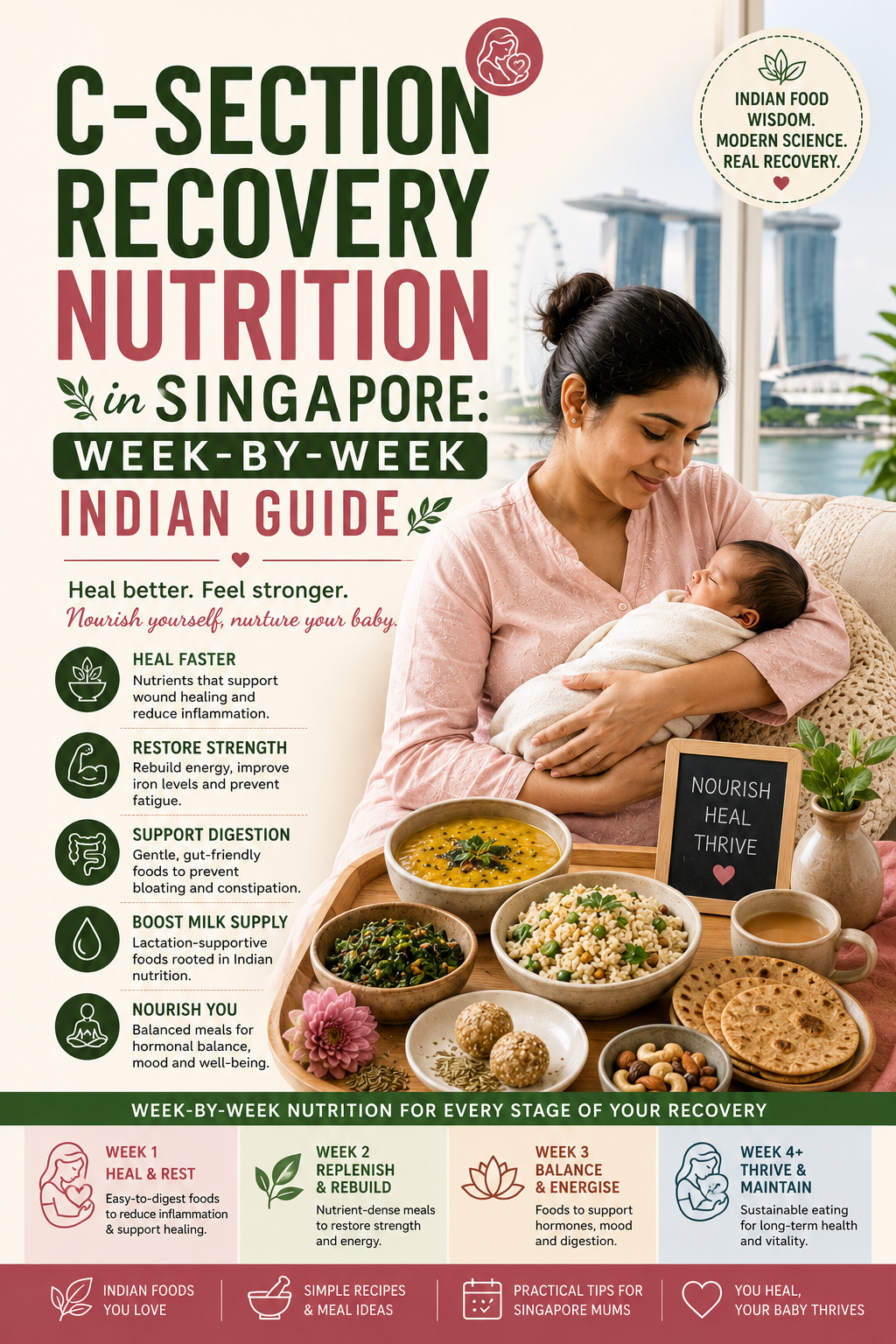
In Singapore, C-section rates are significant. Across KKH, NUH, Thomson Medical, Mount Alvernia, and Gleneagles, caesarean delivery accounts for a substantial proportion of births, and Indian women, given their higher rates of gestational diabetes, foetal macrosomia, and the higher caesarean rates that follow, are not underrepresented in this group.
This post is the complete nutritional recovery guide for Indian mothers recovering from a C-section in Singapore, week by week, with specific Indian foods, Singapore supplement availability, and the evidence-based nutritional priorities for each stage of healing.
👉Fourth Trimester Care in Singapore: What Hospitals Don’t Cover (and What It Really Costs)
👉The Fourth Trimester Survival Guide
What Your Body Is Healing: The Surgical Reality
Understanding what a C-section involves clarifies why nutritional recovery is so important. A caesarean section involves incisions through seven layers of tissue: skin, subcutaneous fat, fascial layer (connective tissue), rectus abdominis muscles (separated laterally), peritoneum, lower uterine segment, and the uterine wall itself. Each of these layers must heal independently and sequentially, with collagen remodelling continuing for 12–18 months after the surgery. The nutritional demands of this healing process are substantial and specific, and they exist simultaneously with the nutritional demands of breastfeeding, postnatal iron recovery, and the general energy cost of new motherhood.
The Five Most Important Nutrients for C-Section Recovery
1. Protein — The Foundational Building Block
Protein is the most critical macronutrient for surgical wound healing. Amino acids from dietary protein are the direct precursors to collagen synthesis, the structural protein that repairs the seven tissue layers of the incision. Two amino acids are particularly critical: proline and hydroxyproline (found in bone broth, meat, fish, eggs, and dairy) and glycine (found in collagen-rich preparations, legumes, and skin-on chicken).
The protein requirement after caesarean delivery is elevated above standard postpartum requirements: approximately 1.5–1.8g per kg of body weight per day is recommended during active wound healing (the first 6 weeks). For a 60 kg Indian woman, this is 90–108 g of protein daily, considerably more than typical Indian dietary intake. Every meal and snack should include a meaningful protein source.
Best Indian protein sources for C-section recovery:
- Eggs (2 daily): Complete protein with all essential amino acids, plus choline for brain health and B12 for vegetarians, nutritionally ideal for C-section recovery
- Masoor dal (red lentils): Fastest-cooking dal with highest protein-to-carbohydrate ratio among common dals; excellent as a thick soup drunk warm through a cup if sitting up is difficult in early days
- Paneer: High protein, no cooking required for crumbled or pre-cubed versions; protein and calcium simultaneously
- Plain dahi: Protein plus probiotics, particularly important after surgical antibiotic prophylaxis, which disrupts the gut microbiome
- Moong dal khichdi: The traditional Indian post-surgical and post-illness food for good reason, easily digestible protein from moong dal alongside the gentle carbohydrate of rice, in a soft, easily prepared form
- Chicken and fish (for non-vegetarians): Easy to digest, high in complete protein; chicken broth or clear dal-like preparations in the first 24–48 hours before progressing to more solid meals
2. Vitamin C — The Collagen Enabler
Vitamin C is essential for collagen synthesis, it is required for the hydroxylation of proline and lysine residues that give collagen fibres their structural stability. Vitamin C levels fall rapidly when tissue is damaged or inflamed. Without adequate Vitamin C, collagen production stalls and wound healing is impaired.
The practical strategy: include a Vitamin C-rich food at every meal during the 6-week recovery period.
Best Indian Vitamin C sources:
- Amla (Indian gooseberry): The highest natural Vitamin C source available, approximately 600 mg Vitamin C per 100 g, compared to 54 mg in orange. Amla powder in warm water, amla chutney, or amla murabba daily is one of the most nutritionally sound traditional confinement food practices
- Guava: Approximately 228 mg Vitamin C per 100g, widely available at NTUC FairPrice and Tekka Market Singapore; excellent with seeds as a whole fruit snack
- Capsicum (red): 190 mg Vitamin C per 100 g, higher than orange; add to sabzi or stir-fry daily
- Lime/lemon: Squeeze over dal, rice, and vegetables at every meal, the Vitamin C enhances iron absorption from the same meal simultaneously
- Moringa leaves: Moringa powder (available at Mustafa Centre and Phoon Huat Singapore) contains Vitamin C alongside iron, calcium, and protein, one of the most comprehensive nutritional additions to recovery cooking
👉Postpartum Anxiety in Singapore: The Nutritional Support Most Doctors Don’t Mention
3. Zinc — Immune Function and Cellular Repair
Zinc is required for immune cell proliferation, protein synthesis, and cellular repair, all directly relevant to surgical wound healing. Zinc deficiency impairs wound healing and increases infection risk. The C-section incision site requires zinc for the inflammatory phase and proliferative phase of healing that occur in the first two to three weeks.
Best Indian zinc sources: Pumpkin seeds (150 mg per 30 g snack), sesame seeds (til laddoos), rajma and chana (well-soaked and cooked), eggs, and cashews. Zinc supplementation at 15–25 mg elemental zinc daily is reasonable for the first six weeks post-surgery if dietary sources are limited.
4. Iron — Replacing Blood Loss and Supporting Energy
C-section delivery involves greater blood loss than vaginal delivery, typically 500–1000 ml versus 300–500 ml. This blood loss, combined with the iron demands of pregnancy already depleted from maternal stores, means iron deficiency postpartum is extremely common after C-section. Iron depletion causes fatigue, impaired wound healing (iron is required for collagen hydroxylation alongside Vitamin C), and, as discussed in the postpartum anxiety post, impaired neurotransmitter synthesis.
Request a ferritin test (not just haemoglobin) at your 6-week postnatal check at KKH, NUH, or your polyclinic. If below 30 ng/mL, discuss supplementation with your GP; ferrous bisglycinate is generally better tolerated post-surgically than ferrous sulphate.
Daily iron strategy: Masoor dal + lime at every lunch (Vitamin C doubles iron absorption), ragi roti or ragi porridge, palak sabzi, and for non-vegetarians: chicken liver once per week (the single richest accessible iron source). No chai within 60 minutes of iron-rich meals.
5. Omega-3 — Wound Healing and Mood
Omega-3 fatty acids support a healthy inflammatory response during wound healing and are, as discussed in the postpartum anxiety post, critically important for postnatal mood given the DHA depletion of pregnancy. Continue algae-based DHA (for vegetarians) or fish oil throughout the C-section recovery period at 200–400 mg DHA daily. Available at Guardian, Watsons, and iHerb Singapore.
👉Postpartum Hair Loss — iron deficiency after C-section blood loss is a primary driver
Week-by-Week C-Section Recovery Nutrition Guide
Days 1–3 (In Hospital at KKH / NUH / Thomson / Gleneagles)
You will progress from clear liquids to soft foods under your hospital team’s guidance during this period. Most Singapore hospitals allow progression to soft solids by day 2–3 post C-section once bowel function is confirmed.
- Prioritise: Clear liquids (warm jeera water, thin dal soup, warm coconut water, lemon water) in the first 12–24 hours as directed by your surgical team. Progress to thin moong dal khichdi, soft scrambled egg, and plain dahi by day 2–3.
- Avoid: Gas-forming foods that increase abdominal distension and discomfort at the incision site: whole rajma, whole chana, broccoli, cauliflower, carbonated drinks. Resume gradually from week 2.
- Hydration: Minimum 2.5–3 litres daily, essential for wound healing, milk production if breastfeeding, and bowel function. Constipation (from anaesthesia, opioid pain relief, and reduced mobility) is one of the most uncomfortable post-C-section complications and is directly worsened by dehydration.
- Bowel health: Isabgol (one teaspoon in warm water twice daily) from day 2 or 3, as directed by your team, helps prevent constipation without straining the incision. Do not strain at the toilet, this is the most important early comfort instruction.
Week 1–2 (Home Recovery)
- Protein target: At least 25–30g at every main meal. Masoor dal soup + egg is a simple, achievable protein combination requiring minimal cooking.
- Vitamin C: Amla powder in warm water in the morning; squeeze lime on every dal and sabzi.
- Soft, easily prepared meals: Moong dal khichdi, masoor dal soup with soft vegetables, egg-based preparations, plain dahi with banana, soft idli (from fermented batter, the probiotics support the gut microbiome disrupted by surgical antibiotics).
- Still avoiding: Very high-fibre raw vegetables, whole legumes (dal yes, whole rajma/chana no yet), and spicy preparations that may cause gastric upset in the context of reduced post-surgical gut motility.
- Supplements to start if not already: Iron (if prescribed), DHA, magnesium glycinate at night, B-complex or B12.
Weeks 3–6 (Progressive Recovery)
- Progressive return to full Indian diet: Reintroduce whole legumes (rajma, chana, whole moong), raw salads, more varied sabzis, and spices as tolerated. Most women are eating a near-normal diet by weeks 3–4.
- Continue high protein: Do not reduce protein intake because you feel better. The incision is actively healing for 6–12 weeks and collagen remodelling continues for 12–18 months; protein remains the priority.
- Iron-rich focus: Ragi roti or bajra roti daily, masoor dal at every lunch, palak sabzi regularly, chicken liver once weekly for non-vegetarians, and lime with everything iron-containing.
- Bone broth (non-vegetarian): A deeply traditional preparation in many Indian households that is also nutritionally relevant post-C-section, providing glycine, proline, and hydroxyproline directly from the collagen of cooked bones. Slow-cooked chicken or mutton bone broth used as a base for dal or khichdi is a culturally appropriate and clinically sound addition.
- Til laddoos: Sesame, jaggery, and ghee, iron, calcium, and healthy fats. A traditional postpartum sweet that is genuinely nutritionally appropriate during C-section recovery.
After 6 Weeks: The 6-Week Check and Beyond
Your 6-week postnatal check at KKH, NUH, or your GP/polyclinic is the appropriate time to:
- Request ferritin, B12, and Vitamin D blood tests, the most important nutritional tests post-C-section
- Discuss bowel function, incision healing, and any dietary concerns with your doctor or polyclinic
- Begin or intensify core rehabilitation, but only after medical clearance; diastasis recti (abdominal muscle separation) is more common after C-section and requires specific rehabilitation before general abdominal exercise
Related reading:
👉Confinement Food vs Medical Nutrition: What’s Best for Singapore Moms?
👉Postpartum Nutrition: Doctor’s Insights for Optimal Recovery
👩⚕️ Recovering from a C-Section in Singapore?
I work with Indian mothers post-C-section to build a personalised recovery nutrition plan, covering wound healing, iron restoration, breastfeeding support, and return-to-health, adapted for your confinement practices and Singapore’s food environment.
Explore my programs:
🤱 NURTURE — Mother & Baby Fourth Trimester Program (3 months)
 THE HEALING MOTHER— 45-days Post-partum recovery & lactation support Program
Traditional Indian Confinement Food and C-Section Recovery: What to Keep and What to Adjust
Indian confinement food traditions were designed with postnatal recovery in mind, and many of them are entirely consistent with C-section nutritional needs. Here is an honest assessment:
Keep
- Methi (fenugreek) preparations: Methi dal, methi laddoo, methi water; iron, galactagogue properties for breastfeeding support, and anti-inflammatory activity
- Ajwain (carom seed) water: Supports digestive recovery, reduces bloating, and is particularly helpful post-C-section when gut motility is sluggish
- Ghee in moderate amounts: Fat-soluble vitamin absorption (A, D, K2), butyrate for gut healing, and cultural familiarity. One to two teaspoons daily in khichdi or roti is appropriate.
- Dry ginger (soonth) preparations: Anti-inflammatory, supports digestive recovery, traditionally used in Indian confinement food
- Dal-heavy khichdi: Exactly the right food for C-section recovery, soft, easily digestible, high protein from dal, gentle on the healing gut, and warm
- Til (sesame) laddoos and preparations: Excellent iron and calcium source in a form that requires no meal preparation when a new mother is exhausted
Adjust or Add
- Add eggs: Some traditional confinement frameworks discourage eggs, there is no evidence-based reason to avoid eggs post-C-section; they are one of the most nutritionally comprehensive and easily prepared recovery foods available
- Add amla daily: Not universally part of all regional Indian confinement food traditions but nutritionally transformative for Vitamin C, the single most important wound-healing nutrient that Indian confinement food sometimes underserves
- Reduce very cold preparations: The traditional preference for warm foods in confinement is consistent with the evidence that cold foods may slow gut motility in the early post-surgical period; warm liquids, soups, and cooked preparations are practical and appropriate
👉7-Day Meal Plan for Postpartum Recovery: Traditional Indian Diet
Frequently Asked Questions
Can I eat chicken and fish after my C-section?
Yes, and for non-vegetarian Indian mothers, these are among the most important recovery foods. Well-cooked chicken and fish provide complete protein, B12, iron (chicken liver in particular), and omega-3 (oily fish). The restriction of chicken and fish in some confinement traditions is cultural rather than evidence-based; from a wound healing nutrition perspective, these are highly beneficial foods in the first six weeks post-surgery.
I have been told to avoid “cold” or “windy” foods. What should I make of this?
Traditional Indian Ayurvedic categorisation of foods as heating or cooling, and the Chinese confinement concept of “cold” foods to be avoided, are cultural frameworks that carry significant meaning for many families. In practical terms: avoiding raw salads and cold drinks in the first two weeks post-C-section is consistent with supporting gut motility recovery, and the preference for warm, cooked, easily digestible food is sound. The specific lists of “forbidden” foods vary considerably between traditions; evaluate them individually against the nutritional priorities above rather than accepting wholesale restriction that may remove important healing nutrients.
I am breastfeeding. Does this change my nutritional needs?
Yes, breastfeeding adds approximately 400–500 kcal per day to your nutritional requirements and increases demands for protein, calcium, iodine, Vitamin D, B12, and DHA on top of the wound-healing requirements. The C-section recovery nutritional plan above addresses most of these simultaneously, the key additions specific to breastfeeding are ensuring dairy (dahi, milk, paneer) daily for calcium, continuing algae-based DHA, and ensuring iodine (from dairy and iodised salt, note that pink Himalayan salt is not iodised). See our complete breastfeeding nutrition guide for Singapore Indian mothers for the full picture.
When can I go to the polyclinic or NTUC for groceries? I need the ingredients mentioned above but cannot leave the house.
Most Indian women in Singapore recovering from a C-section are indoors for at least the first one to two weeks. This is where Singapore’s grocery delivery infrastructure is invaluable: NTUC FairPrice On, Cold Storage Home Delivery, RedMart, and iHerb all deliver to Singapore addresses within 24–48 hours. A specific shopping list: masoor dal, moong dal, plain dahi (Meiji or Marigold), eggs, guava or kiwi, amla powder (Mustafa delivers), pumpkin seeds, moringa powder (iHerb), algae DHA (iHerb), magnesium glycinate (Guardian delivers), and frozen palak (spinach). Have a family member or your confinement nanny order these on day one of discharge.
The Bottom Line
C-section recovery is a nutritionally demanding process, seven surgical layers healing simultaneously, significant blood loss requiring iron replacement, breastfeeding adding nutritional demands on top, and the general depletion of postnatal recovery. For Indian mothers in Singapore, the good news is that Indian confinement food wisdom; dal-heavy khichdi, methi preparations, ghee, til laddoos, ajwain water, aligns well with evidence-based C-section recovery nutrition. The key additions are: adequate protein at every meal (90–108 g daily), Vitamin C daily (amla, lime, guava), zinc (pumpkin seeds and eggs), ferritin testing at six weeks, and DHA continuation through the recovery and breastfeeding period. You can order all of these to your HDB or condo door within 24 hours in Singapore, no recovery compromise necessary.
👩⚕️ Recovering from a C-Section? Let’s Build Your Week-by-Week Plan.
As a Preventive Medicine physician based in Singapore, I create personalised C-section recovery nutrition plans for Indian mothers, covering every week of recovery, adapted for your confinement food traditions and Singapore’s food environment, with WhatsApp support between sessions.
🌿 Explore My Programs:
🤱 NURTURE — 3-Month Mother & Baby Fourth Trimester Program
A dedicated postnatal program for Indian mothers in Singapore, covering C-section recovery nutrition, breastfeeding, postnatal depletion, and return-to-health, week by week through the fourth trimester.
The Healing Mother: Doctor-Led Postpartum Recovery & Lactation Support Program (45 Days)
For Indian mothers needing support in navigating the post-partum phase including breast-feeding support. Once the six-week mark is crossed, we also consider rebuilding body composition, core strength, and metabolic health, with full understanding of the specific postpartum hormonal and physical context.
🌸 Not sure where to start? Begin with a complimentary 20-minute support call.
Serving Indian women in Singapore and worldwide via Zoom. WhatsApp: +65 8316 7412
Disclaimer: This article is for educational purposes only. C-section recovery requires medical supervision. All dietary changes and supplement use should be discussed with your surgical team, obstetrician, and GP at KKH, NUH, or your Singapore healthcare provider.
References:
- Tian Wei Signature Singapore. Dietitian Shares: Diet Tips to Promote Wound Recovery After C-Section. tianweisignature.com
- ICMR-NIN Expert Group. Recommended Dietary Allowances for Indians. 2020. nin.res.in
- HPB Singapore. Pregnancy and Diet. healthhub.sg
- WHO. Guideline for complementary feeding of infants and young children 6–23 months. 2023. NCBI Bookshelf

Akanksha Sharma
Dr Akanksha Sharma (MBBS, MD) is a physician and women’s health nutrition specialist, and the founder of IYSA Nutrition. She provides evidence-based, doctor-led nutrition guidance for pregnancy, postpartum recovery, PCOS, child nutrition, and family health, helping women make calm, informed decisions about their health and their children’s well-being.