
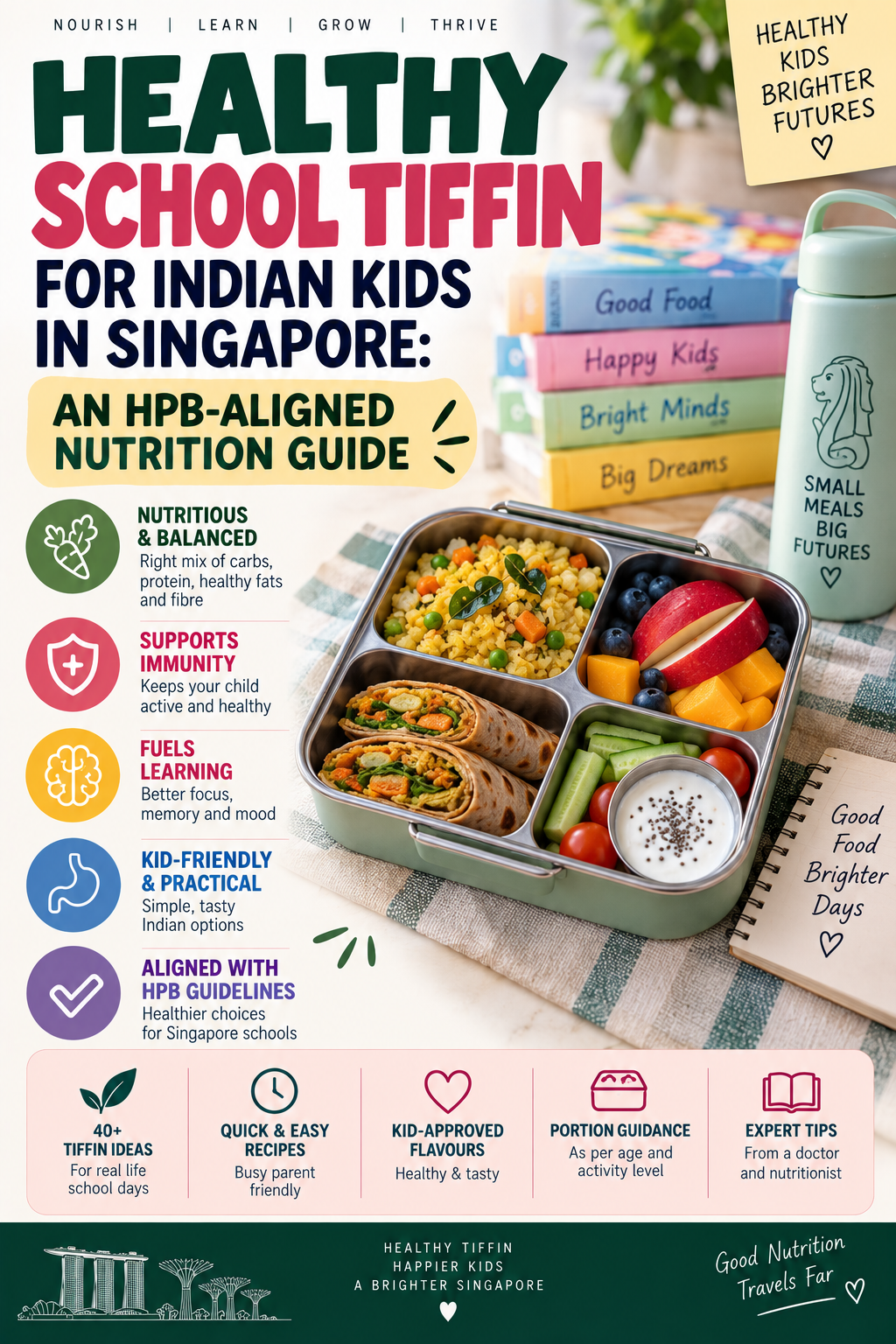
And yet the average Indian school tiffin in Singapore frequently defaults to whatever is convenient: leftover white rice, a plain roti with spread, a packaged biscuit, a sweetened drink. These choices are not choices made out of indifference; they are made under the genuine time pressure of Singapore’s working parent morning routine. This post gives you the HPB-aligned, nutritionally complete, Indian-specific school tiffin framework that works even under that time pressure.
📌Omega-3 for Children’s Brain Development Singapore — DHA-focused school tiffin strategies
📌Iron Deficiency in Indian Children — school tiffin as an iron delivery vehicle
What HPB’s Healthy Meals in Schools Programme Actually Requires
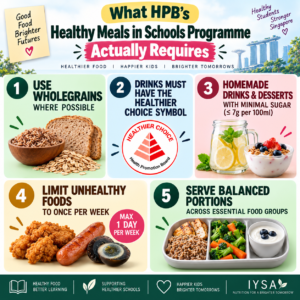
Singapore’s Healthy Meals in Schools Programme (HMSP) sets nutritional guidelines for food sold in school canteens, covering all government and government-aided schools. Key requirements include:
- All food and snacks in school canteens must contain wholemeal or wholegrain ingredients where possible
- All commercially prepared drinks must carry the Healthier Choice Symbol (HCS), the HPB logo indicating lower sugar, lower sodium, or lower saturated fat
- Homemade drinks and desserts must be prepared with minimal sugar (≤7g per 100ml)
- Unhealthy foods (deep-fried items, preserved eggs, sausages) may only be sold once per week
- School canteen food must serve appropriate portions across essential food groups: protein, vegetables, whole grains, and dairy/calcium-rich foods
The HPB Healthier Choice Symbol programme (2024 updated guidelines) evaluates products on fat, saturated fat, sugar, sodium, dietary fibre, calcium, and wholegrains. When buying packaged food for your child’s tiffin at NTUC FairPrice, Cold Storage, or Mustafa, look for the orange HCS logo, it indicates the product has been assessed against these criteria.
References:
- HPB. Healthy Meals in Schools Programme. hpb.gov.sg
- HPB. A Guide for Healthier Choice Symbol Application. November 2024. HPB Guide 2024
The Nutritional Foundations of a Good School Tiffin
A school tiffin that supports a Singapore primary school child through a full academic day needs to deliver five nutritional functions:
- Sustained energy without a glucose crash: Low-glycaemic complex carbohydrates that release glucose gradually, preventing the mid-morning energy drop and post-lunch cognitive slump that derail concentration in the afternoon
- Protein for brain neurotransmitter synthesis and satiety: Adequate protein at lunchtime supports serotonin and dopamine synthesis (the neurotransmitters of focus and mood), prevents hunger before school ends, and supports the muscle growth and repair demands of a growing child
- Iron for attention and energy: As documented in SG17, iron deficiency is near-universal in Indian children and the primary nutritional driver of fatigue and impaired attention; school tiffin is a significant iron delivery opportunity
- DHA for brain function: Most Indian children in Singapore are DHA-deficient; tiffin is one of the key opportunities to address this through oily fish inclusion
- Adequate hydration: A dehydrated child cannot concentrate effectively; the tiffin must include a water bottle, not a sweetened drink.
📌MOH’s Grow Well SG — HPB nutrition standards that school tiffin should align with
The Indian School Tiffin Framework: The Five-Box System
Structure the tiffin box into five components; not all need separate physical compartments, but each should be intentionally present:
Box 1: The Protein Anchor
This is the most important component and the one most frequently missing or under-delivered in Indian school tiffins. Without adequate protein, the tiffin is primarily carbohydrate — blood glucose spikes and crashes, concentration suffers in the afternoon, and the child is hungry again within an hour.
Indian protein options that travel well to school:
- Boiled eggs (1–2): Simplest, most protein-dense tiffin option, 12–14g protein, complete amino acids, iron, B12, choline. Boil a batch of 5–6 at the start of the week; refrigerate; one per day in the tiffin. Peel the night before.
- Paneer cubes (50–70 g): 9–13 g protein plus calcium; room-temperature stable for 3–4 hours in an insulated tiffin box. Can be lightly marinated with cumin and salt the night before.
- Dal-stuffed roti or paratha: Masoor or moong dal filling inside a whole wheat roti provides 8–12 g protein depending on portion size, a classic Indian tiffin that doubles the nutritional value of the roti by adding a legume protein core
- Canned sardines (30–40 g): 7–9 g protein plus approximately 300–400 mg DHA, a two-in-one protein and brain nutrition delivery. Include with rice or roti. The sardine smell concern is real for younger children in shared classrooms; use a sealed container, and test at home before packing for school.
- Plain dahi (small container, 100–150 g): 7–10 g protein plus calcium and probiotics. Cold storage: use an insulated container with an ice pack for summer months.
Box 2: The Complex Carbohydrate
This provides sustained energy, the fuel for the afternoon’s lessons. The key is choosing lower-glycaemic Indian carbohydrates over refined white options:
- Jowar or bajra roti (1–2 pieces): Lower GI than wheat roti, higher in iron and magnesium, more filling. Roll with dal or paneer filling. Millets can be used for children 1- 2 times a week, not a daily staple.
- Whole wheat chapati (1–2): Sustained energy levels, great taste for kids. Standard household production; practical.
- Brown rice or white rice (½ cup cooked): Pair with dal or any other protein source.
- Idli or dosa from fermented batter: Moderate GI but probiotic content from fermentation; very digestible; excellent for younger primary school children who prefer softer textures.
- Avoid: Maida-based bread (white sandwich bread), instant noodles, biscuits as the main carbohydrate
Box 3: The Vegetable Component
The most frequently skipped and most important for micronutrients, fibre, and phytonutrients. HPB’s school guidelines specifically include vegetables as a required food group in every main meal. Strategies for getting vegetables into a school tiffin that children will actually eat:
- Cucumber sticks with a small container of plain dahi: Crunchy, familiar, low-effort, reliably eaten
- Cherry tomatoes (5–6): Self-contained, require no cutting, naturally sweet — one of the easiest vegetables for children to accept without resistance
- Carrot sticks: Crunchy, sweet, pair well with dahi or peanut butter dip
- Corn on the cob (half): Popular with primary school children; sweet; finger food format
- Cooked sabzi inside roti: The most practical method for children who resist raw vegetables; a palak-paneer stuffed roti, aloo-methi paratha, or mixed vegetable roll delivers vegetables within the accepted carbohydrate
- For picky eaters: One small piece of acceptable vegetable is better than no vegetable. Build acceptance gradually (Check our guide on picky eating below).
📌Picky Eater Solutions — the Sensory Food Ladder method for building tiffin acceptance
Box 4: The Fruit
HPB recommends two servings of fruit daily for school-age children. The school tiffin is the most reliable opportunity to deliver one of these servings. Fruit provides natural sugars (with fibre to moderate the glucose response), Vitamin C (which enhances iron absorption from the dal-based tiffin), and antioxidant phytonutrients.
- Guava: The highest Vitamin C content of any commonly available Singapore fruit (228 mg per 100 g, compared to 54 mg in an orange). Widely available at wet markets and NTUC. Eaten with seeds for maximum fibre.
- Banana: Practical format for tiffin; no cutting, self-packaged in its skin, filling, provides potassium and B6. A slightly underripe banana has higher resistant starch (prebiotic benefit) and lower GI than a fully ripe one.
- Grapes (small punnet or zip-lock bag): Popular with children; antioxidant resveratrol; available at all Singapore supermarkets
- Apple slices: Cut and placed in a sealed container; fibre and Vitamin C; familiar to most Singapore children
- Avoid: Packaged fruit cups in syrup (high sugar, nutrient-depleted), dried fruit in large quantities (concentrated sugar without the fibre benefit of whole fruit), fruit juice (removes fibre, concentrates sugar)
Box 5: The Drink
This is the most consistently wrong component of Singapore school tiffins. Sweetened Milo, packaged fruit juice, Ribena, and flavoured milk add 20–40 g of sugar per serving, the equivalent of 5–10 teaspoons of sugar, with no nutritional benefit over water.
The only appropriate school drink is plain water. Singapore tap water is among the cleanest and most consistently safe in the world; send a 500 ml reusable water bottle filled with tap water. If the child refuses plain water: add a few slices of cucumber or a squeeze of lime for flavour, or freeze a portion of the water bottle the night before so the child has cold water throughout the morning.
📌Why Zinc Deficiency is common in Indian Kids (And How to Fix It)
Children’s Nutrition · Singapore
Picky eater? Limited time in the morning? Child refusing vegetables? Let’s solve it together.
I work with Indian families in Singapore to build practical, nutritionally complete school tiffin strategies that work with real morning schedules, real Indian foods, and real children who have opinions about what they eat.
👉 Book a FREE 20-Minute Children’s Nutrition Call
Dr Akanksha Sharma · MBBS MD · Singapore & worldwide via Zoom
Five Complete School Tiffin Plans for Indian Children in Singapore
Tiffin Plan 1: The Classic Indian (20 minutes prep, night before)
- 2 whole wheat chapati + masoor dal stuffing (protein + iron + complex carb)
- Cucumber sticks + small container of plain dahi (vegetable + protein + calcium)
- 1 guava (Vitamin C — doubles iron absorption from the dal)
- 500 ml plain water bottle
- Nutritional highlights: ~18 g protein, ~6 mg iron, ~300 mg calcium, ~230 mg Vitamin C
Tiffin Plan 2: The Quick Assembly (10 minutes in the morning)
- 2 boiled eggs (peeled the night before) + 1 jowar roti from a batch cooked the night before
- Cherry tomatoes (handful)
- 1 banana
- Small container of roasted chana (afternoon snack if hungry)
- 500 ml water
- Nutritional highlights: ~16 g protein, ~4 mg iron, B12, choline, potassium
Tiffin Plan 3: The Brain Booster (DHA-focused)
- Rice (½ cup cooked) + sardine curry (30 g sardine, spiced with onion, tomato, cumin): DHA + iron + protein
- Carrot sticks + cucumber (vegetable)
- 1 apple sliced (fibre + Vitamin C)
- 500 ml water
- Nutritional highlights: ~20 g protein, ~900 mg DHA, ~5 mg iron, significant Vitamin C
Tiffin Plan 4: For the Picky Eater
- 2 mini palak-paneer parathas (spinach and paneer inside the paratha, vegetables and protein in the accepted format)
- 4–5 cherry tomatoes or any other acceptable vegetable
- Banana (or any other acceptable fruit) + 5 almonds (powder and add to the paratha if the child is <3 years old)
- DHA supplement (drops)
- 500 ml water
- Nutritional highlights: ~14 g protein, palak providing iron + calcium
Tiffin Plan 5: The Teen Tiffin (higher protein for secondary school students)
- 2 whole wheat chapatis + chicken or paneer curry (generous protein portion for teenage growth)
- Rajma or chole mixed salad chaat (½ cup cooked, high protein, iron, and potassium for teenage athletes; tomato, cucumber, carrot with lime)
- 1 guava + a handful of pumpkin seeds (zinc for immune function and testosterone balance in teenage boys)
- 500 ml water
- Nutritional highlights: ~30–35 g protein, ~8 mg iron, zinc, potassium; appropriate for 12–16-year-old growth demands
📌How to Know If Your Child Is Getting Enough Protein!
📌Is Your Child Getting Enough Calcium? (Without Dairy Supplements)
Practical Singapore Sourcing Guide for School Tiffin
- Jowar and bajra flour: Mustafa Centre (Little India), most comprehensive and affordable Indian grain selection; NTUC FairPrice health foods aisle (increasingly available); Phoon Huat
- Masoor dal: All Singapore supermarkets; best value at Mustafa or Indian grocery stores in Little India; Tekka Market
- Canned sardines: NTUC FairPrice (Ayam brand or Butterfly brand; approximately SGD 1.50); most cost-effective DHA tiffin ingredient available
- Paneer: NTUC FairPrice dairy aisle; Cold Storage; Mustafa (fresh Indian paneer)
- Plain dahi (low-sugar, live cultures): Meiji plain, Marigold plain, Greenfields plain at all major supermarkets; avoid flavoured or sweetened varieties
- Reusable tiffin boxes: Available at Daiso (affordable), Muji, and online; invest in a good insulated set for keeping dal-based preparations warm and dahi cold
Frequently Asked Questions
My child’s school has a canteen, and the child prefers to buy food there. How do I ensure they eat well?
Singapore school canteens under the Healthy Meals in Schools Programme must meet HPB nutritional standards, so the baseline food quality is regulated. Practical guidance for canteen eating: teach your child to choose protein with every meal (eggs, tofu, fish, chicken), to always include a vegetable dish, to choose economy rice over fried noodles or fried rice options, and to drink plain water from the school water cooler rather than buying a sweetened drink. Packing a water bottle from home ensures the drink choice is resolved. A fruit from home to eat at recess covers the fruit component that canteen food may not provide.
My child comes home starving even after eating the tiffin. Is the tiffin not enough?
This typically signals inadequate protein in the tiffin; a primarily carbohydrate tiffin (rice or roti without meaningful protein) digests quickly and leaves the child hungry within 2–3 hours. Increase the protein component: two boiled eggs instead of one, add paneer to the roti, increase the dal portion, or add a small container of plain dahi alongside the existing tiffin. Alternatively, include a separate afternoon snack container (roasted chana, a handful of almonds, or a banana) that the child can eat on the bus home.
My child refuses everything except white rice and plain roti. How do I upgrade the tiffin?
Start with one change at a time, not a complete overhaul. Children who are resistant to new foods become more resistant when multiple changes arrive simultaneously. Week 1: add one boiled egg alongside the existing roti. Week 3: add 3–4 cherry tomatoes (likely accepted as they are sweet). Week 5: swap one plain roti for a dal-stuffed roti (same format, new filling). Week 8: introduce a sardine-based dish at home first before attempting it in the tiffin. The Sensory Food Ladder framework in our picky eater guide provides the full approach; gradual, positive, food-format-consistent change works where overnight overhauls fail.
How do I keep the tiffin food safe in Singapore’s heat?
Singapore’s ambient temperature is 28–32°C year-round; food safety in school tiffins requires attention. Use an insulated tiffin carrier (available at Daiso, Ikea, or online) and include a small ice pack for dairy-containing components (dahi, paneer). Dal and rice can be kept warm in an insulated thermos-style container. Avoid tiffins containing raw egg or uncooked protein, mayonnaise-based preparations, or cut fruit left at room temperature for more than 2–3 hours. Prepare the tiffin the night before and refrigerate it, removing it from the fridge only in the morning.
The Bottom Line
The school tiffin is not just a convenience; it is one of the most consistent, highest-impact nutritional interventions available to Indian parents in Singapore. A tiffin that includes a protein anchor (eggs, dal-stuffed roti, paneer, sardines), a complex carbohydrate (jowar roti, whole wheat chapati, or a smaller portion of brown rice), a vegetable component (cherry tomatoes, cucumber, sabzi in the roti), a fruit (guava for maximum Vitamin C to enhance iron absorption), and plain water covers the five nutritional priorities for a Singapore school child’s cognitive and growth demands, and aligns directly with HPB’s Healthy Meals in Schools Programme standards. None of these components requires more than 15–20 minutes of preparation the night before. The investment pays off in a child who concentrates better, tires less, grows stronger, and comes home with energy left for the evening.
School Tiffin & Children’s Nutrition · Singapore
What Goes in the Tiffin Box Is One of the Most Important Health Decisions You Make Every Day.
A personalised children’s nutrition plan gives you the weekly tiffin strategy, the shopping list, the meal prep shortcuts, and the picky eater solutions, all tailored for Indian food and Singapore family life.
Want a personalised tiffin strategy for your child? Let’s talk — 20 minutes, your child’s preferences, a practical plan. 👉 Book a FREE 20-Minute Children’s Nutrition Call Dr Akanksha Sharma · MBBS MD · Preventive Medicine Physician · Singapore & worldwide via Zoom |
Disclaimer: This article is for educational purposes only. Children with specific medical conditions or dietary requirements should consult their paediatrician or a registered dietitian for individual advice.
References:
- HPB Singapore. Healthy Meals in Schools Programme (HMSP). hpb.gov.sg
- HPB Singapore. A Guide for Healthier Choice Symbol Application. November 2024. hpb.gov.sg
- MOH Singapore. Grow Well SG — Supporting families in building healthy habits. 2025. moh.gov.sg
- ICMR-NIN Expert Group. Recommended Dietary Allowances for Indians. 2020. nin.res.in

Akanksha Sharma
Dr Akanksha Sharma (MBBS, MD) is a physician and women’s health nutrition specialist, and the founder of IYSA Nutrition. She provides evidence-based, doctor-led nutrition guidance for pregnancy, postpartum recovery, PCOS, child nutrition, and family health, helping women make calm, informed decisions about their health and their children’s well-being.

Leave a Reply