
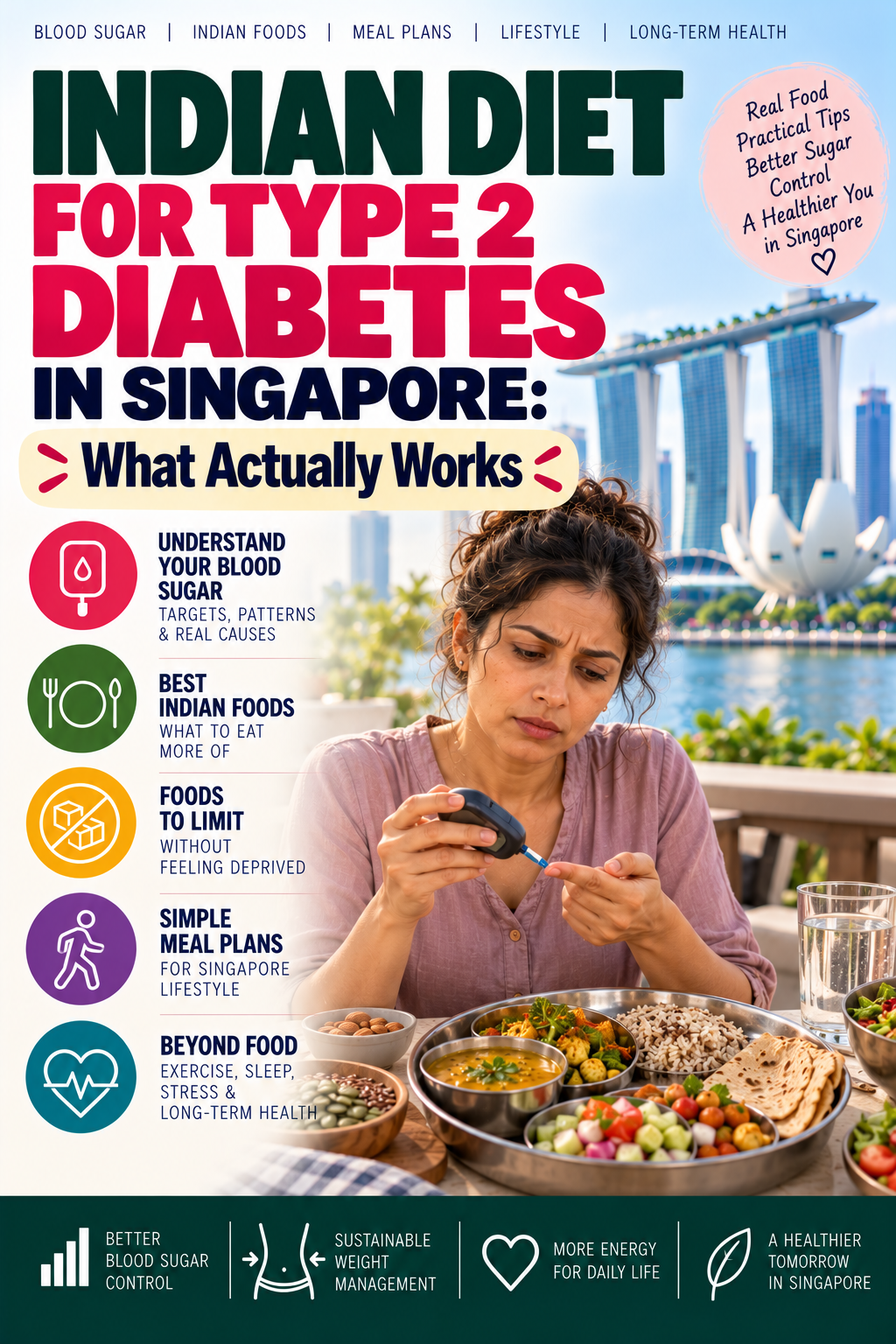
This post gives you that guidance, evidence-based, culturally grounded, and specific to Singapore’s Indian food environment.
👉PCOS and Insulin Resistance Singapore — the shared insulin resistance driver behind PCOS and T2DM
The Evidence Base for Dietary Management of T2DM in South Asians
A 2023 narrative review published in Healthcare,specifically examining culturally tailored dietary interventions for improving glycaemic control and preventing complications in South Asians with type 2 diabetes, confirmed that dietary and physical activity interventions (duration 3–12 months) are effective in generating a clinically relevant decrease in HbA1c (≥0.5%) in South Asians with T2DM, a magnitude that is clinically meaningful for complication risk reduction.
A 2025 systematic review and meta-analysis assessing 24 RCTs of lifestyle interventions on glycaemic control in South Asian adults with T2DM found: physical activity interventions reduced HbA1c by 0.99%, dietary interventions by 0.59%, and combined programmes by 0.55%. The dietary effect, 0.59% HbA1c reduction, is comparable to the effect of adding a second oral medication in many patients with mild-to-moderate hyperglycaemia.
A remarkable 2025 case study published in PMC documented a South Asian male who achieved ten-year medication-free remission of type 2 diabetes using a culturally adapted low-carbohydrate diet based on a traditional South Indian vegetarian pattern at approximately 100g of carbohydrate daily, maintaining HbA1c of 4.7–4.9% (non-diabetic range) for a decade without medication. The researchers noted that moderate carbohydrate restriction at ~100g/day may represent a clinically feasible and culturally compatible approach for South Asian T2DM management.
A 2025 Lancet Southeast Asia commentary specifically addressing diabetes in South Asia highlighted that fewer than one in four Indians on regular treatment achieve glycaemic control (HbA1c <7%), underscoring the significant gap between current treatment and optimal outcomes that dietary intervention can partially address.
The South Asian Diabetes Picture: Why Indian Bodies Respond Differently
The 2025 Lancet Southeast Asia commentary confirmed what clinical experience makes apparent: South Asian diabetes is not the same as Western diabetes. The specific differences with direct dietary implications:
- Earlier onset: South Asians develop T2DM approximately 10 years earlier than White Europeans, at lower BMI, and often with the thin-fat phenotype (normal BMI but elevated visceral fat and insulin resistance)
- Insulin-deficient phenotype prevalent: In an Indian cohort, insulin-deficient subtypes comprised up to 75% of T2DM, meaning many Indian patients have less capacity for the high-carbohydrate dietary loads that even mildly elevated postprandial glucose demands. This is fundamentally different from the obesity-driven, hyperinsulinaemic Western T2DM pattern.
- HbA1c diagnostic limitations: A 2026 medRxiv preprint confirmed that a common PIEZO1 genetic variant enriched in South Asian populations biases HbA1c downward, meaning HbA1c may systematically underestimate glycaemic risk in a substantial minority of South Asians. Fasting glucose and postprandial glucose measurements alongside HbA1c give a more complete picture.
- Dietary staples are predominantly high-glycaemic: White rice (GI 72–83), maida-based bread and rotis, sweetened chai, and packaged snacks form the modern Indian Singapore dietary pattern, each a significant glycaemic challenge for an insulin-resistant or insulin-deficient pancreas.
👉The Singapore Woman’s Essential Guide to Early Diabetes Detection
👉Blood Sugar After 40: What Every Indian Woman Should Know
The Indian Diabetes Diet Strategy: What to Change and What to Protect
The Non-Negotiable Changes: Highest Glycaemic Load Foods
These are the dietary elements that produce the largest and most consistent blood glucose spikes in Indian T2DM patients in Singapore; addressing them produces the most immediate HbA1c improvement:
- Eliminate all sweetened drinks: Teh tarik, sweetened Milo, packaged fruit juice, sugarcane juice, flavoured drinks. Each causes a rapid glucose spike in an already-compromised glucose regulatory system. The evidence is unambiguous: liquid sugar is the highest-risk dietary element for diabetes management. Replace with water, plain black tea, or unsweetened green tea (available everywhere in Singapore).
- Reduce white rice portion by half and change the eating sequence: White rice is not prohibited; it is portion-managed and sequenced. The evidence-based approach: eat your dal and vegetable dish first, completely, before beginning the rice. This protein-and-fibre-first sequencing reduces the post-meal glucose peak from the same rice portion by 20–37%, a clinically meaningful reduction achievable with zero change in the foods consumed, only the order.
- Replace maida with whole wheat or millets: Maida (refined wheat flour), in naan, parotta, puri, commercial flatbreads, and biscuits has a glycaemic index comparable to or higher than white bread. Replace all maida rotis with whole wheat atta chapati, or better, jowar or bajra roti (GI 50–55 vs maida GI 70+). Available at Mustafa Centre, Indian grocery stores in Little India, and NTUC FairPrice health foods aisle.
- Eliminate the “sweet at the end of the meal” habit: Mithai, kheer, halwa, and gulab jamun after a meal extend the post-meal glucose elevation for an additional 1–2 hours and make the overall glycaemic response significantly worse than the rice component alone. The Indian tradition of ending every meal and every celebration with sweets is the single most difficult cultural habit to modify, and the one that most consistently distinguishes patients who achieve HbA1c control from those who do not.
What to Eat More Of: The Blood Glucose Stabilisers
- Dal at every meal, not occasionally: Masoor, moong, toor, rajma, and chana are the highest-priority foods in the diabetic Indian diet. The combination of protein, soluble fibre, and resistant starch in legumes is the most evidence-grounded blood glucose stabiliser available in the Indian food tradition. Dal eaten before rice lowers the meal’s overall glycaemic impact. The 2023 narrative review on culturally tailored interventions specifically highlighted legume consumption as a key dietary feature of effective South Asian diabetes management programmes.
- Methi (fenugreek): One of the most evidence-backed Indian foods for glycaemic control, methi seeds contain galactomannan, a soluble fibre that slows glucose absorption and reduces postprandial glucose peaks. Multiple small Indian RCTs have found methi supplementation reduces fasting blood glucose and HbA1c. Soak 1 teaspoon of methi seeds overnight and consume with water in the morning, or add methi leaves to dal and sabzi regularly. Available at Mustafa, Tekka Market, and all Indian grocery stores in Singapore.
- Karela (bitter gourd): Contains polypeptide-p (plant insulin), momordicin, and charantin, compounds with documented hypoglycaemic effects in multiple Indian RCTs. Karela juice (bitter), stir-fried karela with onion and spices, or karela curry (all common in South Indian cooking) should be included at least twice weekly for diabetic patients. Available at Tekka Market, Geylang Serai, and specialist Indian grocers in Singapore.
- Ragi (finger millet): The lowest-GI Indian grain staple available, with a GI of approximately 57 compared to white rice at 72–83. Ragi roti or ragi porridge as a breakfast or dinner staple directly reduces the post-meal glucose response compared to equivalent white rice or maida portions. Available at Mustafa and Indian grocery stores.
- Vegetables at every meal (minimum half the plate): Non-starchy vegetables (ladies finger/okra, particularly beneficial for diabetes due to its mucilaginous fibre that slows glucose absorption; palak; brinjal; drumstick/moringa; capsicum) dilute the glycaemic density of the meal and add fibre that slows glucose absorption from all foods consumed.
- Cinnamon: Ceylon cinnamon (not cassia) has multiple small RCTs supporting its ability to improve insulin sensitivity and reduce fasting blood glucose at 1–3 g daily. Add to morning dahi, porridge, or chai. Available at all Singapore supermarkets.
👉Indian Meal Plan for Insulin Resistance That Actually Works
👉Metabolic Syndrome in South Asian Women: A Doctor’s Warning
Diabetes Nutrition · Singapore
Managing diabetes on medication, but your HbA1c is still not where it should be. The dietary strategy is the missing piece.
I work with adults in Singapore to build an evidence-based, culturally grounded dietary management strategy for type 2 diabetes, HbA1c reduction, meal sequencing, Indian food translation, and Singapore hawker navigation. Some are even able to reverse diabetes completely.
👉 Book a FREE 20-Minute Diabetes Nutrition Call
Dr Akanksha Sharma · MBBS MD · Singapore & worldwide via Zoom
The Meal Sequencing Approach: The Highest-Impact Zero-Cost Change
The evidence for protein-and-fibre-first meal sequencing as a blood glucose management tool is among the most striking in diabetes nutrition research — and it requires no change in what you eat, no new foods, and no cost. The research, replicated across multiple RCTs in both Western and South Asian populations, consistently finds that eating protein and vegetables before carbohydrates reduces the post-meal glucose peak by 20–37% compared to eating the same foods in the conventional carbohydrate-first order.
The diabetic Indian meal sequence:
- Start with any vegetable dish — palak, sabzi, salad
- Eat the dal — completely, or substantially
- Now begin the rice or roti — in a smaller portion than you would have eaten if starting with carbohydrate
- If dessert is unavoidable socially: eat fruit (not mithai) or a very small portion at the end
This sequence works because protein and fibre consumed first slow gastric emptying and stimulate GLP-1 (the same pathway targeted by Ozempic/semaglutide), reducing the glucose absorption rate from the subsequent carbohydrate consumption. The food is identical; the blood glucose outcome is measurably different.
A Day of Eating for Indian T2DM Management in Singapore
- Morning fasting check (before breakfast): Target fasting blood glucose below 7.0 mmol/L (126 mg/dL). Use a glucometer (available at Guardian and Watsons for approximately SGD 30–50; strips are the ongoing cost). Self-monitoring 2–3 times weekly gives the dietary feedback loop that quarterly HbA1c testing alone cannot provide.
- Breakfast (7:30 am — protein first): Ragi porridge with a tablespoon of ground flaxseed and cinnamon + plain dahi (the high-protein, high-fibre, low-GI Indian breakfast). Or: two scrambled eggs + one jowar roti + a small bowl of vegetables. No sweetened drinks — plain water, black chai without sugar, or methi water.
- Mid-morning (10 am): Plain water. If hungry: a small handful of roasted chana (protein + fibre snack; GI approximately 28, one of the lowest-GI Indian snacks available). Avoid biscuits, packaged crackers, or fruit juice.
- Lunch (1 pm, sequence strictly): Palak sabzi first → thick masoor dal → small portion of brown rice or one jowar roti. Include karela once or twice weekly at lunch.
- Afternoon (4 pm): Plain dahi (blood glucose stabilising protein snack) with a teaspoon of cinnamon and a small amount of walnuts. No packaged snacks.
- Dinner ( 7.30-8 pm; early dinner reduces overnight glucose load): Rajma or toor dal → two small chapatis or small rice portion → mixed vegetable sabzi with bitter gourd included once or twice weekly. No dessert on weekdays.
- Evening: 20-minute walk after dinner, the single most effective post-meal blood glucose disposal intervention available. Reduces the 2-hour postprandial glucose reading measurably. Singapore’s park connector network, void deck loops, or condominium grounds make this accessible regardless of housing type.
Managing Diabetes Through Singapore’s Healthcare System
- Enrol in Healthier SG: Every Singapore resident with diabetes should be enrolled with their assigned family doctor through the Healthier SG programme, providing subsidised medication, quarterly HbA1c testing, foot and eye checks, and nutritional counselling. The HealthHub app tracks your enrolled provider and health records.
- Request self-monitoring equipment subsidy: Diabetic patients enrolled in Healthier SG or CDMP (Chronic Disease Management Programme) are eligible for subsidies on glucometers and test strips at polyclinics. Self-monitoring of blood glucose (SMBG) provides the dietary feedback that allows real-time meal assessment.
- Continuous glucose monitoring (CGM): FreeStyle Libre and Dexcom CGM devices are available in Singapore, increasingly recommended by endocrinologists at KKH, NUH, and SGH for patients who want detailed dietary feedback on their glucose responses to specific Indian foods. The GLiMPSE2 study at SGH has been evaluating flash glucose monitoring for T2DM management in Singapore. Private CGM programmes are available at Thomson Medical and private endocrinology clinics.
- Specialist referral: Endocrinologist referral through Healthier SG is available for patients not achieving glycaemic targets on first-line therapy. Endocrinology departments at KKH, NUH, SGH, Raffles Medical, and Mount Elizabeth provide specialist diabetes management.
👉Healthier SG and Diabetes Prevention — Singapore’s policy framework for Indian women at risk
👉 Normal Weight but High Sugar? The Singapore Metabolic Trap
Frequently Asked Questions
My doctor says my HbA1c is 7.8% and I need to start a second medication. Can diet alone bring it down?
The evidence suggests diet can produce a 0.59% HbA1c reduction in South Asians with T2DM, which would reduce 7.8% to approximately 7.2%, which may or may not reach the target your physician has set. Whether diet alone is sufficient depends on your baseline HbA1c, how long you have had diabetes, your pancreatic reserve (insulin deficiency vs insulin resistance dominance), and your physician’s target. Diet and medication are not mutually exclusive; the most evidence-grounded approach is medication as prescribed alongside the dietary strategy in this post, which may allow medication dose reduction over time if glycaemic targets are achieved. Always discuss any changes to medication with your physician; do not self-discontinue.
I have been told rice is completely off-limits for diabetics. Is this accurate?
No, and this overly restrictive advice frequently leads to dietary frustration and abandonment of the entire diabetes management attempt, because rice is central to South Indian food culture and identity. White rice is high-GI and should be portion-controlled and sequenced (eaten after dal and vegetables, not before). The evidence-based approach is: half a cup of cooked white rice as part of a balanced meal eaten in the correct sequence, not a full plate of rice with minimal accompaniment. Switching half of rice consumption to ragi or brown rice further reduces the glycaemic impact. Eliminating rice entirely is rarely necessary and rarely sustainable for Indian patients; managing the quantity, accompaniment, and sequence is the evidence-grounded and culturally realistic alternative.
I am vegetarian. Can I manage my diabetes effectively without eggs or meat?
Yes — the Indian vegetarian diet, in its traditional form emphasising dal, legumes, vegetables, ragi, and dahi, is well-suited to diabetes management. The key vegetarian priorities: dal at every meal for protein and fibre, ragi over white rice or maida wherever possible, plain dahi daily for protein and probiotic benefit, karela and methi regularly, and no sweetened drinks. The 10-year T2DM remission case study published in 2025 was specifically a lacto-ovo vegetarian South Indian patient, demonstrating that medication-free diabetes control is achievable on a well-structured vegetarian Indian diet.
My mother has diabetes and I have been told I am “pre-diabetic.” What should I do now?
Prediabetes in an Indian woman with a diabetic family member is a high-urgency intervention window. The evidence is clear: progression from prediabetes to diabetes is substantially preventable through dietary and lifestyle intervention, with studies showing a 50–70% reduction in progression risk with consistent lifestyle intervention. Act immediately: eliminate sweetened drinks, implement dal-first meal sequencing at every meal, reduce white rice portion by half, replace maida with whole wheat or jowar, add 30 minutes of daily walking, and request a fasting insulin and HOMA-IR test (not just fasting glucose) to assess insulin resistance. Enrol in Healthier SG’s diabetes prevention pathway. Prediabetes is the highest-opportunity intervention point; what you do now determines whether your HbA1c tracks toward 7% or toward 5.5% over the next five years.
The Bottom Line
Type 2 diabetes in Indian women in Singapore is both common and more manageable through diet than most patients are led to believe. The evidence from South Asian-specific systematic reviews is clear: culturally tailored dietary intervention produces clinically significant HbA1c reductions of 0.59%, comparable to adding a pharmaceutical agent, and the combination of dietary and physical activity intervention outperforms either alone. The dietary strategy does not require abandoning Indian food culture; it requires modifying the modern, urbanised version of it that has departed significantly from the traditional pattern. Eliminate sweetened drinks, eat dal before rice, halve the rice portion, replace maida with jowar or ragi, include karela and methi regularly, and walk after dinner. These six changes, consistently applied, constitute the evidence-based, culturally grounded diabetes management strategy for Indian women in Singapore. Do not wait for medication to do what diet can achieve. Start with the meal sequence change at your next meal, it costs nothing, requires no new foods, and the evidence says it will reduce your postprandial glucose peak by up to 37% from today.
Diabetes Nutrition · Singapore
Your HbA1c Number Is Not Fixed.
The Right Diet Strategy Can Change It.
A personalised diabetes nutrition plan built for adults in Singapore: meal sequencing, food swaps, hawker centre navigation, and the culturally grounded approach that makes HbA1c reduction sustainable.
Want a personalised Indian diabetes diet plan? Let’s talk — 20 minutes, your HbA1c, your kitchen, a specific plan. 👉 Book a FREE 20-Minute Diabetes Nutrition Call Dr Akanksha Sharma · MBBS MD · Preventive Medicine Physician · Singapore & worldwide via Zoom |
Disclaimer: This article is for educational purposes only. Type 2 diabetes requires medical management. Do not adjust or discontinue prescribed diabetes medication without guidance from your physician. Always discuss dietary changes with your managing doctor, particularly if you are on insulin or sulfonylureas where dietary changes may increase hypoglycaemia risk.
References:
- Culturally Tailored Dietary Interventions for Glycaemic Control in South Asians with T2DM. Healthcare. 2023;11:1123. PMC10138081
- SR and Meta-Analysis of Lifestyle Interventions on Glycaemic Control in South Asian T2DM. PMC. 2025. PMC12821424
- Ten-year medication-free T2DM remission in South Asian male: culturally adapted low-carb diet. PMC. 2025. PMC12990069
- Not one-size-fits-all: diabetes in South Asia. Lancet Southeast Asia. 2025. PMC12676139
- MOH Singapore. Singapore Diabetes Statistics — 1 in 3 Singaporeans will develop diabetes. moh.gov.sg

Akanksha Sharma
Dr Akanksha Sharma (MBBS, MD) is a physician and women’s health nutrition specialist, and the founder of IYSA Nutrition. She provides evidence-based, doctor-led nutrition guidance for pregnancy, postpartum recovery, PCOS, child nutrition, and family health, helping women make calm, informed decisions about their health and their children’s well-being.

Leave a Reply