
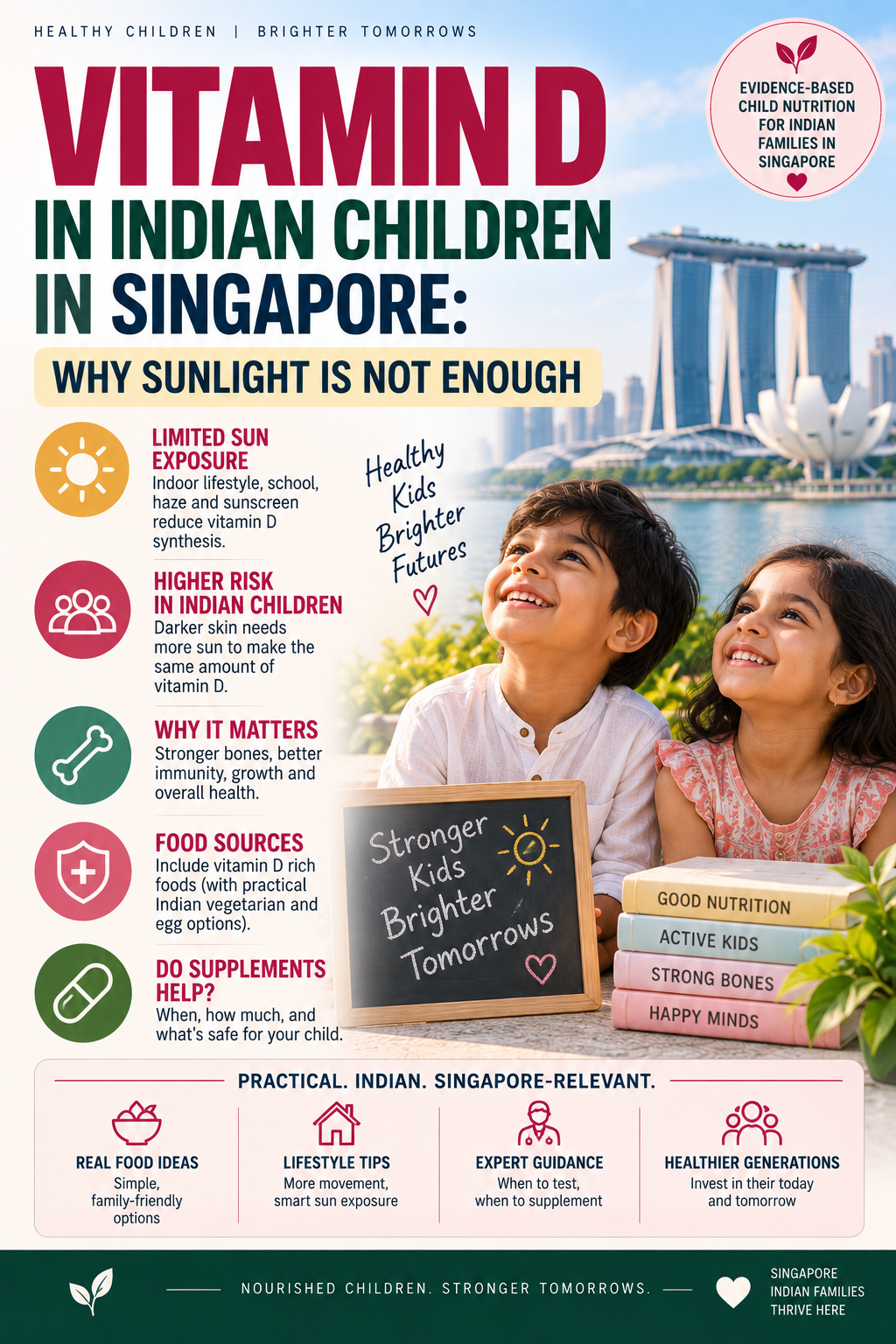
The Evidence: How Common Is Vitamin D Deficiency in Indian Children?
A comprehensive 2025 systematic review and meta-analysis published in ScienceDirect, which included 23 cross-sectional studies covering 38,762 Indian children and adolescents, found a pooled prevalence of Vitamin D deficiency (below 20 ng/mL or 50 nmol/L) of 66.4% (95% CI: 59.0–73.2), meaning nearly two-thirds of apparently healthy Indian children are Vitamin D deficient, despite India receiving abundant sunlight year-round.
A large multi-centre study published in Scientific Reports (2022) examining Vitamin D status and determinants in Indian children across 2,500 children confirmed high prevalence of deficiency and identified the key determinants: inadequate sun exposure, dietary factors (including high phytate intake, inadequate Vitamin D in diet, and high prevalence of lactose intolerance reducing dairy consumption), skin pigmentation, pollution reducing UVB penetration, and genetic polymorphisms affecting Vitamin D metabolism.
For Indian children in Singapore, the same factors apply, with additional Singapore-specific amplifiers that make the situation arguably worse than in India: indoor air-conditioned school environments, tuition class schedules that reduce outdoor time, and sunscreen application by parents concerned about heat and UV exposure.
📌Vitamin D Deficiency in Singapore — the full Singapore Vitamin D guide for adults
📌Children Are Not Mini Adults: Stop “Healthy” Food Trends From Harming Your Child
Why Singapore Sunshine Is Not Enough for Indian Children: The Reasons Explained
1. Skin Pigmentation — The Primary Biological Reason
Melanin, the pigment that gives Indian skin its darker tone, acts as a natural sunscreen by absorbing UV radiation before it can trigger Vitamin D synthesis in the skin. The same biological adaptation that protects dark-skinned populations from sun damage in equatorial environments also means they require significantly longer sun exposure to synthesise the same amount of Vitamin D as lighter-skinned individuals.
Studies estimate that a dark-skinned person requires approximately 3–6 times longer sun exposure than a fair-skinned person to produce equivalent amounts of cutaneous Vitamin D. In practical terms: the 10–15 minutes of midday sun that might adequately supplement a Chinese Singaporean child produces far less Vitamin D in an Indian child with deeper melanin pigmentation.
2. Indoor Lifestyle — The Singapore-Specific Amplifier
Singapore’s climate, intense heat, humidity, and UV radiation- paradoxically drives children indoors. Singapore primary school children spend the majority of their day in air-conditioned classrooms, are transported by air-conditioned buses, come home to air-conditioned apartments, and spend evenings at tuition classes or on screens. The outdoor time needed for meaningful cutaneous Vitamin D synthesis simply does not occur consistently for most Singapore Indian children during the week.
3. Glass, Sunscreen, and Clothing Block UVB
UVB radiation, the specific wavelength that triggers cutaneous Vitamin D synthesis, does not penetrate glass. A child studying beside a sunny window receives light but not Vitamin D-producing UVB. SPF 15 sunscreen, commonly applied to Singapore children by parents concerned about sun damage, reduces cutaneous Vitamin D synthesis by approximately 93%. Indian children wearing long sleeves and full clothing during outdoor activities have minimal skin surface exposed to UVB even during outdoor time.
4. Dietary Vitamin D Sources Are Limited in Indian Diets
Vitamin D is found in significant quantities in very few foods: oily fish (salmon, sardines, mackerel), egg yolks, liver, and fortified dairy or plant milks. Traditional Indian vegetarian diets contain essentially no Vitamin D from food. Even non-vegetarian Indian diets, if not including oily fish regularly, provide minimal dietary Vitamin D. The best dietary source available in Singapore, salmon from Cold Storage, provides approximately 600–1,000 IU per 100g serving: a meaningful amount, but sufficient only if consumed multiple times weekly alongside other sources.
5. Vitamin D Requirement Is Actively Competed For
Body fat stores Vitamin D; overweight and obese children (a growing issue in Singapore, with 22% of children aged 5–19 being overweight per MOH data) sequester Vitamin D in fat tissue, reducing its bioavailability for skeletal and immune function. Singapore’s rising childhood obesity rate therefore compounds the already-elevated Indian children’s Vitamin D deficiency risk.
📌Bone Health for Indian Women — bone density built in childhood determines adult fracture risk
📌Iron Deficiency in Indian Children — the other most common correctable nutritional deficiency
Why Vitamin D Matters for Children: Beyond Bones
Vitamin D’s role in children’s health extends far beyond its classical role in calcium absorption and bone mineralisation:
- Bone development: Vitamin D is essential for calcium absorption in the gut (absorption falls from 30–40% to 10–15% when Vitamin D is deficient). Severe deficiency causes rickets, bow legs, soft skull bones, delayed tooth eruption, and impaired growth, which, while less common in Singapore’s Indian community than in India, remains a clinical reality. Milder deficiency reduces bone mineralisation and peak bone mass accumulation across the entire childhood growth period.
- Immune function: Vitamin D directly regulates both innate and adaptive immune responses. Deficiency is associated with increased susceptibility to respiratory tract infections, relevant for Singapore children who circulate through air-conditioned environments and may catch infections repeatedly. The IAP (Indian Academy of Pediatrics) 2021 revised guidelines specifically highlight Vitamin D’s role in immune function as a reason for supplementation during childhood.
- Cognitive development and academic performance: Vitamin D receptors are present in the brain, including regions involved in learning and memory. Emerging evidence associates adequate Vitamin D status with better cognitive performance in children, particularly relevant in Singapore’s academic environment.
- Muscle function and growth: Vitamin D deficiency causes proximal muscle weakness, the kind that makes children tire easily during physical activity. In Singapore’s school sports programmes, unexplained fatigue and reduced physical performance in Indian children may partly reflect Vitamin D deficiency.
- Autoimmune disease prevention: Adequate Vitamin D status is associated with reduced risk of type 1 diabetes and inflammatory bowel disease, both of which have higher incidence in Indian populations.
📌Screen Time and Sleep: How Your Child’s Diet Affects Both
📌How to Know If Your Child Is Getting Enough Protein!
📌Healthy School Tiffin for Indian Kids in Singapore (HPB-Aligned)
How to Test and What the Numbers Mean
Vitamin D status is measured as serum 25-hydroxyvitamin D (25-OH Vitamin D). Testing is available at all Singapore polyclinics, KKH, NUH, and private diagnostic labs.
| 25-OH Vitamin D Level | Status (Singapore/International) | Action |
|---|---|---|
| Below 25 nmol/L (<10 ng/mL) | Severe deficiency | Therapeutic supplementation under paediatric guidance |
| 25–50 nmol/L (10–20 ng/mL) | Deficiency | Supplementation at 600–1000 IU daily; retest in 3 months |
| 50–75 nmol/L (20–30 ng/mL) | Insufficiency | Supplementation at 600 IU daily; ensure dietary sources |
| 75–150 nmol/L (30–60 ng/mL) | Adequate/Optimal | Maintain with 400–600 IU daily; monitor annually |
| Above 250 nmol/L (>100 ng/mL) | Potential toxicity threshold | Reduce supplementation; reassess |
The Indian expert consensus (41 endocrinologists, DELPHI method, published 2025 — PMID 40181864) recommends maintaining physiological 25-OH Vitamin D levels of 40–60 ng/mL (100–150 nmol/L) for Indian populations, higher than the standard “adequate” threshold of 20 ng/mL used in some international guidelines, reflecting the higher functional requirements observed in Indian populations.
What to Request in Singapore
Ask your child’s paediatrician at KKH, NUH, or polyclinic for a serum 25-OH Vitamin D test at the annual health check. If your child is not having an annual health check, consider a private diagnostic lab (Raffles Diagnostics, Parkway Shenton, or Thomson Medical Diagnostic Centre). The test costs approximately SGD 30–60 at private labs and is often covered by integrated shield plans. The Grow Well SG Health Plan (MOH 2025) does not routinely include Vitamin D testing; you need to specifically request it.
The Supplementation Strategy: Dosage and Formulation
The Indian Academy of Pediatrics 2021 revised guidelines (Indian Pediatr. 2022;59(2):142-158; PMID 34969941) provide clear supplementation recommendations for Indian children:
- Infants 0–1 year: 400 IU Vitamin D3 daily from the first week of life; this is the universally agreed paediatric recommendation from IAP, AAP, and ESPGHAN for exclusively breastfed infants regardless of geography
- Children 1–18 years: 600 IU Vitamin D3 daily for maintenance; 1,000–2,000 IU daily for correction of documented deficiency
- Therapeutic high-dose supplementation for severe deficiency (below 25 nmol/L) should be under paediatric medical guidance
Formulation guidance for Singapore parents:
- Choose Vitamin D3 (cholecalciferol), not D2 (ergocalciferol); D3 is more effective at raising and maintaining serum levels
- Liquid drops are most practical for young children; Ddrops, Baby D Drops, and similar formulations are available at Guardian, Watsons, and pharmacies at KKH and NUH
- Chewable tablets or gummies for school-age children; check for D3 specifically; many children’s multivitamins use D2
- Give with a meal containing fat; Vitamin D is fat-soluble and absorption is significantly higher when taken with food containing fat (eggs, dahi, full-fat milk)
📌Is Your Child Getting Enough Calcium? (Without Dairy Supplements)
Dietary Sources of Vitamin D: Indian Food Strategies for Singapore
While supplementation is typically necessary for adequate Vitamin D status in Indian children in Singapore, dietary sources provide a meaningful contribution and reinforce supplement intake:
| Food Source | Vitamin D Content | Available in Singapore |
|---|---|---|
| Salmon (wild, cooked, 100g) | 600–1,000 IU | Cold Storage, FairPrice Finest; Tekka Market (fresh) |
| Sardines in oil (100g) | 270–300 IU | NTUC FairPrice (canned); very affordable |
| Mackerel (cooked, 100g) | 250–350 IU | Tekka Market, Geylang Serai wet market |
| Egg yolk (1 large) | 40–50 IU per yolk | All supermarkets; daily contributor |
| Fortified cow’s milk (200ml) | 80–100 IU (if fortified) | Meiji Hi-Calcium; check label for “Vitamin D” addition |
| Fortified plant milk (200ml) | 100–120 IU | Oatly, Alpro at Cold Storage; check label |
| Liver (chicken, 100g) | 50 IU | Tekka Market, Geylang Serai |
Practical Singapore strategy for vegetarian Indian families: Two eggs daily in the child’s diet contribute approximately 80–100 IU, meaningful but not sufficient alone. Fortified milk (check that the brand specifically adds Vitamin D, as not all Singapore milk brands are Vitamin D-fortified; Meiji Hi-Calcium is) adds 80–100 IU per glass. Together with a daily 600 IU supplement, this approaches adequacy. For non-vegetarian families: include sardines from NTUC (very affordable at approximately SGD 1.50 per can) at least twice weekly; this is the single most cost-effective Vitamin D food source available in Singapore.
Children’s Nutrition · Singapore
Your child’s Health Plan flagged concerns — or you simply want to get ahead of nutritional gaps before they become problems.
I work with Indian families in Singapore to identify and address nutritional deficiencies, including Vitamin D, iron, zinc, and calcium, through personalised, culturally grounded plans that work with Indian food traditions and Singapore’s food environment.
👉 Book a FREE 20-Minute Children’s Nutrition Call
Dr Akanksha Sharma · MBBS MD · Singapore & worldwide via Zoom
Safe Sun Exposure: How to Get Some Vitamin D From Singapore’s Sun
Supplementation is necessary, but encouraging some safe, deliberate sun exposure for Indian children in Singapore remains valuable for Vitamin D synthesis and for the broader physical and mental health benefits of outdoor time.
- Timing: 10am–2pm is when Singapore’s UVB intensity is highest, paradoxically the time most parents avoid the sun. Brief, deliberate exposure during this window, 15–20 minutes for Indian children, is the minimum needed for meaningful cutaneous Vitamin D synthesis given the skin pigmentation factor
- Body surface area: Arms and legs exposed (not just face and hands) maximises the skin surface available for synthesis. Full school uniform with long sleeves during the recess period under shade provides essentially no Vitamin D.
- No sunscreen for brief exposures: Apply sunscreen after 15–20 minutes of deliberate exposure, not before. For the brief window of sun exposure aimed at Vitamin D synthesis, sunscreen should be withheld initially.
- Practical Singapore opportunities: School recess under direct sun (not shade), weekend morning park sessions, ActiveSG pool time, Saturday morning at the playground between 10–11 am, brief, regular, direct sun exposure as part of weekly routine
Frequently Asked Questions
My child drinks milk every day. Isn’t that enough for Vitamin D?
This depends entirely on which milk and how much. Not all Singapore milk products are Vitamin D-fortified; check the nutrition label specifically for Vitamin D content per serving. If the label lists Vitamin D, one to two glasses of fortified milk provides 80–200 IU per day. The recommended daily intake for children is 600 IU, fortified milk alone rarely closes the gap. For Indian children with the additional barrier of skin pigmentation reducing cutaneous synthesis, a dedicated Vitamin D3 supplement is the most reliable strategy.
The paediatrician at KKH said my child’s Vitamin D is 22 ng/mL — normal. Should I supplement?
The standard lower limit for “normal” is 20 ng/mL in many laboratory reference ranges, so at 22 ng/mL your child technically falls within the normal range. However, 22 ng/mL represents sufficiency at the bare minimum threshold, not optimal function. The Indian expert consensus (PMID 40181864) recommends maintaining 40–60 ng/mL for Indian populations for optimal skeletal and immune function. At 22 ng/mL with no supplementation in a dark-skinned child in Singapore with limited outdoor time, levels will continue to drift lower over time. Discuss with your paediatrician whether a maintenance supplement at 400–600 IU daily is appropriate even at this “normal” level.
Can I give my child too much Vitamin D?
Vitamin D toxicity from supplementation at standard paediatric doses (400–1000 IU daily) is essentially absent; toxicity requires sustained very high doses (typically above 10,000 IU daily for extended periods). The IAP and AAP both consider 600–1000 IU daily safe and appropriate for children with deficiency or insufficiency. For therapeutic doses above 2,000 IU daily, paediatric medical guidance and monitoring of 25-OH Vitamin D levels is appropriate.
My child is on the Grow Well SG Health Plan. Does it include Vitamin D testing?
The Grow Well SG Health Plan covers BMI screening, vision, dental, and immunisation records; it does not routinely include serum Vitamin D testing. You need to request Vitamin D testing specifically at your child’s polyclinic visit or annual health check. Given the high prevalence of deficiency in Indian children in Singapore, requesting this test proactively at your child’s next polyclinic or paediatric visit is entirely appropriate; you do not need to wait for symptoms.
The Bottom Line
Nearly two-thirds of apparently healthy Indian children have Vitamin D deficiency, a finding that holds in India and applies with equal or greater force to Indian children in Singapore, where indoor lifestyles, sunscreen, full clothing, and skin pigmentation prevent meaningful cutaneous Vitamin D synthesis despite year-round sunshine. The consequences- impaired bone mineralisation, reduced immune function, muscle weakness, and potentially compromised cognitive development— are entirely preventable. The solution is straightforward: test 25-OH Vitamin D at the next paediatric or polyclinic visit, supplement with 600 IU Vitamin D3 daily from a quality formulation available at Guardian or Watsons Singapore, include sardines and eggs regularly in the diet, and ensure brief direct sun exposure several times per week. This is not a complex intervention, but it requires deliberately addressing a deficiency that will not correct itself through Singapore’s sunshine alone.
Children’s Nutrition · Singapore
Give Your Child the Nutritional Foundation They Need to Thrive in Singapore.
Vitamin D is one of the most common and most correctable nutritional gaps in Indian children in Singapore. A personalised children’s nutrition plan identifies all such gaps and builds the food and supplement strategy to close them.
Not sure which programme fits your child? Let’s talk — 20 minutes, your child’s specific needs, a clear plan. 👉 Book a FREE 20-Minute Children’s Nutrition Call Dr Akanksha Sharma · MBBS MD · Preventive Medicine Physician · Singapore & worldwide via Zoom |
Disclaimer: This article is for educational purposes only. Vitamin D testing and supplementation in children should be discussed with your child’s paediatrician at KKH, NUH, or polyclinic.
References:
- Prevalence of vitamin D deficiency in apparently healthy Indian children and adolescents: systematic review and meta-analysis. ScienceDirect. 2025. Full Text
- Khadilkar A et al. Vitamin D status and determinants in Indian children and adolescents: multicentre study. Sci Rep. 2022;12:16790. Full Text
- Gupta P et al. Indian Academy of Pediatrics Revised (2021) Guidelines on Prevention and Treatment of Vitamin D Deficiency and Rickets. Indian Pediatr. 2022;59(2):142-158. PubMed PMID 34969941
- Prevention and Treatment of Vitamin D Deficiency in India: Expert Group Consensus (41 endocrinologists). PubMed. 2025. PubMed PMID 40181864
- ICMR-NIN Expert Group. Recommended Dietary Allowances for Indians. 2020. nin.res.in

Akanksha Sharma
Dr Akanksha Sharma (MBBS, MD) is a physician and women’s health nutrition specialist, and the founder of IYSA Nutrition. She provides evidence-based, doctor-led nutrition guidance for pregnancy, postpartum recovery, PCOS, child nutrition, and family health, helping women make calm, informed decisions about their health and their children’s well-being.


Leave a Reply