
📌 Omega-3 for Vegetarian Pregnant Women — DHA supplementation begins in the womb
📌Why Zinc Deficiency is common in Indian Kids (And How to Fix It)
What DHA Does in the Developing Brain: The Biology
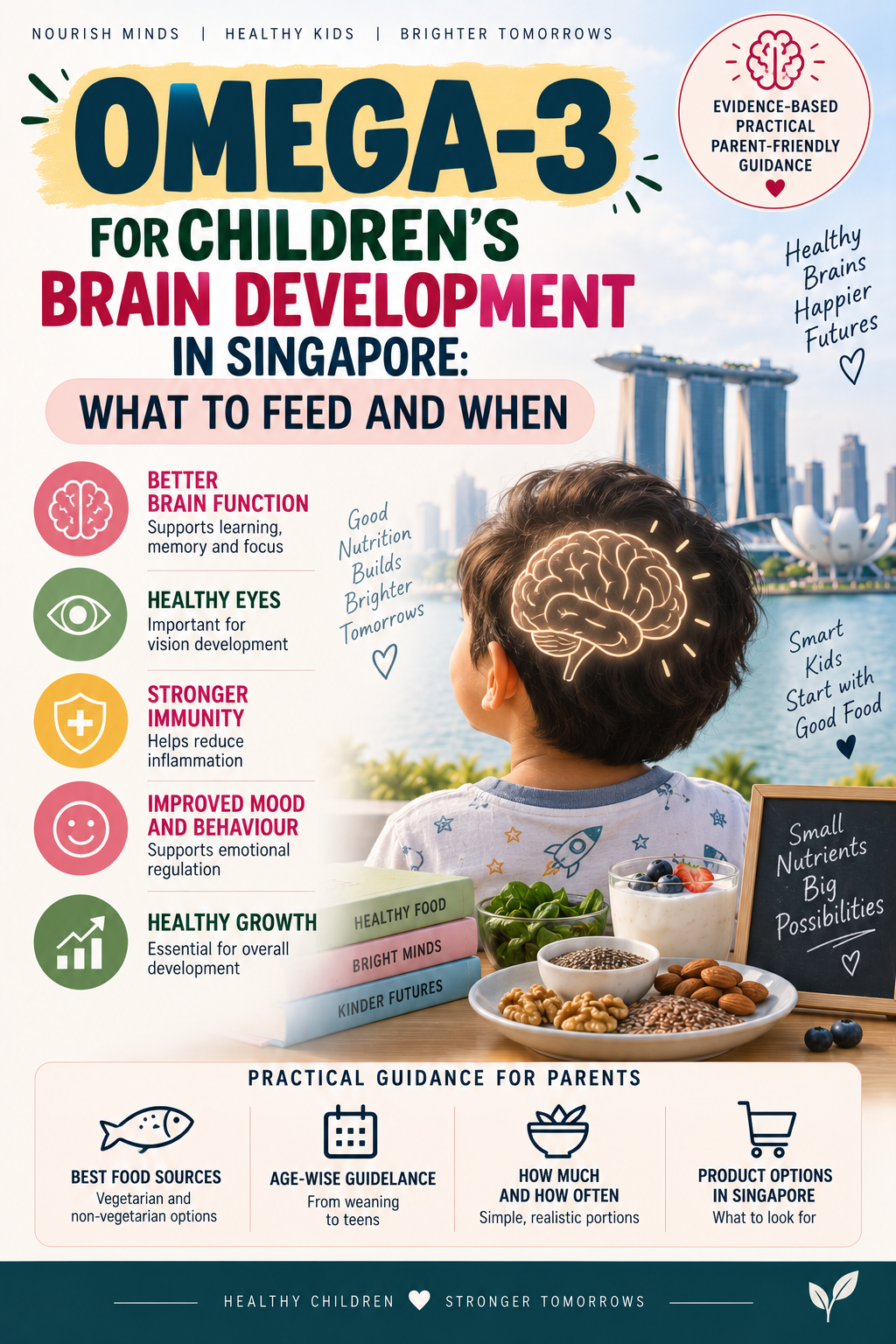
Approximately 60% of the brain’s dry weight is fat. Of this fat, the most abundant polyunsaturated fatty acid is DHA (docosahexaenoic acid), it constitutes approximately 97% of the total omega-3 fatty acids in the brain and approximately 93% of total omega-3 fatty acids in the retina. DHA is not a fuel for the brain; it is a structural component of neuronal cell membranes, particularly the synaptic membranes where neural signals are transmitted.
DHA serves multiple functions in the developing brain:
- Membrane fluidity: DHA-rich membranes are more fluid and flexible, enabling faster and more efficient signal transmission across synapses, directly relevant to processing speed, learning, and reaction time
- Synaptic development: DHA is required for the formation and maturation of synapses, the connections between neurons. Higher synaptic density is associated with greater cognitive capacity.
- Myelination: DHA supports the formation of myelin, the fatty sheath around nerve fibres that speeds neural conduction. Myelination continues into the mid-20s, meaning DHA’s relevance extends well beyond infancy into adolescence.
- Neuroinflammation regulation: DHA is metabolised to resolvins and protectins, potent anti-inflammatory mediators that resolve neuroinflammation and protect neuronal tissue. In children with attention difficulties or neurodevelopmental concerns, reducing neuroinflammation through adequate DHA is a directly relevant biological mechanism.
- Retinal development: The retina is the highest-DHA tissue in the body, adequate DHA is essential for visual acuity development, which continues through the first several years of life and is relevant to the visual demands of reading and learning.
The human body can synthesise DHA from the shorter-chain omega-3 fatty acid ALA (found in flaxseed, walnuts, and chia seeds). Still, this conversion is extremely inefficient, with conversion rates of typically 0–4%. ALA-containing plant foods are not reliable DHA sources for children; pre-formed DHA from marine or algae sources is required.
📌Healthy School Tiffin for Indian Kids in Singapore (HPB-Aligned)
What the Evidence Shows: Omega-3 and Cognitive Outcomes in Children
A 2023 systematic review in the American Journal of Lifestyle Medicine (Sherzai et al.) specifically examining omega-3 fatty acid consumption and neurodevelopmental outcomes from fetal development through adolescence reviewed studies from 2000–2022 and found that DHA is consistently associated with improvements in learning, cognitive development, memory, and speed of cognitive task performance in children, with the clearest benefits in children habitually consuming DHA-poor diets (which includes most vegetarian Indian children) and in children with low literacy or neurodevelopmental difficulties.
A 2026 comprehensive review in Marine Drugsexamining omega-3 effects on children’s development and neurological outcomes, synthesising evidence up to January 2026, confirmed that DHA is critical for brain and visual development especially during early childhood when rapid neural growth occurs, and that adequate omega-3 intake is associated with improvements in cognitive performance, attention, and learning outcomes. In children with ADHD and autism spectrum disorder, DHA and EPA supplementation showed improvements in memory, attention, and executive functioning.
A systematic review and meta-analysis specifically on prenatal DHA supplementation (2025) found significant positive effects on offspring attention, motor development, executive function, and language — confirming that DHA’s brain benefits begin before birth and extend through the entire period of neurological development.
Why Indian Children in Singapore Are at Particular Risk of DHA Deficiency
Vegetarian Diets Contain No Pre-Formed DHA
Traditional Indian vegetarian diets contain essentially zero pre-formed DHA. Flaxseed, walnuts, and chia seeds provide ALA, the short-chain omega-3 precursor, but as discussed above, conversion to DHA is too inefficient to maintain adequate brain DHA status in children. A vegetarian Indian child eating a traditional diet is almost certainly DHA-deficient unless supplemented.
Fish Consumption Is Limited in Many Indian Households
Even in non-vegetarian Indian families, fish is not always consumed regularly or in the specific forms (oily fish: sardines, mackerel, salmon) that provide meaningful DHA. The Indian non-vegetarian diet frequently includes chicken and mutton, both of which contain negligible omega-3, rather than oily fish. A child eating chicken curry three times a week is not getting meaningful DHA.
The Singapore Academic Pressure Context
Singapore’s school system places significant cognitive demands on children from Primary 1 onwards. Attention, processing speed, memory, and executive function- all domains supported by adequate DHA- are exactly what determine performance in Singapore’s academic environment. The brain-nutritional gap in Indian children in Singapore is occurring in the context of the highest cognitive demands of their lives.
📌 Iron Deficiency in Indian Children — iron and DHA together determine brain development outcomes
📌Children Are Not Mini Adults: Stop “Healthy” Food Trends From Harming Your Child
How Much DHA Do Children Need?
| Age Group | Recommended DHA Intake | Practical Daily Source |
|---|---|---|
| 0–6 months | 100 mg DHA daily | Breast milk (if mother has adequate DHA) or DHA-fortified formula |
| 6 months–2 years | 100–150 mg DHA daily | Algae-based DHA drops (vegetarian) or small amounts of oily fish from 6–7 months |
| 2–6 years | 150–200 mg DHA daily | Sardines 2× weekly or algae DHA supplement 150 mg daily |
| 6–12 years | 200–250 mg DHA daily | Sardines 2–3× weekly or algae/fish oil supplement 200–250mg DHA daily |
| 12–18 years | 250–500 mg DHA daily | Oily fish 3× weekly or algae/fish oil supplement 250–500mg DHA daily |
Best Food Sources of DHA for Children in Singapore
Top Oily Fish Sources — Available in Singapore
| Fish | DHA per 100g | Singapore Availability and Cost |
|---|---|---|
| Sardines (canned in oil) | ~1,000 mg | NTUC FairPrice ~SGD 1.50/can; most affordable DHA source available |
| Mackerel (fresh or canned) | ~1,400–2,000 mg | Tekka Market, Geylang Serai wet market; fresh ~SGD 8–12/kg |
| Salmon (fresh or frozen) | ~1,500–2,000 mg | Cold Storage, FairPrice Finest; ~SGD 18–28/kg; highest DHA fish widely available |
| Tuna (canned in water) | ~250–300 mg | NTUC FairPrice; affordable; much lower DHA than sardines or salmon |
| Pomfret / Seabream | ~300–500 mg | Tekka Market; popular in Indian cooking; moderate DHA |
The sardine strategy: For Indian families who want the most cost-effective DHA food source in Singapore, canned sardines in oil (approximately SGD 1.50 per can at NTUC) provide approximately 1,000mg DHA per 100g. A child eating half a can twice weekly receives approximately 500mg DHA from this source alone, well above daily requirements. Sardines can be incorporated into Indian cooking as a curry, mashed onto toast, or mixed into rice with spices- surprisingly versatile and far less “fishy” when cooked with Indian flavours.
🥚 Omega-3 Enriched Eggs — the Easiest DHA Upgrade for Singapore Families who don’t eat fish
Standard eggs provide approximately 30–50 mg DHA per yolk. Omega-3 enriched eggs, laid by hens fed flaxseed and algae, provide 100–200 mg DHA per egg. Two per day deliver 200–400 mg DHA without any change in cooking method or food acceptance. For vegetarian children who do not eat fish or who do not take supplements, this is the most practical single DHA intervention available.
Available in Singapore: Seng Choon Omega-3 Eggs at NTUC FairPrice (~SGD 3.50–4.50 per tray of 10); Chew’s Omega-3 Enriched Eggs at Cold Storage and FairPrice Finest. Check the label for DHA specifically, some “omega-3” eggs are enriched with ALA only, not pre-formed DHA (check the label).
For Vegetarian Children: Algae-Based DHA
Algae-based DHA supplements are the vegetarian solution; they provide pre-formed DHA sourced directly from the microalgae that fish themselves obtain their DHA from. This bypasses the fish entirely and provides the same bioavailable DHA form. Available in Singapore at:
- Guardian and Watsons: Nordic Naturals Algae Omega and similar brands
- iHerb Singapore: Deva Vegan Omega-3, Ovega-3, and multiple algae DHA brands at competitive prices
- Liquid drop formulations (most practical for young children): available at Cold Storage’s health section and online
Recommend: 150–250 mg DHA from an algae-based supplement daily for school-age vegetarian children in Singapore. Give with a meal containing fat (dahi, eggs, full-fat milk) for better absorption.
📌How to Know If Your Child Is Getting Enough Protein!
📌Is Your Child Getting Enough Calcium? (Without Dairy Supplements)
Children’s Brain Nutrition · Singapore
Your child’s brain is building itself right now. Give it the right materials.
I work with Indian families in Singapore to identify and address DHA deficiency alongside all key nutritional gaps in children, through culturally grounded food strategies and targeted supplementation that actually fits Singapore family life.
👉 Book a FREE 20-Minute Children’s Nutrition Call
Dr Akanksha Sharma · MBBS MD · Singapore & worldwide via Zoom
DHA and Specific Childhood Conditions: Singapore Relevance
ADHD and Attention
Attention-deficit/hyperactivity disorder (ADHD) is increasingly diagnosed in Singapore primary school children, and DHA deficiency is consistently associated with worse attention outcomes in children with and without formal ADHD diagnoses. The 2026 Marine Drugs review confirmed that EPA and DHA supplementation may improve cognitive functions including memory, attention, and executive functioning in children with neurodevelopmental conditions. DHA is not a cure for ADHD and does not replace medical assessment, but it is a nutritionally sound and risk-free adjunct to whatever management approach is being pursued.
📌 ADHD Nutrition: What to Feed a Child Who Can’t Focus
Learning Difficulties and Reading
The evidence from the 2023 Sherzai review specifically noted that children with low literacy ability show the clearest cognitive benefits from omega-3 supplementation, suggesting that DHA is particularly valuable for children who are already struggling with learning, where the neurological substrate for reading and attention may be most susceptible to nutritional optimisation.
Vision and Screen Time
Singapore has among the highest myopia rates in the world, and DHA is required for retinal development and maintenance. While DHA does not prevent myopia (a condition driven primarily by near-work and reduced outdoor light exposure), adequate DHA status supports retinal health in the context of the extraordinarily high screen and near-work demands of Singapore’s children. This is an adjunctive consideration rather than a primary indication, but one relevant in Singapore’s specific context.
Frequently Asked Questions
My child refuses to eat fish. How do I get DHA into their diet?
This is the most common practical challenge for Indian families in Singapore; many Indian children are unfamiliar with fish textures and tastes, particularly in families that rarely cook fish at home. Strategies that work: introduce sardines mashed into tomato sauce over rice (the “fishiness” is reduced when cooked with tomato, spices, and onion), use salmon in small pieces within a curry where the texture is less prominent, or use canned tuna (lower DHA than sardines but more neutral taste) mixed with dahi and spices as a spread. If all fish is firmly refused, omega-rich eggs or algae-based DHA drops or soft gels are the most practical alternative; flavourless liquid drops added to any food or drink are the most covert approach for young children.
📌 Childhood Food Allergy: What Parents Must Know
Is flaxseed oil enough for my vegetarian child’s omega-3 needs?
No, and this is one of the most important nutritional misconceptions to correct for Indian vegetarian families. Flaxseed oil provides ALA, which the body converts to DHA at approximately 0–4% efficiency. A child eating a tablespoon of flaxseed oil containing 7,000mg ALA will convert approximately 0–280 mg to DHA, an unpredictable and generally insufficient amount to meet the 200–250 mg direct DHA requirement for school-age children. Flaxseed and walnuts are valuable additions to the diet for their ALA and other nutritional properties — but they are not substitutes for pre-formed DHA from algae supplements or oily fish.
Can I give my child fish oil capsules sold at pharmacies in Singapore?
Yes, most fish oil supplements at Guardian and Watsons provide EPA and DHA in varying ratios. Check the label for the specific DHA content per capsule, not just the total omega-3 content. A supplement listing “1000 mg Omega-3” may contain only 120 mg DHA; verify the DHA figure specifically. Choose a reputable brand with third-party testing (Nordic Naturals, Carlson, or similar) to minimise concerns about heavy metals and rancidity. Liquid fish oil is often better absorbed and easier to give to younger children than capsules.
My child has an allergy to fish. What do I do?
Fish allergy does not preclude omega-3 supplementation; algae-based DHA is entirely fish-free and shellfish-free, sourced from the same microalgae that fish obtain their DHA from. It is the cleanest and most appropriate DHA source for children with fish allergies, children of vegetarian families, and children whose parents prefer a plant-based supplement for any reason. Available at Guardian, Watsons, Cold Storage health section, and iHerb Singapore.
The Bottom Line
DHA is the primary structural fat of the brain, and most Indian children in Singapore, whether vegetarian or non-vegetarian, are not getting enough of it. The evidence from systematic reviews across thousands of children consistently shows that adequate DHA intake supports learning, memory, processing speed, attention, and cognitive development, exactly the capacities most relevant to children navigating Singapore’s academically demanding school environment. The solution is practical and affordable: sardines from NTUC at SGD 1.50 per can twice weekly for non-vegetarian families, or algae-based DHA drops at 150–250mg daily for vegetarian families, available at Guardian, Watsons, and iHerb Singapore. No expensive protocol required, just the right fat in the right form, consistently.
Children’s Brain Nutrition · Singapore
Build the Nutritional Foundation Your Child Needs to Learn, Focus, and Grow.
DHA is one piece of the complete brain nutrition picture. A personalised children’s nutrition plan identifies all the gaps: iron, Vitamin D, zinc, protein, omega-3, and builds the food and supplement strategy to address them together.
Want to understand your child’s specific nutritional gaps? Let’s talk for 20 minutes about their diet, needs, and a clear plan. 👉 Book a FREE 20-Minute Children’s Nutrition Call Dr Akanksha Sharma · MBBS MD · Preventive Medicine Physician · Singapore & worldwide via Zoom |
Disclaimer: This article is for educational purposes only. Children with diagnosed neurodevelopmental conditions should be under the care of a paediatrician or developmental paediatrician.
References:
- Sherzai D et al. A Systematic Review of Omega-3 Fatty Acid Consumption and Cognitive Outcomes in Neurodevelopment. Am J Lifestyle Med. 2023. Full Text
- Omega-3 Fatty Acids from Marine Sources: Effects on Children’s Development and Neurological Disorders. Marine Drugs. 2026. Full Text
- Impact of Omega-3 DHA Supplementation During Pregnancy on Neurodevelopment: Systematic Review and Meta-Analysis. PMC. 2025. PMC Full Text
- Does Consumption of LC Omega-3 PUFA Enhance Cognitive Performance in Healthy School-Aged Children? PMC. PMC Full Text
- ICMR-NIN Expert Group. Recommended Dietary Allowances for Indians. 2020. nin.res.in

Akanksha Sharma
Dr Akanksha Sharma (MBBS, MD) is a physician and women’s health nutrition specialist, and the founder of IYSA Nutrition. She provides evidence-based, doctor-led nutrition guidance for pregnancy, postpartum recovery, PCOS, child nutrition, and family health, helping women make calm, informed decisions about their health and their children’s well-being.

Leave a Reply