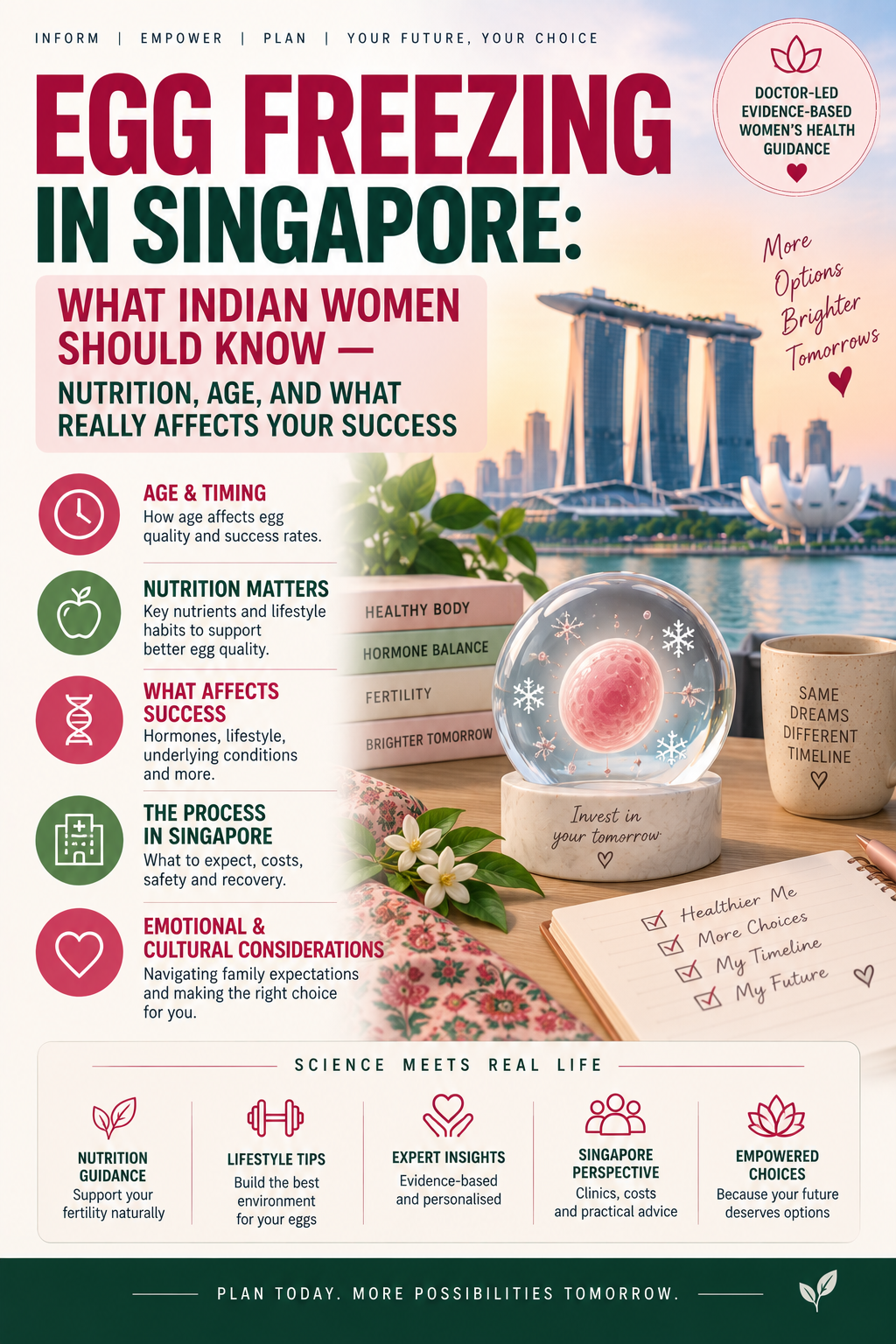
Since legalisation, interest in egg freezing among Singapore women, including the Indian community, has grown significantly. Thomson Fertility Centre, Virtus Fertility Centre, KKH, and NUH all offer the procedure, and counselling is mandated before proceeding. But the conversation most women have with their fertility specialists covers the procedure itself: the stimulation protocol, the retrieval, the storage. What it typically does not cover in adequate depth is the nutritional preparation period: the 3–6 months before the retrieval cycle that represent the most modifiable window for improving egg quality and response to stimulation.
This post covers what the Singapore legal framework looks like, what the evidence says about age and success rates, and the complete nutritional strategy for maximising egg quality in the preparation window.
👉Preconception Nutrition: Start Here 3 Months Before You Try
👉Fertility Diet for Women: What to Eat When Trying to Conceive
👉The Silent Surge: Why Women’s Reproductive Health Is Declining
Singapore’s Elective Egg Freezing Framework: What You Need to Know
The legal and clinical framework following Singapore’s July 2023 legalisation:
- Eligibility: Unmarried Singaporean women and Permanent Residents aged 21 to 37 are eligible for elective egg freezing. Note the upper age limit of 37; this is deliberately set to maximise the likelihood of retrieving good-quality eggs while limiting the emotional and financial investment in procedures with significantly reduced success rates.
- Mandatory pre-procedure counselling: All women must complete formal counselling before proceeding, covering success rates, risks, alternatives, and the realistic expectations of the procedure. A 2023 paper in Human Fertility specifically noted that Singapore’s newly mandated counselling requirement needs clear guidelines on content to enable informed decision-making.
- Marital status restriction: The legalisation applies only to unmarried women; married women in Singapore are expected to proceed directly to IVF if fertility assistance is needed, rather than freezing eggs as a couple. This is an important distinction for Indian women in Singapore who are married but not yet ready for conception.
- Storage: Frozen eggs can be stored for use when needed; storage fees apply annually. The Annals of the Academy of Medicine Singapore 2024 review noted that storage annual fees range from USD 100–1,500 depending on the facility.
- Where in Singapore: KKH (Reproductive Medicine Centre), NUH (Division of Reproductive Endocrinology), Thomson Fertility Centre, Virtus Fertility Centre Singapore, and private fertility clinics at Mount Elizabeth and Gleneagles all offer elective egg freezing.
References:
- Thomson Medical. Egg Freezing in Singapore: Age, Success Rates and Process. Full Text
- Systematic protocol and methodology needed for pre-procedure counselling of elective egg freezing patients in Singapore. Human Fertility. 2023. Taylor & Francis
- Oocytes on Ice: Exploring the advancements in elective egg freezing for women. Annals Academy of Medicine Singapore. 2024. Full Text
👉The 90-Day Egg Quality Roadmap: Prepare to conceive
👉Egg Freezing in Singapore: Optimizing Your Hormones for Success
Age and Success Rates: The Evidence You Need to Know
The most important determinant of egg freezing success is the age at which eggs are frozen, a fact that cannot be optimised nutritionally but must be understood clearly when making the decision of when to proceed.
A comprehensive systematic review and meta-regression analysis of planned oocyte cryopreservation published in Human Reproduction Update (2024, PMID 38654466) confirmed that live birth rates decline substantially with increasing age at egg retrieval. The Annals of Academy of Medicine Singapore 2024 review reported the Singapore-specific and international data:
| Age at Egg Freezing | Estimated Live Birth Rate per Thawed Oocyte | Recommended Eggs to Freeze |
|---|---|---|
| Under 30 | ~7.4% | 8–10 eggs for a reasonable chance of one live birth |
| 30–34 | ~7.0% | 10–15 eggs recommended |
| 35–37 | ~3.5–5% | 15–20 eggs recommended; may require multiple retrieval cycles |
| 38–40 | ~2–3% | Significantly more eggs needed; outcomes less predictable |
Thomson Medical Singapore specifically identifies the optimal age window for egg freezing as 28–34 years, consistent with the international evidence that this window produces the best balance of egg quality and quantity with the fewest retrieval cycles needed. The Annals Singapore 2024 review confirmed that fertility decreases gradually but significantly after age 32 and more rapidly after age 37.
The practical implication for Indian women in Singapore: the decision to freeze eggs is most likely to produce meaningful fertility insurance if made before age 35. The 37-year upper limit in Singapore’s elective framework is a clinical, not arbitrary, threshold; eggs retrieved at 36–37 have significantly higher aneuploidy rates (chromosomal abnormalities) and lower fertilisation potential than eggs retrieved at 30–33.
References:
- Song BB et al. Planned Oocyte Cryopreservation: A Review of Current Evidence on Outcomes, Safety and Risks. Obstet Gynecol Clin North Am. 2023;50(4):707-719. PubMed PMID 37914489
- Planned oocyte cryopreservation: systematic review and meta-regression. Hum Reprod Update. 2024. PubMed PMID 38654466
- Oocytes on Ice: Elective egg freezing advances in Singapore. Ann Acad Med Singap. 2024. Full Text
- Mount Elizabeth Singapore. Elective Egg Freezing: Success rates and process. Full Text
What the Stimulation Cycle Involves
Understanding the process helps contextualise why the 3–6 month nutritional preparation window matters:
- Baseline assessment (cycle day 2–3 before stimulation): Antral follicle count (AFC) on transvaginal ultrasound counts the follicles available for stimulation. Anti-Müllerian Hormone (AMH) blood test assesses ovarian reserve. These two values primarily determine how many eggs can be expected from a retrieval cycle.
- Ovarian stimulation (approximately 10–14 days): Self-administered daily injections of follicle-stimulating hormone (FSH), with regular monitoring ultrasounds and blood tests. The goal is controlled ovarian hyperstimulation to develop multiple follicles simultaneously.
- Trigger injection: When follicles reach adequate size, a trigger injection (hCG or GnRH agonist) induces final egg maturation.
- Egg retrieval: A 20–30 minute procedure under sedation, a fine needle is passed through the vaginal wall into the ovaries under ultrasound guidance to aspirate the follicular fluid and retrieve the eggs.
- Vitrification: Mature eggs (MII oocytes) are rapidly frozen using vitrification, a flash-freezing technique that prevents ice crystal formation. Approximately 90% of vitrified eggs survive the thaw.
👉How to Improve Your Egg Quality Naturally
👉10 Top Supplements for Women’s Reproductive Health
The Nutritional Preparation Window: Why It Matters and What to Do
Eggs mature in follicles over approximately 90 days before retrieval (the antral follicle-to-ovulation timeline spans approximately three months). The nutritional environment during this 90-day period directly influences egg quality, the mitochondrial energy capacity, the antioxidant protection of egg DNA, and the hormonal environment that supports follicular development. This is the most modifiable fertility variable available before a retrieval cycle.
1. CoQ10 (Coenzyme Q10) — The Mitochondrial Energy Intervention
Eggs are the most mitochondria-rich cells in the human body; they require extraordinary mitochondrial energy (ATP) to complete meiosis and sustain early embryonic development. CoQ10 is the primary mitochondrial energy transfer molecule and is also a potent antioxidant protecting egg DNA from oxidative damage. CoQ10 levels decline with age, which partly explains age-related declines in egg quality and IVF outcomes.
Multiple studies have found that CoQ10 supplementation improves ovarian response to stimulation and egg quality markers in women undergoing IVF, particularly in poor responders and older women. A randomised controlled trial found that CoQ10 supplementation at 600mg daily for 60 days before IVF significantly improved fertilisation rates and embryo quality compared to placebo. Ubiquinol (the reduced, more bioavailable form) is recommended over ubiquinone (the oxidised form) for women above 35, as the conversion from ubiquinone to ubiquinol becomes less efficient with age.
Target dose: 400–600mg CoQ10 (ubiquinol form) daily for a minimum of 60 days before retrieval. Available at Guardian, Watsons, and iHerb Singapore.
👉CoQ10 & Reproductive Health: What the Research Really Says
2. Omega-3 DHA — Egg Membrane Integrity
DHA, the long-chain omega-3 fatty acid, is incorporated into egg cell membranes during follicular development. Adequate membrane DHA content supports egg quality, fertilisation rates, and early embryonic development. Multiple studies have found associations between higher omega-3 status and better IVF outcomes. Indian vegetarian women, whose dietary DHA intake is essentially zero without supplementation, are particularly likely to have suboptimal egg membrane DHA content.
Algae-based DHA 400–600mg daily for at least 3 months before retrieval is the recommended strategy for vegetarian Indian women. Non-vegetarians: salmon, sardines, and mackerel two to three times per week. Available at Guardian, Watsons, and iHerb Singapore.
3. Antioxidants — Protecting Egg DNA
Oxidative stress is one of the primary mechanisms of age-related egg quality decline; reactive oxygen species damage egg mitochondria and DNA, increasing aneuploidy (chromosomal abnormalities) rates. A comprehensive antioxidant nutrition strategy reduces this oxidative damage during the follicular development window:
- Vitamin C (500–1,000mg daily): Primary water-soluble antioxidant in follicular fluid; food sources: amla (600mg per 100g, easily achieved with one amla daily), guava, capsicum. May supplement additionally.
- Vitamin E (400 IU daily): Primary fat-soluble antioxidant protecting egg membrane lipids from oxidative damage. Food sources: almonds, sunflower seeds, avocado. Supplementation at 200–400 IU may be appropriate if dietary intake is consistently low.
- Selenium (200mcg daily): Required for selenoprotein antioxidants that protect follicular cells. Two Brazil nuts daily provide the full RDA, the simplest and most accessible selenium strategy. Available at Cold Storage, FairPrice Finest.
- Alpha-lipoic acid (ALA, 400–600mg daily): Regenerates other antioxidants (Vitamin C, E, glutathione) and directly protects mitochondrial function in eggs.
4. Folate (Methylfolate) — For DNA Integrity
Folate is required for DNA synthesis and methylation, processes that occur at extraordinary rates during egg maturation and early embryonic development. Deficiency increases chromosomal abnormality rates in eggs (aneuploidy), which is the primary cause of failed fertilisation and early pregnancy loss. Methylfolate (5-MTHF), the bioavailable form, bypasses the MTHFR conversion step and is preferred for women with MTHFR variants (see our dedicated folate post, SG06).
Begin methylfolate supplementation at 400–800mcg daily at least 3 months before the retrieval cycle. Continue through any subsequent IVF cycle if using frozen eggs. Food sources: masoor dal (highest folate dal), palak, edamame, and chicken liver for non-vegetarians.
👉Folate vs Folic Acid Singapore — methylfolate for egg quality optimisation and MTHFR variants
5. Vitamin D — The Follicular Environment Regulator
Vitamin D receptors are present in granulosa cells (the cells surrounding the developing egg) and directly influence follicular development and oestradiol synthesis. Multiple studies have found associations between adequate Vitamin D status and better IVF outcomes, including higher fertilisation rates, more mature eggs retrieved, and higher live birth rates. Test 25-OH Vitamin D and correct to above 75 nmol/L before beginning the stimulation cycle.
👉Vitamin D in Singapore — correcting deficiency before retrieval for better follicular outcomes
6. Reduce Inflammatory Dietary Load — The Background Environment
Systemic inflammation, driven by ultra-processed food, sugar, refined carbohydrates, and excess omega-6 fats, creates an inflammatory follicular environment that impairs egg development. In the 3–6 months before retrieval:
- Eliminate sweetened drinks, packaged snacks, and ultra-processed food
- Switch to jowar or bajra roti from maida; reduce white rice portions
- Increase colourful vegetables at every meal (antioxidant phytonutrients)
- Include a palm-sized serving of oily fish two to three times per week or algae DHA daily
- Include turmeric with black pepper at every main meal
- Maintain dahi daily for gut microbiome support (gut health influences systemic inflammation)
7. Achieve and Maintain a Healthy Body Composition
Both underweight (BMI below 18.5) and overweight/obese status negatively affect ovarian response, egg quality, and retrieval outcomes. In Indian women, this is complicated by the thin-fat phenotype: a woman with a BMI of 22 may have the visceral fat load and insulin resistance of someone classified as overweight by standard criteria, and her ovarian response may be suboptimal as a result. Address insulin resistance through the dietary strategies in this series, particularly reduced glycaemic load, protein-first meals, and physical activity, before or alongside the nutritional preparation strategy above.
Egg Freezing Preparation · Singapore
Planning to freeze your eggs in Singapore? The 3 months before retrieval are the most important.
I work with Indian women in Singapore building the complete pre-egg-freezing nutrition plan, CoQ10 protocol, antioxidant strategy, inflammatory load reduction, and metabolic optimisation, to give retrieved eggs the best possible quality foundation.
👉 Book a FREE 20-Minute Fertility Foundation Call
Dr Akanksha Sharma · MBBS MD · Singapore & worldwide via Zoom
Frequently Asked Questions
I am 33. Should I freeze my eggs now even if I might be ready to conceive in two years?
This is the most common and most important question, and the answer depends on your specific situation. The considerations: egg quality at 33 is meaningfully better than at 36–37; if you genuinely anticipate wanting children and there is uncertainty about your timeline, freezing at 33 provides meaningful insurance. Against this: the procedure has costs and physical demands, frozen eggs are not a guaranteed pregnancy, and two years is not a long time in the fertility window. Your AMH level and antral follicle count (AFC) on baseline ultrasound give you the most relevant individual data; if your ovarian reserve is strong, you have more time; if it is already declining at 33, acting sooner is more urgent. A fertility assessment consultation at KKH, NUH, Thomson, or Virtus Fertility will give you these numbers.
I am 36. Is it too late to freeze my eggs?
Not too late, but the calculus changes. At 36, egg quality has begun declining measurably; more eggs will need to be retrieved to produce a similar number of usable mature eggs compared to age 32, often requiring two stimulation cycles. The Singapore legal framework permits elective freezing up to 37. If you are 36 and have not yet frozen, acting now, rather than waiting until 37, is the evidence-based advice. The nutritional preparation strategy in this post is most impactful in the 3–6 months before retrieval, so starting the protocol immediately is the most time-efficient decision.
My AMH is low for my age. Does nutrition help?
AMH (anti-Müllerian hormone) reflects ovarian reserve, the number of remaining eggs, and cannot be meaningfully increased by nutritional interventions in the clinical trial evidence. However, AMH reflects quantity, not quality. The nutritional strategies in this post- CoQ10, DHA, antioxidants, Vitamin D, reduced inflammatory load, target egg quality rather than quantity. A woman with a lower AMH but good nutritional preparation may retrieve fewer eggs but with better quality than without preparation. Discuss with your fertility specialist what an AMH of your specific value means for your stimulation protocol and realistic expectations for your retrieval cycle.
Does PCOS affect egg freezing success?
PCOS affects egg freezing differently than natural fertility. Women with PCOS typically have high antral follicle counts and often respond very strongly to stimulation, sometimes too strongly, creating a risk of ovarian hyperstimulation syndrome (OHSS). Fertility specialists managing PCOS patients for egg freezing use lower stimulation doses and may use a GnRH agonist trigger (rather than hCG) to reduce OHSS risk. The eggs retrieved may be higher in number but have higher rates of maturity and quality issues related to the PCOS hormonal environment. The nutritional preparation, particularly insulin resistance reduction through a low-GI diet and myo-inositol supplementation, and CoQ10 for mitochondrial quality, is particularly important for PCOS patients preparing for egg freezing. See our PCOS Hormone Harmony programme for the complete PCOS pre-fertility optimisation approach.
What are the risks of egg freezing?
The 2023 review (PMID 37914489) confirmed: planned oocyte vitrification is “an overall safe, low risk method of fertility preservation.” The primary risk is ovarian hyperstimulation syndrome (OHSS), a response to stimulation medications causing fluid accumulation, bloating, and, in severe cases, abdominal pain and breathing difficulty. OHSS rates have significantly reduced with modern stimulation protocols. Long-term data show no increase in the risk of ovarian or breast cancer linked to fertility medications or oocyte cryopreservation. Multiple retrieval cycles are associated with a small cumulative risk of ovarian torsion; discuss the number of cycles you are planning with your specialist.
👉PCOS and Hormonal Health — PCOS-specific considerations for egg freezing preparation
👉Ovarian Cyst vs PCOS — distinguishing these conditions before fertility planning
The Bottom Line
Elective egg freezing became legal in Singapore in July 2023 for unmarried women aged 21–37, a significant policy change that gives Indian women in Singapore meaningful reproductive autonomy. The evidence is clear on two things: age at retrieval is the primary determinant of success, with the 28–34 window producing the best outcomes; and the 90-day nutritional preparation period before retrieval is the most modifiable variable available to improve the quality of eggs retrieved at any age. CoQ10 (ubiquinol, 400–600mg daily), DHA, antioxidants (Vitamin C, E, selenium), methylfolate, corrected Vitamin D, and a reduced-inflammatory dietary pattern, started at minimum 3 months before the retrieval cycle, constitute the evidence-based preparation foundation. The fertility specialist provides the medical procedure. Your nutrition provides the biological environment the eggs develop in. Both matter.
Fertility Nutrition · Singapore
Your Fertility Specialist Manages the Procedure.
I Build the Nutritional Foundation.
The 3–6 months before egg retrieval are your highest-leverage window for improving egg quality. A personalised pre-egg-freezing nutrition plan, tailored to your diet, your blood results, and Singapore’s food environment, is the preparation most fertility clinics do not provide.
Planning to freeze your eggs in Singapore? Let’s talk about your prep phase, 20 minutes, your timeline, and your plan. 👉 Book a FREE 20-Minute Fertility Foundation Discovery Call Dr Akanksha Sharma · MBBS MD · Preventive Medicine Physician · Singapore & worldwide via Zoom |
Disclaimer: This article is for educational purposes only. Decisions about egg freezing require consultation with a licensed fertility specialist in Singapore. This post does not constitute fertility or medical advice.
References:
- Song BB et al. Planned Oocyte Cryopreservation: A Review of Current Evidence on Outcomes, Safety and Risks. Obstet Gynecol Clin North Am. 2023;50(4):707-719. PubMed PMID 37914489
- Planned oocyte cryopreservation: systematic review and meta-regression analysis. Hum Reprod Update. 2024. PubMed PMID 38654466
- Oocytes on Ice: Elective egg freezing advances in Singapore women. Ann Acad Med Singap. 2024. Full Text
- Systematic protocol needed for pre-procedure counselling of elective egg freezing in Singapore. Human Fertility. 2023. Taylor & Francis
- Thomson Medical Singapore. Egg Freezing: Age, Success Rates and Process. Full Text
- Mount Elizabeth Medical Centre. Elective Egg Freezing Singapore. Full Text

Akanksha Sharma
Dr Akanksha Sharma (MBBS, MD) is a physician and women’s health nutrition specialist, and the founder of IYSA Nutrition. She provides evidence-based, doctor-led nutrition guidance for pregnancy, postpartum recovery, PCOS, child nutrition, and family health, helping women make calm, informed decisions about their health and their children’s well-being.
2 responses to “Egg Freezing in Singapore: What Indian Women Should Know”
[…] 👉Egg Freezing in Singapore: What Indian Women Should Know […]
[…] 👉Egg Freezing in Singapore: What Indian Women Should Know […]