👉PCOS and Insulin Resistance in Singapore: What Works Beyond Metformin
Why PCOS Causes Acne: The Androgen-Insulin Mechanism
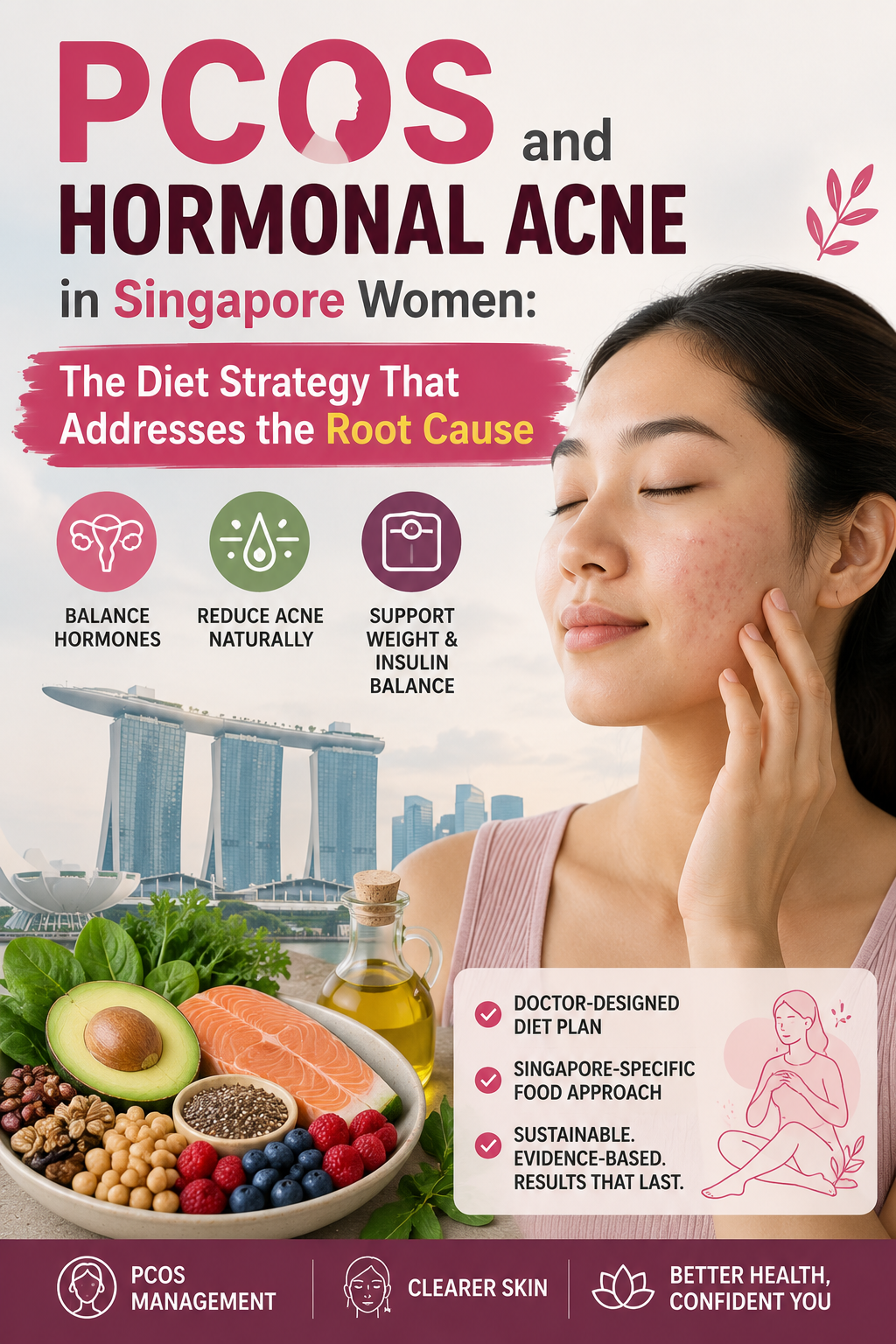
PCOS-associated acne is driven by a specific hormonal cascade, the same one that drives hair loss, hirsutism, and menstrual irregularity. Understanding it matters because it identifies exactly where dietary intervention can interrupt the cycle.
Step 1: Insulin Resistance → Hyperinsulinaemia
The majority of women with PCOS have some degree of insulin resistance. The pancreas compensates with higher insulin output; chronically elevated insulin (hyperinsulinaemia) is the upstream driver of most PCOS symptoms.
Step 2: Hyperinsulinaemia → Androgen Excess
High insulin directly stimulates ovarian theca cells to produce testosterone and other androgens. Simultaneously, it suppresses sex hormone-binding globulin (SHBG), reducing the binding and inactivation of free testosterone. The result: more free testosterone circulating in the bloodstream.
Step 3: Androgens → Sebum Overproduction → Acne
Androgen receptors in the pilosebaceous unit (the hair follicle and attached sebaceous gland) respond to testosterone and its more potent derivative DHT by increasing sebum production. Excess sebum, combined with altered skin cell turnover and inflammatory signals, creates the environment for Cutibacterium acnes proliferation and the inflammatory, cystic acne typical of hormonal breakouts.
A 2024 review published in PMC specifically examining PCOS-associated acne confirmed that the interplay of hyperandrogenism and insulin resistance is the primary pathophysiological mechanism, with first-line pharmacological therapy including anti-androgens (spironolactone) and combined oral contraceptives alongside insulin sensitisers such as metformin, directly reflecting the dual androgen-insulin driver.
👉PCOS and Hair Loss — the same DHT-insulin mechanism drives both hair thinning and hormonal acne
Recognising PCOS-Related Hormonal Acne: The Pattern Matters
Not all acne is hormonal, and not all hormonal acne is PCOS-related. Recognising the specific pattern helps both in seeking the right diagnosis and in understanding why standard skincare alone is insufficient:
- Location: Predominantly jawline, chin, and lower cheeks, where androgen receptors are most concentrated. This distribution is distinct from teenage acne, which tends to be more forehead and T-zone centred.
- Type: Deep, cystic, inflammatory lesions, the kind that are painful to touch, sit under the skin, and take weeks to resolve. Not surface whiteheads or blackheads.
- Timing: Worsens cyclically around menstruation, or is persistently present without clear resolution, unlike stress acne, which may come and go with discrete stressors.
- Associated symptoms: Often accompanied by other signs of androgen excess, increased facial or body hair (hirsutism), scalp hair thinning, or irregular periods, confirming the hormonal driver.
If this pattern fits your experience, a clinical assessment including free testosterone, SHBG, DHEA-S, fasting insulin, and a pelvic ultrasound is the appropriate next step, not simply switching face washes. In Singapore, this assessment is available through gynaecologists at KKH, NUH, or private women’s health clinics, as well as through endocrinologists and dermatologists at polyclinics and restructured hospitals.
👉Managing PCOS while eating at Singapore Hawker Centres
The Dietary Strategy: Working at the Root Cause
A systematic review of pharmacological and non-pharmacological interventions for PCOS in Indian women, published in 2024 in Pharmaceuticals and covering 30 RCTs on pharmacological and 8 on non-pharmacological interventions, confirmed that lifestyle and dietary interventions significantly improve hyperandrogenism markers and metabolic parameters in PCOS, with dietary modification addressing the insulin resistance that is the upstream driver of androgen excess.
1. Reduce the Glycaemic Load — The Highest-Impact Intervention
Because hyperinsulinaemia is the upstream driver of androgen excess, reducing insulin spikes is the most causally relevant dietary intervention for PCOS acne. Every meal that causes a large blood glucose and insulin spike- white rice eaten alone in large portions, maida roti, sweetened chai, packaged biscuits, flavoured drinks- contributes to the androgen excess driving the breakouts.
Practical changes with the highest impact for Indian women in Singapore:
- Replace white rice with a smaller portion of brown rice or cauliflower rice at one meal daily, or eat white rice last after dal and vegetables
- Replace maida roti with jowar or bajra roti, available at Mustafa Centre and NTUC FairPrice’s Indian foods section
- Eliminate sugar-sweetened drinks completely: sweetened Milo, packaged fruit juice, sugarcane juice at hawker centres, sweetened lassi
- Break the biscuit-and-chai habit, the most common daily insulin driver among Indian professional women in Singapore’s CBD offices
👉Insulin Resistance Diet: Indian Meal Plan — the foundational dietary change for all PCOS symptoms
👉The Insulin Resistance Trap in PCOS: How to Break Free Naturally
2. Protein at Every Meal — Insulin Stability and Androgen Reduction
Protein slows gastric emptying, reduces post-meal glucose and insulin spikes, and provides the amino acid substrate for SHBG synthesis (the protein that binds and inactivates free testosterone). Consistently adequate protein intake directly supports lower free testosterone through multiple mechanisms. Target 25–30g protein per main meal: dal, eggs, paneer, fish, or chicken.
3. Reduce Dairy — The PCOS Acne Specific Recommendation
This recommendation requires nuance because dairy has genuine nutritional value. However, several lines of evidence suggest that high dairy intake specifically worsens hormonal acne through two mechanisms: dairy proteins (particularly whey) stimulate IGF-1 production, which directly upregulates sebum production; and some dairy products contain hormones from pregnant cows that may act as mild androgen precursors. The Singapore clinical community has noted this specifically for PCOS acne management.
The practical approach: reduce milk intake and flavoured dairy products (sweetened lassi, flavoured yoghurt, paneer in large quantities daily) while retaining plain dahi, which has lower hormonal content due to fermentation and provides probiotic benefit. This is not dairy elimination; it is reducing the highest-IGF-1-stimulating forms specifically.
4. Omega-3 Fatty Acids — Anti-Inflammatory and Anti-Androgenic
Omega-3 fatty acids reduce the inflammatory component of PCOS-associated acne and have been found in several studies to modestly reduce androgen levels and improve menstrual regularity in PCOS. For Indian women in Singapore: sardines and mackerel (widely available at Tekka Market, Geylang Serai wet market, and NTUC FairPrice), or algae-based DHA+EPA for vegetarians (available at Guardian, Watsons, and iHerb Singapore).
5. Zinc — The Sebum Regulator
Zinc inhibits 5-alpha reductase, the enzyme converting testosterone to the more potent DHT, and reduces sebaceous gland activity. Multiple clinical studies have found zinc supplementation reduces acne severity, and zinc deficiency is common in Indian vegetarian women with PCOS. Best food sources: pumpkin seeds (a daily handful), sesame seeds (til laddoo, til chutney), rajma, eggs, and cashews. Zinc supplementation at 15–25 mg elemental zinc daily is appropriate for vegetarian women with documented insufficiency.
👉Zinc: The Important Mineral You are Not Taking Enough
6. Spearmint Tea — Anti-Androgenic Evidence
A 30-day RCT found that two cups of spearmint herbal tea daily significantly reduced free and total testosterone in women with PCOS. Free testosterone fell from 38.1 to 19.3 pg/mL (p=0.009). For women whose PCOS acne is driven by androgen excess, spearmint tea as a daily replacement for one or two cups of regular chai is a low-risk, evidence-supported adjunct. Available at Cold Storage, Ryan’s Grocery, and iHerb Singapore.
👉PCOS Diet Plan for Indian Women in Singapore — the complete dietary framework
What to Avoid: The Acne Triggers Most Common in Indian Women’s Diets in Singapore
| Food/Drink | Why It Worsens PCOS Acne | Replace With |
|---|---|---|
| Sweetened Milo, Horlicks, flavoured milk | Whey protein + added sugar → IGF-1 spike + insulin spike | Plain warm milk or green tea |
| White rice (large portions alone) | High glycaemic → insulin spike → androgen production | Smaller rice portion, eat after dal and vegetables |
| Packaged biscuits (daily) | Refined carbohydrate + sugar → insulin driver | Roasted chana, plain makhana, nuts |
| Sweetened chai (multiple cups) | Sugar + tannins → insulin spikes + iron absorption inhibition | One unsweetened or lightly sweetened chai; spearmint tea |
| Maida-based preparations (naan, parotta, puri) | Very high GI → large insulin spike | Jowar or bajra roti, whole wheat chapati |
| Sugarcane juice, fruit juices | Fructose → fructose-driven uric acid and insulin elevation | Coconut water (moderate), plain water with lime |
PCOS Nutrition · Singapore
Struggling with PCOS acne that skincare alone isn’t fixing?
I work with Indian women in Singapore to build personalised PCOS nutrition plans that address insulin resistance, androgen excess, and skin health from the inside, not just the surface.
👉 Book a FREE 20-Minute Discovery Call
Dr Akanksha Sharma · MBBS MD · Singapore & worldwide via Zoom
The Skin-Care Piece: What to Do Alongside Diet
Dietary intervention addresses the root cause; topical and medical management addresses the existing acne more immediately. For PCOS-associated hormonal acne, the dermatologically supported approach in Singapore includes:
- Topical retinoids (tretinoin): Available on prescription from polyclinic or private dermatologist; the most evidence-supported topical treatment for hormonal acne by normalising skin cell turnover
- Azelaic acid: Anti-inflammatory and anti-comedonal; available without prescription in some formulations; well-suited for Indian skin tones as it reduces post-inflammatory hyperpigmentation
- Niacinamide: Reduces sebum production and inflammation; available over-the-counter at Watsons, Guardian, and Sephora Singapore in multiple formulations
- Spironolactone (oral anti-androgen): Directly blocks androgen receptors in the pilosebaceous unit; highly effective for PCOS hormonal acne; requires prescription from a dermatologist or gynaecologist in Singapore
- Combined oral contraceptive pill with anti-androgenic progestin: Reduces androgen production and raises SHBG; available on prescription and commonly used for PCOS management in Singapore
The most effective approach combines dietary management (reducing insulin resistance and androgen production at source) with appropriate topical or medical treatment (managing existing acne on the skin), neither alone is as effective as the combination.
👉Metabolic Syndrome in South Asian Women — PCOS as part of the broader metabolic picture
👉 PCOS Diet Myths – What Actually Works (Doctor Explains)
Frequently Asked Questions
I have been diagnosed with PCOS in Singapore. Should I see a dermatologist, gynaecologist, or endocrinologist for my acne?
All three specialists may play a role depending on your full symptom picture. A gynaecologist at KKH or NUH is typically the first port of call for PCOS diagnosis and management, and can address acne in the context of the full hormonal picture. If acne is severe or the primary complaint, a dermatologist referral can provide prescription-grade topical treatments and oral anti-androgens. An endocrinologist is most relevant if insulin resistance, prediabetes, or thyroid issues are also present. Your polyclinic GP can initiate assessment and coordinate the most appropriate referral.
My acne improves when I go on holiday. Does that mean it’s stress-related?
Partly, but the dietary changes that typically accompany a holiday are equally or more important than the stress reduction. Most Indian women eat less biscuits, fewer sweetened drinks, more varied meals, and walk more on holiday. The combination of reduced glycaemic load and reduced cortisol (which itself stimulates androgen production via DHEA-S) explains the holiday skin improvement. The dietary changes are the actionable part to bring home.
Does cutting out dairy completely cure PCOS acne?
Complete dairy elimination is not necessary and not supported by evidence as a standalone cure. The evidence points to reducing high-IGF-1-stimulating dairy (milk, flavoured drinks, whey protein supplements) while retaining fermented dairy (plain dahi) as the most practical approach. The dietary changes with the strongest evidence for PCOS hormonal acne are reducing glycaemic load and insulin spikes, dairy reduction is a useful secondary measure, not the primary intervention.
The Bottom Line
PCOS-associated hormonal acne is not a skin problem, it is a hormonal and metabolic problem that expresses itself on the skin. Addressing it with skincare alone is addressing the symptom while the cause continues. The dietary strategy, reducing glycaemic load, prioritising protein at every meal, moderating high-IGF-1 dairy, adding omega-3 and zinc, and incorporating spearmint tea, directly reduces the insulin resistance and androgen excess that drive the breakouts. Combined with appropriate medical management from your Singapore dermatologist or gynaecologist, this approach addresses PCOS acne from both directions simultaneously.
Ready to Address PCOS From the Root Cause?
Clear Skin Starts With Balanced Hormones
Topical treatments manage the surface. A personalised PCOS nutrition plan addresses the insulin resistance and androgen excess driving the breakouts, so the results last beyond your skincare routine.
|
⚖️ |
Not sure where to start? Let’s talk, 20 minutes, no pressure, clear next step.
👉 Book a FREE 20-Minute PCOS Discovery Call
Dr Akanksha Sharma · MBBS MD · Preventive Medicine Physician · Singapore & worldwide via Zoom
Disclaimer: This article is for educational purposes only. PCOS and hormonal acne require clinical assessment and management by a qualified physician, gynaecologist, or dermatologist.
References:
- Polycystic Ovary Syndrome-Associated Acne: The Interplay of Hyperandrogenism, Insulin Resistance, and Therapeutic Strategies. PMC. 2024. PMC Full Text
- Pharmacological and Non-Pharmacological Interventions for PCOS in Indian Women: A Systematic Review. Pharmaceuticals. 2024. doi:10.3390/ph18050680
- Neubronner SA et al. Effect of BMI on phenotypic features of PCOS in Singapore women. BMC Women’s Health. 2021. PMC Full Text
- Grant P. Spearmint herbal tea has significant anti-androgen effects in PCOS. Phytother Res. 2010;24(2):186-188. PubMed PMID 19585478

Akanksha Sharma
Dr Akanksha Sharma (MBBS, MD) is a physician and women’s health nutrition specialist, and the founder of IYSA Nutrition. She provides evidence-based, doctor-led nutrition guidance for pregnancy, postpartum recovery, PCOS, child nutrition, and family health, helping women make calm, informed decisions about their health and their children’s well-being.