Written & reviewed by Dr Akanksha Sharma, MBBS, MD (Preventive & Community Medicine) | Founder, IYSA Nutrition, Singapore
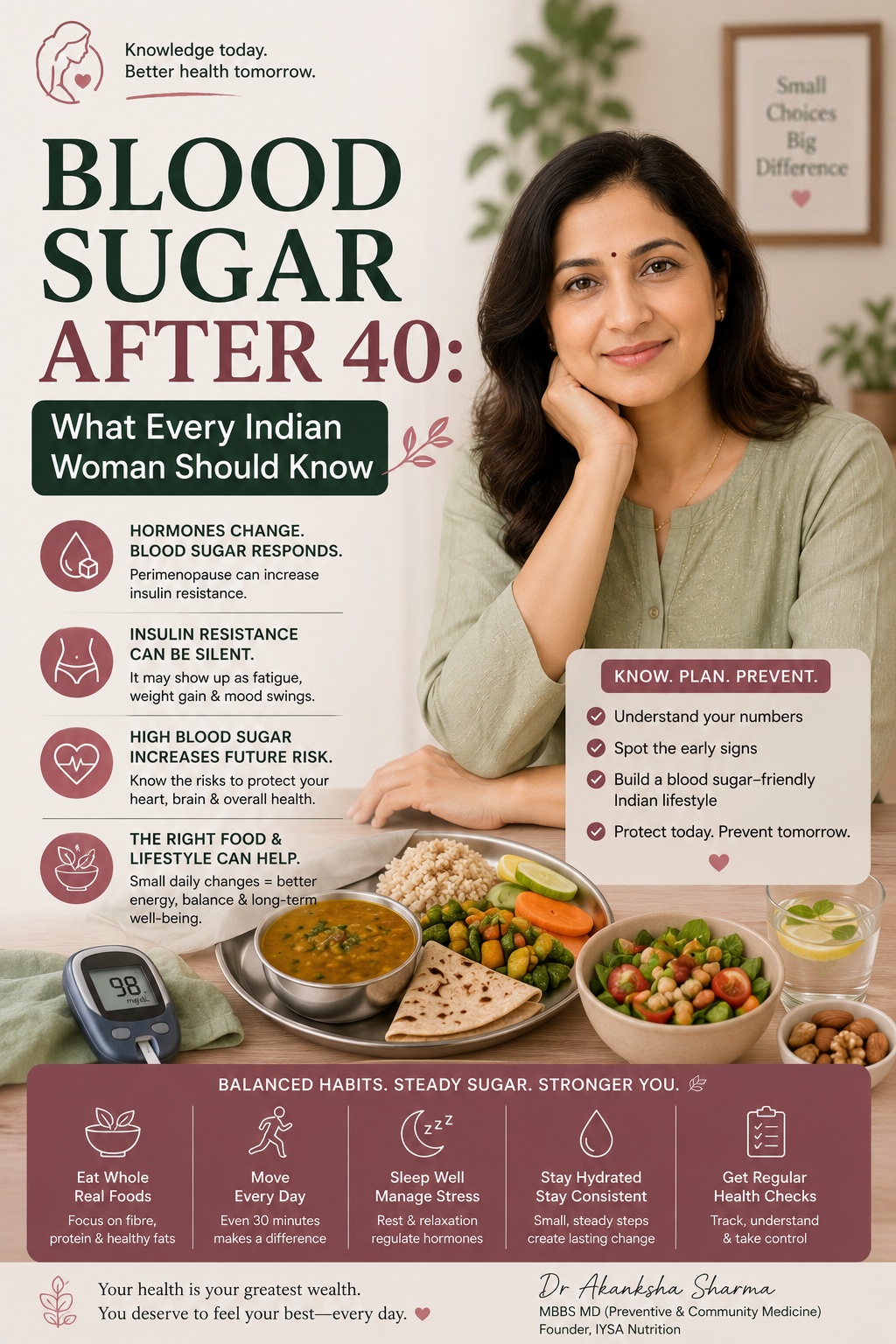
If you are an Indian woman over 40, your blood sugar deserves far more attention than you are probably giving it. Not because something is necessarily wrong right now, but because of a convergence of factors unique to this stage of life and this ethnic background that quietly but significantly shifts your metabolic risk.
India has the second-highest number of adults with diabetes in the world, approximately 101 million as of 2023, with projections rising steeply. But the statistic that concerns me most as a Preventive Medicine physician is the one that is less discussed: Indians develop type 2 diabetes approximately a decade earlier than people of European descent, often at lower BMIs, and frequently with fewer warning symptoms. By the time a formal diabetes diagnosis is made, many Indian women have been living with insulin resistance or pre-diabetes for five to ten years without knowing it.
The years between 40 and 55 are a critical window, a period when the hormonal shifts of perimenopause interact with the natural decline in insulin sensitivity that comes with ageing, and when dietary and lifestyle choices can either significantly accelerate or significantly slow that trajectory. This is the window where intervention is most impactful.
In this post, I will explain exactly what is happening to your blood suga
r after 40, why Indian women are particularly vulnerable, what the warning signs look like, and, most importantly, the specific dietary changes that make the biggest difference.
Related reading:
👉Fitness After 40: Why It Feels Different (And What To Do)
👉The Singapore Woman’s Essential Guide to Early Diabetes Detection
What Changes With Blood Sugar After 40
Declining Oestrogen and Insulin Sensitivity
Oestrogen is not just a reproductive hormone; it plays a significant and often underappreciated role in metabolic regulation. Oestrogen helps maintain insulin sensitivity in muscle and fat cells, supports healthy glucose uptake, and reduces visceral fat accumulation. As oestrogen levels begin declining in perimenopause (typically starting in the mid-40s, sometimes earlier), these protective metabolic effects diminish.
The result is a gradual shift toward insulin resistance, the same mechanism at the heart of type 2 diabetes and metabolic syndrome. Cells become less responsive to insulin’s signal, blood glucose rises slightly higher after meals, the pancreas compensates by producing more insulin, and chronically elevated insulin drives fat storage, particularly around the abdomen.
This is why many Indian women gain weight in the belly during their 40s, even without eating more or exercising less than before. The hormonal environment has changed, and the metabolic consequences follow.
South Asian Genetic Susceptibility
Indian and South Asian populations carry a disproportionately high genetic predisposition to insulin resistance and type 2 diabetes. Research consistently shows that South Asians develop metabolic dysfunction at lower BMIs than Western populations; the conventional “overweight” BMI threshold of 25 does not apply in the same way. An Indian woman with a BMI of 22–23 may already have significant visceral adiposity and insulin resistance that would not be detected without specific testing.
South Asians also have a higher proportion of body fat at any given BMI compared to people of European origin, a phenomenon sometimes called the “thin-fat Indian” phenotype. This means a normal-weight Indian woman may carry metabolically active visceral fat that drives insulin resistance, while her BMI appears healthy on paper.
The Muscle Loss Factor
After 40, both men and women begin losing muscle mass at approximately 1% per year, a process called sarcopenia. This is critically relevant to blood sugar because muscle is the primary site of glucose disposal in the body. When you eat carbohydrates, most of the resulting glucose is taken up by muscle cells for energy or storage. As muscle mass declines, this glucose disposal capacity decreases, blood sugar rises higher after meals, and insulin resistance worsens.
This is one of the strongest arguments for resistance training (strength exercises) in women over 40, building and maintaining muscle mass is one of the most effective metabolic interventions available. But nutrition must support it: adequate protein is essential for muscle maintenance, and many Indian women significantly under-eat protein.
Chronic Stress and Cortisol
Women in their 40s are disproportionately subject to chronic stress, managing careers, children, ageing parents, relationship changes, and their own health concerns simultaneously. Chronically elevated cortisol (the stress hormone) directly impairs insulin signalling, raises blood glucose, promotes visceral fat storage, disrupts sleep (which further worsens insulin sensitivity), and drives carbohydrate cravings as a neurobiological compensatory mechanism.
This is not a character flaw or a willpower problem; it is a physiological cascade. Managing stress is not a luxury for women over 40; it is metabolic medicine.
Related reading:
👉The Insulin Resistance Trap in PCOS: How to Break Free Naturally
👉Diabetes in Singapore Women: Early Signs You Shouldn’t Ignore
👉Metabolic Syndrome in South Asian Women: A Doctor’s Warning
What Are Normal Blood Sugar Levels? Understanding Your Numbers
Many women have had blood tests, but do not know what the numbers mean. Here is a clear breakdown:
| Test | Normal | Pre-Diabetes | Diabetes |
|---|---|---|---|
| Fasting blood glucose (FBG) | Below 5.6 mmol/L (100 mg/dL) | 5.6–6.9 mmol/L (100–125 mg/dL) | 7.0+ mmol/L (126+ mg/dL) |
| HbA1c (3-month average) | Below 5.7% | 5.7–6.4% | 6.5%+ |
| Post-meal glucose (2-hour) | Below 7.8 mmol/L (140 mg/dL) | 7.8–11.0 mmol/L | 11.1+ mmol/L |
| Fasting insulin | Below 10 µIU/mL (optimal: below 5) | 10–20 µIU/mL | Often above 20 µIU/mL |
Doctor’s Note: Fasting blood glucose and HbA1c are the most commonly ordered tests but they miss a significant proportion of insulin resistance. I recommend also asking for fasting insulin and HOMA-IR (a calculated index of insulin resistance). Many women with normal fasting glucose and HbA1c have elevated fasting insulin that indicates their pancreas is working overtime to maintain normal blood sugar, a warning sign most standard health screens do not detect.
👉Vitamin D Deficiency in Singapore: Why You’re Still Low Despite the Sun
Warning Signs of Blood Sugar Dysregulation in Indian Women Over 40
Blood sugar problems rarely announce themselves dramatically; they present as a collection of symptoms that are easily attributed to “ageing,” “stress,” or “hormones.” Watch for:
- Energy crashes 1–2 hours after meals — a strong indicator of reactive hypoglycaemia or significant post-meal glucose spikes and crashes
- Intense carbohydrate cravings, particularly in the afternoon — often driven by insulin dysregulation
- Difficulty losing weight despite not eating more — chronically elevated insulin is a potent fat storage hormone
- Belly fat accumulation that is disproportionate to other areas, and that feels resistant to exercise
- Waking between 2 and 4am — often caused by a cortisol spike triggered by nocturnal blood sugar dips
- Brain fog after eating, particularly after high-carbohydrate meals
- Increased thirst and frequent urination — later-stage signs
- Slow-healing cuts or skin infections
- Tingling or numbness in the hands and feet — a sign of possible early peripheral neuropathy, warrants urgent evaluation
- Acanthosis nigricans — dark, velvety patches of skin at the back of the neck, armpits, or groin; a visible marker of significant insulin resistance
If you recognise five or more of these symptoms, please ask your doctor for a full metabolic screen: fasting glucose, HbA1c, fasting insulin, lipid panel, and waist circumference measurement.
The Dietary Changes That Make the Biggest Difference
1. Restructure Your Carbohydrate Intake — Not Eliminate It
The most impactful dietary change for blood sugar management in Indian women is not eliminating carbohydrates — it is choosing them more intelligently and structuring meals to blunt their glycaemic impact.
Lower-GI carbohydrate swaps for common Indian staples:
- White rice → Parboiled rice, red rice, or brown rice (reduce portion to half a cup cooked)
- Maida roti or naan → Multigrain roti, jowar roti, bajra roti (1–2 at a meal)
- White bread → Whole grain or sourdough bread
- Potato-heavy dishes → Substitute with sweet potato, raw banana, or colocasia in smaller quantities
- Packaged biscuits and namkeen → Roasted chana, nuts, seeds, dahi
- Fruit juice → Whole fruit (the fibre matrix dramatically changes the glycaemic response)
The carbohydrate swap alone is insufficient without also addressing meal composition.
2. The Meal Sequencing Strategy — Eat in the Right Order
Emerging research on meal sequencing shows that the order in which you eat the components of a meal significantly affects the post-meal blood glucose response. Eating vegetables first, then protein and fat, then carbohydrates last reduces the post-meal glucose spike by up to 30–40% compared to eating carbohydrates first.
In practice for a typical Indian meal:
- Start with your salad or sabzi (vegetables first)
- Then eat your dal and protein component
- Then eat your roti or rice last, in a smaller quantity, because the previous foods will have blunted your appetite
This is a simple, no-cost strategy that requires no changes to what you cook, only the order in which you eat it.
3. Protein at Every Meal — Non-Negotiable
Protein significantly blunts the glycaemic response of any meal by slowing gastric emptying, stimulating the secretion of GLP-1 (a hormone that enhances insulin release and reduces appetite), and reducing the overall glycaemic load of the meal. Aim for at least 20–25 g of protein per main meal.
The most reliable way to achieve this in an Indian vegetarian context:
- A generous cup of thick dal at lunch — 8–10 g per meal
- Plus dahi as an accompaniment — additional 6–8 g
- Or paneer (80–100g) in a sabzi — 14–18 g
- Or two eggs at breakfast — 12 g; pair with one roti and a sabzi rather than two rotis alone
4. Eliminate Liquid Calories and Hidden Sugars
Liquid calories: sweet chai (2–3 cups daily with sugar), packaged fruit juices, flavoured milk, cold drinks, and sweet lassi, drive blood sugar spikes rapidly because they lack the fibre that slows absorption. For many Indian women, eliminating sugar from chai alone reduces daily sugar intake by 20–40 g. This single change can have a measurable impact on HbA1c over 3–6 months.
- Reduce chai to 1–2 cups per day; reduce sugar or cut altogether
- Replace fruit juice with whole fruit
- Replace sweet lassi with plain chaas (buttermilk with jeera and salt): probiotic, blood-sugar-friendly, and culturally familiar
- Avoid packaged “health” drinks for children and adults. Horlicks, Bournvita, and similar products contain significant added sugar
5. Prioritise Fibre — Especially Soluble Fibre
Dietary fibre, particularly soluble fibre, is one of the most powerful dietary tools for blood sugar regulation. Soluble fibre dissolves in water to form a gel in the gut that slows glucose absorption, reduces post-meal glucose spikes, feeds beneficial gut bacteria, and improves insulin sensitivity over time.
Best sources of soluble fibre in Indian cooking:
- Methi seeds (fenugreek): One of the most evidence-backed blood sugar regulators available; the soluble fibre (galactomannan) in methi significantly reduces fasting glucose and post-meal glucose spikes. Soak one teaspoon overnight in water and consume in the morning, a traditional Indian practice with strong scientific backing.
- Oats: Beta-glucan in oats is among the most studied soluble fibres for blood sugar; rolled oats (not instant) at breakfast is an excellent daily habit
- All dals and legumes: rajma, chana, moong, masoor; eat at least one cup of cooked legumes daily
- Isabgol (psyllium husk): One teaspoon in water before meals reduces post-meal glucose; commonly available in Indian households
- Vegetables: Okra (bhindi), bitter gourd (karela), bottle gourd, brinjal, all have low GI and reasonable soluble fibre content
6. Vinegar Before Meals — A Simple Evidence-Based Hack
One to two tablespoons of apple cider vinegar (diluted in a glass of water) consumed 10–15 minutes before a carbohydrate-rich meal reduces the post-meal blood glucose response by approximately 20–30% in multiple studies. The mechanism involves acetic acid inhibiting the enzymes that break down starch into glucose, slowing carbohydrate digestion. It also improves insulin sensitivity over time with consistent use.
This is not a cure, but it is a safe, inexpensive, evidence-backed addition to a blood sugar management strategy. Always dilute well to protect tooth enamel. Avoid if you have gastroparesis or take medications that slow gastric emptying.
7. Time Your Meals — Eat Earlier, Fast Longer
Time-restricted eating, consuming all meals within a 10–12 hour window, has significant metabolic benefits supported by growing evidence. For most Indian women, this means finishing dinner by 7–8 pm and not eating again until 7–8 am. This aligns food intake with the body’s natural circadian metabolic rhythms (insulin sensitivity is highest in the morning and declines through the day) and allows an extended overnight fast during which insulin levels fall and fat oxidation increases.
Avoid the common Indian urban pattern of a light lunch, snacking through the afternoon, and a large late dinner at 9–10 pm, this pattern is metabolically extremely damaging and directly worsens insulin resistance.
👉Indian Meal Plan for Insulin Resistance That Actually Works
👉Brain Fog in Perimenopause: The Nutritional Cause and Fix
Specific Indian Foods That Help Regulate Blood Sugar
- Karela (bitter gourd): Contains charantin and polypeptide-p, compounds that mimic insulin activity. One of the most extensively studied vegetables for blood sugar management. Karela juice, karela sabzi, or stuffed karela, include 2–3 times per week.
- Methi seeds: Soak overnight, consume in the morning. Studied in multiple Indian trials with consistent evidence for reducing fasting and post-meal glucose.
- Cinnamon (dalchini): Half to one teaspoon daily in oats, chai, or warm water has been shown to improve insulin sensitivity and reduce fasting glucose in insulin-resistant individuals.
- Amla (Indian gooseberry): Rich in chromium, which enhances insulin signalling; also high in vitamin C, which reduces oxidative stress associated with insulin resistance. Fresh amla, amla powder, or amla juice daily.
- Barley (jau): One of the lowest GI grains available; barley khichdi, barley roti, or barley soup are excellent additions to a blood sugar-conscious diet.
- Flaxseeds (alsi): Rich in omega-3s, lignans, and soluble fibre; one tablespoon of ground flaxseed daily in dahi, roti dough, or oats has measurable benefits for insulin sensitivity over time.
- Chaas (buttermilk): A probiotic drink that supports gut health, which emerging research is strongly linking to insulin sensitivity. Have a glass of plain chaas with jeera after lunch instead of sweet lassi or juice.
Related reading:
👉Strength Training: Your Secret to a Healthier, Longer Life
👉Understanding the Body’s Mechanism to Maintain Weight
Frequently Asked Questions
Can I prevent diabetes if it runs in my family?
Yes, family history increases your risk, but it does not determine your destiny. The landmark Diabetes Prevention Program trial showed that lifestyle intervention (modest weight loss, dietary changes, and 150 minutes of moderate exercise per week) reduced the risk of developing type 2 diabetes by 58% in high-risk individuals, more effective than metformin medication alone. Genetics loads the gun; lifestyle pulls the trigger.
Is rice the main reason Indian women get diabetes?
Rice is frequently blamed, but the picture is more nuanced. White rice has a high GI, and large portions eaten without adequate protein, fat, and fibre do drive significant blood glucose spikes. However, rice eaten in appropriate portions (half a cup cooked) as part of a balanced meal with dal, sabzi, and dahi has a much lower glycaemic impact than rice eaten alone in large quantities. The problem is usually not rice per se, it is portion size, lack of accompanying protein and fibre, and the overall dietary pattern. Reducing rice portions and pairing it well is more practical and sustainable than elimination.
What should I ask for at my next health check if I am worried about blood sugar?
Request the following from your doctor: fasting blood glucose, HbA1c, fasting insulin, HOMA-IR (calculated from fasting glucose and insulin), a full lipid panel (including triglycerides, which are often an early marker of insulin resistance), and waist circumference measurement. In Singapore, Healthier SG and MedSave-funded health screenings cover some of these. In India, these are available at any diagnostic lab without a referral.
I have been told I am “borderline” or “pre-diabetic.” What should I do?
Act now. Pre-diabetes is a reversible condition, and the window between pre-diabetes and type 2 diabetes is a critical intervention opportunity. The dietary changes in this article are an excellent starting point. Additionally, achieve a 5–7% reduction in body weight if you are overweight; begin resistance training 2–3 times per week to rebuild muscle glucose disposal capacity; prioritise 7–8 hours of sleep (sleep deprivation worsens insulin resistance acutely); and consider working with a nutrition specialist to build a personalised meal plan. Do not “wait and see”, the evidence is very clear that early intervention prevents progression.
Does intermittent fasting help with blood sugar in Indian women?
Time-restricted eating (a moderate form of intermittent fasting) has good evidence for improving insulin sensitivity, particularly in women with insulin resistance or pre-diabetes. A 12–16-hour overnight fast is generally safe and beneficial for most women over 40. However, extreme calorie restriction or prolonged fasting can worsen hormonal balance, increase cortisol, and trigger muscle loss, all of which are counterproductive metabolically. More is not better; a consistent 12-hour eating window with high dietary quality is a sustainable and effective approach for most women.
The Bottom Line
Blood sugar dysregulation in Indian women over 40 is not inevitable; it is a product of a specific convergence of hormonal changes, genetic susceptibility, and dietary patterns that can be meaningfully modified. The dietary changes that matter most are not dramatic or restrictive: eat protein at every meal, reduce your rice portion and pair it well, include methi and karela regularly, eliminate sugary drinks, eat in a 12-hour window, and prioritise soluble fibre.
These are sustainable, culturally compatible changes, not a Western diet imposed on Indian food traditions. Indian cuisine, at its best, is metabolically excellent. The problem is the modern ultra-processed, high-sugar, low-fibre version of Indian eating that has become increasingly common in urban India and among the Indian diaspora in Singapore.
Your 40s are not too late, they are, in fact, the ideal time to take your metabolic health seriously. The choices you make in the next five years will largely determine your health trajectory for the next thirty.
📩 Click here to book a FREE consultation with Dr Akanksha Sharma — personalised metabolic nutrition consultations for Indian women in Singapore and India.
OR Explore this FREE Guide:
👉 The Insulin Reset: A Women’s Guide
Disclaimer: This article is for educational purposes only. If you have diabetes or pre-diabetes, dietary changes should be made under medical supervision.
References:
- International Diabetes Federation. IDF Diabetes Atlas, 10th edition. 2021. diabetesatlas.org
- Knowler WC et al. Reduction in the incidence of type 2 diabetes with lifestyle intervention or metformin. N Engl J Med. 2002;346(6):393-403. PubMed
- Shukla AP et al. Food order has a significant impact on postprandial glucose and insulin levels. Diabetes Care. 2015;38(7):e98-99. PubMed
- Johnston CS et al. Vinegar improves insulin sensitivity. Diabetes Care. 2004;27(1):281-282. PubMed
- ICMR-NIN Expert Group. Recommended Dietary Allowances for Indians. 2020. nin.res.in

Akanksha Sharma
Dr Akanksha Sharma (MBBS, MD) is a physician and women’s health nutrition specialist, and the founder of IYSA Nutrition. She provides evidence-based, doctor-led nutrition guidance for pregnancy, postpartum recovery, PCOS, child nutrition, and family health, helping women make calm, informed decisions about their health and their children’s well-being.