Written & reviewed by Dr Akanksha Sharma, MBBS, MD (Preventive & Community Medicine) | Founder, IYSA Nutrition, Singapore
Metabolic syndrome is one of the most common and most consequential conditions affecting Indian and South Asian women today, and it is being systematically underdiagnosed because the diagnostic criteria most widely used were developed for Western populations and do not adequately capture the risk in South Asian bodies.
As a Preventive Medicine physician, this is the condition I worry about most for my Indian female patients, because it silently and simultaneously increases the risk of type 2 diabetes, cardiovascular disease, non-alcoholic fatty liver disease, PCOS, and certain cancers. It affects Indian women at younger ages, at lower body weights, and with less warning than it affects women of European ancestry. And it is largely preventable and reversible, but only if it is identified and addressed before the downstream diseases develop.
This post is my clinical warning to Indian and South Asian women in Singapore and India: understand what metabolic syndrome is, know whether you have it, and take it seriously enough to act now, not when your blood pressure requires medication or your blood sugar crosses the diabetes threshold.
Related reading:
👉The Insulin Reset: A Women’s Guide
👉Blood Sugar After 40: What Every Indian Woman Should Know
👉Cervical Cancer Screening in Singapore: What Every Indian Woman Should Know
👉Ozempic and GLP-1 in Singapore: What to Eat When You’re on Weight Loss Injections
What Is Metabolic Syndrome?
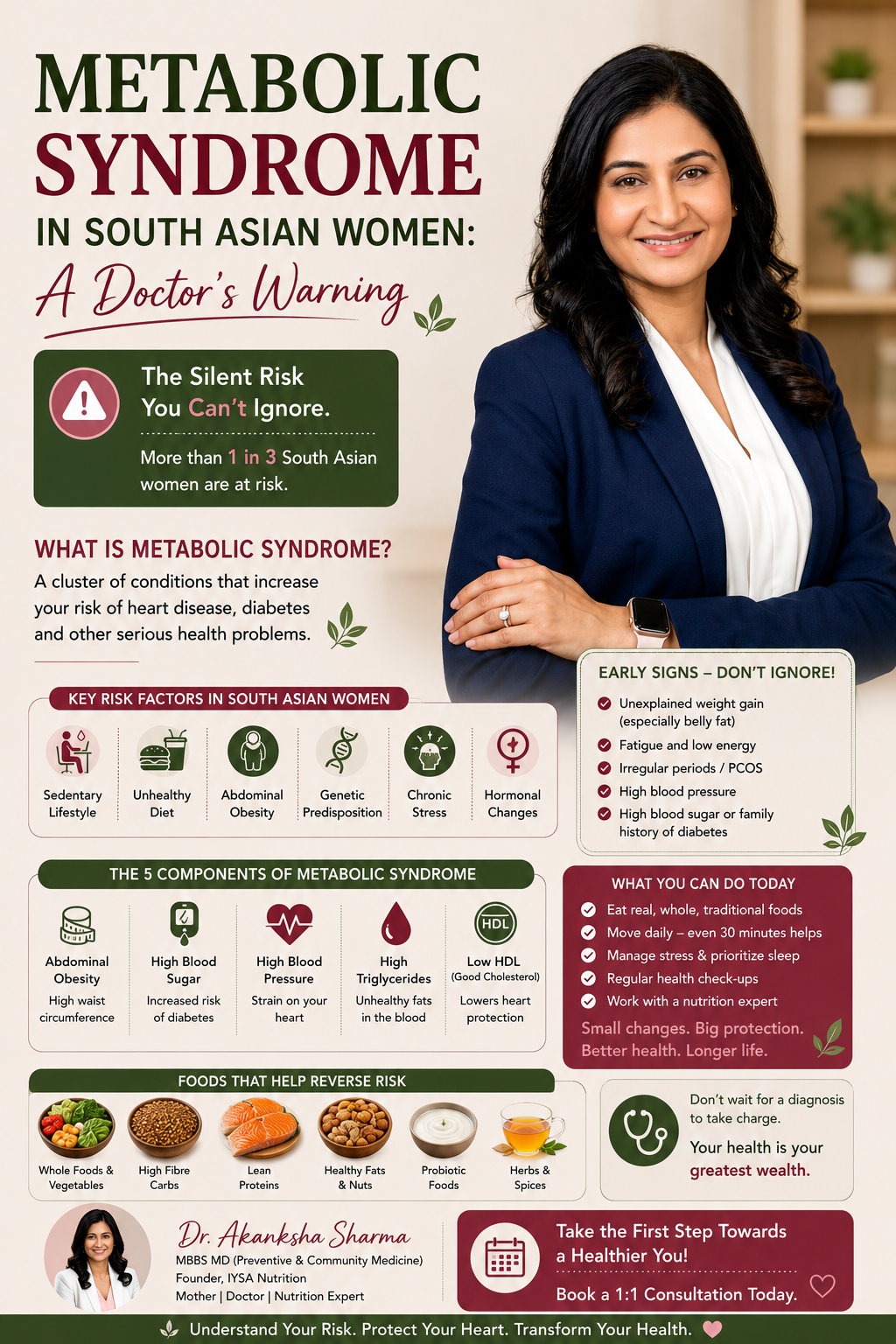
Metabolic syndrome is not a single disease but a cluster of five interrelated metabolic abnormalities that together dramatically amplify cardiovascular and diabetes risk, beyond the sum of their individual contributions. The presence of three or more of the following five criteria constitutes metabolic syndrome:
| Component | Standard Criteria | South Asian-Specific Criteria |
|---|---|---|
| Waist circumference | Above 88 cm (women, WHO) | Above 80 cm (women, IDF South Asian) |
| Triglycerides | ≥1.7 mmol/L (150 mg/dL) | Same |
| HDL cholesterol | <1.3 mmol/L (50 mg/dL) | Same |
| Blood pressure | ≥130/85 mmHg or on treatment | Same |
| Fasting blood glucose | ≥5.6 mmol/L (100 mg/dL) or on treatment | Same |
The critical difference for South Asian women is the waist circumference threshold: 80 cm rather than 88 cm. This lower cutoff reflects the consistent finding that South Asian women accumulate metabolically dangerous visceral fat at lower absolute waist measurements than Western women, and therefore reach equivalent cardiovascular and diabetes risk at what Western guidelines would classify as “normal” waist size.
An Indian woman with a waist circumference of 84 cm, which is “normal” by the WHO standard guideline, already meets the South Asian metabolic syndrome criterion for central obesity. If she also has elevated triglycerides and low HDL (which she likely does if she has abdominal obesity), she already has three components of metabolic syndrome and the associated risks, despite not meeting the criteria that her GP may be using.
Doctor’s Note: In my clinical practice, I use the International Diabetes Federation (IDF) South Asian-specific waist circumference criterion of 80 cm for women. I urge every Indian woman to measure her own waist circumference at the level of the navel, in the morning before eating. If it is above 80 cm, metabolic risk assessment should be a priority regardless of BMI or visible weight.
Related reading:
👉The Insulin Resistance Trap in PCOS: How to Break Free Naturally
👉Diabetes in Singapore Women: Early Signs You Shouldn’t Ignore
👉Hypertension in Singapore Indian Women: Why It’s Rising and the Diet That Actually Fixes It
Why South Asian Women Are Specifically Vulnerable
The Thin-Fat Phenotype
The most important concept for understanding metabolic syndrome in South Asian women is the “thin-fat Indian” phenotype, a term coined by researchers at KEM Hospital in Pune to describe the pattern in which South Asian individuals have higher body fat percentages, particularly visceral fat, at lower BMIs compared to Western populations.
A South Asian woman with a BMI of 23 kg/m² may have a body fat percentage and visceral adipose tissue volume equivalent to a Western woman with a BMI of 28 kg/m², meaning the metabolic risk associated with “overweight” in a Western population is already present at “normal weight” in the South Asian population. Standard BMI-based screening tools miss this entirely.
The mechanism involves genetic differences in adipose tissue distribution, fat cell size and lipid storage capacity, and the proportion of fat stored in metabolically active visceral depots (around organs) versus subcutaneous depots (under the skin). Visceral fat is metabolically active, it produces inflammatory cytokines, free fatty acids, and adipokines that drive insulin resistance, dyslipidaemia, and hypertension directly.
Genetic Predisposition to Insulin Resistance
South Asian populations carry several genetic variants that increase susceptibility to insulin resistance at lower fat mass thresholds. These include variants in PPARG, TCF7L2, and other genes involved in insulin signalling and glucose metabolism. This is not a counsel of despair, genetic predisposition is modifiable by lifestyle, but it means the vigilance required is greater than for lower-risk populations.
Dietary Transition and Urbanisation
The rapid dietary transition in Indian urban populations over the past two to three decades, from traditional whole-food diets (whole grains, legumes, vegetables, fermented foods, limited refined sugar) to modern diets heavy in refined carbohydrates, added sugar, refined oils, ultra-processed snacks, and large portions of white rice, has created a population-level metabolic health crisis. The traditional Indian diet was metabolically protective. The modern urban Indian diet is metabolically damaging at a population level, and the consequences are measurable in the epidemic rates of insulin resistance, type 2 diabetes, hypertension, and cardiovascular disease now seen in Indian urban populations.
Sedentary Urbanisation
Urban Indian and Singapore Indian women are among the most sedentary populations in Asia, driven by desk-based work, long commutes, domestic responsibilities that leave little time or energy for structured exercise, and cultural norms that historically did not prioritise vigorous physical activity for women. Physical inactivity compounds genetic predisposition and dietary risk significantly.
Related reading:
👉Fitness After 40: Why It Feels Different (And What To Do)
👉The Singapore Woman’s Essential Guide to Early Diabetes Detection
👉Singapore’s Healthier SG Program: How Women Can Use It to Prevent Disease
Free Metabolic Health Audit
Your Numbers May Look “Normal”, But Are They Optimal for a South Asian Woman?
Fasting insulin, HOMA-IR, waist circumference, and functional thyroid markers are almost never included in a standard health check — yet they are the earliest signals of metabolic syndrome in Indian women. In a 20-minute call, I can tell you exactly what to test, what the results mean for your risk profile, and where to start.
👉 Book Your FREE Metabolic Health Audit Call
Dr Akanksha Sharma · MBBS MD (Preventive Medicine) · Singapore & worldwide via Zoom
Diagnosing Metabolic Syndrome: What to Test and What to Ask For
Many Indian women have metabolic syndrome and do not know it, because standard health checks test fasting glucose and lipids, but do not systematically assess the full metabolic syndrome cluster. Request the following at your annual health check:
- Waist circumference: Measured at the level of the navel; above 80 cm in South Asian women = elevated risk
- Fasting lipid panel: Including triglycerides (target below 1.7 mmol/L), HDL cholesterol (target above 1.3 mmol/L), LDL cholesterol, and total cholesterol
- Fasting blood glucose: Target below 5.6 mmol/L
- HbA1c: Three-month average glucose — target below 5.7%
- Fasting insulin and HOMA-IR: Not in standard panels, but the most sensitive early marker; ask specifically
- Blood pressure: Both values; target below 130/85 mmHg
- Liver ultrasound or FIB-4 score: If fatty liver is suspected, non-alcoholic fatty liver disease is the hepatic manifestation of metabolic syndrome
- Uric acid: Elevated uric acid is strongly associated with metabolic syndrome and is often forgotten in standard panels
In Singapore, Healthier SG screenings through polyclinics cover fasting glucose, lipids, and blood pressure, and request waist circumference measurement and fasting insulin alongside these. In India, the equivalent package is available at most private diagnostic laboratories and urban health centres.
👉 Struggling with weight or energy despite “doing everything right”?
A structured, hormone-aware approach can make the difference. Click here to book a FREE 20-minute consultation call.
👉Sodium and Salt in Singapore: What MOH’s Nutri-Grade 2027 Extension Means for Your Indian Diet
The Comprehensive Dietary Approach to Metabolic Syndrome
The power of the dietary approach to metabolic syndrome is that it addresses all five components simultaneously, through overlapping mechanisms. You do not need five separate dietary plans for five separate conditions. One coherent dietary framework addresses the whole cluster.
Component 1: Central Obesity — Reduce Visceral Fat
Visceral fat reduction requires a caloric deficit combined with strategies that specifically target visceral, rather than subcutaneous fat. The strategies most evidence-supported for visceral fat reduction in South Asian women:
- Time-restricted eating (12-hour window): Finishing dinner by 7:30 pm and not eating until 7:30 am creates an extended overnight fast that specifically promotes visceral fat oxidation. This is the most evidence-supported dietary timing strategy for visceral adiposity.
- High protein intake: Protein has the highest thermic effect of food and specifically preserves muscle mass during caloric deficit, directing fat loss preferentially toward adipose tissue, including visceral adipose.
- Reduce refined carbohydrates and sugar: The primary driver of visceral fat accumulation is chronic hyperinsulinaemia, driven by refined carbohydrates and sugar. Reducing these is the most direct dietary intervention for visceral fat.
- Resistance training: The most effective intervention for visceral fat reduction in women, more effective than cardio alone. Building muscle increases insulin-mediated glucose disposal, directly reducing the hyperinsulinaemia that drives visceral fat storage.
Component 2: Elevated Triglycerides — The Sugar and Refined Carbohydrate Connection
Elevated fasting triglycerides are driven primarily by two dietary factors: refined carbohydrate and sugar intake (which the liver converts to triglycerides via de novo lipogenesis) and alcohol consumption. The most direct dietary interventions:
- Eliminate added sugar and refined carbohydrates from the diet, this single change produces the most rapid and dramatic reduction in fasting triglycerides of any dietary intervention
- Eliminate or minimise alcohol: alcohol is directly converted to triglycerides in the liver
- Increase omega-3 fatty acids (DHA and EPA from fatty fish or algae supplement): omega-3s specifically reduce hepatic triglyceride production and are one of the most evidence-backed dietary interventions for hypertriglyceridaemia
- Replace refined seed oils with mustard oil, olive oil, and ghee: reducing the pro-inflammatory omega-6 load that drives hepatic lipid dysregulation
Component 3: Low HDL — The Exercise and Fat Quality Component
HDL (the “good” cholesterol) is the least responsive to dietary change and the most responsive to exercise. The primary dietary factors that raise HDL:
- Monounsaturated fats (olive oil, avocado, almonds): consistently associated with HDL raising in trials
- Moderate healthy fat intake overall: very low-fat diets paradoxically lower HDL
- Omega-3 fatty acids have modest HDL-raising effects alongside their triglyceride-lowering benefit
- Reduction of trans fats and refined carbohydrates: both lower HDL
- Regular aerobic exercise: 150 minutes per week of moderate-intensity exercise is the most effective HDL-raising intervention available
Component 4: Elevated Blood Pressure — The DASH-Compatible Indian Approach
Hypertension in the context of metabolic syndrome is driven by insulin resistance (which causes sodium retention), visceral fat (which activates the renin-angiotensin-aldosterone system), and low-grade inflammation. Addressing the underlying insulin resistance and inflammation through the dietary pattern in this guide addresses blood pressure through its root causes. Additionally:
- Reduce sodium: Aim for below 2g of sodium per day (approximately one teaspoon of salt). Key sources of excess sodium in the Indian diet: pickles, papads, salted namkeen, processed cheese, packaged soups and noodles, and generous salt in cooking.
- Increase potassium: Potassium counteracts sodium’s blood pressure-raising effect. Best Indian sources: coconut water, banana, rajma, chana, dark leafy greens.
- Increase magnesium: Magnesium relaxes arterial smooth muscle, reducing peripheral vascular resistance. Bajra, pumpkin seeds, almonds.
- Beetroot (chukandar): Rich in dietary nitrates, which are converted to nitric oxide in the body, a vasodilator that directly reduces blood pressure. Regular inclusion in salads, raita, or juice (one small glass, not large quantities due to sugar content) has evidence for modest blood pressure reduction.
Component 5: Elevated Fasting Glucose — The Insulin Resistance Intervention
Read my post on the insulin resistance dietary protocol to know about this in detail. The key additions for the metabolic syndrome context:
- Meal sequencing (vegetables → protein → carbohydrates): 30–37% reduction in post-meal glucose spike
- Soluble fibre at every meal (isabgol, methi, okra, dal)
- Low-GI carbohydrate choices (jowar, bajra, barley over white rice)
- Time-restricted eating (12-hour window)
👉Is Intermittent Fasting Right for Singaporean Women? A Doctor’s View
👉The Truth About Intermittent Fasting for Women Over 35
👉Hypothyroidism and Weight Gain: Why Indian Women in Singapore Struggle More
The Anti-Metabolic-Syndrome Indian Dietary Pattern: Summary
The coherent dietary pattern that addresses all five components of metabolic syndrome simultaneously for South Asian women:
- Protein first: 1.2–1.5 g per kg body weight daily; protein at every meal; especially important at breakfast
- Dal and legumes: Every main meal; the single most metabolically protective food category in Indian cuisine
- Low-GI whole grains: Jowar roti, bajra roti, barley, oats, replacing white rice in large quantities and maida preparations
- 5+ servings of non-starchy vegetables: Especially cruciferous, dark leafy, bitter gourd, okra
- Healthy fats: Mustard oil, ghee in moderation, olive oil for dressings, nuts daily — avoiding refined seed oils and vanaspati
- Omega-3s: Fatty fish 2–3 times per week or algae supplement for vegetarians
- Fermented foods daily: Dahi, idli, dosa, chaas; gut microbiome support
- Targeted Indian metabolic foods: Methi seeds (fasting glucose), karela (insulin activity), amla (antioxidant, chromium), cinnamon (insulin sensitivity), turmeric+black pepper (anti-inflammatory)
- Zero refined sugar: No packaged sweets, no sugary drinks, no added sugar in chai; jaggery in very small amounts only
- Zero alcohol: Alcohol directly worsens all five components of metabolic syndrome
- 12-hour eating window: Dinner by 7:30 pm; breakfast after 7:30 am
- 150 minutes of exercise per week: Including resistance training 2–3 times per week
👉Indian Meal Plan for Insulin Resistance That Actually Works
👉High Uric Acid Diet in Singapore: Indian Foods to Avoid and What Actually Helps
Frequently Asked Questions
I am of normal weight, but my waist is 83 cm. Do I have metabolic syndrome?
Your waist circumference of 83 cm meets one of the five criteria for metabolic syndrome in South Asian women (above 80 cm). Whether you have metabolic syndrome depends on whether you have two or more of the other four criteria: elevated triglycerides, low HDL, elevated blood pressure, and elevated fasting glucose. Get these tested. If two or more are also present, you meet the full metabolic syndrome definition and metabolic risk reduction should be a priority, regardless of your body weight and BMI.
My doctor says my blood tests are “normal.” Should I still be concerned?
It depends on which tests were done and what “normal” means in context. If your fasting insulin was not tested, your early insulin resistance will be invisible. If the waist circumference criterion used was 88 cm rather than 80 cm, your central obesity risk will be missed. If your triglycerides are 1.5 mmol/L, below the 1.7 threshold but trending upward, they will be reported as normal, while the trajectory is concerning. Request the specific tests listed above, and ask for your actual numbers rather than just “normal or not.” Preventive medicine is about trajectories, not just thresholds.
Can metabolic syndrome be fully reversed?
Yes, particularly in the early stages before type 2 diabetes is established. Multiple clinical trials have demonstrated that lifestyle intervention (dietary change and increased physical activity) can normalise all five components of metabolic syndrome in a significant proportion of participants. The Diabetes Prevention Program is the most cited example, 58% reduction in diabetes progression with lifestyle intervention. The earlier metabolic syndrome is identified and addressed, the more completely it can be reversed. In women who have progressed to frank type 2 diabetes or established cardiovascular disease, partial reversal remains possible, but complete normalisation is less consistent.
My mother and grandmother both had diabetes. Is it inevitable for me?
No. Family history increases your risk substantially, but does not determine your destiny. The DPP study included high-risk individuals, many with family histories of diabetes, and still showed 58% risk reduction with lifestyle intervention. Genetics loads the gun; lifestyle pulls the trigger. Knowing your family history is valuable precisely because it tells you that preventive action is more urgent for you than for lower-risk individuals. The dietary and lifestyle changes in this guide are your most powerful available tools against a genetic predisposition.
What is the single most impactful dietary change I can make for metabolic syndrome?
Eliminating all added sugar and refined carbohydrates, sugary drinks, packaged sweets, biscuits, maida-based preparations, and large portions of white rice in isolation produces the most rapid and broad-spectrum metabolic improvement of any single dietary change. It directly reduces fasting and post-meal glucose, lowers triglycerides (via reduced hepatic de novo lipogenesis), reduces visceral fat accumulation (via reduced hyperinsulinaemia), and reduces blood pressure (via reduced insulin-driven sodium retention). It is the most mechanistically comprehensive single dietary intervention for the metabolic syndrome cluster.
Take Action Now — Not When It’s Harder to Reverse
The Window for Prevention Is Open. Let’s Use It.
If what you’ve read in this post has raised flags — your waist, your triglycerides, your energy, your family history — the right next step
is a personalised metabolic assessment, not a generic diet plan.
Choose what fits where you are right now:
Not ready for a programme yet? Start here, it’s free:
The Bottom Line
Metabolic syndrome in South Asian women is not a distant risk or a condition that only affects older, overweight women. It is a present-tense reality for a significant proportion of Indian women in their 30s and 40s, many of whom have never been told their waist measurement exceeds South Asian risk thresholds, or that their combination of mildly elevated triglycerides, low HDL, and slightly elevated fasting glucose constitutes a clinical syndrome with serious long-term consequences.
My clinical warning is straightforward: measure your waist. Test your full metabolic panel. Know your numbers. And if three or more criteria are met, act now, with the comprehensive dietary and lifestyle approach described in this post, not when your blood sugar crosses the diabetes threshold or your blood pressure requires daily medication.
Disclaimer: This article is for educational purposes only. Metabolic syndrome requires medical assessment and management. Please consult your physician for personalised evaluation and treatment.
References:
- Alberti KG et al. Harmonizing the metabolic syndrome: a joint interim statement. Circulation. 2009;120(16):1640-1645. PubMed
- Yajnik CS, Yudkin JS. The Y-Y paradox. Lancet. 2004;363(9403):163. PubMed
- Misra A, Khurana L. Obesity and the metabolic syndrome in developing countries. J Clin Endocrinol Metab. 2008;93(11 Suppl 1):S9-30. PubMed
- Knowler WC et al. Reduction in incidence of type 2 diabetes with lifestyle intervention. N Engl J Med. 2002;346(6):393-403. PubMed
- IDF. The IDF consensus worldwide definition of the metabolic syndrome. 2006. idf.org
- ICMR-NIN Expert Group. Recommended Dietary Allowances for Indians. 2020. nin.res.in

Akanksha Sharma
Dr Akanksha Sharma (MBBS, MD) is a physician and women’s health nutrition specialist, and the founder of IYSA Nutrition. She provides evidence-based, doctor-led nutrition guidance for pregnancy, postpartum recovery, PCOS, child nutrition, and family health, helping women make calm, informed decisions about their health and their children’s well-being.