
👉Hypothyroidism and Weight Gain — overlapping with perimenopause; always test thyroid first
👉Metabolic Syndrome in South Asian Women — perimenopause accelerates metabolic risk
👉Sleep and Nutrition in Singapore: Why You Can’t Sleep & How to Fix It
What Is Perimenopause — And When Does It Start for Indian Women?
Perimenopause is the hormonal transition period before menopause, defined clinically as the point of the final menstrual period (FMP). It is characterised by fluctuating and declining oestrogen levels, irregular cycles, and the beginning of the physiological changes that accompany loss of ovarian function. Perimenopause typically lasts four to eight years and ends 12 months after the final period.
For Indian women, this transition begins significantly earlier than their Western counterparts. A meta-analysis of Indian menopause data estimated the mean age at menopause for Indian women as 46.64 years (95% CI: 44.83–48.44), compared to the global average of approximately 51 years. The Indian Menopause Society’s pan-India survey of 23 medical centres confirmed the mean menopausal age of Indian women as 46.2 years.
If Indian women reach menopause at approximately 46–47, perimenopause, which begins 4–8 years earlier, starts in the late 30s to early 40s for many Indian women. A woman who begins experiencing perimenopausal symptoms at 38 or 40 in Singapore is not unusual; she is experiencing an Indian-specific hormonal timeline that most general healthcare providers do not adequately account for.
The Singapore-specific data from the nation-wide Singapore study published in Maturitas found the mean age of natural menopause in Singapore women to be 49.0 years — with muscle and joint ache as the most commonly reported symptom (52.6%), reflecting the Asian pattern of musculoskeletal symptoms predominating over vasomotor symptoms.
👉Singapore’s Healthier SG Program: How Women Can Use It to Prevent Disease
References:
- Prasad JB et al. Age at menopause in India: A systematic review. J Mid-Life Health. 2021. ScienceDirect Full Text [Mean age at menopause for Indian women: 46.64 years]
- Chim H et al. The age of menopause and the menopause transition in a multiracial population: a nationwide Singapore study. Maturitas. 2002. ScienceDirect [Mean age 49.0 years in Singapore; muscle and joint ache most common symptom at 52.6%]
- Erdélyi A et al. The Importance of Nutrition in Menopause and Perimenopause — A Review. Nutrients. 2023;16(1):27. PubMed PMID 38201856
The Hormonal Changes of Perimenopause: What Is Actually Happening
Perimenopause is not a simple linear decline in oestrogen. It is a chaotic, fluctuating phase where oestrogen levels swing dramatically — sometimes higher than premenopausal norms before eventually declining. This hormonal turbulence, rather than a simple deficiency, accounts for the seemingly inconsistent symptom pattern many women experience: symptoms that come and go, weeks that feel normal followed by weeks of complete disruption.
The key hormonal changes and their nutritional consequences:
- Declining and fluctuating oestrogen: Oestrogen directly influences insulin sensitivity, fat distribution (from subcutaneous to visceral), bone density, collagen production, and serotonin synthesis. As oestrogen declines, insulin resistance increases, visceral fat accumulates, bone resorption accelerates, and mood becomes less stable — all through oestrogen-mediated pathways.
- Progesterone decline (often precedes oestrogen decline): Progesterone is the first hormone to meaningfully decline in perimenopause. Low progesterone relative to oestrogen — oestrogen dominance — drives bloating, sleep disruption, breast tenderness, heavy periods, and anxiety. Many perimenopausal symptoms blamed on “too little oestrogen” are actually driven by too little progesterone relative to oestrogen.
- Rising FSH: As ovarian reserve declines, the pituitary releases increasing amounts of follicle-stimulating hormone (FSH) to stimulate the ovaries. Rising FSH is the standard biomarker of perimenopausal transition.
- Cortisol dysregulation: The adrenal glands become increasingly important for sex hormone production in perimenopause — they produce DHEA, which can be converted to oestrogen and testosterone. Chronic stress and high cortisol in perimenopause directly impair this adrenal contribution and worsen the hormonal picture.
Why You’re Gaining Weight Despite Eating Less: The Perimenopausal Metabolic Shift
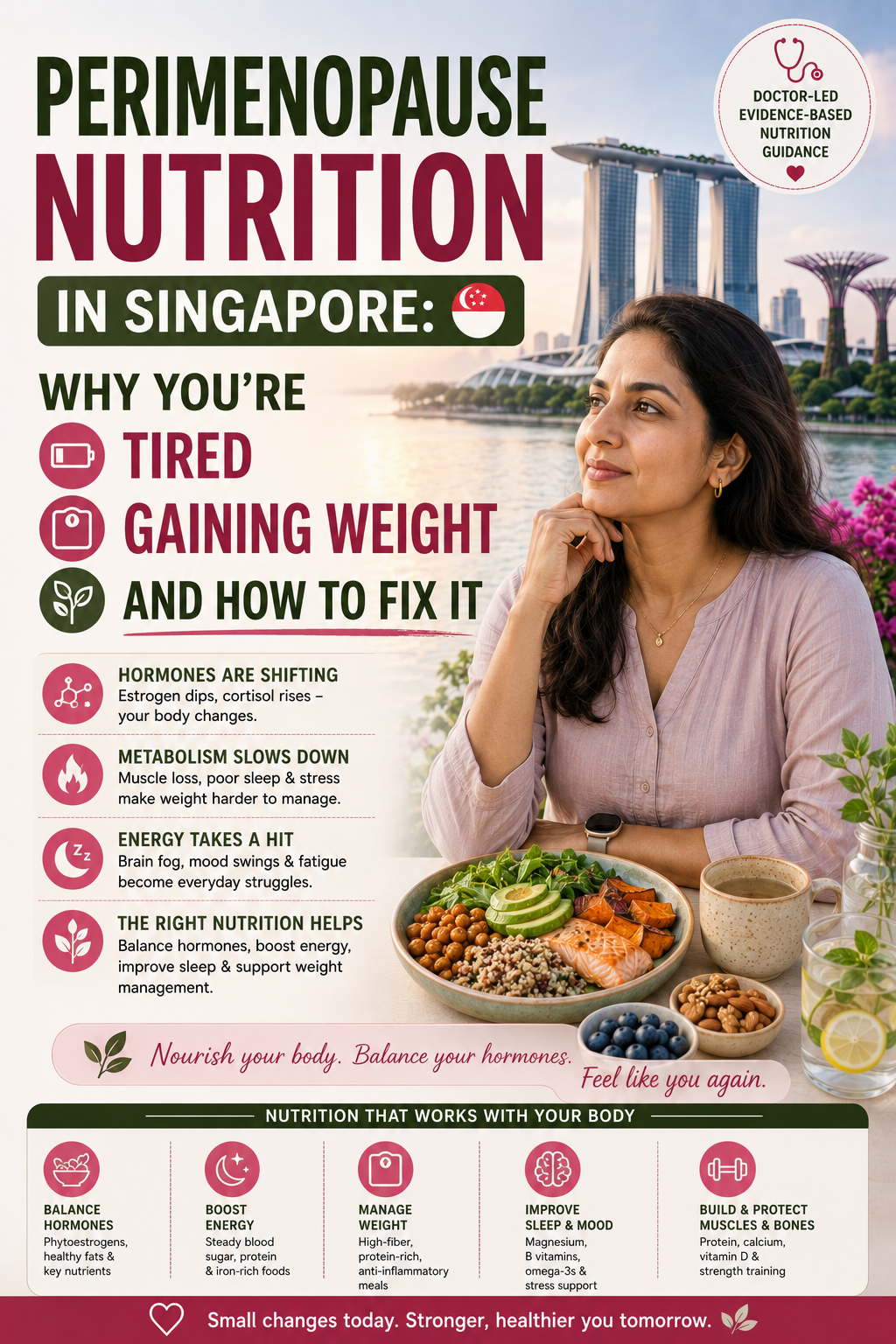
This is the most common and most distressing complaint I hear from Indian women in Singapore in their 40s: “I am eating less than I ever have. I am exercising. And I am still gaining weight — particularly around my middle.” This is not willpower failure. It is a documented, physiological metabolic shift driven by declining oestrogen.
A comprehensive 2025 Frontiers in Nutrition mini-review synthesising evidence from 42 high-quality studies (18 systematic reviews/meta-analyses and 24 RCTs) confirmed that menopause and perimenopause are associated with increased prevalence of obesity, metabolic syndrome, insulin resistance, and adverse metabolic reprogramming — driven by oestrogen depletion’s effects on adipose tissue distribution, insulin signalling, and energy homeostasis.
The specific mechanisms:
- Declining oestrogen directly increases insulin resistance — meaning the same diet that maintained weight at 35 produces weight gain at 42 because cells are less responsive to insulin
- Fat redistribution from subcutaneous (hips and thighs) to visceral (abdominal) locations occurs independently of total body weight — women gain visceral fat without necessarily gaining much total weight, making standard BMI measurements misleading
- Resting metabolic rate declines due to lean mass loss and reduced thyroid sensitivity
- Leptin resistance develops — the satiety hormone becomes less effective at signalling fullness, increasing hunger despite adequate caloric intake
👉 Perimenopause & Hormone Support Guide
The Perimenopausal Nutrition Strategy: What the Evidence Supports
1. Protein — The Single Most Important Macronutrient in Perimenopause
Declining oestrogen reduces muscle protein synthesis directly — muscle mass and strength decline faster in perimenopause than in earlier adulthood. Muscle is both the primary site of insulin-mediated glucose disposal and the largest contributor to resting metabolic rate. Muscle loss therefore accelerates both insulin resistance and metabolic rate decline simultaneously.
The nutritional response is unambiguous: increase protein intake significantly above premenopausal requirements. Target 1.2–1.5g per kg of body weight daily — for a 60 kg Indian woman, this is 72–90g daily. This is substantially higher than average Indian dietary protein intake and requires deliberate planning across every meal.
Best Indian protein sources for perimenopause in Singapore:
- Eggs — the most protein-efficient perimenopause food: Complete protein, choline for brain health (increasingly relevant as cognitive symptoms emerge in perimenopause), B12 for energy and neurological function, Vitamin D. Two eggs at breakfast is one of the highest-return nutritional habits in perimenopause.
- Masoor dal (red lentils): 9g protein per 100g cooked, highest iron content of common dals, fastest cooking — the daily perimenopausal dal staple
- Plain dahi: 10–12g protein per 150g serving, plus probiotic benefit for the gut microbiome which shifts significantly during hormonal transitions
- Paneer: 18g protein per 100g, plus calcium for bone protection — critical given accelerating bone loss in perimenopause
- Fish — particularly salmon and sardines: Complete protein plus omega-3 DHA, which directly reduces the neuroinflammation associated with brain fog and mood symptoms
2. Phytoestrogens — The Dietary Oestrogen Modulators
Phytoestrogens are plant compounds that bind weakly to oestrogen receptors, producing mild oestrogenic effects that can modulate the impact of declining endogenous oestrogen. The most clinically relevant phytoestrogens for perimenopausal symptoms are isoflavones — found in soy — and lignans — found in flaxseed.
A systematic review and meta-analysis published in Menopause (Taku et al., 2022) found that extracted or synthesised soy isoflavones reduced menopausal hot flash frequency and severity significantly. The benefit was most pronounced in women with higher circulating equol — a metabolite of soy daidzein whose production depends on gut microbiome composition and explains individual variation in soy responsiveness.
For Indian women in Singapore: tofu and edamame are the most practical soy sources (available at all Singapore supermarkets). Ground flaxseed (one tablespoon daily in porridge, smoothie, or dahi) provides lignan phytoestrogens alongside omega-3 ALA and soluble fibre. Besan (chickpea flour) and dal also contain modest amounts of isoflavone-related compounds.
3. Calcium and Vitamin D — Protecting Bone Through the Transition
Bone loss accelerates in perimenopause — particularly in the 2–3 years surrounding the final menstrual period, when the rate of bone mineral density loss can reach 2–3% per year. For Indian women who already have lower peak bone mass than Western women and near-universal Vitamin D deficiency, this acceleration occurs from a lower baseline, compounding lifetime fracture risk.
The nutritional priorities are unambiguous: ragi daily (344mg calcium per 100g dry — the single richest Indian non-dairy calcium source), dahi and milk for calcium plus protein, sesame seeds (til) for calcium, moringa, and corrected Vitamin D (above 75 nmol/L confirmed by blood test). See our dedicated bone health guide (Day 59 of this series) for the complete protocol.
👉Bone Health for Indian Women — bone loss accelerates in perimenopause; start the protocol now
4. Magnesium — The Sleep and Stress Mineral in Perimenopause
Magnesium is a cofactor for over 300 enzymatic reactions including the HPA axis stress response and melatonin synthesis. In perimenopause, when sleep disruption and anxiety are among the most common and most debilitating symptoms, magnesium deficiency is both highly prevalent and highly treatable. Several studies have found magnesium supplementation improves sleep quality and reduces anxiety in perimenopausal women.
Magnesium glycinate at 300–400mg before bed is the most practical and best-tolerated supplemental form. Available at Guardian and Watsons Singapore. Food sources: bajra roti, pumpkin seeds, almonds, and dark leafy greens — all accessible at Indian grocery stores in Little India and NTUC FairPrice.
5. Omega-3 Fatty Acids — Brain, Mood and Inflammation
Oestrogen is neuroprotective — its decline in perimenopause removes a key anti-inflammatory and neurotrophic influence in the brain, contributing to brain fog, low mood, and memory complaints. DHA, the omega-3 fatty acid that constitutes the primary structural fat of neuronal membranes, partially compensates for reduced oestrogen neuroprotection through its anti-inflammatory and membrane-stabilising effects.
A systematic review found that omega-3 supplementation produced significant improvements in depression scores in peri- and postmenopausal women (Sun et al., Maturitas, 2023; PMID 36576445). For Indian vegetarian women: algae-based DHA (200–400mg daily) is available at Guardian, Watsons, and iHerb Singapore. For non-vegetarians: salmon and sardines two to three times per week.
👉Omega-3: Why the Buzz? Backed by Science & Real Needs
6. Reduce Sugar and Refined Carbohydrates — The Most Impactful Single Dietary Change
As oestrogen declines, insulin resistance increases — and the dietary triggers of insulin spikes (refined carbohydrates, sugar-sweetened drinks, large white rice portions) produce more pronounced blood glucose and insulin responses than they did a decade earlier. The perimenopausal weight gain most Indian women experience is driven primarily by this insulin resistance, worsened by the continued consumption of high-glycaemic Indian dietary staples (maida roti, sweetened chai, white rice in large portions) that were manageable in the 30s but become metabolically problematic in the 40s.
The transition to lower-glycaemic Indian carbohydrates — jowar and bajra roti over maida, smaller rice portions eaten after dal and vegetables, elimination of sweetened drinks — is the highest-impact single dietary change for perimenopausal Indian women in Singapore.
👉A Doctor’s Natural Approaches for Perimenopause Symptom Relief
👉Navigating Perimenopause: Signs, Symptoms, and Strategies
Symptoms and Their Nutritional Connections: What to Target
| Symptom | Primary Nutritional Driver | Nutritional Response |
|---|---|---|
| Weight gain despite eating less | Insulin resistance from declining oestrogen | Lower-GI carbohydrates, protein-first meals, 12-hour overnight fast |
| Fatigue despite adequate sleep | Iron deficiency, Vitamin D deficiency, thyroid shift, B12 | Test ferritin, Vitamin D, TSH, FT3; correct deficiencies first |
| Sleep disruption — waking at 3am | Cortisol/progesterone imbalance, magnesium deficiency | Magnesium glycinate 300mg before bed; no sugar after 6pm; early dinner |
| Brain fog and poor memory | DHA depletion, insulin resistance (brain glucose dysregulation), inflammation | Algae-based DHA daily, reduce refined carbs, increase omega-3 fish |
| Mood instability and anxiety | Serotonin decline (oestrogen-dependent), magnesium deficiency, blood sugar instability | Protein + complex carbohydrate at every meal (both needed for serotonin); magnesium |
| Hot flashes and night sweats | Declining oestrogen, cortisol elevation, dietary triggers | Soy isoflavones (tofu, edamame), ground flaxseed daily, avoid spicy food and alcohol as triggers |
| Joint and muscle ache | Most common Singapore menopause symptom; oestrogen’s anti-inflammatory role declines | Omega-3, turmeric with black pepper, Vitamin D correction, resistance training |
| Irregular and heavy periods | Anovulatory cycles with unopposed oestrogen; iron depletion from heavy bleeding | Monitor ferritin; increase iron-rich foods; see gynaecologist for cycle management |
Perimenopause Nutrition · Singapore
Tired despite eight hours of sleep. Gaining weight despite eating carefully. Hormones that feel completely out of control.
I work with Indian women in Singapore navigating unexplained weight gain, chronic fatigue, hormonal imbalance, and the frustration of doing everything right and still not feeling well, building personalized, evidence-based nutrition plans tailored to the Indian body, the Indian kitchen, and Singapore’s food environment.
👉 Book a FREE 20-Minute Perimenopause Call
Dr Akanksha Sharma · MBBS MD · Singapore & worldwide via Zoom
Testing: What to Ask Your Singapore Doctor For
Many Indian women in Singapore in their early 40s are told their blood tests are “normal” while experiencing significant perimenopausal symptoms. This is because the standard tests do not include the perimenopause-specific markers. At your next polyclinic or GP visit, request:
- FSH and oestradiol (E2): Elevated FSH with declining or fluctuating E2 confirms perimenopausal transition. Note: these fluctuate daily in perimenopause — a single normal result does not exclude the diagnosis. Clinical symptoms alongside the trend over time are more meaningful than any single measurement.
- Full thyroid panel (TSH, FT4, FT3): Thyroid dysfunction often emerges or worsens in perimenopause and produces overlapping symptoms (fatigue, weight gain, cognitive slowing, mood changes). Essential to differentiate or confirm.
- Ferritin: Heavy perimenopausal periods deplete iron stores significantly. Low ferritin (below 30 ng/mL) directly causes fatigue and worsens cognitive function — and is completely correctable.
- Vitamin D (25-OH): Near-universal deficiency in Indian Singapore women; correct to above 75 nmol/L before attributing all fatigue and joint ache to “perimenopause.”
- Fasting insulin and HOMA-IR: Perimenopause accelerates insulin resistance. Catching this early, before fasting glucose becomes abnormal, allows dietary intervention to prevent progression to prediabetes.
- DHEA-S and testosterone (free): Relevant if fatigue, low libido, and cognitive symptoms are prominent — declining adrenal androgens contribute meaningfully to perimenopausal fatigue and mood.
👉PCOS and Hormonal Acne — PCOS and perimenopause share the insulin resistance driver
👉Brain Fog in Perimenopause: The Nutritional Cause and Fix
👉Ashwagandha and Perimenopause: Science-Backed Support for Women Over 40
Navigating Perimenopause in Singapore’s Food Environment
The perimenopausal dietary strategy is not compatible with Singapore’s default convenience food culture. The practical Singapore challenges:
- Sweetened drinks at hawker centres: The single most impactful elimination for perimenopausal insulin resistance. Sugarcane juice, Milo, sweetened barley water, teh tarik, packaged juices — all drive insulin spikes that the declining-oestrogen body handles far less well than it did a decade earlier. Replace with plain water, coconut water, or black coffee.
- Office snacking: Biscuits, packaged crackers, and sweetened snacks in Singapore offices are ubiquitous. Replace with roasted chana (available at NTUC FairPrice), a small handful of almonds, or plain dahi — all of which provide protein without the insulin spike.
- Restaurant dinners: At Indian restaurants in Little India and Serangoon, request extra dal (free protein and phytoestrogens), choose fish curry over heavy meat gravies, and request chapati over naan or parotta. At Chinese restaurants: steamed protein dishes with vegetables, minimal rice, and broth-based soups are the most perimenopause-compatible choices.
Frequently Asked Questions
I am 41 and my periods have been irregular for the past year. My GP says I am too young for perimenopause. Is this right?
Given that Indian women have a mean age of menopause around 46–47 years, perimenopause beginning at 38–42 is entirely consistent with the Indian hormonal timeline — not “too young.” If your GP is applying Western menopause frameworks (which assume transition begins in the mid-40s), this may explain the disconnect. Request FSH and oestradiol levels alongside a full thyroid panel (to exclude thyroid dysfunction causing irregular cycles), and ask specifically whether your symptom pattern is consistent with perimenopause. If your GP is dismissive, a gynaecologist or endocrinologist referral through KKH or NUH — or a private women’s health specialist — will give you a more thorough evaluation.
I have all the symptoms of perimenopause but my FSH came back normal. Does this mean I am not perimenopausal?
Not necessarily. FSH levels fluctuate significantly in perimenopause — the hormonal chaos of early perimenopause means FSH can be normal on the day of testing even when the overall trajectory is toward menopause. A single normal FSH does not exclude perimenopause. The clinical picture — irregular cycles, symptoms, age, and the trend of FSH over repeated testing — is more diagnostic than any single measurement. Track FSH over three to six months if the single result is inconclusive.
Will I keep gaining weight throughout perimenopause regardless of what I eat?
No — but the dietary adjustments need to specifically address the insulin resistance that perimenopause drives. A diet that maintained your weight in your 30s may produce weight gain in your 40s because the metabolic environment has changed. Increasing protein, reducing refined carbohydrates and sugar, adding resistance training to rebuild muscle mass, correcting Vitamin D and thyroid function, and addressing sleep (which directly affects hunger hormones) — together, these interventions can halt and reverse perimenopausal weight gain. They require more deliberate effort than pre-perimenopausal maintenance, but they work.
My periods are still regular but I feel completely different — more anxious, worse sleep, more bloated. Could this still be perimenopause?
Yes. Perimenopause does not begin with irregular periods in all women — progesterone decline, which causes anxiety, sleep disruption, bloating, breast tenderness, and mood changes, can precede cycle irregularity by several years. If you are in your late 30s or 40s and experiencing these symptoms without obvious other cause, perimenopausal hormonal shifts are a clinically relevant consideration even with regular cycles.
The Bottom Line
Perimenopause in Indian women in Singapore begins earlier than most healthcare frameworks account for — potentially as early as the late 30s for women who will reach natural menopause at 46–47. The symptoms — weight gain despite careful eating, fatigue despite adequate sleep, sleep disruption at 3am, brain fog, joint aches, and mood instability — are not character failures or inevitable aging. They are direct hormonal consequences with specific, evidence-based nutritional responses. Increase protein dramatically. Prioritise phytoestrogens through tofu and ground flaxseed. Correct Vitamin D, ferritin, and thyroid function before assuming all symptoms are “just hormones.” Reduce refined carbohydrates and sugar. Add resistance training and magnesium glycinate at night. Test your FSH and oestradiol. And recognise that your Indian body operates on an Indian hormonal timeline — earlier, and therefore requiring earlier attention.
Perimenopause Support · Singapore
You Deserve to Feel Like Yourself Again.
Perimenopause is not something to push through alone. A personalised nutrition plan built specifically for your hormonal transition — with the blood test interpretation, the Indian food strategies, and the Singapore lifestyle context — makes a measurable difference.
Not sure where to start? Let’s talk — 20 minutes, your symptoms, your numbers, a clear plan. 👉 Book a FREE 20-Minute Perimenopause Call Dr Akanksha Sharma · MBBS MD · Preventive Medicine Physician · Singapore & worldwide via Zoom |
Disclaimer: This article is for educational purposes only. Perimenopausal symptoms overlap with thyroid dysfunction, PCOS, and other conditions — always seek medical assessment before attributing symptoms to perimenopause alone.
References:
- Prasad JB et al. Age at menopause in India: A systematic review. J Mid-Life Health. 2021. Full Text
- Chim H et al. Age of menopause and menopause transition in a multiracial Singapore population. Maturitas. 2002. ScienceDirect
- Erdélyi A et al. The Importance of Nutrition in Menopause and Perimenopause. Nutrients. 2023;16(1):27. PubMed PMID 38201856
- Dietary interventions and nutritional strategies for menopausal health: mini-review. Front Nutr. 2025. Full Text
- Taku K et al. Soy isoflavones reduce menopausal hot flash frequency and severity. Menopause. 2022;29(6):670-680. PubMed PMID 35651836
- Sun Y et al. Effects of dietary patterns on depression in peri- and postmenopausal women. Maturitas. 2023. PubMed PMID 36576445
- Murphy MB et al. Nutrient Intake and Menopausal Symptoms in Perimenopausal Women. Nutrients. 2025. PMC Full Text

Akanksha Sharma
Dr Akanksha Sharma (MBBS, MD) is a physician and women’s health nutrition specialist, and the founder of IYSA Nutrition. She provides evidence-based, doctor-led nutrition guidance for pregnancy, postpartum recovery, PCOS, child nutrition, and family health, helping women make calm, informed decisions about their health and their children’s well-being.

One response to “Perimenopause Nutrition in Singapore: Why You’re Tired, Gaining Weight and How to Fix It”
[…] 👉Perimenopause Nutrition in Singapore: Why You’re Tired, Gaining Weight and How to Fix It […]