
Written & reviewed by Dr Akanksha Sharma, MBBS, MD (Preventive & Community Medicine) | Founder, IYSA Nutrition, Singapore
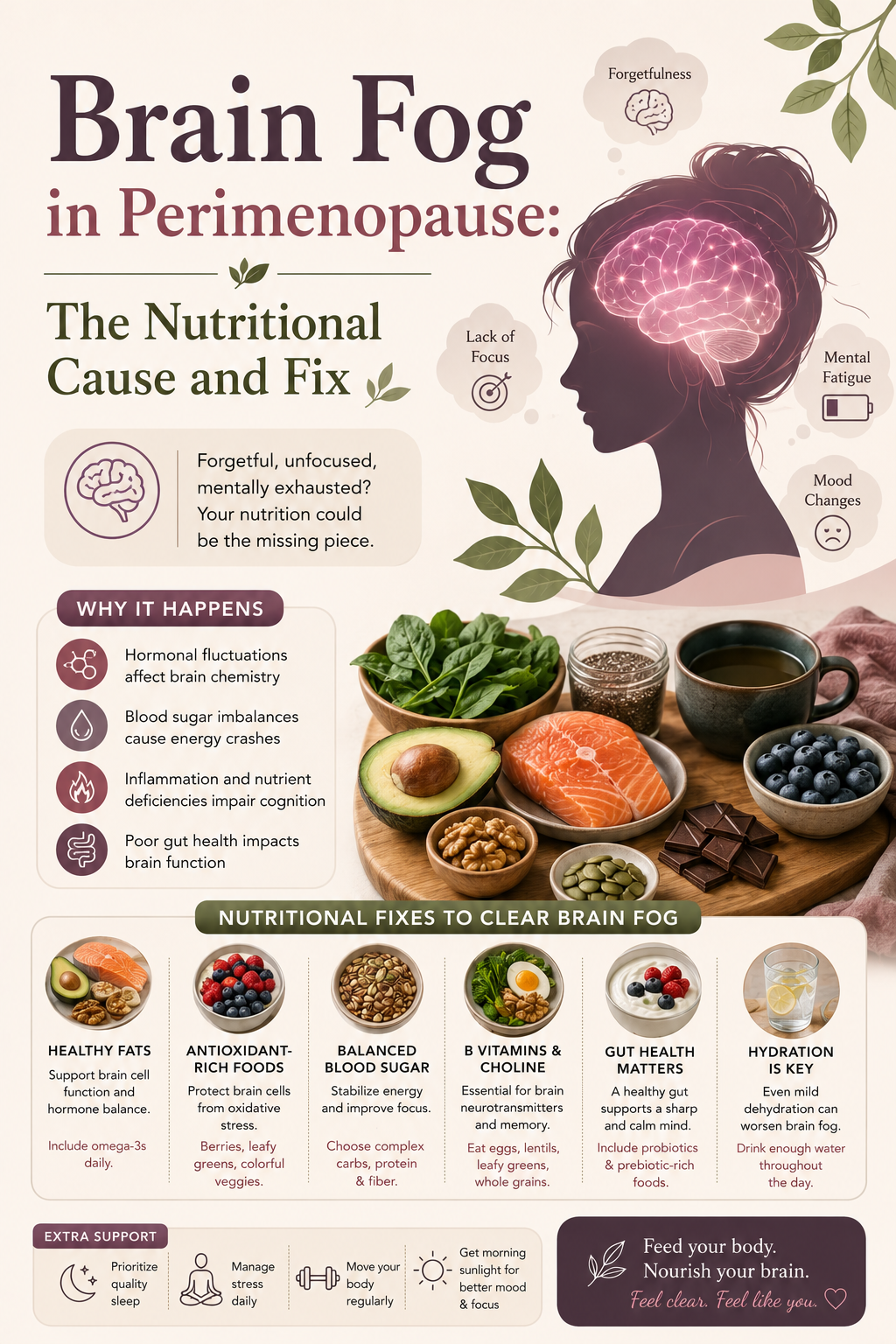
You walk into a room and forget why you went in. A familiar name sits just out of reach mid-sentence. You re-read the same paragraph three times and still cannot retain it. For many women navigating perimenopause, this experience, commonly described as “brain fog”, is one of the most disorienting symptoms of the transition, and one of the least discussed in clinical settings.
Brain fog is not a formal medical diagnosis; it is a lay term describing a cluster of cognitive symptoms, memory lapses, word-finding difficulty, reduced concentration, and a general sense of mental sluggishness. Despite not being a single diagnosable condition, it has a real, increasingly well-characterised biological basis, and there is genuine evidence for several supportive nutritional and lifestyle approaches.
Related reading:
👉Fitness After 40: Why It Feels Different (And What To Do)
👉The Singapore Woman’s Essential Guide to Early Diabetes Detection
👉Perimenopause Nutrition in Singapore: Why You’re Tired, Gaining Weight and How to Fix It
Why Brain Fog Happens: The Oestrogen-Brain Energy Connection
A comprehensive review of cognitive problems in perimenopause, published in the journal Climacteric, describes a key underlying mechanism: brain glucose metabolism begins declining during perimenopause and continues into postmenopause, likely related to oestrogen’s role in brain bioenergetics and the widespread distribution of oestrogen receptors throughout the brain.
In practical terms, oestrogen plays a significant role in how efficiently brain cells use glucose, their primary fuel source. As oestrogen levels become erratic and then decline through the perimenopausal transition, this efficiency drops, described in some literature as a state of reduced brain energy availability. This is the leading biological explanation for why so many women notice cognitive changes specifically during this hormonal transition, rather than at a stable later postmenopausal stage.
The same review notes that researchers have found measurable differences in specific brain regions correlating with cognitive performance in perimenopausal women, providing initial evidence for which areas of the brain are most affected during this transition, though the science connecting these neurological changes definitively to day-to-day cognitive symptoms is still developing.
👉Metabolic Syndrome in South Asian Women: A Doctor’s Warning
An Important Honesty Note: What We Do Not Yet Know
It is worth being direct about the limits of current science here, because this is an area where confident claims often outrun the evidence. The same review notes that large-scale, placebo-controlled studies are still needed to properly test interventions for perimenopausal cognitive symptoms specifically, and that there remains a lack of evidence for interventions designed to address cognitive complaints in this population directly. The review’s own conclusion is that, in the absence of dedicated trial evidence, women may benefit from engaging in healthy behaviours that promote overall brain function generally, alongside appropriately treating any underlying mood disorders that could be contributing to cognitive symptoms.
This means: the nutritional strategies below are grounded in what supports brain health and energy metabolism generally, and in the biological plausibility of addressing factors known to affect cognition (sleep, blood sugar stability, specific nutrient deficiencies), not in large dedicated trials proving that any single food or supplement reverses perimenopausal brain fog specifically. That distinction matters, and I want you to have it clearly rather than an oversold promise.
Nutritional and Lifestyle Strategies With a Sound Rationale
1. Stable Blood Glucose
Given that reduced brain glucose metabolism is a proposed mechanism in perimenopausal brain fog, avoiding large swings in blood glucose is a logical supportive strategy. Blood glucose spikes followed by crashes place additional strain on a brain that may already be working with reduced energy efficiency.
- Protein at every meal, including breakfast; dal, eggs, dahi, paneer, to slow glucose absorption
- Pairing carbohydrates with protein and fibre rather than eating them alone
- Reducing refined sugar and very high-GI foods, particularly as a stand-alone snack
- Regular meal timing rather than skipping meals and then eating large amounts later
👉Blood Sugar After 40: What Every Indian Woman Should Know
👉5 Science-Backed Morning Drinks to Balance Blood Sugar
2. Omega-3 Fatty Acids
DHA is a major structural component of brain cell membranes and is involved in the maintenance of neuronal signalling generally. While dedicated trials in perimenopausal brain fog specifically are limited, the broader evidence base for omega-3 fatty acids and cognitive health across adulthood is substantial, and adequate intake is a reasonable, low-risk inclusion.
- Fatty fish (sardines, mackerel, salmon) 2–3 times per week
- Ground flaxseed and walnuts daily for ALA, particularly for vegetarians
- An algae-based DHA+EPA supplement for vegetarians not eating fish regularly
👉Omega-3: Why the Buzz? Backed by Science & Real Needs
3. Adequate Iron, Vitamin D, and B12
Fatigue and cognitive symptoms attributed to perimenopause can sometimes be compounded, or even partly driven, by common, correctable nutrient deficiencies that overlap symptomatically with brain fog. Iron deficiency, Vitamin D deficiency, and Vitamin B12 deficiency (particularly relevant for vegetarian women) all independently cause fatigue and cognitive sluggishness, and are all common in Indian women.
Before assuming all cognitive symptoms in your 40s are “just perimenopause,” it is sensible to rule out and correct these treatable deficiencies, since doing so may meaningfully improve symptoms regardless of the hormonal contribution.
👉Iron-Deficiency Anemia in Singapore Women
👉Vitamin D Deficiency in Singapore: Why You’re Still Low Despite the Sun
4. Sleep Quality
Perimenopause frequently disrupts sleep, both directly (through night sweats and hormonal changes affecting sleep architecture) and indirectly (through mood changes). Poor sleep independently and substantially impairs memory, concentration, and processing speed, irrespective of any hormonal brain fog mechanism. Addressing sleep quality, through my other blogs (👉Hot Flashes and Food: What to Eat During Menopause) and (👉Cortisol and Food: How Stress Eating Wrecks Your Hormones), is one of the most evidence-supported general strategies for supporting cognitive clarity during this life stage.
5. Regular Physical Activity
Aerobic exercise has substantial, well-established evidence for supporting cognitive function across the lifespan, through mechanisms including improved cerebral blood flow and support for brain-derived neurotrophic factor (BDNF). While not specific to perimenopause, this remains one of the most consistently supported “healthy behaviours that promote overall brain function” referenced in the perimenopause cognition literature.
👉Bone Health for Indian Women: Preventing Osteoporosis Before It’s Too Late
6. Addressing Mood Symptoms
The Climacteric review specifically recommends treating any underlying psychiatric or mood disorders that could be contributing to cognitive complaints. Anxiety and low mood, both common during perimenopause, independently impair concentration and memory. If mood symptoms are prominent alongside brain fog, addressing them, with professional support where appropriate, may improve cognitive symptoms as well.
👉Strength Training: Your Secret to a Healthier, Longer Life
👉Understanding the Body’s Mechanism to Maintain Weight
What About Specific Supplements Sometimes Marketed for Brain Fog?
Several supplements are commonly marketed for menopausal brain fog, including saffron, bacopa, citicoline, and magnesium. Saffron has reasonable trial evidence for mood support, and magnesium has a sound rationale for sleep and stress support. The evidence specifically for cognitive outcomes in perimenopausal brain fog for these supplements, however, is considerably less developed than the evidence for their other uses, and I am not able to point to robust, dedicated randomised trials establishing their effectiveness for this specific symptom. If considering any of these, discuss with your doctor, and treat them as a reasonable adjunct within an evidence-grounded overall approach rather than a proven fix on their own.
👉Struggling with hormone changes after 35? Explore the FLOURISH Program (for women 35+)
Frequently Asked Questions
Is perimenopausal brain fog a sign of dementia?
The cognitive symptoms of perimenopause are generally distinct from dementia and are commonly described in the literature as temporary, fluctuating, and related to the hormonal transition rather than progressive neurodegeneration. That said, the experience can be frightening, particularly for women with a family history of dementia, and some become concerned enough to seek formal cognitive testing. If memory or cognitive symptoms are severe, progressively worsening rather than fluctuating, or significantly interfering with daily function, this is worth discussing with your doctor for appropriate assessment, rather than assuming it is “just” perimenopause.
Will hormone replacement therapy fix my brain fog?
Some clinical sources suggest that appropriately dosed hormone therapy can improve perimenopausal brain fog for some women, reflecting oestrogen’s role in brain energy metabolism and neuronal signalling described above. However, as the Climacteric review notes, large-scale placebo-controlled trials specifically testing interventions for perimenopausal cognitive symptoms are still needed, and this remains a developing area of research rather than a settled one. The decision about HRT should be made with your gynaecologist, weighing your overall symptom picture and individual risk profile, not on the promise of cognitive improvement alone.
How long does perimenopausal brain fog last?
This varies considerably between women and is not yet precisely characterised in the research literature, partly because perimenopause itself varies in duration and because cognitive symptoms have been less systematically studied over time compared to vasomotor symptoms like hot flashes. Many women report that cognitive symptoms ease somewhat once they are clearly postmenopausal and hormone levels have stabilised at a lower, steadier level, though more research specifically tracking cognitive symptoms over this full transition is needed.
Could my brain fog actually be due to a thyroid problem rather than perimenopause?
This is an important question to raise with your doctor, because thyroid dysfunction, which is common in women in this age group, produces very similar cognitive symptoms, fatigue, slowed thinking, and memory difficulty, and the two conditions can occur simultaneously. A simple TSH and free T4 test can help clarify whether thyroid function is contributing, and is a reasonable thing to request alongside discussing perimenopausal symptoms generally.
👉Thyroid Diet: Foods That Help or Harm Your Hormones
The Bottom Line
Brain fog in perimenopause has a real, biologically plausible basis rooted in oestrogen’s role in brain energy metabolism, and it is a genuinely common and valid experience, not something to dismiss or be told you are imagining. At the same time, the dedicated research base for specific interventions remains limited, and the most defensible approach right now combines ruling out and correcting common overlapping deficiencies (iron, Vitamin D, B12, thyroid function), stabilising blood glucose, supporting sleep, staying physically active, and addressing mood, alongside an honest conversation with your doctor about whether hormone therapy is appropriate for your individual situation.
Your 40s are not too late, they are, in fact, the ideal time to take your metabolic health seriously. The choices you make in the next five years will largely determine your health trajectory for the next thirty.
📩 Click here to book a FREE consultation with Dr Akanksha Sharma — personalised metabolic nutrition consultations for Indian women in Singapore and India.
OR Explore this FREE Guide:
👉 Perimenopause & Hormone Support Guide
Disclaimer: This article is for educational purposes only and does not constitute personalised medical advice. If you have concerns about cognitive symptoms, please consult a qualified physician.
References:
- Cognitive Problems in Perimenopause: A Review of Recent Evidence. PMC Full Text
- Scientific insights into brain fog during the menopausal transition. Climacteric. Taylor & Francis Full Text
- ICMR-NIN Expert Group. Recommended Dietary Allowances for Indians. 2020. nin.res.in

Akanksha Sharma
Dr Akanksha Sharma (MBBS, MD) is a physician and women’s health nutrition specialist, and the founder of IYSA Nutrition. She provides evidence-based, doctor-led nutrition guidance for pregnancy, postpartum recovery, PCOS, child nutrition, and family health, helping women make calm, informed decisions about their health and their children’s well-being.