Written & reviewed by Dr Akanksha Sharma, MBBS, MD (Preventive & Community Medicine) | Founder, IYSA Nutrition, Singapore
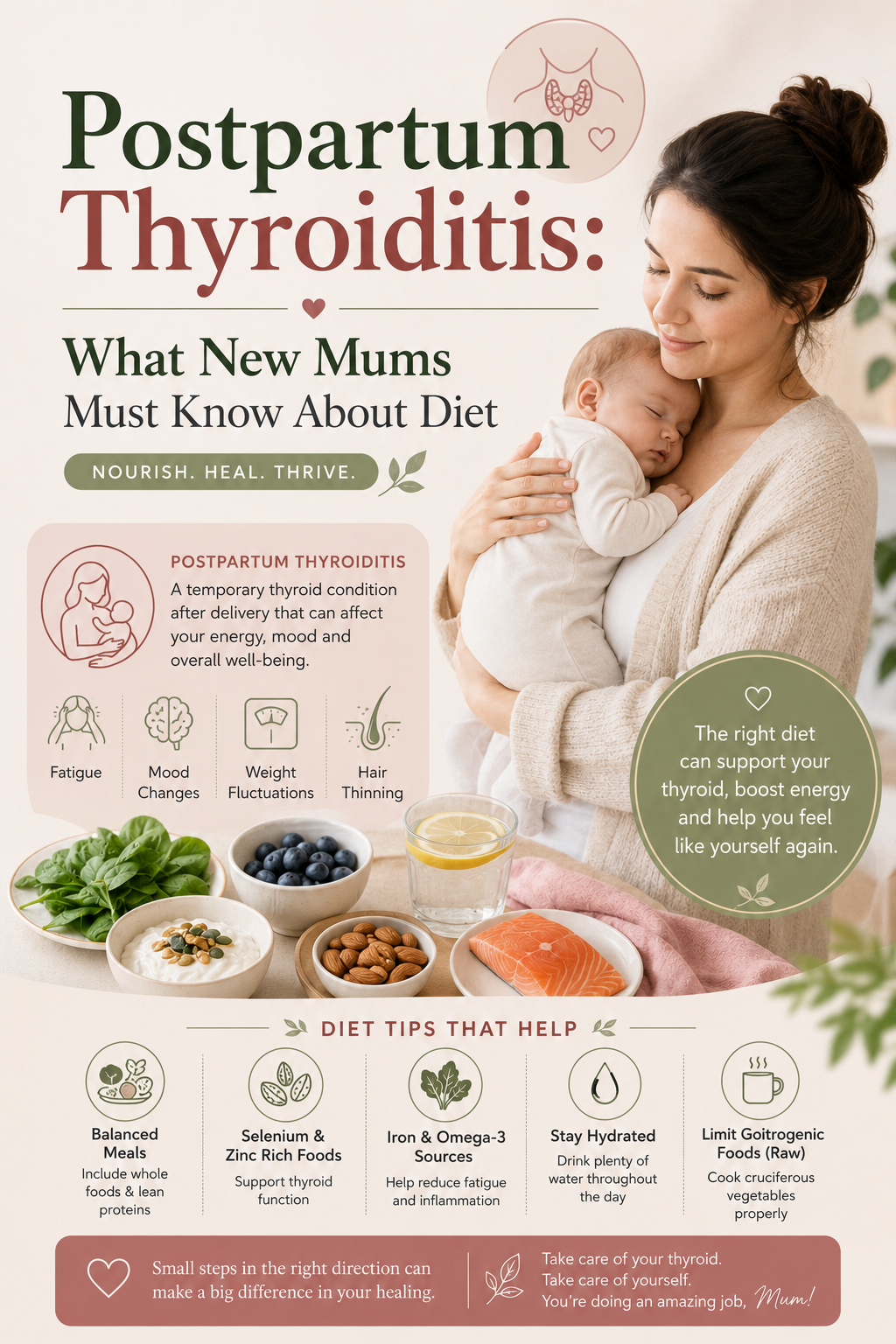
Of all the postpartum conditions that are missed in routine clinical care, postpartum thyroiditis is among the most consequential and the most common. It affects approximately 5–10% of all women in the first year after delivery. It causes significant and disruptive symptoms. It is frequently mistaken for normal postpartum fatigue, postpartum depression, or simply “the stress of new motherhood.” And it is almost entirely manageable with the right clinical awareness and nutritional support.
The problem is that most new mothers — and many of their healthcare providers — have never heard of it.
This post gives you the clinical knowledge you need: what postpartum thyroiditis is, how it presents at each stage, who is at highest risk, why Indian women are particularly vulnerable, and the specific dietary strategies that support thyroid function through the postpartum thyroid cycle.
👉 Download my Fourth Trimester Survival Guide – includes recovery meals, red flags & checklists.
👉Fourth Trimester Care in Singapore: What Hospitals Don’t Cover (and What It Really Costs)
👉Returning to Work After Maternity: How to Keep Up Nutrition
What Is Postpartum Thyroiditis?
Postpartum thyroiditis (PPT) is an autoimmune inflammation of the thyroid gland that occurs in the first year after delivery. It is caused by the reactivation of the immune system after the immune suppression of pregnancy, the same immune rebound that can trigger other autoimmune flares postpartum.
During pregnancy, the immune system is deliberately downregulated to prevent rejection of the foetus (which is genetically foreign to the mother). In the weeks to months after delivery, the immune system “rebounds”, sometimes overshooting into an inflammatory state that attacks the thyroid gland. This inflammation causes the thyroid to release stored thyroid hormone in a burst, followed by a period during which the damaged thyroid cannot produce adequate hormone.
The result is a characteristic two-phase pattern:
Phase 1: Thyrotoxicosis (Hyperthyroid Phase)
Occurs typically at 1–4 months postpartum. The inflamed thyroid releases stored thyroid hormone in excess, causing temporary hyperthyroid symptoms: palpitations, anxiety, tremors, heat intolerance, fatigue (paradoxically, high thyroid hormone can cause exhaustion through overstimulation), weight loss, and irritability. This phase is often missed because the symptoms overlap with normal postpartum anxiety and sleep deprivation, and because TSH is low but the clinical picture may not be immediately connected to thyroid disease.
Phase 2: Hypothyroid Phase
Occurs typically at 4–8 months postpartum. The thyroid, now damaged by the autoimmune inflammation, cannot produce adequate hormone. TSH rises as the pituitary tries to stimulate a failing thyroid. Symptoms are classic hypothyroid: profound fatigue (often worse than any fatigue experienced during the newborn period), cold intolerance, weight gain despite unchanged diet, brain fog and memory impairment, depression and low mood, constipation, hair loss, and dry skin. This phase is the one most likely to be misdiagnosed as postpartum depression, because mood and energy are the most prominent symptoms.
Phase 3: Resolution or Persistence
In approximately 80% of women, thyroid function normalises spontaneously within 12–18 months. In approximately 20–30% of women, the hypothyroid phase does not fully resolve, and permanent hypothyroidism develops, requiring ongoing levothyroxine therapy. Women with anti-TPO antibodies (detectable in the hyperthyroid phase) have the highest risk of permanent hypothyroidism.
Related reading:
👉Post-partum Depression and the Baby Blues: Causes and Management
👉Postpartum Hair Loss: The Nutritional Truth Nobody Tells You
Who Is at Highest Risk?
Several risk factors predict higher likelihood of developing postpartum thyroiditis:
- Anti-TPO antibody positivity before or during pregnancy: The single strongest predictor. Women with detectable anti-TPO antibodies in the first trimester have approximately a 50% risk of developing PPT.
- Personal history of Hashimoto’s thyroiditis or previous PPT
- Family history of autoimmune thyroid disease
- Type 1 diabetes: Women with type 1 diabetes have a three-fold higher risk of PPT
- History of miscarriage
- Vitamin D deficiency: Consistently associated with higher anti-TPO antibody levels and more severe autoimmune thyroid disease
- Selenium deficiency: Essential for thyroid antioxidant defence; deficiency increases susceptibility to inflammatory thyroid damage
- Indian and South Asian ethnicity: Higher rates of autoimmune thyroid disease in the Indian population compared to many Western populations, likely reflecting both genetic predisposition and high rates of Vitamin D and selenium deficiency
Related reading:
👉10 Healthy Snack Ideas to Boost Energy and Aid Recovery for New Moms
Explore my NURTURE: Mother & Baby Fourth Trimester Program
A doctor-led, evidence-based program supporting healing, feeding, and emotional recovery.
Why Indian Women Are Particularly Vulnerable
Indian women face a specific convergence of risk factors that makes postpartum thyroiditis both more common and more severe:
Pre-existing Autoimmune Predisposition
Hashimoto’s thyroiditis, the most common autoimmune thyroid condition and the background against which PPT most frequently develops, is more prevalent in Indian women than commonly recognised. The stigma around mental health and the tendency to attribute thyroid symptoms (fatigue, mood changes, weight gain) to “lifestyle” issues means it is frequently undiagnosed before pregnancy. Women entering the postpartum period with pre-existing subclinical Hashimoto’s are at significantly elevated PPT risk.
Vitamin D Deficiency
As discussed extensively in Day 21, Vitamin D deficiency is near-universal among Indian women in Singapore and common in urban India. Vitamin D has direct immune-modulatory effects on thyroid autoimmunity; it reduces the T-helper 1 (Th1) immune response that drives anti-TPO antibody production and thyroid inflammation. Deficient Vitamin D creates a more permissive environment for the autoimmune rebound that causes PPT.
Iodine Insufficiency
India has made significant progress in iodine status through Universal Salt Iodisation, but deficiency persists in subgroups, particularly those using non-iodised salts, those with very low dairy and seafood intake, and those in certain geographically iodine-deficient areas. Iodine insufficiency impairs thyroid hormone production throughout the PPT cycle and worsens the hypothyroid phase.
Selenium Deficiency
Indian soils are selenium-depleted in many regions, meaning plant foods grown in India contain less selenium than equivalent foods from selenium-replete soils. Selenium is the most critical micronutrient for thyroid antioxidant defence; it is a cofactor for the glutathione peroxidase enzymes that protect thyroid tissue from oxidative damage during autoimmune inflammation. Women with low selenium entering the PPT cycle have less antioxidant protection for the inflamed thyroid gland.
Postnatal Nutritional Depletion
The nutritional depletion of pregnancy and breastfeeding depletes the very micronutrients most critical for thyroid protection: selenium, iodine, Vitamin D, and zinc. The postpartum woman entering the PPT period is often in her most nutritionally depleted state precisely when her thyroid most needs nutritional support.
Related reading:
👉7-Day Meal Plan for Postpartum Recovery: Traditional Indian Diet
👉5 Effective Exercises to Flatten Your Mommy Pooch and Strengthen Your Core
👉10 Yoga Asanas to Strengthen Deep Core Muscles and Combat Mommy Pooch
If you’re unsure whether what you’re feeling is normal, structured postpartum support can make a huge difference.
👉New mom? Book a complimentary 20-minute support call
Diagnosing Postpartum Thyroiditis: What to Ask For
Postpartum thyroiditis is diagnosed through blood tests. The challenge is that most routine postnatal checks include only haemoglobin and basic metabolic markers, not thyroid function. You need to ask specifically.
Request at your 6-week postnatal check:
- TSH (Thyroid-Stimulating Hormone): The first-line screening test. Low TSH (below 0.4 mIU/L) in the first 3 months postpartum suggests the thyrotoxic phase. High TSH (above 4.5–5.0 mIU/L) from 4–8 months postpartum suggests the hypothyroid phase.
- Free T4: To confirm the degree of thyroid hormone excess or deficiency
- Anti-TPO antibodies: Positive antibodies confirm autoimmune aetiology and predict progression risk
At 3–6 months postpartum (even if the 6-week check was normal): Repeat TSH and free T4, particularly if you have any of the symptoms described above. The hypothyroid phase of PPT is most commonly missed because it peaks at 4–8 months, well after the routine postnatal follow-up period ends.
In Singapore, thyroid testing is available at polyclinics and private GPs without specialist referral. In India, thyroid panel testing is available at any diagnostic laboratory. If you have risk factors or symptoms, advocate for testing; do not wait to be offered it routinely.
Related reading:
👉Starter Guide to Getting Your Body Back After Having a Baby
The Nutritional Support Protocol for Postpartum Thyroiditis
The dietary approach to postpartum thyroiditis has two goals: supporting thyroid function through key micronutrients, and reducing the autoimmune inflammation driving the condition through anti-inflammatory eating. The strategies are consistent with the general thyroid nutrition guide (Thyroid Diet: Foods That Help or Harm Your Hormones) but with specific emphasis on the postnatal context.
1. Selenium — The Most Critical PPT Nutrient
Selenium is the thyroid’s primary antioxidant mineral. The thyroid gland contains the highest concentration of selenium of any organ in the body; it is incorporated into selenoproteins (particularly glutathione peroxidase and thioredoxin reductase) that neutralise the hydrogen peroxide produced during thyroid hormone synthesis. During autoimmune inflammation, reactive oxygen species are generated in excess; selenium-dependent antioxidant enzymes are the gland’s primary defence.
Multiple RCTs have shown that selenium supplementation (200 µg/day of selenomethionine) reduces anti-TPO antibody titres in women with Hashimoto’s thyroiditis and may reduce the severity and duration of the hypothyroid phase of PPT. Though, a Cochrane-affiliated review found preliminary signals that selenium might reduce anti-TPO antibodies and improve quality of life, but concluded the evidence base (only four small, high/unclear-risk-of-bias trials) is too weak and unreliable to support clinical recommendations.
Reference: van Zuuren EJ et al. Selenium supplementation for Hashimoto’s thyroiditis: summary of a Cochrane systematic review. Eur Thyroid J. 2014;3(1):25-31. PubMed
Practical selenium strategy:
- 2 Brazil nuts daily: The simplest, most reliable food source; 2 nuts provide approximately 100–200 µg of selenium, meeting the full daily requirement. Available at Cold Storage and speciality stores in Singapore; available at premium supermarkets and health stores in Indian cities.
- Eggs: Approximately 15 µg per egg; eat daily
- Fish and seafood: Tuna, sardines, and prawns are good sources, 2–3 servings per week
- Supplementation: 200 µg/day of selenium (as selenomethionine, not selenite) may be appropriate for women with confirmed anti-TPO positivity or documented selenium deficiency; discuss with your doctor. Note: selenium supplementation should not exceed 400 µg/day, toxicity is possible at high doses.
2. Iodine — Adequate, Not Excessive
Iodine is essential for thyroid hormone production. In the hypothyroid phase of PPT, when the thyroid is struggling to produce adequate hormone, adequate iodine supply ensures that the raw material is available for whatever hormone production the gland can manage.
However, and this is important, excessive iodine intake can worsen autoimmune thyroid inflammation in susceptible individuals (the Wolff-Chaikoff effect and its escape are disrupted in Hashimoto’s thyroiditis). High-dose iodine supplements are contraindicated in PPT. The goal is adequacy, not excess.
Adequate iodine for postpartum women:
- Use iodised table salt consistently: the most reliable daily iodine source
- Include dairy (one to two cups of milk or equivalent dahi) daily: provides 150–250 µg of iodine
- Eggs two to three times per week
- Fish and seafood two to three times per week (for non-vegetarians)
- Avoid kelp, seaweed snacks, or high-dose iodine supplements; these provide excessive iodine that can worsen autoimmune thyroid disease
- Continue breastfeeding iodine supplementation (290 µg/day target) if breastfeeding; discuss with your doctor the appropriate source given PPT
3. Vitamin D — Immune Modulation
Correct and maintain Vitamin D above 75 nmol/L throughout the postpartum period. This is the single most accessible immune-modulatory intervention for reducing autoimmune thyroid activity. Test at 6 weeks postpartum; supplement under medical guidance to correct deficiency; maintain with 1000–2000 IU daily thereafter.
👉Vitamin D Deficiency in Singapore: Why You’re Still Low Despite the Sun
4. Iron — Managing PPT-Related Anaemia
Both the hypothyroid state and the heavy periods that can accompany the hypothyroid phase contribute to iron deficiency in women with PPT. Additionally, iron deficiency impairs thyroid peroxidase (TPO) enzyme function, the very enzyme that is targeted by anti-TPO antibodies in Hashimoto’s. Correcting iron deficiency supports whatever residual TPO function remains.
Test ferritin at your 6-week postnatal check and at 4–6 months if PPT is suspected or confirmed. Supplement if below 30 ng/mL. Maintain iron-rich dietary strategies (ragi, masoor dal, palak with lime, sesame seeds) throughout the postpartum period.
👉Iron-Deficiency Anemia in Singapore Women
5. Zinc — Thyroid Hormone Signalling
Zinc is required for TSH synthesis, T4-to-T3 conversion, and thyroid hormone receptor function. Zinc deficiency, common in Indian vegetarian postpartum women, impairs thyroid function at multiple levels. Two Brazil nuts (also providing selenium), pumpkin seeds, rajma, and eggs cover both zinc and selenium needs efficiently.
👉Zinc: The Important Mineral You are Not Taking Enough
6. Anti-Inflammatory Dietary Pattern — Reducing Autoimmune Activity
Postpartum thyroiditis is an autoimmune condition, the same anti-inflammatory, gut-health-supporting dietary principles that apply to Hashimoto’s management (👉Thyroid Support in Hypothyroidism: Diet, Lifestyle & Ayurveda) are directly relevant here:
- Prioritise omega-3 fatty acids: sardine or mackerel curry 2–3 times per week; walnuts and ground flaxseed daily; algae DHA supplement for vegetarians
- Include fermented foods daily: plain dahi, idli from fermented batter, chaas, supporting the gut microbiome diversity that modulates autoimmune activity
- Reduce ultra-processed food, refined sugar, and alcohol, all of which drive gut dysbiosis and systemic inflammation that amplifies autoimmune thyroid activity
- Include turmeric with black pepper daily; curcumin has documented anti-inflammatory effects on thyroid tissue
- Consider a gluten-free trial if GI symptoms are prominent alongside PPT; the association between Hashimoto’s and coeliac disease (or non-coeliac gluten sensitivity) is well-established
Managing PPT Through Breastfeeding
An important consideration for breastfeeding mothers with PPT: the thyroid medications used for each phase have different breastfeeding safety profiles:
- Hyperthyroid phase: Anti-thyroid drugs (propylthiouracil or carbimazole) may be required for symptomatic thyrotoxicosis; both are generally considered safe during breastfeeding at standard doses, with PTU preferred by many specialists as it transfers less into breast milk than carbimazole. Beta-blockers (propranolol) for symptom management are also compatible with breastfeeding at standard doses.
- Hypothyroid phase: Levothyroxine replacement is completely safe during breastfeeding. The amount secreted into breast milk is negligible and does not affect infant thyroid function.
- Supplements: Selenium (200 µg/day selenomethionine), Vitamin D, and iron at standard doses are all safe during breastfeeding. Discuss with your doctor before starting any supplement.
A Sample One-Day PPT-Supportive Meal Plan (Indian)
- On waking: 2 Brazil nuts (selenium: the day’s most important PPT-specific habit). Warm water with amla powder.
- Breakfast: Two scrambled eggs with palak and tomato (selenium, iron, folate) + one jowar roti + plain dahi (iodine, B12, probiotics) + green tea (anti-inflammatory)
- Mid-morning: Plain chaas (probiotic) + a small handful of pumpkin seeds (zinc, magnesium)
- Lunch: One cup masoor dal (iron, protein, zinc) + one jowar roti + broccoli or gobi sabzi (anti-inflammatory, sulforaphane) + a large salad with lime. Vitamin D supplement with this meal.
- Afternoon: One tablespoon ground flaxseed in plain dahi (omega-3 ALA, lignans) + one small fruit
- Dinner: Sardine or mackerel curry (omega-3, selenium, iodine) + half cup brown rice + palak sabzi with garlic and turmeric + plain chaas. Omega-3/DHA supplement with this meal (if vegetarian, use algae-based).
- Before bed: Warm milk with a pinch of turmeric and black pepper (iodine from milk, curcumin anti-inflammatory from turmeric). Iron supplement if ferritin is low; take away from Vitamin D and selenium supplements.
🔗 Related Posts:
👉Confinement Food vs Medical Nutrition: What’s Best for Singapore Moms?
👉Postpartum Nutrition: Doctor’s Insights for Optimal Recovery
👉7-Day Meal Plan for Postpartum Recovery: Traditional Indian Diet
👉Pregnancy & Postpartum Nutrition: A Doctor-Reviewed Guide
Frequently Asked Questions
I am 5 months postpartum and extremely tired and depressed. Could this be PPT?
Yes — PPT is one of the most important diagnoses to rule out when a new mother presents with significant fatigue and mood symptoms at 4–8 months postpartum. The hypothyroid phase of PPT peaks at this exact time window and is the phase most commonly misidentified as postpartum depression. The two conditions can coexist, but treating PPT hypothyroidism resolves the thyroid-driven component of mood and energy symptoms — and if postpartum depression also exists, it is much easier to treat effectively once the thyroid contribution has been addressed. Please ask your GP for a TSH and free T4 test before accepting a primary diagnosis of postpartum depression without thyroid evaluation.
Will PPT affect my ability to breastfeed?
The thyrotoxic phase of PPT is unlikely to affect milk supply significantly. The hypothyroid phase, however, can reduce prolactin function and impair milk production in some women. If your milk supply decreases significantly in the 4–8 month postpartum window alongside symptoms of fatigue and cold intolerance, thyroid testing is warranted. Treating hypothyroidism with levothyroxine typically restores milk production. Anti-thyroid drugs for the thyrotoxic phase may affect milk composition to a small degree — discuss with a lactation consultant and your obstetrician.
My previous pregnancy also caused thyroid problems. Am I at risk again?
Yes, significantly. Previous PPT is one of the strongest predictors of PPT in subsequent pregnancies, with recurrence rates of 70% or higher. Women with a history of PPT should have anti-TPO antibodies checked preconceptionally and thyroid function monitored closely throughout the first year after delivery. Proactively optimising selenium, Vitamin D, and iodine before and during the next pregnancy may reduce severity, though this has not been conclusively proven in RCTs.
Does selenium supplementation prevent PPT?
The evidence suggests selenium may reduce the severity of PPT and the rate of permanent hypothyroidism in women at risk, particularly those with anti-TPO antibodies. A 2019 RCT by Mantovani et al. found that selenium supplementation (83 µg/day of L-selenomethionine) during pregnancy significantly reduced the incidence of PPT in anti-TPO-positive women compared to placebo. This is promising evidence, though larger trials are needed before selenium can be definitively recommended as PPT prevention for all at-risk women. For women with known anti-TPO antibodies planning pregnancy, a discussion with their endocrinologist about selenium supplementation is warranted.
When does PPT resolve, and when do I need long-term thyroid medication?
Approximately 80% of women with PPT recover normal thyroid function within 12–18 months. The remaining 20–30% develop permanent hypothyroidism requiring ongoing levothyroxine therapy. The risk of permanent hypothyroidism is highest in women with high anti-TPO antibody titres, more severe initial hypothyroid phase, and multiple prior episodes of PPT. Annual TSH monitoring for at least five years after an episode of PPT is recommended because risk of progression to permanent hypothyroidism continues beyond the acute recovery period.
The Bottom Line
Postpartum thyroiditis is common, clinically significant, frequently missed, and nutritionally modifiable. The 5–10% of women who develop it deserve more than being told their symptoms are “just normal postpartum tiredness.” They deserve TSH testing at 6 weeks and again at 4–6 months postpartum. They deserve understanding of the two-phase clinical picture. They deserve selenium, Vitamin D, iodine, and iron adequacy, the micronutrients that most directly support thyroid function and modulate autoimmune thyroid activity.
If you are a new mother experiencing significant fatigue, low mood, cold intolerance, hair loss, or weight changes, particularly if these are worsening at 4–6 months rather than improving- please advocate for thyroid testing. It may change everything.
👉 Need guided support through the fourth trimester?
Explore the NURTURE: Mother & Baby Fourth Trimester Program
A doctor-led, evidence-based program supporting healing, feeding, and emotional recovery.
🌸Or start by booking your 20-minute complimentary support call. CLICK HERE!
Disclaimer: This article is for educational purposes only. Postpartum thyroiditis requires medical diagnosis and management. Please consult your physician if you suspect thyroid dysfunction postpartum.
References:
- Stagnaro-Green A. Approach to the patient with postpartum thyroiditis. J Clin Endocrinol Metab. 2012;97(2):334-342. PubMed
- van Zuuren EJ et al. Selenium supplementation for Hashimoto’s thyroiditis: summary of a Cochrane systematic review. Eur Thyroid J. 2014;3(1):25-31. PubMed
- Mantovani G et al. Selenium supplementation in the management of thyroiditis during pregnancy: a randomized controlled trial. J Clin Endocrinol Metab. 2019;104(11):5213-5220. PubMed
- Kivity S et al. Vitamin D and autoimmune thyroid diseases. Cell Mol Immunol. 2011;8(3):243-247. PubMed
- ICMR-NIN Expert Group. Recommended Dietary Allowances for Indians. 2020. nin.res.in

Akanksha Sharma
Dr Akanksha Sharma (MBBS, MD) is a physician and women’s health nutrition specialist, and the founder of IYSA Nutrition. She provides evidence-based, doctor-led nutrition guidance for pregnancy, postpartum recovery, PCOS, child nutrition, and family health, helping women make calm, informed decisions about their health and their children’s well-being.