Written & reviewed by Dr Akanksha Sharma, MBBS, MD (Preventive & Community Medicine) | Founder, IYSA Nutrition, Singapore
Postpartum constipation is one of the most common and most under-discussed discomforts of the early weeks after delivery. It rarely comes up in antenatal classes; it is mentioned only briefly in most postnatal leaflets, and yet a significant proportion of new mothers experience it, often made worse by haemorrhoids, perineal pain, and the fear of straining near a healing episiotomy or caesarean incision.
The good news is that postpartum constipation usually responds well to straightforward dietary and lifestyle measures. This post covers what causes it, what the evidence actually supports, and the specific Indian foods and habits that help.
👉Fourth Trimester Care in Singapore: What Hospitals Don’t Cover (and What It Really Costs)
👉Postnatal Depletion Syndrome: The Reason Mums Feel Exhausted
👉C-Section Recovery Nutrition: Singapore-Friendly Indian & Chinese Meals
Why Constipation Is So Common After Delivery
A Cochrane systematic review on interventions for preventing postpartum constipation identifies several contributing factors operating simultaneously in the puerperium: haemorrhoids, pain at the episiotomy site, the lingering effects of pregnancy hormones (particularly progesterone, which relaxes smooth muscle including the bowel), and haematinics, the iron supplements almost universally prescribed after delivery to replace blood loss.
A further review on pregnancy and postpartum bowel changes notes that these defecatory disorders are multifactorial, also reflecting changes to pelvic floor and anorectal physiology that occur through pregnancy and delivery, particularly after vaginal birth.
In practical terms, several things are happening together in the days and weeks after delivery:
- Hormonal carry-over: Progesterone levels, still elevated from pregnancy, take time to fall, and in the meantime continue to slow gut motility
- Iron supplementation: Iron tablets prescribed to address postpartum blood loss are a well-recognised cause of constipation
- Pain and fear of straining: Perineal pain, haemorrhoids, or a caesarean incision can make a new mother reluctant to bear down, leading to stool retention and a harder, more difficult-to-pass stool over time
- Reduced mobility and altered routine: The dramatic disruption to normal activity, sleep, and meal timing in the early postpartum weeks affects bowel regularity
- Dehydration: Many new mothers, absorbed in feeding and caring for a newborn, simply do not drink enough fluid
Related reading:
👉Post-partum Depression and the Baby Blues: Causes and Management
👉Postpartum Hair Loss: The Nutritional Truth Nobody Tells You
What the Evidence Actually Supports
It is worth being precise here, because much of the home-remedy advice circulating for postpartum constipation outpaces what has actually been tested. The Cochrane review on this topic (Turawa EB et al) concluded that, despite the common recommendation of a high-fibre diet and increased fluid intake to assist defecation, the overall trial evidence for specific interventions in postpartum constipation remains limited, and laxatives are commonly used in practice, though their effectiveness and safety for breastfeeding mothers specifically has not been fully established by quality trials.
This does not mean dietary fibre and fluid do not work; the physiological rationale for fibre and hydration in constipation generally is well established outside the postpartum-specific literature, and these remain the first-line, lowest-risk recommendations from gynaecological and general medical bodies. It means that we should be honest that the postpartum-specific trial base is thin, and that recommendations here are grounded in broader constipation management evidence and physiological reasoning, applied sensibly to the postpartum context, rather than large postpartum-specific RCTs proving each individual food’s effect.
👉10 Healthy Snack Ideas to Boost Energy and Aid Recovery for New Moms
Explore my NURTURE: Mother & Baby Fourth Trimester Program
A doctor-led, evidence-based program supporting healing, feeding, and emotional recovery.
The Foundational Strategies: Fibre and Fluid
Soluble and Insoluble Fibre — Both Matter
Soluble fibre absorbs water and forms a gel that softens stool, while insoluble fibre adds bulk that stimulates gut motility. Both are useful in postpartum constipation, and Indian cuisine offers excellent sources of each.
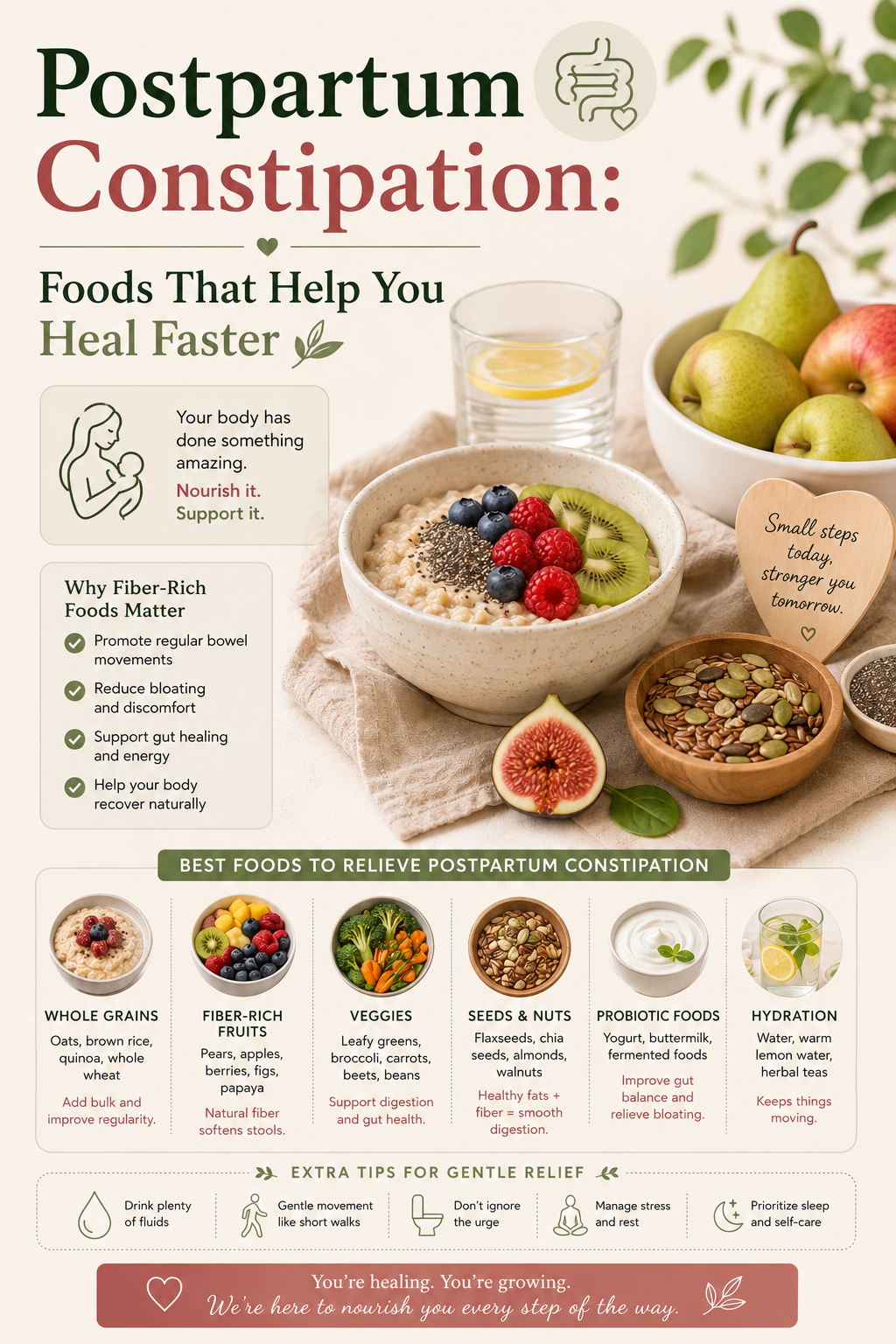
Best Indian fibre sources for postpartum recovery:
- Isabgol (psyllium husk): One of the most effective and gentle soluble fibre sources available; a teaspoon stirred into a glass of water or warm milk before bed is a long-standing and physiologically sound Indian home remedy for constipation
- All dal and legumes: Rajma, chana, masoor, moong; high in both fibre types and a useful protein source for postpartum recovery simultaneously
- Whole grains: Jowar, bajra, and whole wheat atta rather than refined maida
- Papaya (ripe): A traditional postnatal fruit; contains the enzyme papain along with fibre, and is generally well tolerated
- Prunes/dried plums (aloo bukhara, dried): Contain sorbitol, a sugar alcohol with a recognised mild laxative effect, alongside fibre
- Figs (anjeer): A traditional Indian remedy for constipation, providing both fibre and a mild natural laxative effect
- Leafy greens and vegetables generally: Methi, palak, and other sabzis at each meal
Adequate Fluid Intake
Fibre without sufficient fluid can worsen constipation rather than relieve it, because fibre absorbs water from the gut. Breastfeeding mothers already need significantly increased fluid intake (around 3–3.5 litres daily, as discussed in Day 10), and this same hydration target directly supports bowel regularity. Warm fluids, warm water with ajwain, warm milk, soups, and dal are traditionally favoured in the Indian postnatal period and are also physiologically sensible, as warm liquids can help stimulate gut motility.
👉Confinement Food vs Medical Nutrition: What’s Best for Singapore Moms?
👉Postpartum Nutrition: Doctor’s Insights for Optimal Recovery
👉Postpartum Anxiety in Singapore: The Nutritional Support Most Doctors Don’t Mention
Managing Iron-Related Constipation
Because postpartum iron supplementation is one of the most clearly identified contributors to postpartum constipation, addressing it directly is worthwhile rather than simply layering more fibre on top of an unaddressed cause.
- Discuss switching iron formulations with your doctor: Ferrous bisglycinate (an iron glycinate chelate) is generally better tolerated with less constipation than ferrous sulphate, while providing comparable absorption
- Spread iron dosing: Taking a lower dose more frequently, or every other day rather than daily (a strategy increasingly supported for improving absorption while reducing side effects), may help; discuss this with your obstetrician rather than adjusting independently
- Take iron with, not instead of, fibre and fluid strategies: Do not stop iron supplementation due to constipation without medical guidance, as adequate iron remains important for postpartum recovery; address the constipation alongside it
Movement and Positioning
Gentle movement supports bowel motility and is appropriate from early in the postpartum period for most women with uncomplicated deliveries; short, slow walks as tolerated, increasing gradually. For women recovering from caesarean section, movement should be guided by your surgical team’s specific advice, but gentle mobilisation is still generally encouraged as part of recovery, including for bowel function.
Toilet positioning also matters physiologically: using a small footstool to raise the knees above hip level when sitting on the toilet (mimicking a more squatting position) can ease the mechanics of passing stool and reduce straining, which is particularly relevant for women managing perineal discomfort or haemorrhoids.
Traditional Indian Postnatal Practices and Constipation
Several elements of traditional Indian postnatal (40-day) dietary practice are consistent with sound constipation management, even where the original rationale was not framed in these terms:
- Ajwain water: Carom seeds in warm water are a long-standing digestive remedy in Indian postnatal care; their carminative properties may ease bloating, and the warm fluid itself supports hydration and motility
- Methi (fenugreek) preparations: Provide fibre alongside iron and other nutrients relevant to postpartum recovery
- Warm, well-cooked, easily digestible foods: Khichdi, soft dal, and similar preparations are gentle on a digestive system that may be more sluggish in the early postpartum weeks, while still providing fibre from the dal component
These traditional practices sit comfortably alongside, rather than in opposition to, the evidence-based recommendations of adequate fibre, fluid, and gentle movement.
If you’re pregnant or recently delivered, you may find this calm, doctor-reviewed guide on pregnancy and postpartum nutrition helpful—it explains what truly supports recovery and energy without extreme advice. 🌿🤍
👉 Pregnancy & Postpartum Nutrition: A Doctor-Reviewed Guide
👉The Fourth Trimester Survival Guide
A Sample Day for Postpartum Constipation Relief
- On waking: A glass of warm water with a pinch of ajwain
- Breakfast: Ragi porridge or oats with a few soaked prunes or figs chopped in, plus a glass of warm milk
- Mid-morning: A small bowl of ripe papaya
- Lunch: A generous portion of dal (e.g., rajma or chana), a vegetable-rich sabzi, and a wholegrain roti (jowar or bajra)
- Afternoon: A glass of buttermilk (chaas) with roasted jeera
- Dinner: Khichdi made with dal and vegetables, or dal with sabzi and a wholegrain roti
- Before bed: One teaspoon isabgol stirred into a glass of warm water or milk
- Throughout the day: Aim for at least 3 litres of total fluid; take iron supplements as prescribed, with food, and discuss formulation with your doctor if constipation is significant
Frequently Asked Questions
How long does postpartum constipation typically last?
For most women, bowel habits begin returning toward normal within the first one to two weeks postpartum as hormone levels fall, mobility increases, and pain from delivery eases, though some women experience symptoms for longer, particularly if iron supplementation continues and dietary measures are not adjusted. If constipation is severe, persistent beyond a few weeks despite dietary changes, or accompanied by significant pain, bleeding, or signs of haemorrhoids that are not improving, speak with your doctor.
Are laxatives safe while breastfeeding?
Several commonly used laxatives, including bulk-forming agents like psyllium (isabgol) and osmotic agents like polyethylene glycol, are generally considered to have minimal systemic absorption and are commonly used postpartum, including in breastfeeding women, under medical guidance. The Cochrane review on this topic specifically notes that the safety of laxatives for nursing mothers needs further confirmation through quality trials, so this is a decision to make with your doctor rather than self-medicating, particularly for stimulant laxatives.
I am afraid to strain because of my stitches. What can I do?
This fear is extremely common and itself contributes to a cycle of stool retention and harder stools. Addressing the underlying constipation with fibre, fluid, and if needed a stool softener prescribed by your doctor reduces the need to strain in the first place. Using a footstool to elevate your knees while on the toilet can also reduce the mechanical effort required. If pain with bowel movements is significant, mention this specifically to your doctor at your postnatal check, as it may need direct assessment and treatment.
Does eating spicy Indian food make postpartum constipation worse?
There is no strong evidence that spice itself worsens constipation; the more relevant dietary factors are fibre and fluid intake, not spice level. Traditional preference for milder, well-cooked food in the early postnatal weeks in many Indian households is generally about digestive comfort and gentleness rather than constipation prevention specifically, and is a reasonable personal choice rather than a strict requirement.
The Bottom Line
Postpartum constipation has clear, well-understood contributing causes: hormonal carry-over, iron supplementation, pain-related straining avoidance, and reduced fluid intake during the demands of early motherhood. While the postpartum-specific trial evidence remains limited, the foundational approach of adequate fibre, adequate fluid, gentle movement, and sensible iron management is well supported by broader evidence and consistent with traditional Indian postnatal food wisdom. If symptoms are severe or persistent, do not hesitate to raise this directly with your doctor; effective, breastfeeding-safe options exist.
utrition: Doctor’s Insights for Optimal Recovery
🌿 Healing after childbirth takes more than rest — your body needs nourishment too.
If you’re struggling with:
✔ Low energy
✔ Hair fall
✔ Poor recovery
✔ Low milk supply
✔ Postpartum weakness
✔ Weight retention or bloating
…a personalised postpartum nutrition plan can make a real difference.
My doctor-led postpartum recovery program: The Healing Mother: Doctor-Led Postpartum Recovery & Lactation Support Program (45 Days), combine traditional Indian wisdom with evidence-based nutrition to help mothers heal, recover strength, support lactation, and feel like themselves again.
💚 Customized Indian meal plans
💚 Recovery-focused nutrition
💚 Breastfeeding support
💚 Sustainable, practical guidance for real mothers
📞Click here to book a free 20-minute consultation with Dr Akanksha
✨ Join the Healing Mother Program today.
🔗 You May Also Find These Readings Helpful:
- [Are You Ready for Motherhood? Here’s What to Expect (or not)]
- [What Postpartum Moms Should Know: A Comprehensive Guide]
- [Postpartum Care and Recovery: 40 Quick Tips for New Mothers]
- [5 Effective Exercises to Flatten Your Mommy Pooch and Strengthen Your Core]
Disclaimer: This article is for educational purposes only. If you experience severe or persistent constipation, pain with bowel movements, or bleeding, please consult your doctor.
References:
- Turawa EB, Musekiwa A, Rohwer AC. Interventions for preventing postpartum constipation. Cochrane Database Syst Rev. 2020. PMC Full Text
- Turawa EB, Musekiwa A, Rohwer AC. Interventions for treating postpartum constipation. Cochrane Database Syst Rev. PubMed PMID 25246307
- Bharucha AE, Pemberton JH, Locke GR 3rd. Pregnancy and postpartum bowel changes: constipation and fecal incontinence. PubMed PMID 25803402

Akanksha Sharma
Dr Akanksha Sharma (MBBS, MD) is a physician and women’s health nutrition specialist, and the founder of IYSA Nutrition. She provides evidence-based, doctor-led nutrition guidance for pregnancy, postpartum recovery, PCOS, child nutrition, and family health, helping women make calm, informed decisions about their health and their children’s well-being.