What KKH and NUH Follow: The IOM 2009 Guidelines
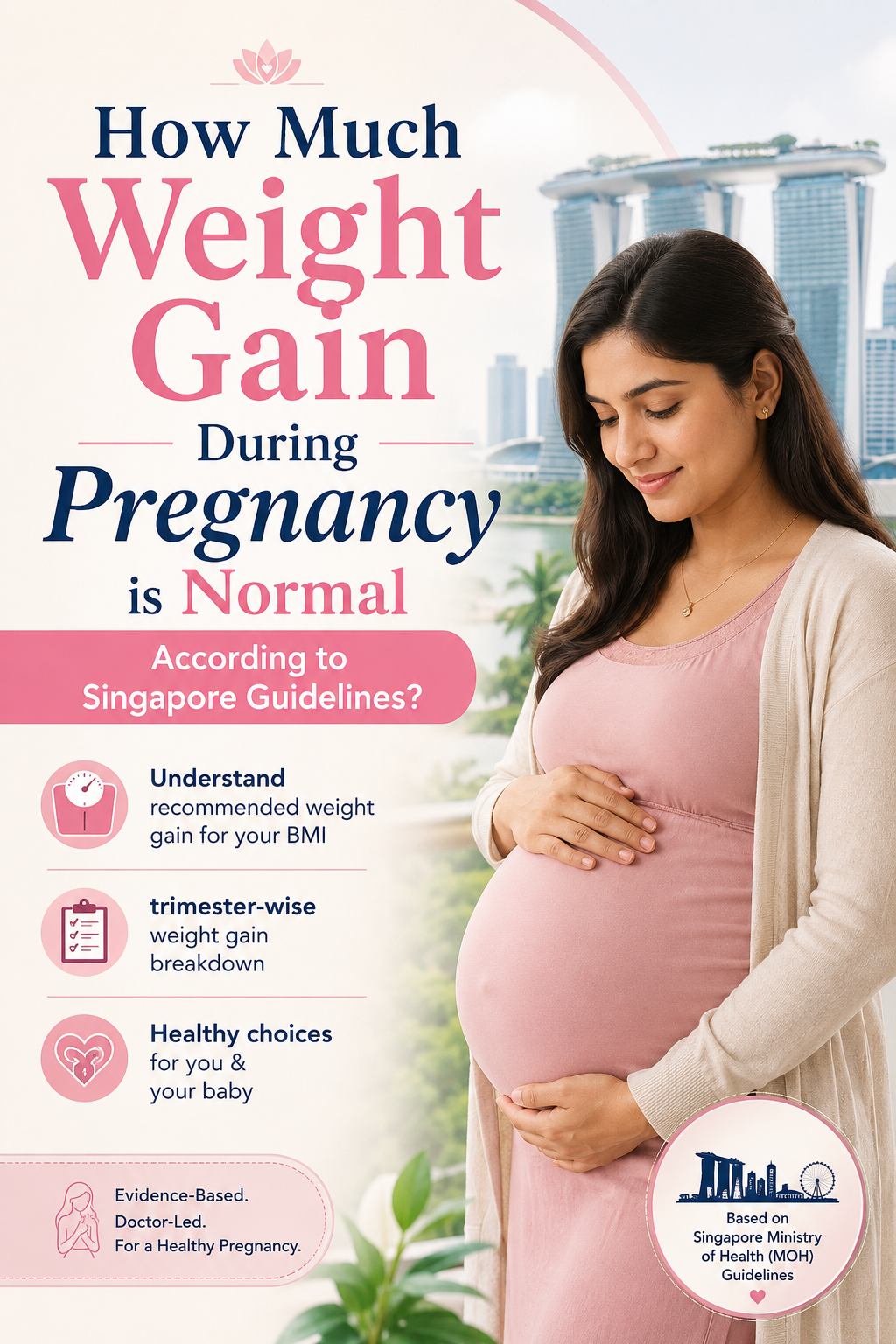
KKH, NUH, Thomson Medical, Mount Alvernia, and Gleneagles Singapore all base gestational weight gain guidance on the Institute of Medicine (IOM) 2009 revised guidelines, which set recommended total weight gain ranges based on pre-pregnancy BMI. Singapore uses Asia-Pacific BMI cut-offs (overweight starts at 23.0, obese at 27.5) rather than WHO international cut-offs (overweight at 25.0), meaning an Indian woman with a BMI of 24 is classified as overweight in Singapore’s system, and her recommended weight gain target differs accordingly.
| Pre-Pregnancy BMI (Singapore/Asian cut-offs) | Recommended Total Weight Gain | Weekly Rate (2nd & 3rd Trimester) |
|---|---|---|
| Underweight (<18.5) | 12.5–18 kg | 0.44–0.58 kg/week |
| Normal weight (18.5–22.9) | 11.5–16 kg | 0.35–0.50 kg/week |
| Overweight (23.0–27.4) | 7–11.5 kg | 0.23–0.33 kg/week |
| Obese (≥27.5) | 5–9 kg | 0.17–0.27 kg/week |
In the first trimester, weight gain is expected to be minimal, approximately 0.5–2 kg total, with most gain occurring in the second and third trimesters at the rates above.
References:
- He et al. Are women in Singapore gaining weight within recommended ranges? BMC Pregnancy and Childbirth. 2019. Full Text
- HPB-MOH Clinical Practice Guidelines: Obesity. hpb.gov.sg
What the Singapore-Specific Research Shows
A Singapore cohort study (He et al., BMC Pregnancy and Childbirth, 2019) examined gestational weight gain patterns in women delivering in Singapore and found that a significant proportion of Singapore women gain outside the IOM-recommended range, with both inadequate and excessive gain being common. The study found that women who gained excessively were more likely to have higher post-delivery weight retention, and that pre-pregnancy BMI was the strongest predictor of which direction weight gain deviated.
For Indian women specifically: excessive gestational weight gain is associated with gestational diabetes, macrosomia, and higher post-delivery weight retention, all outcomes that are already elevated in the Indian population due to the thin-fat phenotype and insulin resistance predisposition. Staying within the recommended range is therefore both a pregnancy health goal and a long-term metabolic health goal for Indian women in Singapore.
👉Gestational Diabetes Indian Meal Plan — the complete week-by-week dietary guide
👉Iron Deficiency in Pregnant Women in Singapore: An Doctor’s Complete Guide
What Does Pregnancy Weight Actually Consist Of?
Understanding where the weight goes helps reframe it from anxiety-inducing number to physiological reality. For a woman gaining 11.5–16 kg (normal pre-pregnancy BMI), the weight is distributed approximately as:
- Baby: 3–3.5 kg
- Placenta: 0.5–1 kg
- Amniotic fluid: 0.8–1 kg
- Uterus (growth): ~1 kg
- Increased blood volume: ~1.5 kg
- Breast tissue: ~0.5 kg
- Maternal fat stores: 2.5–4 kg (the energy reserve for breastfeeding)
- Extracellular fluid: ~1.5 kg
Most of what you are gaining is your baby, your placenta, your blood, and physiological fluid, not excess body fat. The maternal fat stores of 2.5–4 kg represent the body’s preparation for the energy demands of breastfeeding, which burns approximately 500 extra kcal daily. This fat is expected and beneficial. Gaining significantly above the recommended range, however, adds maternal fat beyond what is physiologically needed, and this excess is harder to lose postpartum and worsens insulin resistance.
👉How to Lose Baby Weight Without Affecting Breastfeeding — what happens after delivery
👉Folate vs Folic Acid in Pregnancy: What Singapore’s MOH Says and What Your Body Actually Needs
Why Indian Women Need to Be Particularly Mindful
The Thin-Fat Phenotype
An Indian woman entering pregnancy at a BMI of 22 may appear to be in the “normal weight” category by Singapore standards but carry significantly more visceral fat and less lean muscle mass than a Chinese or Malay woman of identical BMI. This means her metabolic risk at any given weight is higher. This is why the Singapore system applying Asian-specific BMI cut-offs matters; an Indian woman with BMI 23.5 is appropriately classified as overweight in Singapore, whereas the same woman would be classified as normal weight under WHO international thresholds used in many other countries.
Higher GDM Risk Changes the Weight Gain Picture
As documented in our companion post on GDM screening in Singapore, Indian women have higher GDM risk than the general Singapore population. Women who develop GDM are advised to keep gestational weight gain toward the lower end of their recommended range, because excessive weight gain in GDM further impairs insulin sensitivity and increases foetal macrosomia risk. If you have been diagnosed with GDM, discuss your specific weight gain target with your KKH or NUH dietitian.
Postpartum Weight Retention
A systematic review of gestational weight gain and postpartum weight retention found that each kilogram of gestational weight gain above the IOM upper limit increases postpartum weight retention by approximately 0.5 kg at six months. For Indian women who already have a higher baseline visceral fat risk, this postpartum retention compounds existing metabolic risk. Staying within the recommended range during pregnancy directly reduces the postpartum metabolic burden.
What to Eat: Meeting Nutritional Needs Without Excessive Gain
Pregnancy increases caloric needs, but not as dramatically as the “eating for two” myth suggests. The actual caloric increase recommended in Singapore’s pregnancy dietary guidelines from HPB is:
- First trimester: No additional calories required above pre-pregnancy intake
- Second trimester: Approximately +300 kcal/day above pre-pregnancy needs
- Third trimester: Approximately +300–450 kcal/day above pre-pregnancy needs
300 extra calories is not a large increase; it is roughly one additional small meal or two substantial snacks. The quality of those extra calories matters far more than the quantity: 300 kcal from lentils, eggs, yoghurt, and fruit provides protein, iron, calcium, fibre, and folate. However, 300 kcal from biscuits, murukku, namkeen, or sweet chai provides refined carbohydrate, sugar, and little else.
What to Increase
- Lentils and legumes at every meal: Protein for foetal development, iron for maternal blood volume expansion, folate for neural tube development and fibre for gut health. The single most nutritionally important habit of pregnancy.
- Dairy (yoghurt, milk, paneer): Calcium for foetal bone development (the foetus draws calcium from maternal stores in the third trimester), protein, B12 for vegetarians. Available at every Cold Storage, NTUC FairPrice, and Mustafa in Singapore.
- Ragi and millets: Iron, calcium, and complex carbohydrates; available at Mustafa Centre, Little India grocery stores, and increasingly at NTUC’s health food section.
- Eggs: Choline for foetal brain development (one of the most underconsumed pregnancy nutrients), protein, B12, iron. Two eggs daily is a simple and effective pregnancy nutrition strategy.
- Fruits and vegetables: Vitamin C (enhances iron absorption), folate, antioxidants. Aim for at least five portions daily; Singapore’s wet markets at Tekka, Geylang Serai, and Clementi have excellent and affordable fresh produce.
👉 Best Indian Vegetarian Sources of Omega-3 During Pregnancy
👉Best Dals and Lentils for Pregnancy: ICMR 2024 Guide
What Not to Increase
- Sugar and sweetened drinks: Milo (a Singapore pregnancy staple that many Indian women adopt) adds approximately 100–150 kcal per cup with high sugar and limited nutritional benefit over plain milk with a banana. Switch to plain milk or plain dahi for comparable or superior nutrition.
- Refined carbohydrates and fried snacks: The most common driver of excessive gestational weight gain in Singapore Indian women is murukku, achappam, thosai with excessive ghee, and fried vadai, when eaten in large quantities as daily snacks rather than occasional treats.
- Ultra-processed pregnancy “health” products: Many pregnancy-specific food products, including certain pregnancy milk powders, are high in added sugar and unnecessary for women eating a varied whole-food diet. Check labels before purchasing.
👩⚕️ Want a Personalised Pregnancy Nutrition Plan in Singapore?
I work with Indian women throughout pregnancy in Singapore, building culturally relevant meal plans that meet all nutritional targets without excessive weight gain.
Explore my program:
🤱Nourish Nine: Doctor-Led Pregnancy Nutrition & Care Program (Trimester-Wise).
Monitoring Your Weight in Singapore: Practical Points
- Weigh yourself once weekly — at the same time of day, in similar clothing, after voiding. Daily weighing creates unnecessary anxiety from normal fluid fluctuations.
- Your antenatal weight is recorded at every visit at KKH, NUH, and polyclinics — your care team tracks the trajectory, not just the number. A single week of higher gain is less important than the overall trend.
- Fluid retention in the third trimester — swelling of the ankles and feet (oedema) is common and can add 1–2 kg of fluid weight that is not fat. This is physiological in mild to moderate amounts. If sudden severe swelling occurs, particularly in the face and hands alongside headache, this warrants immediate medical assessment as it can indicate pre-eclampsia.
- If you are gaining faster than recommended: Do not restrict food intake drastically during pregnancy. Discuss with your KKH/NUH dietitian or your physician. Targeted changes, reducing refined carbohydrates and added sugar, increasing protein, eliminating sweetened drinks, are appropriate; severe caloric restriction is not.
👉Gestational Diabetes Screening in Singapore — managing weight gain when GDM is diagnosed
👉Gestational Diabetes Diet: Indian Foods That Keep Sugar Stable
Frequently Asked Questions
I am only 7 weeks pregnant and have already gained 3 kg. Is this normal?
Early pregnancy weight gain of more than 2 kg before 12 weeks can reflect several things: normal fluid retention, bloating from hormonal changes, reduced exercise, or dietary changes driven by nausea avoidance (many women switch to simple carbohydrates to manage nausea, which can cause initial weight gain). Discuss with your obstetrician at your first visit. Reassure yourself that first-trimester weight gain of 0.5–2 kg total is the expected range; if you are significantly above this, your doctor can assess whether any dietary adjustment is appropriate.
I have GDM and my doctor wants me to limit weight gain. How do I still get enough nutrition?
Weight gain targets for women with GDM are toward the lower end of the recommended range for their BMI category, not below the range. Adequate nutrition is still essential; the goal is to achieve it through high-quality, nutrient-dense foods (dal, eggs, dahi, vegetables, millet rotis) rather than through high-glycaemic, calorie-dense foods. See our dedicated GDM diet guide for Singapore Indian women linked below.
My mother-in-law says I should eat for two and gain as much as possible. How do I handle this?
This is an extremely common source of conflict for Indian pregnant women in Singapore, where multigenerational households mean well-meaning relatives play an active role in pregnancy food decisions. The evidence is clear: excessive gestational weight gain increases GDM risk, delivery complications, and postpartum weight retention — it does not improve foetal outcomes beyond what adequate, quality nutrition achieves. Sharing this information with family members, or asking your KKH or NUH dietitian to explain the weight gain recommendations directly, can sometimes be more effective than the pregnant woman advocating for herself alone.
The Bottom Line
Pregnancy weight gain in Singapore follows the IOM 2009 guidelines as applied through Singapore’s Asian BMI thresholds, and those targets exist for good reason: staying within the recommended range reduces GDM risk, delivery complications, and postpartum metabolic burden. For Indian women who already carry higher visceral fat risk at lower BMIs, meeting nutritional targets through quality rather than quantity- dal, dahi, eggs, millets, and vegetables- is the most effective strategy. You do not need to eat for two. You need to eat better for one.
👩⚕️ You Don’t Have to Figure This Out Alone
As a Preventive Medicine physician based in Singapore, I work with Indian women throughout pregnancy — building personalised meal plans that meet all nutritional needs within healthy weight gain targets, adapted for Singapore’s food environment.
🌿 Explore My Program:
🤱Nourish Nine: Doctor-Led Pregnancy Nutrition & Care Program (Trimester-Wise), with special focus on dietary management of GDM.
Addresses the insulin resistance underlying GDM, with personalised nutrition protocols, movement guidance, and WhatsApp support between sessions.
🌸 Not sure where to start? Begin with a complimentary 20-minute support call.
Serving Indian women in Singapore and worldwide via Zoom. WhatsApp: +65 8316 7412
Disclaimer: This article is for educational purposes only. Pregnancy weight gain monitoring should be guided by your obstetrician and dietitian at your Singapore antenatal care provider.
References:
- He et al. Are women in Singapore gaining weight within recommended gestational weight gain ranges? BMC Pregnancy and Childbirth. 2019;19:290. Full Text
- HPB-MOH Clinical Practice Guidelines: Obesity — Pregnancy Chapter. hpb.gov.sg
- IOM. Weight Gain During Pregnancy: Reexamining the Guidelines. National Academies Press; 2009. NCBI Bookshelf
- ICMR-NIN Expert Group. Recommended Dietary Allowances for Indians. 2020. nin.res.in

Akanksha Sharma
Dr Akanksha Sharma (MBBS, MD) is a physician and women’s health nutrition specialist, and the founder of IYSA Nutrition. She provides evidence-based, doctor-led nutrition guidance for pregnancy, postpartum recovery, PCOS, child nutrition, and family health, helping women make calm, informed decisions about their health and their children’s well-being.