What Is the OGTT and How Does It Work in Singapore?
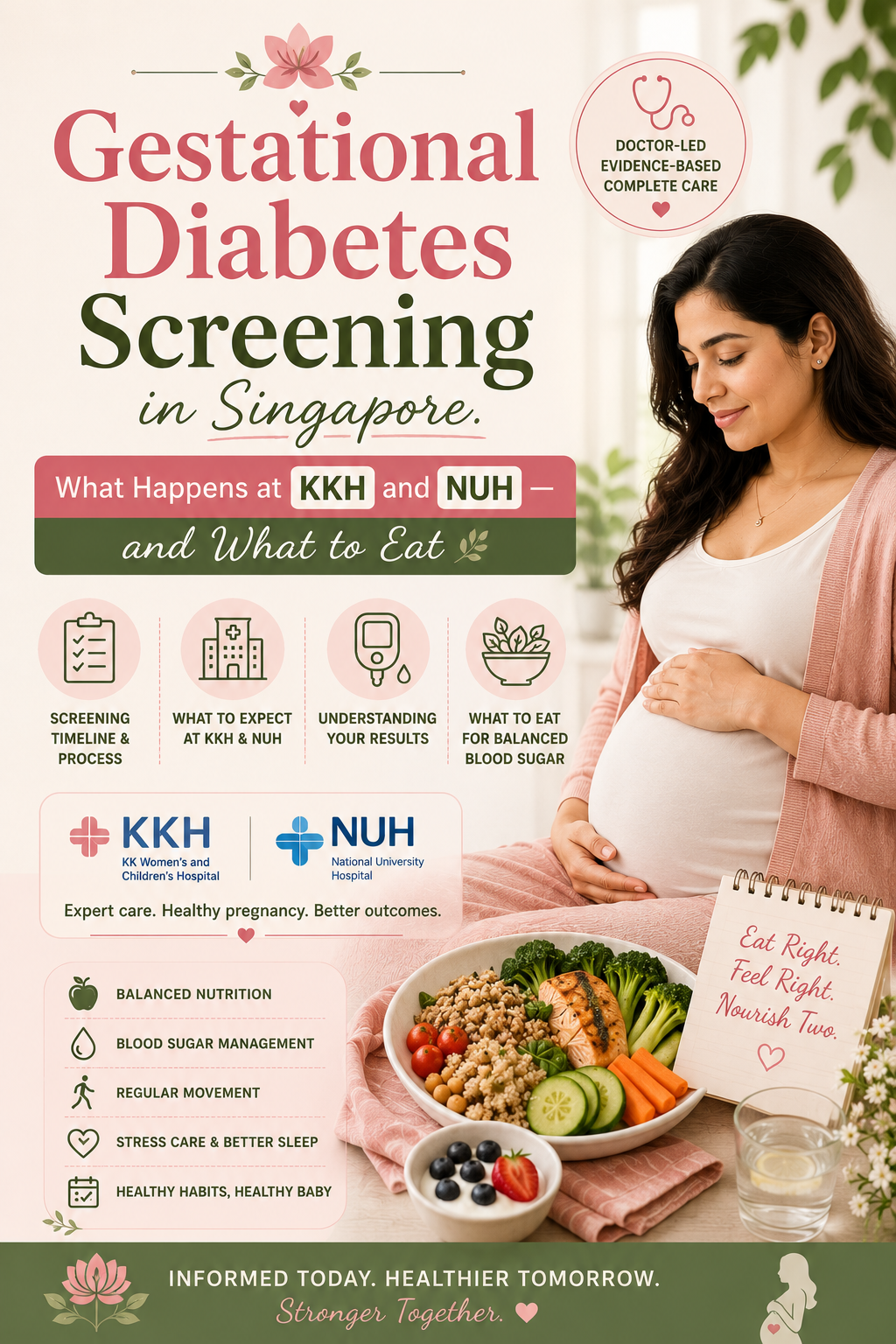
The OGTT (Oral Glucose Tolerance Test) is a three-point blood test that measures how your body processes glucose over a two-hour period. Here is exactly what happens at KKH, NUH, SGH, and polyclinics offering shared care:
Before the Test
- You fast from midnight the night before, no food or drink except plain water
- Arrive at the clinic or hospital in the morning, typically between 7–9 am
- Bring a book, your phone, or something to occupy you, the test takes approximately 2 hours in the clinic
During the Test
- Point 1 (Fasting blood test): Blood is drawn at arrival, after overnight fasting
- You then drink a pre-measured 75 g glucose solution (a standardised, pre-mixed sweet drink used across all Singapore hospitals)
- Point 2 (1-hour blood test): Blood drawn exactly one hour after the glucose drink
- Point 3 (2-hour blood test): Blood drawn exactly two hours after the glucose drink
The Diagnostic Thresholds in Singapore
Singapore follows the IADPSG (International Association of Diabetes and Pregnancy Study Groups) diagnostic criteria, which were adopted by the College of Obstetricians and Gynaecologists Singapore (COGS) and are used at KKH, NUH, and all major Singapore hospitals. GDM is diagnosed if any one of the following three values is met or exceeded:
| Time Point | GDM Threshold (Singapore) |
|---|---|
| Fasting | ≥5.1 mmol/L |
| 1 hour after glucose drink | ≥10.0 mmol/L |
| 2 hours after glucose drink | ≥8.5 mmol/L |
If any single threshold is met, you are diagnosed with GDM; not all three values need to be elevated. This is an important point: many women are surprised to receive a GDM diagnosis based on only one elevated value, typically the one-hour reading.
References:
- SingHealth: GDM Screening Singapore. singhealth.com.sg
- NUH GDM Service. nuh.com.sg
- COGS Singapore GDM Guidelines. COGS GDM Guidelines 2018
- ACE Singapore GDM Update. ace-hta.gov.sg
👉Overcoming Gestational Diabetes: A Guide for Pregnant Women
👉Iron Deficiency in Pregnant Women in Singapore: An Doctor’s Complete Guide
Why Indian Women in Singapore Are at Higher Risk
The HAPO study, of which KKH was a participating centre, established that even mildly elevated blood glucose during pregnancy increases the risk of adverse outcomes including macrosomia (large baby), primary caesarean delivery, and neonatal hypoglycaemia. NUH has specifically documented that one in five pregnant women in Singapore is diagnosed with GDM, and women with GDM carry at least a 70% increased lifetime risk of developing type 2 diabetes, with half progressing within 10 years of delivery.
For Indian women specifically, this risk is compounded by the “thin-fat Indian phenotype”; South Asian women develop higher visceral and intramuscular fat at lower BMIs than Chinese or Malay women. A woman who appears to be a healthy weight by Singapore BMI standards (18.5–22.9) may still carry enough visceral fat to impair insulin signalling, placing her at higher GDM risk than her weight alone suggests. This is why fasting insulin and HOMA-IR testing before pregnancy is valuable for Indian women.
👉The Singapore Woman’s Essential Guide to Early Diabetes Detection
What Happens After a GDM Diagnosis in Singapore
At KKH and NUH, a GDM diagnosis initiates a structured management pathway:
- Dietitian referral: You will be referred to a hospital dietitian for dietary counselling, typically within one to two weeks of diagnosis. This is one of the most useful appointments of your pregnancy. Take notes and ask specific questions about Indian foods.
- Home blood glucose monitoring: You will be given a glucometer and taught to self-monitor blood glucose four times daily, fasting (before breakfast) and two hours after each main meal. Target values: fasting below 5.3 mmol/L, 2-hour post-meal below 6.7 mmol/L at KKH (values may differ slightly at other institutions).
- Exercise prescription: A 10–15 minute walk after each main meal is one of the most effective GDM management strategies; it uses the glucose from that meal in active muscle rather than allowing it to remain elevated in the bloodstream.
- Insulin or metformin if targets are not met: If blood glucose targets cannot be met with diet and exercise alone within one to two weeks, medication, typically insulin or metformin, will be prescribed. Accepting this is not a failure; it is recognising that GDM has a physiological component that diet alone sometimes cannot fully control.
- Increased foetal surveillance: Women with GDM receive additional growth scans to monitor foetal size.
- Post-delivery OGTT: A repeat OGTT is performed 6–12 weeks after delivery to assess whether blood glucose has returned to normal. Given that 50% of women with GDM develop type 2 diabetes within 10 years, this post-delivery test and its annual follow-up are clinically important, not optional.
👉 Normal Weight but High Sugar? The Singapore Metabolic Trap
👉How Much Weight Gain During Pregnancy is Normal According to Singapore Guidelines?
The GDM Diet for Indian Women in Singapore — Practical Guide
Singapore hospital dietitians provide excellent general GDM guidance, but their advice is often not specifically tailored to Indian eating patterns. The standard Singapore GDM plate model (half vegetables, quarter protein, quarter carbohydrate) applies perfectly to Indian food; the challenge is knowing which specific Indian carbohydrates, dal preparations, and traditional foods fit within GDM blood glucose targets.
The Core Principles
- Distribute carbohydrates across three main meals and two to three small snacks — never consume all your carbohydrates in one sitting. A large rice-heavy lunch will spike blood glucose even if the total daily carbohydrate is within target; distribution is as important as total quantity.
- Pair every carbohydrate with protein and fibre — never eat carbohydrates alone. Dal before rice at every meal. Vegetables before roti. This meal sequencing reduces the post-meal glucose peak significantly.
- Test after meals to identify your personal triggers — two hours after the first bite of each meal. Every woman’s blood glucose response is individual. Some women spike significantly after white rice but tolerate jowar roti well; others tolerate smaller portions of white rice better than expected. Your glucometer is your most important dietary tool.
👉Gestational Diabetes Diet: Indian Foods That Keep Sugar Stable
Carbohydrates: What to Choose and What to Limit
| Lower GI Choices (Prefer) | Higher GI (Limit/Test Carefully) |
|---|---|
| Jowar roti (1 medium) | White rice (>¼ cup cooked) |
| Bajra roti (1 medium) | Maida roti, naan, paratha |
| Ragi porridge (small portion) | White bread, idiyappam |
| Barley in khichdi | Suji/semolina upma alone |
| Oats (plain, rolled) | Sweet mithai, jaggery in large quantities |
| White rice (¼ cup, with dal first) | Fruit juice, sweetened drinks |
| Idli (2–3, with sambar) | Packaged cereals |
Note on idli and dosa: Fermented idli and dosa, often assumed to be automatically GDM-friendly, have a moderate glycaemic index. Small portions (2–3 small idlis) paired with sambar (protein + fibre) and a vegetable chutney rather than coconut chutney alone are generally manageable for most women with GDM. However, always test two hours after your first serving to know your individual response.
Protein: The Blood Sugar Stabiliser — Make It the Priority
Protein at every meal slows gastric emptying, reduces the post-meal glucose peak, and provides the amino acids required for foetal growth. For Indian women in Singapore:
- Dal at every main meal: Masoor, moong, toor, the most GDM-friendly protein sources in the Indian diet. Eat the dal before the rice or roti.
- Eggs: Two eggs at breakfast is one of the most effective GDM breakfast strategies; protein and fat before any carbohydrate stabilises the morning glucose (which tends to be most sensitive in GDM)
- Plain dahi: Include at breakfast and as a snack; protein plus the probiotics that may support insulin sensitivity
- Paneer and tofu: Excellent protein sources with zero carbohydrate impact; available at NTUC FairPrice, Cold Storage, Mustafa, and online grocery platforms across Singapore
- Fish and chicken (for non-vegetarians): See our guide on: Safe fish choices in Singapore pregnancy, options from Tekka Market and NTUC’s fish counter
A Sample GDM Day for Indian Women in Singapore
- Breakfast (7:30 am): Two scrambled eggs + one jowar roti + plain dahi + one cup green tea. No sweetened chai or milo.
- Mid-morning snack (10 am): A small handful of almonds (10–12) + one guava
- Lunch (1 pm — dal first, then roti/rice): One cup masoor dal soup → one jowar or bajra roti + palak sabzi + cucumber salad with lime. If having rice: ¼ cup cooked white rice only, eaten last, after dal and vegetables.
- Afternoon snack (4 pm): Plain dahi (small bowl) + a few pumpkin seeds
- Dinner (7 pm — light, early): Moong dal khichdi (dal-heavy, rice-light) + plain chaas + a simple sabzi. Finish by 7:30 pm.
- Post-meal walks: 10–15 minutes after lunch and dinner, walk around your HDB block or condo.
- Test at 2 hours after the first bite of breakfast, lunch, and dinner initially, until you know your triggers.
👉Insulin Resistance Indian Meal Plan — the dietary foundation for GDM management
👩⚕️ Just Diagnosed with GDM in Singapore?
I work specifically with Indian women in Singapore to create personalised GDM meal plans that work with your actual food culture, not generic hospital advice that doesn’t account for dal, roti, or hawker centre eating.
Explore my program:
Navigating GDM at Singapore Hawker Centres and Restaurants
One of the most practical challenges for Indian women managing GDM in Singapore is eating out, at the office, at hawker centres, at family gatherings, and at Indian restaurants. Here are the Singapore-specific strategies:
At the Indian Hawker Stall (Golden Mile Complex, Tekka Market, Little India)
- Choose: Plain thosai with sambar (ask for less coconut chutney), thosai is thinner and lower glycaemic than parotta; fish or chicken curry (not gravy-heavy) with a small portion of rice eaten last; rasam with boiled egg; plain dahi/lassi without sugar
- Limit: Parotta (refined maida, high GI), biryani in large portions (rice-heavy), sweetened drinks including Milo, sweetened lassi, sugarcane juice
- Request: Extra vegetables; less rice; dal or dal-based dishes as the first course
At Chinese or Malay Hawker Stalls
- Choose: Steamed protein (fish, tofu, chicken) + vegetables first, then a small portion of rice or noodles; economy rice (cai png) with extra vegetable and protein dishes, minimal rice; broth-based soups with protein
- Limit: Char kway teow, fried rice, laksa (coconut-based, high glycaemic), roti prata with dhal (the prata itself is high GI)
👉How Healthy Is Singapore Hawker Food? A Doctor’s Breakdown
👉What to Eat at Singapore Hawker Centres Without Ruining Your Health
The Post-Delivery Picture: Your Long-Term Risk
NUH launched Singapore’s first dedicated GDM postpartum service in October 2023 specifically to address the gap in post-delivery follow-up. Their data shows that women with GDM have at least a 70% increased lifetime risk of type 2 diabetes, with half progressing within 10 years of delivery. This is why the post-delivery OGTT at 6–12 weeks is not optional, and why the dietary habits you build managing GDM in pregnancy are the same habits that protect your long-term metabolic health.
The good news: lifestyle intervention reduces progression from prediabetes to type 2 diabetes by more than 50% even in high-risk women. Your GDM diagnosis is a metabolic early warning signal, and it comes with a clear, evidence-based dietary response that you are already learning.
Frequently Asked Questions
I passed my OGTT at 24 weeks. Does that mean I definitely don’t have GDM for the rest of my pregnancy?
The OGTT screens for GDM at the time it is performed. In the third trimester, placental hormones that antagonise insulin increase further; some women develop GDM after a normal 24–28 week OGTT. If you develop symptoms (unusual thirst, frequent urination, large fundal height on scan) in the third trimester, discuss a repeat test with your obstetrician. Women who had a normal OGTT but had early risk factors (previous GDM, PCOS, family history of diabetes) warrant extra vigilance.
I have GDM. Does that mean I have to have a C-section?
Not automatically. Well-controlled GDM with normal foetal growth does not by itself mandate caesarean delivery. Caesarean delivery is more likely if the baby is macrosomic (large, often associated with poorly controlled GDM), if labour does not progress normally, or for other obstetric reasons. Keeping blood glucose well-controlled reduces macrosomia risk and therefore keeps vaginal delivery more likely.
Can I eat at hawker centres at all with GDM?
Yes, with strategy. The principles are: protein and vegetables first, carbohydrate last and in smaller portions; choose lower GI options where available; walk after the meal; and test your blood glucose two hours later to learn your response to specific meals. See the hawker centre guide in the section above.
My blood glucose is well-controlled with diet. Do I still need to monitor it daily?
Yes, until your obstetrician or endocrinologist advises otherwise based on consistently stable readings over an extended period. Glucose responses in pregnancy change as the placenta grows and hormonal demands shift. A meal that was fine at 26 weeks may produce a different response at 34 weeks. Continue monitoring as directed by your care team at KKH or NUH.
The Bottom Line
Gestational diabetes affects one in five pregnant women in Singapore, and Indian women are at higher risk than the general population. The OGTT at 24–28 weeks at KKH, NUH, or your polyclinic is the universal screening test, and the IADPSG diagnostic thresholds used in Singapore require only one elevated value for diagnosis. Management centres on distributing carbohydrates, pairing them with protein and fibre (dal before rice, always), post-meal walking, and home blood glucose monitoring. The dietary principles that manage GDM well are the same ones that protect your long-term metabolic health, making your GDM diagnosis one of the most important and most actionable health signals your pregnancy can give you.
👩⚕️ Managing GDM in Singapore? Let’s Build Your Personalised Plan.
As a Preventive Medicine physician based in Singapore, I specialise in helping Indian women navigate gestational diabetes, with meal plans designed around real Indian food, Singapore’s hawker culture, and your individual glucose readings.
🌿 Explore My Program:
🤱Nourish Nine: Doctor-Led Pregnancy Nutrition & Care Program (Trimester-Wise), with special focus on dietary management of GDM.
Addresses the insulin resistance underlying GDM, with personalised nutrition protocols, movement guidance, and WhatsApp support between sessions.
🌸 Not sure where to start? Begin with a complimentary 20-minute support call.
Serving Indian women in Singapore and worldwide via Zoom.
Disclaimer: This article is for educational purposes only. GDM diagnosis and management require medical supervision from your obstetrician, endocrinologist, and dietitian at KKH, NUH, or your chosen Singapore healthcare provider.
References:
- SingHealth. Gestational Diabetes Mellitus. singhealth.com.sg
- NUH. Gestational Diabetes — Dedicated GDM Service Launch 2023. nuh.com.sg
- College of Obstetricians and Gynaecologists Singapore. Guidelines for the Management of GDM. COGS GDM Guidelines
- Agency for Care Effectiveness Singapore. GDM — An Update on Screening, Diagnosis and Follow-Up. ace-hta.gov.sg

Akanksha Sharma
Dr Akanksha Sharma (MBBS, MD) is a physician and women’s health nutrition specialist, and the founder of IYSA Nutrition. She provides evidence-based, doctor-led nutrition guidance for pregnancy, postpartum recovery, PCOS, child nutrition, and family health, helping women make calm, informed decisions about their health and their children’s well-being.