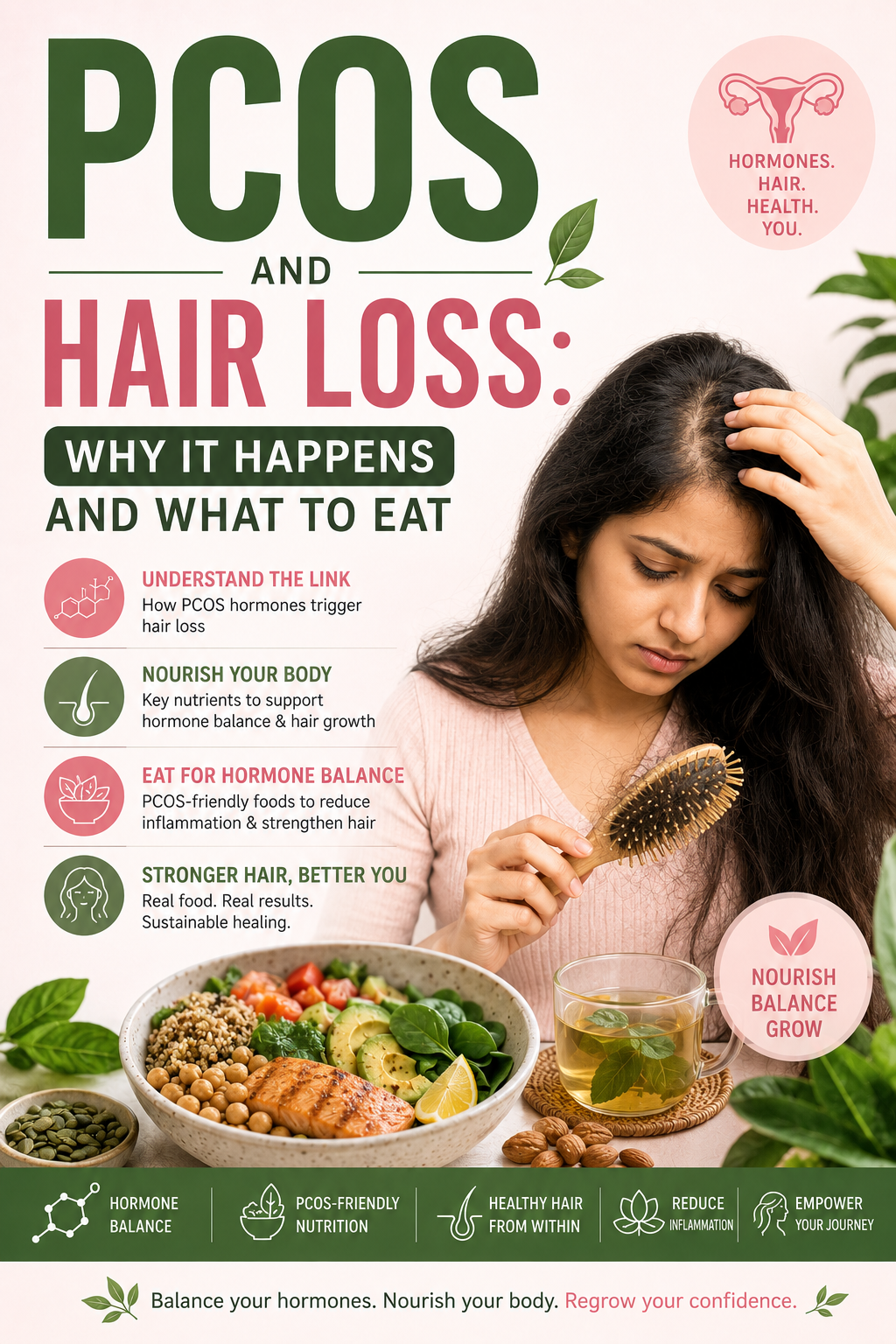
Why PCOS Causes Hair Loss: The DHT-Insulin Mechanism
Hair loss in PCOS is driven by a cascade that begins with insulin resistance and ends at the hair follicle. Understanding each step matters, because the nutritional interventions work at different points in this cascade.
Step 1: Insulin Resistance → Hyperinsulinaemia
The majority of women with PCOS have some degree of insulin resistance. When cells resist insulin’s signal, the pancreas compensates by producing more insulin. This chronically elevated insulin (hyperinsulinaemia) creates two downstream problems relevant to hair loss.
Step 2: Hyperinsulinaemia → Elevated Androgens
High insulin directly stimulates ovarian theca cells to produce testosterone and other androgens. Simultaneously, high insulin suppresses hepatic production of sex hormone-binding globulin (SHBG), the protein that binds and neutralises free testosterone in circulation. The result: more total testosterone is produced, and less of it is bound and inactivated, leaving more free testosterone circulating.
Step 3: Testosterone → DHT via 5-Alpha Reductase
Free testosterone is converted to dihydrotestosterone (DHT) by the enzyme 5-alpha reductase. DHT is significantly more potent than testosterone at androgen receptors, and scalp hair follicles, particularly in the crown and frontal areas, are highly sensitive to it. DHT binds to androgen receptors in follicle dermal papilla cells, triggering a process called follicular miniaturisation: the growth phase (anagen) shortens, the resting phase (telogen) lengthens, and over successive cycles, thick terminal hairs are progressively replaced by fine, thin vellus hairs. This is androgenic alopecia (female pattern hair loss), and in women with PCOS, it is the primary hair loss mechanism.
Approximately 30% of women with PCOS experience this form of hair loss, with the classic pattern being diffuse thinning at the crown and a widening central parting rather than the receding hairline seen in male pattern baldness.
👉PCOS and Hormonal Acne in Singapore Women: The Diet Strategy That Addresses the Root Cause
👉Ovarian Cyst vs PCOS: What Singapore Women Need to Know
The Ferritin Connection — The Most Commonly Missed Factor
Many women with PCOS-related hair loss have a second, overlapping cause that is entirely correctable but frequently overlooked: iron deficiency. Heavy, irregular, or prolonged menstrual bleeding, common in PCOS, depletes iron stores progressively. Iron is essential for hair follicle proliferation during the anagen (growth) phase; ferritin specifically (the stored iron marker) appears to act as a nutrient reservoir for the metabolically active hair follicle.
A ferritin level above 70 ng/mL is widely considered by dermatologists and trichologists to be the minimum for optimal hair growth, substantially higher than the standard laboratory “normal” lower limit of 12–15 ng/mL. Women with PCOS whose ferritin sits at 20–40 ng/mL, technically “normal”, may be experiencing significant hair loss driven in part by suboptimal iron stores, entirely independent of their androgen status.
Test ferritin specifically, not just haemoglobin. Correct to above 70 ng/mL with dietary iron intensification and supplementation under medical guidance. This is one of the most impactful and most frequently missed interventions for PCOS hair loss.
👉Iron-Deficiency Anemia in Singapore Women
Nutritional Strategies That Address the Root Cause
1. Reduce Insulin Resistance — The Foundation of Everything
Because PCOS hair loss is primarily driven by hyperinsulinaemia-induced androgen excess, reducing insulin resistance is the most causally relevant dietary intervention. Every strategy in the insulin resistance protocol applies directly here: low-GI carbohydrates (jowar, bajra, barley over white rice), protein at every meal (25–30g per main meal), soluble fibre before meals (isabgol, methi seeds), meal sequencing (vegetables and protein before carbohydrates), and the 12-hour overnight fast. Reducing insulin reduces androgen production at source, which reduces DHT, which slows follicular miniaturisation.
👉The Insulin Resistance Trap in PCOS: How to Break Free Naturally
2. Myo-Inositol — The Most Evidence-Supported PCOS Supplement
Myo-inositol improves insulin signalling at the cellular level, reducing hyperinsulinaemia and its downstream androgen excess. Multiple randomised controlled trials have found that myo-inositol supplementation reduces free testosterone and the free androgen index in women with PCOS, and reduces markers of hyperandrogenism including hirsutism. While myo-inositol has not been studied specifically for PCOS hair loss as a primary endpoint, its consistently documented effect of reducing free testosterone by up to 50–60% in several trials provides a mechanistically sound basis for expecting downstream benefit for androgenic hair loss driven by androgen excess.
The most studied dose is 2,000–4,000 mg of myo-inositol daily, often in a 40:1 ratio with D-chiro-inositol. Available in powder or capsule form; discuss with your gynaecologist or endocrinologist.
👉Inositol and PCOS: A Natural Approach to Hormonal Balance
3. Zinc — The 5-Alpha Reductase Inhibitor
Zinc competitively inhibits 5-alpha reductase, the enzyme that converts testosterone to the more potent DHT. This is a direct, mechanism-specific nutritional intervention for androgenic hair loss. A study examining zinc supplementation at 50mg elemental zinc daily in PCOS populations found significant reductions in hyperandrogenism markers. Zinc is also essential for hair follicle structural protein synthesis.
Zinc is frequently insufficient in Indian vegetarian women with PCOS. Best food sources: pumpkin seeds (most accessible), sesame seeds (til laddoo, til chutney), rajma, kabuli chana (well-soaked), eggs, and cashews. Supplementation at 15–25mg elemental zinc daily is appropriate for vegetarian women with documented insufficiency.
👉Zinc: The Important Mineral You are Not Taking Enough
4. Protein Adequacy — For Hair Structure and Growth
Hair is composed almost entirely of keratin, a protein. Adequate dietary protein provides the amino acid building blocks for keratin synthesis. Two specific amino acids are most relevant: cysteine (found in eggs, chicken, and legumes) and methionine (found in eggs, dairy, and fish). Protein deficiency does not cause androgenic alopecia but worsens hair thinning independently, compounding the androgenic hair loss of PCOS.
Target 1.2–1.5g of protein per kg of body weight daily. For a 55 kg woman, this is 66–83g daily, significantly higher than average Indian dietary intake. Eggs are the most efficient single food for hair-relevant protein: two eggs daily provide 12g of complete protein with all the hair-relevant amino acids, plus biotin, B12, and choline.
👉 PCOS Diet Myths – What Actually Works (Doctor Explains)
5. Vitamin D — The Hair Follicle Regulator
Vitamin D receptors are present in hair follicle keratinocytes and play a role in regulating the hair cycle. Low Vitamin D is consistently associated with higher rates of hair loss including alopecia areata and female pattern hair loss. Women with PCOS have among the highest rates of Vitamin D deficiency of any female population, and correction of deficiency is both a PCOS metabolic intervention and a potential hair growth support.
Test serum 25-OH Vitamin D. Correct to above 75 nmol/L with supplementation.
👉Vitamin D Deficiency in Singapore: Why You’re Still Low Despite the Sun
6. Spearmint Tea — Anti-Androgenic Evidence
Spearmint (Mentha spicata) has demonstrated anti-androgenic activity in clinical studies. A randomised controlled trial published in Phytotherapy Research (2010) found that drinking two cups of spearmint herbal tea daily for 30 days significantly reduced free and total testosterone levels in women with PCOS (free testosterone fell from 38.1 to 19.3 pg/mL, p=0.009). While the study was small (42 participants), the findings are biologically plausible, and the intervention is safe, caffeine-free, and easy to implement as a replacement for one or two daily cups of chai.
7. Saw Palmetto — The Botanical 5-Alpha Reductase Inhibitor
Saw palmetto (Serenoa repens) is a botanical 5-alpha reductase inhibitor; it works through a similar mechanism to finasteride (the pharmaceutical DHT blocker used for hair loss) but with a significantly milder side effect profile. A 2020 systematic review published in Skin Appendage Disorders (Evron et al.) pooled 5 RCTs and 2 prospective cohort studies and found 60% improvement in overall hair quality and 27% improvement in total hair count with topical and oral saw palmetto supplements, though the authors noted that “robust high-quality data are lacking”. Available as a supplement; 160–320mg standardised extract daily is the studied dose. Discuss with your doctor before starting.
8. Iron Repletion — Correct Ferritin to Above 70 ng/mL
As discussed, test ferritin, not just haemoglobin. If below 70 ng/mL, correct with ferrous bisglycinate supplementation under medical guidance alongside daily dietary iron strategies: masoor dal with lime, ragi roti, palak sabzi, til preparations, and no chai within 60 minutes of iron-rich meals. See Day 1 for the complete iron deficiency guide.
👉PCOS Diet Plan: What to Eat and Avoid, Indian & Singapore Foods
👉PCOS in Singapore: Why It’s Rising Even in Lean Women
Foods That Worsen PCOS Hair Loss
- Refined carbohydrates and sugar: The most direct dietary driver of insulin spikes and hyperinsulinaemia, the upstream cause of androgen excess. White rice in large portions, maida preparations, packaged biscuits, sweet chai, and sugary drinks directly worsen the hormonal environment driving hair loss.
- Ultra-processed foods: Drive systemic inflammation, worsen insulin resistance, and contain endocrine-disrupting additives.
- Alcohol: Worsens insulin resistance, impairs SHBG production, and disrupts hormonal balance.
- Very low-calorie diets: Severe caloric restriction raises cortisol, suppresses thyroid function, and can trigger telogen effluvium, a secondary hair loss pattern that compounds androgenic thinning.
👉PCOS Diet: What PCOS/ PMOS Women on Medication Must Eat
👩⚕️ Need Personalised PCOS Support?
I have worked with hundreds of women across Singapore and beyond, helping them manage PCOS, hair loss, and hormonal health through evidence-based nutrition.
Explore my programmes:
 PCOS Balance: A 12-Week Physician-Led Hormone & Fertility Restoration
 Weight Wise: A 12-Week Physician-Led Weight Loss & Body Recomposition Program
The PCOS Hair Loss Recovery Timeline
This is important to understand before beginning any dietary intervention for hair loss, because the hair cycle timeline means results are slow, and impatience is one of the most common reasons people abandon effective strategies.
- Hair follicles take 3–6 months to move through a complete cycle from growth to shedding
- Dietary changes that reduce androgen levels begin affecting the follicular environment within weeks, but the visible hair that results from those improved follicles will not emerge for another 3–6 months
- Expect a minimum of 4–6 months of consistent dietary and supplementation change before assessing whether hair density has improved
- Initial shedding may temporarily worsen when dormant follicles are stimulated to enter a new growth cycle; this is a positive sign, not a failure
- Ferritin correction, once started, typically produces noticeable improvement in hair quality and shedding reduction within 3–4 months
👉Managing PCOS while eating at Singapore Hawker Centres
Printable PCOS Basics Checklist (Free)
PCOS Self-Reflection Checklist
(For awareness, not diagnosis)
Cycle & symptoms
☐ Irregular or missed periods
☐ Acne beyond teenage years
☐ Excess facial/body hair
☐ Hair thinning
Metabolic signs
☐ Sugar cravings
☐ Energy crashes
☐ Difficulty maintaining weight
☐ Family history of diabetes
Lifestyle
☐ Poor sleep quality
☐ High stress levels
☐ Irregular meal timing
☐ Low physical activity
📌 If multiple boxes are checked, personalised guidance can help clarify next steps.
Frequently Asked Questions
Will my hair grow back fully once I manage my PCOS?
The answer depends on how long the androgenic process has been occurring and how severe the follicular miniaturisation is. In early to moderate androgenic alopecia, where follicles are miniaturised but still active, improving the hormonal environment through insulin resistance reduction, zinc, and myo-inositol can allow partial to significant hair regrowth. In advanced cases where follicles have been dormant for many years, permanent follicular loss is more likely and medical treatments (topical minoxidil, low-level laser therapy) may be needed alongside nutritional management. The earlier the intervention, the better the potential for recovery.
I am losing hair but my testosterone blood test was normal. Can PCOS still cause this?
Yes, and this is a very common and very frustrating clinical scenario. Standard testosterone blood tests may show “normal” total testosterone even when free (biologically active) testosterone is elevated, because SHBG is low and more testosterone is circulating in its unbound, active form. Ask your doctor specifically for free testosterone and SHBG, not just total testosterone. Additionally, even women with borderline androgen levels can have scalp hair follicles with high sensitivity to DHT, so the clinical picture (PCOS diagnosis plus hair thinning at the crown) is more relevant than the specific number on a blood test.
Is hair loss from PCOS the same as postpartum hair loss?
No, they are completely different mechanisms. Postpartum hair loss (telogen effluvium) is a temporary, self-resolving shedding that occurs 3–5 months after delivery when synchronised follicles that were held in the growth phase during pregnancy simultaneously enter the resting phase. It affects all over the scalp equally and resolves within 6–12 months. PCOS androgenic alopecia is a progressive, pattern-specific thinning driven by DHT miniaturisation that does not self-resolve without addressing the underlying hormonal cause.
The Bottom Line
PCOS hair loss is not a cosmetic problem; it is a hormonal signal that the underlying insulin-androgen axis is dysregulated and requires addressing. The dietary strategy is logical and mechanistic: reduce insulin resistance (the upstream driver), inhibit 5-alpha reductase with zinc and saw palmetto (the conversion step), reduce androgen levels with myo-inositol and spearmint tea (the hormonal environment), correct ferritin to above 70 ng/mL (the follicle fuel), and ensure adequate protein and Vitamin D. Results take months, but the same interventions that improve your hair are also improving your metabolic health, hormonal balance, and fertility. In PCOS, hair health and overall health move in the same direction.
👩⚕️ You Don’t Have to Figure This Out Alone
As a Preventive Medicine physician, I have worked with hundreds of women across Singapore and beyond, helping them manage PCOS, hair loss, and hormonal health through personalised, evidence-based nutrition. Whether you are newly diagnosed or have been managing PCOS for years, I am here to help.
🌿 Explore My Programmes:
PCOS Balance: A 12-Week Physician-Led Hormone & Fertility Restoration
Addresses the insulin resistance that drives PCOS, androgenic hair loss, and metabolic dysfunction through personalised nutrition, movement, and WhatsApp support.
⚖️ Weight Wise — A 12-Week Physician-Led Weight Loss & Body Recomposition Program
A unique program that takes care of your nutritional needs and does not follow a fad or extreme diet plan. You lose weight slowly in a sustainable way so that you become a healthier version of yourself.
🌸 Not sure where to start? Begin with a complimentary 20-minute support call, no pressure, just clarity on where your nutrition stands and what to do next.
Serving clients in Singapore, India, and worldwide via Zoom.
Disclaimer: This article is for educational purposes only. Hair loss with PCOS requires assessment by a physician or dermatologist to confirm diagnosis, exclude other causes, and determine appropriate medical treatment alongside nutritional strategies.
References:
- Grant P. Spearmint herbal tea has significant anti-androgen effects in polycystic ovarian syndrome. Phytother Res. 2010;24(2):186-188. PubMed PMID 19585478
- Zinc supplementation effect on androgen and gonadotropin in PCOS women. PubMed PMID 26315303
- Unfer V et al. Myo-inositol effects in women with PCOS: a meta-analysis. Endocr Connect. 2017;6(8):647-658. PubMed PMID 28982691
- Evron E et al. Natural hair supplement: Friend or foe? Saw palmetto, a systematic review in alopecia. Skin Appendage Disord. 2020;6(6):329-337. PubMed PMID 33313047
- ICMR-NIN Expert Group. Recommended Dietary Allowances for Indians. 2020. nin.res.in

Akanksha Sharma
Dr Akanksha Sharma (MBBS, MD) is a physician and women’s health nutrition specialist, and the founder of IYSA Nutrition. She provides evidence-based, doctor-led nutrition guidance for pregnancy, postpartum recovery, PCOS, child nutrition, and family health, helping women make calm, informed decisions about their health and their children’s well-being.