✍️ Written & reviewed by Dr Akanksha Sharma, MBBS MD (Preventive & Community Medicine) | Updated Dec 2025
If you’ve been told you have PCOS — or you suspect you might — you’ve probably heard too many conflicting things. 😵💫
It’s overwhelming. And often inaccurate. This guide is written to help you understand PCOS calmly, without extreme advice, fear-based messaging, or oversimplification. PCOS is not one single condition — and it is not the same for every woman. 💛
🔎 What is PCOS, really?
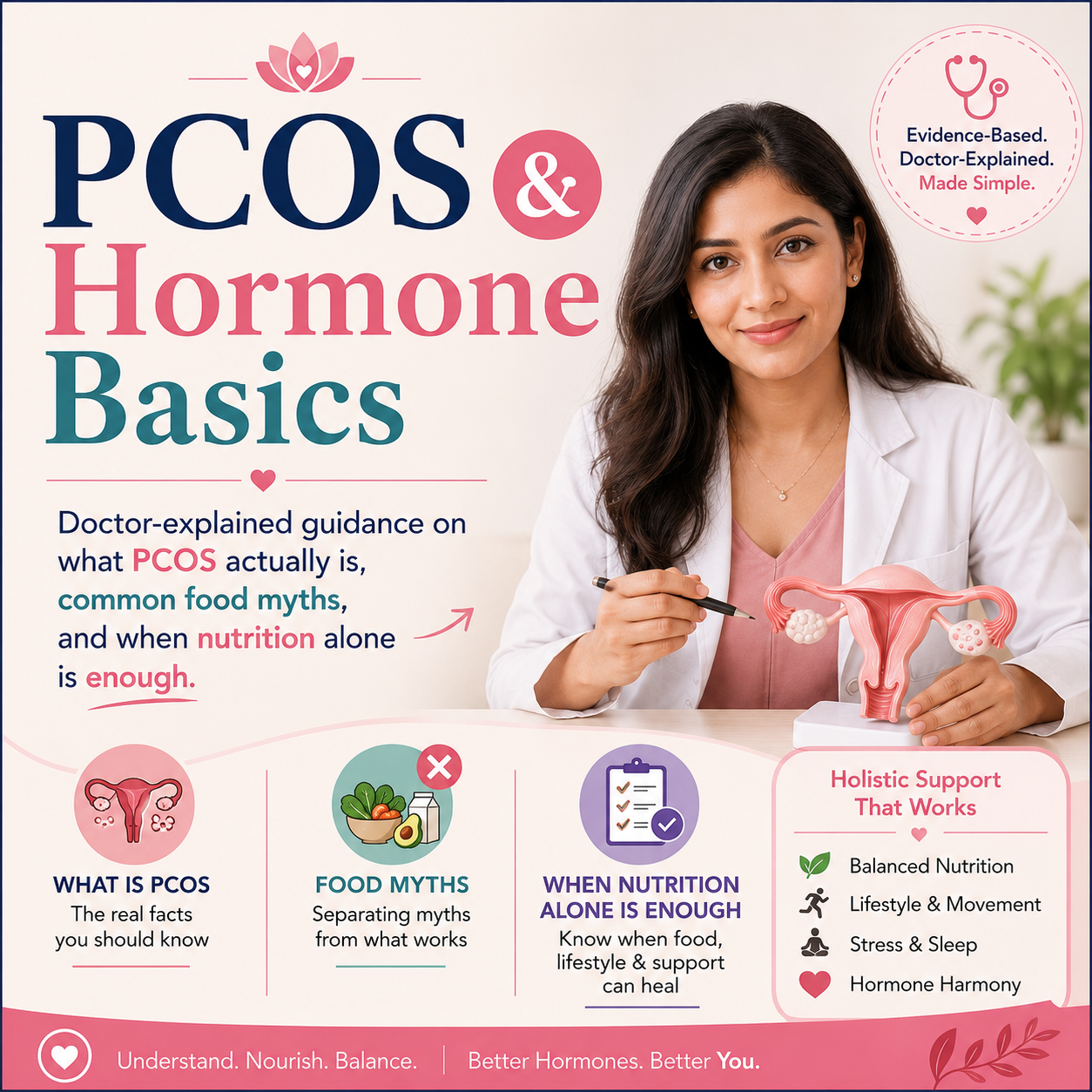
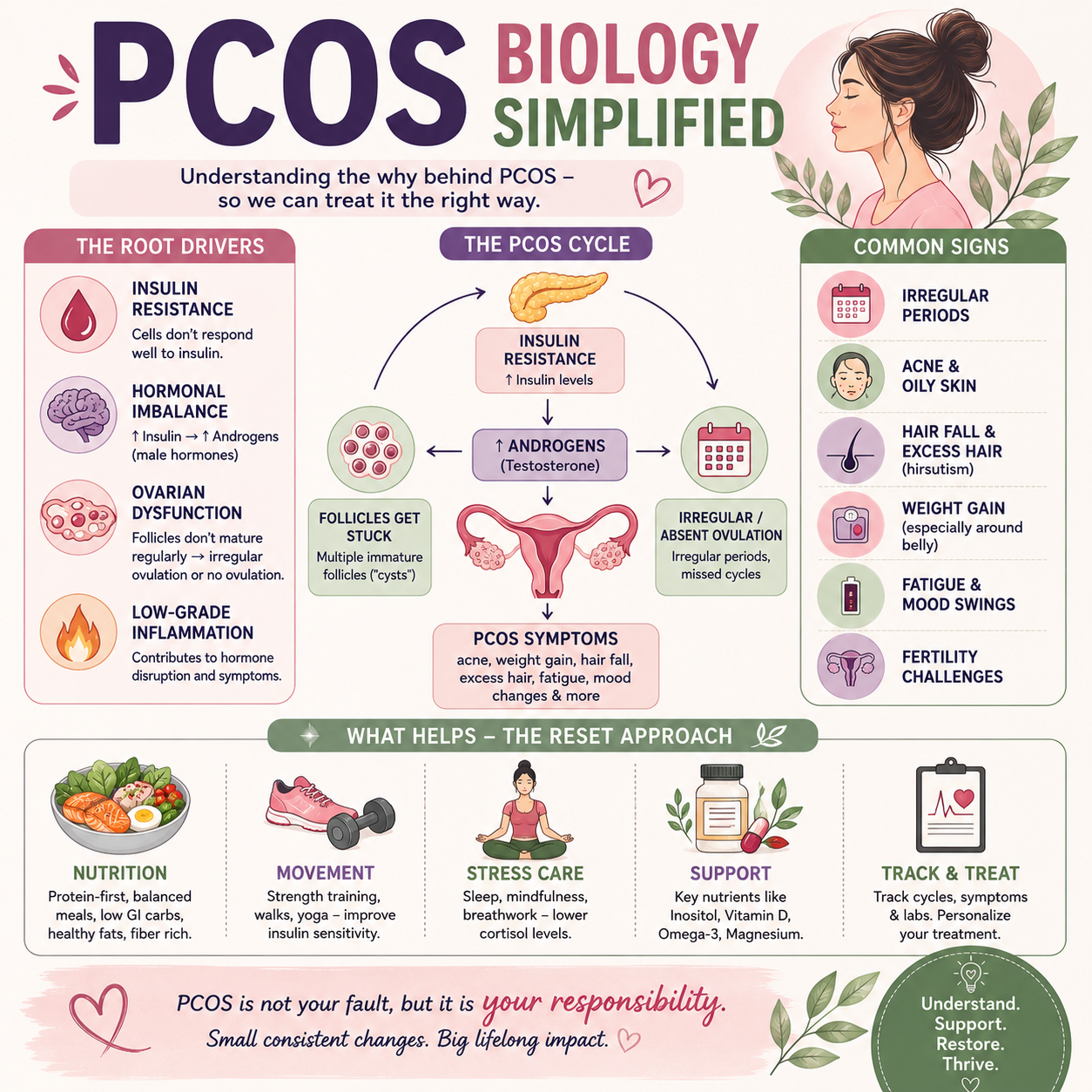
Polycystic Ovary Syndrome (PCOS) is a hormonal and metabolic condition, not just a reproductive disorder. It involves an interaction between:
- Ovarian hormones
- Insulin and metabolism
- Brain–ovary signalling
- Genetics and lifestyle factors
💡 PCOS is diagnosed based on a pattern of symptoms, not just an ultrasound.
👉 Understanding PCOD: Rising Trends, Health Implications, and Ayurvedic Remedies for Balance
🩺 How PCOS is diagnosed
Doctors commonly use the Rotterdam criteria, which require any two of the following:
1️⃣ Irregular or absent ovulation
2️⃣ Signs of excess androgens
3️⃣ Polycystic ovarian appearance
👉 This means two women can both have PCOS and look completely different.
📋 Common symptoms women experience
- Irregular or absent periods
- Acne or oily skin beyond teenage years
- Excess facial or body hair
- Hair thinning or hair fall
- Difficulty losing weight (for some, not all)
- Sugar cravings or energy crashes
- Mood changes, anxiety, or low confidence
Not everyone has all the symptoms. 🌸
👉 PCOS and Hair Loss: Why It Happens and What to Eat
🔗 The insulin–hormone connection
One of the most important drivers of PCOS in many women is insulin resistance. When insulin levels stay high:
- Ovaries produce more androgens
- Ovulation is disrupted
- Cycles become irregular
This is why PCOS is often linked with prediabetes, gestational diabetes, and long-term metabolic risk if unaddressed.
❤️ This does not mean you caused PCOS by eating “wrong.”
👉 The Insulin Resistance Trap in PCOS: How to Break Free Naturally
⚖️ Is PCOS only about weight?
No.
This is one of the biggest myths.
- Lean women can have PCOS
- Overweight women may or may not have insulin resistance
- Weight loss is not a treatment, but sometimes a tool
PCOS management should focus on metabolic health, not just the number on the scale. 💪
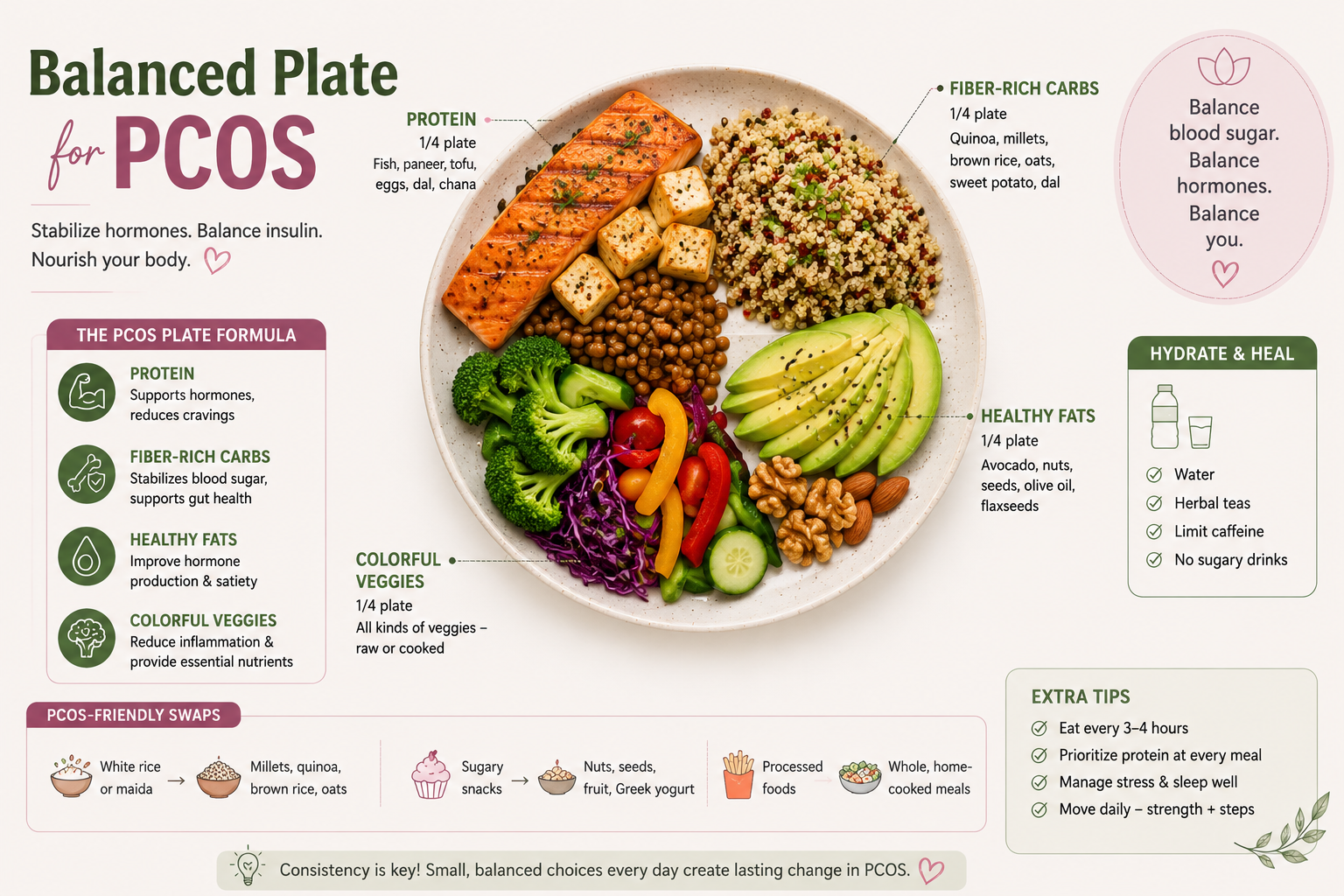
🥗 Nutrition & lifestyle: what actually helps
PCOS does not require:
❌ Cutting all carbs
❌ Eliminating entire food groups
❌ Following social-media “PCOS diets”
✔️ Helpful principles:
- Adequate protein with meals
- Balanced carbohydrates (not zero-carb)
- Fibre-rich vegetables
- Regular meal timing
- Strength training + gentle cardio
- Sleep regulation (often overlooked)
👉 Nutrition supports hormones — it does not “cure” PCOS overnight.
👉 PCOS Diet Myths – What Actually Works (Doctor Explains)
👉 Weight Loss with Hormonal Balance: Why Extreme Diets Backfire
🤰 Does PCOS affect fertility?
PCOS can affect ovulation, but:
- Many women conceive naturally
- Others conceive with simple medical support
- PCOS does not equal infertility
Early understanding and appropriate care improve outcomes significantly. 🌷
👉 10 Top Supplements for Women’s Reproductive Health
👉 Thinking of Having a Baby? Supplements for Healthy Pregnancy
💗 Emotional health & PCOS
Living with PCOS can affect body image, self-esteem, relationship with food, and mental health. A supportive, non-judgmental approach is essential — hormones and mental health are closely connected. 🤍
🚩 When should you seek personalised help?
- Periods are very irregular or absent
- Acne or hair issues are distressing
- You’re trying to conceive
- You feel stuck despite “doing everything right”
- Online advice feels overwhelming
Feeling overwhelmed by PCOS advice online? 🌼
PCOS management isn’t about extremes. It requires understanding your symptoms, labs, lifestyle, and reproductive goals together.
Explore my PCOS Nutrition Program → Book a Free 1:1 Consultation →
🌈 A realistic outlook on PCOS
PCOS is manageable.
With the right support, many women:
- Regulate cycles
- Improve skin and hair health
- Restore ovulation
- Improve metabolic health
- Build a healthy relationship with food
The goal is long-term balance, not short-term fixes. ✨
📝 Printable PCOS Basics Checklist (Free)
For awareness, not diagnosis.
Cycle & symptoms
☐ Irregular/missed periods
☐ Acne beyond teenage years
☐ Excess facial/body hair
☐ Hair thinning
Metabolic signs
☐ Sugar cravings
☐ Energy crashes
☐ Difficulty maintaining weight
☐ Family history of diabetes
Lifestyle
☐ Poor sleep quality
☐ High stress levels
☐ Irregular meal timing
☐ Low physical activity
📌 If multiple boxes are checked, personalised guidance can help clarify next steps.
Need clarity instead of conflicting information? 🌼
I offer doctor-led consultations and structured PCOS programs designed for Indian and Singaporean lifestyles — practical, sustainable, and evidence-based.
Book a Free Consultation → View PCOS Program →
(Educational guidance only. Not a substitute for medical care.)
❓ Frequently Asked Questions
1. Can PCOS be cured permanently?
PCOS is a long-term condition, but symptoms can be effectively managed and often significantly improved with the right approach.
2. Do all women with PCOS need medication?
No. Treatment depends on symptoms, goals, and metabolic status. Many women benefit from lifestyle-based interventions alone.
3. Is PCOS caused by stress?
Stress does not cause PCOS, but it can worsen hormonal imbalance and symptom severity.
4. Can I have PCOS even if my ultrasound is normal?
Yes. PCOS can be diagnosed even without polycystic ovaries if other criteria are met.
5. Does PCOS always cause weight gain?
No. PCOS affects women across all body types.
📚 References (PubMed)

Akanksha Sharma
Dr Akanksha Sharma (MBBS, MD) is a physician and women’s health nutrition specialist, and the founder of IYSA Nutrition. She provides evidence-based, doctor-led nutrition guidance for pregnancy, postpartum recovery, PCOS, child nutrition, and family health, helping women make calm, informed decisions about their health and their children’s well-being.