Written & reviewed by Dr Akanksha Sharma, MBBS, MD (Preventive & Community Medicine) | Founder, IYSA Nutrition, Singapore
Polycystic ovary syndrome (PCOS) is one of the most common hormonal conditions affecting women worldwide & one of the most mismanaged. Too often, women are handed a prescription for the contraceptive pill or metformin, given a vague instruction to “eat healthy and exercise,” and sent home without any real understanding of what that means for their specific hormonal picture.
The truth is that nutrition is one of the most powerful tools available for managing PCOS. Not because diet can “cure” it, PCOS is a lifelong condition that requires ongoing management, but because the right dietary approach directly targets the underlying mechanisms that drive PCOS symptoms: insulin resistance, androgen excess, chronic inflammation, and disrupted ovulation.
In this post, I will give you a clear, evidence-based, culturally relevant guide to eating for PCOS, designed specifically for Indian and South Asian women living in Singapore and India, where most PCOS nutrition content fails to account for the foods we actually eat.
👉Fertility Diet for Women: What to Eat When Trying to Conceive
👉PCOS and Hair Loss: Why It Happens and What to Eat
👉PCOS and Insulin Resistance in Singapore: What Works Beyond Metformin
Understanding PCOS: What Is Actually Going Wrong Hormonally?
Before discussing what to eat, it helps to understand what you are trying to address nutritionally. PCOS is not one single condition; it is a syndrome with multiple hormonal drivers. Understanding your dominant driver helps you prioritise your dietary approach.
Insulin Resistance: The Central Driver in Most Cases
Approximately 70–80% of women with PCOS have some degree of insulin resistance. This means that your cells do not respond efficiently to insulin, causing your pancreas to produce more and more of it. High circulating insulin signals the ovaries to produce excess androgens (male hormones, testosterone and DHEA-S). These androgens suppress ovulation, drive the formation of ovarian cysts, trigger acne, and stimulate unwanted facial and body hair growth.
This is why a low-glycaemic, anti-inflammatory dietary pattern is the foundation of PCOS nutrition management; it directly reduces insulin spikes, which lowers androgen production, which allows ovulation to resume and symptoms to improve.
👉The Insulin Resistance Trap in PCOS: How to Break Free Naturally
👉PCOS Diet: What PCOS/ PMOS Women on Medication Must Eat
Chronic Low-Grade Inflammation
Women with PCOS have measurably higher levels of inflammatory markers, including C-reactive protein, interleukin-6, and tumour necrosis factor alpha, compared to women without PCOS. This chronic inflammation worsens insulin resistance, impairs follicle development, and increases cardiovascular risk over time. An anti-inflammatory diet directly addresses this driver.
Elevated Androgens
High testosterone and DHEA-S drive the most visible PCOS symptoms: acne along the jawline and chin, hirsutism (unwanted hair on the upper lip, chin, abdomen, and thighs), and androgenic alopecia (thinning hair at the crown and temples). Dietary strategies that lower insulin also help lower androgens; they are directly connected.
👉PCOS and Hormonal Acne in Singapore Women: The Diet Strategy That Addresses the Root Cause
Disrupted Gut Microbiome
Emerging research is consistently linking PCOS with gut dysbiosis, an imbalance in the gut microbiome that worsens insulin resistance, increases inflammation, and disrupts the oestrogen-progesterone balance. This means that gut-supporting dietary strategies are not peripheral to PCOS management; they are central to it.
👉A Doctor-Reviewed Guide to Understanding PCOS
The Foundation: A Low-GI, Anti-Inflammatory Eating Pattern
The dietary approach with the strongest evidence base for PCOS is a low-glycaemic index (GI), anti-inflammatory eating pattern. This is not a “diet” in the restrictive sense; it is a framework for choosing foods that work with your hormones rather than against them.
The core principles are:
- Choose carbohydrates that release glucose slowly (low GI) rather than those that spike blood sugar rapidly
- Pair every carbohydrate with protein, healthy fat, and/or fibre to further blunt the glycaemic response
- Prioritise anti-inflammatory foods: vegetables, fruits, omega-3-rich fats, herbs and spices
- Limit ultra-processed foods, refined sugars, and trans fats, which drive both insulin resistance and inflammation
- Support gut health through prebiotic and probiotic-rich foods
👉Ovarian Cyst vs PCOS: What Singapore Women Need to Know
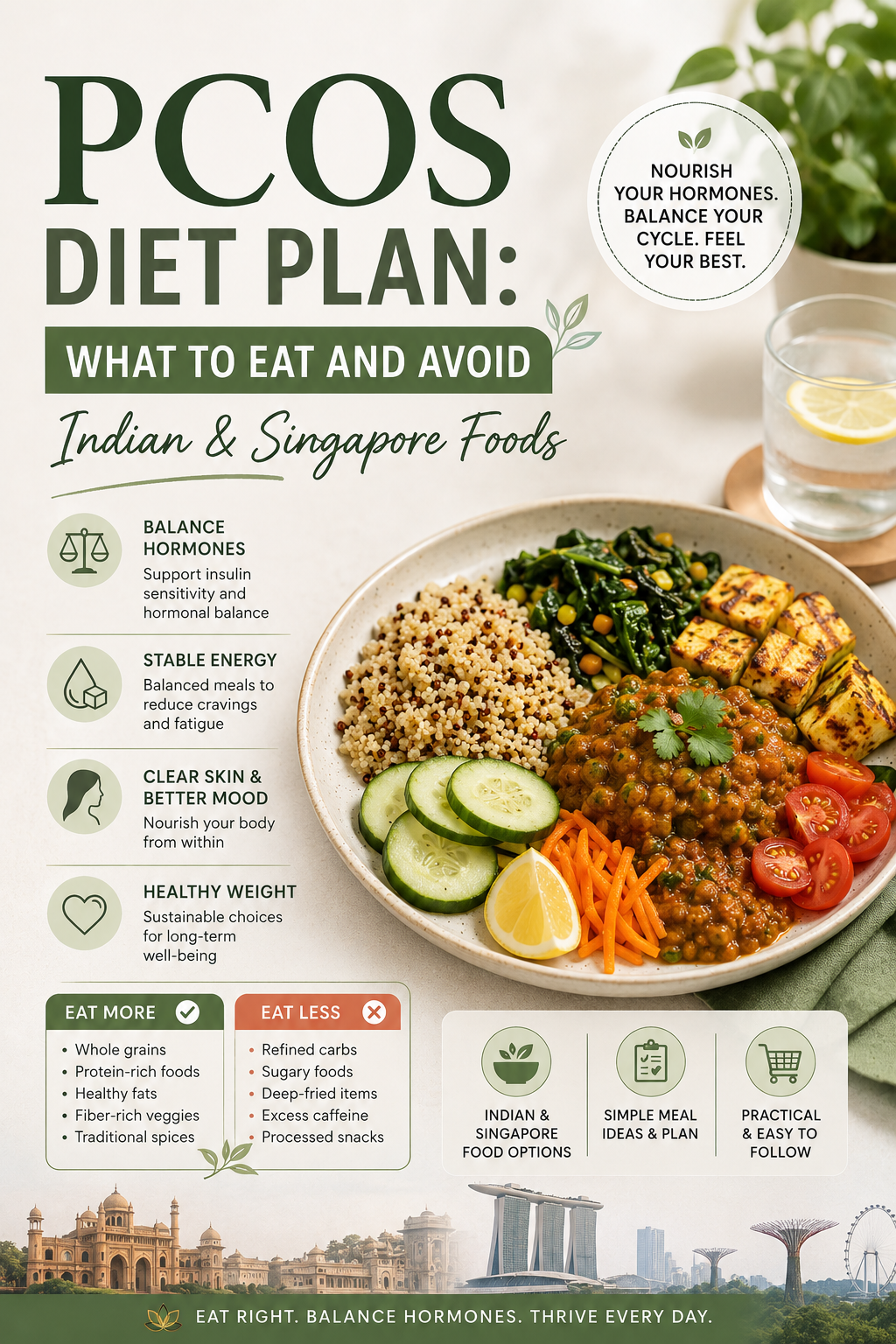
What to Eat: Indian and Singapore Foods That Support PCOS
Grains and Carbohydrates: Choose Wisely
Not all carbohydrates are equal. The goal is not to eliminate carbohydrates, they are an important source of energy, fibre, and B vitamins — but to choose those that do not cause large, rapid blood sugar spikes.
- Roti (1–2 small) made from multi-grain aata: Lower GI than wheat, white rice, higher fibre. Mix a portion of wheat aata with a proportion of jowar (sorghum), besan (chana dal flour) or bajra (pearl millet) flour.
- Jowar (sorghum) roti: Excellent GI profile, gluten-free, and high in fibre. One of the best grain choices for PCOS.
- Bajra (pearl millet) roti: High in magnesium, a mineral that improves insulin sensitivity. Good choice, particularly in the evening.
- Brown rice or red rice: Higher fibre and lower GI than white rice. Portion control still matters; keep to half a cup (cooked) at a meal.
- Oats (rolled, not instant): High in beta-glucan, a soluble fibre that improves insulin sensitivity and reduces cholesterol. Excellent breakfast choice.
- Quinoa: Complete protein, low GI, and high fibre. Available at most FairPrice and Cold Storage outlets in Singapore.
- Sweet potato: Lower GI than regular potato when boiled (not baked). A good carbohydrate alongside protein.
Limit or avoid: White rice (large portions), maida (refined flour), white bread, idli and dosa in large quantities, instant oats, sugary breakfast cereals, naan made with maida.
Proteins: The Hormonal Stabilisers
Protein blunts the glycaemic response of any meal and supports satiety, muscle maintenance, and hormone synthesis. Aim to include a good protein source at every meal.
- Eggs: One of the most complete and affordable protein sources. Two eggs at breakfast significantly reduce post-meal blood sugar compared to a carbohydrate-only breakfast.
- Legumes and dals: Masoor, moong, chana, urad, rajma, all excellent protein and fibre sources with low GI. Dal is one of the best PCOS foods available in Indian cooking.
- Paneer: High protein, minimal carbohydrate. Better than processed cheese. Keep portions moderate due to saturated fat content.
- Tofu: Plant-based, hormone-neutral at food quantities (the phytoestrogen concern is not clinically supported at normal dietary doses), and high in protein. Widely available in Singapore.
- Chicken and fish: Lean protein sources that support satiety and do not spike insulin. Grilled, baked, or poached rather than fried.
- Greek yoghurt (plain, unsweetened): Protein, probiotics, and low sugar. Good breakfast or snack base.
Fats: Anti-Inflammatory Choices Matter
Fat does not raise blood sugar, but it powerfully influences inflammation and hormone production. The type of fat you eat matters significantly in PCOS.
- Extra virgin olive oil: Rich in oleocanthal, a natural anti-inflammatory compound. Use for salad dressings and low-heat cooking.
- Coconut oil (in moderation): Fine for Indian cooking at moderate quantities, the saturated fat concern is overstated at small doses, but do not use it as your primary oil.
- Ghee (in moderation): Traditionally used in Indian cooking and contains butyrate, which supports gut lining health. One teaspoon over dal or roti is fine, not tablespoons.
- Avocado: Monounsaturated fat, high fibre, and anti-inflammatory. Available and affordable in Singapore.
- Nuts (walnuts, almonds, flaxseeds): Walnuts are particularly high in omega-3s. Flaxseeds contain lignans that help modulate oestrogen levels. One tablespoon of ground flaxseed daily is a simple and evidence-backed PCOS strategy.
- Fatty fish (salmon, mackerel, sardines, Indian pomfret): Rich in EPA and DHA, omega-3 fatty acids that reduce inflammatory markers in PCOS.
Limit or avoid: Refined vegetable oils (sunflower, corn, soybean in large quantities), vanaspati/dalda (hydrogenated fats), fried street food and deep-fried snacks, processed biscuits, namkeen, and packaged sweets.
Vegetables: The Non-Negotiables
Aim for at least 3–4 portions of non-starchy vegetables per day. These provide fibre (which slows glucose absorption and feeds beneficial gut bacteria), antioxidants (which reduce inflammation), and micronutrients essential for hormone synthesis.
- Dark leafy greens: palak, methi (fenugreek leaves), moringa, all excellent for PCOS
- Cruciferous vegetables: broccoli, cauliflower, cabbage, Brussels sprouts support liver detoxification of excess oestrogen
- Bitter gourd (karela): one of the most well-studied vegetables for blood sugar regulation
- Bottle gourd, ridge gourd, snake gourd: low GI, high water content, anti-inflammatory
- Tomatoes, capsicum, onion, garlic: anti-inflammatory staples
Fruits: Yes but with a strategy
Fruit is not forbidden in PCOS. Whole fruit contains fibre that slows sugar absorption. However, portion size and timing matter.
- Best choices: Berries (strawberry, blueberry, jamun), guava, kiwi, apple, pear, pomegranate, all low to moderate GI and high in antioxidants
- Moderate: Banana (half at a time, with protein), mango (small portion, not daily), grapes
- Limit: Fruit juice of any kind (removes fibre, concentrates sugar), canned fruit in syrup
Spices and Herbs That Actively Help PCOS
Indian cooking is rich in spices that have genuine, evidence-backed benefits for insulin resistance and inflammation. Use them generously.
- Cinnamon (dalchini): Improves insulin sensitivity; half a teaspoon daily in oats, smoothies, or warm water has been studied in PCOS populations
- Fenugreek (methi seeds): Rich in soluble fibre and compounds that improve insulin sensitivity; soaking and consuming a teaspoon of methi seeds in water overnight is a traditional practice with scientific backing
- Turmeric (haldi): Curcumin is anti-inflammatory; pair with black pepper to increase absorption 20-fold
- Ginger: Anti-inflammatory and helps reduce testosterone levels in some PCOS research
- Spearmint tea: Two cups daily has been shown in clinical studies to reduce free testosterone levels in women with PCOS, one of the most evidence-backed herbal strategies available
👉Indian Meal Plan for Insulin Resistance That Actually Works
What to Avoid: Foods That Worsen PCOS
Sugar and Refined Carbohydrates
Every time you consume refined sugar or high-GI carbohydrates, you drive an insulin spike. In a woman with PCOS, this insulin spike directly stimulates androgen production in the ovaries. Reducing sugar intake is not optional for PCOS management; it is the single most impactful dietary change you can make.
This includes: mithai (Indian sweets), soft drinks, fruit juices, white bread, puri, bhatura, white rice in large portions, packaged biscuits and cakes, ice cream, sweetened yoghurt, flavoured milk, and “health” bars that contain glucose syrup.
Dairy: Nuanced, Not Eliminated
The relationship between dairy and PCOS is genuinely complex. Full-fat dairy from good sources is not inherently harmful. However, commercial cow’s milk contains IGF-1 and androgenic precursors that may worsen acne and androgen excess in some women. Skimmed milk, counterintuitively, has a higher glycaemic index than full-fat milk and is associated with worse PCOS outcomes in some studies.
My clinical approach: reduce commercial cow’s milk to 1–2 servings per day, favour full-fat over skimmed, use plain curd/yoghurt freely, and consider A2 milk or plant milks if dairy seems to worsen your acne or symptoms significantly.
Ultra-Processed Foods
Ultra-processed foods, packaged snacks, instant noodles, ready meals, and fast food are high in refined carbohydrates, trans fats, sodium, and inflammatory seed oils. They worsen insulin resistance, gut dysbiosis, and inflammation simultaneously. Reducing UPF intake is a foundational step in PCOS management.
Alcohol
Alcohol impairs liver function, which is responsible for clearing excess oestrogen and androgens from the body. Even moderate alcohol consumption worsens hormonal balance in women with PCOS and increases cardiovascular risk, which is already elevated in this population.
Struggling to manage your diet in the city? See our guide on:
👉What to Eat at Singapore Hawker Centres Without Ruining Your Health
👉Managing PCOS while eating at Singapore Hawker Centres
Practical Sample Day: PCOS Meal Plan (Indian Vegetarian, Singapore Context)
- On waking: A glass of warm water with half a teaspoon of methi seeds (soaked overnight) or a cup of spearmint tea
- Breakfast: 1/2 cup rolled oats porridge with half a teaspoon of cinnamon, one tablespoon of ground flaxseed, and half a cup of fresh berries & 2 eggs or 60 g grilled paneer. Alternatively: 3 eggs (any style) with one jowar roti and a small portion of sautéed spinach.
- Mid-morning: A cup of plain Greek yoghurt + 1/2 apple
- Lunch: One cup (200g) cooked moong dal or masoor dal (thick in consistency) + one to two jowar/bajra rotis + one cup of any non-starchy sabzi. Keep rice to half a cup if preferred, pair with a generous portion of dal and vegetables.
- Evening snack: A small bowl of sprouts (moong or chana) with chopped tomato, onion, lime, and coriander. Or a small portion of hummus with raw vegetable sticks or 1 scoop whey protein powder in water
- Dinner: 1 bowl of any soup + Grilled fish/ chicken or tofu or paneer + a vegetable curry rich in cruciferous vegetables. Keep dinner the lightest meal of the day.
- Post-dinner: A cup of spearmint or chamomile tea. No screen-time snacking.
Key Micronutrients for PCOS: Are You Deficient?
Several micronutrients are consistently low in women with PCOS and have specific hormonal roles. Consider testing for these and discussing supplementation with your doctor if deficient.
- Vitamin D: Low vitamin D is found in over 70% of women with PCOS and is directly linked to insulin resistance and ovulatory dysfunction. Most Singapore women are also deficient despite living near the equator, indoor lifestyles and UV-avoidance are the main reasons. Testing and supplementing to reach 50–80 nmol/L is a priority.
- Magnesium: Essential for insulin signalling. Deficiency worsens insulin resistance. Food sources include dark leafy greens, pumpkin seeds, almonds, and bajra.
- Inositol (myo-inositol and D-chiro-inositol): The most evidence-backed supplement specifically for PCOS. Improves insulin sensitivity, restores ovulation, and reduces androgen levels. Discuss dosing with your clinician.
- Zinc: Regulates androgen metabolism; deficiency worsens acne and hirsutism. Found in pumpkin seeds, legumes, and meat.
- Omega-3 fatty acids: If fatty fish intake is low, a good-quality fish oil or algae-based omega-3 supplement (for vegetarians) is worth considering.
Frequently Asked Questions
Is rice bad for PCOS?
White rice is high GI and can worsen insulin resistance if eaten in large portions. That said, Indian and South Asian women do not need to eliminate rice entirely; portion control and pairing matter. Limit to half a cup of cooked rice per meal, always serve it with a generous portion of dal, sabzi, and a salad. Brown rice, red rice, or parboiled rice are better choices. Eating rice at lunch rather than dinner also reduces the glycaemic impact.
Can PCOS be reversed with diet?
PCOS cannot be “reversed”, it is a lifelong condition. However, with the right nutrition and lifestyle approach, the symptoms can be managed effectively, cycles can regularise, ovulation can resume, androgens can come down, and fertility can improve. Many women achieve this without medication through dietary changes alone, depending on the severity. The word “reversal” is misleading and sets unrealistic expectations; “effective management” is the accurate goal.
Should I avoid all dairy if I have PCOS?
No. There is no need to eliminate dairy entirely unless you have a confirmed intolerance. The evidence suggests reducing commercial cow’s milk intake, favouring full-fat over skimmed products, and freely consuming plain, unsweetened curd and yoghurt. Fermented dairy (curd, yoghurt, lassi without sugar) provides probiotics that support gut health & is beneficial in PCOS.
Does spearmint tea really help PCOS?
Yes, this is one of the few herbal interventions with actual clinical trial evidence behind it. Two randomised controlled trials have shown that drinking two cups of spearmint tea daily for 30 days reduces free testosterone levels in women with PCOS. It is not a replacement for medical treatment in severe cases, but it is a safe, inexpensive, and evidence-backed addition to a PCOS nutrition plan.
How long before I see results from dietary changes in PCOS?
Most women notice improvements in energy, mood, bloating, and skin within 4 to 8 weeks of consistent dietary change. Hormonal markers like testosterone, fasting insulin, and AMH typically take 3 to 6 months to shift meaningfully. Menstrual cycle regularity often improves within 3 months in women who also achieve modest weight loss (even 5% of body weight can restore ovulation in overweight women with PCOS).
Do I need to lose weight to improve PCOS symptoms?
If you are overweight, even a 5% reduction in body weight significantly improves insulin sensitivity, androgen levels, and ovulatory function. However, not all women with PCOS are overweight; lean PCOS is a recognised phenotype. In lean women, the focus is entirely on dietary quality and anti-inflammatory eating rather than calorie restriction, which can worsen hormonal disruption.
The Bottom Line
Managing PCOS with food is not about eating perfectly, eliminating all your favourite Indian dishes, or following a restrictive Western diet that has nothing to do with your culture or your kitchen. It is about understanding the hormonal mechanisms at play, insulin resistance, inflammation, androgen excess, and choosing foods that work with these mechanisms rather than amplifying them.
Jowar rotis instead of maida naan. Dal at every meal. Spearmint tea in the evening. Ground flaxseed in your breakfast. Limiting chai to between meals rather than with them. These are not dramatic changes, but done consistently, they create a genuinely different hormonal environment in your body.
If you have been diagnosed with PCOS and want a personalised, clinically designed nutrition plan that accounts for your specific hormonal picture, food preferences, and lifestyle, book a consultation with me below.
📩 Click here to book a free 20-minute consultation with Dr Akanksha Sharma. I work with women in Singapore and India to build PCOS nutrition plans that are evidence-based, culturally grounded, and actually sustainable.
👉 Learn more about the PCOS Protocol: 12 Weeks Doctor-Led Hormone & Fertility Restoration
Disclaimer: This article is for educational purposes only and does not constitute personalised medical advice. PCOS management should be overseen by a qualified clinician. Please speak with your doctor before starting any new supplement.
References:
ICMR-NIN Nutrient Requirements for Indians (2020).

Akanksha Sharma
Dr Akanksha Sharma (MBBS, MD) is a physician and women’s health nutrition specialist, and the founder of IYSA Nutrition. She provides evidence-based, doctor-led nutrition guidance for pregnancy, postpartum recovery, PCOS, child nutrition, and family health, helping women make calm, informed decisions about their health and their children’s well-being.