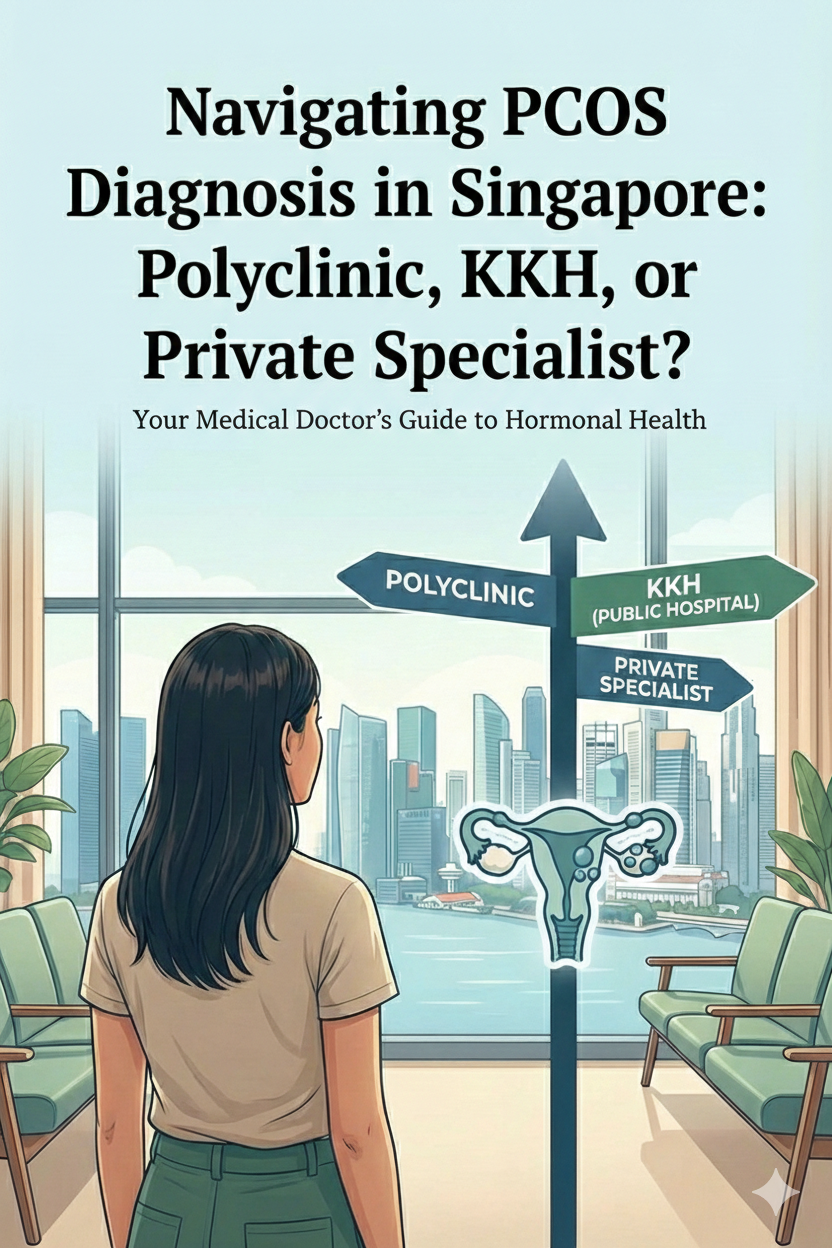
If you suspect PCOS, the confusing part usually isn’t the symptoms; it’s figuring out where to go. Polyclinic? KKH? A private specialist? Here’s a clear breakdown of your three options in Singapore, what each actually involves, and what happens after you get a diagnosis.
Quick note before we start: Getting a formal PCOS diagnosis requires a doctor who can order bloodwork and an ultrasound, a GP, gynaecologist, or endocrinologist. IYSA Nutrition doesn’t replace that step. What we do is the part that often gets skipped afterwards: turning a diagnosis into a nutrition and lifestyle plan that actually addresses why your hormones are behaving this way. More on that below.
Your 3 Paths to a PCOS Diagnosis in Singapore
| Route | Wait Time | Consult Length | Cost |
| Polyclinic → KKH/SGH (subsidised) | 2–4 months | ~10–15 min | $40–$60/visit |
| Private Gynaecologist / Endocrinologist | 2–5 days | 45–60 min | $150–$350 first visit |
| GP first (basic screen, then refer) | Same week | ~15–20 min | $60–$120 |
The Polyclinic route is the most affordable and is a completely reasonable starting point; the tradeoff is longer waits and a rotating cast of doctors. Going private (gynae or endocrinologist) gets you seen fast, with more time per visit and one consistent doctor. Either way, this is the step where your actual diagnosis happens.
👉PCOS and Hair Loss: Why It Happens and What to Eat
👉A doctor-reviewed guide to understanding PCOS
👉PCOS and Hormonal Acne in Singapore Women: The Diet Strategy That Addresses the Root Cause
How PCOS Is Actually Diagnosed
Whichever route you take, doctors in Singapore use the Rotterdam Criteria, you need 2 of these 3 to be diagnosed:
- Irregular or absent periods
- Signs of high androgens, acne, excess hair growth, or elevated levels on bloodwork
- Polycystic ovaries visible on ultrasound
This is why women with regular cycles can still have PCOS (2 out of 3 is enough), and why a scan alone isn’t a diagnosis either. If a doctor is running through these three checks, that’s a good sign you’re being properly assessed.
👉Ovarian Cyst vs PCOS: What Singapore Women Need to Know
What Usually Happens After Diagnosis — And the Gap It Leaves
In most cases, public or private, the standard next step is the combined oral contraceptive pill, to regulate your cycle and protect your uterine lining. This is well-established, appropriate care for many women, especially for symptom control or if you need the lining protected.
What it doesn’t do is treat the root driver for most women with PCOS: insulin resistance. The pill can regulate your bleed while the underlying metabolic picture, the thing actually causing the acne, the hair changes, the weight gain, continues untreated in the background.
This is the gap our PCOS Balance Program is built for. We don’t diagnose or prescribe; that’s your doctor’s role. What we do, working alongside your diagnosis:
- Functional lab interpretation: looking at Fasting Insulin and HOMA-IR, not just glucose and TSH
- Nutrition built for insulin sensitivity: practical, built around actual Singapore life (hawker meals, work lunches, travel)
- Nutrient correction: Vitamin D and Magnesium deficiencies are common here and directly affect insulin function
- A plan that fits your life: not a rulebook that assumes you can meal-prep every night
👉What to Eat at Singapore Hawker Centres Without Ruining Your Health
👉Managing PCOS while eating at Singapore Hawker Centres
Already have a PCOS diagnosis?
The PCOS Balance Program picks up where your doctor’s visit leaves off; a 12-week, physician-led nutrition plan built for your actual life in Singapore.
What It Costs, Roughly
- Private initial consultation: $150–$350
- Hormone panel: $250–$450
- Pelvic ultrasound: $200–$350
- PCOS Balance Program (12 weeks): from $350/month
Most corporate insurance plans cover specialist consultations and diagnostic tests with a referral. Nutrition programs are typically out-of-pocket.
👉PCOS Diet Plan: What to Eat and Avoid, Indian & Singapore Foods
👉PCOS Diet: What PCOS/ PMOS Women on Medication Must Eat
Quick Answers
Can a regular GP diagnose PCOS?
A GP can run initial bloodwork and order a scan, but you’ll usually be referred to a gynaecologist or endocrinologist to rule out look-alike conditions (thyroid, adrenal issues) and confirm the diagnosis.
I have regular periods but bad acne and hair thinning — could it still be PCOS?
Yes. You only need 2 of the 3 Rotterdam criteria; plenty of women have regular cycles but show androgen-related symptoms or polycystic ovaries on a scan.
Why is my doctor prescribing the pill if I’m not sexually active or don’t need contraception?
Without regular ovulation, your uterine lining can thicken over time, raising long-term risk. The pill manages that risk by inducing a regular bleed; it’s a protective measure, not just contraception.
Is PCOS covered by insurance in Singapore?
Most corporate plans cover specialist visits and diagnostics with a referral. Lifestyle-based programs and supplements are usually not covered.
Worried about your future family planning? Learn more about [Egg Freezing in Singapore: Optimising Your Hormones for Success].
Get clarity on your next step
Book a free consultation with Dr Akanksha to talk through your diagnosis and whether the PCOS Balance Program is the right fit.
Dr. Akanksha Sharma (MBBS, MD) is a physician and founder of IYSA Nutrition, providing doctor-led, evidence-based nutrition guidance for women’s health, PCOS, pregnancy, and family nutrition in Singapore.

Akanksha Sharma
Dr Akanksha Sharma (MBBS, MD) is a physician and women’s health nutrition specialist, and the founder of IYSA Nutrition. She provides evidence-based, doctor-led nutrition guidance for pregnancy, postpartum recovery, PCOS, child nutrition, and family health, helping women make calm, informed decisions about their health and their children’s well-being.