Written & reviewed by Dr Akanksha Sharma, MBBS, MD (Preventive & Community Medicine) | Founder, IYSA Nutrition, Singapore
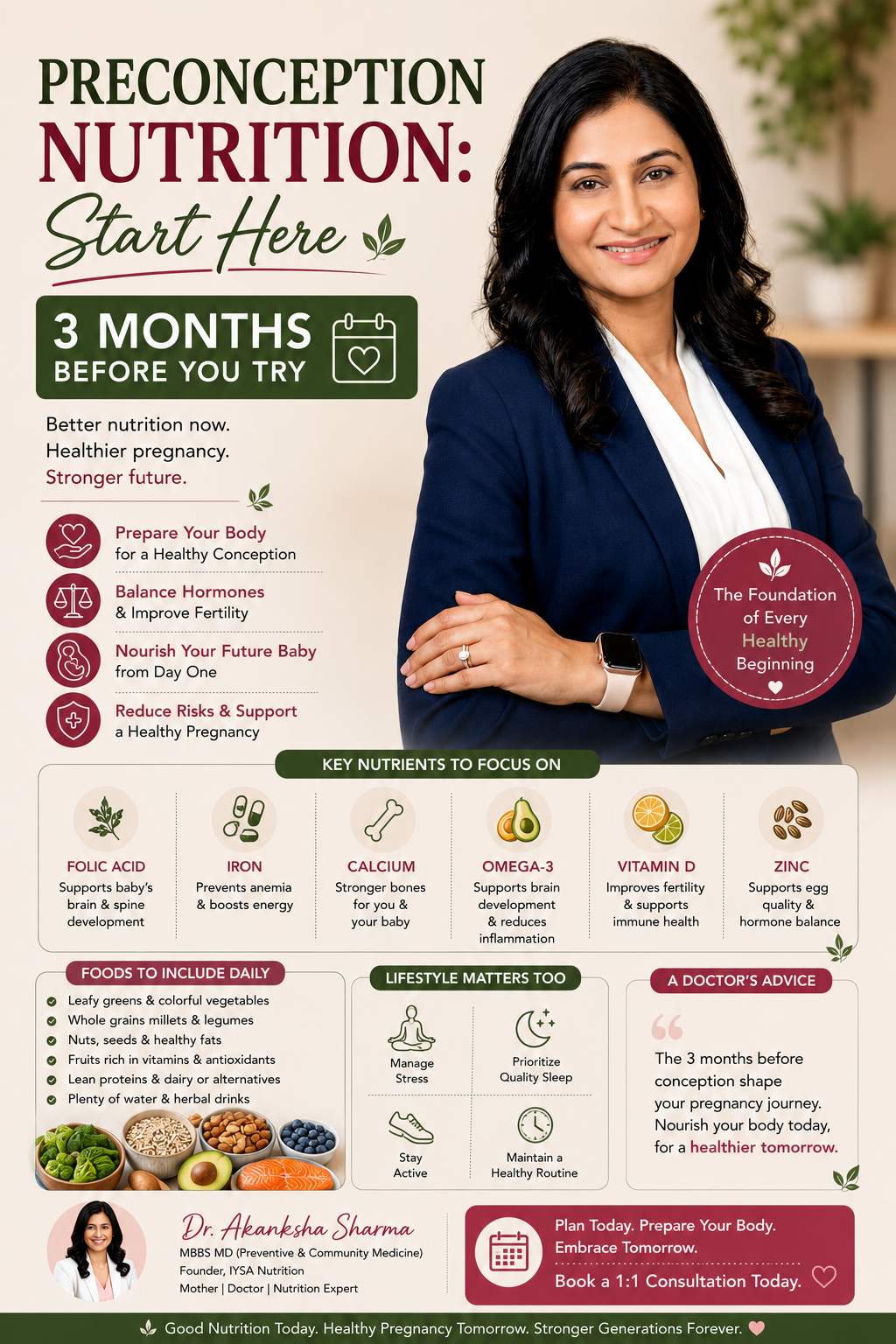
The moment most people start thinking about pregnancy nutrition is the moment they see a positive test. But the most critical window for nutritional preparation begins not at conception; it begins three months before you even start trying.
This is not arbitrary. Three months is the time it takes for eggs to complete their full maturation cycle, for sperm to complete their development (relevant for the partner too), for folate to reach protective levels in maternal tissue, for iron stores to be restored from potential deficiency, for Vitamin D to reach optimal levels, and for the dietary changes you make today to meaningfully alter the biochemical environment in which conception and early embryonic development will occur.
Most Indian women, and most Indian healthcare providers, treat preconception nutrition as a single conversation about folic acid. It is far more than that. This post is the comprehensive, clinically grounded preconception nutrition checklist that every Indian woman planning pregnancy deserves, with the specific tests, supplements, food strategies, and habit changes that actually matter.
👉Fertility Diet for Women: What to Eat When Trying to Conceive
👉10 Top Supplements for Women’s Reproductive Health
Why the 3-Month Window Matters
The Egg Maturation Cycle
Eggs (oocytes) take approximately 90 days to develop from a resting primordial follicle to a mature, ovulable egg. During this three-month window, the developing egg is exquisitely sensitive to the nutritional environment, the quality of antioxidant protection, the availability of DHA for membrane function, the mitochondrial energy supply from CoQ10, and the adequacy of folate and zinc for DNA synthesis. The dietary and supplementation changes you make three months before trying to conceive directly influence the quality of the eggs that will be released during your active conception attempts.
Folate’s Critical Early Window
Neural tube closure, the formation of the brain and spinal cord from the neural tube, occurs between days 21 and 28 after conception, before most women know they are pregnant. By the time you see a positive test, this critical developmental window has already passed. For folic acid supplementation to protect against neural tube defects, it must be started well before conception, ideally at least one month before, and three months is better for building optimal tissue levels.
👉Folate vs Folic Acid in Pregnancy: What Singapore’s MOH Says and What Your Body Actually Needs
Correcting Deficiencies Takes Time
Iron deficiency, endemic among Indian women, cannot be corrected in days or weeks. Restoring ferritin from deficient levels to the optimal preconception target of above 40–50 ng/mL takes 3–6 months of consistent dietary effort and supplementation. Vitamin D levels take 2–3 months to reach optimal levels from deficiency with appropriate supplementation. Starting three months before gives these corrections time to happen before conception occurs.
👉The 90-Day Egg Quality Roadmap: Prepare to conceive
Step 1: Get Tested — Know Your Numbers Before You Start
Preconception is the ideal time for a comprehensive nutritional and health assessment. Do not skip this step; treating confirmed deficiencies is categorically more effective than supplementing blindly. Request the following from your GP or gynaecologist:
Essential Preconception Blood Tests
- Serum ferritin: The stored iron marker. Target above 40 ng/mL preconception, not just “within normal range.” Many laboratories set their lower limit at 12–15 ng/mL, which is insufficient for optimal fertility and early pregnancy. A ferritin below 30 ng/mL requires treatment before trying to conceive.
- Haemoglobin: To identify overt anaemia that needs correction
- Serum 25-OH Vitamin D: Target above 75 nmol/L preconception. Most Indian women in Singapore are deficient, test and correct.
- Vitamin B12: Particularly critical for vegetarian women. Target above 300 pg/mL. B12 deficiency is associated with neural tube defects and early pregnancy loss, and is correctable before pregnancy.
- Folate (red cell folate): A better marker of tissue folate stores than serum folate. Target within reference range with supplementation already started.
- Thyroid panel: TSH, free T4, and anti-TPO antibodies. Subclinical hypothyroidism and Hashimoto’s thyroiditis impair fertility and increase miscarriage risk, and are common in Indian women. Optimising thyroid function before conception significantly improves outcomes.
- Fasting glucose and insulin (HOMA-IR): To identify insulin resistance, which impairs ovulation and egg quality. PCOS is the most common cause of ovulatory infertility in Indian women and requires identification and management before conception.
- Full blood count: To identify anaemia, platelet abnormalities, or infection markers
- Rubella immunity: If not immune and not recently vaccinated, rubella vaccination should be given at least one month before conception (live vaccine, cannot be given during pregnancy)
- Cervical screening (Pap smear): If due, complete before pregnancy
Optional But Valuable
- AMH (Anti-Mullerian Hormone): A marker of ovarian reserve, particularly relevant for women over 35 or with a history of PCOS. Knowing your AMH helps set realistic timeline expectations.
- Plasma zinc: If dietary zinc intake is consistently low (vegetarian diet, no nuts or seeds)
- Homocysteine: Elevated homocysteine is associated with early pregnancy loss and can be corrected with methylfolate and B12
👉10 Top Supplements for Women’s Reproductive Health
Step 2: Start the Non-Negotiable Supplements
These should be started as soon as you decide you want to conceive, ideally, three months before your first active attempt.
Folic Acid or Methylfolate — The Most Important
Standard recommendation: 400 µg of folic acid daily. Women at higher risk of neural tube defects (personal or family history of NTD, coeliac disease, certain medications, BMI above 30, type 1 or 2 diabetes) should take 5 mg daily; discuss with your doctor.
Methylfolate consideration: approximately 15–20% of South Asian women carry the MTHFR C677T genetic variant that impairs conversion of folic acid to its active form. For these women, or for those with a history of recurrent miscarriage, depression, or elevated homocysteine, methylfolate (L-5-MTHF, 400–800 µg daily) is more appropriate than standard folic acid. If you have had a previous unexplained miscarriage, discuss MTHFR testing with your doctor.
Vitamin D3 — Based on Your Tested Level
If your 25-OH Vitamin D is below 50 nmol/L: 2000–4000 IU daily under medical guidance to restore levels before conception. If 50–75 nmol/L: 1500–2000 IU daily for maintenance and optimisation. If above 75 nmol/L: 1000 IU daily for maintenance. Always take D3 (cholecalciferol) rather than D2, with your largest fat-containing meal.
Iron — If Ferritin Is Below 40 ng/mL
Ferrous bisglycinate (better tolerated than ferrous sulphate) at the dose recommended by your doctor. Take with Vitamin C and away from tea, coffee, and calcium. Retest ferritin at 8–12 weeks to confirm adequate response. Do not supplement iron without testing; excess iron is as harmful as deficiency.
Iodine — Often Overlooked in Preconception
Iodine is required for thyroid hormone production, which is critical for foetal brain development from the earliest weeks of pregnancy. Many Indian women, particularly those using non-iodised salts or with low dairy intake, have marginal iodine status. A preconception multivitamin should contain at least 150 µg of iodine, or supplement separately if dietary intake is low. Ensure your cooking salt is iodised.
DHA (Algae-Based for Vegetarians) — 200–300 mg Daily
Begin DHA supplementation three months before conception to build maternal DHA stores; the foetal brain begins incorporating DHA from very early in pregnancy. For non-vegetarians eating fatty fish 2–3 times weekly, dietary DHA may be sufficient. For vegetarian women, algae-based DHA is non-negotiable. See Day 9 for the full DHA preconception rationale.
CoQ10 (Ubiquinol) — 200–400 mg Daily
Start CoQ10 three months before trying to conceive for its egg quality benefits. This is particularly important for women over 35, where age-related CoQ10 decline is a significant contributor to reduced egg quality. Ubiquinol (the reduced, active form) is more bioavailable than ubiquinone. Take with a fat-containing meal.
👉CoQ10 & Reproductive Health: What the Research Really Says
Vitamin B12 — If Below 300 pg/mL or Vegetarian
Methylcobalamin 500–1000 µg daily. Critical for vegetarian women. B12 deficiency in early pregnancy is associated with neural tube defects and pregnancy loss, and is entirely preventable with supplementation started before conception.
Your “Prep Phase”: How the Bloom Program Fits In
Deciding to freeze your eggs or going for IVF is the first step. Actually doing it successfully is the second.
Many leading local centres, Virtus Fertility Centre, Thomson Fertility Centre, NUH, and KKH, are excellent at the procedural aspect. However, their primary focus is the stimulation cycle itself.
The Bloom Program is the essential 3–6-month “prep phase” before you walk through their doors, bridging the gap between your decision and your retrieval day.
We use this window to:
- Deep dive into your metabolic labs to identify silent insulin resistance
- Optimise your thyroid function using narrower, functional ranges tailored for fertility
- Create bespoke nutrition plans that fit a busy Singaporean lifestyle but reduce inflammation
- Ensure your body is flooded with the necessary antioxidants (like CoQ10) to protect egg DNA
By the time you see your fertility specialist, your body is primed, resilient, and ready to yield the highest possible quality eggs.
With Dr Akanksha Sharma · Preventive Medicine Physician · Singapore
Step 3: Build the Preconception Dietary Foundation
Supplements address confirmed gaps. The dietary foundation creates the overall nutritional environment in which conception and early development occur.
The Preconception Plate: Every Meal
- One-quarter protein: Dal, eggs, paneer, fish, chicken, tofu; supporting egg quality through adequate amino acid supply and stable blood glucose
- One quarter low-GI carbohydrate: Jowar or bajra roti, brown rice, oats, barley; supporting insulin sensitivity and blood glucose stability for ovulation
- Half non-starchy vegetables: Cruciferous, dark leafy, colourful; providing antioxidants, folate, fibre, and phytonutrients that support hormonal balance and egg quality
- Plus healthy fat: Ghee, mustard oil, nuts, seeds, olive oil, avocado; essential for hormone synthesis and fat-soluble vitamin absorption
The Daily Non-Negotiable Foods
- Dal at every main meal: Folate, iron, protein, zinc; the most important food category for Indian preconception nutrition
- Two Brazil nuts: The most efficient selenium source; selenium supports thyroid function and antioxidant defence in follicular fluid
- Ground flaxseed (1 tablespoon): ALA omega-3, lignans, soluble fibre; in dahi, oats, or roti dough
- Walnuts (5–7 halves): ALA omega-3, Vitamin E, zinc
- Amla (fresh, dried, or powder): The richest Vitamin C source in Indian cuisine; supports antioxidant defence in follicular fluid and enhances iron absorption
- Plain dahi (150–200g): B12, iodine, calcium, probiotics; essential for gut health and thyroid support
- Dark leafy greens (palak, methi, moringa): Folate, iron, magnesium, Vitamin K; at least one serving daily
Eating for Blood Glucose Stability — Ovulation Protection
Insulin resistance is the primary nutritional driver of ovulatory dysfunction in Indian women. The low-glycaemic, high-protein dietary pattern described in Days 2 and 26 is the foundation of preconception nutrition for this reason. Stable blood glucose means stable insulin, which means normal LH pulsatility, which means regular ovulation. Every meal with protein and fibre, every refined carbohydrate replaced with a whole grain alternative, and the elimination of sugary drinks represents a direct investment in ovulatory regularity.
What to Eliminate or Significantly Reduce
- Alcohol: No safe level has been established in the preconception period. Alcohol impairs egg quality, liver oestrogen metabolism, and folate absorption. Eliminate.
- Caffeine above 200 mg/day: High caffeine intake is associated with reduced fertility and increased early miscarriage risk. Limit to 1–2 cups of chai or one cup of filter coffee daily.
- Ultra-processed foods: Drive inflammation, insulin resistance, and gut dysbiosis, all of which impair fertility
- Trans fats (vanaspati, commercial fried foods): The Nurses’ Health Study II found trans fat intake was the strongest dietary predictor of ovulatory infertility
- Added sugar and refined carbohydrates: Drive insulin resistance and androgen excess in susceptible women
- Excess soya supplements: Normal dietary soya is fine; high-dose isolated isoflavone supplements are not recommended preconception without medical guidance
Step 4: Address Specific Conditions That Affect Fertility
If You Have PCOS
PCOS is the most common cause of ovulatory infertility. The preconception priorities are: correct insulin resistance through the dietary pattern; add myo-inositol (2–4g daily) specifically for ovarian insulin signalling; correct Vitamin D deficiency; optimise iron and B12 status.
👉PCOS Diet Plan: What to Eat and Avoid, Indian & Singapore Foods
If You Have Thyroid Disease
Ensure TSH is within the preconception target range; most endocrinologists recommend TSH below 2.5 mIU/L for women trying to conceive, rather than the standard non-pregnant upper limit of 4.5. Optimise selenium (2 Brazil nuts daily) and Vitamin D for Hashimoto’s management. Correct any iodine insufficiency. Discuss medication dose adjustment with your endocrinologist before and immediately upon conception.
👉Thyroid Diet: Foods That Help or Harm Your Hormones
If You Are Over 35
Prioritise CoQ10 ubiquinol at 400 mg daily; the evidence for improving egg quality in women with age-related decline is strongest at this dose and in this age group. Add alpha-lipoic acid (300 mg daily) for additional mitochondrial antioxidant support. Consider a discussion with a reproductive endocrinologist about AMH, antral follicle count, and whether additional investigation is warranted before extensive trying.
If You Have Had a Previous Miscarriage
One miscarriage is common (affecting approximately 15–20% of recognised pregnancies) and rarely indicates an underlying problem. Two or more consecutive miscarriages warrant investigation for antiphospholipid syndrome, chromosomal abnormalities in either partner, uterine structural issues, thyroid dysfunction, and MTHFR variants (with associated hyperhomocysteinaemia). Nutritionally: ensure optimal B12, methylfolate, Vitamin D, and omega-3 status before the next attempt.
Step 5: Prepare Your Partner
Male-factor infertility contributes to 40–50% of infertility cases, yet preconception preparation advice is overwhelmingly directed at women. Sperm take 74 days to develop (approximately 2.5 months). The dietary and lifestyle changes a man makes now will affect the sperm involved in conception 2–3 months later.
Key male preconception nutritional priorities:
- Zinc: Essential for sperm production and motility; 25 mg elemental zinc daily if dietary intake is insufficient
- Selenium: Required for sperm tail structure and motility; 2 Brazil nuts daily
- Folate: Required for DNA integrity in sperm — 400 µg daily alongside the female partner’s supplementation
- CoQ10: 200–300 mg daily; multiple RCTs show improved sperm motility and concentration with CoQ10 supplementation
- Vitamin C and E: Antioxidant protection against sperm DNA fragmentation, which is associated with miscarriage and IVF failure
- Lycopene: From tomatoes, watermelon, and guava; specifically improves sperm morphology in multiple trials
- Eliminate or minimise: Alcohol (directly impairs testosterone and sperm quality), smoking (dramatically increases sperm DNA fragmentation), excess heat to the scrotal area (tight underwear, hot baths, laptop directly on the lap), anabolic steroids
The Preconception Supplement Stack: A Practical Summary
| Supplement | Dose | Who Needs It | When to Start |
|---|---|---|---|
| Folic acid / Methylfolate | 400–800 µg/day | All women | At least 3 months before |
| Vitamin D3 | As per tested level | All women (especially Indian/South Asian) | Immediately on testing |
| Iron | As per tested ferritin | If ferritin below 40 ng/mL | Immediately on testing |
| DHA (algae/fish oil) | 200–300 mg/day | All women; essential for vegetarians | 3 months before |
| CoQ10 (ubiquinol) | 200–400 mg/day | All; especially women over 35 | 3 months before |
| Vitamin B12 (methylcobalamin) | 500–1000 µg/day | Vegetarians; if below 300 pg/mL | Immediately on testing |
| Iodine | 150 µg/day | If dietary intake uncertain | 3 months before |
| Inositol (myo-inositol) | 2–4g/day | Women with PCOS | 3 months before |
| Zinc | 15–25 mg/day | Vegetarians with low dietary zinc | 3 months before |
All supplementation should be discussed with your doctor or a qualified nutrition specialist. This table is a guide, not a prescription.
A Sample One-Day Preconception Meal Plan (Indian Vegetarian)
- On waking: 2 Brazil nuts (selenium) + amla powder in warm water (Vitamin C, antioxidants). Folic acid/methylfolate supplement.
- Breakfast: Two eggs scrambled with palak and tomato + one jowar roti + plain dahi (150g) + green tea. CoQ10 supplement with this meal (take with fat).
- Mid-morning: 5–7 walnuts (ALA, Vitamin E, zinc) + one guava or kiwi (Vitamin C)
- Lunch: One cup thick masoor dal + one jowar roti + broccoli sabzi (folate, sulforaphane) + a large salad with lime + small bowl dahi. Vitamin D3 supplement with this meal.
- Afternoon: One tablespoon ground flaxseed stirred into plain dahi (ALA, lignans) + a small banana
- Dinner: Rajma or kabuli chana curry (zinc, iron, protein) + one bajra roti + palak sabzi with garlic and lime + plain chaas. DHA supplement with this meal.
- Before bed: Warm milk with a pinch of saffron and cardamom (iodine, calcium, B12 from milk). B12 methylcobalamin supplement (at least 2 hours from any metformin if applicable).
Frequently Asked Questions
I am already trying to conceive. Is it too late to start preconception nutrition?
It is never too late to start, but start immediately. Even if you have been trying for one or two months, beginning optimal nutrition now means the eggs maturing over the next 90 days will develop in a better nutritional environment than if you wait. The folate, Vitamin D, iron, and DHA changes matter as long as you have not yet conceived. And if you do conceive while making these changes, you will enter pregnancy in significantly better nutritional shape than if you had not started at all.
My doctor only recommended folic acid. Is that enough?
Folic acid is the minimum evidence-based recommendation. But for Indian women, who have endemic Vitamin D deficiency, high rates of iron deficiency, frequent B12 insufficiency (particularly vegetarians), and significant zinc gaps, folic acid alone is insufficient as a preconception strategy. The additional supplements in this guide address deficiencies that are common, measurable, and directly relevant to fertility and early pregnancy outcomes. They are not unnecessary extras; they are evidence-based corrections to the specific gaps most prevalent in Indian women.
How do I know if I am ovulating regularly?
The most accessible methods for tracking ovulation at home: basal body temperature (BBT) charting (temperature rises slightly after ovulation), cervical mucus monitoring (mucus becomes clear and egg-white-textured at ovulation), and urine LH surge tests (commercially available ovulation predictor kits). A luteal phase (the time between ovulation and the next period) of at least 12–14 days confirms that ovulation is occurring. Consistently short luteal phases may indicate progesterone insufficiency; discuss with your gynaecologist.
Should I take a prenatal multivitamin or individual supplements?
A good preconception multivitamin can simplify the supplement regimen, but check the label carefully for: minimum 400 µg folate (ideally as methylfolate), at least 150 µg iodine, at least 200 mg DHA (or supplement separately), at least 400 IU Vitamin D (almost certainly insufficient on its own — supplement separately based on your tested level), and iron only if confirmed deficient. Most commercial prenatal vitamins provide inadequate Vitamin D and insufficient DHA; these almost always need to be supplemented separately. Use a prenatal multivitamin as a foundation and address specific gaps individually.
How long should I try before seeking a fertility assessment?
Standard guidance: if you are under 35 and have been trying for 12 months without success, seek assessment. If you are 35–37, seek assessment after 6 months. If you are 38 or above, or have a known condition affecting fertility (PCOS, endometriosis, previous pelvic infection, irregular cycles, previous cancer treatment), seek assessment immediately on deciding to try; do not wait. In Singapore, fertility assessment is available at KKH, NUH, and multiple private fertility clinics. In India, most major cities have reproductive medicine specialists. Preconception nutrition optimisation should begin simultaneously with fertility investigation, not after.
The Bottom Line
Preconception nutrition is pregnancy nutrition’s most important and most overlooked chapter. The three months before conception are when egg quality is being shaped, when folate tissue levels are being built, when iron stores are being restored, when Vitamin D is being optimised, and when the dietary patterns that will sustain a healthy pregnancy are being established. These three months are not preparation for pregnancy; they are the beginning of it.
Know your numbers. Start your supplements. Build your dietary foundation. Prepare your partner. And begin this journey with the nutritional foundation your baby deserves.
🌸Ready to Optimise Your Fertility?
Ready to prepare your body for conception, calmly and scientifically?
🌿 Bloom — 3-Month Doctor-Led Fertility Programme
A doctor-led pre-conception and fertility programme focused on hormonal balance, metabolic health, and evidence-based nutrition, without pressure or extremes.
🔬 Struggling with PCOS?
Our targeted PCOS Hormone Harmony Programme provides the specific nutritional protocols needed to restore ovulation and egg quality.
Dr Akanksha Sharma · MBBS MD (Preventive Medicine) · Singapore & Worldwide via Zoom
Disclaimer: This article is for educational purposes only. Preconception health assessment should involve your GP or gynaecologist. Do not start supplementation without discussing with your doctor, particularly if you have underlying health conditions or take medications.
References:
- Lassi ZS et al. Preconception care: nutrition and dietary supplementation. Reprod Health. 2014;11 Suppl 3:S3. PMC
- Stephenson J et al. Before the beginning: nutrition and lifestyle in the preconception period and its importance for future health. Lancet. 2018;391(10132):1830-1841. PubMed
- Ben-Meir A et al. Coenzyme Q10 restores oocyte mitochondrial function and fertility during reproductive aging. Aging Cell. 2015;14(5):887-895. PubMed
- ICMR-NIN Expert Group. Recommended Dietary Allowances for Indians. 2020. nin.res.in

Akanksha Sharma
Dr Akanksha Sharma (MBBS, MD) is a physician and women’s health nutrition specialist, and the founder of IYSA Nutrition. She provides evidence-based, doctor-led nutrition guidance for pregnancy, postpartum recovery, PCOS, child nutrition, and family health, helping women make calm, informed decisions about their health and their children’s well-being.