Written & reviewed by Dr Akanksha Sharma, MBBS, MD (Preventive & Community Medicine) | Founder, IYSA Nutrition, Singapore
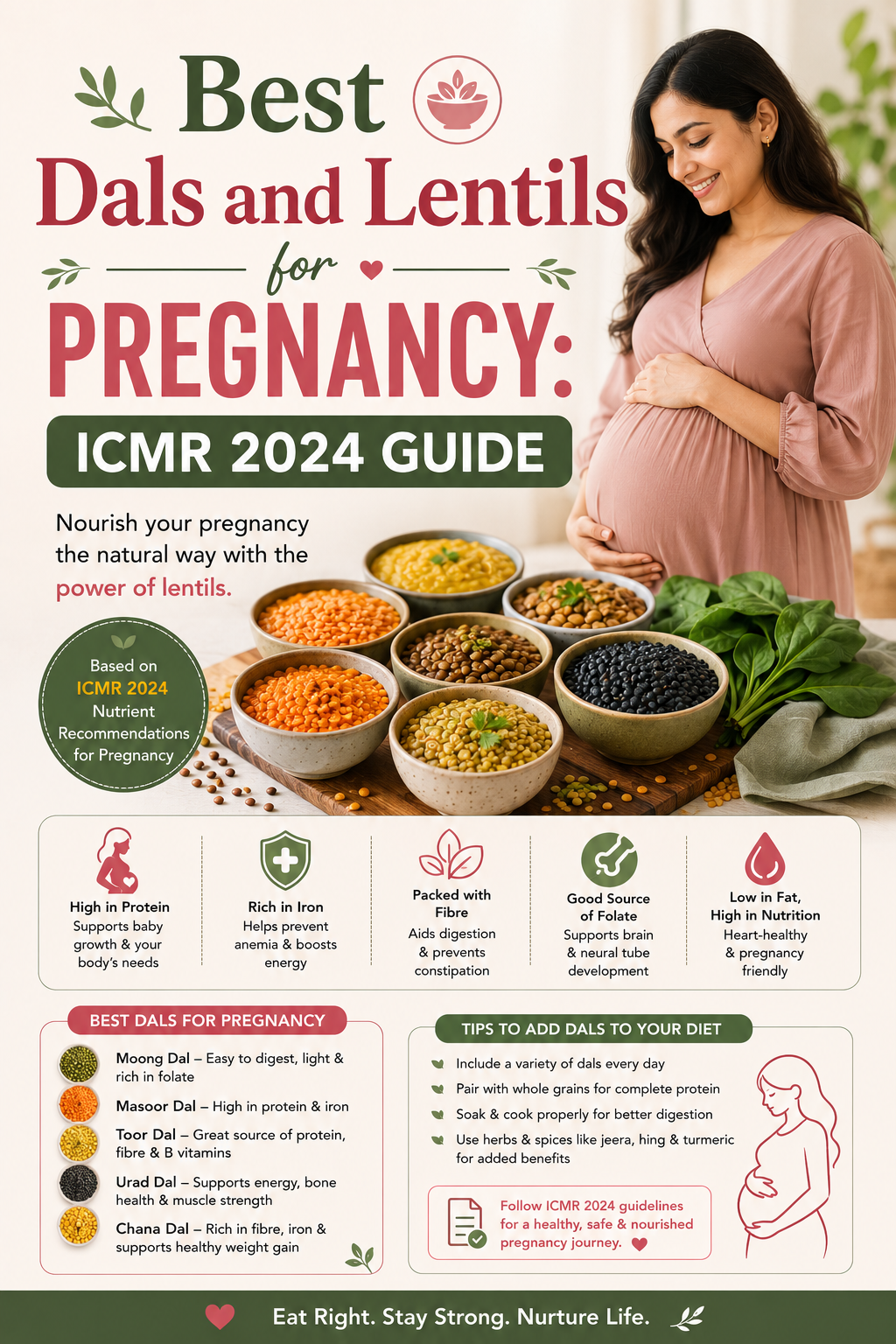
Dal is the backbone of the Indian diet, and for pregnant Indian women, it is arguably the single most important food group on the plate. No other food in the Indian kitchen delivers the combination of folate, iron, protein, zinc, fibre, and complex carbohydrates that dal provides in a single, affordable, culturally universal, and easily digestible preparation. There is no Western superfood, no quinoa, no kale, no acai, that comes close to the nutritional density of a well-prepared Indian dal for the specific demands of pregnancy.
Yet despite eating dal daily, most Indian women do not know which dals are highest in which nutrients, how cooking methods affect their nutritional value, how to maximise iron and zinc absorption from plant sources, or how to structure dal intake across the day to meet their pregnancy nutritional requirements.
This guide gives you the complete picture, a clinically grounded, ICMR-aligned ranking of the best dals and lentils for pregnancy, with specific nutritional data, cooking strategies that maximise absorption, and practical meal integration guidance for every trimester.
Related reading:
👉 Balanced Pregnancy Diet at 6 Months
👉 10 Foods Pregnant Woman Should Eat for a Healthy Pregnancy
👉Second Trimester Nutrition: Step by step guide
Why Dal Is Non-Negotiable During Pregnancy
Before the rankings, it is worth understanding exactly what makes dal so nutritionally critical during pregnancy. The developing foetus has five non-negotiable nutritional priorities that dal directly addresses:
- Folate: Essential for neural tube closure (weeks 3–4), DNA synthesis, and rapid cell division throughout pregnancy. Dal is the richest everyday Indian source of dietary folate.
- Iron: Required for blood volume expansion (40–50% increase during pregnancy), foetal iron stores accumulation, and prevention of anaemia. Non-haem iron from dal, when paired with vitamin C, provides the most culturally accessible iron source for Indian vegetarian women.
- Protein: The structural building material for every new cell added to the growing baby’s brain cells, organ cells, muscle fibres, and blood cells. Dal provides complete or near-complete amino acid profiles when combined with grains.
- Zinc: Required for DNA synthesis, cell division, immune development, and brain formation. Indian vegetarian diets are zinc-insufficient without deliberate attention to legume intake.
- Complex carbohydrates and fibre: Providing stable, sustained energy for both mother and foetus while addressing the near-universal constipation of pregnancy.
ICMR-NIN 2020 recommends that Indian pregnant women consume at least 2–3 servings of legumes (dal, beans, or lentils) per day, a standard that most Indian women meet at lunch but not consistently at breakfast or dinner.
👉Third Trimester Nutrition: Preparing Your Body for Labour
The Complete Nutritional Ranking of Indian Dals for Pregnancy
1. Masoor Dal (Red Lentils) — The Pregnancy Powerhouse
Nutritional profile per 100g cooked: Protein ~9g | Iron ~3.3mg | Folate ~181 µg | Zinc ~1.3mg | Fibre ~8g
Masoor dal earns the top rank for pregnancy nutrition across multiple criteria. It has the highest iron content among commonly used Indian dals, one of the highest folate concentrations, excellent digestibility (critical for women with pregnancy nausea or reflux), the fastest cooking time (15–20 minutes, no soaking required), and a mild, palatable flavour that is well tolerated even during the nausea-heavy first trimester.
Why it tops the pregnancy ranking:
- Iron density: 3.3mg per 100g cooked, the highest of any commonly used dal
- Folate density: 181 µg per 100g, one of the richest dietary folate sources in Indian cooking
- Digestibility: among the easiest dals to digest; rarely causes bloating or flatulence
- Speed: cooks in 15–20 minutes without soaking, ideal for pregnancy fatigue
- Versatility: can be made thick (as a protein-rich dal), thin (as a soup), or incorporated into khichdi, paratha dough, and soups
Pregnancy preparation tips:
- Always finish with a squeeze of lime or lemon after cooking, the vitamin C dramatically increases iron absorption from the dal
- Add tomatoes and coriander to the tadka; both are vitamin C-rich and further enhance iron absorption
- Make it thick (not watery); a thicker dal provides more protein and iron per serving
- Avoid having chai within 60 minutes of eating masoor dal, as tannins in tea block iron absorption
2. Moong Dal (Split Green Gram) — The Digestibility Champion
Nutritional profile per 100g cooked: Protein ~7.6g | Iron ~1.9mg | Folate ~159 µg | Zinc ~1.0mg | Fibre ~7.6g
Moong dal is the most digestible of all Indian dals, making it the preferred choice during the nausea and digestive sensitivity of the first trimester and the reflux of the third trimester. It has a gentle, mild flavour that is rarely aversive even to women with strong food aversions. Moong dal is the traditional dal of Indian illness recovery and new mother convalescence for precisely this reason, it nourishes without taxing the digestive system.
Moong is also available in multiple forms: split yellow (moong dal), whole green (sabut moong), and sprouted; each with a different nutritional and digestibility profile.
Forms and their pregnancy advantages:
- Split yellow moong dal: Easiest to digest; lowest flatulence; ideal for first and third trimesters; cooks in 15 minutes
- Sabut moong (whole green gram): Higher fibre than split moong; good for the management of constipation in the second and third trimesters
- Sprouted moong: Sprouting increases vitamin C content, folate bioavailability, and reduces phytates, improving mineral absorption. However, cook sprouted moong during pregnancy rather than eating raw, as raw sprouts carry a bacterial contamination risk.
Best pregnancy preparations: Moong dal khichdi (the ultimate pregnancy comfort food, complete protein from the rice-dal combination, easy to digest, can be fortified with vegetables); moong dal chilla (protein-rich breakfast pancake); moong dal soup with ginger and lime.
3. Chana Dal (Split Bengal Gram) — The Protein Leader
Nutritional profile per 100g cooked: Protein ~9.4g | Iron ~2.8mg | Folate ~172 µg | Zinc ~1.3mg | Fibre ~11g
Chana dal has the highest protein content among commonly used Indian dals; 9.4g per 100g cooked, making it particularly valuable for meeting the elevated protein requirements of the second and third trimesters. It also has excellent fibre content, which addresses pregnancy constipation, and a low glycaemic index that supports blood glucose stability.
Chana dal requires longer cooking time (45–60 minutes) and benefits from soaking, but the soaking process reduces phytate content by approximately 30%, improving the bioavailability of iron and zinc. It is worth planning ahead.
Pregnancy preparation tips:
- Soak for 4–6 hours before cooking, which reduces phytates and cooking time
- Add amchur (dried mango powder) or lime at the end of cooking; the vitamin C content enhances iron absorption and brightens the flavour
- Chana dal khichdi with vegetables is a complete, protein-rich pregnancy meal requiring minimal preparation
- Besan (ground chana dal), used in chilla, pakora batter, and kadhi, provides the same nutritional benefits in different preparations
4. Toor Dal (Arhar / Pigeon Pea) — The Everyday South Indian Essential
Nutritional profile per 100g cooked: Protein ~7.2g | Iron ~2.3mg | Folate ~114 µg | Zinc ~1.0mg | Fibre ~6.7g
Toor dal is the most widely consumed dal in South India, the base of sambar, rasam, and everyday dal preparations across Karnataka, Tamil Nadu, Andhra Pradesh, and Maharashtra. It provides solid, across-the-board nutrition and has the advantage of cultural familiarity and palatability for women from these regions.
Toor dal’s folate content is slightly lower than that of masoor or chana dal, which is nutritionally relevant given that folate is the most critical nutrient in early pregnancy. Women relying primarily on toor dal should supplement with other high-folate dals at breakfast or snack time.
Pregnancy preparation tips:
- Sambar — toor dal with tamarind, tomatoes, and vegetables, is actually an excellent pregnancy preparation: the tamarind and tomatoes provide vitamin C, the vegetables add micronutrients, and the spices (mustard seeds, curry leaves) add anti-inflammatory compounds
- Pressure cooking toor dal retains more folate than prolonged boiling — use a pressure cooker where possible
- Rasam, while thin, provides excellent digestive support and hydration during pregnancy nausea
5. Rajma (Kidney Beans) — The Iron and Zinc Combination
Nutritional profile per 100g cooked: Protein ~9.0g | Iron ~2.9mg | Folate ~130 µg | Zinc ~1.4mg | Fibre ~11g
Rajma stands out for having the highest zinc content among commonly used Indian legumes, 1.4mg per 100g, and very high iron. Zinc is one of the most commonly deficient minerals in Indian vegetarian diets, and its role in foetal brain development, immune system formation, and DNA synthesis makes it critically important throughout pregnancy.
Rajma requires overnight soaking and longer cooking time, making it less convenient for daily use, but its nutritional density makes it worth preparing 2–3 times per week as a protein and mineral powerhouse meal.
Pregnancy preparation tips:
- Soak overnight (8–12 hours) and discard soaking water before cooking. This removes approximately 50% of phytates, significantly improving iron and zinc absorption
- Pressure cook until very soft; undercooked kidney beans retain lectins that can cause digestive distress
- Serve with lemon juice squeezed over the finished dish, vitamin C enhances iron and zinc absorption
- Rajma chawal: the quintessential North Indian meal, is one of the most nutritionally complete pregnancy meals available when prepared with adequate dal and moderate rice
6. Urad Dal (Black Gram) — The Traditional Postnatal Dal
Nutritional profile per 100g cooked: Protein ~8.7g | Iron ~2.5mg | Folate ~128 µg | Zinc ~1.1mg | Fibre ~6.3g | Calcium ~138mg
Urad dal deserves special mention for its calcium content; at 138mg per 100g cooked, it is the highest-calcium dal available in Indian cooking and valuable for the elevated calcium requirements of pregnancy. It is also the base for idli, dosa, and vada, fermented preparations that are highly digestible, probiotic, and excellent for gut health during pregnancy.
The fermentation of idli and dosa batter made from urad dal has an important nutritional bonus: fermentation reduces phytate content by 30–50%, significantly improving iron and zinc bioavailability. The combination of urad dal’s iron content plus the fermentation-improved absorption makes idli and dosa prepared from traditional fermented batter genuinely excellent pregnancy foods, far superior nutritionally to the instant idli mixes that are increasingly replacing them.
Pregnancy preparation tips:
- Prioritise traditionally fermented idlis and dosas over instant mixes; the fermentation is nutritionally significant
- Serve with sambar (toor dal + vegetables) and coconut chutney, a complete protein + iron + calcium + probiotic meal
- Dal makhani uses urad dal as its base — a nutrient-rich preparation, though the cream and butter should be used moderately during pregnancy
7. Kabuli Chana (Chickpeas / Chole)
Nutritional profile per 100g cooked: Protein ~9.0g | Iron ~2.9mg | Folate ~172 µg | Zinc ~1.5mg | Fibre ~12g
Kabuli chana has the highest zinc content of any Indian legume listed here, 1.5mg per 100g, alongside excellent protein and folate. Its very high fibre content (12g per 100g) makes it one of the best foods for the constipation management that affects virtually every pregnant woman in the second and third trimesters.
Like rajma, kabuli chana requires overnight soaking and longer cooking, but in terms of nutritional density for pregnancy, it is worth the preparation time. Hummus (ground chickpeas with sesame paste) is an excellent pregnancy snack, available ready-made in Singapore or easily prepared at home.
👉 Pregnancy & Postpartum Nutrition: A Doctor-Reviewed Guide
👉First Trimester Nutrition: A Week-by-Week Food Guide for Indian Mums
If you are a woman struggling with optimising your diet during pregnancy:
👉 Join my program Nourish Nine: Doctor-Led Pregnancy Nutrition & Care Program (Trimester-Wise, 3 months)
📥 Want a Printable Food & Nausea Tracker?
🎁 Download my FREE “Anti-Nausea Food List + Tracker” to keep by your bedside or fridge
👉 Click here to download
Comparative Pregnancy Nutrition Table: At a Glance
| Dal | Protein (g) | Iron (mg) | Folate (µg) | Zinc (mg) | Fibre (g) | Best For |
|---|---|---|---|---|---|---|
| Masoor (red lentil) | 9.0 | 3.3 | 181 | 1.3 | 8.0 | Iron + folate; first trimester |
| Chana dal | 9.4 | 2.8 | 172 | 1.3 | 11.0 | Protein; blood sugar control |
| Kabuli chana | 9.0 | 2.9 | 172 | 1.5 | 12.0 | Zinc + fibre; constipation |
| Rajma | 9.0 | 2.9 | 130 | 1.4 | 11.0 | Zinc + iron combination |
| Urad dal | 8.7 | 2.5 | 128 | 1.1 | 6.3 | Calcium; fermented preparations |
| Moong dal | 7.6 | 1.9 | 159 | 1.0 | 7.6 | Digestibility; nausea; recovery |
| Toor dal | 7.2 | 2.3 | 114 | 1.0 | 6.7 | South Indian staple; daily use |
All values are approximate per 100g cooked dal. Actual values vary by variety, soil quality, and cooking method. Source: ICMR-NIN Nutritive Value of Indian Foods.
👉Safe Fish to Eat During Pregnancy in Singapore: A Mercury Guide
How to Maximise Nutritional Absorption from Dal
The Vitamin C Rule — Most Important
Non-haem iron (the form in all plant foods, including dal) has absorption rates of 2–20%, compared to 15–35% for haem iron from animal sources. Adding vitamin C to the same meal increases non-haem iron absorption by 2–4 times. This is one of the highest-impact, zero-cost nutritional interventions available. At every dal meal: squeeze lime or lemon, add tomatoes, include coriander garnish, serve with amla chutney, or have a small portion of vitamin C-rich fruit.
Soaking — For Iron, Zinc, and Digestibility
Phytates are antinutrients in legume seed coats that bind iron and zinc, reducing their absorption. Soaking dal for 4–12 hours (depending on the dal) and discarding the soaking water reduces phytate content by 20–50%. The longer the soaking and the warmer the water, the greater the phytate reduction. For pregnancy, where iron and zinc requirements are elevated, soaking is particularly valuable. Moong and masoor do not require soaking (their phytate content is already lower), but chana dal, rajma, kabuli chana, and urad dal benefit significantly from overnight soaking.
Sprouting — The Nutritional Multiplier
Sprouting dal (allowing it to germinate for 1–3 days before cooking) dramatically improves its nutritional profile: vitamin C increases from near-zero to 10–20mg per 100g, folate bioavailability increases, phytates decrease by 30–70%, and overall digestibility improves. For pregnancy, sprouted moong and sprouted chana (both widely available in Indian markets and Singapore wet markets) are excellent additions, but cook them rather than eating raw, as raw sprouts carry Salmonella and E. coli contamination risk that is particularly relevant during pregnancy.
Avoid Iron Absorption Inhibitors at Dal Meals
- No chai or coffee for 60 minutes before and after a dal meal
- No calcium supplements taken at the same time as iron-rich meals
- No large dairy servings at the same sitting as the main iron-containing meal
Pressure Cooking vs Boiling
Pressure cooking retains more water-soluble vitamins (particularly folate and B vitamins) than prolonged open boiling, because the shorter cooking time reduces heat-degradation of these heat-sensitive nutrients. Use a pressure cooker for all dals where possible, it also reduces cooking time, energy use, and is culturally standard in Indian households.
📥 Want a FREE Supplement Checklist?
🎁 Download my Trimester-Wise Pregnancy Supplement Chart (with brand suggestions & Ayurvedic swaps!)
👉 Click here to download or DM me “SUPPLEMENTS” on Instagram @iysanutrition.doctor
How Much Dal Per Day During Pregnancy?
ICMR-NIN 2020 recommends 2–3 servings of legumes per day during pregnancy. One serving is approximately 30g dry (which expands to approximately 80–100g cooked). Practically, this means:
- Breakfast: One moong dal chilla (2 chillas from approximately 50g dry moong dal) or besan chilla, counts as one to one-and-a-half servings
- Lunch: One generous cup (200g cooked) of thick masoor or chana dal counts as two servings
- Dinner: Half cup cooked rajma or moong dal in a lighter preparation counts as one serving
Total: 3–4 servings across the day. This delivers approximately:
- Protein: 22–28g from dal alone (significantly contributing to the 60–82g daily pregnancy requirement)
- Iron: 8–12mg from dal alone (contributing meaningfully toward the 35mg daily requirement)
- Folate: 400–500 µg from dal alone (meeting the entire pregnancy folate requirement from food, before supplement)
Frequently Asked Questions
Can I eat dal every day throughout pregnancy?
Not only can you, but you should. Dal at every main meal (breakfast, lunch, and dinner) is the single most practical way for Indian vegetarian women to meet the combined protein, folate, iron, and zinc requirements of pregnancy from food. Varying the type of dal across the day and week ensures a broad micronutrient profile: masoor at lunch, moong at breakfast, rajma or chana twice a week at dinner.
Does cooking dal in a pressure cooker reduce its nutritional value?
Pressure cooking is actually superior to prolonged open boiling for preserving heat-sensitive nutrients. The shorter cooking time in a pressure cooker reduces the degradation of folate and B vitamins compared to boiling for 45–60 minutes on the stovetop. The protein content is not significantly affected by any standard cooking method. Pressure cooking is the recommended preparation method for Indian dals from both a nutritional and a practical standpoint.
I have been told to avoid urad dal in pregnancy. Is this true?
The advice to avoid urad dal in pregnancy is a traditional dietary restriction without scientific evidence. Urad dal is nutritionally valuable during pregnancy, high in protein, iron, calcium, and B vitamins, and is the base for some of the most beneficial pregnancy foods, including fermented idli and dosa. There is no clinical nutrition evidence that urad dal causes any harm during pregnancy. If your cultural tradition advises avoidance, discuss this with your obstetrician and consider whether the nutritional benefits of continuing to eat it outweigh any traditional concerns.
Is sprouted moong safe to eat during pregnancy?
Cooked sprouted moong is safe and nutritionally excellent during pregnancy. Raw sprouted moong (and all raw sprouts) carry bacterial contamination risk; Salmonella and E. coli can proliferate during the sprouting process, and should be avoided during pregnancy. The solution is simple: cook your sprouted moong (add to khichdi, stir-fry, or soup) rather than eating it raw. The cooking eliminates bacterial risk while retaining most of the nutritional benefits of sprouting.
Can dal replace my iron supplement during pregnancy?
No, though it significantly supports it. ICMR-NIN recommends 35mg of iron per day during pregnancy. Dal, even consumed generously at every meal with vitamin C, will provide approximately 8–12mg of absorbed non-haem iron per day, a meaningful contribution but insufficient on its own. Iron supplementation during pregnancy is standard of care and should not be replaced by dietary iron alone. However, excellent dietary iron intake reduces the gap that supplementation must fill and reduces the severity of deficiency if supplement adherence is imperfect.
Related reading:
👉Foods to Avoid During Pregnancy & Why
The Bottom Line
Dal is not just cultural comfort — it is the cornerstone of evidence-based pregnancy nutrition for Indian women. Masoor dal for maximum iron and folate. Moong dal for first and third trimester digestibility. Chana dal and kabuli chana for protein and zinc. Rajma for the zinc-iron combination. Urad dal for calcium and fermented preparations. Each dal has a distinct nutritional personality, and rotating through them across the week provides the most comprehensive micronutrient coverage possible from a single, affordable food group.
Make dal thick, eat it at every meal, always pair it with vitamin C, soak your larger legumes overnight, and cook your sprouts. These simple practices transform your everyday dal into one of the most nutritionally powerful pregnancy foods in the world.
If you are a woman struggling with optimising your diet during pregnancy:
👉 Join my program Nourish Nine: Doctor-Led Pregnancy Nutrition & Care Program (Trimester-Wise, 3 months),
customised for Indian diets and Singapore lifestyles.
👉Book a consultation call (FREE) to discuss your concerns
Disclaimer: This article is for educational purposes only. Individual nutritional needs during pregnancy should be assessed by your obstetrician or a qualified nutrition specialist.
🔗 You May Also Find These Readings Helpful:
- [10 Superfoods for Pregnant Women: A Blend of Science and Ayurveda]
- [12 Ways to Find Relief From Morning Sickness]
- [Top 7 Anti-Bloating Foods During Pregnancy (With Recipes!)]
References:
- ICMR-NIN. Nutritive Value of Indian Foods. National Institute of Nutrition. nin.res.in
- ICMR-NIN Expert Group. Recommended Dietary Allowances for Indians. 2020. nin.res.in
- Hurrell R, Egli I. Iron bioavailability and dietary reference values. Am J Clin Nutr. 2010;91(5):1461S-1467S. PubMed
- Gupta RK et al. Reduction of phytic acid and enhancement of bioavailable micronutrients in food grains. J Food Sci Technol. 2015;52(2):676-684. PMC

Akanksha Sharma
Dr Akanksha Sharma (MBBS, MD) is a physician and women’s health nutrition specialist, and the founder of IYSA Nutrition. She provides evidence-based, doctor-led nutrition guidance for pregnancy, postpartum recovery, PCOS, child nutrition, and family health, helping women make calm, informed decisions about their health and their children’s well-being.