Written & reviewed by Dr Akanksha Sharma, MBBS, MD (Preventive & Community Medicine) | Founder, IYSA Nutrition, Singapore
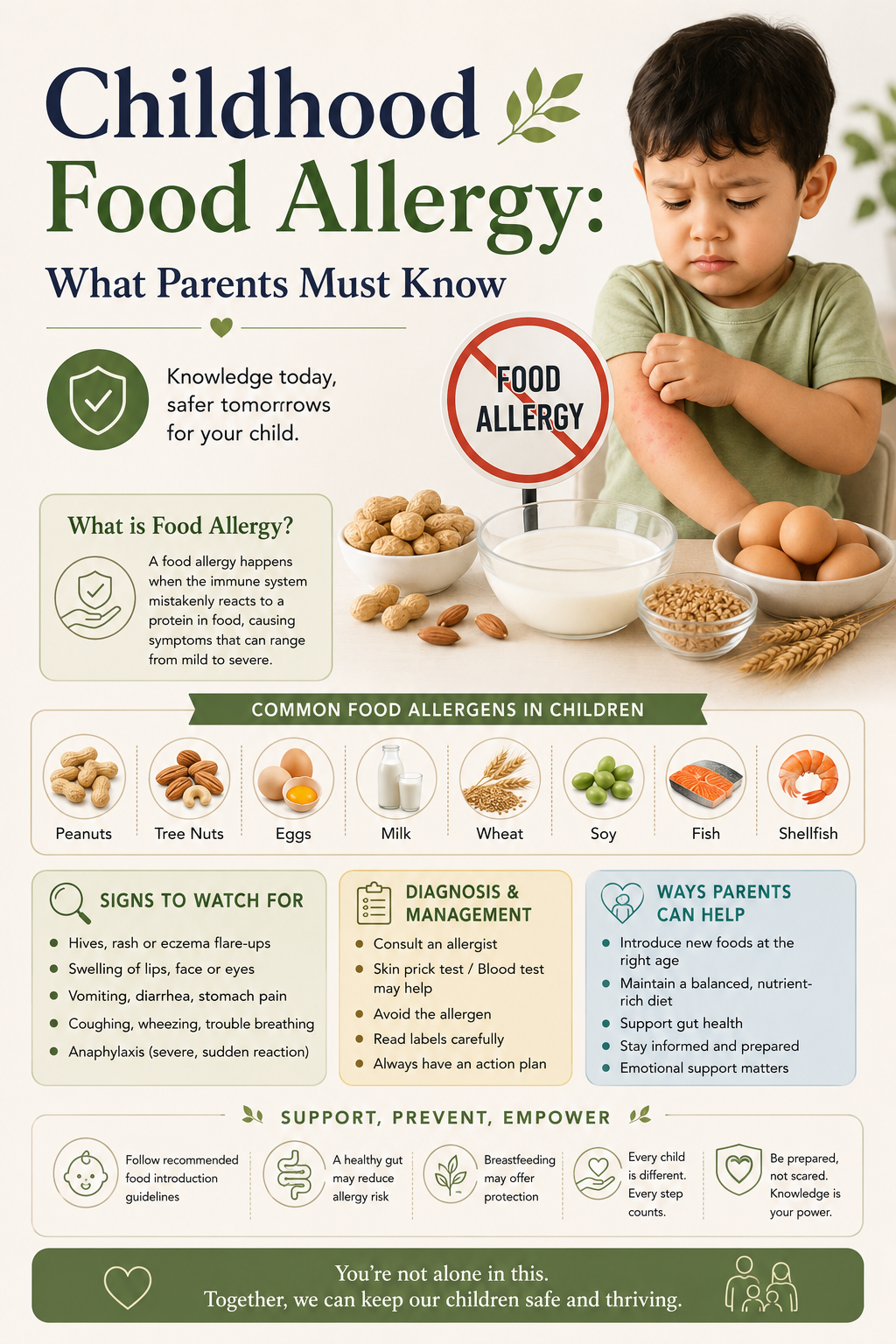
Food allergy in children is one of the most anxiety-inducing diagnoses for parents, and one of the most commonly misunderstood. Parents worry that their child’s rash after eating egg means a lifelong allergy. They eliminate foods unnecessarily based on suspicion, sometimes inadvertently creating nutritional gaps at critical developmental stages. Or, on the other side, they dismiss genuine allergic reactions because “we have always eaten this food, it cannot be an allergy.”
For Indian families in Singapore and India specifically, the picture has additional complexity: India has historically had low food allergy prevalence compared to Western countries, but this is changing in urban populations; Singapore’s Indian community faces a different environmental context that may raise risk; and the foods most likely to cause reactions in Indian children differ from the standard Western allergen lists.
This post gives you the evidence-based foundation for understanding, identifying, and managing childhood food allergy, and explains why the approach to preventing allergy has shifted dramatically in the last decade.
👉Weaning Your Baby: First Foods by Age and How to Introduce Them
👉The First Food of Your Baby: A Doctor’s Guide
👉Celiac Disease in Indians: Diagnosis, and Gluten-Free Diet
How Common Is Food Allergy in Children — Globally and in India and Singapore?
A comprehensive review of food allergy published in the Journal of Allergy and Clinical Immunology (2023) reported that food allergy is a major public health issue globally, affecting approximately 8% of children and 10% of adults worldwide based on available clinical diagnosis data.
However, the picture in India and Singapore is distinctly different from Western figures. The EuroPrevall multinational study — which included India and China found food allergy prevalence in India to be just 0.14%, far below Western and East Asian figures. A 2024 cross-sectional study in Delhi and the National Capital Region confirmed this, concluding that the overall prevalence of food allergy was very low among urban and rural school children in India. The same comprehensive 2023 review noted that food allergy prevalence among Singaporean children was 1.1%, compared to 15% in Australian children of Asian ethnicity, a striking difference that suggests environmental factors, not genetics alone, determine food allergy risk.
This is a clinically important finding for Indian families: being of South Asian ethnicity does not predispose children to high food allergy risk, but migrating to or being raised in a Western or highly urbanised environment may increase it, as the allergy-protective factors of the traditional Indian environment (microbial exposure, dietary diversity, lower hygiene hypothesis burden) are reduced.
👉Is Your Child Getting Enough Calcium? (Without Dairy Supplements)
👉Why Zinc Deficiency is common in Indian Kids (And How to Fix It)
Food Allergy vs Food Intolerance: An Essential Distinction
These two terms are frequently confused and the distinction matters enormously for management.
Food Allergy
A food allergy is an immune-mediated response, the immune system incorrectly identifies a food protein as a threat and mounts an IgE-mediated or non-IgE-mediated response. The key features are:
- Involves the immune system
- Can occur with very small quantities of the food (trace exposure)
- Symptoms are consistent and reproducible on re-exposure to the same food
- Can potentially be life-threatening (anaphylaxis)
- Typically rapid onset, within minutes to 2 hours of ingestion (for IgE-mediated)
Food Intolerance
A food intolerance is a non-immune-mediated reaction, typically involving difficulty digesting a food component (such as lactose in lactose intolerance) or sensitivity to naturally occurring compounds. Key features:
- Does not involve the immune system
- Usually dose-dependent, small amounts may be tolerated
- Symptoms are typically digestive (bloating, gas, loose stools, cramping)
- Not life-threatening
- Often develops gradually over time
The distinction is clinically critical: food intolerance does not require the same level of avoidance as food allergy, and treating an intolerance as an allergy can lead to unnecessary dietary restriction with nutritional consequences, particularly in growing children.
👉The Rising Tide of Childhood Allergies: Causes & Management
The Most Common Allergens: Global vs Indian Context
The globally recognised “Big Eight” (now “Big Nine” in the US) food allergens are: peanut, tree nuts, milk, egg, wheat, soy, fish, shellfish, and sesame. These account for the vast majority of food allergies in Western populations.
For Indian children, the allergen picture has important differences. A review of food allergy sensitisation in India and other low-middle-income countries found that Indian food allergy patterns differ significantly from Western patterns, with:
- Fish allergy being more common in coastal Indian populations (where fish is a dietary staple) and in Singapore’s multi-ethnic population
- Sesame allergy being clinically relevant in Indian diets given the widespread use of til (sesame seeds) in cooking, chutneys, and laddoos
- Lentil and legume allergy, including allergy to chickpea (chana), lentils (dal), and peanut, being clinically relevant given the centrality of these foods in Indian vegetarian diets
- Milk allergy (distinct from lactose intolerance) occurring in young children, though often outgrown by school age
- Egg allergy being common in toddlers but also frequently outgrown
- Spice allergy, including coriander, fenugreek (methi), and mustard, is recognised in Indian populations and underreported given cultural familiarity with these spices as everyday cooking ingredients
Recognising Food Allergy Reactions in Children
Mild to Moderate Symptoms
- Hives (urticaria), raised, itchy, red welts on the skin
- Swelling of the lips, face, tongue, or throat (angioedema)
- Runny nose, watery eyes, sneezing
- Nausea, vomiting, abdominal pain, or diarrhoea
- Itching or tingling in the mouth (oral allergy syndrome)
- Redness and itching of the skin
Severe Reaction — Anaphylaxis
Anaphylaxis is a severe, potentially life-threatening allergic reaction involving multiple organ systems simultaneously. Recognise it by:
- Sudden difficulty breathing or wheezing
- Throat tightening or hoarse voice
- Severe drop in blood pressure causing dizziness, collapse, or loss of consciousness
- Rapid pulse
- Pale or blue-tinged skin
- Combined skin symptoms (hives, swelling) with breathing difficulty or cardiovascular symptoms
Anaphylaxis requires immediate emergency treatment with adrenaline (epinephrine) and urgent hospital attention. If your child has been prescribed an epinephrine auto-injector (EpiPen), it must be carried at all times, all caregivers must know how to use it, and it must be used at the first signs of anaphylaxis, not as a last resort.
Doctor’s note: Any child who has had a severe allergic reaction to food must be referred to a paediatric allergist for formal testing, written emergency action plan, and prescription of epinephrine auto-injector if appropriate. This is not a situation to manage with home observation and dietary guesswork. In Singapore, paediatric allergy clinics are available at KKH (KK Women’s and Children’s Hospital) and NUH (National University Hospital). In India, AIIMS Delhi, CMC Vellore, and most major children’s hospitals have paediatric allergy services.
👉Is Ghee for Children Good? An Evidence-Based Answer
👉Why Cow’s Milk May Not Be the Best Choice for Toddlers Under Two
Diagnosis: How Food Allergy Is Properly Confirmed
This is an area where significant mismanagement occurs, both in Indian and international contexts. Many children are labelled as having food allergies based on parental reporting alone, without confirmatory testing, leading to unnecessary avoidance of nutritionally important foods.
Skin Prick Test (SPT)
A small amount of the suspected allergen extract is applied to the forearm skin, and a lancet is used to allow it to penetrate the skin. A positive result (raised weal) indicates sensitisation, meaning the immune system has developed IgE antibodies to that food. Sensitisation does not always mean clinical allergy, some sensitised individuals can eat the food without symptoms. SPT is useful for identifying likely allergens but must be interpreted alongside clinical history.
Specific IgE Blood Testing (sIgE)
A blood test measuring IgE antibodies to specific food proteins. Similar to SPT in that a positive result indicates sensitisation, not necessarily clinical allergy. Component-resolved diagnostics (CRD), testing IgE to specific protein components within an allergen rather than the whole allergen, allows more precise prediction of clinical allergy severity.
Oral Food Challenge (OFC)
The gold standard for confirming or ruling out food allergy. The child consumes gradually increasing amounts of the suspected food under medical supervision, with monitoring for reactions. This is particularly valuable for ruling out allergy in children who have been avoiding a food based on suspicion or a positive SPT/sIgE without confirmed clinical reactions.
The review of food allergy prevalence globally noted that self-reported food allergy rates are considerably higher than rates confirmed by oral food challenge, underscoring that a parent’s report of a “reaction” to a food is not, on its own, sufficient to diagnose food allergy and restrict the food long-term without medical evaluation.
Worried your child is eating “too little” or too selectively or not sure what to start first?
👉 Book a child nutrition consult (FREE) (Singapore-friendly, practical, doable meal plans).
The Paradigm Shift: Early Introduction Prevents Allergy
This is the most important clinical change in food allergy prevention of the past decade, and one that is still not widely known among parents.
For most of the 20th century, delayed introduction of allergenic foods was standard advice, parents were told to avoid giving children peanut, egg, and other common allergens until age 2–3 years, in the belief that early exposure would cause allergy. The research evidence has now entirely reversed this position.
The LEAP Trial (Learning Early About Peanut)
The landmark LEAP trial, published in the New England Journal of Medicine in 2015, randomised 640 high-risk infants (those with severe eczema, egg allergy, or both) to either early peanut introduction (from 4–11 months) or peanut avoidance until age 5. The result was striking: early introduction reduced peanut allergy by 81% in high-risk infants. This single trial fundamentally changed global allergy prevention guidelines.
What Current Guidelines Now Say
Based on the LEAP trial and subsequent evidence, the American Academy of Pediatrics, ASCIA (Australasian Society of Clinical Immunology and Allergy), and the Indian Academy of Pediatrics now recommend:
- For most infants (low-risk): Introduce all allergenic foods, including peanut and egg, from 6 months alongside other complementary foods. There is no benefit from delaying beyond 6 months, and delay may increase allergy risk.
- For high-risk infants (severe eczema, known egg allergy, or family history of severe food allergy): discuss the timing and method of allergen introduction with a paediatrician or allergist before starting, as a supervised introduction may be recommended depending on risk assessment.
- Once introduced, keep the food in the diet regularly, infrequent introduction without maintenance appears less effective at inducing tolerance than regular consumption.
For Indian families, this is practically relevant: peanuts (groundnuts) appear in Indian cooking regularly, sesame seeds are used in laddoos and chutneys, and fish appears in coastal cooking from early childhood, the traditional Indian weaning approach of exposing children to the family’s food is broadly consistent with this evidence, as long as it begins at the appropriate age and texture stage.
👉How Much Protein Children Need Actually? An Age-by-Age Guide
Managing Food Allergy in Families: Practical Nutrition Considerations
Milk Allergy in Young Children
Cow’s milk protein allergy (CMPA) in infants and young children requires careful substitute selection. If breastfeeding, a maternal dairy elimination diet may be recommended under dietitian guidance. For formula-fed infants, extensively hydrolysed formula or amino-acid-based formula is appropriate, not standard soy formula (which may also cause reactions in some CMPA children). Most children outgrow CMPA by school age, an allergist-supervised oral food challenge is appropriate once the child has been reaction-free for an appropriate period.
Egg Allergy
Egg is a significant nutritional source for Indian children, providing protein, choline, iron, and B12. Children with egg allergy often tolerate baked egg (in cakes, biscuits, and well-cooked dishes) before tolerating raw or lightly cooked egg, as the baking process denatures the egg proteins sufficiently. A graduated approach to egg introduction, supervised by an allergist, is standard management. Most children outgrow egg allergy by school age.
Peanut Allergy
Unlike milk and egg allergy, peanut allergy tends to persist into adulthood in the majority of affected individuals. Peanuts appear extensively in Indian cooking, groundnut chutney, peanut-containing snacks, groundnut oil, making avoidance more complex than in Western diets. Label reading, restaurant communication, and school allergy management plans are critical components of managing peanut allergy in Indian children.
Dal and Legume Allergy
This is the most nutritionally consequential allergy for vegetarian Indian children. Dal is the primary protein, iron, zinc, and folate source in the Indian vegetarian diet. A child allergic to multiple legumes (peanut, chickpea, lentil) may have significant nutritional compromise that requires expert dietitian assessment to ensure adequate protein, iron, and zinc from alternative sources. This warrants referral to both an allergist and a paediatric dietitian.
Reading Labels in India and Singapore for Food Allergens
In Singapore, the Singapore Food Agency (SFA) requires mandatory labelling of the 8 major allergens (milk, egg, fish, crustacean shellfish, peanuts, tree nuts, wheat, and soybeans) on pre-packaged food. Sesame labelling requirements have been updated in line with international standards.
In India, FSSAI regulations require declaration of major allergens on packaged food labels under Schedule IX of the Food Safety and Standards (Labelling and Display) Regulations 2020. However, enforcement and compliance remain inconsistent, particularly for smaller manufacturers. Parents of allergic children in India need to be aware that “may contain traces” warnings are not standardised and to contact manufacturers directly when uncertain.
Frequently Asked Questions
My child had a rash after eating egg. Does that mean they are allergic?
It may, but not necessarily. A rash after eating egg warrants medical evaluation, including a clinical history review and potentially skin prick testing or specific IgE measurement. However, rashes in young children have many causes, including viral infections, heat rash, contact dermatitis, and eczema flares that coincidentally occur around mealtimes. Only a pattern of consistent reactions to a specific food, confirmed by clinical assessment, constitutes a food allergy diagnosis. Do not eliminate egg permanently from your child’s diet based on one incident without medical guidance, egg is nutritionally very important for Indian children.
Can food allergy be cured?
Oral immunotherapy (OIT), a structured protocol of gradually increasing allergen exposure under medical supervision, has emerged as an effective treatment for peanut allergy and is approved in several countries (including the US, where Palforzia, an OIT product for peanut allergy, received FDA approval). OIT does not eliminate the allergy but can significantly raise the threshold at which a reaction occurs, reducing the severity of accidental exposure. Research on OIT for other allergens (milk, egg) is also advancing. Discuss availability and suitability of OIT with a paediatric allergist if your child has a confirmed persistent food allergy.
Should I give my baby peanut early even if we have no family history of allergy?
Yes, current evidence supports introducing peanut-containing foods from 6 months for all infants without severe eczema or known food allergy, as part of normal complementary feeding diversity. For Indian families, this means incorporating groundnut-based preparations, peanut butter stirred into dal or porridge, finely ground groundnuts in porridge, from 6 months onward is appropriate and consistent with current allergy prevention evidence. Do not delay introduction based on caution unless your baby has been assessed as high risk by a paediatrician.
My child’s school has a “nut-free” policy. Is this enough protection?
School nut-free policies reduce risk but cannot guarantee zero exposure, particularly for peanuts, which technically are legumes (not tree nuts) but are frequently included in nut-free policies. For a child with a confirmed peanut or nut allergy, a nut-free policy is one layer of protection, but a written school allergy action plan, trained staff who know how to use an epinephrine auto-injector, and the child’s own carried epinephrine auto-injector (for those prescribed one) are the critical protections. Ensure the school has a formal allergy management plan on file for your child.
The Bottom Line
Food allergy in Indian children is less common than in Western populations, but it is not absent, and it is changing as Indian children grow up in more urbanised environments including Singapore. The most important clinical shifts Indian parents need to know are: distinguish allergy from intolerance, do not diagnose allergy without medical confirmation, introduce allergenic foods early (from 6 months) rather than delaying, and for confirmed allergies, particularly peanut, work with an allergist on a formal management plan including school protocols and emergency medication.
💛 Want structured guidance? 📩 Click here to book a FREE consultation with Dr Akanksha Sharma
👉 Explore my programs:
🔗 You May Also Find These Readings Helpful:
- [Dincharya: A Balanced Daily Routine for Healthy, Happy Children]
- [10 things that compromise child immunity & ways to fight them]
Disclaimer: This article is for educational purposes only. Suspected food allergy in children requires assessment by a qualified paediatrician or allergist. Do not eliminate foods from your child’s diet without professional guidance.
References:
- Comprehensive review of food allergy 2021–2023. J Allergy Clin Immunol. 2024. PMC Full Text
- Comparative Study of Food Allergies in Children from China, India, and Russia: The EuroPrevall-INCO Surveys. J Allergy Clin Immunol Pract. 2020;8(4):1349-1358.e16. Full Link
- Understanding the burden of food allergy among urban and rural school children from north India. World Allergy Organ J. 2024. PubMed PMID 38974947
- Allergic sensitization to foods in India and other Low-Middle-income countries. Clin Exp Allergy. 2023. PubMed PMID 36825760
- Du Toit G et al. Randomized trial of peanut consumption in infants at risk for peanut allergy (LEAP). N Engl J Med. 2015;372(9):803-813. PubMed PMID 25705822

Akanksha Sharma
Dr Akanksha Sharma (MBBS, MD) is a physician and women’s health nutrition specialist, and the founder of IYSA Nutrition. She provides evidence-based, doctor-led nutrition guidance for pregnancy, postpartum recovery, PCOS, child nutrition, and family health, helping women make calm, informed decisions about their health and their children’s well-being.