Written & reviewed by Dr Akanksha Sharma, MBBS, MD (Preventive & Community Medicine) | Founder, IYSA Nutrition, Singapore
Uterine fibroids, benign smooth muscle tumours of the uterus, are among the most common gynaecological conditions affecting women of reproductive age. Population studies estimate that 20–50% of reproductive-age women have fibroids, with prevalence significantly higher among women of African descent and also elevated among Indian and South Asian women compared to European populations. Many fibroids are asymptomatic and discovered incidentally. Others cause significant symptoms: heavy, prolonged periods (menorrhagia), pelvic pressure and pain, frequent urination, bloating, painful intercourse, and, in some cases, fertility impairment.
Fibroids are oestrogen and progesterone-dependent; they grow in response to these hormones, which is why they typically develop during the reproductive years and shrink after menopause. This hormonal dependence is the basis for both the medical management of fibroids and the dietary approach to supporting fibroid management.
I want to be honest with you about what diet can and cannot do in the context of fibroids. Diet cannot shrink established fibroids, that requires medical or surgical intervention when indicated. But diet can meaningfully influence the hormonal environment that drives fibroid growth, reduce the inflammatory burden that worsens symptoms, support liver oestrogen clearance, and address the iron deficiency anaemia that heavy fibroid-related bleeding commonly causes. These are real, clinically relevant dietary contributions, and they are the focus of this post.
👉Easing Menstrual Cramps in Endometriosis — The Natural Way
👉Endometriosis Diet: Anti-Inflammatory Foods That Make a Difference
👉IBS in Women: Managing Irritable Bowel Syndrome Through Diet
How Fibroids Develop and Grow: The Hormonal and Nutritional Mechanisms
Oestrogen Dependence
Fibroids are oestrogen-sensitive tumours; they express higher levels of oestrogen receptors than normal myometrium (uterine muscle), and oestrogen directly stimulates their growth. Conditions associated with higher circulating oestrogen, obesity (adipose tissue produces oestrogen via aromatase activity), early menarche, no pregnancies, and oestrogen dominance relative to progesterone are all associated with higher fibroid prevalence and faster growth rates.
The dietary connection: dietary patterns that drive oestrogen excess (excess body fat, high refined carbohydrate intake that worsens insulin resistance and aromatase activity, inadequate dietary fibre that impairs faecal oestrogen excretion, alcohol that impairs hepatic oestrogen metabolism) create a hormonal environment that is more permissive for fibroid growth. Dietary patterns that reduce oestrogen burden, cruciferous vegetables that support liver oestrogen detoxification, adequate fibre, healthy weight maintenance, and alcohol reduction, create a less growth-permissive environment.
Progesterone and Growth Factors
Progesterone also contributes to fibroid growth through upregulation of growth factors, particularly IGF-1 (insulin-like growth factor 1), which stimulates fibroid cell proliferation. Insulin resistance, which is associated with elevated IGF-1, may therefore contribute to fibroid growth, making the insulin resistance dietary strategies in Day 26 relevant to fibroid management.
Chronic Inflammation
Fibroids are associated with elevated inflammatory markers, including TNF-alpha, IL-1, and IL-6, both locally in fibroid tissue and systemically. Chronic inflammation promotes fibroid vascularisation (blood vessel formation that sustains fibroid growth) and worsens the pain and bleeding symptoms associated with fibroids. An anti-inflammatory dietary pattern directly addresses this component.
Iron Deficiency from Menorrhagia
Heavy menstrual bleeding from fibroids is one of the most common causes of iron deficiency anaemia in Indian women of reproductive age. The anaemia itself, with its fatigue, brain fog, and reduced quality of life, often becomes more symptomatic than the fibroids themselves. Nutritional management of fibroid-related anaemia is a critical and often undertreated aspect of fibroid care.
👉10 Top Supplements for Women’s Reproductive Health
Foods That Support Fibroid Management
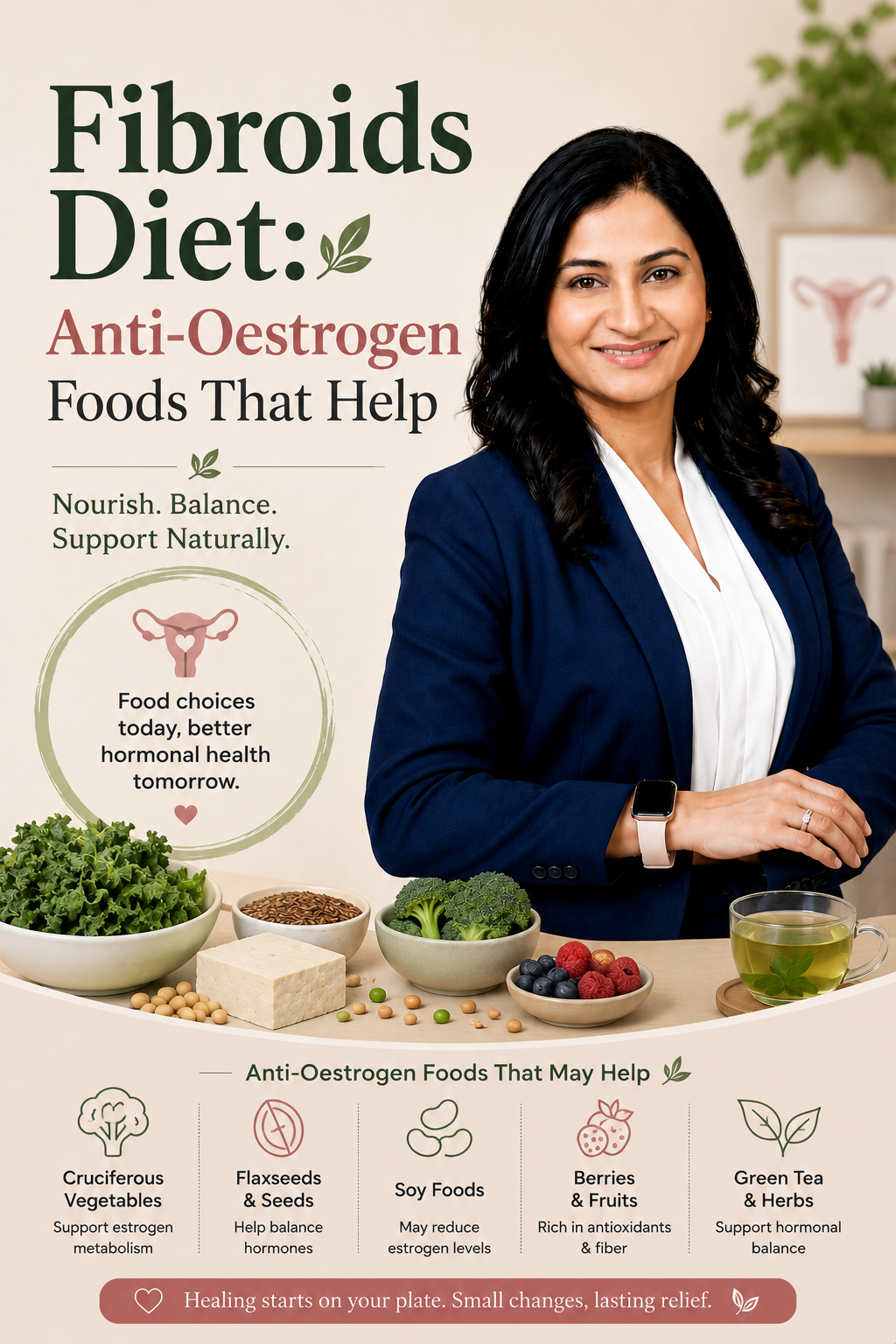
1. Cruciferous Vegetables — The Oestrogen Clearance Strategy
Cruciferous vegetables like broccoli, cauliflower, cabbage, Brussels sprouts, kale, and in Indian cooking, sarson (mustard greens), mooli (radish), and turnip, contain two compounds with direct relevance to oestrogen metabolism:
- Indole-3-carbinol (I3C): Converted in the acidic stomach environment to DIM (diindolylmethane). I3C and DIM support the liver’s Phase I and Phase II detoxification of oestrogen, promoting conversion to the less potent 2-hydroxyoestrone pathway and away from the more biologically active 16-alpha-hydroxyoestrone pathway. In plain terms, they help the liver process and eliminate oestrogen more efficiently, reducing the total oestrogen burden in circulation.
- Sulforaphane: A potent inducer of Phase II liver detoxification enzymes (particularly glutathione S-transferases) that conjugate oestrogen for faecal excretion. Broccoli and broccoli sprouts are the richest sulforaphane sources.
A 2016 case-control study published in The Journal of Obstetrics and Gynaecology Research found that higher cruciferous vegetable intake was associated with lower fibroid prevalence in premenopausal women. While cross-sectional studies cannot establish causation, the biological mechanism is well-established and supports including these vegetables daily.
Indian cruciferous vegetable integration — daily:
- Sarson ka saag (mustard greens), a traditional North Indian dish that is one of the most sulforaphane-rich preparations in Indian cuisine
- Gobi sabzi (cauliflower), eat 3–4 times per week rather than occasionally
- Patta gobi (cabbage) thoran or sabzi, affordable, widely available, excellent I3C source
- Broccoli stir-fried with garlic and mustard oil, not traditional but easily integrated into Singapore Indian household cooking
- Mooli (radish) sabzi or raw in salads, an underused cruciferous vegetable in Indian cooking
2. Dietary Fibre — The Oestrogen Excretion Enhancer
Fibre is the second most important dietary tool for oestrogen clearance. Conjugated oestrogen is excreted through bile into the gut, where it should bind to dietary fibre and be eliminated in stool. When dietary fibre is inadequate, the enzyme beta-glucuronidase (produced by certain gut bacteria) deconjugates oestrogen in the gut, allowing it to be reabsorbed into circulation rather than excreted. This oestrogen reabsorption cycle is a direct driver of oestrogen excess.
A high-fibre diet, targeting 30–35g of dietary fibre per day from whole grains, legumes, vegetables, and fruits, promotes efficient oestrogen excretion and reduces circulating oestrogen burden.
Best Indian high-fibre foods for fibroid management:
- All dal and legumes — rajma, chana, masoor, moong; eat at least one cup per day
- Jowar and bajra roti instead of maida or white atta
- All non-starchy vegetables eaten generously at every meal
- Isabgol (psyllium husk) — one teaspoon in water before meals; directly binds oestrogen in the gut
- Flaxseed (ground, 1–2 tablespoons daily) — contains both fibre and lignans (which modulate oestrogen activity)
- Fruits with skin intact: guava, pear, apple — the skin provides significant soluble and insoluble fibre
3. Green Tea — The Most Evidence-Backed Single Food for Fibroids
Green tea deserves specific attention for fibroids because it has the strongest clinical trial evidence of any dietary intervention for fibroid management.
A double-blind, randomised, placebo-controlled trial by Eman Roshdy et al., published in the International Journal of Women’s Health (2013), found that green tea extract (EGCG, epigallocatechin gallate, 800 mg daily) significantly reduced fibroid size (by approximately 32.6%) and reduced fibroid-related symptoms including heavy bleeding, compared to placebo, over four months in women with symptomatic uterine fibroids. This is the most robust single nutritional intervention trial in fibroid literature and warrants attention.
The proposed mechanisms of EGCG on fibroids: direct anti-proliferative effects on fibroid smooth muscle cells, anti-angiogenic effects (reducing blood vessel formation within fibroids), and reduction of the inflammatory cytokines that promote fibroid growth.
At food quantities, green tea provides approximately 50–100 mg of EGCG per cup, significantly below the 800 mg supplement dose used in Al-Hendy’s trial. Two to three cups of green tea daily is a reasonable, safe addition to the fibroid management diet, providing clinically relevant EGCG exposure alongside the L-theanine and cardiovascular benefits of green tea.
4. Omega-3 Fatty Acids — Anti-Inflammatory and Anti-Angiogenic
Omega-3 fatty acids (EPA and DHA) reduce the prostaglandins and cytokines that drive fibroid-related inflammation and heavy menstrual bleeding. They also have anti-angiogenic properties, inhibiting the formation of new blood vessels that sustain fibroid growth. A 2020 study found that higher erythrocyte (red blood cell) levels of omega-3 fatty acids, a biomarker of longer-term omega-3 status, were associated with significantly lower fibroid risk (OR 0.41), though dietary omega-3 intake alone was not independently associated with fibroid risk in the same analysis. The evidence on omega-3 and fibroids remains mixed, and the primary justification for including omega-3s in fibroid management is their well-established anti-inflammatory effect rather than direct fibroid-specific trial data.
5. Vitamin D — The Fibroid Regulator
Multiple observational studies have found that women with lower Vitamin D levels have significantly higher fibroid prevalence, larger fibroid volumes, and more severe symptoms. A 2013 study by Baird et al. in Epidemiology found that sufficient Vitamin D status (above 50 nmol/L) was associated with a 32% lower risk of fibroids compared to insufficient status.
The mechanisms are not fully established, but Vitamin D receptors are expressed in fibroid cells, and Vitamin D may directly suppress fibroid cell proliferation through regulation of specific growth pathways. Given that Vitamin D deficiency is near-universal among Indian women in Singapore and common in India, testing and correcting Vitamin D status is a high-priority, low-risk intervention for women with fibroids.
6. Legumes and Plant Protein — Replacing Red Meat
Multiple epidemiological studies have found an association between higher red meat intake (particularly beef and ham) and higher fibroid risk, while higher legume and vegetable intake is associated with lower risk. The 2007 Black Women’s Health Study found that beef and ham consumption was associated with significantly higher fibroid risk.
For Indian women, replacing red meat (mutton, beef) as the primary protein source with dal, rajma, chana, and paneer, which they are largely already doing, is consistent with the dietary pattern associated with lower fibroid risk. This is another example of traditional Indian food culture being nutritionally protective when maintained.
7. Iron-Rich Foods — Managing Menorrhagia-Related Anaemia
As discussed, heavy periods from fibroids commonly cause iron deficiency anaemia. Some strategies include:
- Ragi, masoor dal, palak, til, rajma — daily iron-rich food sources
- Vitamin C pairing at every iron-rich meal (lime, amla, tomatoes)
- No chai for 60 minutes before and after iron-rich meals
- Test ferritin — supplement with ferrous bisglycinate if below 30 ng/mL
Foods and Habits That May Worsen Fibroid Growth
Alcohol
Alcohol is the most consistently documented dietary risk factor for fibroids across multiple studies. A 2004 analysis of the Nurses’ Health Study II found that alcohol consumption (beer in particular) was associated with significantly higher fibroid risk; each daily alcoholic drink was associated with approximately a 10% increase in fibroid risk. The mechanisms: alcohol impairs hepatic oestrogen metabolism, raises circulating oestrogen, and reduces SHBG (sex hormone-binding globulin), all of which increase biologically active oestrogen availability.
Red and Processed Meat
As noted above, higher red meat intake is associated with higher fibroid risk across multiple studies. The mechanism may involve the haem iron content of red meat (which promotes oxidative stress), the IGF-1-stimulating effect of animal protein in excess, and the arachidonic acid (pro-inflammatory omega-6) content of red meat. This does not mean eliminating all red meat, small amounts occasionally are unlikely to be significant, but regular, large-portion red meat consumption is not consistent with fibroid management.
Refined Carbohydrates and Sugar
Insulin resistance drives IGF-1 elevation, which promotes fibroid growth. The high-GI, high-sugar dietary pattern typical of modern Indian urban eating worsens insulin resistance and creates a more growth-permissive hormonal environment for fibroids. Reducing refined carbohydrates and sugar is directly relevant to fibroid management through this mechanism.
Excess Body Fat
Adipose tissue is a significant site of oestrogen production via aromatase, the enzyme that converts androgens to oestrogens. Women with higher body fat percentages have higher circulating oestrogen, independent of ovarian production. This is one of the primary reasons fibroids are more common and larger in women with higher BMI. Achieving and maintaining a healthy body weight reduces the peripheral oestrogen production that drives fibroid growth — though this is a long-term intervention rather than an immediate one.
👉The Rise of Fem-Tech: Empowering Women’s Health Through Technology
👉Fertility Diet for Women: What to Eat When Trying to Conceive
The Fibroid-Supportive One-Day Indian Meal Plan
- On waking: Warm water with amla powder (Vitamin C, anti-inflammatory) + one teaspoon isabgol in water (fibre for oestrogen excretion)
- Breakfast: Sarson (mustard greens) paratha or palak paratha (cruciferous/I3C) with a small amount of ghee + plain dahi (150g) + a cup of green tea (EGCG)
- Mid-morning: 5–7 walnuts (omega-3) + one guava or kiwi (Vitamin C)
- Lunch: One cup masoor dal (iron, folate) + one jowar roti + broccoli or gobi sabzi with mustard oil (I3C, sulforaphane) + salad with lime. Second cup of green tea after lunch.
- Afternoon: One tablespoon ground flaxseed stirred into plain dahi (lignans, fibre, ALA)
- Dinner: Sardine or mackerel curry (omega-3, Vitamin D) + one bajra roti + stir-fried cabbage or broccoli (cruciferous, anti-oestrogenic) + plain chaas (probiotic, gut health for oestrogen excretion)
- Before bed: Third cup of green tea (decaf if preferred; green tea is naturally lower in caffeine than black tea)
- Supplements (discuss with your doctor): Vitamin D3 (if deficient), Omega-3 DHA+EPA 500–1000 mg (if not eating fish regularly), Iron (if ferritin below 30 ng/mL), Green tea extract (EGCG 400–800 mg) as per Al-Hendy protocol, discuss with gynaecologist
Frequently Asked Questions
Can diet shrink existing fibroids?
No dietary intervention has been shown in clinical trials to reliably shrink established fibroids in humans. The Al-Hendy EGCG trial showed significant fibroid volume reduction with high-dose green tea extract, but this was a small trial that requires replication. Diet primarily influences the hormonal environment that drives fibroid growth, potentially slowing growth, reducing new fibroid formation, and improving symptoms, rather than directly reducing existing fibroid size. For symptomatic fibroids, appropriate medical and surgical options (GnRH agonists, uterine fibroid embolisation, myomectomy, or hysterectomy for severe cases) are the primary treatment modalities. Diet is a supportive, adjunctive intervention.
Is soya safe for women with fibroids?
This is a common concern. Soya contains phytoestrogens (isoflavones) that bind weakly to oestrogen receptors. The theoretical concern is that this could stimulate fibroid growth. However, the clinical evidence does not support this concern at normal dietary soya quantities, soya isoflavones bind to oestrogen receptors with much lower potency than endogenous oestrogen, and several studies suggest they may actually compete with more potent oestrogens at receptor sites, potentially having a net anti-oestrogenic effect. The current consensus: moderate dietary soya (tofu 2–3 times per week, occasional soya milk) is safe for women with fibroids. High-dose isolated isoflavone supplements are more uncertain and best avoided without medical discussion.
I have fibroids and heavy periods. How do I manage the anaemia nutritionally?
Heavy menstrual bleeding from fibroids is one of the most common causes of iron deficiency anaemia in Indian women. The nutritional management parallels dietary management of iron deficiency anaemia and dietary management of postpartum hair loss, ragi, masoor dal, palak, til, and rajma as daily iron sources; vitamin C at every iron-rich meal; avoiding tea and coffee with meals; and iron supplementation under medical guidance when ferritin is confirmed below 30 ng/mL. Additionally, the anti-fibroid dietary strategies above (particularly cruciferous vegetables, green tea, omega-3, and Vitamin D) address the underlying fibroid-related bleeding at its hormonal roots over time.
Does dairy worsen fibroids?
The evidence on dairy and fibroids is mixed and does not support elimination. Some studies have actually found an inverse association, higher dairy intake associated with lower fibroid risk, possibly due to Vitamin D and calcium content. Full-fat dairy from grass-fed sources contains CLA and Vitamin K2, which are nutritionally beneficial. Fermented dairy (dahi, chaas) supports gut health and oestrogen excretion. There is no robust evidence to recommend dairy elimination for women with fibroids. If individual dairy sensitivity is suspected based on symptoms (bloating, increased cramping), a supervised elimination trial is reasonable, but routine dairy avoidance is not evidence-based for fibroids.
I was told to have surgery for my fibroids. Does diet still matter?
Yes, in two important ways. Pre-operatively, optimising iron status (which is often critically depleted from heavy fibroid bleeding) directly affects surgical safety; severely anaemic women face higher perioperative risk and longer recovery. This should be addressed before elective fibroid surgery with iron supplementation and dietary iron intensification. Post-operatively, the anti-inflammatory, anti-oestrogenic dietary pattern described in this post supports recovery and potentially reduces the rate of fibroid recurrence, which is meaningful because fibroids recur in a proportion of women after myomectomy. Both the preoperative and postoperative periods are appropriate times for nutrition consultation.
The Bottom Line
Fibroids are a common, often manageable, and nutritionally modifiable condition. Diet cannot cure fibroids or eliminate them, but it can meaningfully influence the hormonal environment that drives their growth, reduce the inflammation that worsens their symptoms, support the liver’s oestrogen clearance, address the iron deficiency anaemia they frequently cause, and potentially slow their progression.
The dietary approach is consistent: increase cruciferous vegetables daily for I3C and sulforaphane; drink green tea for EGCG; prioritise dietary fibre for oestrogen excretion; ensure omega-3 adequacy for anti-inflammatory and anti-angiogenic effects; correct Vitamin D deficiency; maintain a healthy weight; eliminate alcohol; and treat fibroid-related anaemia aggressively with iron. This is not a dramatic overhaul of Indian food traditions; it is an intensification of their most protective features.
✨ Struggling with painful periods, bloating, fatigue, or weight fluctuations?
You do not have to navigate this alone.
My doctor-led Nutrition Programs are designed to help women reduce inflammation, support hormones, improve gut health, and build a sustainable way of eating that works in real life.
💚 Personalised anti-inflammatory meal guidance
💚 Indian & Singapore-friendly food options
💚 Symptom-focused nutrition strategies
💚 Sustainable, evidence-based support
📞 CLICK Here to Book your FREE consultation call with Dr Akanksha Sharma today and take the first step toward feeling better.
Disclaimer: This article is for educational purposes only. Fibroids require gynaecological assessment and management. Dietary changes are supportive and should complement, not replace, appropriate medical care.
References:
- Shen Y, Wu Y, Lu Q, Ren M. Vegetarian diet and reduced uterine fibroids risk: A case-control study in Nanjing, China. J Obstet Gynaecol Res. 2016;42(1):87-94. doi:10.1111/jog.12834. Link
- Eman Roshdy et al. Treatment of uterine leiomyomas with the selective progesterone receptor modulator — use of green tea extract as adjunctive therapy. Int J Womens Health. 2013;5:477-486. PMC
- Harris HR, Eliassen AH, Doody DR, Terry KL, Missmer SA. Dietary fat intake, erythrocyte fatty acids, and risk of uterine fibroids. Fertil Steril. 2020 Oct;114(4):837-847. doi: 10.1016/j.fertnstert.2020.03.023. Epub 2020 Jul 14. PubMed
- Baird DD et al. High cumulative incidence of uterine leiomyoma in black and white women: ultrasound evidence. Am J Obstet Gynecol. 2003;188(1):100-107. PubMed
- Wise LA et al. Intake of fruit, vegetables, and carotenoids in relation to risk of uterine leiomyomata. Am J Clin Nutr. 2011;94(6):1620-1631. PubMed
- Radin RG et al. Dietary glycemic index and load in relation to risk of uterine leiomyomata in the Black Women’s Health Study. Am J Clin Nutr. 2010;91(5):1281-1288. PubMed

Akanksha Sharma
Dr Akanksha Sharma (MBBS, MD) is a physician and women’s health nutrition specialist, and the founder of IYSA Nutrition. She provides evidence-based, doctor-led nutrition guidance for pregnancy, postpartum recovery, PCOS, child nutrition, and family health, helping women make calm, informed decisions about their health and their children’s well-being.