Written & reviewed by Dr Akanksha Sharma, MBBS, MD (Preventive & Community Medicine) | Founder, IYSA Nutrition, Singapore
Endometriosis is one of the most underdiagnosed, under-treated, and misunderstood conditions in women’s medicine. It affects approximately 10–15% of women of reproductive age worldwide, and in India, where menstrual pain is frequently normalised and dismissed, the average time from symptom onset to diagnosis is often seven to ten years. By the time many Indian women receive a diagnosis, they have spent years managing debilitating pain with painkillers, being told their symptoms are “normal,” and not receiving the comprehensive care this condition demands.
Endometriosis is fundamentally a condition of chronic inflammation, immune dysregulation, and oestrogen dependence. Endometrial-like tissue grows outside the uterus, on the ovaries, fallopian tubes, bowel, bladder, and peritoneum, responding to the same hormonal signals as the uterine lining: proliferating, breaking down, and bleeding with each menstrual cycle, but with nowhere to exit. This drives adhesions, scarring, severe pelvic pain, painful periods, painful intercourse, bowel and bladder symptoms, and, in a significant proportion of women, fertility challenges.
Nutrition cannot cure endometriosis; it is a complex surgical and hormonal condition that requires appropriate medical management. But the evidence is increasingly clear that dietary patterns which reduce inflammation, modulate oestrogen metabolism, support the immune system, and promote gut health can meaningfully reduce symptom severity and improve quality of life. For many Indian women managing endometriosis, dietary changes represent the intervention they have the most direct control over, between medical appointments and treatments.
👉Fibroids Diet: Anti-Oestrogen Foods That Help
Why Diet Matters in Endometriosis: The Biological Mechanisms
Inflammation Is the Driver
Endometriotic lesions create a chronic inflammatory environment, producing prostaglandins, cytokines, and other inflammatory mediators that drive pain, tissue damage, and disease progression. Prostaglandin E2 (PGE2), in particular, both drives endometriosis pain and stimulates oestrogen production locally within lesions, creating a self-sustaining inflammatory-hormonal feedback loop.
Dietary fatty acids directly influence prostaglandin production. Omega-6 fatty acids (from refined seed oils) are the primary substrate for PGE2 synthesis, a pro-inflammatory prostaglandin. Omega-3 fatty acids compete with omega-6s for the same enzymes and shift production toward anti-inflammatory prostaglandins (PGE3 and PGI3). This is not a theoretical biochemical point; it has direct, measurable implications for endometriosis pain levels and is one of the best-supported nutritional mechanisms in endometriosis research.
Oestrogen Dominance and Liver Metabolism
Endometriosis is an oestrogen-dependent condition; the tissue growth and inflammation are stimulated by oestrogen and suppressed by progesterone. Women with endometriosis frequently have relative oestrogen excess (oestrogen dominance), driven by impaired oestrogen metabolism, excess adipose tissue (which produces oestrone via aromatase), and potentially by dietary and environmental oestrogen exposure.
The liver is the primary site of oestrogen breakdown and conjugation. A well-functioning liver and healthy gut are essential for efficient oestrogen clearance. Dietary factors that support liver detoxification pathways, such as cruciferous vegetables, fibre, adequate protein, and reduced alcohol, directly support oestrogen clearance. Dietary factors that impair it, excess refined carbohydrates, alcohol, and inadequate fibre, worsen oestrogen dominance.
The Gut-Endometriosis Connection
The “oestrobolome”, the collection of gut bacteria that metabolise oestrogen, is an emerging and important concept in endometriosis. Certain gut bacteria produce an enzyme called beta-glucuronidase that deconjugates oestrogen in the gut, allowing it to be reabsorbed rather than excreted. Women with endometriosis show altered gut microbiome composition and higher beta-glucuronidase activity, leading to increased oestrogen reabsorption and worsened hormonal burden.
Supporting a healthy, diverse gut microbiome through fibre, fermented foods, and reduced ultra-processed food is therefore directly relevant to endometriosis management, not just general health.
Immune Dysregulation
In healthy women, the immune system clears endometrial cells that enter the peritoneal cavity during retrograde menstruation (a nearly universal occurrence). In women with endometriosis, immune surveillance is impaired, natural killer cells and macrophages fail to clear the misplaced cells, and instead, they implant and proliferate. Nutritional support of immune regulation, through Vitamin D, omega-3s, and zinc, may partially address this vulnerability.
Are you struggling with the condition? You don’t have to do it alone. My doctor-led Endometriosis Nutrition Program is designed to help women reduce inflammation, support hormones, improve gut health, and build a sustainable way of eating that works in real life.
The Anti-Inflammatory Diet for Endometriosis: Core Principles
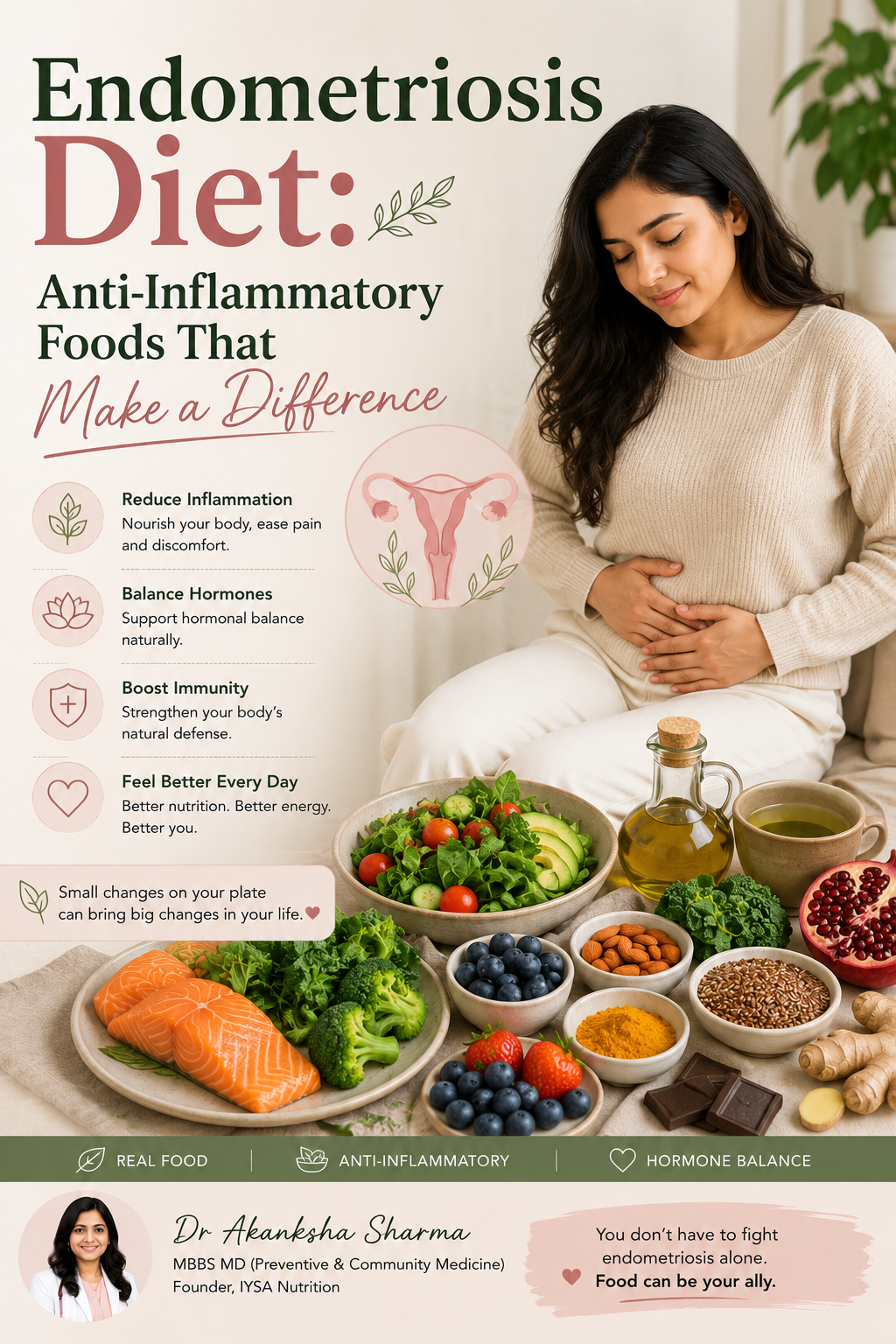
The dietary approach with the strongest evidence base for endometriosis management is a Mediterranean-style, anti-inflammatory eating pattern, adapted here for Indian food culture. This is not a restrictive diet; it is a framework that prioritises whole, unprocessed foods with anti-inflammatory properties while reducing foods that drive the inflammatory pathways central to endometriosis.
Core Principle 1: Maximise Omega-3, Minimise Omega-6
This is the most mechanistically well-supported dietary change for endometriosis. A 2004 prospective study by Missmer et al. (Harvard) found that higher long-term omega-3 intake was associated with significantly lower endometriosis risk. Conversely, higher trans fat intake was associated with substantially higher risk.
To increase omega-3:
- Fatty fish (salmon, sardines, mackerel) 2–3 times per week, for non-vegetarian women, this is the most direct intervention
- 1 tablespoon of ground flaxseed daily, in dahi, roti dough, or oats
- A small handful of walnuts daily
- An algae-based DHA+EPA supplement (500–1000 mg combined) for vegetarians
- Fish oil supplement (1–2g per day) for non-vegetarians who do not eat fish regularly
To reduce omega-6:
- Replace sunflower oil and refined vegetable oil in cooking with mustard oil (North Indian cooking), coconut oil (South Indian cooking, in moderation), or ghee
- Reduce fried foods, deep-frying in seed oils creates very high omega-6 loads
- Choose extra virgin olive oil for low-heat cooking and dressings
- Avoid vanaspati (hydrogenated fat), which contains trans fats, the most strongly implicated dietary fat in endometriosis risk
- Read packaged food labels; most commercial biscuits, namkeen, and snacks are made with refined palmolein or sunflower oil
Core Principle 2: Eat Cruciferous Vegetables Daily
Cruciferous vegetables, broccoli, cauliflower, cabbage, kale, Brussels sprouts, and in Indian cuisine, sarson (mustard greens), contain a compound called indole-3-carbinol (I3C) and its metabolite DIM (diindolylmethane). These compounds directly support the liver’s Phase I and Phase II detoxification pathways, promoting the conversion of oestrogen to its less potent, more easily excreted 2-hydroxyoestrone form, rather than the more carcinogenic 16-alpha-hydroxyoestrone form.
In plain terms: eating cruciferous vegetables daily supports your body’s ability to metabolise and clear oestrogen efficiently, reducing the oestrogen burden that drives endometriosis growth and pain.
Caveat: In some women, cruciferous vegetables can cause indigestion; in such cases, a small amount of well-cooked crucifers should be introduced.
Indian cruciferous vegetables and how to include them:
- Broccoli: Lightly stir-fried with garlic and mustard oil, or blanched and added to dahi-based salads. Aim for at least 3–4 servings per week.
- Cauliflower (phool gobi): A staple of Indian cooking, aloo gobi, gobi paratha, gobi sabzi. Eat freely.
- Cabbage (patta gobi): Cabbage sabzi, cabbage thoran (South Indian), and raw cabbage salad with lime. An excellent, affordable cruciferous staple.
- Sarson (mustard greens): Sarson ka saag, a deeply nutritious North Indian classic that is one of the best anti-oestrogen foods in Indian cuisine. Include weekly during the season.
- Radish (mooli): Technically a cruciferous vegetable; mooli sabzi, mooli paratha, and raw mooli in salads are all beneficial.
Core Principle 3: Prioritise Fibre — Especially from Legumes and Vegetables
Dietary fibre is essential for oestrogen excretion. Conjugated oestrogen is excreted through bile into the gut, where it should be bound by fibre and eliminated in the stool. Inadequate fibre allows the beta-glucuronidase enzyme (from gut bacteria) to deconjugate oestrogen, enabling its reabsorption. A high-fibre diet effectively “escorts” oestrogen out of the body.
A 2010 study found that women who ate the most fibre had significantly lower circulating oestrogen levels compared to those eating low-fibre diets. Target at least 30–35g of dietary fibre per day, significantly higher than what most Indian urban women currently consume.
High-fibre Indian foods for endometriosis:
- All dals and legumes — rajma, chana, moong, masoor, urad; at least one cup per day
- Whole grains — jowar roti, bajra roti, whole wheat atta, brown rice
- All non-starchy vegetables — eat a minimum of 4–5 portions per day
- Psyllium husk (isabgol) — one teaspoon in water before a meal is a practical way to boost fibre intake significantly
- Flaxseeds — both ALA omega-3 and soluble fibre in one food
Core Principle 4: Include Powerful Anti-Inflammatory Foods
Several specific foods have strong evidence for anti-inflammatory effects relevant to endometriosis:
- Turmeric (haldi) with black pepper: Curcumin, the active compound in turmeric, has direct anti-inflammatory effects, inhibits PGE2 synthesis, and has shown anti-proliferative effects on endometriotic cells in preclinical studies. The critical point: curcumin has very low bioavailability unless consumed with piperine (from black pepper), which increases absorption by up to 2000%. Cook with turmeric and black pepper together, as Indian cooking traditionally does, or take a curcumin supplement formulated with piperine. A daily intake of at least 1–2 teaspoons of turmeric in cooking is worthwhile; higher therapeutic doses from curcumin supplements should be discussed with your doctor.
- Ginger (adrak): Contains gingerols and shogaols that inhibit prostaglandin synthesis and have demonstrated efficacy for reducing dysmenorrhoea (painful periods) in clinical trials, with an effect comparable to ibuprofen at 750–2000mg per day doses. Fresh ginger added to cooking, warm ginger water, or ginger tea is a daily anti-inflammatory habit with direct relevance to endometriosis-related menstrual pain.
- Green tea: Contains epigallocatechin gallate (EGCG), which has anti-angiogenic properties, inhibiting the formation of new blood vessels that sustain endometriotic lesions. Observational studies have found lower endometriosis risk in regular green tea drinkers. Two cups of green tea daily is a reasonable, safe habit.
- Berries and pomegranate: Rich in polyphenols and anthocyanins that reduce inflammatory cytokines. Pomegranate (anaar) is a traditional Indian fruit with a particularly rich polyphenol profile.
- Dark leafy greens: Palak, moringa, methi, provide folate (supports oestrogen methylation pathways), magnesium (reduces cramps and inflammation), iron (frequently depleted in endometriosis due to heavy periods), and Vitamin K.
Core Principle 5: Support Gut Health and the Oestrobolome
- Include fermented foods daily: plain dahi, homemade idlis and dosas, kanji (fermented rice water), homemade pickles (in small quantities)
- Eat prebiotic-rich foods that feed beneficial gut bacteria: onion, garlic, raw banana, oats, and legumes
- Reduce ultra-processed foods, which deplete gut microbiome diversity and promote inflammatory bacterial species
- Reduce alcohol, as it impairs liver oestrogen metabolism and disrupts gut microbiome composition significantly
Foods to Limit or Avoid in Endometriosis
Red Meat and Processed Meat
Multiple epidemiological studies, including data from the Nurses’ Health Study II, have found an association between higher red meat consumption and increased endometriosis risk. Red meat is high in arachidonic acid (an omega-6 fatty acid) that directly feeds the PGE2 inflammatory pathway. Processed meats (sausages, deli meats, salami) additionally contain nitrates and preservatives that drive further inflammation. For Indian women, replacing frequent mutton or beef consumption with fish, chicken, eggs, and legumes is a clinically sound dietary shift.
Alcohol
Alcohol directly impairs hepatic oestrogen metabolism, raises circulating oestrogen levels, disrupts gut microbiome composition, and increases systemic inflammation. Regular alcohol consumption is associated with significantly higher oestrogen levels and worsened endometriosis symptoms. I recommend that women with endometriosis minimise or eliminate alcohol entirely, not as a permanent restriction, but as a meaningful therapeutic intervention during the period of active symptom management.
Refined Sugar and High-GI Carbohydrates
Refined sugar and high-GI carbohydrates drive systemic inflammation through multiple pathways, advanced glycation end-products (AGEs), increased inflammatory cytokine production, and worsened insulin resistance. Insulin resistance promotes aromatase activity (the enzyme that converts androgens to oestrogens in adipose tissue), further increasing the oestrogen burden in endometriosis. Reducing refined sugar, white bread, packaged biscuits, sweet chai, and commercial sweets is a foundational intervention.
Refined Seed Oils and Trans Fats
As discussed above, sunflower oil, corn oil, soybean oil in large quantities, and especially vanaspati (partially hydrogenated fat) directly fuel the inflammatory prostaglandin pathways at the centre of endometriosis pain. Replace with mustard oil, coconut oil, ghee, and olive oil.
Soya in Very Large Quantities
Soya contains phytoestrogens (isoflavones) that can weakly mimic oestrogen in some tissues. The clinical evidence is mixed; some studies suggest soya isoflavones actually compete with more potent endogenous oestrogens and may be protective, while others suggest they could worsen oestrogen-sensitive conditions. The practical, evidence-based position: moderate soya consumption, tofu 2–3 times per week, is unlikely to be harmful for most women with endometriosis. Avoid very high-dose soya isoflavone supplements.
Key Micronutrients to Test and Supplement If Deficient
- Vitamin D: Low Vitamin D is consistently associated with worse endometriosis severity and higher inflammatory marker levels. Test serum 25-OH Vitamin D. If below 50 nmol/L, supplement under medical guidance, typically 2000–4000 IU/day for a period, with monitoring.
- Magnesium: Magnesium inhibits PGE2 synthesis and prostaglandin-induced uterine cramping, directly relevant to endometriosis-related dysmenorrhoea. Supplement with magnesium glycinate (300–400 mg/day) if dietary intake is low. Food sources: dark chocolate, pumpkin seeds, almonds, dark leafy greens, and bajra.
- Zinc: Anti-inflammatory and immune-modulatory; low in many women with endometriosis. Supplement 15–25 mg/day elemental zinc if deficient.
- Iron: Heavy periods are a major feature of endometriosis; chronic iron deficiency anaemia is common. Test ferritin, supplement if below 30 ng/mL under medical guidance.
- N-Acetyl Cysteine (NAC): A precursor to glutathione (the body’s master antioxidant). A small Italian RCT found NAC supplementation reduced endometrioma size and pain scores. Dose: 600 mg three times daily on three consecutive days per week. Discuss with your doctor before starting.
A Sample One-Day Anti-Inflammatory Meal Plan for Endometriosis (Indian)
- On waking: Warm water with fresh ginger and lemon (anti-inflammatory, liver-supportive). One teaspoon of ground flaxseed in warm water or stirred into the first meal.
- Breakfast: Sarson ka saag (mustard greens) paratha with a teaspoon of ghee + a bowl of plain dahi + a cup of green tea. Or: vegetable oats with turmeric, black pepper, and soft-boiled eggs.
- Mid-morning: A small handful of walnuts + one pomegranate or a cup of mixed berries
- Lunch: Salmon or sardine curry (omega-3) with half a cup of brown rice + broccoli or cabbage sabzi with mustard oil and garlic + a large salad with mooli, carrot, and lime dressing. For vegetarians, rajma curry replaces fish.
- Afternoon: Two cups of green tea. A small square of 70%+ dark chocolate.
- Dinner: Sarson dal or masoor dal with moringa leaves + 1–2 jowar rotis + mix veg sabzi + plain chaas (probiotic, fibre-supportive)
- Before bed: Warm turmeric milk with black pepper and a pinch of ashwagandha (adaptogenic, anti-inflammatory, discuss with your doctor if on hormonal treatment)
- Supplements (discuss with your doctor): Vitamin D 2000 IU, Omega-3 (fish oil or algae) 1g EPA+DHA, Magnesium glycinate 300mg at night
Frequently Asked Questions
Can diet alone reduce endometriosis pain?
For some women with mild-to-moderate endometriosis, dietary changes, particularly increasing omega-3s, reducing inflammatory foods, and optimising Vitamin D and magnesium, produce meaningful reductions in pain scores. Multiple observational studies support this. However, endometriosis is a progressive surgical condition in many women, and diet alone cannot stop disease progression or resolve existing lesions and adhesions. The most effective approach is dietary optimisation alongside appropriate medical management (hormonal therapy, laparoscopic surgery where indicated, pain management). Think of diet as a powerful modulator, not a standalone treatment.
Does dairy worsen endometriosis?
The evidence on dairy and endometriosis is genuinely mixed and does not support blanket elimination. Some studies have found higher dairy intake associated with lower endometriosis risk (possibly due to calcium’s anti-inflammatory effects and dairy’s progesterone content); others show no association. Full-fat organic dairy may be preferable to conventional commercial dairy if consuming dairy. For women who notice a clear worsening of symptoms with dairy, bloating, cramping, or increased inflammation, a 4–6 week elimination trial under dietary supervision is reasonable. Otherwise, routine dairy elimination is not evidence-based for endometriosis and removes important calcium, protein, and iodine sources.
Is a vegan diet good for endometriosis?
A well-planned plant-based diet can be excellent for endometriosis, high in fibre, anti-inflammatory phytonutrients, and cruciferous vegetables, and naturally lower in red meat and animal fats associated with increased risk. However, poorly planned veganism risks deficiencies in omega-3 DHA, iron, zinc, Vitamin B12, and calcium, all of which are specifically relevant to endometriosis management. If following a vegan diet, ensure algae-based DHA supplementation, iron and B12 supplementation if deficient, and generous inclusion of ragi, til, moringa, and legumes for calcium, iron, and zinc.
Does turmeric (haldi) actually help endometriosis?
Curcumin (the active compound in turmeric) has demonstrated anti-proliferative, anti-angiogenic, and anti-inflammatory effects on endometriotic cells in laboratory and animal studies. Human clinical trial evidence is limited but emerging positively. At culinary doses (1–2 teaspoons of turmeric per day in cooking, with black pepper), turmeric is safe, beneficial for overall inflammation, and supported by a plausible biological mechanism. High-dose curcumin supplements (2–8g/day) are used therapeutically in some endometriosis protocols but can interact with blood thinners and other medications. Discuss with your doctor before high-dose supplementation.
I have both endometriosis and PCOS. How do I eat for both?
Fortunately, the dietary approaches for endometriosis and PCOS have significant overlap; both benefit from an anti-inflammatory, low-GI, high-fibre eating pattern rich in omega-3s and cruciferous vegetables, with reduced refined carbohydrates, sugar, and omega-6-heavy oils. The key differences: endometriosis also emphasises oestrogen-clearing foods (cruciferous vegetables, fibre, reduced alcohol) specifically, while PCOS additionally emphasises insulin-sensitising strategies (low-GI carbohydrates, spearmint tea, inositol, cinnamon). A nutritionist familiar with both conditions can integrate these approaches into a single, practical eating plan, which is what I do in my IYSA Nutrition consultations.
✨ Struggling with painful periods, bloating, fatigue, or endometriosis flare-ups?
You do not have to navigate this alone.
My doctor-led Endometriosis Nutrition Program is designed to help women reduce inflammation, support hormones, improve gut health, and build a sustainable way of eating that works in real life.
💚 Personalized anti-inflammatory meal guidance
💚 Indian & Singapore-friendly food options
💚 Symptom-focused nutrition strategies
💚 Sustainable, evidence-based support
📞 CLICK Here to Book your FREE consultation call with Dr Akanksha Sharma today and take the first step toward feeling better.
Or
🌿 Join the Endometriosis Nutrition Program and start healing with food, science, and support.
The Bottom Line
Endometriosis is a complex, chronic condition that deserves comprehensive medical care. Diet cannot replace that care, but it can meaningfully reduce the inflammatory burden that drives pain, support oestrogen clearance, protect the gut microbiome, and improve quality of life between medical interventions. For Indian women with endometriosis, the anti-inflammatory principles in this guide are largely compatible with traditional Indian food culture — turmeric, ginger, mustard greens, cruciferous sabzis, fatty fish, flaxseeds, and legumes. These are not foreign foods. They are the foundations of a cuisine that, at its best, has extraordinary anti-inflammatory potential.
Reclaim that potential. Eat intentionally. And advocate for appropriate medical care alongside your dietary changes, you deserve both.
Disclaimer: This article is for educational purposes only. Endometriosis requires medical diagnosis and management. Dietary changes are supportive interventions and should not replace appropriate medical care.
🔗 You May Also Find These Readings Helpful:
- [Easing Menstrual Cramps in Endometriosis — The Natural Way]
-
[Eat to Beat Period Pain: Foods and Drinks That Help with Endometriosis Cramps]
-
[The Rise of Fem-Tech: Empowering Women’s Health Through Technology]
- [Fertility Diet for Women: What to Eat When Trying to Conceive]
📚References:
- Missmer SA et al. A prospective study of dietary fat consumption and endometriosis risk. Hum Reprod. 2010;25(6):1528-1535. PubMed
- Parazzini F et al. Diet and endometriosis risk. Hum Reprod Update. 2013;19(3):259-269. PubMed
- Sesti F et al. Hormonal suppression treatment or dietary therapy versus placebo in the control of painful symptoms in women with endometriosis who were relapsing after conservative surgery. Fertil Steril. 2007;88(6):1541-1547. PubMed
- Brosens I et al. Endometriosis: a life cycle approach? Am J Obstet Gynecol. 2013;209(4):307-316. PubMed
- Flower A et al. Chinese herbal medicine for endometriosis. Cochrane Database Syst Rev. 2012. PubMed

Akanksha Sharma
Dr Akanksha Sharma (MBBS, MD) is a physician and women’s health nutrition specialist, and the founder of IYSA Nutrition. She provides evidence-based, doctor-led nutrition guidance for pregnancy, postpartum recovery, PCOS, child nutrition, and family health, helping women make calm, informed decisions about their health and their children’s well-being.