
Written & reviewed by Dr Akanksha Sharma, MBBS, MD (Preventive & Community Medicine) | Founder, IYSA Nutrition, Singapore
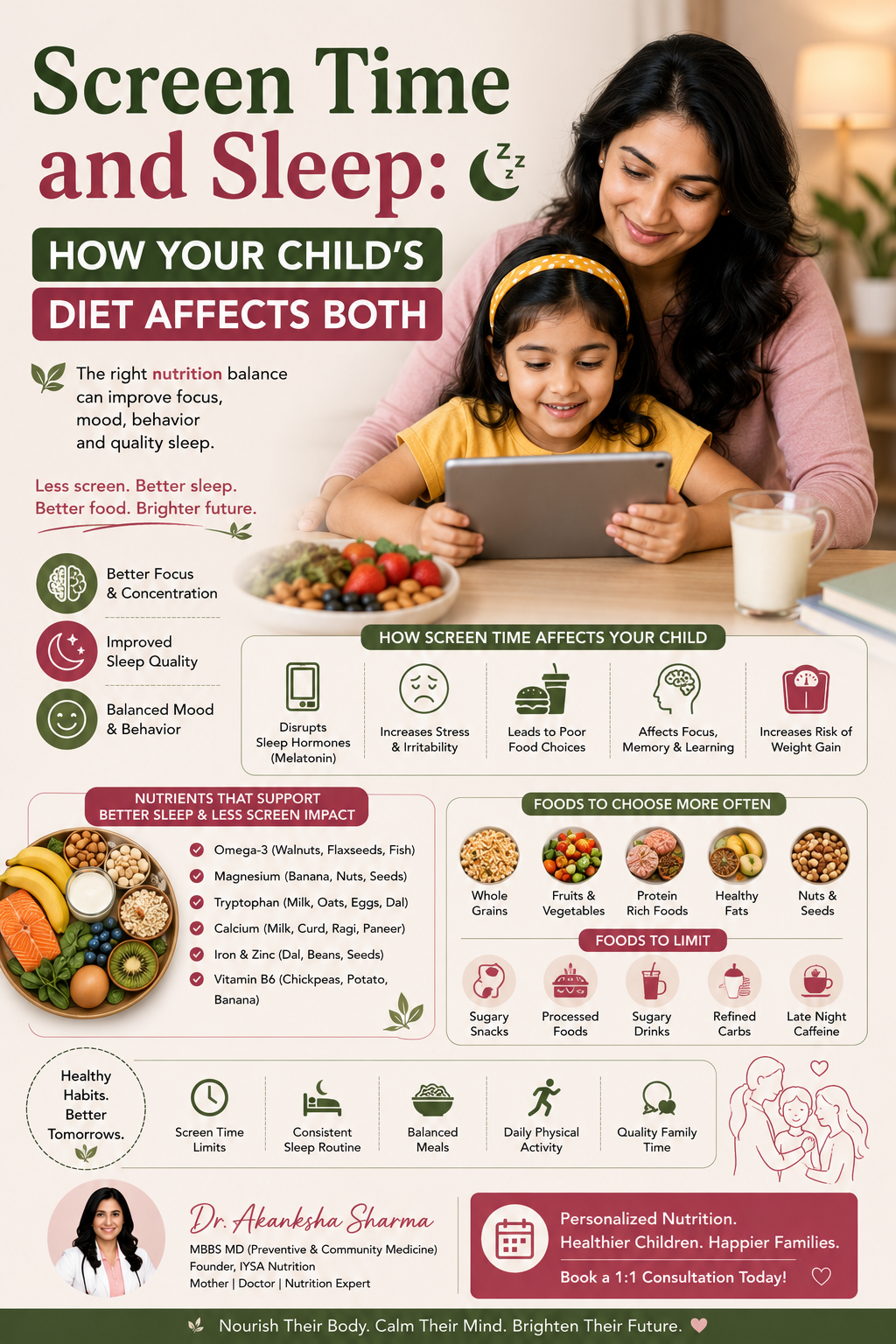
Every parent navigating screen time in 2026 is dealing with the same battle: a child who is reluctant to put down the device, struggles to wind down at bedtime, wakes up tired despite seemingly adequate hours of sleep, and becomes progressively more irritable, impulsive, and emotionally reactive as the day wears on.
What most parents do not realise is that diet is directly connected to all three of these challenges: screen time behaviour, sleep quality, and the emotional dysregulation that follows poor sleep. These are not separate problems with separate solutions. They are interconnected through specific neurochemical pathways that nutrition directly influences.
This post explains those connections clearly and gives you the specific dietary changes, grounded in Indian food culture, that support better sleep, better self-regulation of screen time, and better daytime behaviour in children.
📌MOH’s Grow Well SG Health Plan for Singapore Children: What Indian Parents Need to Know
The Neuroscience: How Diet Connects to Sleep and Screen Behaviour
The Dopamine Connection
Screens are dopaminergic; they trigger repeated releases of dopamine (the brain’s reward neurotransmitter) through unpredictable rewards, social feedback, and visual novelty. This is not a character flaw or a parenting failure; it is a design feature of digital platforms that neurologically resembles other high-reward stimuli. Children’s brains, with prefrontal cortices that are not fully developed until their mid-20s, are particularly susceptible to this dopaminergic pull.
Nutrition connects to this system because dopamine is synthesised from the amino acid tyrosine (from dietary protein). A child who chronically under-eats protein has reduced substrate for dopamine synthesis, which paradoxically increases dopamine-seeking behaviour — making screens more appealing, not less. Adequate dietary protein, particularly at breakfast, stabilises dopamine production and supports the prefrontal cortical function needed to self-regulate screen use.
📌Screen-Free Meals: How Ditching Distractions Can Help Your Child Overcome Fussy Eating
The Serotonin-Melatonin Pathway
Melatonin, the hormone that initiates and maintains sleep, is synthesised from serotonin, which is synthesised from tryptophan (an essential amino acid from dietary protein). The pathway is: dietary tryptophan → serotonin → melatonin. This means that the foods your child eats in the hours before bed directly affect their melatonin production and, therefore, their ability to fall asleep and stay asleep.
Simultaneously, the blue light emitted by screens suppresses melatonin production by inhibiting the pineal gland. The combination of a tryptophan-poor evening diet (biscuits, packaged snacks, white rice alone) with two hours of screen exposure before bed creates a double suppression of melatonin, making it biologically very difficult for a child to fall asleep on time, regardless of how tired they are.
The Blood Glucose-Sleep Disruptor
Blood glucose fluctuations at night directly impair sleep quality. A high-sugar dinner or a sugary snack close to bedtime causes a blood glucose spike followed by a reactive drop in the early hours of the night (approximately 2–3 am). This nocturnal hypoglycaemia activates the sympathetic nervous system, raising cortisol and adrenaline, causing the child to rouse partially or fully from sleep, experience nightmares or night terrors, or have difficulty returning to deep sleep. Parents often attribute this to “bad dreams” or “not being tired enough”, but nutritional blood glucose instability is a frequently overlooked and completely correctable cause.
📌Hidden Sugar in Indian Kids’ Snacks (And Healthier Swaps)
The Gut-Brain Axis
Approximately 90% of serotonin is produced in the gut by enterochromaffin cells whose activity is directly influenced by the gut microbiome. Children with dysbiotic gut microbiomes (depleted of beneficial bacteria by ultra-processed food, antibiotics, or inadequate dietary fibre) produce less serotonin, have less melatonin available for sleep, and show higher rates of anxiety, emotional dysregulation, and sleep difficulties. Supporting gut microbiome health through diet is therefore a direct intervention in sleep quality, a connection that is only recently being fully appreciated in paediatric research.
📌Why Are So Many Kids Becoming Fussy Eaters?
📌Picky Eating Solutions: A Doctor-Backed Nutrition Guide
How Poor Diet Worsens Screen Time Problems
The dietary pattern most common in modern Indian urban children, high in refined carbohydrates and sugar, low in protein and fibre, heavy in ultra-processed snacks, and light on vegetables and fermented foods, creates a neurochemical environment that makes screen time harder to manage. Here is why:
- Blood glucose instability → impaired prefrontal function: The prefrontal cortex, the brain region responsible for self-regulation, impulse control, and the ability to stop doing something pleasurable, is exquisitely sensitive to glucose fluctuations. Blood sugar crashes impair it directly, making the child neurologically less able to put down the device when asked.
- Low protein → dopamine substrate deficit → increased reward-seeking: A child who under-eats protein at breakfast and lunch arrives at screen time in the afternoon with depleted dopamine precursors, amplifying the rewarding pull of screen stimulation.
- Sugar and processed foods → gut dysbiosis → serotonin deficit → anxiety and emotional reactivity: Children with depleted gut microbiomes show higher rates of anxiety and emotional dysregulation, making them more likely to use screens as a coping mechanism for distress.
- Poor sleep → cortisol elevation → worse impulse control next day: A child who slept poorly due to dietary factors has elevated cortisol and reduced prefrontal function the following day, making screen self-regulation even harder, and sugar cravings even stronger, creating a worsening cycle.
📌Why Zinc Deficiency is common in Indian Kids (And How to Fix It)
📌Is Ghee for Children Good? An Evidence-Based Answer
📌Ultra-Processed Foods and Children: What Parents Think vs What Guidelines Say
Foods That Support Better Sleep in Children
1. Tryptophan-Rich Foods in the Evening — The Melatonin Precursor Strategy
Tryptophan is the rate-limiting amino acid in melatonin synthesis. Eating tryptophan-rich foods in the 2–3 hours before bed, combined with a small amount of complex carbohydrate (which facilitates tryptophan’s entry into the brain), is a direct, evidence-based dietary strategy for supporting natural melatonin production.
Best Indian tryptophan-rich foods for evening meals:
- Milk (warm): The traditional Indian bedtime drink has a genuine scientific basis. Warm milk contains both tryptophan and casein (a slow-digesting protein that provides sustained amino acid release through the night). The warmth supports relaxation through a mild temperature effect. A cup of warm plain milk or warm haldi doodh 30–60 minutes before bed is genuinely evidence-supported for sleep in children.
- Dahi: Rich in tryptophan and casein, with probiotic benefits for gut serotonin production. A small bowl of plain dahi at dinner is an excellent sleep-supportive food.
- Paneer: High in both tryptophan and casein. Evening meals with paneer as the protein source directly support melatonin synthesis.
- Eggs: If your child’s dinner includes eggs, these provide tryptophan alongside choline, important for melatonin synthesis and cognitive function.
- Dal: All lentils and legumes contain tryptophan. Moong dal khichdi at dinner is one of the best combinations for sleep, tryptophan from the dal, complex carbohydrate from the rice, and the digestive ease of khichdi, which means the gut is not overworked during sleep.
- Banana: Provides tryptophan, potassium (which supports muscle relaxation), and Vitamin B6 (required for the tryptophan-to-serotonin conversion step). A small banana as part of the evening snack is a practical sleep-supportive addition.
- Walnuts: Unusually among plant foods, walnuts contain small amounts of melatonin directly, not just the precursors. A few walnuts as an evening snack provide both melatonin and ALA omega-3.
2. Magnesium — The Relaxation Mineral
Magnesium regulates the NMDA receptor and activates GABA (gamma-aminobutyric acid) receptors, the primary inhibitory neurotransmitter system that promotes relaxation and sleep. Magnesium deficiency is associated with insomnia, restless sleep, night waking, and anxiety in children. Studies in adults have shown that magnesium supplementation improves sleep onset, sleep duration, and sleep efficiency.
Modern Indian children’s diets, heavy in refined grains and processed snacks, light in whole grains, nuts, and leafy greens, are frequently magnesium-insufficient. Restoring dietary magnesium is a meaningful and underutilised intervention for childhood sleep problems.
Best Indian magnesium sources for children:
- Pumpkin seeds — approximately 150mg per 30g; the most concentrated source available. A small handful as an evening snack provides significant magnesium.
- Dark chocolate (70%+) — 64mg per 30g; a small square as an after-dinner treat provides magnesium and is generally enthusiastically received by children
- Almonds and cashews — 70–80mg per 30g
- Bajra (pearl millet) roti — 137mg per 100g flour; one of the best reasons to include bajra rotis at dinner
- Banana — 27mg per medium banana
- Dark leafy greens — palak, moringa, methi in the dinner sabzi
3. Omega-3 Fatty Acids — For Sleep Architecture
A 2014 randomised controlled trial by Paul Montgomery et al. at the University of Oxford found that omega-3 DHA supplementation in children was associated with significantly better sleep, fewer night wakings, longer sleep duration, and improved sleep efficiency. The mechanism involves DHA’s role in neuronal membrane function, which affects the activity of sleep-regulating neural circuits.
For Indian children, who are typically low in dietary DHA (particularly vegetarian children), increasing omega-3 intake is a practical and meaningful sleep intervention. Fish 2–3 times per week for non-vegetarian children; walnuts, ground flaxseed, and an algae-based DHA supplement for vegetarian children.
4. Probiotic-Rich Foods — For Gut-Serotonin Production
Supporting the gut microbiome directly supports serotonin production (90% of which is gut-derived) and, therefore, the melatonin synthesis that depends on it. Daily fermented food inclusion is a meaningful and accessible sleep-supporting dietary habit:
- Plain dahi at dinner or as an afternoon snack
- Idli and dosa from properly fermented batter at dinner, one of the most gentle, sleep-friendly evening meals available in the Indian dietary tradition
- Plain chaas at dinner, probiotic, easy to digest, does not burden the gut overnight
Foods That Worsen Sleep in Children
Sugar and Refined Carbohydrates at or After Dinner
As described above, post-dinner sugar or high-GI snacks cause nocturnal blood glucose swings that directly disrupt sleep architecture. The common Indian evening pattern of dinner at 8–9 pm, followed by biscuits, mithai, or sweet chai while watching television, followed by screen time, followed by attempting sleep, stacks multiple sleep-disrupting factors simultaneously.
The specific pattern to change: no high-sugar foods after 7 pm. If a bedtime snack is needed, make it protein and magnesium-based (warm milk, a small handful of almonds, a few walnuts) rather than carbohydrate-based.
Caffeine — More Widespread Than Parents Realise
Caffeine has a half-life of 5–7 hours in adults, and longer in children whose metabolic enzyme activity is lower. Tea, coffee, chocolate, cola, and energy drinks all contain significant caffeine. A child who drinks sweet chai at 5 pm, eats chocolate biscuits at 6 pm, and has a glass of cola at dinner has consumed a caffeine load that will still be active at 11 pm or midnight, directly suppressing melatonin and impairing sleep onset.
For children, limit all caffeine-containing foods after 3 pm. Plain milk chocolate contains approximately 10mg of caffeine per 30g; dark chocolate contains 15–20mg per 30g; a cup of Indian chai contains 30–50mg. These are not trivial doses in the context of children’s smaller body weights and slower caffeine metabolism.
Heavy, High-Fat Dinners
Large, fatty meals at dinner slow gastric emptying significantly, causing the gut to continue active digestion work during the hours that should be sleep hours. This diverts blood flow to the digestive system, activates the enteric nervous system, and can cause discomfort, reflux, and restlessness that impairs sleep onset and quality. Keep dinner the lightest meal of the day for children, eaten at least 2 hours before bedtime.
Ultra-Processed Snacks Before Bed
Commercial biscuits, packaged chips, instant noodles, and similar products contain combinations of refined carbohydrates, artificial additives, MSG, and sometimes caffeine-containing ingredients, all of which worsen sleep quality through multiple mechanisms. The additive and preservative load of ultra-processed foods specifically alters gut microbiome composition in ways that reduce serotonin-producing bacteria. Replace evening packaged snacks with warm milk, plain dahi, or a small handful of nuts.
Worried your child is eating “too little” or too selectively?
👉 Book a child nutrition consult (FREE) (Singapore-friendly, practical, doable meal plans).
Diet and Screen Time Self-Regulation: Practical Strategies
High-Protein Breakfast — The Single Most Impactful Change
A protein-rich breakfast (two eggs, besan chilla with dahi, moong dal chilla) provides the tyrosine and phenylalanine needed for dopamine synthesis throughout the morning, supporting the prefrontal cortical function that underlies self-regulation. Research consistently shows that children who eat protein-rich breakfasts demonstrate better impulse control, better attention, and better emotional regulation throughout the school day, including more compliance with screen time limits.
Conversely, a high-sugar breakfast (sweetened cereal, biscuits, sugary chai, packaged juice) produces an initial glucose spike followed by a mid-morning crash that impairs prefrontal function, increases irritability, amplifies reward-seeking (including screen-seeking), and sets up a day of poor self-regulation.
No High-GI Snacks in the Afternoon Screen Time Window
The period between school and dinner (typically 3–7 pm in Indian households) is when screen use is highest and when snacking is most unsupervised. High-sugar afternoon snacks like packaged biscuits, flavoured chips, commercial juices, sweet chai, create a blood glucose instability pattern that worsens the dopaminergic pull of screens and reduces the prefrontal capacity to self-regulate use. Replace these with: plain dahi with seeds, roasted chana, a piece of fruit with almonds, or warm milk.
The Pre-Screen Protein Snack
If screen time occurs in the afternoon, offering a protein-rich snack beforehand, two eggs, a bowl of dahi, roasted chana, stabilises blood glucose and supports prefrontal function during screen use, making the child more able to respond to limits and transition away from screens when the time is set.
📌How to Know If Your Child Is Getting Enough Protein!
📌Is Your Child Getting Enough Calcium? (Without Milk/ Dairy)
📌Does Milk Cause Early Puberty in Girls? A Doctor’s Evidence-Based Answer
The Evening Routine That Works: Diet + Screen Management
- 5:00pm: Afternoon snack: plain dahi with seeds or roasted chana + water (not juice or cola)
- 5:30–7:00pm: Permitted screen time, if any homework and outdoor time is complete. No screen time within 90 minutes of bedtime.
- 7:00pm: Dinner: ideally light and tryptophan-rich: khichdi with dal, idli-sambar, dal with one roti and sabzi, or eggs with vegetables. One small portion of dahi.
- 7:30pm onwards: All screens off. Warm lighting, calm activity (reading, drawing, family conversation, light play)
- 8:00pm (for primary school children): Pre-bed snack if needed, a cup of warm milk (plain or haldi) or 5 almonds + 2 walnuts
- 8:30pm: Lights off for 5–8 year olds. 9-9:30pm for older children.
Frequently Asked Questions
My child refuses milk. What can replace warm milk at bedtime for sleep?
Several alternatives work equally well: a small bowl of plain dahi (same tryptophan and casein profile), warm dahi-based chaas, a small banana with a few almonds, or warm water with a teaspoon of ashwagandha churna (adaptogenic herb with some evidence for improving sleep in children over 5 years, discuss with your paediatrician first). The goal is a tryptophan + magnesium combination without high sugar, dahi and nuts achieve this as effectively as milk.
Does melatonin supplement help children sleep better?
Melatonin supplements are increasingly used for childhood sleep difficulties in Singapore and India, and they can be effective for specific circadian rhythm disorders and in children with neurodevelopmental conditions. However, the starting point should always be dietary optimisation and sleep hygiene before supplement melatonin, because most childhood sleep problems are driven by correctable factors (screen exposure, dietary sugar, insufficient tryptophan, inadequate magnesium) rather than a physiological melatonin deficiency. Discuss melatonin supplementation with your paediatrician if dietary and behavioural approaches have been consistently implemented for 4–6 weeks without adequate improvement.
Can diet help children with diagnosed ADHD sleep better?
Yes, particularly meaningfully so in this group. Children with ADHD already have dopaminergic dysregulation that makes screen stimulation more compelling and sleep regulation more difficult. Dietary strategies that support dopamine stability (protein at breakfast), magnesium adequacy (pumpkin seeds, almonds, bajra), omega-3 DHA (fish or algae supplement), and gut health (daily dahi, idli, dosa) are particularly impactful for ADHD children’s sleep and screen self-regulation. See Day 15 for the complete ADHD nutrition guide.
My child sleeps 9 hours but wakes up exhausted. Could diet be the cause?
Yes, sleep quantity and sleep quality are different things. A child can spend 9 hours in bed but experience fragmented, shallow sleep due to: nocturnal blood glucose swings (from high-sugar evening snacks), magnesium deficiency (causing restless sleep and muscle cramps), gut discomfort from heavy or poorly tolerated evening meals, or the delayed circadian rhythm caused by screen blue light exposure before bed. All of these are dietary and behavioural factors that, when addressed, produce qualitative improvement in sleep even without changing total sleep duration. The child who wakes feeling refreshed after 8 hours has better sleep quality than the child who wakes exhausted after 10.
📌How to Pack A Nutritious and Fun Lunch Box for Your Kids
📌5 High-Protein & Delicious Snacks for Kids’ Lunch
The Bottom Line
Screen time, sleep quality, and diet are not three separate conversations, they are one interconnected system. Diet shapes the neurochemical environment in which your child navigates screens and sleep. Protein at breakfast supports the dopaminergic self-regulation needed to put down the device. Tryptophan-rich evening meals and warm milk support the melatonin synthesis needed to fall asleep. Magnesium-rich foods support the GABA-mediated nervous system relaxation needed for deep sleep. Daily dahi and fermented foods support the gut serotonin production that underlies mood, self-regulation, and sleep architecture.
None of this replaces screen time limits, consistent bedtime routines, or reducing blue light exposure before bed. But it provides the neurochemical foundation on which all of those behavioural strategies work better, because a child with stable blood glucose, adequate dopamine precursors, and sufficient melatonin support is genuinely more able to self-regulate than a child operating in a state of nutritional depletion.
💛 Want structured guidance? 📩 Click here to book a FREE consultation with Dr Akanksha Sharma
👉 Explore my programs:
-
Little Legends: The Doctor-Designed Growth & Strength Plan for Kids
- Teen Fuel: Doctor-Guided Nutrition & Routine Reset for Teenagers (Ages 12–19)
🔗 You May Also Find These Readings Helpful:
- [Hidden Sugar in Indian Kids’ Snacks (And Healthier Swaps)]
- [The Growth-Smart School Tiffin Recipes Guide]
-
[Children Are Not Mini Adults: Stop “Healthy” Food Trends From Harming Your Child]
- [Positive Reinforcement Tips to Encourage Good Behavior in Your Child]
Disclaimer: This article is for educational purposes only. If your child has persistent sleep difficulties, please consult your paediatrician to rule out underlying medical causes.
References:
- Montgomery P, Burton JR, Sewell RP, Spreckelsen TF, Richardson AJ. Fatty acids and sleep in UK children: subjective and pilot objective sleep results from the DOLAB study — a randomized controlled trial. J Sleep Res. 2014;23(4):364-388. PubMed
- Peuhkuri K, Sihvola N, Korpela R. Diet promotes sleep duration and quality. Nutr Res. 2012;32(5):309-319. PubMed
- Cao Y et al. Dietary patterns and sleep quality in children. Nutrients. 2021;13(8):2818. PMC
- Yau YH, Potenza MN. Stress and eating behaviors. Minerva Endocrinol. 2013;38(3):255-267. PMC

Akanksha Sharma
Dr Akanksha Sharma (MBBS, MD) is a physician and women’s health nutrition specialist, and the founder of IYSA Nutrition. She provides evidence-based, doctor-led nutrition guidance for pregnancy, postpartum recovery, PCOS, child nutrition, and family health, helping women make calm, informed decisions about their health and their children’s well-being.