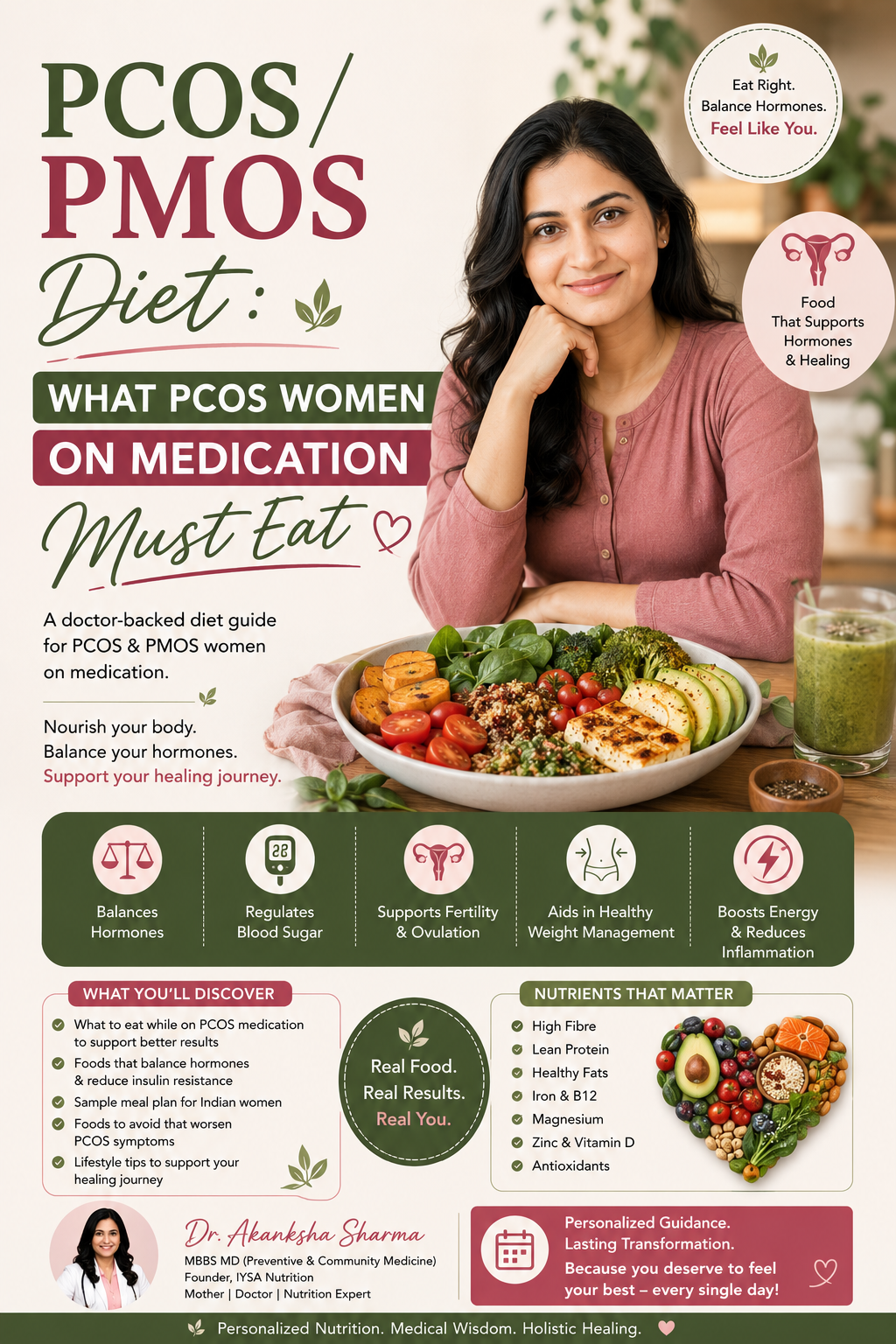
Written & reviewed by Dr Akanksha Sharma, MBBS, MD (Preventive & Community Medicine) | Founder, IYSA Nutrition, Singapore
Metformin is one of the most prescribed medications for PCOS in India and Singapore, and for good reason. It is safe, inexpensive, well-studied, and directly targets the insulin resistance that underlies most PCOS presentations. Millions of Indian women with PCOS take it daily, often for years.
But what most of these women are never told is that metformin has specific nutritional interactions that significantly affect both its efficacy and its side effect profile. There are nutrients that metformin depletes over time, most critically Vitamin B12. There are foods that amplify their mechanism. There are foods and habits that worsen its most common side effects. And there is a dietary pattern that works synergistically with metformin to produce better hormonal outcomes than either the medication or the diet alone.
This post covers all of it, clearly, practically, and with the clinical accuracy you should be receiving from your treating physician.
👉Navigating PCOS Diagnosis in Singapore: Polyclinic, KKH, or Private Specialist?
👉The Truth About Intermittent Fasting for Women Over 35
How Metformin Works in PCOS
Metformin (biguanide) works primarily by reducing hepatic glucose production, suppressing the liver’s tendency to release glucose into the bloodstream between meals. It also improves peripheral insulin sensitivity in muscle and fat cells, and has some evidence for direct effects on ovarian androgen production. In PCOS, where insulin resistance drives the hyperinsulinaemia that stimulates excess androgens from the ovaries, metformin addresses the upstream hormonal driver rather than just managing symptoms.
Clinical effects in PCOS include: improved menstrual regularity, reduced fasting insulin and blood glucose, modest reduction in androgen levels, modest weight loss, and, in some studies, improved ovulation rates. It is not a standalone cure for PCOS, but it is a meaningful pharmacological tool when used alongside appropriate diet and lifestyle changes.
The critical point: metformin and dietary intervention work synergistically. Studies consistently show that metformin produces significantly better hormonal and metabolic outcomes when combined with a low-glycaemic, high-protein diet than when taken without dietary modification. The medication does not do the job alone, nor does diet alone. Together, they are more effective than either independently.
👉The Insulin Resistance Trap in PCOS: How to Break Free Naturally
👉A Doctor-Reviewed Guide to Understanding PCOS
👉PCOS and Insulin Resistance in Singapore: What Works Beyond Metformin
The Vitamin B12 Depletion Problem — The Most Clinically Important Interaction
This is the most critical nutritional consequence of long-term metformin use, and the one most consistently undercommunicated to patients.
Metformin impairs Vitamin B12 absorption in the terminal ileum through two mechanisms: it competes with the calcium-dependent absorption of the B12-intrinsic factor complex, and it alters the gut microbiome in ways that reduce B12 bioavailability. The result is a gradual, progressive decline in serum B12 levels with prolonged metformin use.
Studies consistently find that 10–30% of patients on long-term metformin develop Vitamin B12 deficiency, and a further 20–30% develop subclinical insufficiency. The risk increases with duration of use, higher doses, and baseline dietary B12 intake, making Indian vegetarian women on metformin particularly vulnerable, as their dietary B12 is already limited to dairy and eggs.
Why B12 Deficiency on Metformin Is Particularly Dangerous
Vitamin B12 deficiency causes neurological damage, peripheral neuropathy (tingling and numbness in the hands and feet), cognitive impairment, memory loss, mood changes, and, in severe cases, irreversible spinal cord degeneration (subacute combined degeneration). The danger is that B12 deficiency develops slowly and silently, and its early neurological symptoms are easily misattributed to PCOS itself, to thyroid dysfunction, or to anxiety and stress.
There is a specific clinical trap here: metformin-treated women with peripheral neuropathy (tingling in the feet) are often assumed to have diabetic neuropathy, when the actual cause is metformin-induced B12 deficiency. The treatment is completely different. This distinction is critically important.
What to Do
- Test B12 annually if you are on metformin; this should be standard care, but frequently is not. Ask your doctor specifically for a serum Vitamin B12 test at your annual review.
- Target serum B12 above 300 pg/mL: many laboratories set their lower normal limit at 180–200 pg/mL, but neurological symptoms can occur at levels between 200–300 pg/mL. Functional B12 sufficiency requires levels above 300 pg/mL.
- Supplement proactively: Most physicians who are aware of this interaction recommend B12 supplementation for all women on long-term metformin, typically 500–1000 µg of methylcobalamin (the active, neurologically preferred form) daily, or 1000 µg of cyanocobalamin alternate days. Methylcobalamin is preferred for women with neurological symptoms or MTHFR variants.
- Take B12 at least 2 hours apart from metformin: concurrent dosing reduces absorption
Best dietary B12 sources for Indian vegetarian women on metformin:
- Dahi — one cup provides approximately 0.6 µg (approximately 25% of RDA). Eat daily.
- Milk — one cup provides approximately 1.2 µg. Have two cups daily if possible.
- Paneer — 100g provides approximately 0.5 µg
- Eggs (if consumed) — one egg provides approximately 0.6 µg, predominantly in the yolk
- Fish (for non-vegetarians) — salmon, sardines, and mackerel provide 2–8 µg per 100g
For most Indian vegetarian women on metformin, dietary B12 alone is insufficient to maintain adequate levels; supplementation is clinically necessary, not optional.
👉PCOS Diet Plan: What to Eat and Avoid, Indian & Singapore Foods
👉Ovarian Cyst vs PCOS: What Singapore Women Need to Know
Folate — The Second Depletion Risk
Metformin also depletes folate over time through similar absorption interference mechanisms. Folate deficiency is associated with elevated homocysteine levels, an independent cardiovascular risk factor that is already elevated in women with PCOS. Long-term metformin use can compound this risk.
For women of reproductive age who may be trying to conceive, folate sufficiency is non-negotiable; neural tube defects remain the critical risk of folate deficiency in early pregnancy.
Action: Ensure consistent folate intake from food (masoor dal, palak, methi, moringa, chana) and continue or start a folic acid or methylfolate supplement (400–800 µg daily) if there is any possibility of pregnancy.
Coenzyme Q10 — The Energy Depletion
Metformin inhibits mitochondrial complex I, one of the energy-producing structures in cells. This is partly how it works (reducing hepatic glucose production requires suppressing liver cell energy production), but it also results in reduced CoQ10 synthesis, as CoQ10 is an essential component of the mitochondrial electron transport chain.
Reduced CoQ10 may contribute to the fatigue, muscle weakness, and exercise intolerance that some women experience on metformin. CoQ10 supplementation (100–200 mg/day of ubiquinol form) is a reasonable consideration for women on metformin who experience significant fatigue; discuss with your doctor.
Foods That Work Synergistically With Metformin
These foods and dietary strategies enhance metformin’s mechanism, reducing insulin resistance, lowering post-meal glucose spikes, and supporting the hormonal improvements metformin aims to produce.
1. Berberine-Containing Foods and Supplements
Berberine, a compound found in barberry and some other plants, works through a similar mechanism to metformin (AMPK activation) and has shown comparable effects on fasting glucose and insulin sensitivity in head-to-head trials. While berberine and metformin should not be combined without medical supervision (risk of additive hypoglycaemia), the synergy between a metformin-like dietary pattern and metformin’s pharmacological action is significant.
2. Soluble Fibre — At Every Meal
Metformin reduces hepatic glucose output; soluble fibre reduces intestinal glucose absorption. Together, they address blood glucose from two complementary directions. At every meal: isabgol before eating, dal and legumes as the protein base, jowar or bajra roti, vegetables with every meal, and ground flaxseed in dahi. This combination maximises the glycaemic benefit of metformin’s action.
3. Low-GI Carbohydrates — The Foundation
Metformin reduces insulin resistance but does not eliminate it. Eating high-GI foods while on metformin still produces excessive insulin responses, just slightly less excessive than without the medication.
To know in detail how to eat a low-glycaemic index diet, read my posts on:
👉PCOS Diet Plan: What to Eat and Avoid, Indian & Singapore Foods
👉Indian Meal Plan for Insulin Resistance That Actually Works
Specifically: reduce white rice portions to half a cup; replace maida rotis with jowar or bajra; eliminate sugary drinks and sweet chai; eat fruit whole rather than as juice. These changes work with metformin rather than making it carry all the metabolic load alone.
4. Protein at Every Meal
Protein stabilises blood glucose by slowing gastric emptying and stimulating GLP-1, complementing metformin’s glucose-lowering mechanism. Target 20–25g of protein per main meal.
👉How to Make Indian Vegetarian Meals High in Protein?
5. Methi Seeds (Fenugreek) — The Complementary Indian Strategy
Methi seeds contain galactomannan, a soluble fibre with demonstrated effects on fasting glucose and insulin. One teaspoon soaked overnight in water, consumed in the morning before breakfast, has consistent Indian clinical trial evidence for reducing fasting blood glucose and insulin. This directly complements metformin’s mechanism and is a culturally accessible, inexpensive daily habit. Multiple Indian studies on type 2 diabetes and PCOS populations support this strategy.
Foods and Habits to Avoid on Metformin
Alcohol — Lactic Acidosis Risk
This is the most clinically serious interaction. Metformin, in rare circumstances and particularly with heavy alcohol intake, can contribute to lactic acidosis, a dangerous buildup of lactic acid in the blood. The risk is very low in normal therapeutic use with moderate or no alcohol consumption, but it is not zero. Avoid excessive alcohol entirely while on metformin. Occasional moderate consumption (one drink on a special occasion) is generally considered acceptable, but discuss with your doctor based on your kidney function and overall health status.
Large Meals — Worsen GI Side Effects
Metformin’s most common side effects, nausea, diarrhoea, abdominal cramps, and metallic taste, are driven partly by the medication’s effects on the gut and are significantly worsened by large meals, particularly large high-carbohydrate meals. Always take metformin with food, ideally at the beginning of a meal rather than after, and with moderate portions rather than large ones.
High-Fat Meals
Very high-fat meals slow gastric emptying and alter the gastrointestinal environment in ways that can worsen metformin’s GI side effects in susceptible women. This does not mean avoiding healthy fats, it means avoiding very large fried or heavy meals taken at the same time as metformin.
Iodine Contrast and Metformin — Temporary Hold
If you are having any imaging procedure that requires iodine contrast dye (CT scan with contrast, coronary angiogram), inform your doctor that you are taking metformin; it typically needs to be held for 48 hours before and after the procedure due to kidney-related risks. This is a medical interaction point rather than a dietary one, but worth being aware of.
👉What to Eat at Singapore Hawker Centres Without Ruining Your Health
👉Managing PCOS while eating at Singapore Hawker Centres
Managing Metformin’s Common Side Effects Through Nutrition
Nausea and Abdominal Discomfort
Metformin’s GI side effects are most common when starting the medication or increasing the dose. Several nutritional strategies minimise them:
- Always take metformin at the beginning of a meal, not on an empty stomach and not after finishing eating
- Start with small, frequent meals rather than large ones
- Ginger, fresh adrak in warm water, ginger chai, or ginger laddoos, directly reduces nausea through the same 5-HT3 receptor mechanism
- Ajwain (carom seed) water, a traditional Indian digestive, reduces bloating and gastric cramping. Half a teaspoon of ajwain seeds in warm water, 30 minutes before taking metformin, is a practical strategy.
- Jeera (cumin) water is similarly effective for bloating and gut discomfort
- If GI side effects persist beyond 4–6 weeks despite dietary strategies, discuss switching to extended-release metformin (metformin XR) with your doctor, it has a significantly better GI tolerability profile with equivalent efficacy
Metallic Taste
Some women experience a metallic taste while on metformin, particularly at higher doses. This is often most noticeable with water. Drinking water with a squeeze of lime, consuming lime-flavoured chaas, or flavouring water with cucumber or mint significantly reduces the perception of metallic taste. Zinc supplementation (15mg daily) is sometimes recommended as zinc deficiency can worsen taste disturbances, and Indian vegetarian women on metformin are at double risk of zinc insufficiency.
Diarrhoea and Loose Stools
Metformin alters gut microbiome composition and increases gut motility in some women, causing loose stools or diarrhoea, particularly when starting treatment. Probiotic-rich foods like plain dahi, idli, dosa from fermented batter, and chaas support gut microbiome balance and can reduce this side effect. A probiotic supplement (Lactobacillus rhamnosus GG, 10 billion CFU daily) may be helpful in women with persistent gastrointestinal symptoms on metformin.
The Combined Dietary-Metformin Protocol: What a Well-Managed Day Looks Like
- On waking (before breakfast): One teaspoon of soaked methi seeds in water (glucose management). A glass of warm water with amla powder (antioxidant, chromium for insulin signalling).
- Breakfast (with metformin dose — at the start of the meal): Moong dal chilla (2 pieces, 16g protein) with mint chutney + plain dahi (150g, B12) + a cup of green tea. Take metformin at the beginning of this meal.
- Mid-morning: A small handful of walnuts + one guava (Vitamin C) + B12 supplement (at least 2 hours from metformin dose)
- Lunch (with metformin if taking twice daily — at the start of the meal): One tablespoon isabgol in water before sitting down to eat. Then: salad first → masoor dal (1 cup) + one jowar roti + bhindi sabzi (soluble fibre) + a bowl of dahi. Squeeze lime over dal. Take metformin at the beginning of this meal.
- Afternoon snack: Roasted chana (30g, zinc) + one small apple
- Dinner (light — keep it the smallest meal): Grilled fish or tofu + steamed or stir-fried vegetables + a small portion of brown rice or one roti. No refined sugar after dinner.
- Daily supplements (discuss with doctor): Methylcobalamin B12 500–1000 µg (at least 2 hours from metformin), Folate/methylfolate 400 µg (if reproductive age), CoQ10 ubiquinol 100–200 mg (if fatigue is prominent), Vitamin D 2000 IU (if deficient), Zinc 15 mg (if vegetarian and symptomatic)
👉PCOS and Hair Loss: Why It Happens and What to Eat
Printable PCOS Basics Checklist (Free)
PCOS Self-Reflection Checklist
(For awareness, not diagnosis)
Cycle & symptoms
☐ Irregular or missed periods
☐ Acne beyond teenage years
☐ Excess facial/body hair
☐ Hair thinning
Metabolic signs
☐ Sugar cravings
☐ Energy crashes
☐ Difficulty maintaining weight
☐ Family history of diabetes
Lifestyle
☐ Poor sleep quality
☐ High stress levels
☐ Irregular meal timing
☐ Low physical activity
📌 If multiple boxes are checked, personalised guidance can help clarify next steps.
👉 Download PCOS Basics Checklist (PDF)
Need clarity instead of conflicting information?
I offer doctor-led consultations and structured PCOS programs designed for Indian and Singaporean lifestyles—practical, sustainable, and evidence-based.
(Educational guidance only. Not a substitute for medical care.)
Frequently Asked Questions
I have been on metformin for 3 years and was never told about B12. What should I do?
Request a serum Vitamin B12 test from your doctor immediately, ideally alongside homocysteine and a full blood count. If your B12 is below 300 pg/mL, discuss supplementation. If you have been experiencing tingling or numbness in your hands or feet, fatigue disproportionate to your activity level, or memory difficulties, raise these symptoms specifically, they may be early signs of B12 deficiency from long-term metformin use. This is a correctable problem if caught early, but neurological damage from severe B12 deficiency is not fully reversible.
Does metformin work better with specific foods?
Yes, the combination of metformin with a low-glycaemic, high-protein, high-fibre dietary pattern consistently outperforms metformin alone in PCOS outcomes. Specifically, meals that include soluble fibre (isabgol, methi, legumes, okra) before or with metformin enhance its glucose-lowering effect by reducing intestinal glucose absorption simultaneously with metformin’s hepatic glucose suppression. The synergy is real and clinically meaningful.
Can I stop metformin if I improve my diet significantly?
This is a conversation to have with your doctor, not a decision to make unilaterally. Some women with mild insulin resistance whose PCOS is well-managed through diet and lifestyle may be able to reduce or discontinue metformin under medical supervision with regular monitoring. However, metformin discontinuation without adequate dietary adherence typically results in rapid return of insulin resistance and PCOS symptoms. The medication reduction should follow confirmed metabolic improvement on testing, not just symptomatic improvement.
I feel nauseous every time I take metformin. Should I take it on an empty stomach?
No, taking metformin on an empty stomach reliably worsens nausea. Always take it at the start of a meal (not before or after). If nausea persists despite consistent with-food dosing for 4–6 weeks, discuss switching to metformin XR (extended release) with your doctor; it has a significantly better nausea profile. Starting at a lower dose and titrating up slowly also significantly reduces initial GI side effects.
I am trying to conceive while on metformin for PCOS. What nutritional changes are most important?
The preconception nutrition priorities on metformin are: ensure B12 is above 300 pg/mL (metformin B12 depletion is particularly important before and during pregnancy); start methylfolate 400–800 µg daily immediately; optimise Vitamin D to above 75 nmol/L; include CoQ10 ubiquinol 200–400 mg daily for egg quality; maintain the low-GI, high-protein diet that supports both metformin’s action and ovarian function. Metformin is sometimes continued through early pregnancy in women with PCOS to reduce miscarriage risk, this is a decision for your reproductive endocrinologist or obstetrician.
👉Fertility Diet for Women: What to Eat When Trying to Conceive
The Bottom Line
Metformin is a valuable medication for PCOS /PMOS, but it comes with nutritional interactions that are routinely undercommunicated. The B12 depletion is the most important: test annually, supplement proactively with methylcobalamin, and do not wait for symptoms to develop. Folate and CoQ10 are secondary but meaningful considerations for long-term users.
Metformin works best not as a standalone treatment but as a pharmacological partner to the dietary changes that address the same underlying insulin resistance. Feed your medication well, with methi seeds in the morning, isabgol before meals, dal and legumes at every meal, low-GI grains, and consistent protein. The combination produces outcomes that neither alone can match.
📩 Click here to book a free 20-minute consultation with Dr Akanksha Sharma. I work with women in Singapore and India to build PCOS nutrition plans that are evidence-based, culturally grounded, and actually sustainable.
👉 Learn more about the PCOS Protocol: 12 Weeks Doctor-Led Hormone & Fertility Restoration
Disclaimer: This article is for educational purposes only. Do not modify your metformin dose or supplementation without consulting your physician.
References:
- de Jager J et al. Long term treatment with metformin in patients with type 2 diabetes and risk of vitamin B-12 deficiency: randomised placebo controlled trial. BMJ. 2010;340:c2181. PubMed
- Aroda VR et al. Long-term metformin use and vitamin B12 deficiency in the Diabetes Prevention Program Outcomes Study. J Clin Endocrinol Metab. 2016;101(4):1754-1761. PubMed
- Palomba S et al. Metformin administration versus laparoscopic ovarian diathermy in clomiphene citrate-resistant women with PCOS. Hum Reprod. 2004;19(6):1320-1325. PubMed
- ICMR-NIN Expert Group. Recommended Dietary Allowances for Indians. 2020. nin.res.in

Akanksha Sharma
Dr Akanksha Sharma (MBBS, MD) is a physician and women’s health nutrition specialist, and the founder of IYSA Nutrition. She provides evidence-based, doctor-led nutrition guidance for pregnancy, postpartum recovery, PCOS, child nutrition, and family health, helping women make calm, informed decisions about their health and their children’s well-being.