Written & reviewed by Dr Akanksha Sharma, MBBS, MD (Preventive & Community Medicine) | Founder, IYSA Nutrition, Singapore
Breastfeeding is one of the most nutritionally demanding things the human body can do. Breastfeeding diet is real. A breastfeeding woman producing 750–800 ml of milk daily expends approximately 500 extra calories per day, more than the additional caloric cost of the third trimester of pregnancy. Every nutrient in that milk comes from your body: either from your current diet, or from your stored reserves if your diet is inadequate.
The good news is that your body is extraordinarily good at prioritising milk production, even under nutritional stress. In most cases, milk volume and basic composition are maintained even when maternal nutrition is suboptimal, but at a cost to you. It is the mother’s nutritional stores that are depleted to sustain milk quality. This is why postpartum nutritional depletion, fatigue, hair loss, bone loss, and hormonal dysregulation are so common in women who breastfeed without adequately supporting their own nutrition.
This guide gives you the complete picture: caloric needs, the nutrients that matter most, the best Indian foods for milk production, traditional Indian galactagogues that have nutritional rationale, what to avoid, and how to eat well when you are exhausted, time-poor, and feeding a baby every two hours.
Related reading:
👉 Postpartum Nutrition: Doctor’s Insights for Optimal Recovery
👉Pregnancy & Postpartum Nutrition: A Doctor-Reviewed Guide
👉How to Lose Weight Without Affecting Breastfeeding
How Much More Do You Need to Eat While Breastfeeding?
Calories
Breastfeeding increases caloric requirements by approximately 400–500 kcal per day above pre-pregnancy maintenance needs. ICMR-NIN 2020 recommends an additional 400 kcal/day for the first six months of exclusive breastfeeding, reducing slightly as complementary foods are introduced.
For a typical Indian woman with a pre-pregnancy energy requirement of 1800–2000 kcal/day, this means 2200–2500 kcal/day while exclusively breastfeeding. Most new mothers significantly under-eat, partly due to time pressure, partly due to the cultural messaging that they should “get their body back” quickly after delivery, and partly because appetite is sometimes suppressed by postpartum hormonal changes and sleep deprivation.
Chronic under-eating while breastfeeding has consequences:
- Reduced milk volume — milk production is energy-dependent; severe caloric restriction can reduce supply
- Faster depletion of maternal nutrient stores — accelerating postpartum hair loss, fatigue, bone loss, and hormonal dysregulation
- Impaired mood and mental health — the postpartum period already carries an elevated risk for depression; nutritional depletion amplifies it
Eating enough is not indulgent during breastfeeding; it is a clinical requirement.
Protein
Breastfeeding increases protein requirements to approximately 1.2–1.5g per kg of body weight per day, significantly higher than non-pregnant, non-breastfeeding requirements. For a 55 kg woman, this means 66–82g of protein per day. Most Indian women fall short of this unless they deliberately include protein-rich foods at every meal.
Fluid
Milk is approximately 87% water. Adequate hydration is the single most important dietary factor for milk volume. Breastfeeding women need approximately 3–3.5 litres of total fluid per day, from water, dal, soups, buttermilk, milk, coconut water, and other beverages. A practical guideline: drink a full glass of water every time you sit down to feed your baby.
Signs of inadequate hydration that affect milk supply: dark yellow urine, infrequent urination, baby not producing enough wet nappies (fewer than 6–8 wet nappies per day in a well-fed newborn), and reduced milk let-down sensation.
👉 Download my Fourth Trimester Survival Guide – includes recovery meals, red flags & checklists.
Key Nutrients in Breastfeeding Diet
Iodine — The Most Critical Micronutrient
Iodine is actively concentrated in breast milk and is essential for the infant’s thyroid development and brain function. The breastfeeding iodine requirement is the highest of any life stage, 290 µg/day according to ICMR-NIN 2020, compared to 150 µg/day for non-pregnant women. Despite this, iodine is the nutrient most commonly missing from postnatal nutrition advice.
Indian women who use non-iodised salts (rock salt, pink salt, sea salt) or who eat little dairy and seafood are at genuine risk of iodine insufficiency during breastfeeding, with potential consequences for infant neurological development. Use iodised table salt consistently in cooking, eat dairy daily, and include eggs and seafood if non-vegetarian. For vegetarians with low dairy intake, discuss an iodine supplement with your doctor.
Vitamin D
Breast milk is a poor source of Vitamin D, even in Vitamin D-sufficient mothers. The American Academy of Pediatrics (AAP) and multiple international guidelines recommend 400 IU of Vitamin D drops daily for all breastfed infants from birth. This is not a dietary failure; it is a known limitation of breast milk that is addressed through infant supplementation.
For the mother: breastfeeding increases Vitamin D turnover, and maternal Vitamin D deficiency (extremely common in Indian women in Singapore) impairs both maternal immune function and the small amount of Vitamin D that does pass through milk. Continue or start Vitamin D supplementation postpartum, typically 1000–2000 IU daily under medical guidance.
Calcium
Breastfeeding mobilises calcium from maternal bone to maintain milk calcium content, regardless of maternal dietary intake. Women who consistently under-eat calcium during breastfeeding experience measurable bone density loss, typically 3–5%, which is usually recovered within 6–12 months after weaning, but only if calcium intake is adequate.
ICMR-NIN 2020 recommendation: 1000 mg calcium per day during lactation. Best Indian sources: milk and dahi (300–350 mg per cup), ragi/finger millet (approximately 344mg per 100g — one of the richest non-dairy calcium sources), til (sesame seeds, approximately 975 mg per 100g — use in til laddoos and chutney), moringa leaves (approximately 440mg per 100g), and amaranth (rajgira) leaves.
DHA
As discussed in my post on Best Indian Vegetarian Sources of Omega-3 During Pregnancy, breast milk DHA content directly reflects maternal DHA intake. Continue your algae-based DHA supplement (200–300 mg/day) throughout breastfeeding. Adequate breast milk DHA is associated with better infant cognitive development, visual acuity, and sleep quality.
Iron
Despite the common advice to “replenish iron after delivery,” breastfeeding itself does not significantly increase iron requirements; iron loss through breast milk is minimal. However, iron stores are typically depleted from pregnancy and delivery blood loss, and many women enter the breastfeeding period already iron-deficient. Get your ferritin tested at your 6-week postnatal check and supplement if below 30 ng/mL.
Related reading:
👉Post-partum Depression and the Baby Blues: Causes and Management
👉Postpartum Hair Loss: The Nutritional Truth Nobody Tells You
👉Postpartum Constipation: Foods That Help You Heal Faster
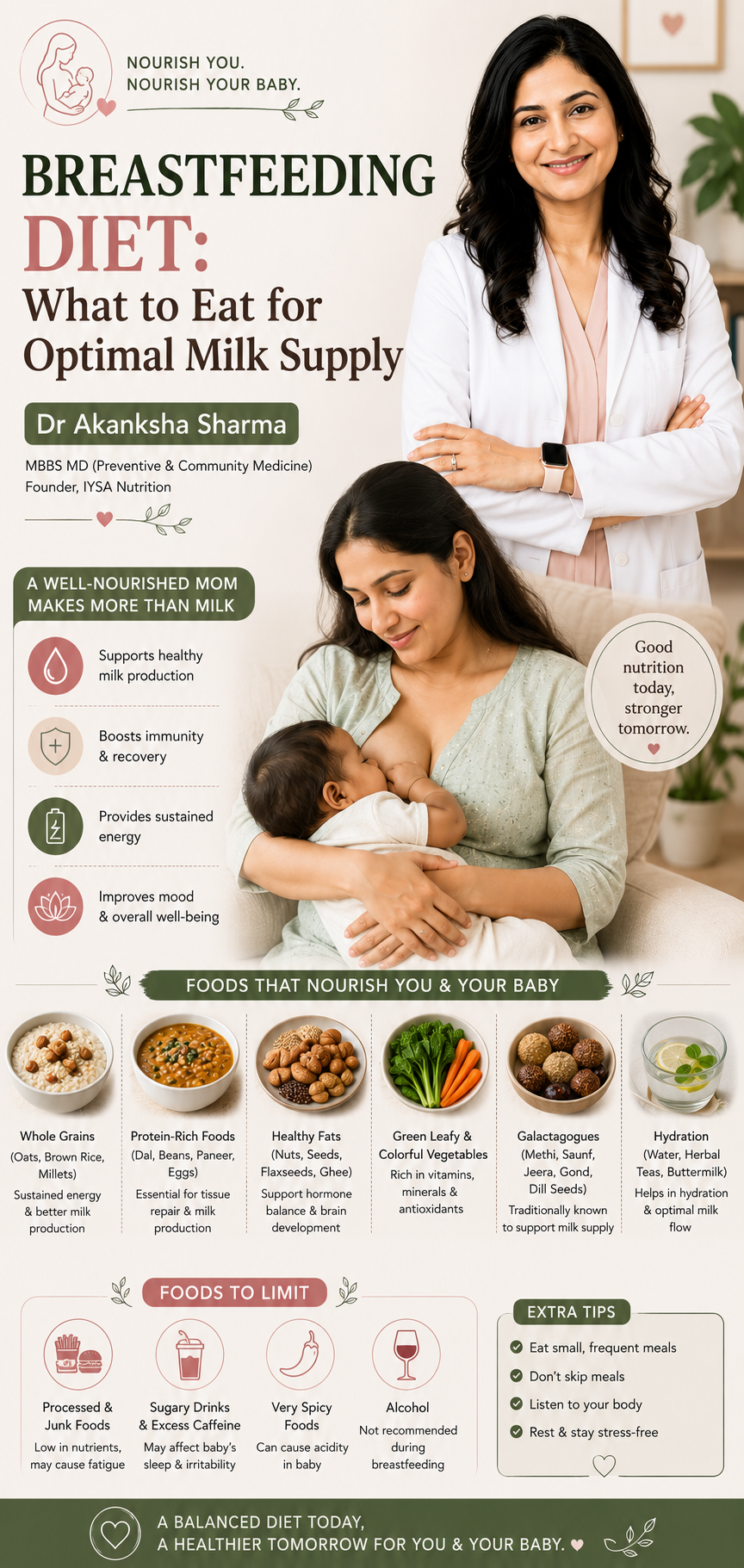
Foods That Support Milk Supply: Evidence and Indian Kitchen Wisdom
The Hydration Foundation — Non-Negotiable
Before discussing specific galactagogues, the most fundamental milk supply strategy is hydration. No herb or food will overcome dehydration as a cause of low supply. The following fluids are particularly beneficial during breastfeeding:
- Warm water with a pinch of ajwain (carom seeds): Traditional Indian postnatal drink; ajwain supports digestion and uterine recovery, and the warm water supports hydration and milk let-down
- Plain chaas (buttermilk): Hydrating, probiotic, cooling, and easily digestible; one or two glasses daily is an excellent breastfeeding drink
- Coconut water: Natural electrolytes; excellent for replenishing fluid losses, especially in Singapore’s heat
- Warm milk with shatavari or haldi: Traditional tonic with both nutritional (calcium, iodine) and herbal (shatavari) support for lactation
- Soups and dal: Thin dal, vegetable soups, and rasam count toward fluid intake and provide additional nutrition simultaneously
Galactagogues — What the Evidence Says
A galactagogue is any food, herb, or medication that is believed to increase milk production. Traditional Indian postnatal food culture is rich in galactagogues, and many of them have at least plausible biological mechanisms, even if large-scale clinical trials are limited. Here is an honest, evidence-informed assessment of the most commonly used Indian galactagogues:
Methi (Fenugreek) Seeds — Most Studied
Fenugreek is the most well-studied herbal galactagogue globally. Multiple small clinical trials have found that fenugreek supplementation (typically 2–3 g of seed extract, or consuming seeds in food) increases milk volume within 24–72 hours in some women. The proposed mechanisms include stimulation of sweat glands (breast tissue is modified sweat gland tissue, and fenugreek may stimulate it similarly) and a phytoestrogen-mediated effect on prolactin.
Importantly, fenugreek does not work for all women, and some women experience gastrointestinal side effects (bloating, loose stools in mother and baby). It is safe at dietary doses (used in cooking, in laddoos). High-supplement doses should be discussed with your doctor as fenugreek can lower blood sugar, which matters if you have a history of gestational diabetes.
How to use: Methi laddoos (the traditional Indian preparation with methi seeds, gond, wheat flour, ghee, and jaggery), one or two daily in the first 40 days postpartum. Methi seeds added to dal and sabzi. Methi paratha with fresh methi leaves (slightly different from seeds but also nutritionally valuable).
Shatavari (Asparagus racemosus) — Ayurvedic Evidence
Shatavari is one of the most important Ayurvedic herbs for women’s reproductive health and lactation. It is classified as a rasayana (rejuvenating herb) and a stanyajanana (milk-producing herb). Multiple Indian trials and Ayurvedic clinical studies have found shatavari supplementation to increase serum prolactin levels and milk production in breastfeeding women.
Shatavari is available as a powder (churna) or tablet from Himalaya, Dabur, Patanjali, and other Ayurvedic brands across India and in Indian grocery stores in Singapore. The typical dose is 1–2 g of powder mixed in warm milk, twice daily. It is generally considered safe during breastfeeding at this dose.
Gond (Edible Gum / Gondh Katira)
Gond is a natural resin used extensively in Indian postnatal cooking, in gond laddoos, gond ka halwa, and other traditional preparations. It provides significant energy (important for the caloric demands of breastfeeding), calcium, protein, and iron. While it does not have direct clinical trial evidence as a galactagogue, it contributes to the caloric and nutritional density of the overall postnatal diet, which indirectly supports milk production.
Ragi (Finger Millet)
Ragi is one of the most nutritionally valuable grains for breastfeeding women, rich in calcium, iron, protein, and B vitamins. Ragi porridge (ragi satva or ragi kanji) is a traditional postnatal food in many South Indian households. While not a galactagogue in the strict sense, its nutritional profile directly supports milk quality and maternal recovery. Ragi laddoos with jaggery and ghee are an excellent, calorie-dense snack for breastfeeding women.
Garlic
Several studies, including a notable trial by Mennella and Beauchamp, have found that when breastfeeding women consumed garlic, their infants suckled longer and consumed more milk. The proposed mechanism: garlic flavour compounds pass into breast milk, enhancing its palatability for the infant and stimulating longer, more vigorous feeding, which drives higher milk production through increased demand stimulation. Garlic also has general anti-inflammatory and antimicrobial properties relevant to postnatal recovery.
Add garlic generously to your sabzi, dal, and cooking rather than avoiding it as some traditional advice suggests.
Jeera (Cumin) Water
Warm jeera water is one of the most commonly recommended postnatal drinks in Indian households. Cumin contains compounds that may stimulate the mammary glands, and it supports digestion and reduces bloating, both of which support comfortable, consistent feeding. While direct clinical trial evidence is limited, it is safe, inexpensive, and widely used with apparent benefit in the Indian breastfeeding culture.
Related reading:
👉Boosting the Fat Content of Breast Milk Naturally: Diet & Herbal Remedies
👉Postnatal Depletion Syndrome: The Reason Mums Feel Exhausted
A Complete One-Day Breastfeeding Diet (Indian Vegetarian)
- On waking: A glass of warm water with a pinch of ajwain + 4–6 soaked almonds + 3 dates (iron, energy, potassium)
- Breakfast: Ragi porridge or ragi dosa + paneer + one cup warm milk with a teaspoon of shatavari powder. Alternatively: two eggs (for non-vegetarians) with one paratha + a glass of milk.
- Mid-morning: One methi laddoo or gond laddoo (traditional postnatal snack) + a glass of coconut water or chaas
- Lunch: A generous cup of thick dal (moong or toor) + one cup of sabzi (palak, methi, or drumstick sabzi) + 2 rotis or half cup brown rice + a small bowl of dahi + a glass of water or thin dal broth. Include garlic in cooking.
- Afternoon: Warm milk with shatavari OR a glass of chaas with jeera
- Evening snack: A small bowl of dahi with ground flaxseed and walnuts sprinkled on top, or ragi laddoo
- Dinner: Rajma or chana curry + 2 rotis + a sabzi with moringa or drumstick (excellent calcium and iron source)
- Before bed: A glass of warm turmeric milk (haldi doodh) with a small amount of ghee, traditional, anti-inflammatory, and sleep-supporting
- Throughout the day: Minimum 3–3.5 litres of total fluids; drink a full glass of water at every feeding session
If you’re a mom and want a doctor-led, culturally sensitive postpartum food plan (vegetarian-friendly options included) with simple recipes, shopping lists, and “what to eat when you’re exhausted” structure:
Explore the NURTURE: Mother & Baby Fourth Trimester Program
What to Avoid While Breastfeeding
The list of foods to avoid while breastfeeding is much shorter than most women are told. Many traditional restrictions, avoiding brinjal, tomato, citrus, or all spicy food, are not evidence-based and unnecessarily restrict nutritional variety. Here is what actually warrants caution:
- Alcohol: Alcohol passes into breast milk. If you choose to drink, do so after a feeding session and wait at least 2 hours per standard drink before the next feed. Regular alcohol consumption during breastfeeding is not recommended.
- Excess caffeine: Caffeine passes into breast milk and can cause infant irritability and sleep disruption. Limit to 200–300 mg/day (approximately 1–2 cups of coffee or 2–3 cups of Indian chai).
- High-mercury fish: Avoid shark, swordfish, and king mackerel; mercury passes into breast milk. Low-mercury fish (pomfret, sardines, salmon) are encouraged.
- Specific dietary triggers for a colicky infant: A small subset of breastfed infants show sensitivity to specific foods in the maternal diet, most commonly cow’s milk protein (in the mother’s diet), cruciferous vegetables in very large quantities, or occasionally garlic. If your infant shows persistent colicky behaviour that correlates with specific foods you have eaten, a brief elimination trial may be worth discussing with your paediatrician. This is not universal; most breastfed babies tolerate all foods in the maternal diet without issue.
Related reading:
👉The Fourth Trimester Survival Guide
👉Fourth Trimester Care in Singapore: What Hospitals Don’t Cover (and What It Really Costs)
👉Postpartum Depression and Nutrition: The Missing Link
Frequently Asked Questions
Will eating more increase my milk supply?
Caloric adequacy is necessary but not sufficient for milk supply. Milk production is primarily driven by demand; the more frequently and effectively your baby feeds (or you pump), the more milk your body produces. However, severe caloric restriction (below 1500 kcal/day) can reduce milk volume in some women. The goal is to eat adequately, 2200–2500 kcal/day, not to force-feed. Hydration has the strongest direct relationship with milk volume of any single dietary factor.
Is it true I should avoid all spicy food while breastfeeding?
No. This is a widely repeated myth without a scientific basis. Spices flavour breast milk, which actually serves a beneficial purpose, infants exposed to a variety of flavours through breast milk show less food rejection when starting solid foods. Traditional Indian spices at normal cooking quantities are safe and beneficial during breastfeeding. The only reason to reduce spice is if your individual infant consistently shows distress after you eat particularly spicy foods, which is not common.
How do I know if my milk supply is actually low?
True low milk supply (insufficient milk syndrome) is less common than perceived low supply driven by normal infant feeding behaviour. Signs that your supply may actually be insufficient: infant not regaining birth weight by day 14, fewer than 6 wet nappies per day after day 5, infant consistently unsettled after prolonged feeding attempts, inadequate weight gain over time. Perceived low supply, feeling empty, not feeling let-down, and hearing the baby swallow less can occur even with adequate supply. Consult a lactation consultant if you are concerned; interventions should be based on infant growth data, not maternal perception alone.
Can I take fenugreek supplements for milk supply?
Fenugreek at dietary doses (in laddoos, dal, and sabzi) is safe and reasonable. High-dose fenugreek supplements (3–6 capsules, multiple times daily) have a higher risk of side effects, gastrointestinal symptoms, blood sugar lowering, and maple syrup-like odour in the infant. If you want to supplement beyond dietary use, discuss with your doctor or a lactation consultant first. And remember: no galactagogue compensates for inadequate feeding frequency, ensuring your baby feeds effectively and often is the primary milk supply strategy.
I am going back to work. How do I maintain milk supply while pumping?
Milk supply while pumping is maintained by the same principles: feed or pump frequently (every 2–3 hours during the work day), ensure pump fit and suction are correct, stay well-hydrated at work, and eat adequately. Bringing nutritious snacks (nuts, dahi, methi laddoos) to work makes this much easier. Skin-to-skin and nursing directly at morning, evening, and night feeds helps maintain supply when daytime pumping output dips. Nutritionally, the same guidelines apply as for exclusive breastfeeding; your body does not distinguish between a feeding baby and an effective pump.
👉Returning to Work After Maternity: How to Keep Up Nutrition
The Bottom Line
Breastfeeding nutrition is about nourishing two people, your baby through your milk, and yourself, so that the process is sustainable. The foundation is always the same: eat enough calories, drink enough fluid, include protein at every meal, and prioritise the key micronutrients: iodine, Vitamin D, calcium, DHA, and iron. Layer in the traditional Indian galactagogues: methi laddoos, shatavari, ragi, garlic, jeera water, not as magic solutions, but as nutritionally valuable foods with cultural wisdom and at least some scientific rationale.
Breastfeeding is hard. Eating well while breastfeeding, when you are exhausted, feeding around the clock, and caring for a newborn, is genuinely challenging. The simplest strategy: batch-cook, lean on family support for meal preparation, keep easy, high-nutrition foods accessible (soaked almonds, dates, dahi, nuts, ragi laddoos), and drink water at every feed.
When to Seek Professional Help
If you’re:
-
Constantly exhausted
-
Losing supply despite pumping
-
Confused by online advice
👉 Struggling to balance work, breastfeeding, and your own health?
Explore my doctor-designed breastfeeding & postpartum nutrition plans tailored for working moms in Singapore.
Or click here to book a FREE Consultation call with Dr Akanksha to discuss your concerns.
Disclaimer: This article is for educational purposes only. If you have concerns about milk supply or infant growth, please consult your paediatrician and a certified lactation consultant.
References:
- ICMR-NIN Expert Group. Recommended Dietary Allowances for Indians. 2020. nin.res.in
- Bazzano AN et al. A review of herbal and pharmaceutical galactagogues for breast-feeding. Ochsner J. 2016;16(4):511-524. PMC
- Mennella JA, Beauchamp GK. Maternal diet alters the sensory qualities of human milk and the nursling’s behavior. Pediatrics. 1991;88(4):737-744. PubMed
- WHO. Infant and young child feeding. 2023. who.int

Akanksha Sharma
Dr Akanksha Sharma (MBBS, MD) is a physician and women’s health nutrition specialist, and the founder of IYSA Nutrition. She provides evidence-based, doctor-led nutrition guidance for pregnancy, postpartum recovery, PCOS, child nutrition, and family health, helping women make calm, informed decisions about their health and their children’s well-being.