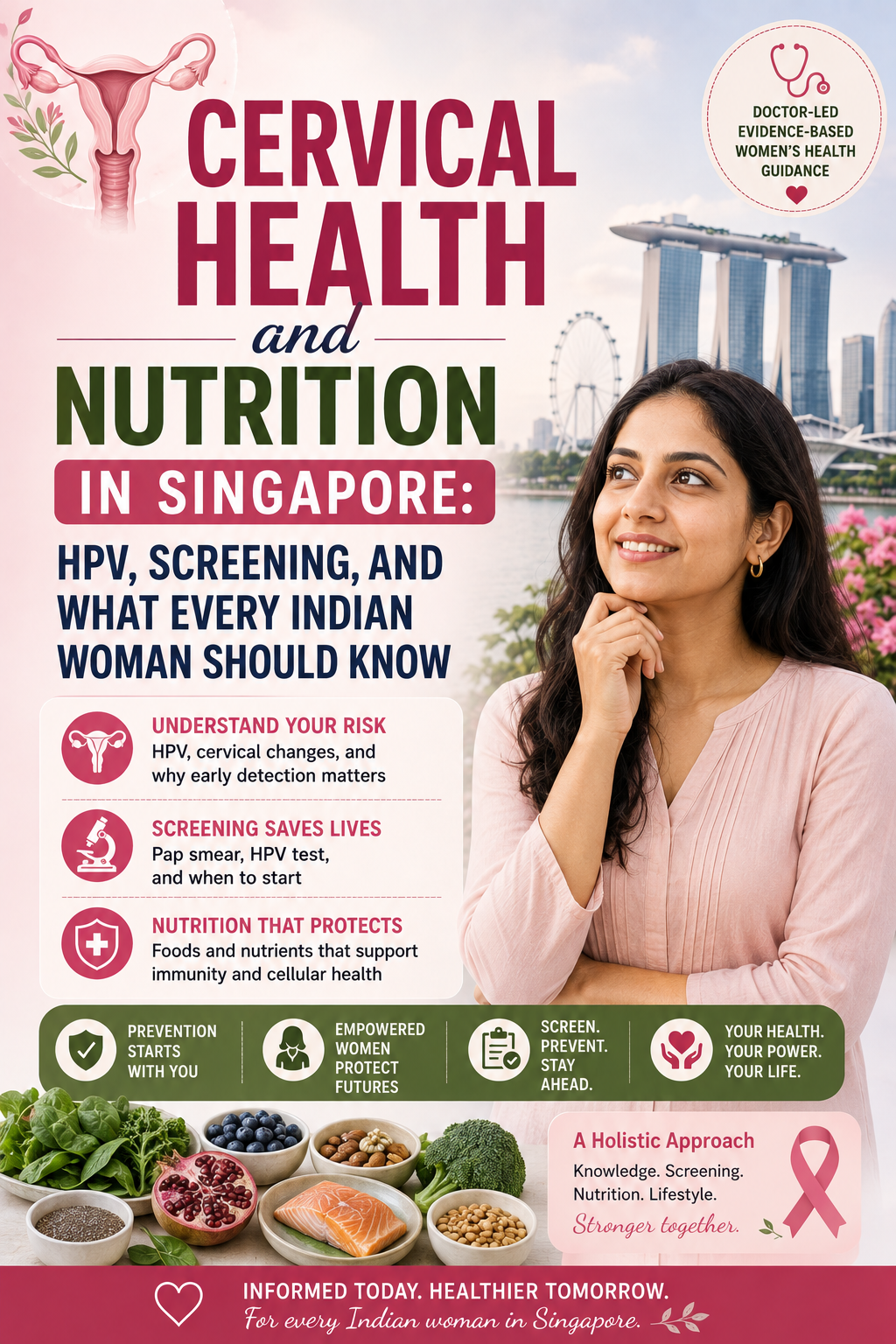
- Evaluating the effectiveness of cervical cancer screening and prevention in Singapore. Annals Academy of Medicine Singapore. 2024. Full Text
- RCT evaluating HPV DNA testing in Singapore primary care settings. PMC. 2025. PMC Full Text
👉Fibroids Diet: Anti-Oestrogen Foods That Help
👉10 Top Supplements for Women’s Reproductive Health
Understanding the HPV-Cervical Cancer Connection
Approximately 95% of cervical cancers worldwide are caused by persistent infection with high-risk strains of the Human Papillomavirus (HPV), a double-stranded DNA virus primarily transmitted through sexual contact. Of over 200 HPV genotypes identified, HPV 16 and HPV 18 together account for approximately 70% of all cervical cancer cases globally. The good news: the immune system clears most HPV infections within one to two years without intervention. The problem arises when high-risk HPV strains persist, and it is this persistent infection that drives the cellular changes that can, over years, progress to cervical cancer.
This means that cervical cancer prevention operates on two levels: preventing HPV infection in the first place (vaccination), and detecting and treating any cellular changes before they progress to cancer (screening). Both are essential, and Singapore’s programme addresses both.
Singapore’s Cervical Cancer Prevention Programme: What You Need to Do and When
HPV Vaccination — Primary Prevention
Singapore has offered a national school-based HPV vaccination programme since 2019, providing the bivalent HPV vaccine free of charge to all Secondary 1 female students. Since launch, at least 9 in 10 Secondary 1 female students have received HPV vaccination, one of the highest school-based vaccination coverage rates in Asia.
For women outside the school programme:
- Ages 9–26: The bivalent and quadrivalent HPV vaccines are available under Medisave coverage at all polyclinics and eligible clinics. Medisave can be used to pay for vaccination, making it financially accessible.
- Ages 27–45: In September 2020, the 9-valent vaccine (which targets 9 HPV strains including HPV 6, 11, 16, 18, 31, 33, 45, 52, and 58, covering up to 90% of cervical cancer cases) was approved for men and women up to age 45. Available at private clinics and hospitals. Not covered by Medisave for women above 26, but available out-of-pocket at KKH, NUH, Raffles Medical, and private women’s clinics.
- Important: HPV vaccination does not eliminate the need for ongoing cervical screening; vaccinated women still require regular Pap smears and HPV tests per the screening schedule below.
Cervical Screening — Secondary Prevention (Cervical Screen Singapore)
In 2019, MOH launched updated national cervical cancer screening guidelines (Cervical Screen Singapore) incorporating HPV primary screening. The current schedule:
| Age Group | Test | Frequency | Where in Singapore |
|---|---|---|---|
| 25–29 years | Pap smear (cervical cytology) | Every 3 years | All polyclinics, GP clinics, women’s health clinics, KKH, NUH |
| 30–69 years | HPV DNA test (primary) or Pap smear | Every 5 years (HPV test) or every 3 years (Pap smear) | All polyclinics, KKH, NUH, private clinics |
| Below 25 or above 69 | Screening only if symptomatic or at clinical discretion | As directed by physician | Through specialist referral |
Screening is available at subsidised rates at polyclinics across Singapore for eligible Singapore Citizens and Permanent Residents. The Screen for Life programme offers subsidised rates of SGD 5–50 for eligible women. Indian women who are eligible for this subsidy but have not yet been screened can book through HealthHub or at any polyclinic without a referral.
References:
- Lim TSC, Ismail-Pratt I, Goh LH. Cervical cancer screening and vaccination: understanding the latest guidelines. Singapore Med J. 2022;63(3):125-129. SMJ Full Text
- MOH Singapore. Awareness of Need for Cervical Cancer Checks. moh.gov.sg
What Happens If Your Screen Is Abnormal
An abnormal screening result does not mean cervical cancer. The vast majority of abnormal results reflect minor cellular changes (low-grade squamous intraepithelial lesions, LSIL) that resolve spontaneously without treatment. The clinical pathway in Singapore:
- Abnormal Pap smear: Repeat Pap smear in 6–12 months, or referral for colposcopy if indicated
- HPV 16 or HPV 18 positive on primary HPV test: Referral for colposcopy regardless of cytology result; these are the two highest-risk strains
- Other high-risk HPV positive (not 16/18): Reflex cytology testing; colposcopy if cytology is also abnormal
- Normal HPV test: Repeat in 5 years; women with a negative HPV test have less than half the risk of developing cervical cancer over the subsequent 5 years compared to women screened by cytology alone
Colposcopy is available at KKH, NUH, SGH, and private gynaecology practices. If a lesion is identified at colposcopy, treatment, typically LLETZ (large loop excision of the transformation zone) or laser ablation, is highly effective and curative for pre-cancerous changes.
👉PCOS and Hormonal Acne — hormonal balance and immune function are connected
Nutrition and Cervical Health: The Evidence
While vaccination and screening are the primary and most evidence-supported interventions for cervical cancer prevention, a growing body of research documents that nutritional factors influence the immune system’s ability to clear HPV infections and reduce the risk of progression from HPV infection to cervical dysplasia and cancer. This is not an alternative to vaccination and screening; it is a complementary strategy that supports the immune environment in which cervical health is maintained.
1. Folate — The Most Studied Nutritional Factor in Cervical Health
Folate (Vitamin B9) is required for DNA synthesis and methylation, the processes that maintain chromosomal stability and suppress viral oncogene expression. Multiple epidemiological studies have found that low folate status is associated with a higher risk of HPV persistence and cervical dysplasia. This is mechanistically plausible: HPV integrates into host cell DNA, and adequate folate-dependent DNA repair mechanisms may influence the rate of this integration and subsequent oncogenic transformation.
Indian women’s folate status is frequently suboptimal, particularly those on oral contraceptive pills, which deplete folate. Best Indian dietary sources: masoor dal, palak, rajma, edamame, and chicken liver (for non-vegetarians). See our dedicated folate vs folic acid guide (SG06) for Singapore-specific supplement options.
2. Vitamin C and Antioxidants — Supporting HPV Clearance
Oxidative stress impairs immune surveillance and facilitates viral persistence. Vitamin C is a primary antioxidant that supports both innate and adaptive immune function. Epidemiological studies have found associations between higher dietary Vitamin C intake and reduced risk of cervical dysplasia. The Indian diet offers exceptional Vitamin C sources: amla (600mg per 100g, the richest natural source), guava (228mg per 100g), lime, and capsicum. Daily inclusion of these foods supports immune antioxidant capacity directly relevant to HPV clearance.
3. Vitamin D — The Immune Modulator
Vitamin D receptors are present on virtually all immune cells, and Vitamin D plays a direct role in regulating both innate and adaptive immune responses to viral infections. Several studies have found associations between Vitamin D deficiency and higher rates of HPV persistence and cervical dysplasia. Given that near-universal Vitamin D deficiency exists in Indian women in Singapore (as documented in Day 21 of this series), correcting it to above 75 nmol/L is a biologically sound and low-risk intervention that supports immune function broadly, including immune surveillance of HPV-infected cells.
4. Anti-Inflammatory Dietary Pattern — Reducing Progression Risk
Chronic inflammation is a known co-factor in HPV persistence and cervical dysplasia progression. The anti-inflammatory dietary pattern, rich in omega-3 fatty acids, turmeric, colourful vegetables and fruits, and low in ultra-processed food and trans fats, supports the immune environment that HPV clearance requires. For Indian women, the traditional dietary pattern (dal, sabzi, whole grains, dahi, turmeric in cooking) is inherently anti-inflammatory when not displaced by ultra-processed food and refined carbohydrates.
5. Reduce Smoking — The Single Most Preventable Risk Factor Beyond HPV
Tobacco smoking is an established independent risk factor for cervical cancer; smokers have approximately twice the risk of cervical cancer compared to non-smokers among HPV-infected women. Smoking impairs local cervical immune responses and increases DNA damage in cervical cells. This applies to active smoking and to heavy environmental tobacco smoke exposure. While smoking rates among Indian women in Singapore are lower than in the general population, this risk factor is worth flagging explicitly because its interaction with HPV infection is multiplicative, not additive.
Practical Checklist: What Every Indian Woman in Singapore Should Do
- ☑️ Know your screening status: When was your last Pap smear or HPV test? If you are 25 or older and have not been screened in the past 3 years, book through HealthHub or at your nearest polyclinic
- ☑️ HPV vaccination if not yet vaccinated: If you are under 26, Medisave-claimable at polyclinics. If 27–45, available at private clinics; discuss the 9-valent vaccine with your gynaecologist
- ☑️ Check your Vitamin D: Request 25-OH Vitamin D at your next polyclinic or GP visit; correct deficiency to above 75 nmol/L
- ☑️ Check your folate status: Particularly important if on oral contraceptive pills, which deplete folate; ensure daily folate-rich foods (dal, palak) and a B-complex supplement if needed
- ☑️ Daily Vitamin C: Amla, guava, lime, or capsicum at every meal, accessible at every Singapore wet market
- ☑️ Bring your daughter for vaccination: Secondary 1 students receive free HPV vaccination through the national school programme, ensure your daughter does not opt out
Women’s Health Nutrition · Singapore
Supporting your immune health and hormonal balance!
I work with women in Singapore (and abroad) who are doing everything right, eating less, moving more, and still not seeing results. If fatigue, unexplained weight gain, and hormonal symptoms are running your life, a personalised nutrition plan that actually accounts for your body, your bloodwork, and your Singapore lifestyle is where we start.
👉 Book a FREE 20-Minute Women’s Health Call
Dr Akanksha Sharma · MBBS MD · Singapore & worldwide via Zoom
Frequently Asked Questions
I have been vaccinated against HPV. Do I still need Pap smears?
Yes, absolutely. Current HPV vaccines protect against the most common high-risk strains (HPV 16 and 18, and with the 9-valent vaccine, 7 strains total), but they do not protect against all HPV strains. Additionally, women who were vaccinated after potential prior HPV exposure may have already been infected with strains the vaccine cannot clear. Singapore’s guidelines specify that all women aged 25–69 should be screened regardless of vaccination status. Vaccination reduces your risk; screening detects any changes that occur despite vaccination.
I had an abnormal Pap smear. How worried should I be?
Most abnormal Pap smears reflect minor cellular changes that resolve on their own within one to two years without treatment. The finding means appropriate follow-up and monitoring is needed, not that cancer is present or imminent. Follow your gynaecologist’s recommended follow-up schedule, ensure your Vitamin D and folate are optimal (to support immune HPV clearance), stop smoking if relevant, and attend all follow-up appointments. The purpose of screening is to catch changes early, when they are most manageable, an abnormal result means the system is working.
How do I book a subsidised Pap smear in Singapore?
Through the Screen for Life programme: log into the HealthHub app (using Singpass), go to Appointments, and book a health screening at your nearest polyclinic. Eligible Singapore Citizens and PRs pay SGD 5–50 depending on CHAS card tier. No GP referral is needed. You can also book directly at any polyclinic reception or through the SingHealth/NUHS clinic booking systems online.
My mother has never had a Pap smear. She is 58. Is it too late?
Not at all, screening is recommended up to age 69 under Singapore’s guidelines. A woman who has never been screened and is 58 should have a Pap smear or HPV test as soon as possible. The risk of cervical cancer does not disappear after 40 or 50, in fact, some cervical cancers are diagnosed in women over 50 who were never screened. Encourage her to book through HealthHub or at the polyclinic, where the Screen for Life subsidy applies.
The Bottom Line
Cervical cancer is preventable, and Singapore has one of the most accessible and subsidised prevention programmes in the world. The two non-negotiables are: HPV vaccination (which Singapore offers free to Secondary 1 students and at Medisave rates for women up to 26) and regular cervical screening (Pap smear from age 25, HPV test from age 30, available at subsidised rates at all polyclinics through Screen for Life). Nutrition supports the immune environment that vaccination and screening protect; adequate folate, Vitamin C daily, corrected Vitamin D, and an anti-inflammatory dietary pattern all support the immune system’s ability to clear HPV and maintain cervical health. If you are an Indian woman in Singapore who has not been screened recently, your next step is HealthHub or your nearest polyclinic. The system is there. Use it.
Preventive Women’s Health · Singapore
Prevention Is the Best Medicine.
Nutrition Is Its Most Powerful Complement.
Screening and vaccination protect your cervical health medically. A personalised nutrition plan supports your immune system, hormonal balance, and anti-inflammatory environment that keeps you resilient long-term. Choose what fits where you are now:
|
Not sure where to start? Let’s talk — 20 minutes, no pressure, clear next step.
👉 Book a FREE 20-Minute Women’s Health Call
Dr Akanksha Sharma · MBBS MD · Preventive Medicine Physician · Singapore & worldwide via Zoom
Disclaimer: This article is for educational purposes only. Cervical cancer screening and HPV vaccination decisions should be made with your gynaecologist or GP in Singapore.
References:
- Effectiveness of cervical cancer screening and prevention in Singapore. Ann Acad Med Singap. 2024. Full Text
- RCT evaluating HPV DNA testing in Singapore primary care. PMC. 2025. PMC Full Text [current screening rate 43%, national target 70% confirmed here]
- Lim TSC et al. Cervical cancer screening and vaccination: understanding the latest guidelines. Singapore Med J. 2022;63:125-129. SMJ Full Text
- MOH Singapore. Awareness of Need for Cervical Cancer Checks. moh.gov.sg

Akanksha Sharma
Dr Akanksha Sharma (MBBS, MD) is a physician and women’s health nutrition specialist, and the founder of IYSA Nutrition. She provides evidence-based, doctor-led nutrition guidance for pregnancy, postpartum recovery, PCOS, child nutrition, and family health, helping women make calm, informed decisions about their health and their children’s well-being.