Written & reviewed by Dr Akanksha Sharma, MBBS, MD (Preventive & Community Medicine) | Founder, IYSA Nutrition, Singapore
Going back to work after maternity leave is one of the most emotionally and logistically complex transitions a new mother navigates. In Singapore, most women return to work at 16 weeks postpartum (after the standard four months of government-paid maternity leave). In India, where private sector maternity leave is typically 26 weeks for the first two children, the return comes slightly later, but no less abruptly.
In the midst of managing the logistics of childcare, pumping schedules, workplace re-entry, and the emotional weight of leaving a young baby, nutrition is almost always the first thing that drops. The structured postnatal eating that may have been maintained at home, regular meals, traditional recovery foods, adequate hydration, gives way to skipped breakfasts, desk lunches of whatever is available, missed pumping sessions due to back-to-back meetings, and evening exhaustion that produces the worst food choices of the day.
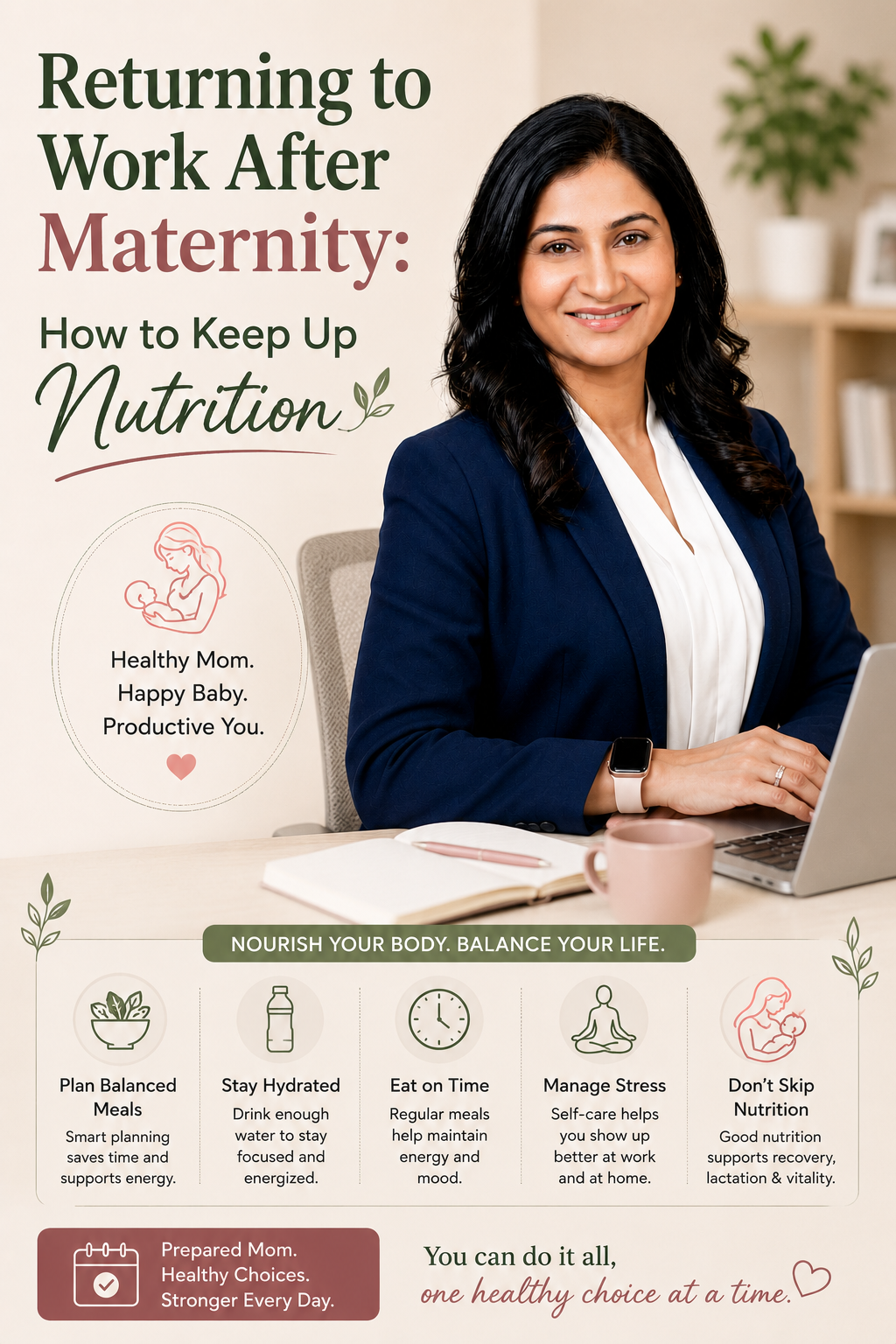
This post is specifically for the returning working mother, with practical, realistic strategies for maintaining the nutritional standards your recovering body and (if breastfeeding) your baby’s nutritional needs require, within the time and logistical constraints of a working day.
👉 Download my Fourth Trimester Survival Guide – includes recovery meals, red flags & checklists.
👉Fourth Trimester Care in Singapore: What Hospitals Don’t Cover (and What It Really Costs)
Why Nutrition Matters Even More When You Return to Work
The return to work coincides with a period of continued physiological recovery. At 16 weeks postpartum (the typical Singapore return date), most women are still experiencing:
- Incomplete restoration of iron stores, particularly if blood loss was significant at delivery
- Ongoing postnatal hair loss (typically peaking at 3–5 months, often right when work resumes)
- Sleep fragmentation that remains significant even as night feeds reduce
- Breastfeeding nutritional demands (if continuing), 400–500 kcal extra daily, plus elevated protein, iodine, DHA, and calcium requirements
- Potential subclinical postnatal depletion, which may worsen without deliberate nutritional recovery (👉Postnatal Depletion Syndrome: The Reason Mums Feel Exhausted)
The common response to all of these pressures, particularly in achievement-oriented working environments, is to “push through” and deprioritise self-care, including eating. This approach is self-defeating. A nutritionally depleted mother is a less effective worker, a less patient parent, and at greater risk of postnatal depression, thyroid dysfunction, and sustained fatigue. Maintaining nutrition when returning to work is not indulgence; it is the foundation of functional performance in both roles.
👉Post-partum Depression and the Baby Blues: Causes and Management
👉Postpartum Hair Loss: The Nutritional Truth Nobody Tells You
The Five Non-Negotiables When Returning to Work
1. Breakfast Before Leaving the House — Every Day Without Exception
The morning rush of preparing a baby for childcare or waiting for the caregiver to arrive, getting yourself ready, and leaving for work on time creates enormous pressure that makes breakfast feel like an optional luxury. It is not. Skipping breakfast raises cortisol, destabilises blood glucose for the entire morning, reduces cognitive performance and emotional regulation at precisely the time when you need both, drives mid-morning hunger that leads to poor vending machine or canteen choices, and reduces breast milk production in breastfeeding mothers (who need consistent caloric intake to sustain supply).
Practical breakfast solutions for the time-pressured returning mother:
- Overnight oats: Prepare the night before in a jar: 40g rolled oats, 100 ml milk/ plant milk, 150 g Greek yoghurt, one tablespoon ground flaxseed, 1 tsp chia seeds, a small handful of mixed seeds, and whatever fruit you have. Refrigerate overnight. Eat cold from the jar in 5 minutes while standing at the kitchen counter. Provides 15–20g protein, omega-3 from flaxseed, and beta-glucan from oats.
- Two boiled eggs: Boil six eggs on Sunday evening. Eat two cold with a slice of whole grain toast or a leftover roti, every weekday morning without thinking. 12g protein, zero morning preparation.
- Greek yoghurt bowl: 200g Greek yoghurt + one tablespoon pumpkin seeds + one tablespoon ground flaxseed + 150 g mixed berries. Takes 90 seconds to assemble. 20 g protein, magnesium, omega-3, B12, iodine.
- Leftover dal and roti: Intentionally make extra dal the night before. Eat it cold or reheated in 2 minutes with a leftover roti. This is nutritionally one of the best breakfasts possible: folate, iron, protein, fibre.
- Smoothie: 200ml milk/ plant milk + one banana + one tsp peanut butter + one tablespoon ground flaxseed + 1 scoop whey protein powder. Blend in 60 seconds. Drink in the car or at your desk. 30g protein, potassium, ALA omega-3.
2. Pack Your Lunch and Snacks — Do Not Rely on the Office Canteen
The office canteen or nearby food court in Singapore is not designed for postnatal nutritional recovery. Most hawker centres and food court options are: high in refined carbohydrates (white rice, white noodles), moderate in protein (often insufficient for breastfeeding mothers), high in sodium, low in vegetables, and lacking in the specific nutrients most needed postnatally: iron, DHA, iodine, folate, and magnesium.
Packing lunch and snacks for the office sounds like yet another task in an already overloaded life, but it takes 10 minutes the night before if done systematically, and it means you eat a meaningful meal rather than whatever is available and fast at 1 pm.
Simple office lunch ideas that can be prepared the night before:
- Leftover dal and paneer sabzi from dinner in a thermos + one roti wrapped in foil. Total packing time: 3 minutes. Nutritional value: exceptional.
- A container of rajma or chana (made in a large batch on Sunday, frozen in portions and defrosted the night before) with brown rice or rotis. High protein, high iron, excellent for returning to work fatigue.
- Dahi rice (curd rice) with pickle and cucumber — traditional South Indian comfort food that is cooling, probiotic, and extremely easy to prepare. A handful of soaked almonds alongside for protein.
- A large container of khichdi (moong dal and rice, vegetable-heavy) with plain dahi on the side. Nutritionally complete, easy to digest, can be eaten warm or cold.
- For non-vegetarians: leftover fish curry or chicken sabzi from dinner with a roti or brown rice.
Office desk snacks — keep these at your workstation permanently:
- A small jar of roasted chana — 10g protein per 30g serving; the best desk protein snack available
- A small bag of mixed nuts (almonds, walnuts, cashews) — protein, magnesium, omega-3
- Dates (3–4) — iron, natural sugar for quick energy between meetings
- Methi or ragi laddoos — bring from home; excellent postnatal energy and iron snacks that travel well
- A small thermos of warm dahi or chaas — protein, probiotics, iodine
3. Hydration at Your Desk — The Milk Supply Protector
Dehydration is the most common and most impactful cause of reduced milk supply in working breastfeeding mothers, and office environments are particularly dehydrating (air conditioning, cognitive stress, and forgetting to drink while in meetings). A breastfeeding mother needs approximately 3–3.5 litres of total fluid per day, which requires deliberate effort in an office setting.
Practical hydration strategies for the office:
- Keep a 750 ml–1 litre water bottle at your desk and refill it twice daily; this alone provides 1.5–2 litres of the daily target
- Set a phone reminder to drink 250 ml of water before each pumping session; hydration directly before pumping supports let-down
- Replace one afternoon chai with coconut water (available at most Singapore office convenience stores); electrolytes, potassium, natural sugar
- Keep a small thermos of warm dahi-based chaas at your desk; it contributes fluid and probiotics
- Avoid excess caffeine; limit chai and coffee to 2 cups in the morning; caffeine is a mild diuretic and reduces effective hydration at the margins
4. The Pumping Schedule — Protect It Like a Clinical Appointment
If you are continuing to breastfeed after returning to work, maintaining milk supply requires pumping at work, typically every 3–4 hours if your baby is under six months. Singapore law requires employers to provide a private space and reasonable time for breastfeeding mothers to pump, though implementation varies.
Nutritionally, missed pumping sessions directly reduce supply, and a reduced supply creates anxiety that reduces supply further. Treating pumping sessions as unmovable calendar appointments (not optional depending on meeting schedule) is both a legal right and a clinical necessity for milk supply maintenance.
What to eat before each pumping session: a small protein-rich snack (10g protein minimum) 30 minutes before pumping helps sustain milk production. A handful of roasted chana, a small bowl of dahi, or a few dates with almonds are all appropriate pre-pump snacks.
5. The Dinner Strategy — Frontload Cooking, Minimise Evening Decisions
After a full work day, the commute, collecting the baby, and the bedtime routine, cooking a nutritious dinner from scratch is often simply not possible. The working mother who expects herself to cook elaborate postnatal meals every weeknight is setting herself up for repeated failure and guilt. The solution is not to lower nutritional standards; it is to shift when the cooking happens.
Batch cooking strategies that work in Singapore and India:
- Sunday batch cook: 90 minutes on Sunday evening produces: a large pot of dal (refrigerates for 4 days, freezes for a month), a large batch of rajma or chana (freezes in portions perfectly), boiled eggs for the week (refrigerate up to 5 days), washed and chopped vegetables for stir-frying quickly, and one or two sabzi dishes. This infrastructure means weeknight dinner is assembly, not cooking.
- Use the pressure cooker for speed: Rajma that takes 45 minutes to cook on the stovetop takes 15 minutes in a pressure cooker. Build pressure cooker usage into the Sunday batch cook and weeknight quick meals.
- The instant dal: Masoor and moong dal need no soaking and cook in 10 minutes. A pot of masoor dal, an omelette, and leftover roti from the refrigerator is a nutritionally excellent dinner that takes 15 minutes.
- Accept support: In Singapore and urban India, food delivery platforms make it possible to order nutritious meals without cooking every night. This is not laziness; it is a valid strategy for exhausted new mothers. Choose options with dal, vegetables, and protein rather than refined carbohydrate-heavy fast food.
👉10 Healthy Snack Ideas to Boost Energy and Aid Recovery for New Moms
👉How to Lose Weight Without Affecting Breastfeeding
Explore my NURTURE: Mother & Baby Fourth Trimester Program
A doctor-led, evidence-based program supporting healing, feeding, and emotional recovery.
Nutrition by Meal: The Working Mother’s Guide
Breakfast (Target: 20–25g protein, 400–450 kcal)
Use the prep-ahead options above. Breakfast protein sets up blood glucose stability and dopaminergic function for the entire working morning; it is the highest-return nutrition investment of the day.
Mid-Morning (Target: 8–10g protein, 150–200 kcal)
This is the most commonly skipped and the easiest to fix. Desk snacks (roasted chana, nuts, dahi) require zero morning preparation if restocked weekly. Eat at 10:30–11 am regardless of whether you are hungry, postnatal hormone changes, and office cognitive load suppress hunger signals.
Lunch (Target: 25–30g protein, 500–600 kcal)
The biggest meal of the working day. Dal + a whole grain + a vegetable + Greek yoghurt is the template. Packing this from home takes 5 minutes the night before and is categorically superior to the canteen alternative for postnatal recovery.
Afternoon Snack (Target: 8–10g protein, 150–200 kcal)
Before or after the afternoon pumping session if breastfeeding. Roasted chana, a few walnuts and almonds, or a small ragi laddoo. Coconut water for hydration is great.
Dinner (Target: 25–30g protein, 500 kcal)
The lightest main meal of the day, which sounds counterintuitive to most Indian families, where dinner is the largest meal. Keep dinner simple: dal + one or two rotis + paneer in any form. Or eggs + vegetables + one roti. Or a bowl of khichdi with extra dal. No elaborate cooking; maximum 20 minutes preparation using batch-cooked components.
Pre-Bed Snack (If Breastfeeding)
A small glass of warm milk provides protein, calcium, iodine, and tryptophan to support sleep quality.
Related reading:
👉5 Effective Exercises to Flatten Your Mommy Pooch and Strengthen Your Core
👉10 Yoga Asanas to Strengthen Deep Core Muscles and Combat Mommy Pooch
If you’re unsure whether what you’re feeling is normal, structured postpartum support can make a huge difference.
👉New mom? Book a complimentary 20-minute support call
Iron and DHA — The Two Most Critical Nutrients to Maintain
Iron
If your ferritin was tested at your 6-week postnatal check and found low, or if you never tested, get it tested when you return to work. Postnatal iron deficiency is the single most common and most correctable cause of the fatigue, brain fog, and reduced performance that most working mothers attribute to “just being a new parent.” A ferritin below 30 ng/mL at 4 months postpartum is not unusual, and not acceptable as a baseline for managing the cognitive and physical demands of professional work alongside new parenthood.
Daily iron maintenance at work: a serving of masoor dal at lunch, a handful of pumpkin seeds at afternoon snack, lime squeezed over everything iron-containing, and no chai within 60 minutes of iron-rich meals. If ferritin is below 30 ng/mL: supplement with ferrous bisglycinate under medical guidance.
DHA
If continuing to breastfeed, maintain your algae-based DHA supplement or fatty fish at least twice a week. If using a fish oil supplement, keep a bottle at your office desk to take with lunch, an easy habit to maintain once it is part of the workplace routine rather than the home routine.
👉Starter Guide to Getting Your Body Back After Having a Baby
Managing the Most Common Nutritional Challenges
Client Lunches and Work Dinners
Professional obligations sometimes mean eating in restaurants rather than from your packed lunch. Strategies: choose grilled or steamed fish as the protein where available; request steamed rice or brown rice rather than fried rice; ask for vegetables as an accompaniment; avoid alcohol (still postnatally relevant, particularly if breastfeeding); and if you eat a heavy dinner, have a lighter breakfast and lunch the next day rather than a consecutive heavy day.
Office Birthday Cakes and Celebration Foods
A piece of birthday cake at a colleague’s celebration is not a nutritional crisis. The issue is when office food culture means daily exposure to biscuits, sweets, and refined carbohydrate snacks that replace rather than supplement planned nutritious snacks. Keep your desk snacks available so you have a nutritious alternative at hand, then the birthday cake is an occasional addition rather than an emergency substitute for a meal you did not prepare.
Fatigue-Driven Evening Eating
The most predictable nutritional challenge of the working mother: arriving home exhausted at 7 pm, feeding the baby, completing the bedtime routine, and then standing at the refrigerator at 9 pm, eating whatever requires the least effort. This is often the caloric worst case, biscuits, leftover rice alone, packaged snacks, sweet chai, because decision fatigue at this point is maximal and nutritious food is not accessible without preparation.
The solution: ensure dinner is already prepared or partially prepared (from Sunday batch cook or morning preparation). If nothing is ready, the fastest nutritious dinner is: one pot of masoor dal (15 minutes), two fried or scrambled eggs (3 minutes), and leftover roti from the freezer (reheated in 1 minute). This 18-minute dinner provides 35g of protein, iron, folate, and B12; and is available at any exhaustion level.
🔗 Related Posts:
👉Confinement Food vs Medical Nutrition: What’s Best for Singapore Moms?
👉Postpartum Nutrition: Doctor’s Insights for Optimal Recovery
👉7-Day Meal Plan for Postpartum Recovery: Traditional Indian Diet
👉Pregnancy & Postpartum Nutrition: A Doctor-Reviewed Guide
Frequently Asked Questions
How do I maintain milk supply when pumping at work is limited?
Supply maintenance at work requires: pumping every 3–4 hours (align with natural feeding times at home), staying well hydrated (3+ litres of fluid daily), eating adequately (never skip meals or snacks on working days), keeping stress manageable where possible (cortisol directly impairs let-down), and maintaining direct feeding as many times as possible before and after work. If supply dips significantly, increase pumping frequency over a weekend of skin-to-skin and direct feeding to rebuild. A lactation consultant can provide personalised support, NICU nurses and lactation consultants at KKH and NUH in Singapore are excellent resources.
I cannot eat at my desk — I work in a client-facing role. How do I manage meals?
Prioritise a substantial breakfast (30g protein) and a substantial morning snack if possible. Pack a calorie and protein-dense lunch that can be eaten quickly (15–20 minutes) during whatever break is available. Keep high-protein desk snacks for moments between interactions. The total daily intake matters as much as the timing; a nutritionally dense breakfast and lunch can compensate for limited access during the day if dinner is substantial. This is one scenario where a protein-rich smoothie or blended meal (drunk quickly) may be a more practical solution than a formal sit-down meal.
My employer does not provide a pumping room. What are my rights in Singapore?
Singapore’s Employment Act requires employers to provide a private space for breastfeeding, but does not specify the facilities in detail. If your employer does not provide a suitable space, discuss with HR citing the Employment Act requirements. Practical alternatives that some mothers use: a private meeting room booked in the calendar, a lockable single-occupancy bathroom (not ideal, but sometimes the only option), or a storage room that can be made private. Know your rights and advocate for them, your ability to continue breastfeeding depends partly on having access to a pump at work.
I feel guilty spending time on meal prep and nutrition when I have so little time with my baby in the evenings. Is this reasonable?
This is one of the most common emotional tensions working mothers express, and it deserves a direct, compassionate response. Spending 15–20 minutes on Sunday evening batch cooking or 5 minutes preparing tomorrow’s lunch is not time taken from your baby. It is an investment in your ability to be present, energised, and emotionally regulated for your baby during the time you do have together. A depleted, hypoglycaemic, iron-deficient mother is less present with her baby than a nourished one. Nutrition is not self-indulgence in competition with parenting; it is the physiological foundation of parenting capacity.
The Bottom Line
Returning to work while managing postnatal recovery and, often, breastfeeding is one of the most demanding nutritional challenges women face. The solution is not perfection; it is systems. Pre-boiled eggs. Sunday batch dal. Desk snacks replenished weekly. A water bottle always within reach. Pumping sessions treated as appointments. These are not complicated. But they require the intentional decision to treat your nutrition as a non-negotiable, because it is.
Your body is still recovering. Your baby (if breastfeeding) is still depending on your nutritional status for their development. And your professional performance depends on the cognitive clarity, emotional regulation, and physical energy that adequate nutrition provides. Feeding yourself well at work is not indulgence. It is the most rational investment you can make in every role you are carrying right now.
👉 Need guided support through the fourth trimester?
Explore the NURTURE: Mother & Baby Fourth Trimester Program
A doctor-led, evidence-based program supporting healing, feeding, and emotional recovery.
🌸Or start by booking your 20-minute complimentary support call. CLICK HERE!
Disclaimer: This article is for educational purposes only. Individual nutritional needs postpartum vary — consult a nutrition specialist or your physician for personalised guidance.
References:
- Dewey KG. Energy and protein requirements during lactation. Annu Rev Nutr. 1997;17:19-36. PubMed
- Ortiz J et al. Duration of breast milk expression among working mothers enrolled in an employer-sponsored lactation program. Pediatr Nurs. 2004;30(2):111-119. PubMed
- Singapore Ministry of Manpower. Employment Act — maternity leave and breastfeeding provisions. mom.gov.sg
- ICMR-NIN Expert Group. Recommended Dietary Allowances for Indians. 2020. nin.res.in

Akanksha Sharma
Dr Akanksha Sharma (MBBS, MD) is a physician and women’s health nutrition specialist, and the founder of IYSA Nutrition. She provides evidence-based, doctor-led nutrition guidance for pregnancy, postpartum recovery, PCOS, child nutrition, and family health, helping women make calm, informed decisions about their health and their children’s well-being.