Written & reviewed by Dr Akanksha Sharma, MBBS, MD (Preventive & Community Medicine) | Founder, IYSA Nutrition, Singapore
You had a baby one year ago. Or two years ago. Or perhaps three. And you are still exhausted, not the normal tiredness of a busy life, but a bone-deep fatigue that does not lift no matter how much sleep you get. Your hair is still thinning. Your memory is unreliable. You feel anxious and overwhelmed disproportionately often. Small decisions feel enormous. Your capacity for the work, relationships, and activities that used to energise you has shrunk to a fraction of what it was. You have been told, by well-meaning doctors, family, and social media, that this is “just motherhood,” that it gets better, that everyone feels this way.
But it is not getting better. And not everyone feels this way forever.
What you may be experiencing is postnatal depletion syndrome, a concept that was formally named and described by Australian integrative medicine physician Dr Oscar Serrallach in his 2018 book The Postnatal Depletion Cure, drawing on both clinical observation and an emerging body of research into postpartum nutritional, neurological, and hormonal depletion. While postnatal depletion syndrome is not yet a formal diagnostic category in the ICD or DSM, its clinical features are increasingly recognised and validated by nutrition, endocrinology, and neuroscience research.
This post explains what postnatal depletion syndrome is, why Indian women are particularly vulnerable, which nutritional deficiencies underpin it, and the evidence-based, practical recovery protocol that can meaningfully restore energy, mood, and cognitive function.
👉 Download my Fourth Trimester Survival Guide – includes recovery meals, red flags & checklists.
👉Fourth Trimester Care in Singapore: What Hospitals Don’t Cover (and What It Really Costs)
👉Returning to Work After Maternity: How to Keep Up Nutrition
👉Postpartum Thyroiditis: What New Mums Must Know About Diet
What Is Postnatal Depletion Syndrome?
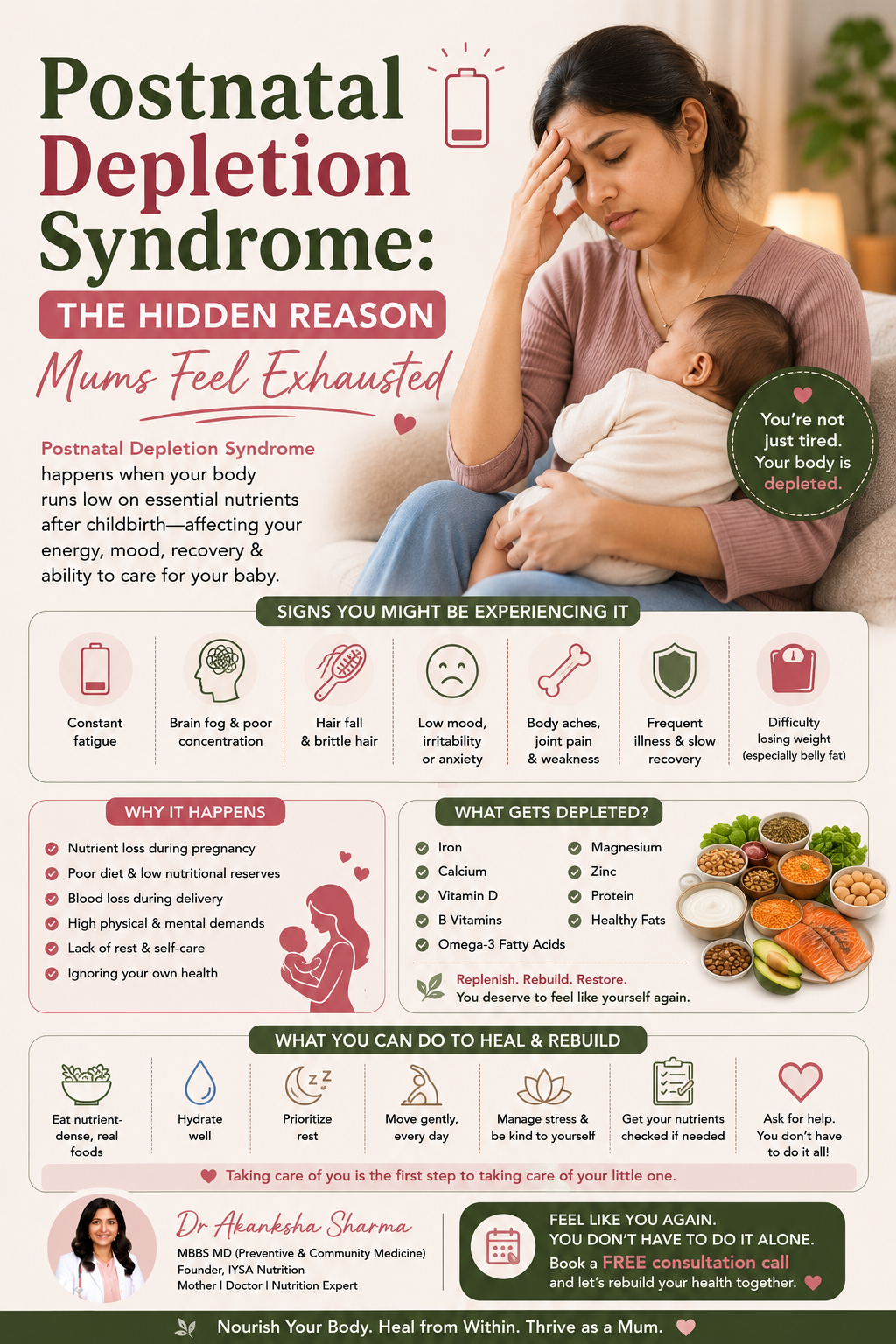
Postnatal depletion syndrome (PDS) describes the constellation of symptoms that persist in mothers for months to years after childbirth — driven by the intersection of nutritional depletion, hormonal dysregulation, sleep deprivation, neurological changes, and the extraordinary physical and emotional demands of new motherhood.
It is distinct from, though overlapping with, postpartum depression (PPD). PPD is a mood disorder characterised by persistent low mood, loss of interest, and often hopelessness that typically presents within the first 12 weeks postpartum. Postnatal depletion syndrome has a broader presentation; it includes mood changes but is characterised equally by physical exhaustion, cognitive impairment, and a sense of reduced capacity across all domains, and it may persist far longer than the typical PPD timeline.
The Core Features of Postnatal Depletion Syndrome
- Profound fatigue that is disproportionate to sleep quantity and does not resolve with rest
- “Baby brain”: persistent cognitive impairment: poor working memory, difficulty concentrating, word-finding difficulties, mental sluggishness
- Emotional fragility: low frustration tolerance, tearfulness, anxiety, feelings of being overwhelmed
- Hypervigilance and hyper-reactivity: a persistent state of alert that prevents full rest even when opportunity exists
- Reduced sense of self: loss of the pre-mother identity, feeling disconnected from previous interests and relationships
- Physical symptoms: continuing hair loss, poor skin quality, brittle nails, low libido, joint aches
- Immune vulnerability: frequent infections, slow recovery from illness
- Persistent hormonal disruption: irregular cycles after breastfeeding cessation, thyroid dysfunction, low cortisol (adrenal fatigue pattern)
Related reading:
👉Post-partum Depression and the Baby Blues: Causes and Management
👉Postpartum Hair Loss: The Nutritional Truth Nobody Tells You
👉Postpartum Anxiety in Singapore: The Nutritional Support Most Doctors Don’t Mention
The Biology of Postnatal Depletion: What Has Actually Happened
The Nutritional Debt
Pregnancy is the most nutritionally demanding physiological state the human body enters outside of illness. Over nine months, the developing baby has drawn on maternal stores for:
- DHA: The foetal brain accumulates DHA at the expense of maternal brain stores. Research by Hibbeln and others has found that maternal brain DHA is measurably reduced after pregnancy, contributing directly to the cognitive symptoms of postpartum and postnatal depletion.
- Iron: Foetal iron accumulation + delivery blood loss creates significant iron deficiency in most Indian women.
- Zinc: Foetal zinc accumulation depletes maternal stores; breastfeeding adds further demand.
- Iodine: Diverted to foetal thyroid development; may precipitate postpartum thyroid dysfunction.
- Vitamin B12 and folate: Used for foetal DNA synthesis and neural development; depleted in mothers with already-low reserves.
- Magnesium: Used in enormous quantities during the third trimester, pregnancy magnesium depletion contributes to postpartum anxiety, poor sleep, and muscle fatigue.
- Vitamin D: Transferred across the placenta; depleted maternal stores contribute to immune compromise, mood disruption, and thyroid dysfunction postpartum.
If breastfeeding follows, as it should, this nutritional debt continues accumulating. Breast milk is produced at a metabolic cost of 400–500 kcal/day. Key micronutrients, iodine, DHA, choline, Vitamin D, and B12 continue to be transferred to the infant through milk. A mother who enters breastfeeding already depleted exits it in a state of profound nutritional debt that may take one to three years to fully correct without deliberate intervention.
The Neurological Change
Pregnancy induces measurable structural changes in the maternal brain, a phenomenon documented in landmark neuroimaging research published in Nature Neuroscience (Hoekzema et al., 2017). The study found significant grey matter reductions in regions associated with social cognition and theory of mind, changes that persisted for at least two years postpartum and were associated with maternal attachment quality. The authors noted this may represent a neurological specialisation for maternal caregiving rather than cognitive decline, but the metabolic demand of this structural reorganisation adds to the overall neurological depletion burden.
The Hormonal Disruption
The postpartum hormonal landscape is complex and protracted:
- Oestrogen and progesterone fall precipitously after delivery
- Prolactin (elevated during breastfeeding) suppresses oestrogen and ovulation, contributing to vaginal dryness, low libido, mood instability, and bone density loss during the breastfeeding period
- Cortisol regulation is disrupted by sleep deprivation, and remains dysregulated for extended periods in mothers with ongoing sleep fragmentation
- Thyroid function may be compromised by postpartum thyroiditis, iodine depletion, or selenium deficiency, all common in Indian women
- The HPA axis (stress response system) may become hypersensitive after the sustained cortisol dysregulation of late pregnancy, labour, and early motherhood, contributing to the anxiety, hypervigilance, and exhaustion that characterise PDS
The Sleep Architecture Destruction
Newborn care produces some of the most severe sleep deprivation studied outside of military contexts. But it is not just the quantity of sleep that matters; it is the architecture. Deep, restorative sleep (slow-wave sleep, Stage 3 NREM) is when the brain clears metabolic waste through the glymphatic system, repairs cellular damage, consolidates memory, and regulates hormones. The fragmented, interrupted sleep of new motherhood disrupts slow-wave sleep disproportionately, meaning even when a mother gets 7 hours of total sleep through a series of fragments, she is not receiving the restorative sleep architecture that those 7 hours would normally contain.
Related reading:
👉10 Healthy Snack Ideas to Boost Energy and Aid Recovery for New Moms
Explore my NURTURE: Mother & Baby Fourth Trimester Program
A doctor-led, evidence-based program supporting healing, feeding, and emotional recovery.
Why Indian Mothers Are Particularly Vulnerable
Indian cultural and social factors create specific vulnerabilities to postnatal depletion syndrome beyond the universal biological mechanisms:
Pre-existing Nutritional Deficiency
Studies in India consistently find high rates of iron deficiency anaemia, Vitamin D deficiency, zinc insufficiency, and Vitamin B12 deficiency in Indian women of reproductive age, before pregnancy even begins. A woman who enters pregnancy nutritionally depleted exits it in a significantly worse state than a well-nourished woman. The nutritional debt is compounded rather than additive.
Vegetarian Diet Without Deliberate Supplementation
The strict vegetarian diet, while nutritionally excellent when well-planned, is naturally deficient in DHA, haem iron, Vitamin B12 (in the absence of adequate dairy), and zinc. Without deliberate supplementation and strategic food selection, the postpartum nutritional debt from these specific nutrients may take years to correct through diet alone.
Return to Full Domestic Responsibility
In many Indian households in India and among the Indian diaspora in Singapore, the cultural expectation is that the new mother will resume full household and family responsibilities relatively soon after the 40-day confinement period ends. The combination of newborn care, older child management, household running, and often professional responsibilities creates a state of chronic physical and cognitive overload that prevents the recovery window the depleted body needs.
Diminished Traditional Postpartum Support
Traditional Indian culture had sophisticated postnatal support systems, the extended family presence, the structured 40-day rest period, the specialised postpartum cooking, and the oil massage practices. In nuclear family settings in Singapore and urban India, many of these support structures are absent or attenuated. The isolated new mother who is managing everything alone while nutritionally depleted and sleep-fragmented has no buffer against the compounding of postpartum depletion.
The “Strong Mother” Cultural Pressure
Indian cultural narratives around motherhood frequently emphasise self-sacrifice, stoicism, and devotion, creating significant social and internal pressure on mothers to appear well and functional even when they are genuinely depleted. Women who admit to exhaustion, cognitive difficulty, or reduced capacity are often told it is normal or that they are not trying hard enough. This cultural environment reduces the likelihood of seeking help and prolongs the period of untreated depletion.
Related reading:
👉7-Day Meal Plan for Postpartum Recovery: Traditional Indian Diet
👉5 Effective Exercises to Flatten Your Mommy Pooch and Strengthen Your Core
👉10 Yoga Asanas to Strengthen Deep Core Muscles and Combat Mommy Pooch
If you’re unsure whether what you’re feeling is normal, structured postpartum support can make a huge difference.
👉New mom? Book a complimentary 20-minute support call
The Postnatal Depletion Recovery Protocol: Nutritional Foundations
Step 1: Test Before You Supplement
The first step in addressing postnatal depletion is knowing your specific deficiency profile. Request the following from your GP or physician:
- Full blood count (haemoglobin, MCV)
- Serum ferritin (stored iron, not just haemoglobin)
- Serum 25-OH Vitamin D
- Vitamin B12 and folate
- Thyroid panel: TSH, free T4, free T3, anti-TPO antibodies
- Fasting glucose and insulin (HOMA-IR) if metabolic symptoms are present
- Plasma zinc (less sensitive than serum but useful if multiple deficiency signs are present)
Targeted correction of confirmed deficiencies is more effective than broad-spectrum supplementation and avoids the risks of over-supplementing nutrients that are not deficient.
Step 2: Iron Repletion
Iron deficiency is the most common and most impactful nutritional deficiency in postnatal depletion. The fatigue, brain fog, emotional blunting, reduced exercise tolerance, and hair loss of postnatal depletion overlap almost entirely with the symptoms of iron deficiency, and correcting iron status is frequently transformative.
If ferritin is below 30 ng/mL: supplement with ferrous bisglycinate (better tolerated than ferrous sulphate) at the prescribed dose, alongside daily iron-rich foods and consistent vitamin C pairing. Retest at 3 months. Target ferritin above 50 ng/mL for full resolution of symptoms, not just above the laboratory “normal” lower limit.
👉Iron-Deficiency Anemia in Singapore Women
Step 3: DHA Restoration
DHA restoration is the most neurologically specific intervention for postnatal depletion. Research suggests that maternal brain DHA can take 12–18 months to recover to pre-pregnancy levels without deliberate supplementation, explaining the protracted “baby brain” and mood vulnerability of the postpartum period.
Supplement with 1000–2000mg of combined EPA+DHA daily, higher than standard maintenance dosing, to actively rebuild depleted stores. For vegetarians: algae-based EPA+DHA is equivalent to fish oil. Continue for at least 6–12 months. Fatty fish 3 times per week, alongside the supplement, accelerates recovery for non-vegetarians.
Step 4: Vitamin D Correction
Test and correct to above 75 nmol/L. If breastfeeding continues, remember that Vitamin D supplementation for the infant is also necessary (400 IU/day) since breast milk provides negligible Vitamin D. Maternal Vitamin D correction supports mood, immunity, thyroid function, and bone density, all relevant to postnatal recovery.
👉Vitamin D Deficiency in Singapore: Why You’re Still Low Despite the Sun
Step 5: Vitamin B12 and Methylfolate
For vegetarian Indian women who have relied primarily on dairy for B12, and for women whose dairy intake was reduced during pregnancy nausea B12 repletion is critical. If B12 is below 200 pg/mL, supplementation is indicated; if between 200–300 pg/mL, supplementation is prudent. Methylcobalamin (the active form of B12) is preferred over cyanocobalamin for neurological recovery. Methylfolate (5-MTHF) is preferred over folic acid for women with MTHFR variants or previous postpartum mood issues.
Step 6: Magnesium — For Sleep, Anxiety, and Muscle Recovery
Magnesium glycinate at 300–400mg at night is one of the most consistently impactful supplements for postnatal depletion, improving sleep quality, reducing anxiety, relaxing muscle tension, and supporting the cortisol normalisation that comes with improved sleep. Many mothers notice significant improvements in sleep quality and anxiety within 1–2 weeks of starting magnesium at night.
Step 7: Dietary Foundation
Supplements address confirmed deficiencies, but the dietary foundation determines long-term recovery and prevents re-depletion. The postnatal recovery diet follows the same principles as the breastfeeding nutrition guide and the postpartum hair loss guide, with protein at every meal, iron-rich foods daily, fermented foods for gut health, anti-inflammatory omega-3s, and adequate caloric intake.
The specific additions for postnatal depletion recovery:
- Ashwagandha: 300–600mg of standardised root extract daily, for HPA axis normalisation, cortisol reduction, and energy restoration (see Day 20 for full evidence). Discuss with your doctor if breastfeeding.
- Shatavari: 500mg–1g daily, supports hormonal balance, lactation (if ongoing), and energy in the postnatal period. Well-evidenced in Indian RCTs.
- Lion’s Mane mushroom: Emerging evidence for neurological recovery stimulates nerve growth factor (NGF), which supports brain recovery and cognitive function. Available as a supplement or added to cooking in dried form. Not yet in the ICMR guidelines but evidence is building.
- Traditional Indian postnatal foods: Methi laddoos, gond laddoos, ragi porridge, haldi doodh, kesar milk, nutritionally validated traditional preparations that directly address postnatal depletion (see Day 18 for full discussion).
👉C-Section Recovery Nutrition in Singapore: Week-by-Week Indian Guide
The Non-Nutritional Pillars of Recovery
Nutrition is foundational but insufficient on its own. The recovery from postnatal depletion syndrome requires attention to all contributing factors:
Sleep Architecture Repair
As sleep fragments gradually lengthen, as the child sleeps for longer periods, prioritise slow-wave sleep by: going to bed early (before 10 pm, when the first slow-wave sleep cycle is most accessible), avoiding screens in the 60 minutes before bed, taking magnesium glycinate at night, and, where possible, accepting night-time support from a partner, family member, or night nanny to allow at least one uninterrupted sleep block of 4+ hours.
Nervous System Regulation
The hypervigilant postpartum nervous system requires deliberate down-regulation practices. Five minutes of slow breathing (4 counts in, 6 counts out) twice daily activates the parasympathetic nervous system and reduces cortisol. Yoga nidra (a guided body-scan relaxation practice widely available through apps and YouTube) has been specifically studied for postpartum anxiety and fatigue. Regular outdoor time, even 15 minutes of walking in greenery, reduces cortisol and supports circadian rhythm.
Support — Asking for and Accepting It
Postnatal depletion cannot be recovered from in isolation. Asking for and accepting support, from a partner, family, friends, or professional services is not a failure of motherhood. It is the biological necessity of a depleted organism that needs recovery conditions it cannot create alone. In Singapore, postnatal doulas, breastfeeding consultants, women’s health physiotherapists, and perinatal mental health services provide professional support. In India, extended family networks, postpartum helpers (ayas), and increasingly, perinatal health professionals provide structured support. Use these resources.
🔗 Related Posts:
👉Confinement Food vs Medical Nutrition: What’s Best for Singapore Moms?
👉Postpartum Nutrition: Doctor’s Insights for Optimal Recovery
👉7-Day Meal Plan for Postpartum Recovery: Traditional Indian Diet
👉Pregnancy & Postpartum Nutrition: A Doctor-Reviewed Guide
Frequently Asked Questions
How long does postnatal depletion last without treatment?
Without deliberate nutritional recovery and adequate rest, the symptoms of postnatal depletion can persist for 3–10 years. Dr Serrallach’s clinical observations suggest that the typical duration without intervention corresponds roughly to the number of pregnancies multiplied by the severity of the depletion going into each pregnancy, meaning each subsequent pregnancy deepens the depletion further. With deliberate nutritional intervention, targeted supplementation, improved sleep, and nervous system support, meaningful recovery is typically seen within 3–6 months, with full restoration taking 12–18 months.
Is postnatal depletion syndrome the same as postpartum depression?
No, they are related but distinct. Postpartum depression (PPD) is primarily a mood disorder characterised by persistent sadness, loss of interest, and hopelessness, typically developing within the first 12 weeks postpartum. Postnatal depletion syndrome is a broader condition of multi-system depletion, encompassing mood but also fatigue, cognitive impairment, physical symptoms, and hormonal dysregulation, that can persist for years. Many women with PDS have mild-moderate mood symptoms that do not meet the clinical threshold for PPD. Some women have both. The distinction matters because the management differs: PDS requires nutritional and lifestyle recovery as its primary intervention, while PPD may require psychological therapy and/or medication.
My child is now 3 years old and I am still exhausted. Can I still recover?
Absolutely yes. There is no cutoff after which postnatal depletion recovery is no longer possible. The depletion physiology, nutritional deficits, DHA reduction, and hormonal dysregulation remain correctable regardless of how long it has persisted. What changes with time is not the potential for recovery but the likelihood that the depletion has been compounded by further demands (a second pregnancy, sustained poor sleep, inadequate nutrition) and possibly by secondary conditions (thyroid dysfunction, anaemia that has progressed) that need to be identified and addressed. Start with the blood tests. Get your numbers. Address the deficiencies. The body’s capacity to restore itself is remarkable, but it needs the raw materials to do so.
I am pregnant again and I think I still had postnatal depletion from my last pregnancy. What should I do?
This is clinically urgent. Entering a second pregnancy in a state of postnatal depletion from the first compounds the depletion significantly and increases the risk of pregnancy complications (anaemia, pre-eclampsia, foetal growth restriction), alongside worsening the postnatal depletion after delivery. Request a full nutritional panel immediately: ferritin, Vitamin D, B12, folate, thyroid panel. Address all confirmed deficiencies under medical supervision. Optimise your diet as comprehensively as possible. Consider spacing pregnancies by at least 18–24 months from delivery to weaning (the WHO recommendation) to allow meaningful nutritional recovery between pregnancies.
Can traditional Indian postpartum practices (the 40-day confinement) prevent postnatal depletion?
Yes, traditional Indian postpartum practices, when properly maintained, are highly effective for preventing or attenuating postnatal depletion. The structured rest period, specialised nutritious cooking (methi laddoos, gond preparations, ragi porridge, haldi milk, frequent small meals), oil massage (which supports skin and nervous system recovery), and extended family caregiving collectively address the nutritional, rest, and support deficits that cause postnatal depletion. The tragedy is that these practices are increasingly abandoned in modern urban households — leaving women with the full biological depletion of pregnancy and childbirth and none of the traditional recovery infrastructure. Wherever possible, maintaining or adapting traditional postpartum practices is one of the most effective PDS prevention strategies available.
Related reading:
👉Starter Guide to Getting Your Body Back After Having a Baby
The Bottom Line
Postnatal depletion syndrome is real, it is widespread, and it is not simply “just motherhood.” It is a specific physiological state of nutritional, neurological, and hormonal depletion that develops from the extraordinary metabolic demands of growing and birthing a baby, and it is deepened rather than healed when mothers are expected to “bounce back” without recovery support.
For Indian mothers, who frequently enter pregnancy already nutritionally insufficient, who may follow diets naturally deficient in DHA and B12, and who are increasingly expected to manage full domestic and professional responsibilities without the traditional postpartum support structures, the risk of significant and prolonged postnatal depletion is particularly high.
The recovery protocol is not complicated: test your deficiencies, restore your iron and DHA, correct your Vitamin D and B12, rebuild your magnesium, eat your traditional postpartum foods, sleep whenever it is possible, and ask for the help you need. You grew a human being. You deserve to recover from that — fully, deliberately, and without apology.
👉 Need guided support through the fourth trimester?
Explore the NURTURE: Mother & Baby Fourth Trimester Program
A doctor-led, evidence-based program supporting healing, feeding, and emotional recovery.
🌸Or start by booking your 20-minute complimentary support call. CLICK HERE!
Disclaimer: This article is for educational purposes only. If you are experiencing persistent fatigue, mood changes, or cognitive symptoms postpartum, please consult a qualified physician for a full assessment. This article does not substitute for medical evaluation or treatment.
References:
- Serrallach O. The Postnatal Depletion Cure. Grand Central Publishing. 2018.
- Hoekzema E et al. Pregnancy leads to long-lasting changes in human brain structure. Nat Neurosci. 2017;20(2):287-296. PubMed
- Hibbeln JR. Seafood consumption, the DHA content of mothers’ milk and prevalence rates of postpartum depression. J Affect Disord. 2002;69(1-3):15-29. PubMed
- Beard JL et al. Maternal iron deficiency anemia affects postpartum emotions and cognition. J Nutr. 2005;135(2):267-272. PubMed
- ICMR-NIN Expert Group. Recommended Dietary Allowances for Indians. 2020. nin.res.in

Akanksha Sharma
Dr Akanksha Sharma (MBBS, MD) is a physician and women’s health nutrition specialist, and the founder of IYSA Nutrition. She provides evidence-based, doctor-led nutrition guidance for pregnancy, postpartum recovery, PCOS, child nutrition, and family health, helping women make calm, informed decisions about their health and their children’s well-being.