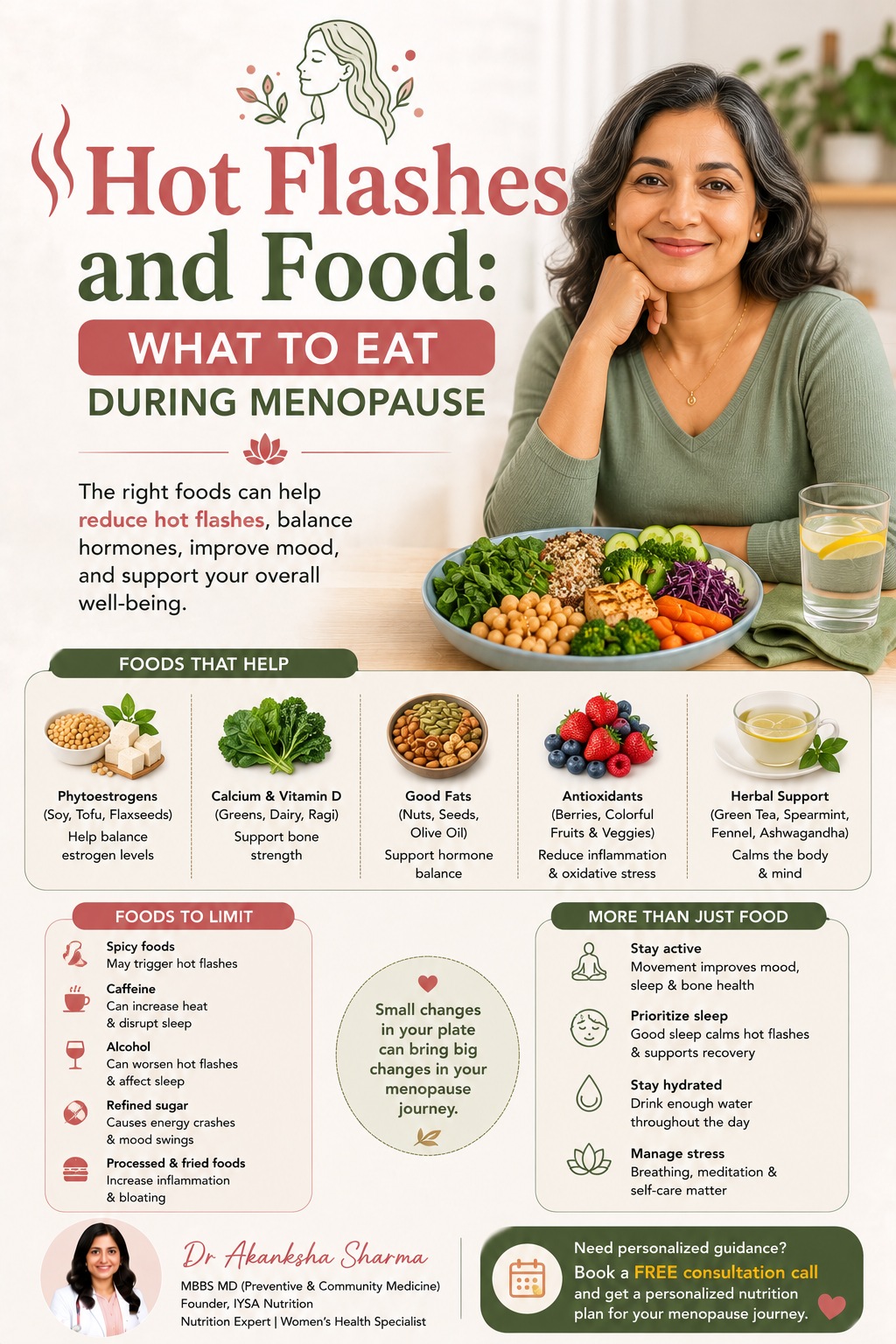
Written & reviewed by Dr Akanksha Sharma, MBBS, MD (Preventive & Community Medicine) | Founder, IYSA Nutrition, Singapore
Hot flashes are the hallmark symptom of menopause, and for many women, they come as a shock. Not just the physical experience itself, the sudden wave of heat, the flushing, the drenching sweat, the disorienting loss of thermoregulatory control, but the sheer disruption they create. Hot flashes interrupt sleep, derail concentration, cause social embarrassment, and, for women experiencing them ten or more times a day, significantly impair quality of life.
Approximately 75–80% of women experience hot flashes during perimenopause and menopause. Among South Asian women, the overall prevalence is somewhat lower than in Western populations, but when they occur, they are equally disruptive and equally distressing.
I want to be honest with you about what diet can and cannot do here, because the wellness industry around menopause is full of overclaims and false hope. What the evidence genuinely supports is this: specific dietary triggers reliably worsen hot flashes; a Mediterranean-style dietary pattern is associated with fewer symptoms; certain nutrients support the broader metabolic and hormonal disruptions of menopause; and at least one Indian herbal preparation has meaningful clinical trial evidence.
Let us go through what the evidence actually shows.
👉Menopause Care in Singapore: A Doctor Explains Your Treatment & Support Options
👉Brain Fog in Perimenopause: The Nutritional Cause and Fix
👉Hormone Therapy in Singapore: Benefits, Risks and What Your Doctor May Not Have Told You
What Causes Hot Flashes: The Mechanism
Hot flashes are vasomotor symptoms driven by declining oestrogen during perimenopause and menopause. Oestrogen normally modulates the hypothalamic thermostat, the brain region that regulates body temperature. As oestrogen falls, this thermostat becomes hypersensitive, narrowing the thermoneutral zone (the temperature range within which no heating or cooling response is triggered). Small increases in core body temperature that would normally be imperceptible now trigger the full vasodilatory heat-dissipation response: skin flushing, sweating, and the subjective sensation of intense heat.
The neurochemical mediators of this process include norepinephrine, serotonin, and KNDy neurons in the hypothalamus. Several dietary components directly modulate these systems, which explains why specific foods reliably trigger or blunt hot flash events.
The Triggers: What to Reduce or Avoid
The strongest and most consistent dietary evidence in menopause is not about foods that help,
it is about foods and habits that reliably trigger and worsen hot flashes. Addressing triggers is the highest-yield dietary intervention available, and it costs nothing.
1. Alcohol — The Most Consistent Trigger
Alcohol causes peripheral vasodilation, raises core body temperature, disrupts sleep architecture (worsening nocturnal hot flashes), and impairs liver oestrogen metabolism, further reducing already-declining oestrogen. Multiple studies confirm that women who drink alcohol experience significantly more frequent and more severe hot flashes than non-drinkers. If hot flashes are bothering you, reducing or eliminating alcohol is the single highest-impact dietary change you can make.
2. Caffeine — Timing Matters
Caffeine stimulates the sympathetic nervous system and raises core body temperature, directly triggering the narrowed thermoneutral zone of the menopausal hypothalamus. Multiple cups of chai or coffee daily are consistently reported by menopausal women as hot flash triggers, particularly in the afternoon and evening. Reducing to one or two cups in the morning and switching subsequent cups to green tea (lower caffeine, with L-theanine moderating the stimulant effect) is a practical modification worth trying.
3. Very Spicy Food
Capsaicin — the active compound in chillies — binds to TRPV1 receptors in the mouth and gut that signal the hypothalamus to initiate heat-dissipation responses. In a woman with a hypersensitive menopausal thermostat, eating very spicy food can directly trigger a hot flash. This does not mean eliminating Indian spices entirely — turmeric, cumin, coriander, and cardamom are all fine. The specific concern is capsaicin-heavy chilli heat, particularly at dinner when nocturnal symptoms are already problematic.
4. Refined Sugar and High-GI Foods
High-glycaemic-load foods cause blood glucose spikes followed by reactive hypoglycaemia. The hypoglycaemic phase activates the sympathetic nervous system — triggering adrenaline release, which causes vasodilation and flushing that mimics and amplifies hot flash responses. Women with insulin resistance (increasingly common in perimenopause) are particularly susceptible. Reducing refined sugar, packaged sweets, white rice in large portions, and sugary drinks reduces the frequency of glucose-triggered vasomotor events.
5. Very Hot Beverages
Drinking very hot chai, coffee, or soup raises core body temperature directly — activating the narrowed thermoneutral zone. Allowing hot beverages to cool slightly before drinking is a genuinely effective and completely free intervention.
👉Protein for Menopause: Are You Eating Enough?
👉Menopause Nutrition in Singapore: The Complete Indian Women’s Guide to Eating Well After 50
Dietary Patterns That Help: The Evidence
The Mediterranean Dietary Pattern — The Most Robust Evidence
The most consistent dietary pattern evidence for vasomotor symptom reduction comes from research on Mediterranean-style eating. A landmark prospective cohort study by Herber-Gast and Mishra (2013), analysing data from 6,040 Australian women followed for nine years, found that adherence to a Mediterranean-style dietary pattern was associated with significantly lower risk of night sweats and hot flashes, while a high-fat, high-sugar dietary pattern was associated with increased risk.
This finding has been supported by subsequent observational studies. A 2022 cross-sectional study published in Frontiers in Endocrinology found that higher Mediterranean diet adherence was inversely associated with vasomotor symptom severity in postmenopausal women. The European Menopause and Andropause Society (EMAS) position statement on menopause and diet supports the Mediterranean pattern as a tool for potentially alleviating vasomotor symptoms.
It is important to be clear about the nature of this evidence: these are observational and cross-sectional studies, not randomised controlled trials. They show association, not causation. We cannot say with certainty that adopting a Mediterranean diet will reduce your hot flashes, but the association is consistent across multiple studies, biologically plausible (anti-inflammatory, insulin-sensitising, gut-health-supporting), and the dietary pattern is beneficial for cardiovascular, bone, and metabolic health independently. There is no downside to adopting it.
What a Mediterranean-style Indian diet looks like in practice:
- Generous dal and legumes at every meal (replacing red meat as the primary protein)
- Mustard oil or cold-pressed groundnut oil replacing refined seed oils in cooking
- Abundant non-starchy vegetables, at least 4–5 servings daily
- Whole grains, jowar roti, bajra roti, oats, brown rice, replacing maida and large portions of white rice
- Nuts and seeds daily: walnuts, almonds, pumpkin seeds, flaxseeds
- Fatty fish 2–3 times per week (pomfret, sardines, mackerel)
- Abundant fruits, particularly berries, guava, pomegranate, and amla
- Reduced refined sugar, packaged snacks, and ultra-processed foods
What About Flaxseeds?
Flaxseeds are rich in lignans, compounds metabolised by gut bacteria to enterolignans with mild hormonal activity. A small, uncontrolled pilot study at the Mayo Clinic in 2007 (Pruthi et al., 21 participants, no placebo group) reported a 50% reduction in hot flash frequency and a 57% reduction in overall hot flash score with 40g of ground flaxseed daily over six weeks. This was the study widely cited in wellness media as evidence for flaxseed and hot flashes.
However, the follow-up was not encouraging. The Mayo Clinic and North Central Cancer Treatment Group subsequently conducted a large, randomised, double-blind, placebo-controlled trial (Pruthi et al., 2012) with 188 women, and found no statistically significant difference in hot flash scores between the flaxseed and placebo groups. A 2016 systematic review of nine RCTs on flaxseed and hot flashes (Foshati et al.) concluded that while flaxseed showed a beneficial trend on hot flash frequency and intensity, the results were not statistically significant.
The honest conclusion: the early pilot study results were not confirmed in rigorous placebo-controlled trials. Flaxseed is nutritionally excellent; it provides ALA omega-3, soluble fibre, lignans, and protein, and should be included in the menopause diet for its overall nutritional benefits. But the claim that it significantly reduces hot flashes is not well supported.
What About Soya and Phytoestrogens?
This deserves a direct, honest answer. The Cochrane review by Lethaby et al. (2013), the highest level of evidence available, covering 43 randomised controlled trials and 4,084 participants, found no conclusive evidence that phytoestrogen supplements effectively reduce the frequency or severity of hot flashes and night sweats in menopausal women. Some trials showed a slight reduction; genistein (a specific soya isoflavone) showed more consistent signals and warrants further investigation, but overall, no indication suggested that phytoestrogens work better than no treatment.
Soya foods like tofu, edamame, tempeh, soya milk, are nutritionally valuable during menopause for their protein, calcium, and bone-protective effects, and are safe to consume. But the popular claim that soya foods meaningfully reduce hot flashes is not supported by the current clinical trial evidence. Include soya for its nutritional benefits, not for hot flash relief.
Shatavari — The Indian Herbal Evidence
Shatavari (Asparagus racemosus) is the most studied Ayurvedic herb for female reproductive transitions, and it has generated a genuinely promising evidence base for menopausal symptoms over the past two years.
A 2024 double-blind, randomised, placebo-controlled trial by Gudise et al., published in Cureus, found that shatavari root extract significantly reduced hot flashes, night sweats, insomnia, anxiety, vaginal dryness, and loss of libido compared to placebo in menopausal women, with significant improvement in quality of life scores and no adverse events.
A 2025 randomised, double-blind, three-arm, placebo-controlled study published in Frontiers in Reproductive Health found that shatavari root extract was safe and effective for menopausal symptoms, with the shatavari-plus-ashwagandha combination showing particularly strong results across vasomotor, psychological, and urogenital domains.
These are small trials at early stages of the evidence hierarchy; larger, multicentre, long-duration RCTs are still needed before shatavari can be recommended with the same confidence as pharmaceutical agents. But the evidence is real, the safety profile is good, and the traditional use is long-established. For Indian women seeking non-pharmacological support for menopausal symptoms, shatavari is the most evidence-supported Ayurvedic option currently available.
Dose used in trials: 100–500 mg of standardised root extract daily. Available as churna (one teaspoon in warm milk at night) or as capsule from Himalaya, Dabur, and other Ayurvedic brands in India and Singapore.
Key Nutrients for the Broader Menopause Picture
While the evidence for dietary interventions directly reducing hot flashes is limited, several nutrients have strong evidence for the other critical health priorities of menopause, bone density, cardiovascular risk, mood, and metabolic health. These matters as much as hot flash frequency for long-term well-being.
Calcium and Vitamin D — Bone Protection Is Non-Negotiable
Bone density loss accelerates dramatically in the years immediately before and after menopause. The first 5–7 years after menopause are the most critical for bone loss, and the nutritional foundations must be in place proactively. ICMR-NIN 2020 recommends 800–1000 mg of calcium per day for postmenopausal women, from dairy, ragi, sesame, moringa, and fortified foods. Combine with Vitamin D tested and maintained above 75 nmol/L. This is the most clinically critical nutrition priority of menopause — more evidence-supported than any dietary hot flash intervention.
👉Menopause and Osteoporosis: Prevention Starts Earlier Than You Think
Magnesium — For Sleep and Mood
Magnesium supports sleep quality, reduces anxiety, and moderates the HPA axis stress response, all of which are significantly disrupted during perimenopause and menopause. Magnesium glycinate at 300–400 mg at night is one of the most impactful supplements for sleep quality in menopausal women. Food sources: pumpkin seeds, almonds, bajra, dark chocolate, dark leafy greens.
Omega-3 Fatty Acids — Cardiovascular and Mood
Oestrogen is cardioprotective; its loss in menopause significantly increases cardiovascular risk. Omega-3 fatty acids (DHA and EPA) from fatty fish or algae supplements directly reduce cardiovascular risk markers and address the mood disruption and joint inflammation that commonly accompany menopause. The evidence for omega-3 specifically reducing hot flash frequency is limited and inconsistent, but the cardiovascular and mood benefits are well-established and make omega-3 inclusion a priority regardless.
Protein — Preventing Sarcopenia
Oestrogen supports muscle maintenance. It’s loss accelerates sarcopenia (age-related muscle loss), which reduces metabolic rate, worsens insulin resistance, and increases fall and fracture risk. Maintaining protein intake at 1.2–1.5g per kg of body weight per day, combined with resistance training, is the most effective strategy for preserving muscle mass and metabolic rate through and after menopause.
👉Protein for Menopause: Are You Eating Enough?
Menopausal Weight Redistribution: A Nutritional Approach
One of the most universal features of menopause for Indian women is the redistribution of body fat from the hips and thighs to the abdomen. This is not simply about eating more; it reflects changes in adipose tissue receptor activity as oestrogen declines, directly promoting visceral fat deposition.
The nutritional strategies that address this most effectively:
- Reduce insulin resistance: visceral fat is driven by insulin resistance, which worsens with oestrogen decline
- Maintain high protein intake to preserve muscle mass
- Prioritise resistance training: the most effective single intervention for reducing visceral fat in menopausal women
- Moderate alcohol, even one drink daily, significantly increases abdominal fat deposition in menopausal women
- Address sleep disruption: poor sleep raises cortisol and ghrelin, both of which directly drive abdominal fat storage
Related reading:
👉The Insulin Reset: A Women’s Guide
👉Blood Sugar After 40: What Every Indian Woman Should Know
A Sample One-Day Menopause-Supportive Meal Plan (Indian)
- On waking: Warm water with fresh amla juice or amla powder. One teaspoon shatavari churna in warm water or milk (if using).
- Breakfast: Rolled oats with one tablespoon ground flaxseed (nutritional value) + mixed seeds + a small handful of walnuts + a cup of dahi. Green tea rather than chai as the first drink.
- Mid-morning: A small handful of almonds and pumpkin seeds + one pomegranate or a cup of mixed berries
- Lunch: Masoor dal + one jowar or bajra roti + bottle gourd or ridge gourd sabzi + cucumber and mint raita. Keep the spice level moderate at lunch. No chai immediately after, wait 60 minutes.
- Afternoon: One or two cups of green tea (L-theanine moderates caffeine stimulation; polyphenols are anti-inflammatory). A small square of dark chocolate (70%+) for magnesium.
- Dinner (by 7 pm, keep it light): Grilled sardines or mackerel (omega-3) + sautéed vegetables + a light green salad with lime. For vegetarian: tofu or paneer in a mild Indian preparation + dal soup. Keep dinner not very spicy and not very hot in temperature.
- Before bed: Warm milk with shatavari churna and a pinch of nutmeg (sleep support). Magnesium glycinate 300mg.
- Supplements to discuss with your doctor: Vitamin D 2000 IU (if deficient), Calcium (if dietary intake is insufficient), Omega-3 EPA+DHA 1g, Magnesium glycinate 300mg, Shatavari 500mg
👉Menopause-Friendly Gut & Bone Health Diet and Lifestyle Plan
👉The Ultimate Guide to the Best Diet for Menopause: What to Eat (and to Avoid) to Thrive
Frequently Asked Questions
Is hormone replacement therapy (HRT) better than dietary changes for hot flashes?
Yes — significantly. HRT (oestrogen therapy, with or without progesterone) is the most effective treatment for vasomotor symptoms, reducing hot flash frequency by 75–90%. Dietary changes produce much more modest effects, if any — trigger reduction being the most reliable. The decision about HRT is a medical conversation between you and your gynaecologist, weighing your individual risk profile, symptom severity, and preferences. Dietary optimisation is appropriate for women who cannot or choose not to take HRT — but should not be presented as equivalent in efficacy. For women who are taking HRT, dietary optimisation addresses the other health priorities of menopause (bone, cardiovascular, metabolic) independently.
Does cutting all spice help hot flashes?
Only capsaicin-heavy chilli heat needs reducing. Anti-inflammatory Indian spices — turmeric, cumin, coriander, fennel, cardamom, ginger — are beneficial and should be used generously. Ginger is anti-inflammatory and has some preliminary evidence for reducing dysmenorrhoea; turmeric with black pepper is anti-inflammatory; cardamom and fennel are digestive supports. The distinction is between chilli-based heat (reduce) and the broader Indian spice palette (maintain and even increase).
Do I need to avoid dairy during menopause?
No. Full-fat dairy — whole milk, dahi, paneer — is actually one of the most valuable food groups during menopause for its calcium (bone protection), protein (muscle preservation), iodine (thyroid function), and B12. The concern about dairy and menopause is not evidence-based. Unless you have a confirmed dairy intolerance or allergy, dairy should be a daily staple during and after menopause.
How long do hot flashes typically last?
Longer than traditionally taught. The Study of Women’s Health Across the Nation (SWAN) found that the median duration of frequent hot flashes is 7.4 years — not 2–5 years as older estimates suggested. Women who begin experiencing hot flashes during perimenopause (before their final menstrual period) have the longest duration, sometimes exceeding 12 years. Understanding this realistic timeline helps set appropriate expectations and motivates establishing sustainable dietary habits early rather than hoping symptoms will resolve quickly.
Is there any Indian food that specifically helps hot flashes?
Shatavari has the best evidence among Indian-origin interventions, based on the 2024 and 2025 RCTs described above. Beyond that, the most evidence-supported dietary strategy is trigger reduction (alcohol, caffeine, spicy food, refined sugar) combined with an anti-inflammatory dietary pattern broadly. Amla — for its anti-inflammatory, antioxidant, and Vitamin C content — is a valuable daily addition for overall menopausal health even without specific hot flash trial data. Traditional cooling foods (coconut water, cucumber, bottle gourd, coriander) are reasonable Ayurvedic-informed strategies for managing heat discomfort even if clinical trial evidence is lacking.
The Bottom Line
The honest evidence base for dietary management of hot flashes is more limited than wellness media suggests. The most reliable dietary strategies are:
- Reduce triggers — alcohol, caffeine, very spicy food, refined sugar, very hot beverages. This is the highest-yield intervention.
- Adopt a Mediterranean-style Indian dietary pattern — associated with fewer vasomotor symptoms across multiple observational studies, and beneficial for all other menopause health priorities.
- Consider shatavari — the most evidence-supported Ayurvedic option, with two recent RCTs showing significant symptom improvement.
- Prioritise calcium, Vitamin D, protein, and magnesium — for bone protection, muscle preservation, and sleep quality, which are the most clinically significant nutritional priorities of menopause.
If hot flashes are severely affecting your quality of life, please have a conversation with your gynaecologist about HRT. Dietary changes are supportive, adjunctive, and appropriate — but they are not a substitute for evidence-based medical treatment when symptoms are severe and quality of life is significantly impaired.
If you’re navigating menopause or perimenopause and want a doctor-designed, non-extreme approach that fits real life in Singapore, explore how our menopause programs support metabolic health, energy, and long-term wellbeing.
👉 Explore my programs Flourish Peri-Menopause Program OR Menopause Metabolic Reset (For women>50)
OR CLICK HERE to Book a FREE consultation call with Dr Akanksha Sharma, MD.
Disclaimer: This article is for educational purposes only. Menopausal symptoms should be assessed by a qualified gynaecologist or physician to determine the appropriate treatment approach.
References:
- Lethaby A et al. Phytoestrogens for menopausal vasomotor symptoms. Cochrane Database Syst Rev. 2013;(12):CD001395. PubMed PMID 24323914
- Herber-Gast GC, Mishra GD. Fruit, Mediterranean-style, and high-fat and -sugar diets are associated with the risk of night sweats and hot flushes in midlife. Am J Clin Nutr. 2013;97(5):1092-1099. PubMed PMID 23553160
- Pruthi S et al. A phase III, randomized, placebo-controlled, double-blind trial of flaxseed for the treatment of hot flashes. Menopause. 2012;19(1):48-53. PubMed PMID 21900849
- Gudise VS et al. Efficacy and Safety of Shatavari Root Extract for the Management of Menopausal Symptoms: A Randomized Controlled Trial. Cureus. 2024;16(4):e57879. PMC Full Text
- Ademola J et al. Efficacy and safety of Shatavari root extract for menopausal symptoms: a randomized, double-blind, three-arm, placebo-controlled study. Front Reprod Health. 2025. PubMed
- ICMR-NIN Expert Group. Recommended Dietary Allowances for Indians. 2020. nin.res.in

Akanksha Sharma
Dr Akanksha Sharma (MBBS, MD) is a physician and women’s health nutrition specialist, and the founder of IYSA Nutrition. She provides evidence-based, doctor-led nutrition guidance for pregnancy, postpartum recovery, PCOS, child nutrition, and family health, helping women make calm, informed decisions about their health and their children’s well-being.