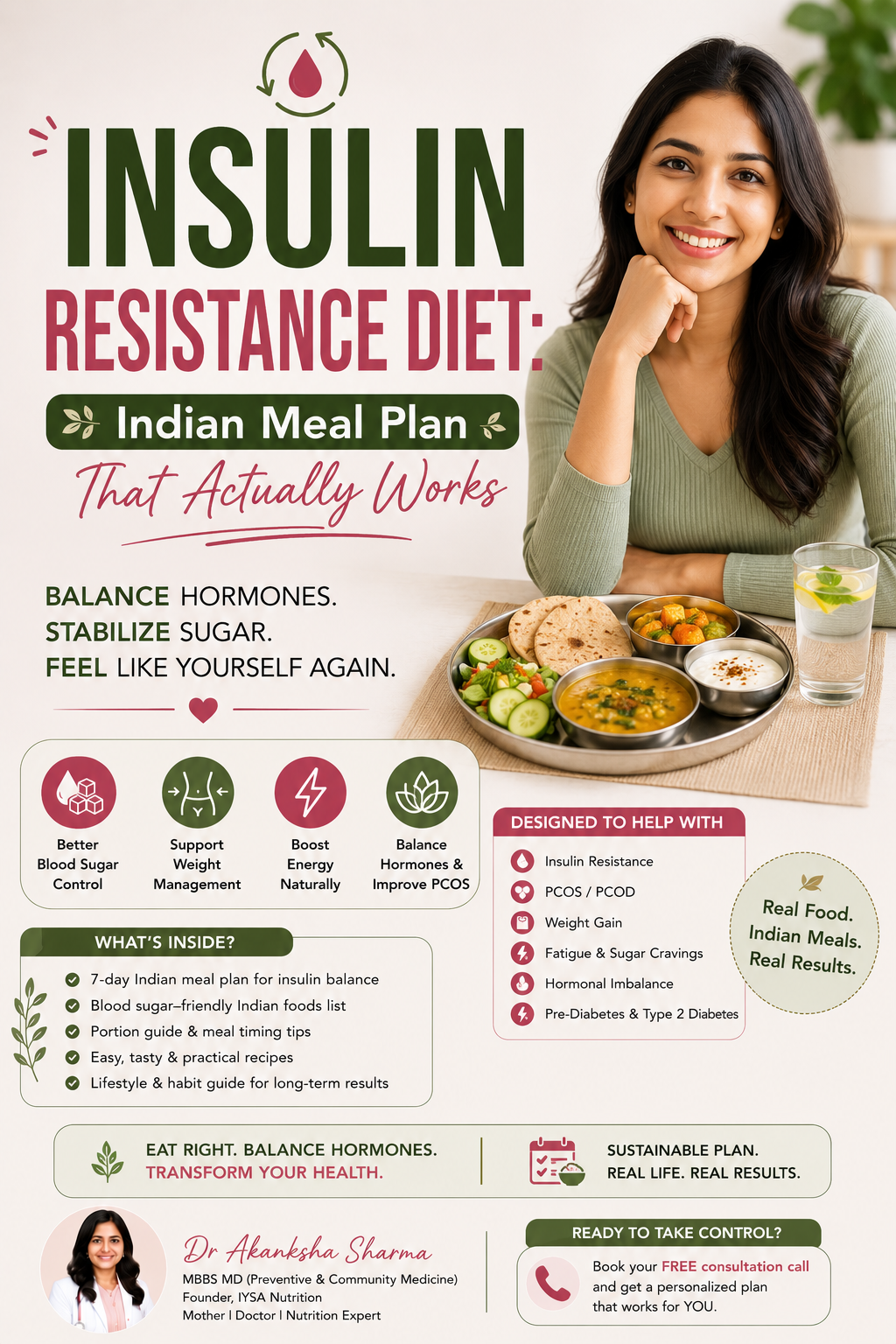
Written & reviewed by Dr Akanksha Sharma, MBBS, MD (Preventive & Community Medicine) | Founder, IYSA Nutrition, Singapore
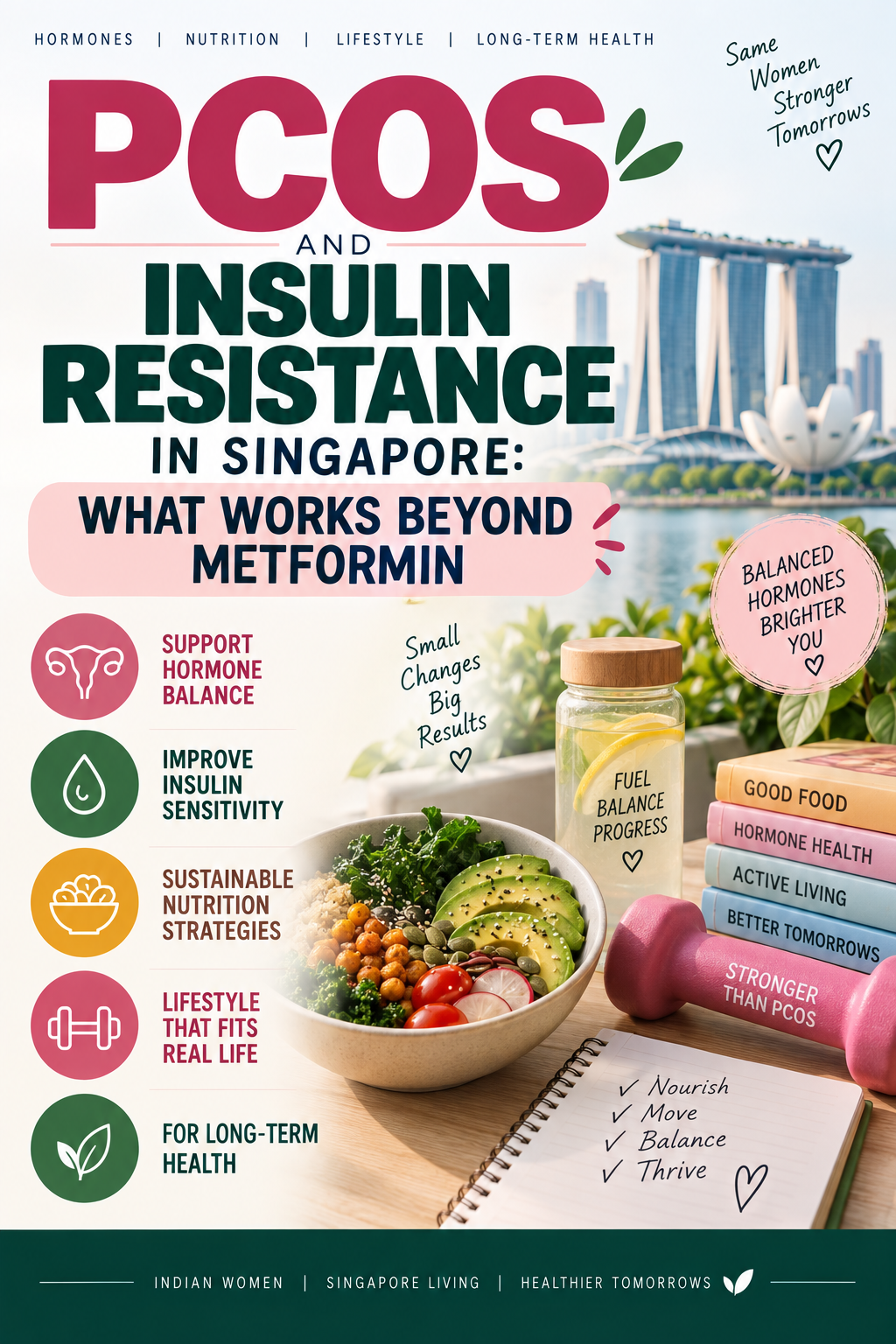
Insulin resistance is one of the most common and most consequential metabolic conditions affecting Indian women today, yet it is among the least recognised and least explained. Women come to me after years of struggling with unexplained weight gain, stubborn belly fat, afternoon energy crashes, carbohydrate cravings, irregular periods, skin darkening, and fatigue, having been told repeatedly that their blood tests are “normal.” What has not been tested, in most cases, is their fasting insulin.
Insulin resistance is not a diagnosis that most standard health screenings detect, because most screenings only check fasting glucose and HbA1c. By the time these markers are abnormal, insulin resistance has typically been present and worsening for years. The earlier, more sensitive marker, fasting insulin and the HOMA-IR index is rarely tested unless a clinician specifically looks for them.
But insulin resistance is not only detectable earlier, but it is also reversible earlier. The dietary and lifestyle window for meaningful reversal is widest before frank type 2 diabetes develops. And for Indian women, who are genetically predisposed to insulin resistance at lower BMIs and younger ages than Western populations, identifying and addressing it through targeted nutrition is both urgent and achievable.
This post gives you the complete Indian meal plan framework for insulin resistance: the principles, the specific foods, the strategies, and a practical week’s worth of meal ideas, all grounded in Indian food culture rather than imported Western dietary templates that do not account for how Indian women actually cook and eat.
Related reading:
👉The Insulin Reset: A Women’s Guide
👉Blood Sugar After 40: What Every Indian Woman Should Know
👉Ozempic and GLP-1 in Singapore: What to Eat When You’re on Weight Loss Injections
What Is Insulin Resistance and Why Does It Matter?
Insulin is the hormone produced by the pancreatic beta cells that enables glucose to enter cells for energy. When cells respond normally to insulin, blood glucose is efficiently cleared after meals and remains stable between meals. Insulin resistance occurs when cells, particularly in muscle, liver, and fat tissue, become less responsive to insulin’s signal. The pancreas compensates by producing more and more insulin. For a while, blood glucose stays normal, but at the cost of chronically elevated insulin levels.
Chronically elevated insulin is metabolically damaging in multiple ways:
- Fat storage promotion: Insulin is the body’s primary anabolic (building) hormone; it drives fat storage and suppresses fat burning. High insulin means the body is in perpetual fat-storage mode, particularly around the abdomen.
- Androgen excess: In the ovaries, high insulin directly stimulates testosterone and DHEA production, driving PCOS, acne, hirsutism, and ovulatory dysfunction in susceptible women.
- Inflammation: Chronic hyperinsulinaemia drives systemic inflammation, increasing cardiovascular risk, worsening autoimmune conditions, and accelerating cellular ageing.
- Liver fat accumulation: Excess insulin drives fat deposition in the liver, and non-alcoholic fatty liver disease (NAFLD) is strongly associated with insulin resistance and is increasingly common in Indian adults.
- Progressive beta-cell exhaustion: Over years of overproduction, pancreatic beta cells progressively fail, leading eventually to type 2 diabetes when they can no longer compensate.
Related reading:
👉The Insulin Resistance Trap in PCOS: How to Break Free Naturally
👉Diabetes in Singapore Women: Early Signs You Shouldn’t Ignore
How to Know If You Have Insulin Resistance
Request these tests from your doctor. Do not rely on fasting glucose alone:
- Fasting insulin: Below 5 µIU/mL is optimal; 5–10 µIU/mL is borderline; above 10 µIU/mL indicates significant insulin resistance even with normal glucose
- HOMA-IR: Calculated from fasting glucose and fasting insulin; above 1.9 indicates insulin resistance; above 2.9 indicates significant resistance
- Fasting blood glucose: Above 5.6 mmol/L (100 mg/dL) suggests impaired fasting glucose
- HbA1c: Above 5.7% indicates pre-diabetes
- Triglycerides: Above 1.7 mmol/L (150 mg/dL) is a sensitive early marker of insulin resistance
- HDL cholesterol: Below 1.3 mmol/L (50 mg/dL) in women; low HDL combined with high triglycerides is the classic dyslipidaemia of insulin resistance
- Waist circumference: Above 80 cm in South Asian women is considered high risk, regardless of BMI
Doctor’s Note: Acanthosis nigricans, dark, velvety skin darkening at the back of the neck, armpits, and groin, is a visible clinical sign of significant insulin resistance. If you have this, get tested immediately. It is not a cosmetic issue, it is a metabolic warning sign.
👉 Struggling with weight or energy despite “doing everything right”?
A structured, hormone-aware approach can make the difference. Click here to book a FREE 20-minute consultation call.
The Core Dietary Principles for Insulin Resistance
Principle 1: Lower the Glycaemic Load — Strategically, Not Obsessively
Glycaemic load (GL) is the measure of how much a given portion of food raises blood glucose, accounting for both the GI of the food and the portion size. Lowering the overall glycaemic load of the diet is the most direct nutritional intervention for insulin resistance. However, this does not mean eliminating all carbohydrates, it means choosing carbohydrates wisely and portioning them strategically.
Low-GL Indian carbohydrate choices:
- Jowar (sorghum) roti, GI approximately 55; significantly lower than white wheat roti (GI 70+)
- Bajra (pearl millet) roti, GI approximately 54; also rich in magnesium, which improves insulin sensitivity
- Ragi (finger millet), GI approximately 68, but very high fibre; overall GL is low at typical serving sizes
- Barley (jau), one of the lowest GI grains available; GI approximately 28. Barley khichdi, barley roti, or barley added to dal is an excellent insulin-sensitising grain strategy.
- Oats (rolled, not instant), beta-glucan fibre is one of the most evidence-backed compounds for improving insulin sensitivity; GI approximately 55
- Brown rice or parboiled rice, significantly lower GI than white rice; keep portions to half a cup cooked
- Sweet potato (boiled, not baked), lower GI than regular potato when boiled; moderate portions
The portion rule for carbohydrates in insulin resistance: Fill no more than one-quarter of your plate with starchy carbohydrates. Fill one quarter with protein-rich food (dal, paneer, eggs, fish). Fill half the plate with non-starchy vegetables. This plate composition, before you consider individual food choices, is one of the most practically impactful changes you can make.
Principle 2: Protein at Every Meal — Mandatory, Not Optional
Protein is the macronutrient with the greatest impact on post-meal blood glucose and insulin. Protein:
- Slows gastric emptying — glucose enters the bloodstream more slowly
- Stimulates GLP-1 secretion — an incretin hormone that enhances insulin release proportionately to glucose load and reduces appetite
- Has minimal direct effect on blood glucose itself
- Promotes satiety — reducing total caloric intake and preventing overconsumption of high-GL foods
- Supports muscle mass — critical for glucose disposal, as muscle is the primary site of insulin-mediated glucose uptake
Target: 25–30g of protein per main meal for women with insulin resistance. This is higher than average dietary intake and requires deliberate planning in Indian vegetarian diets.
Achieving 25–30g protein per meal from Indian vegetarian foods:
- One cup masoor dal (9g) + 100g paneer in sabzi (18g) = 27g
- Two eggs (12g) + one cup moong dal (8g) + 150g dahi (8g) = 28g
- Half cup rajma (8g) + 100g tofu bhurji (9g) + 150g dahi (8g) = 25g
- Two besan chilla (11g) + 150g thick dahi (8g) + 30g pumpkin seeds (8g) = 27g
Principle 3: Fibre First — Eat Vegetables Before Carbohydrates
Meal sequencing, eating food components in a specific order, has direct, measurable effects on post-meal blood glucose and insulin. Research by Dr Alpana Shukla at Weill Cornell Medical College demonstrated that eating vegetables and protein before carbohydrates reduces the post-meal glucose spike by 30–37% and reduces insulin response significantly in people with type 2 diabetes and insulin resistance.
The mechanism: fibre from vegetables forms a viscous layer in the small intestine that physically slows carbohydrate digestion and absorption. The protein eaten before carbohydrates also stimulates GLP-1 (which slows gastric emptying) and insulin release proportionate to need before the full glucose load arrives.
Practical meal sequencing for Indian meals:
- Start with your salad (cucumber, carrot, tomato, onion with lime and coriander)
- Then eat your sabzi and dal
- Then eat your roti or rice in a smaller portion, because you will be partially full from the preceding courses
This simple sequence change, which requires no modification to what you cook, is one of the highest-impact, lowest-effort interventions for insulin resistance management.
Principle 4: Soluble Fibre — Target 10–15g Daily
Soluble fibre dissolves in water to form a viscous gel that slows carbohydrate absorption, feeds beneficial gut bacteria, reduces post-meal glucose and insulin spikes, and, over time, improves insulin sensitivity. The target of 10–15g of soluble fibre daily has the most evidence for insulin resistance management.
Best Indian soluble fibre sources:
- Methi seeds (fenugreek): One teaspoon soaked overnight in water, consumed in the morning, contains galactomannan, one of the most potent soluble fibres for blood glucose management. Multiple Indian clinical trials confirm this effect.
- Isabgol (psyllium husk): One teaspoon before meals, reduces post-meal glucose spike significantly; available in every Indian household
- Oats: Beta-glucan content; 40g of rolled oats provides approximately 2g of beta-glucan
- Barley: Highest beta-glucan content of any grain; even better than oats for insulin sensitivity
- All dal and legumes: Rajma, chana, moong, masoor, each cup provides 3–5g of soluble fibre
- Flaxseeds (ground): One tablespoon provides approximately 1g soluble fibre plus ALA omega-3
- Okra (bhindi): The viscous mucilage in okra is a powerful soluble fibre that specifically reduces post-meal glucose; bhindi sabzi multiple times per week is a direct insulin-resistance management strategy
- Amla (Indian gooseberry): High in pectin (soluble fibre) and chromium, which enhances insulin signalling
Principle 5: The Time Window — Eat Earlier, Stop Earlier
Insulin sensitivity follows a circadian rhythm; it is highest in the morning and declines through the afternoon and evening. The same food eaten at breakfast produces a lower blood glucose and insulin response than the same food eaten at dinner. This has direct implications for meal timing in insulin resistance:
- Eat breakfast: Skipping breakfast raises cortisol (which worsens insulin resistance) and drives compensatory overeating at dinner when insulin sensitivity is at its lowest
- Make lunch your largest meal: Eaten when insulin sensitivity is still reasonably high (midday), a larger lunch produces lower blood glucose and insulin responses than the same meal at dinner
- Keep dinner small and early: Aim to finish dinner by 7:00–7:30 pm. The late, large Indian dinner, often eaten at 9–10 pm, is one of the most metabolically damaging eating patterns for insulin resistance, as it delivers a high glucose load at the point of lowest insulin sensitivity and precedes hours of inactivity
- Maintain a 12-hour overnight fast: Finishing dinner at 7:30 pm and having breakfast at 7:30 am creates a 12-hour fast during which insulin levels fall significantly, improving insulin sensitivity for the following day
Principle 6: The Insulin-Sensitising Spices and Foods
Several Indian spices and foods have specific, evidence-backed effects on insulin sensitivity that go beyond general glycaemic load management:
- Cinnamon (dalchini): Half to one teaspoon daily activates insulin receptor signalling pathways, reducing fasting glucose and improving insulin sensitivity. Add to morning oats, chai, or warm water.
- Methi seeds: As above, one teaspoon soaked overnight, consumed in the morning. One of the most consistently evidence-backed traditional Indian remedies for blood sugar management.
- Karela (bitter gourd): Contains charantin and polypeptide-p, compounds that directly mimic insulin activity. Karela sabzi or karela juice 2–3 times per week has measurable effects on fasting glucose.
- Amla (Indian gooseberry): Chromium content enhances insulin signalling; polyphenols reduce post-meal oxidative stress. Daily amla, fresh, dried, or as juice, is one of the most accessible insulin-sensitising habits in Indian cuisine.
- Apple cider vinegar: One to two tablespoons diluted in water before a meal reduces post-meal glucose by approximately 20–30% through acetic acid inhibition of starch-digesting enzymes. A simple, inexpensive addition to the pre-meal routine.
- Turmeric with black pepper: Curcumin improves insulin sensitivity through NF-kB pathway modulation and direct effects on adiponectin (an insulin-sensitising adipokine). Cook with turmeric and black pepper daily.
Related reading:
👉Fitness After 40: Why It Feels Different (And What To Do)
👉The Singapore Woman’s Essential Guide to Early Diabetes Detection
👉Turmeric and Inflammation: What the Science Actually Says
Complete One-Week Indian Meal Plan for Insulin Resistance
Daily Non-Negotiables (Every Day)
- On waking: One teaspoon of soaked methi seeds in water + a glass of warm water with amla powder or fresh amla
- Before meals: One teaspoon of isabgol in water (especially before high-carbohydrate meals)
- Meal sequence: Salad first → sabzi and dal → roti or rice last (smaller portion)
- No food after 8 pm
- 1–2 tablespoons ACV diluted in water before lunch (if tolerated)
Day 1 (Monday)
- Breakfast: Moong dal chilla (2) with spinach and tomato + plain dahi (150g) + green tea
- Lunch: Salad first → masoor dal (1 cup) + bajra roti (1) + bhindi sabzi with garlic + raita
- Snack: A small handful of walnuts + one guava
- Dinner: Paneer bhurji + one jowar roti + cucumber salad + plain chaas
Day 2 (Tuesday)
- Breakfast: Rolled oats (40g) with half a teaspoon of cinnamon + one tablespoon ground flaxseed + mixed seeds + dahi
- Lunch: Salad first → rajma (half cup) + brown rice (half cup) + moringa sabzi + dahi
- Snack: Roasted chana (30g) + one small apple
- Dinner: Grilled fish or tofu in Indian spices + barley khichdi (small portion) + stir-fried broccoli
Day 3 (Wednesday)
- Breakfast: Two eggs (scrambled) + one ragi roti + a bowl of dahi with pumpkin seeds
- Lunch: Salad first → chana masala + one jowar roti + palak sabzi with lime + raita
- Snack: 5–6 almonds + 1–2 Brazil nuts + one small pear
- Dinner: Moong dal khichdi (light, vegetable-heavy) + plain chaas + cucumber salad
Day 4 (Thursday)
- Breakfast: Besan chilla (2) + mint chutney + plain dahi (150g)
- Lunch: Salad first → karela sabzi + masoor dal + one bajra roti + dahi
- Snack: Plain dahi (150g) with ground flaxseed + a small banana
- Dinner: Rajma or kidney bean soup + one jowar roti + sautéed green vegetables
Day 5 (Friday)
- Breakfast: Ragi porridge with a teaspoon of jaggery + one egg + a cup of green tea
- Lunch: Salad first → dal makhani (no cream; use a small amount of ghee) + one roti + bhindi sabzi + plain dahi
- Snack: Til chikki (small piece) + coconut water
- Dinner: Grilled chicken or paneer tikka + sautéed vegetables + green salad with lime dressing. No rice or roti at dinner.
Day 6 (Saturday)
- Breakfast: Dosa (one, made from fermented batter — the fermentation lowers the GI significantly) + sambar (protein-rich, fibre-rich) + coconut chutney
- Lunch: Salad first → sarson dal + one jowar roti + cauliflower sabzi + raita
- Snack: A small bowl of sprouts chaat with onion, tomato, lime (protein + fibre)
- Dinner: Fish curry (sardines or mackerel) + small portion of brown rice + stir-fried greens
Day 7 (Sunday)
- Breakfast: Masala omelette (two eggs) + one multigrain roti + avocado or tomato + green tea
- Lunch: Salad first → chole (chickpeas) + one bajra roti + gobi sabzi + plain dahi. A small family treat is fine — eat it after the vegetables and protein, not before.
- Snack: Plain dahi with a teaspoon of amla powder and a drizzle of honey
- Dinner: Light vegetable soup + moong dal khichdi (small portion) + plain chaas
👉Metabolic Syndrome in South Asian Women: A Doctor’s Warning
👉The Truth About Intermittent Fasting for Women Over 35
👉Hypertension in Singapore Indian Women: Why It’s Rising and the Diet That Actually Fixes It
Supplements With Evidence for Insulin Resistance
- Berberine: One of the most evidence-backed supplements for insulin resistance, comparable in effect to metformin in some trials. 500mg twice daily with meals. Discuss with your doctor if on diabetes medication, as the combined effects can cause hypoglycaemia.
- Magnesium glycinate: 300–400 mg at night, corrects the magnesium deficiency that worsens insulin resistance in most modern Indian diets
- Inositol (myo-inositol): 2–4g daily, particularly for women with PCOS-related insulin resistance; improves ovarian insulin signalling specifically
- Alpha-lipoic acid (ALA): 300–600 mg daily, improves glucose uptake in muscle cells and reduces oxidative stress associated with insulin resistance
- Vitamin D: As discussed in Day 21 — correct deficiency to above 75 nmol/L; Vitamin D directly improves insulin sensitivity
- Chromium picolinate: 200–400 µg daily, enhances insulin receptor signalling; found naturally in amla, broccoli, and barley
Always discuss supplementation with your doctor, particularly if you are already on diabetes medication, as several supplements have additive blood glucose-lowering effects.
👉Vitamin D Deficiency in Singapore: Why You’re Still Low Despite the Sun
Frequently Asked Questions
Can I eat rice if I have insulin resistance?
Yes, with strategic modification. The key changes: reduce the portion to half a cup of cooked rice; choose parboiled, brown, or red rice over white; always eat rice after vegetables and dal rather than as the first course; pair rice with a generous amount of dal or protein to reduce the glycaemic impact; add a teaspoon of ghee (the fat slows gastric emptying and reduces the GI of the overall meal); and if possible, eat rice at lunch rather than dinner when insulin sensitivity is higher. “Rice is bad for diabetes” is an oversimplification, portion and pairing matter far more than the food itself for most people with insulin resistance.
How long does it take to reverse insulin resistance through diet?
Meaningful improvement in fasting insulin and HOMA-IR is typically seen within 8–12 weeks of consistent dietary changes and increased physical activity, even without significant weight loss. The Diabetes Prevention Program showed that lifestyle intervention reduced progression from pre-diabetes to type 2 diabetes by 58% within 3 years. The keyword is consistent, these changes need to become permanent eating habits, not a 12-week challenge, because insulin resistance can return rapidly with a return to previous dietary patterns.
Is low-carb or keto better for insulin resistance?
Very low-carbohydrate diets (below 50g of carbs per day) can produce rapid improvements in insulin sensitivity and blood glucose in the short term, because dramatically reducing carbohydrate intake minimises the glucose load that the insulin system must manage. However, strict ketogenic diets are culturally incompatible with Indian food patterns, nutritionally challenging for vegetarians (who rely heavily on carbohydrate-rich legumes for protein), and difficult to sustain long-term. A low-glycaemic-load, high-fibre approach, as described in this guide, produces comparable long-term metabolic outcomes with far greater cultural compatibility and nutritional completeness. The best diet for insulin resistance is the one you can sustain for life.
Does intermittent fasting help with insulin resistance?
Yes, time-restricted eating (eating within a 10–12 hour window) consistently improves insulin sensitivity in research, independent of caloric restriction. The mechanism: extended overnight fasting allows insulin levels to fall to their nadir, which resets insulin receptor sensitivity. For Indian women with insulin resistance, finishing dinner by 7:30 pm and not eating until 7:30 am creates a 12-hour fast that provides meaningful metabolic benefit without the hormonal disruption risks of more extreme fasting protocols.
I have been told I have fatty liver. Is it related to insulin resistance?
Yes, non-alcoholic fatty liver disease (NAFLD) is directly driven by insulin resistance and is essentially its hepatic manifestation. High insulin drives excess fat deposition in the liver. NAFLD is increasingly common in Indian adults, including those with normal BMI, and is a reversible condition with the same dietary interventions that address insulin resistance: low glycaemic load, high fibre, reduced refined sugar and fructose, adequate protein, and regular exercise. Fructose specifically (from added sugars and fruit juice) is particularly lipogenic in the liver, reducing sugary drinks and juices is the most direct dietary intervention for NAFLD.
The Bottom Line
Insulin resistance is not a life sentence, it is a metabolic state that is remarkably responsive to dietary and lifestyle change, particularly in the early stages before beta-cell exhaustion is established. The Indian diet, at its traditional best, with its dal, jowar and bajra rotis, bhindi, karela, methi, amla, and fermented foods, is actually extraordinarily well-equipped to address insulin resistance. The problem is the modern version of Indian eating: refined white rice in large portions, maida-based breads, packaged snacks, sugary drinks, late large dinners, and the gradual disappearance of fibre-rich traditional foods from daily meals.
Reclaim your traditional food culture. Add the strategic meal sequencing, the portion adjustments, the methi morning ritual, the bhindi sabzi, the jowar roti. These are not foreign interventions — they are the foundations of an Indian dietary heritage that understood metabolic health long before modern medicine named it insulin resistance.
📩 Click here to book a FREE consultation with Dr Akanksha Sharma — personalised metabolic nutrition consultations for women and kids in Singapore and India.
OR Explore this FREE Guide:
👉 The Insulin Reset: A Women’s Guide
Disclaimer: This article is for educational purposes only. If you have been diagnosed with pre-diabetes, type 2 diabetes, or metabolic syndrome, dietary changes should be supervised by a qualified physician or registered dietitian.
References:
- Shukla AP et al. Food order has a significant impact on postprandial glucose and insulin levels. Diabetes Care. 2015;38(7):e98-99. PubMed
- Knowler WC et al. Reduction in incidence of type 2 diabetes with lifestyle intervention. N Engl J Med. 2002;346(6):393-403. PubMed
- Yin J et al. Efficacy of berberine in patients with type 2 diabetes mellitus. Metabolism. 2008;57(5):712-717. PubMed
- Johnston CS et al. Vinegar improves insulin sensitivity to a high-carbohydrate meal. Diabetes Care. 2004;27(1):281-282. PubMed
- ICMR-NIN Expert Group. Recommended Dietary Allowances for Indians. 2020. nin.res.in

Akanksha Sharma
Dr Akanksha Sharma (MBBS, MD) is a physician and women’s health nutrition specialist, and the founder of IYSA Nutrition. She provides evidence-based, doctor-led nutrition guidance for pregnancy, postpartum recovery, PCOS, child nutrition, and family health, helping women make calm, informed decisions about their health and their children’s well-being.