Written & reviewed by Dr Akanksha Sharma, MBBS, MD (Preventive & Community Medicine) | Founder, IYSA Nutrition, Singapore
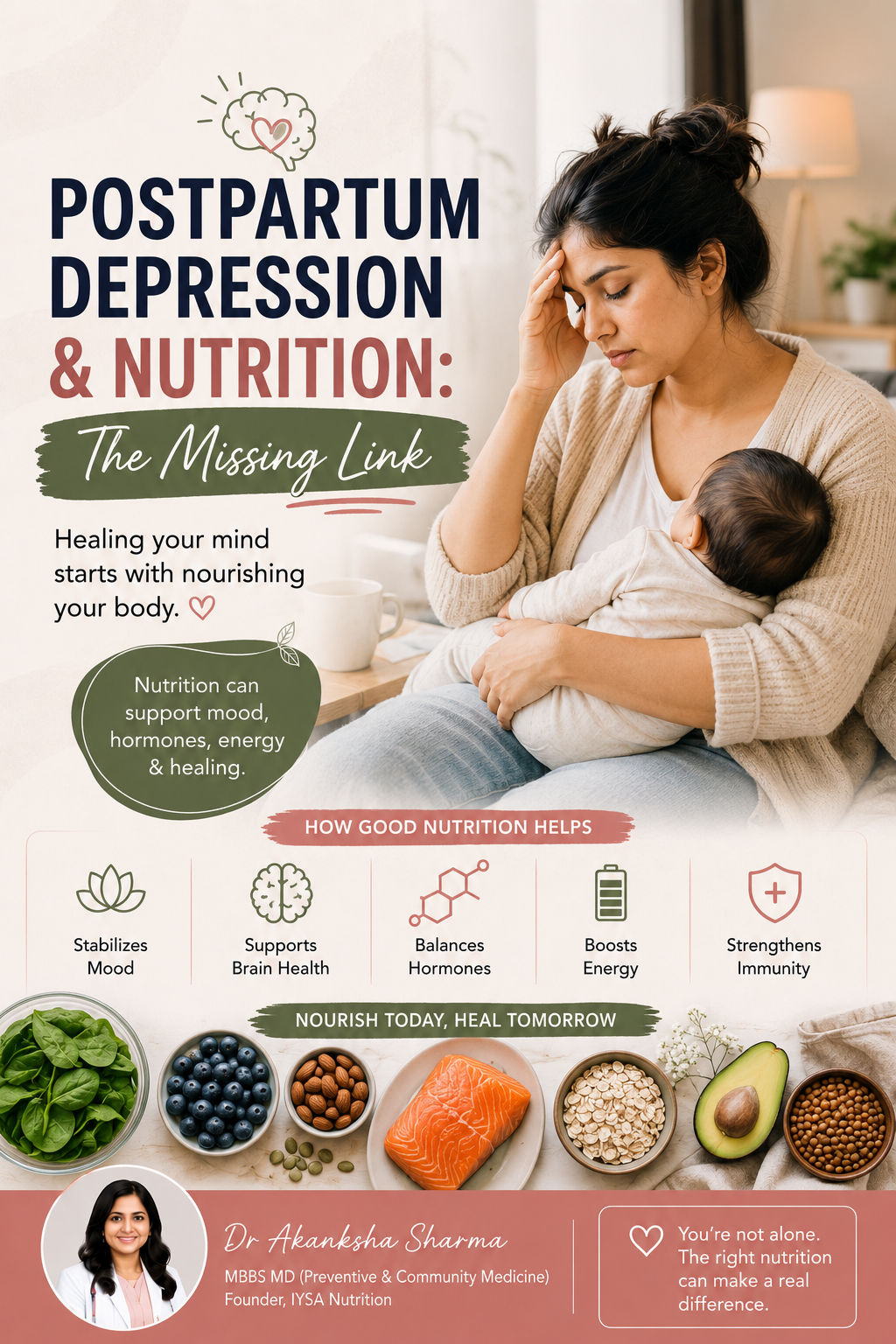
Postpartum depression is one of the most common and most under-reported complications of childbirth. It affects approximately 10–15% of women globally, and in India, where stigma around mental health remains significant and where new mothers face enormous cultural pressure to appear joyful and grateful, the true prevalence is likely much higher. Studies in India have reported postpartum depression rates of 11–23%, depending on the population and screening tools used.
Yet despite how common it is, postpartum depression continues to be discussed almost exclusively in psychological and psychiatric terms, as a condition of hormonal imbalance, life stress, lack of support, and identity disruption. All of these are true and important. But there is a dimension that is almost never discussed in postnatal care settings: the profound nutritional depletion that occurs during pregnancy and the postpartum period, and its direct, mechanistic contribution to postpartum mood disorders.
This is not an alternative to psychiatric care. Women with postpartum depression need appropriate medical support, screening, therapy, and medication where indicated. But nutrition is a modifiable, evidence-supported factor that influences the biochemical environment in which a new mother’s brain is operating. Addressing it is not optional; it is part of comprehensive postnatal care that is currently systematically overlooked.
In this post, I want to explain the nutritional mechanisms clearly, identify the specific deficiencies most associated with postpartum depression, and give Indian new mothers a practical, evidence-grounded guide to eating for mood recovery.
Related reading:
👉Post-partum Depression and the Baby Blues: Causes and Management
👉How to Lose Weight Without Affecting Breastfeeding
The Postpartum Brain: What Is Happening Biochemically
The Hormonal Cliff
In the days following delivery, oestrogen and progesterone levels fall from their pregnancy highs to near-zero. This is one of the most dramatic hormonal shifts the human body undergoes, equivalent, in terms of oestrogen drop, to a sudden surgical menopause. Oestrogen has direct effects on serotonin and dopamine systems; it upregulates serotonin receptors, increases serotonin synthesis, and supports dopamine receptor sensitivity. When oestrogen drops precipitously postpartum, serotonin and dopamine activity decrease in parallel.
This is the neurochemical foundation of postpartum mood vulnerability. What nutritional depletion does is compound this vulnerability by further impairing the body’s ability to synthesise, transport, and utilise these neurotransmitters at exactly the time when they are most needed.
The Nutritional Depletion Reality
By the time a woman delivers, her body has spent nine months prioritising the foetus’s nutritional needs over her own. DHA has been drawn from maternal brain tissue to build the foetal brain. Iron stores have been depleted by the foetal demand and delivery blood loss. Zinc and B vitamins have been transferred across the placenta. Iodine has been diverted to foetal thyroid development. Vitamin D has been used for foetal bone and immune development.
The postpartum woman begins motherhood in a state of significant nutritional debt, and then breastfeeding increases nutritional demands further. Sleep deprivation (which profoundly impairs nutritional metabolism and appetite regulation), reduced time and energy for meal preparation, and in many cases the resumption of household and work responsibilities before nutritional recovery is complete, all compound this depletion.
The result is a brain operating with reduced substrate for neurotransmitter synthesis, impaired cell membrane function, elevated systemic inflammation, and disrupted hormonal signalling, all of which are the biochemical preconditions for depression and anxiety.
👉 Related readings:
The Key Nutritional Deficiencies Linked to Postpartum Depression
1. DHA (Omega-3 Fatty Acid) — The Brain Fat Deficit
DHA is the most abundant structural fat in the human brain. It is incorporated into neuronal cell membranes and affects membrane fluidity, receptor function, neurotransmitter signalling, and neuroinflammation. During pregnancy, maternal DHA is drawn down to supply the foetal brain, a process that directly depletes maternal brain DHA stores.
Multiple studies have found that women with lower plasma DHA levels have higher rates of postpartum depression. A landmark analysis by Hibbeln (2002), published in The Lancet, found a striking inverse correlation between seafood DHA consumption across 22 countries and postpartum depression prevalence. Countries with higher DHA intake (Japan, Singapore, Hong Kong) had significantly lower postpartum depression rates than countries with lower seafood consumption.
The mechanism is multifactorial: DHA reduces neuroinflammation (elevated in postpartum depression), supports serotonin receptor function, and is a structural component of the brain regions most affected in depression. Correcting DHA depletion postpartum is a direct, mechanistically supported intervention for mood support.
Target: 1000–2000 mg of combined EPA+DHA daily postpartum, higher than the pregnancy recommendation, as the therapeutic dose for mood support in postpartum depression research is typically at least 1g EPA per day. Discuss dosing with your doctor.
Best food sources for Indian women postpartum:
- Sardine curry (tarli): 500–800 mg EPA+DHA per serving; eat twice weekly
- Mackerel (bangda) curry: similar omega-3 density; widely available in India and Singapore
- Salmon: higher cost but excellent DHA content; available at Cold Storage and FairPrice in Singapore
- For vegetarian women: an algae-based EPA+DHA supplement (1000–2000 mg combined) is essential, dietary ALA from flaxseeds and walnuts cannot adequately replace preformed DHA postpartum
2. Iron — The Fatigue-Mood Spiral
Iron deficiency is the most common nutritional deficiency among postpartum Indian women, and its relationship with postpartum depression is increasingly well-documented. Iron is required for the synthesis of dopamine and serotonin (as a cofactor for tyrosine hydroxylase and tryptophan hydroxylase, respectively), for energy metabolism in brain cells, and for thyroid hormone synthesis, all directly relevant to mood.
The fatigue, brain fog, emotional blunting, and low motivation of iron deficiency closely mimic and amplify the symptoms of postpartum depression, and the two conditions frequently co-exist. A woman who is told she has postpartum depression but whose ferritin has not been checked may be experiencing a combination of both, and the depressive symptoms will not fully resolve until the iron deficiency is corrected.
A 2012 study by Beard et al. found that iron-deficient women had significantly higher depression scores postpartum, and that iron supplementation, independent of antidepressant treatment, improved mood outcomes. This is a clinically critical finding that should translate into routine postpartum ferritin screening alongside mood assessment.
Action step: Every new mother should have her ferritin (not just haemoglobin) checked at the 6-week postnatal visit. A ferritin below 30 ng/mL is functionally deficient and warrants treatment, ideally ferrous bisglycinate for tolerability.
Iron-rich Indian foods for the postpartum period: Read my post on: Postpartum Hair Loss: The Nutritional Truth Nobody Tells You. The same iron-building strategies apply to mood support.
3. Folate and Vitamin B12 — The Methylation Duo
Folate and Vitamin B12 are both required for a biochemical process called methylation, the process by which methionine is converted to SAMe (S-adenosyl methionine), the body’s primary methyl donor. SAMe is essential for the synthesis of serotonin, dopamine, and melatonin. Without adequate folate and B12, SAMe production is impaired, and neurotransmitter synthesis falls.
Low folate levels have been consistently associated with depression in multiple population studies. Low B12, extremely common in Indian vegetarian women, who have limited dietary sources, is independently associated with depression, cognitive impairment, and fatigue. The combination of low folate and low B12 creates a double hit on the methylation pathway that is particularly damaging to postpartum mood.
Pregnancy depletes both nutrients. If a woman is not consistently supplementing folic acid or consuming B12-rich foods during pregnancy, she enters the postpartum period with depleted methylation capacity, exactly when her brain most needs it.
Best Indian food sources:
- Folate: Masoor dal, moong dal, palak, methi leaves, moringa, chana; eat multiple servings of these daily
- Vitamin B12: Dahi and milk (best vegetarian sources), eggs (100–200% of daily requirement per egg), fish and meat (non-vegetarian); vegetarian women with low dairy intake should supplement B12 actively
4. Zinc — The Neurological Architect
Zinc plays a critical role in hippocampal neurogenesis, BDNF (brain-derived neurotrophic factor) signalling, and glutamate/GABA neurotransmitter balance. Low zinc is consistently associated with depression across multiple population studies, and zinc supplementation has shown antidepressant effects both independently and as an augmentation strategy alongside antidepressant medication in clinical trials.
Postpartum zinc depletion is significant; the foetus accumulates zinc preferentially from maternal stores during pregnancy, and breastfeeding increases zinc requirements by approximately 4 mg/day above baseline. Indian vegetarian women are at particular risk given the lower bioavailability of plant-based zinc.
Best Indian food sources: Pumpkin seeds, til (sesame), rajma, chana, eggs, dahi, chicken and meat.
5. Iodine — The Thyroid-Mood Connection
Postpartum thyroiditis, inflammation of the thyroid gland in the months after delivery, affects approximately 5–10% of women and frequently presents with hypothyroid symptoms, including depression, fatigue, brain fog, and weight gain. This condition is frequently missed because its symptoms overlap almost entirely with normal postpartum exhaustion and postpartum depression.
Adequate iodine supports thyroid function and reduces the severity of thyroid disruption postpartum. Additionally, iodine deficiency itself, independently of frank thyroid disease, impairs thyroid hormone production, which directly affects brain serotonin and dopamine systems and contributes to low mood. Use iodised salt consistently, include dairy and eggs daily, and discuss iodine status with your doctor if thyroid symptoms are prominent.
6. Vitamin D — The Sunlight Deficit
Vitamin D has significant effects on serotonin synthesis, brain development, and immune modulation. Low Vitamin D is associated with higher rates of depression in multiple population studies, including postpartum populations. A 2015 study found that women with Vitamin D deficiency at delivery had significantly higher rates of postpartum depression at 6 weeks postpartum.
New mothers in Singapore, particularly those spending extended periods indoors with a newborn, are at very high risk of Vitamin D deficiency. Testing and correcting Vitamin D postpartum is a simple, safe, and evidence-supported intervention for mood support.
Related reading:
👉Confinement Food vs Medical Nutrition: What’s Best for Singapore Moms?
👉Postpartum Nutrition: Doctor’s Insights for Optimal Recovery
👉7-Day Meal Plan for Postpartum Recovery: Traditional Indian Diet
👉Pregnancy & Postpartum Nutrition: A Doctor-Reviewed Guide
The Gut-Brain Axis: Your Microbiome Affects Your Mood
Approximately 90% of the body’s serotonin is produced in the gut, by enterochromaffin cells in the gut lining, in a process directly influenced by gut microbiome composition. The gut microbiome communicates with the brain through the vagus nerve (the gut-brain axis), the immune system, and the production of short-chain fatty acids that affect brain function and neuroinflammation.
Multiple studies have found significant differences in gut microbiome composition between women with and without postpartum depression, with women experiencing postpartum depression showing lower populations of Lactobacillus and Bifidobacterium species, higher inflammatory bacterial populations, and altered short-chain fatty acid production.
Pregnancy and delivery themselves significantly disrupt the gut microbiome through hormonal changes, dietary disruption during nausea, antibiotic use during delivery (common in caesarean sections and GBS prophylaxis), and the physiological stress of labour. Restoring gut microbiome diversity postpartum is therefore not just a digestive health priority, it is a mood health priority.
Gut-supportive strategies for postpartum mood:
- Daily fermented foods: Plain dahi (the most accessible and culturally familiar probiotic food for Indian women), homemade idli and dosa (fermented batter), kanji (fermented rice water, a traditional postnatal drink in South India and Rajasthan), homemade lassi without sugar
- Prebiotic fibre: Onion, garlic, raw banana, oats, and all dals, these feed beneficial gut bacteria. Aim for 30g of dietary fibre per day.
- Probiotic supplement: A supplement containing Lactobacillus rhamnosus GG and Bifidobacterium longum has the most evidence for mood-related benefit; discuss with your doctor if you want to supplement beyond dietary sources
- Reduce ultra-processed foods: These actively deplete gut microbiome diversity and promote inflammatory bacterial species that worsen both gut and mental health
💛To Download the 7-Day C-Section Recovery Meal Plan (Doctor-Designed), CLICK HERE!
Anti-Inflammatory Eating for Postpartum Mood
Neuroinflammation, inflammation within the brain and nervous system, is increasingly recognised as a central mechanism in depression, including postpartum depression. The postpartum period is characterised by elevated inflammatory markers (IL-6, TNF-alpha, CRP) driven by the physiological stress of delivery, sleep deprivation, and nutritional depletion. Women with higher postpartum inflammatory burden have higher postpartum depression rates.
An anti-inflammatory dietary pattern directly addresses this neuroinflammatory component. Key anti-inflammatory foods for postpartum mood:
- Turmeric with black pepper: Curcumin has demonstrated antidepressant effects in clinical trials; one randomised trial found curcumin supplementation comparable to fluoxetine for mild-to-moderate depression. Add generously to all cooking; consider a standardised curcumin supplement with piperine for therapeutic doses (discuss with your doctor).
- Saffron (kesar): Multiple high-quality clinical trials have found saffron supplementation (30mg per day of dried stigma extract) as effective as low-dose antidepressants for mild-to-moderate depression, with fewer side effects. Traditional Indian postnatal cooking already includes kesar in milk and kheer; this ancient food wisdom has now been validated by clinical trials. A few strands of saffron in warm milk daily is a safe, pleasant, and evidence-supported mood-supportive practice.
- Ashwagandha (Withania somnifera): A well-studied adaptogenic herb with multiple clinical trial evidence for reducing cortisol, improving stress resilience, and supporting mood in anxious, depleted individuals. Particularly relevant for postpartum women experiencing anxiety alongside low mood. Typical dose: 300–600mg of root extract daily. Safe for non-breastfeeding women; discuss with your doctor if breastfeeding, as evidence on breast milk transfer is limited.
- Dark leafy greens: Rich in folate, magnesium, and iron, the three micronutrients most directly relevant to neurotransmitter synthesis, eaten daily
- Whole foods, minimally processed: The Mediterranean dietary pattern, characterised by vegetables, legumes, whole grains, olive oil, nuts, seeds, and fish, has the strongest dietary evidence base for depression prevention and management across multiple meta-analyses
👉Postnatal Depletion Syndrome: The Reason Mums Feel Exhausted
👉Postpartum Constipation: Foods That Help You Heal Faster
The Role of Blood Sugar in Postpartum Mood
Postpartum women are chronically sleep-deprived, and sleep deprivation profoundly disrupts blood glucose regulation, increasing insulin resistance, amplifying cortisol responses, and creating a physiological environment of metabolic stress. Add to this the tendency of exhausted new mothers to skip meals, eat irregularly, and reach for high-sugar convenience foods, and the result is a pattern of blood glucose instability that directly worsens mood, anxiety, and emotional regulation.
The brain consumes approximately 20% of the body’s glucose supply. Glucose crashes, driven by insulin spikes from high-sugar foods followed by rapid drops, cause irritability, anxiety, tearfulness, cognitive impairment, and emotional dysregulation that are indistinguishable from and compound the symptoms of postpartum depression.
Practical blood glucose strategies for postpartum mood:
- Never skip meals, even if it means eating a handful of almonds and a banana while nursing
- Include protein and fat at every meal to slow glucose absorption
- Keep easy, stable-glucose snacks accessible: soaked almonds, dates, dahi, peanut butter on a rice cake, roasted chana, cheese cubes
- Reduce sugary drinks, sweet chai, and packaged biscuits, particularly in the first weeks when exhaustion-driven cravings are strongest
- Eat regularly every 3–4 hours, even if you are not hungry; blood glucose stability is more important than appetite during the acute postpartum period
The Cultural Context: Traditional Indian Postnatal Food and Mental Health
Traditional Indian postnatal dietary practices, the 40-day “confinement” period observed in many Indian families, with its emphasis on warming, nourishing foods, contain extraordinary nutritional wisdom that directly addresses the mood-relevant nutritional gaps of the postpartum period.
- Methi laddoos: iron, folate, magnesium, and galactagogue properties in one food
- Gond (edible gum) halwa or laddoos: energy-dense, mineral-rich, traditionally given to restore strength and warmth postpartum
- Ragi porridge: iron, calcium, essential amino acids, including tryptophan (serotonin precursor)
- Haldi doodh (turmeric milk): curcumin’s antidepressant and anti-inflammatory effects; calcium and iodine from milk
- Kesar (saffron) in milk and kheer: direct evidence for mood support through saffron’s antidepressant mechanisms
- Ajwain (carom seed) water: digestive support that reduces bloating and gut discomfort, indirectly supporting the gut-brain axis
- Dry fruits and nuts: dates, almonds, cashews, walnuts have iron, zinc, magnesium, omega-3, and tryptophan
When families maintain these traditional postnatal feeding practices, they are, whether they know it or not, providing neurochemically supportive nutrition during the most vulnerable period of a new mother’s mental health. The tragedy is that these practices are increasingly abandoned in modern urban households. Restoring them is not regression; it is evidence-based postnatal care.
Related reading:
👉Fourth Trimester Care in Singapore: What Hospitals Don’t Cover (and What It Really Costs)
If you’re unsure whether what you’re feeling is normal, structured postpartum support can make a huge difference.
👉New mom? Book a complimentary 20-minute support call
A Sample One-Day Mood-Supportive Meal Plan for New Mothers (Indian)
- On waking: A few strands of saffron in warm water or milk. Take your postnatal supplements with a small amount of food.
- Breakfast: Ragi porridge with a teaspoon of jaggery, a teaspoon of ghee, and a pinch of cardamom + one egg (any style) + a glass of warm milk with turmeric and black pepper. (Iron, tryptophan, choline, calcium, curcumin.)
- Mid-morning: One methi or gond laddoo + 5–7 walnuts (omega-3) + a glass of coconut water
- Lunch: A generous cup of thick masoor dal + palak sabzi with garlic and lime + 1–2 jowar rotis + a bowl of dahi. (Iron, folate, zinc, B12, probiotics.)
- Afternoon: A cup of warm milk with kesar (saffron) — the traditional Indian mood tonic. A small square of 70%+ dark chocolate. (Saffron antidepressant compounds, magnesium from dark chocolate.)
- Dinner: Sardine or mackerel curry with half a cup of brown rice + moringa sabzi or drumstick dal + plain chaas. (EPA+DHA for neuroinflammation, iron, calcium, probiotics.) For vegetarians: Rajma curry with the same accompaniments; take algae DHA supplement with dinner.
- Before bed: Warm ashwagandha milk, one teaspoon of ashwagandha churna in warm milk (discuss with doctor if breastfeeding). (Cortisol reduction, stress resilience, sleep quality.)
- Supplements (discuss with your doctor): Omega-3 (fish oil or algae, 1g EPA+DHA minimum), Iron (if ferritin is low), Vitamin D 2000 IU, Vitamin B12 (especially for vegetarians), Folate continuation, Zinc 15–25mg
👉Returning to Work After Maternity: How to Keep Up Nutrition
When to Seek Help: This Is Not Just About Nutrition
Postpartum depression is a medical condition that requires professional care. Nutrition is a supportive, evidence-based intervention, not a substitute for appropriate assessment and treatment. Please seek help from your doctor or a mental health professional promptly if you experience:
- Persistent low mood lasting more than two weeks
- Loss of interest or pleasure in your baby or activities you usually enjoy
- Feelings of worthlessness, guilt, or that you are a bad mother
- Anxiety, panic attacks, or intrusive thoughts about harm to yourself or your baby
- Inability to sleep even when the baby is sleeping
- Difficulty eating or taking care of yourself
- Thoughts of harming yourself or others, seek immediate help
In Singapore, postpartum depression screening is offered at KKH, NUH, and SGH postnatal clinics using the Edinburgh Postnatal Depression Scale. Your family doctor can also screen and refer. In India, NIMHANS (National Institute of Mental Health and Neurosciences) and state mental health helplines provide support. iCall (022-25521111) and Vandrevala Foundation (1860-2662-345) are accessible mental health helplines in India.
You are not weak for struggling. You are not a bad mother. You are depleted, nutritionally, hormonally, and emotionally. Help is available, and you deserve it.
Explore my NURTURE: Mother & Baby Fourth Trimester Program
A doctor-led, evidence-based program supporting healing, feeding, and emotional recovery.
Frequently Asked Questions
Can eating better actually help postpartum depression?
Yes, with appropriate context. Nutritional interventions, particularly omega-3 supplementation, iron correction, and a whole-food anti-inflammatory dietary pattern, have demonstrated evidence for improving postpartum mood outcomes in clinical research. These effects are meaningful but generally modest on their own; nutrition is most powerful as a component of a comprehensive approach that also includes appropriate psychological support, adequate rest, social support, and medication where clinically indicated. Nutrition does not cure postpartum depression, but it materially improves the biochemical environment in which a new mother’s brain is functioning, and addressing deficiencies is always appropriate.
How quickly will I notice mood improvement from dietary changes?
Iron correction typically produces energy and mood improvements within 4–8 weeks of consistent treatment. Omega-3 incorporation into brain cell membranes takes 6–12 weeks of consistent supplementation before the full neurological effect is apparent. Blood glucose stabilisation and gut microbiome improvements from dietary changes can produce noticeable effects within 2–4 weeks. Be patient with yourself; these are gradual biochemical restorations, not overnight cures. If mood is severely impaired, please do not wait for nutritional interventions alone to work — seek professional support in parallel.
Is it safe to take omega-3 supplements while breastfeeding?
Yes, omega-3 supplementation at doses of 1–3g per day is safe and beneficial during breastfeeding. Higher maternal DHA intake increases breast milk DHA, benefiting infant brain development. Fish oil supplements should be sourced from reputable, contaminant-tested brands. For vegetarian women, algae-based omega-3 (EPA+DHA combined) is a safe and effective alternative.
My mother-in-law says I should not eat cold food postpartum. Is this true?
Traditional Indian postnatal practices often emphasise warm, cooked foods, partly for practical reasons (warm foods are more digestible and comforting in the postpartum period) and partly based on Ayurvedic concepts of vata balance after delivery. From a clinical nutrition perspective, there is no specific harm from cold foods postpartum. However, the emphasis on warm, cooked, easily digestible foods in traditional practice is sound; these are typically easier on the postpartum digestive system, which can be sluggish due to progesterone and the physical demands of delivery and recovery. The specific foods that are most nourishing postpartum: dal, ragi, khichdi, warm milk, methi preparations, are all traditionally consumed warm, and there is nutritional wisdom in this practice.
I had a caesarean section. Does this affect my nutritional needs postpartum?
Yes, in several ways. Caesarean section involves significant blood loss (typically higher than vaginal delivery), increasing the urgency of iron repletion. It also typically involves antibiotic use during the procedure, which disrupts the gut microbiome significantly, making probiotic-rich foods and fermented foods even more important in the weeks following a C-section. Protein requirements for tissue healing are also higher after major surgery. Additionally, pain medication used postpartum can cause constipation, making adequate fibre and hydration particularly important. The nutritional principles outlined in this guide apply with greater urgency for women recovering from caesarean section.
How Structured Fourth Trimester Care Helps
A structured program provides:
-
Medical safety checks
-
Nutrition & lifestyle guidance
-
Emotional health screening
-
Feeding and growth monitoring
-
Weekly check-ins during a vulnerable period
👉 Need guided support through the fourth trimester?
Explore the NURTURE: Mother & Baby Fourth Trimester Program
A doctor-led, evidence-based program supporting healing, feeding, and emotional recovery.
🌸Or start by booking your 20-minute complimentary support call. CLICK HERE!
The Bottom Line
Postpartum depression has a nutritional dimension that is consistently overlooked in clinical settings and public health messaging. The depleted new mother, exhausted, oestrogen-crashed, iron-deficient, DHA-depleted, zinc-insufficient, and gut-dysbiosed, is operating a brain that is biochemically compromised at exactly the moment when the emotional demands of new motherhood are at their highest.
Nutrition cannot fix everything. But restoring DHA, iron, folate, B12, zinc, Vitamin D, and gut microbiome health, through the evidence-based, culturally grounded strategies in this guide, meaningfully improves the neurochemical environment and gives a new mother’s brain the raw materials it needs to function, heal, and recover.
Traditional Indian postnatal food wisdom, methi laddoos, kesar milk, ragi porridge, haldi doodh, gond ka halwa, is not old-fashioned. It is the original evidence-based postnatal nutritional protocol, validated by modern neuroscience. Restore it. Add it back. And seek the professional support you deserve alongside it.
Disclaimer: This article is for educational purposes only. Postpartum depression is a medical condition requiring professional assessment and treatment. If you are experiencing postpartum depression symptoms, please seek help from a qualified healthcare provider. This article does not substitute for medical care.
References:
- Hibbeln JR. Seafood consumption, the DHA content of mothers’ milk and prevalence rates of postpartum depression. J Affect Disord. 2002;69(1-3):15-29. PubMed
- Beard JL et al. Maternal iron deficiency anemia affects postpartum emotions and cognition. J Nutr. 2005;135(2):267-272. PubMed
- Sharifan A et al. Saffron supplementation for major depressive disorder. J Affect Disord. 2019. PubMed
- Lopresti AL et al. Curcumin and major depression: a randomised, double-blind, placebo-controlled trial. J Affect Disord. 2014;167:368-375. PubMed
- ICMR-NIN Expert Group. Recommended Dietary Allowances for Indians. 2020. nin.res.in

Akanksha Sharma
Dr Akanksha Sharma (MBBS, MD) is a physician and women’s health nutrition specialist, and the founder of IYSA Nutrition. She provides evidence-based, doctor-led nutrition guidance for pregnancy, postpartum recovery, PCOS, child nutrition, and family health, helping women make calm, informed decisions about their health and their children’s well-being.