👉The Insulin Reset: A Women’s Guide
What Is Uric Acid and Why Does It Rise?
Uric acid is the end product of purine metabolism, the breakdown of purine-containing compounds found in DNA, RNA, and dietary foods. When purines are broken down, xanthine oxidase converts them to uric acid, which is excreted primarily through the kidneys. Hyperuricemia occurs when uric acid production exceeds renal excretion; approximately two-thirds of hyperuricemia cases are due to underexcretion (impaired kidney uric acid clearance) and one-third due to overproduction (excess dietary or endogenous purine load).
At high enough serum concentrations (typically above 420 µmol/L in Singapore laboratory reference ranges), uric acid can crystallise as monosodium urate crystals in joints, triggering the intensely painful inflammatory arthritis of a gout attack, typically affecting the big toe (podagra), ankle, or knee first. Between attacks, crystal deposition continues silently, which is why management between attacks is as important as managing the acute flare.
A comprehensive review of the role of diet in hyperuricemia and gout, published in PMC, specifically noted an important nuance: the conventional low-purine dietary approach, focusing on protein restriction, can worsen gout’s cardiometabolic comorbidities by leading to compensatory higher consumption of carbohydrates, including fructose, and fats, which themselves raise uric acid. This means the standard advice of “eat low protein, avoid all meat and dal” is both nutritionally inadequate and potentially counterproductive.
👉Blood Sugar After 40 in Indian Women — insulin resistance and uric acid are closely linked
The Evidence: What Actually Raises Uric Acid
A systematic review of lifestyle factors and dietary patterns on serum uric acid levels (2025, Journal of Health, Population and Nutrition) identified the following as the strongest evidence-based drivers of hyperuricemia:
HIGH EVIDENCE — Significantly Raises Uric Acid
- Alcohol, especially beer: Alcohol impairs renal uric acid excretion by competing for the same excretion pathway. Beer is additionally high in purines from malt. Even moderate regular alcohol intake consistently raises serum uric acid and significantly increases gout flare risk. This applies to all forms of alcohol.
- Fructose and sugar-sweetened beverages: Fructose metabolism directly stimulates purine catabolism and uric acid production through a specific enzymatic pathway, making it one of the most significant dietary drivers of hyperuricemia, independent of purine content. Regular soft drinks, fruit juices, sugarcane juice at hawker centres, and high-fructose corn syrup-containing packaged foods all raise uric acid through this mechanism. This is often the most underappreciated driver in Singapore Indian diets.
- Red meat and organ meats: High in animal purines with high bioavailability, the most direct dietary purine source. Organ meats (liver, kidney, tripe) carry the highest purine load of any commonly consumed food.
- Certain seafood, particularly shellfish: Prawns, crab, mussels, clams, and anchovies are high-purine seafoods widely consumed at Singapore hawker centres. Important nuance: not all seafood is equally high in purines. Fish rich in omega-3 fatty acids (salmon, mackerel, sardines) carry lower gout risk despite containing purines, as omega-3s may independently reduce gout inflammation.
LOWER EVIDENCE THAN ASSUMED — Does Not Significantly Raise Uric Acid
- High-purine vegetables: Multiple studies, including those reviewed by the Mayo Clinic and systematic meta-analyses, consistently show that vegetables high in purines, asparagus, spinach, peas, cauliflower, and mushrooms do NOT raise gout risk. The bioavailability of purines from plant sources is significantly lower than from animal sources, and plant foods contain co-compounds that may actually protect against gout. Indian vegetarians are frequently incorrectly advised to avoid spinach, dal, and other legumes entirely, this is not evidence-based.
- Dal and legumes: A finding that surprises many patients: legume intake does not consistently raise serum uric acid or gout risk in population studies. While dal and legumes contain moderate purines, their overall effect in dietary pattern studies is neutral to beneficial — likely because they displace higher-purine animal proteins and their fibre content supports renal uric acid excretion. Avoiding dal entirely is both nutritionally harmful (removes the primary protein source for Indian vegetarians) and not supported by evidence.
- Tofu and soy: Population studies in Asian populations find soy food consumption is not associated with increased gout risk, despite soy’s moderate purine content.
👉Gut Health and the Indian Diet — emerging evidence on gut microbiome and uric acid metabolism
👉Healthiest Hawker Choices in Singapore — navigating Singapore’s food courts with high uric acid
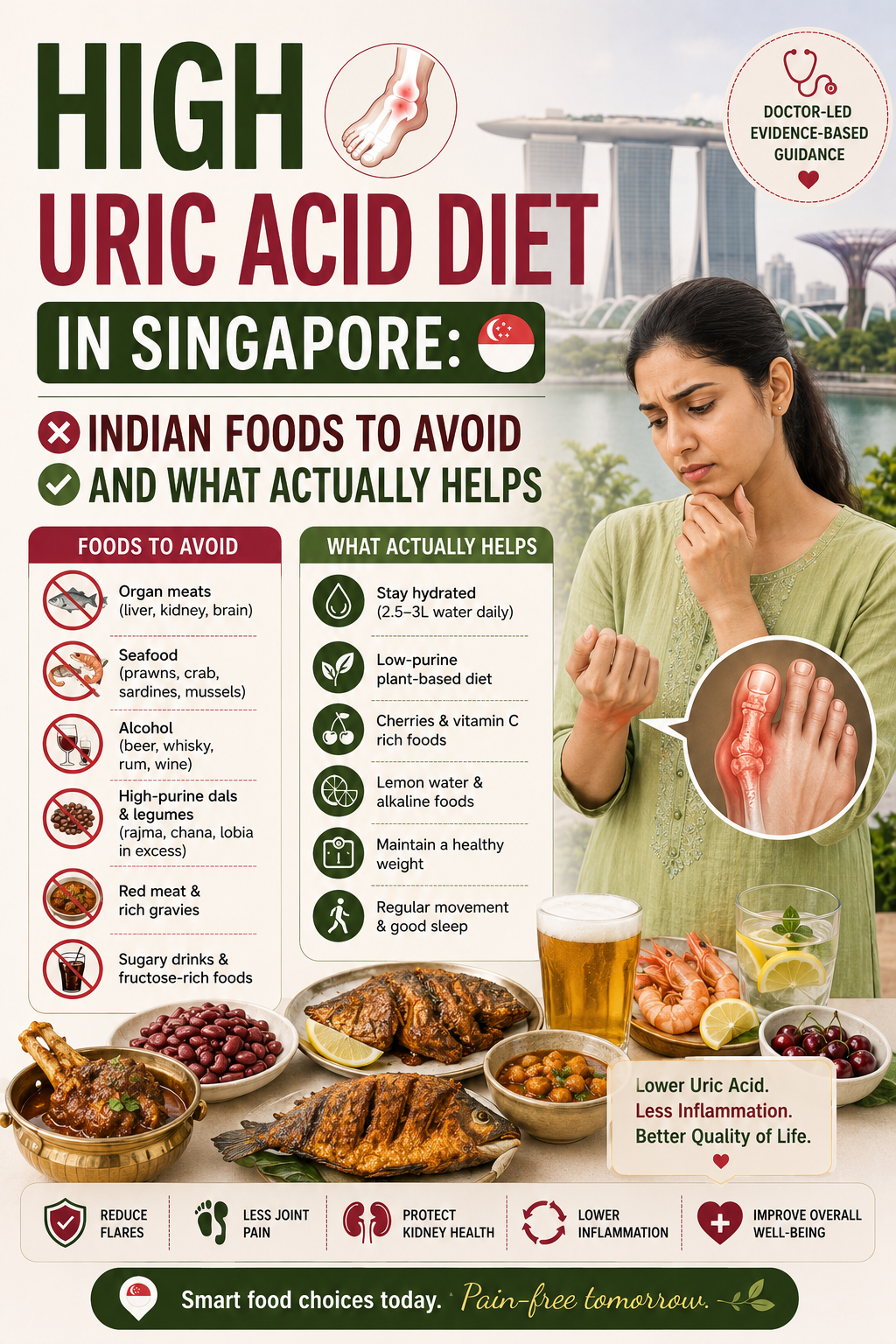
The Singapore-Specific High Uric Acid Food Guide
Avoid or Strictly Limit
| Food/Drink | Why | Singapore Context |
|---|---|---|
| Beer, spirits, wine | Impairs uric acid excretion + beer adds purines | Common at kopitiams, hawker centres, social events |
| Sugarcane juice | High fructose, directly stimulates uric acid production | Very common at Singapore hawker centres |
| Packaged fruit juices, cola, 100-plus | Fructose and sugar → uric acid production | Daily consumption in many Singapore households |
| Prawns, crab, clams, mussels | High-purine shellfish | Extremely common at Singapore seafood restaurants and hawker centres: black pepper crab, chilli crab, prawn noodles |
| Organ meats (liver, kidney, tripe) | Highest-purine foods available | Available at hawker centres in soups and stir-fries |
| Anchovies/ikan bilis | Very high purine density | Used extensively in Singapore cooking, nasi lemak topping, soup stock, sambal |
| Red meat in large amounts | Animal purines, high bioavailability | Mutton curry, beef rendang, portion reduction rather than elimination |
Eat Freely — Evidence Does Not Support Restriction
- All dal and legumes: masoor, moong, toor, rajma, and chana not evidence-based to restrict
- All vegetables including spinach, peas, cauliflower, asparagus, mushrooms; contrary to common advice, plant purines do not raise gout risk
- Tofu and soy: population data in Asian populations is reassuring
- Whole grains: jowar, bajra, brown rice, oats
- Eggs: low purine, good protein, safe for hyperuricemia
- Dairy: plain dahi, milk, paneer; dairy consumption is consistently associated with LOWER uric acid in epidemiological studies; the lactic acid in dairy appears to enhance uric acid excretion
Evidence-Based Foods That Lower Uric Acid
- Plain dahi and milk: Among the most consistently protective dietary factors against hyperuricemia and gout in population studies, both reduce uric acid levels and gout attack frequency
- Cherries: Several studies have found cherry consumption reduces gout attack frequency; the proposed mechanism involves anthocyanin-mediated reduction of uric acid and inflammatory markers. Available at Cold Storage and FairPrice Finest in Singapore.
- Water — adequate hydration: The kidneys excrete uric acid in urine; adequate daily fluid intake (2.5–3 litres daily) directly supports uric acid excretion and reduces crystal formation risk. Plain water is the most important single dietary habit for hyperuricemia management.
- Coffee: Multiple large epidemiological studies have found regular coffee consumption is associated with lower serum uric acid and reduced gout risk, including decaffeinated coffee, suggesting the effect is not caffeine-mediated. This does not mean adding sugar to coffee is beneficial; black or minimally sweetened coffee is the relevant comparison.
- Vitamin C: Several studies found Vitamin C supplementation (500mg daily) modestly reduces serum uric acid by increasing renal uric acid excretion. Guava, amla, and lime, all common in Indian diets, are excellent natural Vitamin C sources.
Metabolic Nutrition · Singapore
High uric acid alongside other metabolic concerns?
Hyperuricemia rarely travels alone; it frequently coexists with insulin resistance, hypertension, and metabolic syndrome. I work with Indian adults in Singapore to address the full metabolic picture through a personalised nutrition protocol that accounts for all these interacting factors.
👉 Book a FREE 20-Minute Metabolic Health Audit Call
Dr Akanksha Sharma · MBBS MD · Singapore & worldwide via Zoom
Navigating Singapore’s Food Environment With High Uric Acid
At the Hawker Centre
- Choose: Fish soup (non-shellfish) with minimal noodles, vegetable-heavy economy rice with egg and tofu, plain congee with egg and fish fillet, ban mian with vegetables, chapati with dhal at Indian stalls (dal does not raise uric acid)
- Avoid: Prawn noodles, seafood bee hoon, chilli crab, black pepper crab, laksa with prawns, organ meat soups, beer at the end of a hawker meal
- Drink: Plain water or barley water (unsweetened; Singapore’s kopitiam barley is usually sweetened; ask for it without sugar) rather than sugarcane juice or fruit juice
At Indian Restaurants in Singapore (Little India, Serangoon Road)
- Choose: Dal-based dishes freely, vegetable curries, paneer preparations, fish curry (salmon, snapper), tandoori chicken, plain lassi (dairy reduces uric acid)
- Limit: Prawn curry, mutton liver, large portions of mutton or beef in one sitting, sweet drinks including rose syrup lassi
👉Diabetes in Singapore Women: Early Signs You Shouldn’t Ignore
The Metabolic Connection: Why Uric Acid Is a Metabolic Syndrome Marker
A review in PMC specifically noted that hyperuricemia and gout are both associated with adverse consequences of the metabolic syndrome, mediated by insulin resistance. This connection is clinically significant for Indian adults in Singapore: elevated uric acid frequently coexists with elevated triglycerides, low HDL, elevated fasting glucose, and central adiposity, the components of metabolic syndrome (Metabolic Syndrome in South Asian Women — uric acid as part of the broader metabolic picture). Addressing insulin resistance through the dietary strategies in that post (low-glycaemic carbohydrates, protein at every meal, fasting, reduced sugar) also directly benefits uric acid levels through improved renal uric acid clearance and reduced fructose-driven uric acid production.
In other words: the diet that is best for your uric acid is largely the same diet that is best for your blood sugar, your blood pressure, and your metabolic health. The specific additions are: dairy daily, adequate hydration, reduced alcohol and fructose, and caution with shellfish at Singapore’s hawker centres.
👉Fitness After 40: Why It Feels Different (And What To Do)
👉The Singapore Woman’s Essential Guide to Early Diabetes Detection
Frequently Asked Questions
My uric acid is high but I have no pain. Should I still change my diet?
Yes, asymptomatic hyperuricemia (elevated uric acid without gout attacks) still carries long-term risk of gout attacks, kidney stones, and cardiovascular complications. The dietary changes in this post are low-risk and nutritionally beneficial regardless of whether you have had a gout attack — and implementing them before the first attack is considerably more comfortable than trying to change diet in the middle of one. Discuss the target uric acid level with your GP or rheumatologist.
Can I eat dal if I have high uric acid?
Yes, the evidence from population studies consistently shows that legumes, including dal, do not raise gout risk despite their moderate purine content. This is because plant purines are less bioavailable than animal purines, and the overall dietary pattern of dal consumption typically displaces higher-risk animal proteins. Avoiding dal would remove the primary protein, iron, zinc, and folate source from Indian vegetarian diets without meaningful benefit to uric acid levels.
I had a gout attack after eating mutton at a family function. Is mutton always off-limits?
Not necessarily always off-limits, but portion and frequency matter considerably. A large serving of mutton curry in a single sitting represents a significant purine load that can trigger a flare in someone predisposed to gout. A smaller portion (100–150g rather than 300g) eaten as part of a meal that includes dal, vegetables, and rice, and accompanied by adequate water rather than beer, is a more manageable situation. Total abstinence from mutton is not required by evidence; portion control and alcohol avoidance at the same occasion are the more important interventions.
Is low-fat dairy better than full-fat dairy for uric acid?
The evidence specifically implicating low-fat dairy in uric acid reduction is stronger than for full-fat dairy; several studies found low-fat milk and low-fat yoghurt produced greater uric acid reduction than full-fat versions. However, the practical recommendation is to include dairy daily in whatever form fits your overall dietary pattern, as the overall association between dairy consumption and lower uric acid is consistent regardless of fat content.
The Bottom Line
High uric acid management in Singapore’s Indian population requires evidence-based dietary guidance, not the oversimplified “avoid all protein and dal” advice that removes nutritionally critical foods without meaningful benefit to uric acid levels. The evidence is clear: eliminate alcohol (especially beer), dramatically reduce fructose and sugar-sweetened drinks (including sugarcane juice at hawker centres), reduce shellfish, eat dairy daily, stay well hydrated, and continue eating dal freely. These changes address the actual drivers of hyperuricemia while preserving the nutritional adequacy of the Indian diet, and they overlap substantially with the broader metabolic syndrome dietary interventions that Indian adults in Singapore benefit from regardless of their uric acid status.
Metabolic Health · Singapore
High Uric Acid Is Rarely the Only Metabolic Issue.
Let’s Address the Full Picture.
Hyperuricemia, insulin resistance, blood pressure, and metabolic syndrome frequently coexist in Indian adults in Singapore. A personalised nutrition audit addresses all the interconnected drivers, not just the uric acid number in isolation.
Not sure where to start? Let’s talk — 20 minutes, your numbers, your next step. 👉 Book a FREE 20-Minute Metabolic Health Audit Call Dr Akanksha Sharma · MBBS MD · Preventive Medicine Physician · Singapore & worldwide via Zoom |
Disclaimer: This article is for educational purposes only. High uric acid and gout require medical assessment and management by a qualified physician or rheumatologist. Do not discontinue urate-lowering medication without discussing with your doctor.
References:
- Burden and management of gout in a multi-ethnic Asian cohort — Singapore. PubMed. PMID 31758246. PubMed
- The Role of Diet in Hyperuricemia and Gout. PMC. PMC Full Text
- Impact of lifestyle factors and dietary patterns on serum uric acid and gout: systematic review. J Health Popul Nutr. 2025. Full Text
- Dietary pattern and risk of hyperuricemia: updated systematic review and meta-analysis. PMC. 2024. PMC Full Text

Akanksha Sharma
Dr Akanksha Sharma (MBBS, MD) is a physician and women’s health nutrition specialist, and the founder of IYSA Nutrition. She provides evidence-based, doctor-led nutrition guidance for pregnancy, postpartum recovery, PCOS, child nutrition, and family health, helping women make calm, informed decisions about their health and their children’s well-being.