Written & reviewed by Dr Akanksha Sharma, MBBS, MD (Preventive & Community Medicine) | Founder, IYSA Nutrition, Singapore
Thyroid disorders are among the most common endocrine conditions affecting Indian women. Estimates suggest that approximately 1 in 10 Indian women has some form of thyroid dysfunction, with hypothyroidism (underactive thyroid) being the most prevalent. Yet despite how common it is, the nutrition advice that most women receive is either vague (“avoid goitrogens”), unnecessarily restrictive, or outright contradictory.
I want to address this directly and clearly, because the confusion around thyroid and diet has real consequences. Women are avoiding nutritionally valuable foods like broccoli, spinach, and soya based on fears that are not well-supported by evidence at normal dietary doses. At the same time, they are not prioritising the nutrients that genuinely matter for thyroid function like iodine, selenium, zinc, iron, and vitamin D.
This post gives you the evidence-based truth about what to eat and what to genuinely be cautious about, in the context of Indian food, Indian dietary patterns, and the specific nutritional vulnerabilities of Indian women with thyroid conditions.
👉Hypothyroidism and Weight Gain: Why Indian Women in Singapore Struggle More
How the Thyroid Works — A Brief Primer
Your thyroid is a butterfly-shaped gland at the base of your neck that produces two key hormones: thyroxine (T4) and triiodothyronine (T3). These hormones regulate your metabolic rate — essentially the speed at which every cell in your body operates. They affect body temperature, heart rate, energy levels, bowel motility, mood, cognition, menstrual cycle regularity, fertility, hair growth, and skin health. When thyroid hormone production is too low (hypothyroidism), everything slows down. When it is too high (hyperthyroidism), everything accelerates.
The production of thyroid hormones depends on a nutritional supply chain:
- Iodine is the essential raw material — thyroid hormones are literally made of iodine atoms attached to the amino acid tyrosine
- Tyrosine (an amino acid from dietary protein) forms the backbone of the hormone molecule
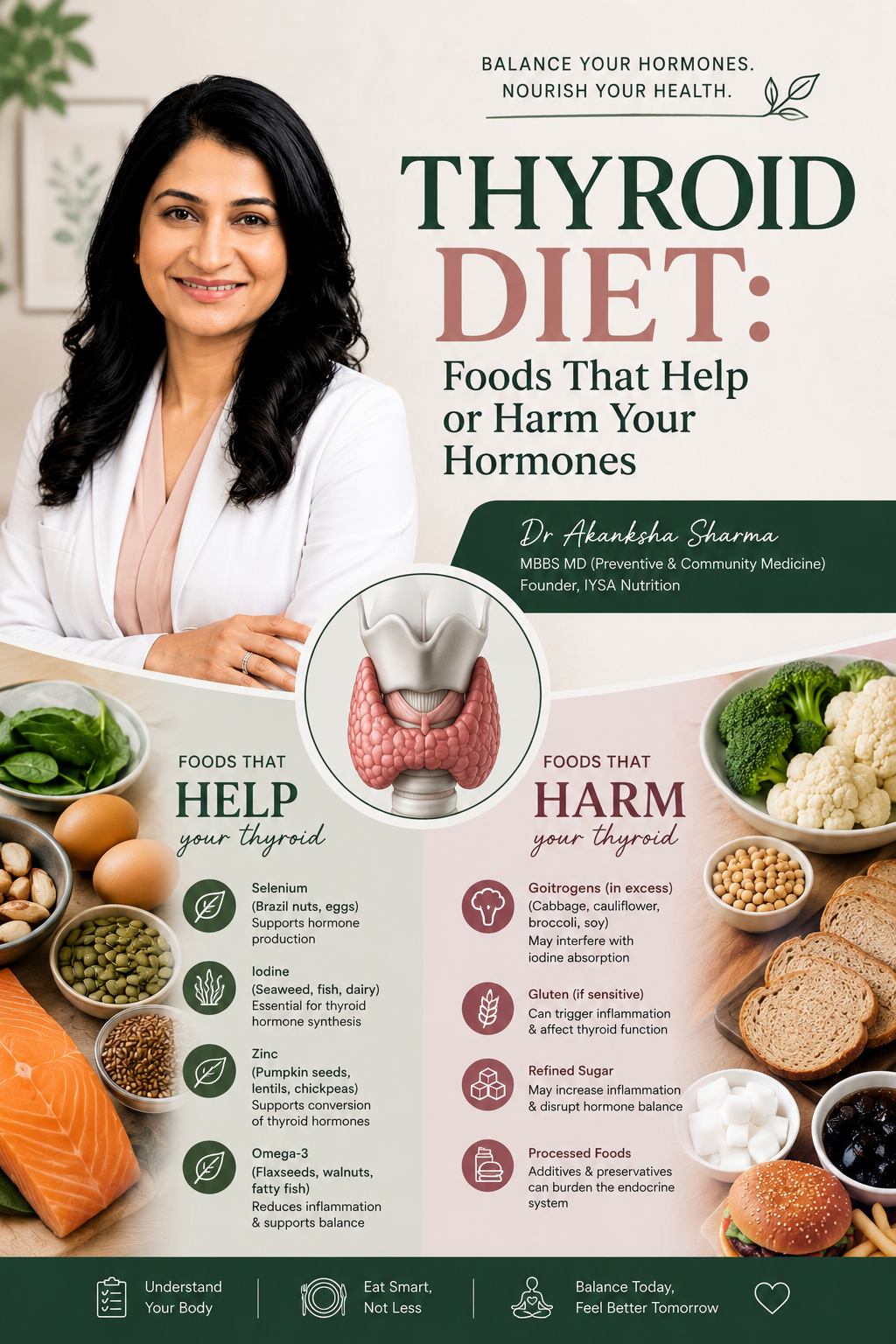
- Selenium is required by the enzymes that convert inactive T4 into active T3 in peripheral tissues
- Zinc is required for the synthesis of TSH (thyroid-stimulating hormone) and for T3 receptor function
- Iron is required for the enzyme (thyroid peroxidase) that incorporates iodine into the hormone molecule
- Vitamin D modulates thyroid autoimmune activity — low Vitamin D is consistently associated with higher rates of Hashimoto’s thyroiditis
Understanding this nutritional dependency makes it clear why diet matters — not in a vague “eat healthy” sense, but in specific, mechanistic ways.
👉Vitamin D Deficiency in Singapore: Why You’re Still Low Despite the Sun
👉Postpartum Thyroiditis: What New Mums Must Know About Diet
The Most Common Thyroid Conditions in Indian Women
Hypothyroidism
The thyroid produces insufficient hormone. Symptoms include fatigue, weight gain, cold intolerance, constipation, dry skin, hair thinning, brain fog, depression, irregular or heavy periods, and a puffy face. In India, iodine deficiency was historically the most common cause; since the introduction of iodised salt, the most common cause is now Hashimoto’s thyroiditis, an autoimmune condition.
Hashimoto’s Thyroiditis
An autoimmune condition in which the immune system attacks the thyroid gland. It is the most common cause of hypothyroidism in India and worldwide. It is diagnosed by the presence of anti-TPO (thyroid peroxidase antibodies) or anti-thyroglobulin antibodies on a blood test. Hashimoto’s has a strong dietary and gut health dimension; intestinal permeability, nutrient deficiencies, and inflammatory foods all influence autoimmune activity. Dietary intervention has the strongest evidence base in this condition.
Subclinical Hypothyroidism
TSH is elevated, but T4 is normal. Many women in this range experience significant symptoms but are told they do not need medication. This is the stage where dietary intervention is most impactful; optimising thyroid-supporting nutrients can prevent progression to overt hypothyroidism in many cases.
Hyperthyroidism and Graves’ Disease
The thyroid is overactive. Dietary considerations are different. Limiting iodine is more relevant, and caloric intake needs to be higher to compensate for the elevated metabolic rate. This post focuses primarily on hypothyroidism and Hashimoto’s, as these are more common among Indian women.
Nutrients That Support Thyroid Function: What to Prioritise
1. Iodine — The Foundation
Without adequate iodine, your thyroid cannot produce hormones, period. The recommended daily intake for non-pregnant adults is 150 µg/day; during pregnancy, it rises to 220 µg/day; during breastfeeding, 290 µg/day.
India has made significant progress in iodine status through the Universal Salt Iodisation programme, but iodine deficiency remains a concern in certain populations, particularly those who use non-iodised rock salt, Himalayan pink salt, or sea salt (none of which are reliably iodised), those who eat very little dairy or seafood, and those in certain iodine-deficient geographic regions.
Important nuance for women on thyroid medication: If you have Hashimoto’s thyroiditis, very high iodine intake can actually worsen autoimmune activity in some individuals. The goal is adequate iodine, not excess. Using iodised salt in cooking and eating dairy regularly is typically sufficient; high-dose iodine supplements are not appropriate without medical guidance.
Best Indian food sources of iodine:
- Iodised table salt — the most reliable daily source; use consistently in cooking
- Whole milk and dahi — dairy from commercially raised cows is typically a good iodine source
- Eggs — approximately 25–50 µg per egg, depending on the hen’s diet
- Seafood — fish and prawns are naturally iodine-rich
- Seaweed — extremely high in iodine; consume in moderation (excessive seaweed intake can actually impair thyroid function)
2. Selenium — The Conversion Enzyme
Selenium is required by the deiodinase enzymes that convert T4 (inactive) into T3 (active). Without adequate selenium, your body may have normal T4 levels but inadequate active T3 — you can be symptomatic despite “normal” blood tests if selenium deficiency is impairing T4-to-T3 conversion. Selenium also has a direct anti-inflammatory and antioxidant role in the thyroid gland itself.
Selenium deficiency is common in India because Indian soils are selenium-depleted in many regions, meaning crops grown there contain less selenium. Multiple Indian studies have found low selenium status among women with Hashimoto’s, and selenium supplementation trials have shown reductions in anti-TPO antibody levels.
Best food sources of selenium:
- Brazil nuts: 2 Brazil nuts daily provide approximately 100–200 µg of selenium — meeting the entire daily requirement. This is the most efficient food source. Available at Cold Storage and speciality stores in Singapore. Note: do not consume more than 3–4 daily — excess selenium is toxic.
- Eggs — approximately 15 µg per egg
- Fish and seafood — tuna, sardines, and prawns are good sources
- Chicken and meat — good selenium sources for non-vegetarians
- Sunflower seeds — approximately 25 µg per 30g
- Whole grains — selenium content varies by soil quality
3. Zinc — TSH Signalling and T3 Receptor Function
Zinc is required for the synthesis of TSH in the pituitary, for T4 to T3 conversion, and for the function of thyroid hormone receptors in target cells. Zinc deficiency impairs thyroid hormone production at multiple levels. Indian vegetarian diets are particularly at risk of zinc insufficiency because plant-based zinc has lower bioavailability due to phytate binding.
Best Indian food sources of zinc:
- Pumpkin seeds (kaddu ke beej) — one of the best plant sources; 30g provides approximately 2.2 mg
- Rajma (kidney beans) and chana (chickpeas) — soak and cook well to reduce phytates
- Sesame seeds (til) — widely used in Indian cooking; good zinc source
- Eggs — good bioavailable zinc source
- Meat, chicken, and fish — best bioavailable sources
4. Iron — Thyroid Peroxidase Function
Thyroid peroxidase (TPO), the enzyme that incorporates iodine into thyroid hormone, is an iron-containing enzyme. Iron deficiency directly impairs thyroid hormone synthesis. Women with iron deficiency anaemia frequently have concomitant thyroid dysfunction, and correcting iron deficiency often improves thyroid function independently of medication.
Given the high prevalence of both iron deficiency and thyroid dysfunction in Indian women, these two conditions must be assessed together. Please see my post: Iron-Deficiency Anaemia in Singapore Women on iron deficiency for detailed food sources and absorption strategies.
5. Vitamin D — The Autoimmune Modulator
Vitamin D has significant immune-modulatory effects. Low Vitamin D levels are consistently and strongly associated with higher anti-TPO antibody levels and more severe Hashimoto’s thyroiditis. Multiple trials have shown that Vitamin D supplementation reduces anti-TPO antibodies in women with Hashimoto’s who are Vitamin D deficient.
Most Indian and South Asian women in Singapore are Vitamin D deficient despite living near the equator: indoor lifestyles, sun avoidance, and darker skin pigmentation all reduce cutaneous Vitamin D synthesis. Testing and correcting Vitamin D is one of the highest-yield interventions for women with Hashimoto’s or subclinical hypothyroidism.
Get your Vitamin D (25-OH Vitamin D) tested. If below 50 nmol/L, supplementation under medical guidance is indicated. Food sources of Vitamin D are limited: fatty fish, eggs, and fortified foods, making supplementation often necessary.
The Goitrogen Question: Are Cruciferous Vegetables Really Dangerous for Thyroid?
This is the most common and most misunderstood area of thyroid nutrition. Many women have been told to avoid broccoli, cauliflower, cabbage, spinach, and even soya because of “goitrogenic effects.” The reality is far more nuanced than this blanket advice suggests.
What Are Goitrogens?
Goitrogens are compounds that can interfere with iodine uptake by the thyroid. They are found in cruciferous vegetables (broccoli, cauliflower, cabbage, kale, Brussels sprouts), some other vegetables (cassava, millet, sweet potato in large quantities), and soya. They include glucosinolates (in cruciferous vegetables) and isoflavones (in soya).
The Evidence: Context Is Everything
Here is what the evidence actually shows:
- Goitrogenic effects are most clinically significant when iodine intake is already inadequate. If you are iodine-sufficient (using iodised salt, eating dairy and eggs regularly), the goitrogenic effect of cruciferous vegetables at normal dietary quantities is not clinically meaningful
- Cooking significantly reduces goitrogenic activity — boiling cruciferous vegetables reduces glucosinolate content by 30–60%. Steaming and stir-frying reduce it somewhat less. The concern applies most to very large quantities of raw cruciferous vegetables — an uncommon pattern in Indian cooking
- No well-designed clinical trials demonstrate that normal dietary intake of cooked cruciferous vegetables worsens thyroid function in iodine-sufficient individuals
- The nutritional benefits of broccoli, cauliflower, and spinach: fibre, folate, vitamin C, calcium, sulforaphane (anti-cancer), glucoraphanin (anti-inflammatory), far outweigh any theoretical thyroid risk at normal cooked dietary quantities
My Clinical Recommendation on Goitrogenic Foods
- Cooked cruciferous vegetables (broccoli, cauliflower, cabbage, palak/spinach cooked): eat freely. The benefits are substantial; the theoretical risk at these quantities is negligible in iodine-sufficient women.
- Raw kale smoothies or raw cruciferous vegetables in very large quantities: moderate these. Having a large raw kale or broccoli smoothie daily is an unnecessary goitrogenic load. Cook your cruciferous vegetables.
- Soya: Soya isoflavones can impair thyroid hormone absorption when consumed in very large quantities or at the same time as thyroid medication. Moderate soya consumption, like tofu 2–3 times per week, occasional soya milk, is not a problem for most women with hypothyroidism. Take your thyroid medication at least 4 hours apart from any soya food. Avoid soya protein isolate supplements.
- Millets in very large quantities: jowar and bajra are nutritionally excellent grains with minimal clinical goitrogenic risk at 1–2 servings per day in iodine-sufficient women. They should not be your only grain at every meal.
Foods and Habits That Impair Thyroid Medication Absorption
If you take levothyroxine (Eltroxin, Thyronorm) or any thyroid hormone replacement, timing and food interactions are critically important. Levothyroxine has very specific absorption requirements that, when not met, significantly reduce medication effectiveness, meaning your dose may appear inadequate when the real issue is absorption interference.
- Take levothyroxine on an empty stomach, 30–60 minutes before breakfast. This is the single most important instruction and the one most frequently not followed
- Coffee (even black coffee) significantly reduces levothyroxine absorption. Wait at least 60 minutes after your medication before having your morning chai or coffee
- Calcium supplements and calcium-rich foods: take at least 4 hours apart from levothyroxine
- Iron supplements: take at least 4 hours apart from levothyroxine; iron binds to thyroid medication and reduces absorption significantly
- High-fibre foods: very high-fibre breakfasts immediately after medication may reduce absorption; take your medication first, wait 30–60 minutes, then eat
- Soya products: at least 4 hours apart from medication
- Antacids: reduce stomach acid needed for medication absorption; take at least 4 hours apart
Doctor’s Tip: Many women whose TSH remains elevated despite adequate medication doses are actually experiencing absorption interference from one of the above factors. Before assuming your dose needs to be increased, review whether you are taking your medication correctly, ideally, first thing in the morning on an empty stomach, with water only, and then waiting at least 30–60 minutes before eating or drinking anything else.
An Anti-Inflammatory Eating Pattern for Hashimoto’s Thyroiditis
Hashimoto’s is an autoimmune condition, and the dietary approach that has the most evidence for reducing autoimmune activity is an anti-inflammatory eating pattern. This is not a specific “Hashimoto’s diet”; it is a framework:
- Eliminate ultra-processed foods: these drive intestinal inflammation and impair the gut barrier, which is strongly implicated in autoimmune disease activity
- Reduce refined sugar and refined carbohydrates: these fuel inflammatory pathways and worsen insulin resistance, which is common in Hashimoto’s
- Increase omega-3 fatty acids: from fatty fish (2–3 times per week), walnuts, and flaxseeds; omega-3s have direct anti-inflammatory effects
- Increase polyphenol-rich foods: berries, dark leafy greens, turmeric, green tea, pomegranate. These modulate immune activity
- Support gut health: include fermented foods (dahi, homemade achaar, idli, dosa, kanji) and prebiotic-rich foods (onion, garlic, raw banana, oats) daily; gut dysbiosis is strongly associated with Hashimoto’s activity
- Consider a gluten trial: a subset of women with Hashimoto’s have non-coeliac gluten sensitivity that worsens autoimmune activity; a 3-month strict gluten elimination trial is worth considering, particularly if gastrointestinal symptoms are present. Discuss with your doctor before eliminating gluten.
A Sample One-Day Thyroid-Supporting Meal Plan (Indian Vegetarian)
- On waking (30–60 min before breakfast): Thyroid medication with a glass of plain water only
- Breakfast: Besan chilla with paneer + one tablespoon of ground flaxseed + 2 Brazil nuts + half a cup of berries or a small guava.
- Mid-morning: Greek yoghurt + one fruit
- Lunch: One cup moong or masoor dal + one jowar or bajra roti (1–2) + a cup of any cooked sabzi (broccoli, cauliflower, palak: all fine cooked) + a small onion-tomato-lime salad. A glass of buttermilk.
- Evening: A cup of green tea (anti-inflammatory polyphenols) or a protein shake + a small handful of pumpkin seeds (zinc)
- Dinner: Soup of choice + grilled chicken/ fish/ paneer/ tofu (any protein source) + 1 small millet roti (if hungry)
- Before bed: Warm turmeric milk (haldi doodh): anti-inflammatory; supports sleep quality, which is often disrupted in hypothyroidism
Frequently Asked Questions
Can diet alone treat hypothyroidism without medication?
In overt hypothyroidism (low T4 with elevated TSH), medication (levothyroxine) is almost always necessary and should not be replaced with diet alone. However, for women with subclinical hypothyroidism (elevated TSH with normal T4), particularly those who are iodine or selenium-deficient, optimising nutrition can be sufficient to normalise TSH and avoid medication, under medical supervision and with regular monitoring. Diet supports thyroid function; it does not replace medication when medication is clinically indicated.
Is Himalayan pink salt or rock salt better than iodised salt for thyroid health?
No, this is one of the most common misconceptions I encounter. Himalayan pink salt and rock salt (sendha namak) contain minimal iodine. They are popular in wellness communities for their mineral content, but they do not provide meaningful iodine. If you use these salts exclusively, you need to ensure adequate iodine from other food sources (dairy, eggs, seafood) or take an iodine-containing supplement. For most people, using iodised table salt consistently is the simplest and most reliable way to meet daily iodine needs.
I have Hashimoto’s. Should I go gluten-free?
There is a clear and well-established link between Hashimoto’s and coeliac disease, women with Hashimoto’s have a 3–5 times higher prevalence of coeliac disease than the general population. If you have Hashimoto’s, ask your doctor to test for coeliac disease (anti-tTG IgA and total IgA). If coeliac disease is confirmed, a strict gluten-free diet is medically mandatory. If coeliac disease is excluded but you have ongoing gastrointestinal symptoms and high antibody levels, a supervised 3-month gluten elimination trial is a reasonable clinical option. Going gluten-free without testing or a clinical rationale is unnecessary and can make the diet unnecessarily restrictive.
Why is my hair still falling out despite taking thyroid medication?
Thyroid-related hair loss (telogen effluvium) typically improves within 6–12 months of achieving optimal thyroid hormone levels on medication. However, several factors can perpetuate hair loss even when TSH is normalised: concurrent iron deficiency (extremely common in Indian women with Hashimoto’s), zinc deficiency, Vitamin D deficiency, or a TSH that is “normal” by laboratory standards but not optimal for that individual woman. In my clinical experience, many women with persistent hair loss on thyroid medication have a ferritin below 30 ng/mL. Check and correct iron stores before attributing persistent hair loss solely to thyroid issues.
Does stress affect my thyroid?
Yes, significantly. Chronic psychological stress elevates cortisol, which directly inhibits TSH production, impairs T4 to T3 conversion, increases reverse T3 (an inactive form of thyroid hormone), and promotes intestinal inflammation that worsens Hashimoto’s autoimmune activity. Stress management is not peripheral to thyroid health; it is integral to it. Meditation, yoga, adequate sleep, and reducing chronic overcommitment are as therapeutically relevant as dietary changes for women with Hashimoto’s.
The Bottom Line
Thyroid nutrition is far less mysterious than most women are led to believe, and far less restrictive. The key nutrients that matter are iodine, selenium, zinc, iron, and Vitamin D. The foods that genuinely need caution are raw cruciferous vegetables in excessive quantities, and food taken simultaneously with thyroid medication. The foods being unnecessarily avoided: cooked broccoli, palak, cauliflower, and moderate tofu, should be welcomed back to the table.
Eat an anti-inflammatory, whole-food diet. Take your medication correctly. Test and correct your nutritional deficiencies. Support your gut health. Manage your stress. These are the pillars of thyroid health through nutrition and they are entirely compatible with Indian food culture at its best.
If you are experiencing persistent fatigue, hair thinning, cold intolerance, or brain fog, please do not dismiss these symptoms as “just stress”. And if you need support navigating thyroid health concerns and building an optimised meal plan that fits your lifestyle, food preferences, and clinical picture, I am here to help.
👉 Or join my program Thyroid Diet: A 12-Week Physician-Led Metabolic Recovery, customised for Indian diets and Singapore lifestyles.
Disclaimer: This article is written for educational purposes and does not constitute personalised medical advice. Please consult a qualified physician before making changes to your diet or starting supplementation.
Related reading:
👉Thyroid Support in Hypothyroidism: Diet, Lifestyle & Ayurveda
👉Perimenopause in Singapore Women: Symptoms Doctors Miss
👉PCOS in Singapore: Why It’s Rising Even in Lean Women
👉Gut Problems Common in Singapore Women (and What to Do About Them)
✅ References
- Liontiris MI, Mazokopakis EE. A concise review of Hashimoto’s thyroiditis and the importance of iodine, selenium, vitamin D and gluten on autoimmune thyroid diseases. Hell J Nucl Med. 2017;20(1):51-56. PubMed
- Ventura M et al. Selenium and thyroid disease: from pathophysiology to treatment. Int J Endocrinol. 2017:1297658. PMC
- Jabbar A et al. Vitamin D deficiency and Hashimoto’s thyroiditis in adults. Open J Endocr Metab Dis. 2015. PubMed
- Bajaj JK et al. Various possible toxicants involved in thyroid dysfunction. J Clin Diagn Res. 2016;10(1):FE01-FE03. PMC
- ICMR-NIN Expert Group. Recommended Dietary Allowances for Indians. 2020. nin.res.in

Akanksha Sharma
Dr Akanksha Sharma (MBBS, MD) is a physician and women’s health nutrition specialist, and the founder of IYSA Nutrition. She provides evidence-based, doctor-led nutrition guidance for pregnancy, postpartum recovery, PCOS, child nutrition, and family health, helping women make calm, informed decisions about their health and their children’s well-being.