Written & reviewed by Dr Akanksha Sharma, MBBS, MD (Preventive & Community Medicine) | Founder, IYSA Nutrition, Singapore
You survived pregnancy. You got through labour and delivery. You are navigating newborn feeding, sleep deprivation, and the complete reinvention of your identity as a mother. And then, around week 10 to 16 postpartum, you notice it: alarming amounts of hair in your shower drain, on your pillow, in your brush, and seemingly everywhere you look.
Postpartum hair loss is one of the most emotionally distressing and least discussed aspects of the postnatal period. It affects approximately 40–50% of women after delivery. For Indian and South Asian women, for whom hair is deeply tied to cultural identity, femininity, and beauty, it can feel devastating. And yet most women are told simply to “wait it out”, that it is “normal” and “will resolve on its own.”
That is partially true, but it is also incomplete. Because while some postpartum hair loss is physiologically normal, nutritional deficiencies significantly worsen its severity and duration. And the right nutritional approach can meaningfully shorten the timeline to recovery and improve the quality of regrowth.
In this post, I will explain exactly what is happening to your hair after delivery, which nutritional deficiencies are making it worse, and what you can concretely do about it.
Related reading:
👉Post-partum Depression and the Baby Blues: Causes and Management
👉How to Lose Weight Without Affecting Breastfeeding
👉Postpartum Anxiety in Singapore: The Nutritional Support Most Doctors Don’t Mention
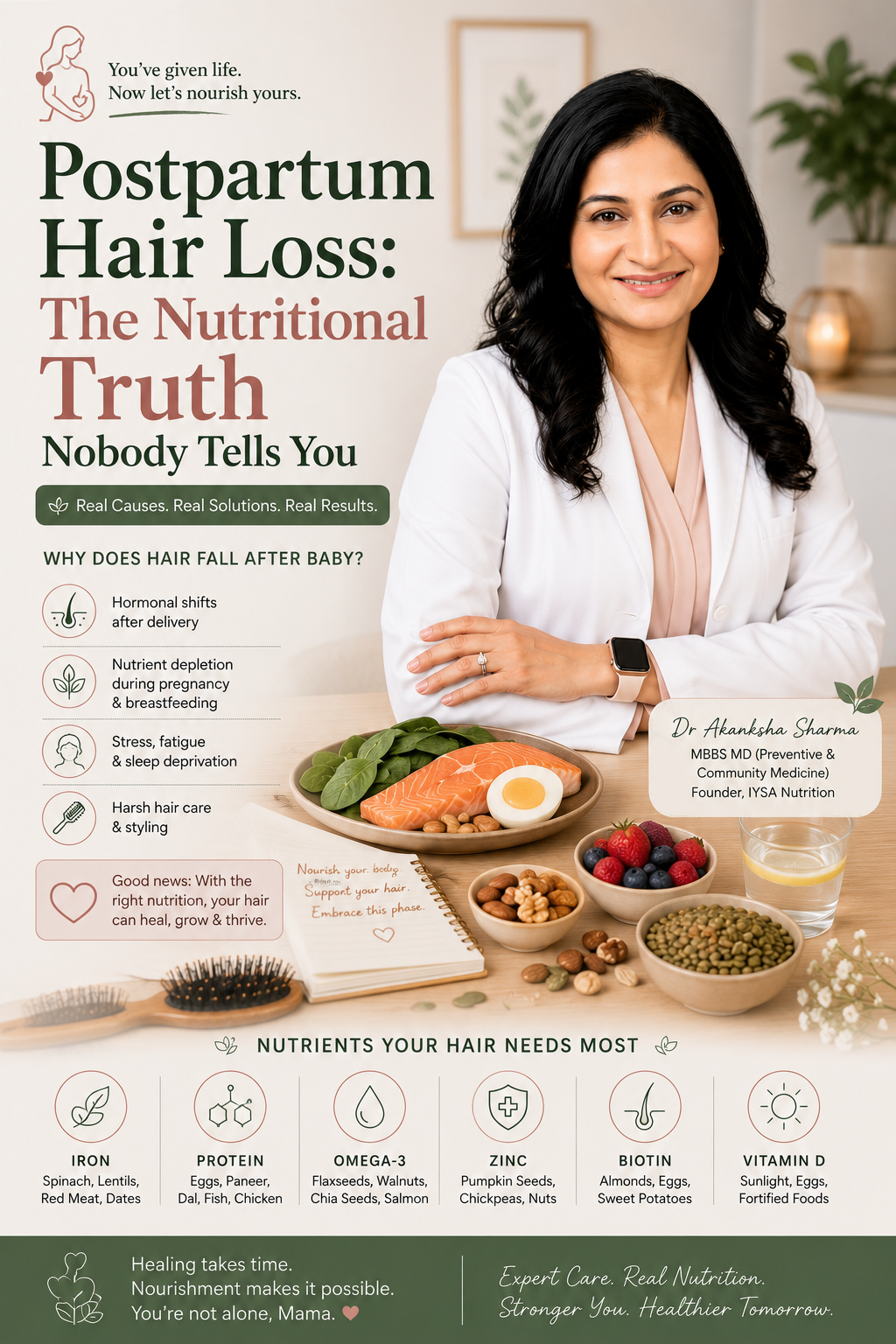
Why Does Postpartum Hair Loss Happen? The Physiology
To understand postpartum hair loss, you need to understand the hair growth cycle. Every hair follicle cycles through three phases:
- Anagen (growth phase): Lasts 2–7 years. Approximately 85–90% of your scalp hairs are in this phase at any given time.
- Catagen (transition phase): Lasts 2–3 weeks. The hair follicle shrinks and detaches from its blood supply.
- Telogen (resting/shedding phase): Lasts 3–4 months. The hair rests, then sheds. Normally, about 10–15% of hairs are in telogen at any time.
During pregnancy, high levels of oestrogen dramatically prolong the anagen (growth) phase. Your hair looks its best during pregnancy, thicker, shinier, and with less daily shedding, because far fewer follicles than normal are entering the telogen phase. This is why so many women notice their hair “improving” during pregnancy.
Then you deliver. Oestrogen levels drop precipitously in the days after birth. All those follicles that were held in the anagen phase suddenly synchronise and enter the telogen phase simultaneously. Three to four months later, which is why hair loss typically peaks at 3–5 months postpartum, they all shed at once. This is called telogen effluvium.
Telogen effluvium is not hair loss in the true sense; you are not losing follicles, and you are not going bald. You are shedding hair that was “saved up” during pregnancy. The follicles remain intact and will regrow hair. This is why postpartum hair loss typically resolves within 6–12 months for most women.
However, and this is the critical clinical point, nutritional deficiencies extend and worsen telogen effluvium significantly. If your ferritin is low, your zinc is depleted, your protein intake is inadequate, or your thyroid is struggling postpartum, the hair loss will be more severe, last longer, and recovery will be slower.
👉Postnatal Depletion Syndrome: The Reason Mums Feel Exhausted
👉Returning to Work After Maternity: How to Keep Up Nutrition
Nutritional Deficiencies That Worsen Postpartum Hair Loss
1. Iron Deficiency — The Most Common Culprit
Iron deficiency is the single most well-documented nutritional cause of telogen effluvium in women. Ferritin — your stored iron — is required by hair follicle cells for DNA synthesis and energy production. When ferritin drops below 30 ng/mL (and many postpartum women have ferritin well below this), hair follicles downregulate activity and shed prematurely.
Postpartum iron depletion is almost universal in Indian women. Blood loss during delivery, the nutritional demands of pregnancy (which deplete maternal iron stores for foetal benefit), and breastfeeding (which increases overall nutritional demand) collectively create a significant iron deficit in the months after birth. Many Indian women enter pregnancy already iron-insufficient, making postpartum depletion more severe.
Studies consistently show that correcting iron deficiency, bringing ferritin above 40–70 ng/mL, leads to meaningful improvement in telogen effluvium over 3–6 months. The key is testing ferritin specifically, not just haemoglobin; haemoglobin can remain normal even when ferritin is depleted enough to cause hair loss.
Action step: Get your ferritin tested at your 6-week postnatal check. If it is below 30 ng/mL, discuss supplementation with your doctor. If it is 30–70 ng/mL, prioritise iron-rich foods aggressively.
2. Protein Deficiency — The Building Block Crisis
Hair is made almost entirely of keratin, a structural protein. Without adequate dietary protein, your body prioritises protein supply to vital organs (heart, lungs, immune system) over hair follicles, which are biologically considered non-essential. The result is accelerated hair shedding and thin, brittle regrowth.
Protein requirements during breastfeeding are significantly elevated, approximately 1.2–1.5 g per kg of body weight per day, compared to 0.8 g/kg for non-pregnant, non-breastfeeding women. Many Indian new mothers dramatically under-eat protein in the postpartum period, partly because of fatigue and time constraints, and partly because of traditional postnatal dietary restrictions that limit many protein-rich foods.
A breastfeeding woman weighing 60 kg needs approximately 72–90 g of protein per day. Most Indian women in the postpartum period are getting considerably less than this.
Action step: Track your protein intake for one or two days using a food diary. You may be surprised how short you are falling. See the food guide below for practical ways to increase protein without major cooking effort.
3. Zinc Deficiency
Zinc plays a critical role in hair follicle cycling. It is required for the activity of the enzymes that regulate hair growth, and it helps maintain the integrity of hair follicle stem cells. Zinc deficiency directly causes hair shedding and is one of the most well-documented micronutrient causes of telogen effluvium.
Pregnancy depletes maternal zinc stores significantly, the foetus accumulates zinc preferentially. Breastfeeding adds a further demand of approximately 4 mg of additional zinc per day. Indian vegetarian diets are particularly at risk of zinc insufficiency because plant-based zinc (from legumes and grains) has lower bioavailability due to phytate content.
Signs of zinc deficiency beyond hair loss include: slow wound healing, frequent infections, loss of taste or smell, and white spots on fingernails.
4. Biotin (Vitamin B7) — Important but Often Overstated
Biotin has become the most heavily marketed nutrient for hair loss, and its importance is simultaneously real and overstated. True biotin deficiency does cause hair loss. However, frank biotin deficiency is rare in women who eat a varied diet. The dramatic marketing around “biotin for hair” has led many women to take very high-dose biotin supplements when their hair loss is actually driven by iron or protein deficiency, which biotin cannot address.
Biotin is water-soluble and safe in typical supplement doses, so taking it is unlikely to cause harm. But if you are spending money on biotin while your ferritin is critically low, you are addressing the wrong deficiency.
Food sources of biotin that are particularly rich include eggs (the yolk is where most biotin is found), chicken liver, sweet potato, and almonds.
5. Vitamin D Deficiency
Vitamin D receptors are present in hair follicle cells, and Vitamin D is thought to play a role in stimulating the cycling of follicles from telogen back into anagen (the growth phase). Low Vitamin D has been associated with telogen effluvium in several studies, and Vitamin D deficiency is endemic among Indian and South Asian women, particularly those who spend most of their time indoors, as most new mothers inevitably do.
Testing and correcting Vitamin D deficiency is a standard part of postnatal care that is frequently overlooked. If your level is below 50 nmol/L, supplementation under medical guidance is typically recommended.
6. Postpartum Thyroid Dysfunction
While not a nutritional deficiency per se, postpartum thyroiditis, which affects approximately 5–10% of women, causes hypothyroidism that dramatically worsens hair loss. It typically presents at 2–6 months postpartum, which coincides precisely with the peak of telogen effluvium, making it clinically difficult to distinguish from “normal” postpartum shedding.
If your hair loss is particularly severe, accompanied by unusual fatigue, cold intolerance, weight gain despite not eating more, and depression or anxiety, ask your doctor to check your thyroid function (TSH and free T4) in addition to your iron and Vitamin D levels.
👉Postpartum Constipation: Foods That Help You Heal Faster
The Best Foods for Postpartum Hair Recovery
The following foods directly address the nutritional deficiencies that worsen postpartum hair loss. Many of them are traditional postnatal foods in Indian culture. There is deep nutritional wisdom in traditions like methi laddoos, ajwain water, and milk with shatavari that our grandmothers knew before science caught up.
For Iron — Daily Priorities
- Ragi (finger millet): One of the richest plant sources of iron in Indian cuisine, approximately 3.9 mg per 100g. Ragi porridge (ragi satva), ragi roti, and ragi laddoos are all excellent postnatal foods for iron repletion.
- Methi (fenugreek) laddoos: A traditional postnatal food in many Indian households — and nutritionally justified. Methi seeds are rich in iron, folate, and compounds that support milk production. The ghee and gum (gond) in traditional laddoos add healthy fat and additional nutrients.
- Masoor and moong dal: Rich in iron and folate; have at least one cup of dal daily
- Palak (spinach) with lime: Always pair with vitamin C to maximise non-haem iron absorption
- Liver (chicken or mutton): The richest iron source available — one serving of chicken liver provides 13 mg of haem iron, which is directly and efficiently absorbed
- Dates (khajur): A traditional postnatal food rich in iron, potassium, and natural sugar for quick energy. Two to three dates daily is a simple habit with meaningful nutritional impact.
For Protein — Practical Solutions for Exhausted Mothers
- Eggs: Two eggs daily provides approximately 12 g of complete protein, significant biotin, choline, iron, and zinc. They take three minutes to cook and require minimal effort — scrambled eggs on toast is a perfectly valid postpartum meal.
- Plain Greek yoghurt or thick dahi: 150–200g provides 15–20 g of protein with minimal preparation. Add a small handful of mixed seeds for additional zinc and omega-3.
- Roasted chana (Bengal gram): 30g provides approximately 10 g of protein and significant zinc. An excellent no-cook snack that can be eaten one-handed while nursing.
- Whey protein powder: For women who are genuinely unable to meet protein needs through food, a single serving of unflavoured or lightly flavoured whey protein in milk, dahi, or a smoothie is a clinically appropriate intervention. Choose a clean product without excessive additives.
- Dal at every meal: This cannot be overstated for Indian women. A generous bowl of dal (not just a thin soup but a thick, well-cooked dal) at lunch and dinner provides the most efficient protein-iron combination available in the Indian diet.
For Zinc
- Pumpkin seeds (kaddu ke beej): 30g provides approximately 2.2 mg of zinc — one of the most zinc-dense plant foods available. Add to dahi, khichdi, or eat as a snack.
- Sesame seeds (til): Extensively used in Indian postnatal cooking — til laddoos are a traditional postnatal food that provides zinc, calcium, and iron in one preparation.
- Rajma and chana: Both provide meaningful zinc; soak and cook well to reduce phytates and improve absorption
- Eggs and meat: The most bioavailable zinc sources
For Overall Hair Health — The Anti-Inflammatory Foundation
- Walnuts: Rich in omega-3 fatty acids, biotin, and zinc — a comprehensive hair-support nut. Four to six walnuts daily is a simple habit.
- Amla (Indian gooseberry): One of the richest natural sources of vitamin C and antioxidants. Amla murabba (preserved amla), fresh amla, or amla powder in water are traditional postnatal remedies with a strong nutritional rationale — vitamin C enhances iron absorption and supports collagen synthesis in the scalp.
- Coconut oil scalp massage: While not nutritional per se, weekly coconut oil scalp massage has been shown to reduce hair breakage and improve scalp circulation, which supports follicle health during the recovery period.
A Practical One-Day Postpartum Hair Recovery Meal Plan
- On waking: 4–6 soaked walnuts + 3 dates + a glass of water with amla powder or fresh lemon
- Breakfast: Two scrambled eggs + one ragi roti or whole-grain toast + a small bowl of dahi with pumpkin seeds sprinkled on top
- Mid-morning: A handful of roasted chana + one banana
- Lunch: A generous bowl of thick masoor or moong dal + 2 rotis + palak sabzi with a squeeze of lime + a small onion-tomato salad
- Afternoon: A bowl of plain Greek yoghurt or dahi + one small portion of seasonal fruit
- Evening snack: Ragi laddoo or methi laddoo (homemade or from a trusted source) — these are postnatal powerhouses
- Dinner: Rajma or chana curry + a bowl of vegetable pulao + any sabzi
- Before bed: a glass of warm milk with a pinch of haldi (turmeric) and a few strands of kesar (saffron) — a traditional postnatal tonic that provides iodine, zinc, and anti-inflammatory compounds
Explore the NURTURE: Mother & Baby Fourth Trimester Program
A doctor-led, evidence-based program supporting healing, feeding, and emotional recovery.
What About Hair Loss Supplements?
The market for “postpartum hair supplements” is enormous and largely unregulated. Here is my honest clinical assessment:
- Iron (if deficient): Absolutely worth supplementing, this is the most impactful intervention you can make for postpartum hair loss if ferritin is low. Requires blood test confirmation and doctor supervision.
- Vitamin D (if deficient): Worth supplementing, test first, then supplement to bring levels to 50–80 nmol/L.
- Zinc: Useful if dietary intake is consistently low (vegetarians especially). 15–25 mg of elemental zinc daily. Do not take high doses without medical guidance; excess zinc impairs copper absorption and causes its own deficiencies.
- Biotin: Safe, inexpensive, and worth taking if dietary intake is low. Unlikely to cause dramatic improvement on its own if iron is the primary deficiency. Note: high-dose biotin (above 5000 µg) interferes with certain thyroid and troponin blood tests; inform your doctor if you are supplementing.
- Collagen peptides: Some evidence for improving hair and nail quality; avoid during breastfeeding; not a replacement for addressing underlying deficiencies.
- “Hair, skin and nails” multivitamins: Typically provide low doses of multiple nutrients. Better than nothing; rarely transformative on their own. Address specific deficiencies with targeted supplements rather than relying on combination products.
You’ve got this, mama 💛
🔗 Related Posts:
-
[Confinement Food vs Medical Nutrition: What’s Best for Singapore Moms?]
-
[7-Day Meal Plan for Postpartum Recovery: Traditional Indian Diet]
- [What Postpartum Moms Should Know: A Comprehensive Guide]
Frequently Asked Questions
How long will my postpartum hair loss last?
For most women, the shedding phase peaks at 3–5 months postpartum and resolves within 6–12 months. Regrowth is typically visible as short baby hairs along the hairline and parting by 6 months. If hair loss is still severe at 12 months postpartum with no signs of improvement, seek evaluation for ongoing nutritional deficiencies or thyroid dysfunction.
Will my hair ever go back to what it was before pregnancy?
For most women, yes, the volume and thickness largely return to pre-pregnancy levels by 12–18 months postpartum. The timeline is faster when nutritional deficiencies are identified and addressed. Some women notice their hair texture changes slightly after pregnancy (straighter or curlier). This is driven by hormonal changes and is usually permanent, but does not affect overall hair health.
Is it safe to take iron supplements while breastfeeding?
Yes. Iron supplementation under medical guidance is completely safe during breastfeeding. Only a small amount of iron enters breast milk, and maternal supplementation does not increase breast milk iron to harmful levels for the baby. If anything, correcting maternal iron deficiency improves energy levels and mood, which supports breastfeeding success.
I am exclusively breastfeeding. Is my hair loss worse because of this?
Breastfeeding itself does not cause hair loss directly. However, breastfeeding significantly increases nutritional demand for protein, iron, zinc, and iodine, which if not adequately met, worsens the severity and duration of postpartum telogen effluvium. The solution is meeting these increased nutritional requirements through diet and targeted supplementation, not stopping breastfeeding.
Are traditional Indian postnatal foods like methi laddoos and ragi porridge genuinely helpful for hair loss?
Yes, many traditional Indian postnatal foods are nutritionally extraordinarily well-designed for postpartum recovery, including hair recovery. Methi (fenugreek) is rich in iron and folate. Ragi is one of the richest plant sources of iron, calcium, and amino acids. Til (sesame) provides zinc and calcium. Gond (edible gum) provides energy, protein, and minerals. These traditional preparations represent centuries of accumulated nutritional wisdom and have very strong rationales from a clinical nutrition perspective.
Should I cut my hair short to reduce hair loss?
Cutting your hair shorter does not reduce the rate of hair loss from telogen effluvium, shedding is determined by follicle biology, not hair length. However, shorter hair can make shedding visually less alarming (shorter hair is less visible in the drain and on surfaces), and it can also make the new regrowth appear more uniform and fuller. It is a personal choice with no clinical implications either way.
The Bottom Line
Postpartum hair loss is common, distressing, and largely normal, but it does not have to be as severe or as prolonged as many women experience. The physiological shedding triggered by hormonal changes after delivery is unavoidable. But the severity of that shedding and the speed of recovery, is significantly influenced by your nutritional status.
Get your ferritin tested. Eat protein at every meal. Include iron-rich Indian foods: ragi, dal, palak, methi laddoos, consistently. Address zinc and Vitamin D if deficient. And be patient with yourself, your body has just accomplished something extraordinary, and it will repair and restore itself with the right nutritional support.
If you would like a personalised postnatal nutrition plan that addresses hair loss, energy recovery, and breastfeeding nutritional needs together, book a consultation with me below.
📩 CLICK HERE to book a free 20-minute consultation with Dr Akanksha Sharma — specialising in postnatal nutrition for Indian and South Asian women in Singapore and India.
Disclaimer: This article is for educational purposes only and does not constitute personalised medical advice. Please consult your physician before starting any supplement regimen postpartum.
References:
- Rebora A. Telogen effluvium: a comprehensive review. Clin Cosmet Investig Dermatol. 2019;12:583-590. PubMed
- Rushton DH. Nutritional factors and hair loss. Clin Exp Dermatol. 2002;27(5):396-404. PubMed
- Almohanna HM et al. The role of vitamins and minerals in hair loss: a review. Dermatol Ther (Heidelb). 2019;9(1):51-70. PMC
- ICMR-NIN Expert Group. Recommended Dietary Allowances for Indians. 2020. nin.res.in

Akanksha Sharma
Dr Akanksha Sharma (MBBS, MD) is a physician and women’s health nutrition specialist, and the founder of IYSA Nutrition. She provides evidence-based, doctor-led nutrition guidance for pregnancy, postpartum recovery, PCOS, child nutrition, and family health, helping women make calm, informed decisions about their health and their children’s well-being.