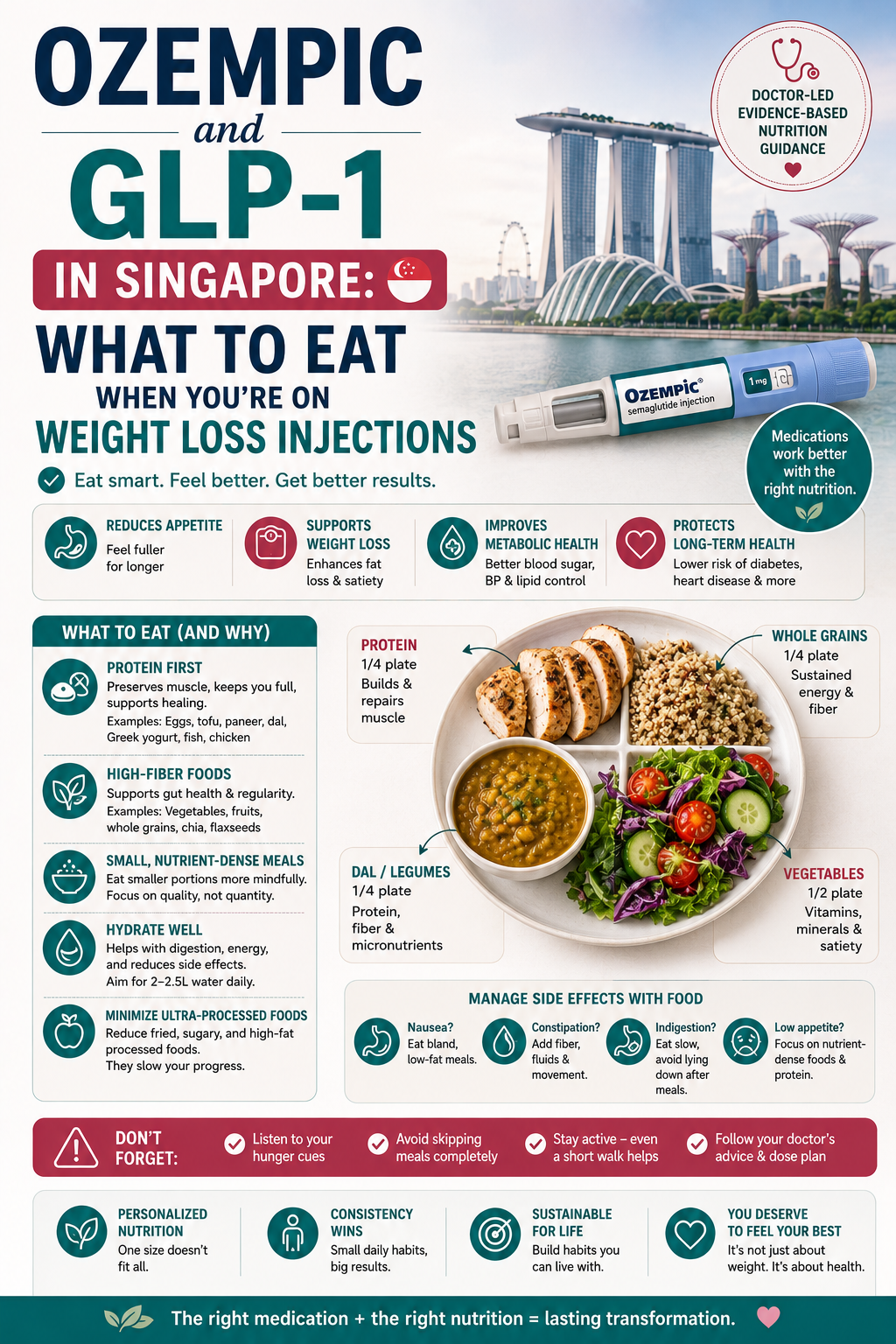
In Singapore, both Ozempic and Wegovy are available, the former approved for type 2 diabetes management, the latter specifically for obesity treatment. Private clinics and weight management specialists across Singapore, at Raffles Medical, Mount Elizabeth, Gleneagles, and a growing number of GP clinics, are prescribing these medications with increasing frequency.
What is less well covered is the nutritional strategy that determines whether GLP-1 therapy produces high-quality weight loss (predominantly fat loss with muscle preservation) or poor-quality weight loss (significant muscle loss alongside fat loss), a distinction that has enormous implications for long-term metabolic health, especially for Indian women whose muscle mass is already lower than comparable Western populations.
This post gives you the evidence-based nutritional strategy for GLP-1 therapy in Singapore’s Indian food environment.
👉Metabolic Syndrome in South Asian Women — the metabolic context for GLP-1 therapy in Indian women
👉How Healthy Is Hawker Food Really? A Doctor’s Breakdown
How GLP-1 Medications Work — The Basics
GLP-1 (glucagon-like peptide-1) is a hormone naturally released from gut cells after eating. It plays multiple roles: stimulating insulin secretion, suppressing glucagon (which raises blood sugar), slowing gastric emptying, and, critically for weight loss, sending satiety signals to the brain that reduce appetite. GLP-1 receptor agonists mimic and amplify this natural hormone signal.
The result: on these medications, you feel full significantly faster, stay full for longer, and experience considerably less food-related hunger than without them. This dramatically reduces spontaneous food intake — which is precisely the mechanism driving the weight loss. In large clinical trials, individuals on semaglutide lost 10–20% of body weight over 68 weeks.
The cardiovascular benefits are substantial; Wegovy is now approved in multiple markets for its cardioprotective benefit in patients with obesity and prior cardiovascular events. The neurological applications are being studied, and early data is also emerging on benefits for fatty liver disease and sleep apnoea.
The Muscle Loss Problem — Why Nutrition Determines Your Outcome
Here is the critical issue that most GLP-1 prescribers do not address adequately at prescription: when any person loses weight rapidly, through any mechanism, approximately 25–40% of the total weight lost comes from lean mass (muscle) rather than fat. This is a biological reality of weight loss, not unique to GLP-1 medications.
However, GLP-1 medications create a specific additional risk: their appetite suppression is so effective that patients often eat far less than their protein requirements, inadvertently entering a severe protein deficit that accelerates muscle loss.
A genetic analysis of over 800,000 individuals from the University of Hong Kong, published in Diabetes, Obesity and Metabolism, confirmed that while GLP-1 medications reduce both fat and lean mass, fat mass reduction is substantially greater; the overall change in body composition is favourable. However, the proportion of muscle lost is meaningfully modifiable through nutrition and exercise: a 2025 study of 200 adults combining GLP-1 medications with resistance training and individualised protein intake found participants lost approximately 13% of body weight but only 3% of muscle mass after six months.
Why This Matters More for Indian Women in Singapore
Indian women have lower muscle mass at any given BMI than Chinese or Malay women, the thin-fat phenotype that characterises South Asian body composition. Muscle is the primary site of insulin-mediated glucose disposal and the largest contributor to resting metabolic rate. An Indian woman who loses significant muscle mass during GLP-1 therapy may emerge from the weight loss phase with a lower metabolic rate, worsened insulin sensitivity, and reduced functional capacity, setting the stage for weight regain when or if the medication is stopped.
The nutritional strategy during GLP-1 therapy is therefore not optional for Indian women; it is the difference between high-quality weight loss that improves long-term metabolic health and poor-quality weight loss that leaves you metabolically worse positioned than before.
The Four Nutritional Priorities on GLP-1 Therapy
Priority 1: Protein — The Non-Negotiable
The 2025 joint advisory from the American College of Lifestyle Medicine and associated bodies recommends 1.2–2.0g of protein per kilogram of body weight daily for individuals on GLP-1 medications. Research presented to the Endocrine Society in 2025 specifically found that among people on semaglutide, lower protein intake was associated with greater muscle loss, making protein the single most evidence-critical nutritional target on GLP-1 therapy.
For a 65 kg Indian woman on semaglutide, this is 78–130g of protein daily. Given that GLP-1 suppresses appetite significantly, eating this amount of protein requires deliberate effort, choosing high-protein foods first at every eating occasion, before appetite disappears.
Protein-first strategy for Indian women on GLP-1:
- Start every meal with the protein component — dal first (not the roti), eggs first, dahi first, before appetite is fully suppressed
- Make protein the foundation of every small meal: plain dahi (10g protein per 150g), eggs (6g per egg), paneer (18g per 100g), masoor dal (9g per 100g cooked), chicken or fish
- Keep high-protein snacks accessible without cooking: boiled eggs, roasted chana, plain dahi with seeds, paneer cubes, roasted pumpkin seeds
- Consider a high-quality protein supplement (whey isolate for vegetarians, or pea protein for those avoiding dairy) as a practical way to meet protein targets when appetite is severely suppressed — 25–30g per serving
Priority 2: Micronutrient Density — Eating Less Requires Eating Better
When total food intake drops significantly on GLP-1 therapy, the risk of micronutrient deficiency rises substantially. Every eating occasion must be nutritionally dense. The specific micronutrients most at risk:
- Iron: On a reduced food intake, iron from both haem and non-haem sources may fall below requirements. Masoor dal with lime at every main meal, ragi if appetite allows, and monitoring ferritin at 3-month intervals while on therapy
- Vitamin B12: Particularly at risk for vegetarian Indian women whose B12 intake was already borderline. A B12 supplement (500–1000mcg methylcobalamin daily) is appropriate prophylactically
- Calcium: Reduced dairy intake due to appetite suppression risks calcium inadequacy. Prioritise plain dahi as a protein source that simultaneously delivers calcium
- Zinc: Required for immune function and protein synthesis; reduced food intake reduces zinc. Pumpkin seeds (a snack that is easy to eat even with low appetite) provide meaningful zinc
- Magnesium: Nausea (a common GLP-1 side effect) may reduce food intake further; magnesium glycinate at 200mg before bed supports sleep and reduces muscle cramping that can occur with muscle loss
Priority 3: Resistance Training — The Muscle Preservation Tool
Nutritional strategy without resistance training preserves some muscle; resistance training without adequate protein preserves some muscle; the combination of both is the only approach consistently shown to maintain lean mass during significant weight loss on GLP-1 therapy. The 2025 joint advisory specifically recommends structured resistance training at least two to three times per week alongside adequate protein for all individuals on GLP-1 medications.
For Indian women in Singapore: two to three sessions per week at any of Singapore’s ActiveSG gyms, Anytime Fitness, condominium gym facilities, or through online resistance training programmes are the practical options. The specific exercises matter less than the progressive overload principle: lifting or moving resistance that challenges the muscle, with progressively increasing difficulty over time.
Priority 4: Hydration — Managing GLP-1 Side Effects
Nausea, constipation, and fatigue are the most common GLP-1 side effects, particularly in the first 4–8 weeks on the medication or after each dose increase. All three are worsened by inadequate hydration. Minimum 2.5–3 litres of plain water daily. The specific strategies:
- For nausea: Ginger tea (fresh ginger in hot water), cold water sipped slowly between meals, eating small quantities of protein-dense food slowly, avoiding eating until very full, and not lying down immediately after eating. The nausea of GLP-1 therapy typically improves significantly after the first 4–8 weeks.
- For constipation: Isabgol (psyllium husk) one teaspoon in water twice daily, adequate hydration, daily vegetables and fruits, and walking after meals
- For fatigue: Ensure protein and caloric intake is not so severely reduced as to cause hypocaloric fatigue; GLP-1 appetite suppression can occasionally reduce intake below 800 kcal/day, which is unsustainable and nutritionally inadequate; a target of 1,200–1,400 kcal daily is generally the safe minimum for most women
GLP-1 Nutrition Support · Singapore
On Ozempic or Wegovy in Singapore? Your nutrition plan determines your outcome.
GLP-1 medications create the caloric deficit. Your nutrition strategy determines whether you lose fat or fat and muscle. I build personalised GLP-1 nutrition plans for Indian women in Singapore: protein targets, micronutrient monitoring, and resistance training integration.
👉 Book a FREE 20-Minute Weight Management Call
Dr Akanksha Sharma · MBBS MD · Singapore & worldwide via Zoom
What to Eat in Singapore on GLP-1: Indian Food Practical Guide
Meals That Work With Suppressed Appetite
The key is nutrient density in small volumes — foods that deliver maximum protein and micronutrients in portions that work with GLP-1’s reduced appetite:
- Breakfast: 2 scrambled eggs (12g protein) + small bowl of plain dahi (10g protein) + half a banana. Total: ~22g protein in a small, easily tolerated meal. No need for roti or paratha when appetite is low — eggs and dahi deliver protein without bulk.
- Lunch: Thick masoor dal soup (9g protein per 100g) + soft boiled or steamed fish/chicken (25g protein per 100g) — small portions, eaten slowly. If going to a hawker centre: economy rice with one protein dish (tofu, fish, egg) and one vegetable, minimal rice.
- Afternoon snack: Plain dahi + a tablespoon of pumpkin seeds. Or a boiled egg. Keep it simple and protein-focused.
- Dinner: Moong dal khichdi (easily digestible, protein from dal, gentle on the stomach, which may be more sensitive on GLP-1) + soft sabzi. If appetite is very low, a bowl of dal soup alone is appropriate.
- Protein supplement if needed: A 25–30g protein shake (whey isolate mixed with water) is a practical way to meet protein targets on days when appetite is severely suppressed. Available at Guardian and GNC Singapore.
Foods to Avoid on GLP-1
- Fried and fatty foods: GLP-1 medications slow gastric emptying; fatty foods, which are already slower to digest, can cause significant nausea and discomfort. Avoid fried snacks, very heavy curries with thick cream or coconut milk, and fried rice in the early weeks of therapy.
- Large meals: The stomach empties slowly on GLP-1; eating to the point of fullness causes significant discomfort. Small, frequent meals (4–5 small meals rather than 3 large ones) are often better tolerated.
- Carbonated drinks: Worsen the bloating and nausea that GLP-1 medications can cause.
- Ultra-processed and sugary foods: These have no place in a GLP-1 nutritional strategy; they use up limited caloric intake with zero nutritional benefit, and some patients report that sweet processed foods trigger nausea more readily than whole foods on GLP-1.
👉Insulin Resistance Indian Meal Plan — the dietary foundation that supports GLP-1 outcomes
Important Considerations for the Indian Community in Singapore
Social Eating
Indian social occasions- family gatherings, Deepavali celebrations, weddings- centre on food in ways that make GLP-1 appetite suppression socially complex. The practical approach: eat a small amount of the protein-rich dishes (dal, paneer, fish curry) and decline additional servings politely. The social script, “I am not very hungry today”, is both honest and appropriate on GLP-1 therapy.
Duration and Stopping GLP-1 Medications
This is one of the most important and least discussed aspects of GLP-1 therapy: the medication works as long as it is taken. Stopping semaglutide typically results in weight regain, with studies showing significant weight return within 12 months of stopping Wegovy. This is not a drug failure, it reflects that the obesity the medication was managing has not been cured; the medication’s suppressive effect on appetite is removed. The implications: GLP-1 therapy may need to be long-term or indefinite for sustained weight management; the nutritional habits built during therapy (protein-first eating, reduced ultra-processed food, regular exercise) are the bridge to maintaining results if medication is eventually stopped. Build these habits during therapy, they matter most after it.
Cost and Access in Singapore
Wegovy and Ozempic are not currently subsidised under Healthier SG or CHAS for weight management (though Ozempic is available through CDMP for type 2 diabetes management). Out-of-pocket costs at private clinics range from approximately SGD 400–800 per month depending on dosage and clinic. Several GP clinics and weight management specialists in Singapore offer GLP-1 prescribing alongside nutritional counselling, asking for the combined service improves outcomes significantly compared to the medication alone.
👉PCOS Diet Plan for Indian Women in Singapore — GLP-1 may be prescribed for PCOS-related obesity
👉Singapore’s Healthier SG Program: How Women Can Use It to Prevent Disease
Frequently Asked Questions
My doctor prescribed Ozempic but did not give me any dietary guidance. What should I do?
Request a referral to a dietitian or nutritionist alongside your prescription; most weight management clinics in Singapore can facilitate this. Alternatively, use the framework in this post as your starting point: protein 1.2–1.5 g per kg body weight daily, protein-first at every meal, resistance training two to three times per week, micronutrient supplementation (B12, iron monitoring, magnesium), and adequate hydration. Discuss monitoring ferritin, Vitamin D, and B12 at your three-month medication review.
How quickly should I be losing weight on GLP-1?
In clinical trials, semaglutide produces weight loss of approximately 0.5–1 kg per week in the initial months, slowing to a plateau around weeks 60–68. Individual variation is significant; some patients lose faster, some slower. A rate of 0.5–1 kg per week with adequate protein intake and resistance training is the target: fast enough to be therapeutically meaningful, slow enough to minimise muscle loss and allow skin adaptation. Faster loss (above 1.5 kg per week) is more likely to include disproportionate muscle loss.
I am vegetarian. Can I meet my protein targets on GLP-1?
Yes, but it requires deliberate effort. Indian vegetarian proteins, masoor dal, paneer, plain dahi, eggs (if lacto-ovo vegetarian), tofu, roasted chana, are the practical sources. A protein supplement (pea protein or whey isolate) is helpful for most vegetarian women on GLP-1 to bridge the gap between food-based protein and the 1.2–1.5g/kg target. Plain dahi (10–12g protein per 150g) is the most protein-dense easily tolerated food on GLP-1 and should be included at every eating occasion where possible.
Can I take GLP-1 medications while trying to conceive?
No, GLP-1 medications are not recommended during pregnancy or while trying to conceive. Semaglutide has a long half-life (approximately 7 weeks for full elimination); MOH and manufacturer guidance recommends stopping at least 2 months before planned conception. If you are using GLP-1 for PCOS-related weight management and are planning conception, discuss timing carefully with your gynaecologist and the prescribing physician. The metabolic improvements from GLP-1 therapy (improved insulin sensitivity, weight loss) can actually improve fertility — but the medication itself should be stopped before attempting conception.
The Bottom Line
GLP-1 medications are one of the most effective weight loss tools available, but the quality of the weight lost is determined by what you eat and whether you exercise, not by the medication alone. For Indian women in Singapore, where lower baseline muscle mass makes muscle preservation during weight loss especially important, the nutritional strategy is not optional. Protein 1.2–1.5 g per kg daily, protein-first at every meal, resistance training two to three times per week, micronutrient monitoring at three months, and the specific Indian food strategies in this post are the evidence-based framework that determines whether GLP-1 therapy produces lasting metabolic improvement or transient weight loss followed by regain.
GLP-1 Nutrition Support · Singapore
GLP-1 Gives You the Opportunity.
Nutrition Determines the Outcome.
Whether you are already on semaglutide or planning to start — build your nutritional strategy now. A personalised plan for protein targets, micronutrient monitoring, resistance training, and Indian food integration makes the difference between high-quality and poor-quality weight loss.
Starting GLP-1 therapy and want to do it right? Let’s talk — 20 minutes, your medication, your plan. 👉 Book a FREE 20-Minute GLP-1 Nutrition Support Call Dr Akanksha Sharma · MBBS MD · Preventive Medicine Physician · Singapore & worldwide via Zoom |
Disclaimer: This article is for educational purposes only. GLP-1 medications require a valid prescription from a licensed physician in Singapore. This post does not constitute medical advice on whether GLP-1 therapy is appropriate for you — that decision requires individual medical assessment.
References:
- GLP-1s and Lean Mass — University of Hong Kong genetic analysis, 800,000+ individuals. Diabetes Obes Metab. 2025. Summary: ACE Fitness June 2025
- 2025 study — resistance training + protein + GLP-1: 13% body weight lost, only 3% muscle mass lost. Full summary
- The Cautious Promise of GLP-1 Receptor Agonists — clinical overview. PMC. 2024. PMC Full Text
- Protein on GLP-1 — 2025 joint advisory from American College of Lifestyle Medicine. Evidence summary

Akanksha Sharma
Dr Akanksha Sharma (MBBS, MD) is a physician and women’s health nutrition specialist, and the founder of IYSA Nutrition. She provides evidence-based, doctor-led nutrition guidance for pregnancy, postpartum recovery, PCOS, child nutrition, and family health, helping women make calm, informed decisions about their health and their children’s well-being.