(And how you can incorporate them into everyday eating)
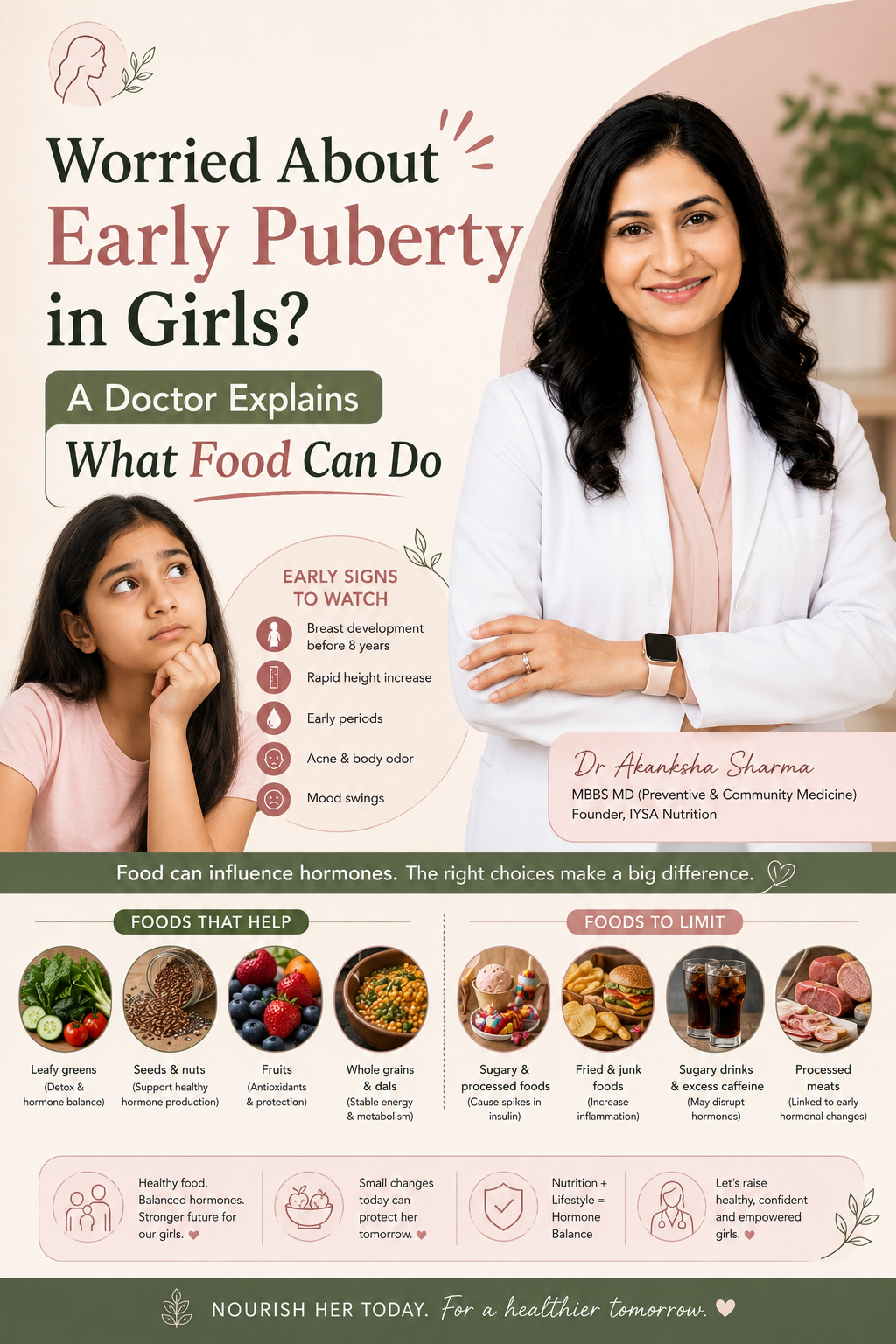
Early puberty, when secondary sexual characteristics (such as breast development, pubic hair, or menstruation) begin significantly earlier than typical age ranges, is a concern for many parents and health professionals. While genetics and other medical factors play important roles, growing evidence suggests diet and lifestyle are modifiable influences.
Here are eight key foods (or food-groups) that the research supports as helpful in reducing the risk / delaying the onset of early puberty in girls, interspersed with ideas for how to use them.
👉10 Reasons for Early Puberty in Girls
8 Foods to Prevent Early Puberty in Girls:
1. Leafy green vegetables
Why: A recent study found that higher vegetable intake was associated with a lower risk of precocious puberty in girls. Vegetables provide fibre, phytonutrients, and may help in hormonal balance.
How to include: Make one big salad or stir-fry of spinach/kale/Swiss chard at least 3-4 times a week. Pair with lentils or beans for a nutrient-dense meal.
2. Beans / lentils / legumes
Why: Plant-based protein sources appear to be protective compared with high animal protein in relation to early puberty.
How to include: For example, include a portion of moong dal, chana, rajma or mixed beans in lunch; substitute one meat/meat-analogue meal a week with legumes.
👉Does Soy Affect Puberty in Girls? Let’s Find Out
3. Whole grains & high-fibre cereal foods
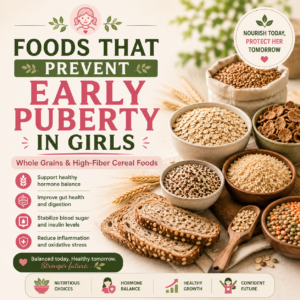
Why: Fibre helps regulate hormones by improving gut/bowel health, potentially helping with the elimination of excess estrogen metabolites. Some studies link higher fibre intake with later menarche.
How to include: Include millets (ragi, jowar) 2-3 times/week. A staple diet should include rice, sourdough bread, whole-grain chapatis, oats porridge for breakfast with nuts/seeds.
4. Nuts & seeds (especially flaxseed, pumpkin seeds, walnuts)
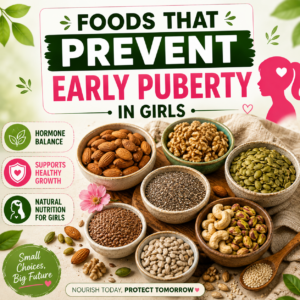
Why: Nuts and seeds are rich in healthy fats, fibre, and plant compounds which support hormonal balance and good growth without promoting early sexual maturation.
How to include: A daily snack of 1-2 tbsp of mixed seeds and nuts; flaxseed-powder sprinkled on yogurt or cereal; pumpkin seeds in salad or snack mix.
5. Fruits (but moderate, whole-fruit, not excessive)
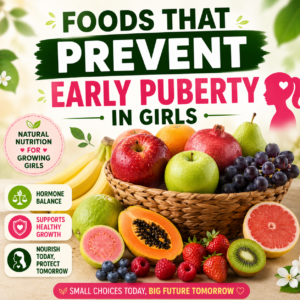
Why: Higher fruit and vegetable intake was protective in a recent Chinese study. But note: the same study flagged that a “high animal-food + fruits” pattern (with lots of fruit) showed some risk, likely via the obesity pathway. So fruit is helpful, just not as a sole “high” intake without other balance.
How to include: Provide 1–2 portions of fresh fruits daily (berries, apples, guava, papaya). Avoid excessive fruit juices or dried/sugary versions.
📘 Want this as a printable checklist?
Download the free, doctor-reviewed Early Puberty Guide, a quick reference you can keep on the fridge.
6. Water & hydrating foods (and avoiding sugary/processed beverages)
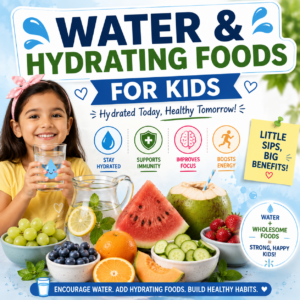
Why: Sugary drinks and high-calorie processed beverages contribute to excess weight and may accelerate puberty onset.
How to include: Encourage water as the primary drink. Occasionally, fruit-infused water. Avoid sodas, high-sugar juices, and packaged flavoured drinks for children.
👉Does Milk Cause Early Puberty in Girls? A Doctor’s Evidence-Based Answer
7. Healthy fats: avocado, olive oil, fatty fish
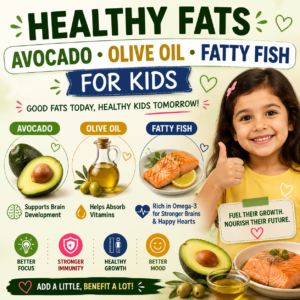
Why: Healthy unsaturated fats support brain and hormonal development without triggering early hormone rise linked to high-fat/animal-fat intake. Some studies show that high animal fat intake is linked to earlier puberty.
How to include: Use olive oil/tahini dressings, include avocado slices, seeds/nuts, and for non-vegetarian children, small oily fish. For vegetarian children, rely on plant fats.
👉 Early Puberty in Girls: A Calm, Doctor-Reviewed Guide for Parents
8. Colourful vegetables (carrots, sweet potato, pumpkin, beetroot)
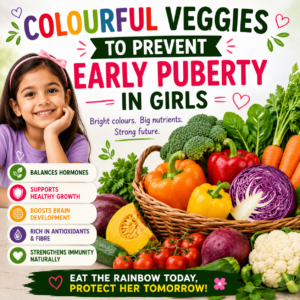
Why: Rich-colour vegetables provide antioxidants and phytochemicals that support detoxification of excess hormones and environmental endocrine disruptors. Some guidelines for early puberty prevention emphasise plenty of natural plant foods.
How to include: Make sweet-potato “wedges” baked, pumpkin soups, carrot sticks with hummus, beetroot salad with pink yoghurt.
Noticing early signs and not sure what’s normal?
Book a free 15-minute call with Dr. Akanksha to talk through what you’re seeing and whether it needs further evaluation.
Integrating These Foods into a Realistic Plan
-
Aim for variety: Try to include at least 5–6 of these foods daily in various meals and snacks.
-
Focus on balancing weight: Excess adiposity/obesity is a strong risk factor for early puberty. The foods above support a healthy weight through nutrient density and fibre.
-
Minimise risky foods: Although not part of the “10 protective foods” list, it is important to limit processed fried foods, hormone-loaded meats/dairy, high-sugar snacks and beverages.
-
Lifestyle matters too: Nutrition works best alongside regular physical activity, adequate sleep, minimal exposure to plastics/pesticides and emotional wellness.
A Sample “Daily Plate” for an 8-12-year-old girl (vegetarian)
-
Breakfast: Paneer dosa with 1/2 tablespoon ground flaxseed + sambhar (with moringa)
-
Mid-morning: Carrot & cucumber sticks + hummus + water
-
Lunch: Oats and mixed vegetable cutlets (add peas, carrot, spinach, pumpkin) + curd dip + side salad of beetroot & cucumber
-
Afternoon snack: Seasonal fruit (apple/pear) + a small handful of pumpkin seeds + water
-
Dinner: Multigrain roti + Dal + egg bhujji
-
Before bed: A glass of warm milk with a pinch of turmeric + short mindful breathing exercise (helps hormonal regulation)
🚨 Implications of Early Puberty in Girls
Early puberty can have both immediate and long-term effects on a girl’s physical, mental, and emotional well-being. These may include:
- Emotional distress: Increased risk of anxiety, mood swings, and lower self-esteem due to being “different” from peers.
- Social pressure: Early physical development may attract unwanted attention or lead to social isolation.
- Increased risk of risky behaviors: Studies show early-developing girls may be more vulnerable to substance use and early sexual activity.
- Metabolic complications: Early puberty is linked with a higher risk of obesity, insulin resistance, and type 2 diabetes.
- Reproductive health risks: Some evidence suggests an increased lifetime risk of conditions like PCOS, breast cancer, and menstrual irregularities.
Prevention and awareness can go a long way in protecting a child’s long-term health.
10 evidence-based tips to help support healthy and timely development in growing girls. ✨
1. 🌿 Limit Exposure to Endocrine Disruptors (EDCs)
EDCs like BPA, phthalates, and parabens found in plastics, cosmetics, and packaged foods can mimic estrogen and disrupt hormonal balance, and bring about early puberty.
- Avoid plastic containers with recycling codes 3 or 7
- Use stainless steel or glass bottles for water
- Switch to natural, paraben-free lotions and shampoos
- Don’t microwave food in plastic containers
- Choose “fragrance-free” or “phthalate-free” household items
2. 🍎 Encourage a Balanced, Whole-Food Diet
A diet high in processed foods and added sugars can increase insulin and estrogen levels. Research shows that when girls are primarily on a diet of vegetables and lean proteins then their puberty is delayed as compared to girls consuming ultra-processed food.
- Include seasonal fruits and vegetables in daily meals
- Offer whole grains like brown rice, oats, and millets (like ragi, jowar, bajra, amaranth, etc.)
- Choose unprocessed, home-cooked meals over packaged snacks
- Incorporate healthy fats like nuts, seeds, and ghee
- Reduce ultra-processed snacks and sugary cereals
3. ⚽ Promote Physical Activity
Regular exercise helps regulate weight and insulin sensitivity, both of which influence puberty timing.
- Encourage outdoor play for 60 minutes daily
- Try fun options like dance, swimming, skating, or yoga
- Limit screen time to under 2 hours a day
- Join mother-daughter fitness challenges or walks
- Use pedometers or fitness games to make movement fun
4. 🧁 Maintain Healthy Weight
Childhood obesity is one of the strongest predictors of early puberty.
- Avoid emotional or mindless snacking habits
- Serve smaller portions and involve kids in meal prep
- Replace sugary drinks with infused water or coconut water
- Watch for early signs of insulin resistance or belly fat
- Encourage a growth-focused, not weight-focused mindset
5. 🏠 Improve Sleep Hygiene
Poor sleep can interfere with the release of growth and reproductive hormones. Research suggests that children who are sleeping for less than 10 hours a day are more prone to develop precocious puberty.
- Maintain a fixed bedtime routine (8–9 PM is ideal) and ensure at least 10 hours of sleep in 24 hours. If the child is getting 9 hours of sleep at night then include a daytime nap of 1 hour to fill up the deficit.
- Remove screens from the bedroom 1 hour before sleep
- Use dim lighting in the evening to support melatonin
- Keep the sleep environment cool and quiet
- Encourage reading or calming activities before bed
6. ☕ Avoid Caffeine and Sugary Beverages
Caffeine and sugary drinks can disturb sleep and may alter hormonal pathways.
- Replace cola and packaged juices with lemon water or herbal teas
- Educate children about caffeine in chocolates and sodas
- Keep sweet drinks out of the school lunchbox
- Offer fun homemade drinks like buttermilk or lemonade
- Set an example by drinking water-rich, caffeine-free options yourself
7. ✔️ Choose Organic When Possible
Some conventional produce may carry pesticide residues linked to hormonal disruption and precocious puberty.
- Prioritize organic apples, spinach, berries (high-residue items)
- Wash all produce thoroughly with salt water or vinegar rinse
- Choose local and seasonal organic produce when possible
- Support community-supported agriculture (CSA) or farmer’s markets
- Avoid storing food in chemical-laden cling films
8. 🍼 Limit Animal Products with Hormones
Some non-organic meat and dairy may contain growth hormones.
- Choose milk labeled “hormone-free” or organic
- Reduce intake of red meat and processed meat
- Avoid dairy products from unknown or non-reputed sources
- Encourage home-cooked protein options like lentils, paneer, tofu (👉Does Soy Affect Puberty in Girls? Let’s Find Out)
9. 🧘♀️ Reduce Screen Time and Stress
Chronic stress and excessive screen time may impact the hypothalamic-pituitary-gonadal axis. Additionally, more screen time leads to excess sedentary behaviour leading to a higher risk of precocious puberty.
- Set daily screen time limits (no more than 1–2 hrs). Before two years of age, there should be zero screen time for kids.
- Schedule daily screen-free, creative playtime
- Introduce mindfulness, journaling, or guided breathing apps
- Promote face-to-face friendships and nature play
- Teach time management to reduce academic pressure
10. 🤔 Stay Informed and Empowered
Awareness is key. Educate young girls gently about body changes and healthy habits.
- Use age-appropriate books and body-positive resources
- Create an open, non-judgmental environment at home
- Involve healthcare professionals in regular developmental checks
- Encourage conversations around self-esteem and confidence
- Support emotional health with gentle parenting and positive role models
👉The Rise of Early Puberty in Girls — What Every Parent Should Know
👉Does Milk Cause Early Puberty in Girls? A Doctor’s Evidence-Based Answer
Final Notes for Parents
-
Encourage consistency rather than perfection: It’s the habitual pattern that counts most.
-
Monitor growth and weight: keep BMI in the normal range for age.
-
Watch for early signs (breast buds before age 8, pubic hair early, rapid height growth) and consult a paediatric endocrinologist if you suspect precocious puberty.
-
Reinforce: Food is one piece of the puzzle. Sleep, stress, screen-time, environmental chemicals and activity are all important.
Still have questions about your daughter’s development?
Read the calm, doctor-reviewed guide on what’s normal and when to seek help, or book a free consultation to discuss your specific concerns.
🌟 Read More
🧶The Rise of Early Puberty in Girls — What Every Parent Should Know
🧶Does Soy Affect Puberty in Girls? Let’s Find Out
🧶Early Menarche in Girls: The Ayurvedic Perspective
🧶Early Menarche: Causes, Risks, and Prevention Strategies
🧶10 Reasons for Early Puberty in Girls

Akanksha Sharma
Dr Akanksha Sharma (MBBS, MD) is a physician and women’s health nutrition specialist, and the founder of IYSA Nutrition. She provides evidence-based, doctor-led nutrition guidance for pregnancy, postpartum recovery, PCOS, child nutrition, and family health, helping women make calm, informed decisions about their health and their children’s well-being.