Written & reviewed by Dr Akanksha Sharma, MBBS, MD (Preventive & Community Medicine) | Founder, IYSA Nutrition, Singapore
If you are raising a child with ADHD, you already know that managing it goes far beyond medication. You are navigating meltdowns at the dinner table, battles over homework, sensory food preferences that make mealtimes a challenge, and the constant question that every parent eventually asks: is there something I can feed them that will actually help?
The answer is yes, with important caveats. Nutrition is not a cure for ADHD, and no dietary approach replaces evidence-based behavioural therapy or medication when they are clinically indicated. But the research on ADHD and nutrition has matured considerably over the past decade, and there is now meaningful evidence that specific nutrients, dietary patterns, and food choices can significantly influence attention, impulse control, emotional regulation, and behaviour in children with ADHD.
This matters particularly for Indian parents, because the typical modern Indian urban diet, high in refined carbohydrates, low in omega-3s, low in zinc and iron, and increasingly reliant on ultra-processed foods, has several nutritional characteristics that research specifically associates with worsened ADHD symptoms. The good news is that the traditional Indian diet, at its best, has many features that support brain function and focus. The challenge is that most families have drifted away from those features.
In this post, I will walk you through the most evidence-supported nutrition strategies for ADHD in children, what to add, what to reduce, and how to implement these changes practically in an Indian household.
👉ADHD in Children: Causes, Prevalence & Management Guide
How ADHD Affects the Brain: The Nutritional Connection
ADHD is a neurodevelopmental disorder characterised by dysregulation of the dopamine and norepinephrine systems in the prefrontal cortex. The region of the brain responsible for executive function, attention, impulse control, and working memory. The medications most commonly used for ADHD (methylphenidate, atomoxetine) work by increasing dopamine and norepinephrine availability in these circuits.
Nutrition connects to this system at multiple points:
- Dopamine and norepinephrine are synthesised from amino acids: tyrosine and phenylalanine from dietary protein. A child who chronically under-eats protein has a reduced substrate supply for neurotransmitter synthesis.
- Iron is a cofactor for the enzyme that converts tyrosine to dopamine (tyrosine hydroxylase). Iron deficiency directly impairs dopamine synthesis and is one of the most well-studied nutritional associations with ADHD.
- Zinc regulates dopamine transport and is involved in fatty acid metabolism relevant to membrane fluidity in brain cells. Low zinc is consistently found in children with ADHD.
- Omega-3 DHA is incorporated into neuronal cell membranes and is essential for the structure and function of synaptic connections in the prefrontal cortex. Children with ADHD consistently show lower plasma DHA levels than neurotypical children.
- Magnesium is required for over 300 enzymatic reactions in the body, including those involved in neurotransmitter synthesis and nervous system regulation. Studies in children with ADHD frequently find magnesium deficiency.
- Blood glucose stability directly affects the prefrontal cortex, which is highly sensitive to glucose fluctuations. Spikes and crashes in blood sugar, driven by refined carbohydrates, sugary drinks, and irregular meal timing, worsen attention, impulsivity, and emotional regulation acutely and immediately.
Understanding these mechanisms makes the nutritional approach to ADHD logical rather than anecdotal: you are not just feeding a child, you are building the biochemical environment in which their brain operates.
👉 Children Are Not Mini Adults: Understanding Brain Development
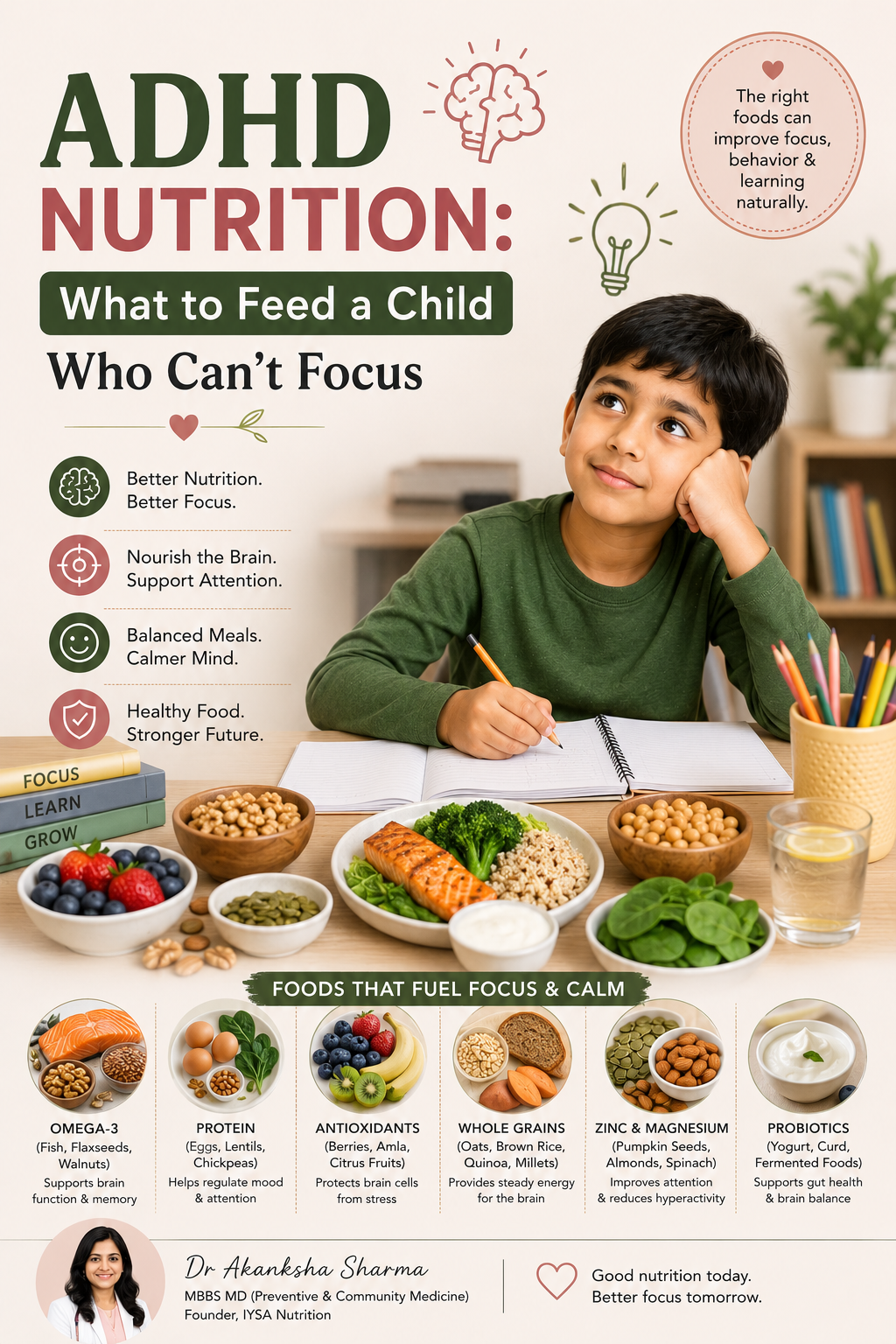
The Most Important Nutrients for ADHD — And Where to Find Them
1. Omega-3 Fatty Acids (DHA and EPA) — The Strongest Evidence
Omega-3 supplementation is the most extensively studied nutritional intervention for ADHD, with a substantial body of evidence from randomised controlled trials. A 2019 meta-analysis published in Neuropsychopharmacology found that omega-3 supplementation, particularly EPA, significantly reduced ADHD symptom scores in children, with the largest effects on inattention and hyperactivity. The effect size is modest compared to medication, but it is consistent across studies and has no adverse effects.
Children with ADHD have consistently lower blood levels of DHA and EPA than neurotypical children across multiple studies in diverse populations. This is both a cause and consequence of ADHD; the condition itself may alter fatty acid metabolism, but dietary insufficiency clearly compounds the problem.
Target intake: Studies showing benefit typically use doses of 500–1000 mg of combined EPA+DHA daily. This is significantly more than what most children get from diet alone.
Best food sources of omega-3 for Indian children:
- Fatty fish: Sardines (tarli), mackerel (bangda), salmon: 2–3 servings per week for non-vegetarian children. A single serving of sardines provides approximately 500–800 mg of combined EPA+DHA.
- Walnuts: 5–7 walnut halves daily, provides ALA (plant omega-3), with some conversion to EPA
- Ground flaxseed: 1 tablespoon daily in dahi, oats, or roti dough
- For vegetarian children: An algae-based DHA+EPA supplement is strongly recommended; dietary ALA sources alone are insufficient to meet therapeutic omega-3 levels. Look for supplements providing at least 500 mg of combined DHA+EPA per serving.
Practical integration for Indian families:
- Sardine or mackerel curry twice a week: these are affordable, culturally familiar fish in South Asian households
- Walnut chutney or walnuts chopped into dahi for breakfast
- Ground flaxseed stirred into the child’s morning oats or mixed into roti dough invisibly
- Fish tikka or fish cutlets: child-friendly preparations that can be made from omega-3-rich fish
2. Iron — Address Deficiency First
The association between iron deficiency and ADHD is one of the most robust in nutritional psychiatry. Multiple studies have found that serum ferritin levels are significantly lower in children with ADHD compared to neurotypical controls, and that low ferritin correlates directly with symptom severity. A landmark study by Konofal et al. found that 84% of children with ADHD had ferritin below 30 ng/mL compared to 18% of controls.
Critically, iron supplementation in iron-deficient children with ADHD has been shown to improve attention and behaviour, independent of medication. This is not a peripheral finding; it has direct clinical implications. Every child with ADHD should have their ferritin tested, not just haemoglobin. A ferritin below 30 ng/mL warrants treatment.
Best Indian food sources of iron for children with ADHD:
- Ragi (finger millet): ragi porridge, ragi roti, ragi laddoos
- Masoor and moong dal: at every meal
- Palak sabzi with lime juice (vitamin C enhances absorption)
- Chicken liver (for non-vegetarians): the richest iron source available
- Pumpkin seeds: excellent lunchbox iron snack
- Dates and raisins: small portions as snacks
3. Zinc — The Overlooked Mineral
Zinc plays a central role in dopamine metabolism and is a modulator of melatonin, which affects sleep, itself profoundly disrupted in children with ADHD. Multiple controlled trials have found zinc supplementation (15–25 mg/day) reduces hyperactivity and impulsivity in ADHD children, particularly in populations where dietary zinc is low.
Indian vegetarian diets are particularly at risk of zinc insufficiency because plant-based zinc has lower bioavailability. Soaking legumes before cooking and including zinc-rich animal foods (if non-vegetarian) are key strategies.
Best Indian food sources of zinc for children:
- Pumpkin seeds (kaddu ke beej): the best plant zinc source; 30g provides 2.2mg
- Rajma and chana (well-soaked before cooking)
- Sesame seeds (til): in chutney, laddoos, and chikki
- Eggs: one of the most bioavailable zinc sources for children
- Chicken and meat: excellent zinc sources for non-vegetarians
4. Magnesium — The Calming Mineral
Magnesium deficiency is found in a significant proportion of children with ADHD across multiple studies. Magnesium plays a role in regulating the NMDA receptor, involved in learning, memory, and stress response, and supports GABAergic activity, which has calming effects on the nervous system. Magnesium deficiency is associated with hyperactivity, sleep difficulties, and emotional dysregulation.
Importantly, refined foods and processed snacks that dominate many children’s diets are very low in magnesium. The more ultra-processed food a child eats, the more likely they are to be magnesium-insufficient.
Best Indian food sources of magnesium for children:
- Bajra (pearl millet) — one of the richest Indian grain sources; approximately 137 mg per 100g
- Dark chocolate (70%+) — a small square daily; approximately 64mg per 30g and often accepted enthusiastically by children
- Almonds and cashews — approximately 76mg and 83mg per 30g respectively
- Banana — approximately 27mg per medium banana; also provides potassium and vitamin B6
- Pumpkin seeds — approximately 150mg per 30g; one of the richest magnesium sources available
- Dark leafy greens — palak, moringa, methi
- All dals and legumes
5. Protein — Every Meal, No Exceptions
Protein at breakfast is one of the most consistently supported practical nutrition strategies for ADHD. Here is why: protein provides tyrosine and phenylalanine, the amino acid precursors to dopamine and norepinephrine. A protein-rich breakfast provides the raw materials for neurotransmitter production throughout the morning school hours, when attention demands are highest.
Conversely, a breakfast of refined carbohydrates, white bread, sugary cereals, biscuits, or plain toast, provides a rapid blood glucose spike followed by a crash, delivers no neurotransmitter precursors, and sets up a morning of poor attention and dysregulation. This is one of the most actionable single changes a family can make.
High-protein Indian breakfast ideas for children with ADHD:
- Two eggs in any form (scrambled, omelette, egg paratha): 12g protein, plus iron and choline
- Besan (chickpea flour) chilla with dahi on the side: 15–18g protein
- Moong dal chilla with a small portion of paneer filling
- Dahi (thick, plain) with mixed seeds and a small portion of fruit: 8–10g protein
- Leftover dal with one roti: a protein-first start that is culturally familiar and quick
- Paneer paratha with dahi
📌Picky Eating Solutions: A Doctor-Backed Nutrition Guide
📌Ultra-Processed Foods and Children: What Parents Think vs What Guidelines Say
The Blood Sugar-ADHD Connection: Why Stable Glucose Matters
The prefrontal cortex, the ADHD-affected brain region, is disproportionately sensitive to blood glucose fluctuations compared to other brain regions. When blood glucose drops after a refined carbohydrate-induced spike, prefrontal function is the first to suffer: attention narrows, impulse control deteriorates, emotional regulation fails, and the child becomes irritable, reactive, and unfocused.
For a child with already-compromised prefrontal function due to ADHD, this blood glucose instability is amplified. The dietary strategy that follows is therefore central to daily symptom management:
- Never skip meals, especially breakfast. The child who arrives at school having eaten nothing or only a biscuit is starting the day in a neurochemical deficit.
- Pair every carbohydrate with protein and fat. Thise slow glucose absorption and prevent spikes and crashes. A banana alone spikes blood sugar; a banana with a small handful of almonds does not.
- Eliminate or dramatically reduce sugary foods and drinks. Packaged juices, cola, sweet chai, sugary biscuits, mithai, flavoured milk, and sweetened yoghurt are all high-spike, low-nutrition foods that are particularly problematic for ADHD children.
- Regular meal and snack timing. Aim for meals every 3–4 hours with a small protein-containing snack in between. Predictable blood glucose patterns support more predictable behaviour.
- Choose low-GI carbohydrates. Jowar roti over white bread, brown rice or red rice over white rice in large portions, oats over packaged cereal, dal-based meals over pure carbohydrate meals.
📌Hidden Sugar in Indian Kids’ Snacks (And Healthier Swaps)
The Food Additive and ADHD Question
The relationship between artificial food colours, preservatives, and ADHD symptoms is one of the most debated topics in paediatric nutrition. Here is an honest evidence summary:
A landmark 2007 study published in The Lancet (McCann et al.) found that a mixture of artificial food colours and sodium benzoate (a common preservative) significantly increased hyperactivity in both ADHD-diagnosed and neurotypical children. This led to the European Food Safety Authority issuing a warning label requirement for foods containing six specific artificial colours in the EU.
The evidence suggests that artificial food colours, particularly the “Southampton Six” colours (sunset yellow FCF, quinoline yellow, carmoisine, allura red, tartrazine, and ponceau 4R), worsen hyperactivity in a subset of children with ADHD who are sensitive to them. They do not cause ADHD, but they can unmask or amplify existing symptoms.
The practical implication: reducing packaged foods containing artificial colours and preservatives is a low-risk, potentially meaningful intervention for children with ADHD. In an Indian context, this means reducing:
- Coloured packaged chips and snacks (many contain artificial colours)
- Commercially produced sweets and mithai with synthetic colours
- Flavoured drinks and sodas
- Packaged instant noodles with flavour sachets (often high in MSG and preservatives)
- Coloured breakfast cereals marketed at children
The Gut-Brain Axis and ADHD
Emerging research is consistently linking gut microbiome composition to ADHD and neurodevelopmental outcomes. Children with ADHD show measurably different gut microbiome profiles compared to neurotypical children, with lower populations of beneficial bacteria (particularly Bifidobacterium and Lactobacillus species) and higher populations of inflammatory bacteria.
The gut-brain connection operates through multiple pathways: the vagus nerve, the immune system, and the gut’s production of neurotransmitter precursors (approximately 90% of the body’s serotonin is produced in the gut). A compromised gut microbiome reduces serotonin availability, increases systemic inflammation, and potentially worsens ADHD symptom severity.
Gut-supporting strategies for children with ADHD:
- Include fermented foods daily: dahi, homemade idli and dosa (fermented batter), kanji (fermented rice water, traditional in South India), homemade chaas
- Prioritise fibre-rich foods: all dals, vegetables, whole grains, fruits; fibre feeds beneficial gut bacteria
- Reduce ultra-processed food, which depletes beneficial gut bacteria and promotes inflammatory species
- Consider a probiotic supplement containing Lactobacillus rhamnosus and Bifidobacterium longum, these specific strains have the most evidence for neurodevelopmental benefit; discuss with your paediatrician
The Elimination Diet Question: Is It Worth Trying?
Some research, particularly from the Netherlands (the INCA study by Pelsser et al.), has found that a highly restrictive “few foods” elimination diet significantly reduced ADHD symptoms in approximately 64% of children. However, this diet is extremely restrictive (limited to lamb, turkey, rice, pear, water, and a few other foods) and is nutritionally inadequate for long-term use without medical supervision.
My clinical position: a full elimination diet of this type is not appropriate to attempt without guidance from a paediatric dietitian and physician. It is nutritionally risky, socially isolating for the child, and the relapse rate upon food reintroduction is high. However, a more targeted approach, reducing ultra-processed foods, artificial colours, and preservatives, identifying and eliminating individual foods that clearly worsen the child’s symptoms through a structured diary and elimination protocol, is reasonable and worth attempting with appropriate professional support.
Practical ADHD-Friendly One-Day Meal Plan (Indian)
- On waking: 5–7 soaked walnuts (omega-3) + 1–2 soaked almonds (magnesium). No screens before breakfast, this alone helps the prefrontal cortex ease into the day.
- Breakfast (high protein, non-negotiable): Two eggs scrambled with one jowar or whole-wheat roti + a glass of milk or dahi on the side. Or: besan chilla (2 pieces) with mint chutney + dahi. Include no added sugar.
- Lunchbox snack: A small box of roasted chana or pumpkin seeds (zinc + protein) + one piece of seasonal fruit (not juice)
- Lunch: A generous cup of thick moong or masoor dal + one cup of sabzi with dark leafy greens + 1–2 rotis (jowar or wheat) + a small portion of dahi. Include a squeeze of lime on the sabzi.
- After-school snack: A small bowl of dahi with one tablespoon of ground flaxseed (omega-3) and a drizzle of honey, or a small banana with peanut butter (protein + stable glucose)
- Dinner: Fish curry or sardine curry (omega-3) with brown rice and a vegetable sabzi. For vegetarians: rajma or chana curry + rotis + sabzi.
- After dinner: One small square of 70%+ dark chocolate (magnesium, flavonoids), a structured treat that replaces the packaged biscuit or mithai habit
- Avoid throughout the day: Packaged chips, coloured sweets, flavoured drinks, instant noodles, sugary cereals, commercial fruit juices
✨Click here to explore Feed the Focus: 21 Days ADHD Nutrition & Lifestyle Plan for Kids. A doctor-designed nutrition & lifestyle program created to support attention, behaviour, emotional regulation and brain development in children.
Frequently Asked Questions
Does sugar cause ADHD or make it worse?
Sugar does not cause ADHD. The popular belief that sugar directly causes hyperactivity has been tested in over 23 double-blind studies and consistently disproven. Parents who believe their child has had a sugar rate their behaviour as more hyperactive even when given a placebo, demonstrating that expectation drives the observation. However, the blood glucose instability caused by high-sugar, refined carbohydrate diets does worsen attention and impulsivity in children with ADHD, not through a direct stimulant effect of sugar, but through the glucose spike-and-crash mechanism described above. Reducing sugar is still clinically sound advice for ADHD; the mechanism just differs from popular belief.
Should my child with ADHD avoid gluten or dairy?
There is no consistent clinical trial evidence that gluten-free or dairy-free diets improve ADHD symptoms in the absence of coeliac disease or dairy allergy. These are common recommendations in wellness circles but are not supported by the evidence base that applies to omega-3s, iron, and zinc. If your child has confirmed coeliac disease or dairy allergy, appropriate elimination is medically necessary. Otherwise, eliminating these food groups without clinical indication removes important nutrient sources, dairy provides calcium, protein, and iodine; whole grain gluten foods provide B vitamins and fibre.
Can omega-3 supplements replace ADHD medication?
No. Omega-3 supplementation has a meaningful but modest effect size on ADHD symptoms, significantly smaller than stimulant medication in children with moderate-to-severe ADHD. They work through different mechanisms and are not mutually exclusive, omega-3s can be used alongside medication as a complementary strategy. For children with mild symptoms or for parents who are not yet ready to proceed with medication, a structured nutritional approach including omega-3 supplementation is a reasonable first-line trial, under the guidance of a paediatric neurologist or psychiatrist. Do not discontinue prescribed ADHD medication in favour of nutritional interventions without discussing this with your child’s doctor.
My child is extremely picky and will not eat any of the foods on this list. What do I do?
Picky eating is particularly common in children with ADHD, and sensory sensitivities to texture, smell, and visual presentation of food are a known feature of the condition. The approach that works: make changes slowly (one food at a time over weeks), present new foods repeatedly without pressure (research shows 10–15 exposures before acceptance), use familiar spice preparations and textures, “hide” nutritious foods in accepted preparations (ground flaxseed in dahi, moringa powder in dal, pureed vegetables in paratha dough), and involve the child in food preparation where possible. A referral to an occupational therapist or feeding specialist is appropriate if extreme food restriction is significantly affecting nutrition or quality of life.
How long before I see results from dietary changes in my ADHD child?
Blood glucose-related improvements (better morning attention after a protein-rich breakfast, reduced afternoon energy crashes) can be noticed within days of consistent dietary changes. Iron and zinc correction typically shows meaningful improvement in ADHD symptoms over 4–8 weeks of consistent treatment. Omega-3 supplementation studies show results at 12–16 weeks, as DHA incorporation into brain cell membranes takes time. Set realistic expectations; these are not overnight interventions but gradual, cumulative improvements that support the overall management plan.
The Bottom Line
Nutrition does not cure ADHD, but it shapes the biochemical environment in which your child’s brain functions every single day. Adequate omega-3s, iron, zinc, magnesium, and protein; stable blood glucose; a gut microbiome rich in beneficial bacteria; and a diet free from artificial colours and ultra-processed foods, these create meaningful neurochemical conditions that support attention, emotional regulation, and impulse control.
For Indian families, the traditional diet is actually well-positioned to deliver many of these benefits: dal for iron and protein, ragi for iron and calcium, fermented dahi and idli for gut health, fatty fish for omega-3, and turmeric for anti-inflammatory support. The challenge is the modern erosion of these food patterns and their replacement with packaged, ultra-processed foods that actively undermine the very brain functions ADHD children are struggling most to maintain.
Start with breakfast. Make it high-protein, every day, without exception. Then add the walnuts, the ground flaxseed, the pumpkin seeds, and the daily dahi. These small, consistent changes compound into a meaningfully different nutritional environment for your child’s brain.
✨ Struggling with focus, hyperactivity, emotional meltdowns or constant “snack cravings” in your child?
🧠 Introducing: Feed the Focus: 21 Days ADHD Nutrition & Lifestyle Plan for Kids. A doctor-designed nutrition & lifestyle program created to support attention, behaviour, emotional regulation and brain development in children.
Inside the program, you’ll learn
✔ What to feed for better focus & calmer behaviour
✔ The nutrients ADHD brains commonly lack
✔ Easy Indian family meals that actually work
✔ Lunchbox & snack strategies
✔ Gut-brain support for growing minds
✔ Screen-time, sleep & routine guidance
📩 Click here to book a FREE consultation with Dr Akanksha Sharma
🔗 You May Also Find These Readings Helpful:
- [ADHD in Children: How to Detect It Early and Manage It Effectively]
-
[Is Your Child Getting Enough Calcium? (Without Dairy Supplements)]
- [Screen-Free Meals: How Ditching Distractions Can Help Your Child Overcome Fussy Eating]
References
- Chang JP et al. Omega-3 polyunsaturated fatty acids in youths with ADHD. Neuropsychopharmacology. 2019;43(3):534-545. PubMed
- Konofal E et al. Iron deficiency in children with ADHD. Arch Pediatr Adolesc Med. 2004;158(12):1113-1115. PubMed
- McCann D et al. Food additives and hyperactive behaviour in children. Lancet. 2007;370(9598):1560-1567. PubMed
- Pelsser LM et al. Effects of a restricted elimination diet on ADHD. Lancet. 2011;377(9764):494-503. PubMed
- ICMR-NIN Expert Group. Recommended Dietary Allowances for Indians. 2020. nin.res.in

Akanksha Sharma
Dr Akanksha Sharma (MBBS, MD) is a physician and women’s health nutrition specialist, and the founder of IYSA Nutrition. She provides evidence-based, doctor-led nutrition guidance for pregnancy, postpartum recovery, PCOS, child nutrition, and family health, helping women make calm, informed decisions about their health and their children’s well-being.