In today’s fast-paced world, anxiety has become an all-too-common companion. From sleepless nights to racing thoughts, it’s a condition that not only affects the mind but also the body. While therapy, meditation, and lifestyle changes are all helpful, one often-overlooked factor is diet. Yes, what you eat can either fuel your anxiety or help calm your nervous system. Enter the Sattvik Diet—an ancient Indian way of eating that’s gaining modern scientific validation. 🌼✨
👉IBS in Women: Managing Irritable Bowel Syndrome Through Diet
🌱 What is a Sattvik Diet?
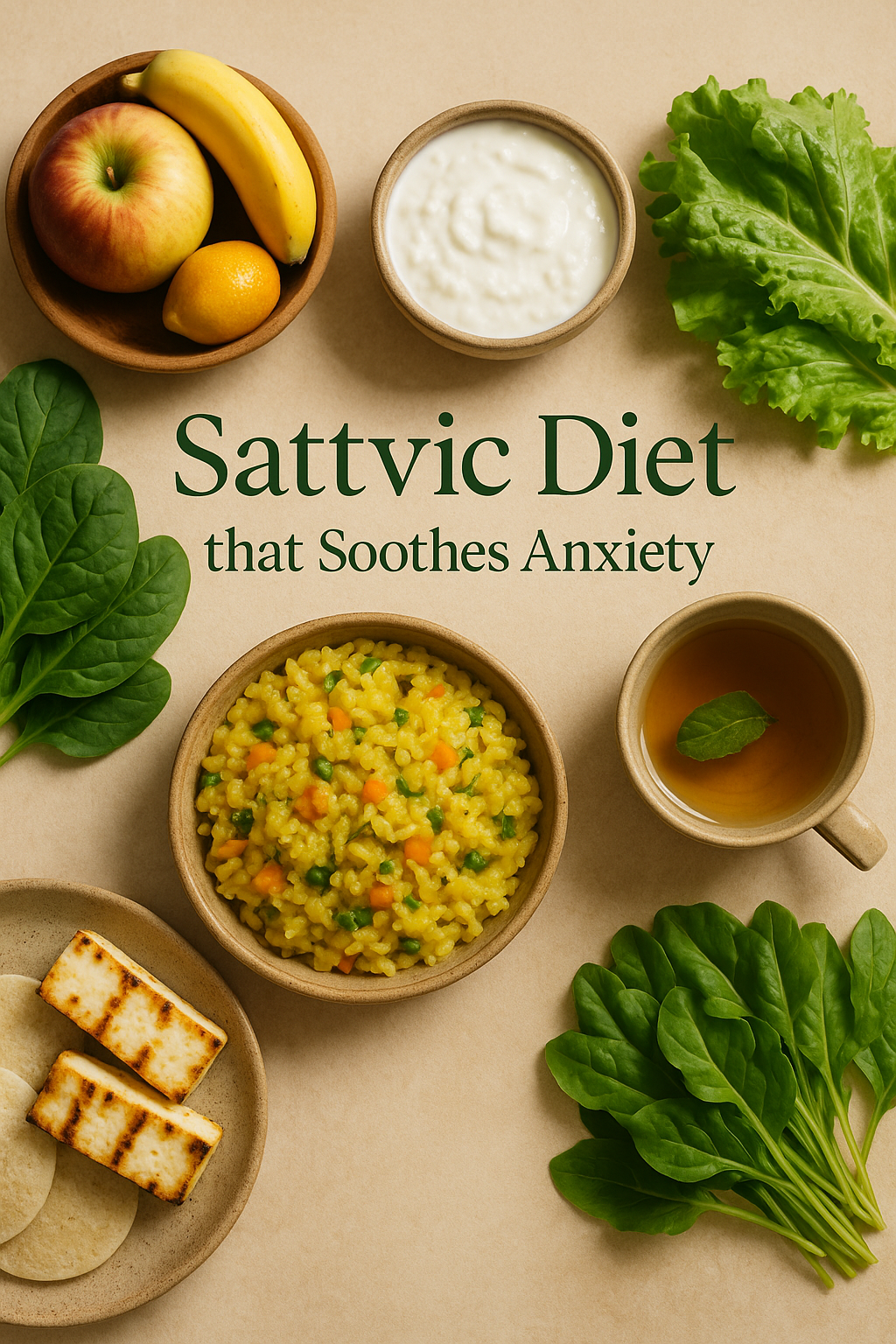
“Sattva” in Sanskrit means purity, clarity, and balance. A Sattvik diet is rooted in Ayurvedic tradition and is designed to bring peace to the body and mind. It consists of:
-
Fresh fruits and vegetables 🍎🥦
-
Whole grains 🌾
-
Nuts and seeds 🥜
-
Plant-based proteins (like lentils and legumes) 🥣
-
Natural dairy (milk, ghee, curd — when well tolerated) 🥛
-
Mild spices and herbs 🌿
-
Herbal teas and warm water infusions 🍵
It strictly avoids stimulants, processed or fermented foods, and anything overly spicy, oily, stale, or tamasic (foods that increase dullness or inertia).
👉How Anxiety Is Wrecking Your Gut: The Gut-Brain Connection Explained
👉Cortisol and Food: How Stress Eating Wrecks Your Hormones
🌿 Sattvik View on Fermented Foods Like Idli & Dosa
-
Mild fermentation is allowed in Ayurveda when it enhances digestibility, doesn’t produce strong sourness, and the food is freshly prepared.
-
Idli and dosa batter, when fermented mildly and cooked fresh, are considered acceptable and even beneficial in moderation.
✔️ Key is balance and freshness:
-
Use minimal fermentation time—just enough to activate natural bacteria.
-
Avoid sour, over-fermented batter (which would be considered tamasic).
-
Serve with Sattvik sides like coconut chutney or vegetable sambar (no onion/garlic during strict Sattvik observance).
✅ When Idli/Dosa Are Okay in a Sattvik Diet:
-
Fermentation is done overnight or 6–8 hours—not over 24 hours.
-
Batter doesn’t smell strong or sour.
-
Eaten in the morning or lunch, not at night.
-
Prepared with clean, mindful intention (Ayurveda emphasizes “Ahara Vidhi” or how food is made too!)
⚠️ When They’re Not:
-
If the batter is store-bought and very sour
-
If paired with heavy chutneys (onion/garlic/tamarind heavy)
-
If deep-fried into vadas or oily dosas with excess ghee/oil
👉Fermented Foods: The Secret to Better Gut Health, Immunity, and Overall Wellness
🧠 How the Sattvik Diet Helps with Anxiety
-
Balances Gut-Brain Axis 🧘♀️
A calm gut equals a calm mind. The Sattvik diet promotes gentle digestion, reducing inflammation and bloating that can aggravate anxiety. -
Reduces Nervous Energy 🔥
By avoiding caffeine, alcohol, garlic, onions, and heavy meats, the body experiences less stimulation and nervous excitation. -
Boosts Mood Naturally ☀️
High levels of magnesium, tryptophan, and B vitamins in Sattvik foods help improve serotonin levels and emotional resilience. -
Regulates Sleep and Hormones 🌙
The light, nourishing nature of this diet supports better sleep patterns and a more balanced hormonal environment.
🍽️ Sample Sattvik Anxiety-Supportive Day
🌄💧Early morning:
-
Warm water with lemon and honey 🍋🍯
-
Soaked almonds + 1 fig
🌅 Breakfast:
-
Moong dal chilla with coconut chutney
🍎 Mid-morning Detox:
-
1 seasonal fruit (apple or pear)
-
Herbal tea with tulsi or chamomile
🍛 Lunch:
-
Mix vegetable khichdi with ghee
-
Beetroot raita (curd if tolerated)
-
Steamed spinach or lauki sabzi
🥗 Evening Snack:
-
Roasted makhana or murmura chivda
-
CCF tea (cumin, coriander, fennel)
🌙 Early Dinner (Before 7 PM):
-
Light vegetable soup with lentils
-
1 soft phulka with ghee
💤 1 hour Before Bedtime:
-
1 soaked date or small banana (supports stable blood sugar overnight, promotes better sleep, reduces nighttime acidity, & supports bowel movements next morning)
-
Warm turmeric milk (if dairy is tolerated) OR Chamomile or Brahmi tea
👉14-Day Metabolic Reset to Reduce Bloating and Improve Energy
👉Anti-Inflammatory Diet 101: How Food Can Fight Inflammation
🔬 Modern Science Backs It Too
Recent studies show a strong link between diet and mental health:
- Vegan and vegetarian diets, when well planned, can be rich in phytonutrients and antioxidants, which have been associated with lower levels of inflammatory markers, such as C-reactive protein (CRP) and interleukin-6 (IL-6). These findings indicate a potential role in reducing systemic inflammation and oxidative stress, both of which are linked to neurodegenerative diseases.
- Plant-based eating pattern is associated with a reduced risk of psychological symptoms.
-
Gut-friendly foods high in prebiotic fiber (like whole grains and lentils) may improve mood, anxiety, stress, and sleep in adults with moderate psychological distress.
💛 Final Thoughts: Eat Peacefully, Live Peacefully
The Sattvik diet is not just a way to eat—it’s a lifestyle of calm, compassion, and clarity. If you’re struggling with anxiety, consider what’s on your plate. You don’t have to be perfect, but leaning toward Sattvik principles could bring the grounding your nervous system needs.
✨ Let food be your first medicine—gently, lovingly, and mindfully.
🔗 You May Also Find These Readings Helpful:
👩⚕️ Struggling With IBS? Let’s Find Your Triggers Together.
Living with IBS means every meal can feel uncertain. At IYSA Nutrition, I work with you one-to-one to identify your personal FODMAP triggers, build a sustainable Indian diet that keeps symptoms under control, and support your gut-brain health holistically.
Your personalised IBS nutrition plan includes:
- 🥗 A personalised low-FODMAP Indian meal plan — no generic Western advice
- 🔍 Systematic trigger identification through guided reintroduction
- 💊 Nutritional deficiency correction (iron, Vitamin D, B12, magnesium)
- 🧘♀️ Gut-brain support — stress, sleep, and nervous system strategies
- 📲 WhatsApp tracking support between sessions
References:
- Clemente-Suárez VJ, Redondo-Flórez L, Martín-Rodríguez A, Curiel-Regueros A, Rubio-Zarapuz A, Tornero-Aguilera JF. Impact of Vegan and Vegetarian Diets on Neurological Health: A Critical Review. Nutrients. 2025; 17(5):884. Link
- Karimi, E., Heidari, H., Kazemi, M., Hadi, A., Askari, G., Khorvash, F., & Arab, A. (2025). Plant-based eating pattern and psychological symptoms: a cross-sectional survey among patients with migraine. Nutritional Neuroscience, 1–12. Link
- Freijy TM, Cribb L, Oliver G, et al. Effects of a high-prebiotic diet versus probiotic supplements versus synbiotics on adult mental health: The “Gut Feelings” randomised controlled trial. Front Neurosci. 2023;16:1097278. Link

Akanksha Sharma
Dr Akanksha Sharma (MBBS, MD) is a physician and women’s health nutrition specialist, and the founder of IYSA Nutrition. She provides evidence-based, doctor-led nutrition guidance for pregnancy, postpartum recovery, PCOS, child nutrition, and family health, helping women make calm, informed decisions about their health and their children’s well-being.