For many parents, the dinner table becomes a battleground the moment broccoli or Brussels sprouts make an appearance. Known for their slightly bitter taste and pungent aroma, cruciferous vegetables—part of the Brassicaceae family—are often the first foods rejected by toddlers.
However, as a pediatric-focused nutrition program, ‘Little Legends‘, we know that these vegetables are arguably the most nutrient-dense foods you can offer a growing child. From supporting “Phase II” liver detoxification to building a robust gut microbiome, the benefits are unparalleled.
In this guide, we’ll explore the science behind these “super-veggies,” how to introduce them safely, and the rare instances when you should actually be concerned.
1. The Sulforaphane Secret: Why These Veggies are Non-Negotiable
The primary reason we push for cruciferous intake isn’t just “fibre”—it’s a powerful phytochemical called Sulforaphane. When a cruciferous vegetable is chopped or chewed, a plant enzyme called myrosinase transforms glucoraphanin into sulforaphane. This compound is a potent activator of the Nrf2 pathway, which is the body’s primary defence against oxidative stress and inflammation.
The Clinical Takeaway: Research suggests that early exposure to these compounds may provide long-term neuroprotective benefits and support the developing immune system. It is established that sulforaphane helps regulate cellular defences, which is critical during the rapid growth phases of childhood.
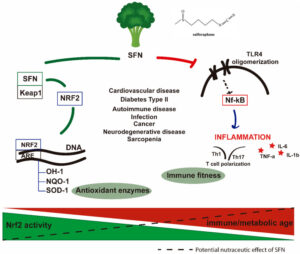
Figure: The umbrella protective effect of Sulforaphane in immune/metabolic ageing.
2. When to Worry: Goitrogens and the Thyroid Myth
A common concern circulating in wellness circles is that cruciferous vegetables are “goitrogenic”—meaning they interfere with iodine uptake in the thyroid gland. For a developing child, thyroid health is paramount for brain development.
Should you worry?
In short: Rarely. The goitrogenic effect of vegetables like broccoli or Kai Lan is only clinically significant if:
-
The child has a pre-existing severe iodine deficiency.
- The child has diagnosed with hypothyroidism and poor iodine intake.
-
The child is eating massive quantities (more than 1 kg) of raw cruciferous vegetables daily.
- If you live in an iodine-deficient region.
-
If iodised salt is completely avoided (NO salt to be given before 1 year of age).
Research indicates that for healthy individuals with adequate iodine intake, the consumption of Brassica vegetables does not adversely affect thyroid function. To be safe, always ensure your child’s diet includes iodine-rich foods like seaweed, fish, or iodised salt.
3. Safe Execution: Choking Hazards and Digestive Comfort
Safety is the first priority when introducing these to babies and toddlers.
The Choking Risk
Raw broccoli florets or tough stems of Choy Sum are high-risk choking hazards for children under age 4.
-
Ages 6–12 Months: Serve “broccoli trees” steamed until very soft (mashable between fingers).
-
Ages 12–24 Months: Chop into bite-sized pieces or finely “rice” the cauliflower/broccoli into porridges.
The “Gas” Factor
Cruciferous vegetables contain raffinose, a complex sugar that humans cannot digest without help from gut bacteria. This can lead to bloating or “tummy aches” in sensitive kids.
-
The Fix: Always start with small portions and cook the vegetables. Steaming or sautéing breaks down some of the complex fibres, making them easier on a developing digestive tract.
4. The Singaporean Plate: Local Cruciferous Superstars
You don’t need to buy imported kale to get the benefits. Some of the best cruciferous vegetables are staples in Singaporean markets.
| Local Vegetable | Nutrient Profile | Best Prep for Kids |
| Kai Lan (Chinese Broccoli) | High in Vitamin K and Calcium | Steamed and finely chopped into fried rice. |
| Choy Sum | Rich in Folate and Fiber | Sautéed with garlic and ginger to aid digestion. |
| Bok Choy | High in Vitamin C and Beta-Carotene | Added to soups or broths to soften the stalks. |
| Cabbage (Wong Bok) | Excellent for gut healing | Fermented as a “mild” sauerkraut for older kids. |
5. Overcoming Food Neophobia: The “15 Times” Rule
If your child spits out broccoli, don’t give up. “Food Neophobia”—the fear of new foods—is a biological survival mechanism.
A study on taste preferences shows that children may need to be exposed to a new vegetable 8 to 15 times before they accept the flavor.
Pro-Tip: Pair the “bitter” veggie with a “safe” flavour. This might mean serving broccoli with a touch of peanut sauce or mixing finely chopped Kai Lan into a savoury egg omelet.
6. Deep Dive: Cruciferous Veggies and the Gut Microbiome
We are now learning that the fibre in cruciferous vegetables acts as a prebiotic, specifically feeding Bifidobacteria.
Research has demonstrated that broccoli consumption significantly alters the human gut microbiome, increasing the diversity of beneficial bacteria. For children, a diverse microbiome is linked to lower rates of allergies and better immune resilience.
FAQs: Cruciferous Veggies for Kids ❓
Q: Can my child eat raw kale in a smoothie?
A: Small amounts are fine occasionally, but for children, lightly steaming is better. This reduces the risk of oxalates (which can interfere with calcium absorption) and makes the fibre easier to digest.
Q: What if my child has a G6PD deficiency?
A: Generally, cruciferous vegetables are safe for G6PD-deficient children. However, always consult your paediatrician before introducing large amounts of any new “sulfur-rich” food.
Q: Is “broccoli sprout” extract safe for kids?
A: We always prefer “food first.” While supplements are powerful, the synergistic effect of the whole vegetable (fibre + vitamins + minerals) is safer and more effective for growing bodies.
Q: My child gets very gassy after eating cabbage. What should I do?
A: Try adding a slice of fresh ginger to the cooking water. Ginger contains gingerols, which help stimulate digestive enzymes and reduce intestinal gas.
Summary: Little Legends Strategy ✅
-
Steaming is Superior: It preserves the sulforaphane-producing enzymes while softening the fibres.
-
Think Local: Choose any local crucifers from the wet market.
-
Persistence is Key: It takes up to 15 tries to “train” a toddler’s palate.
-
Watch the Iodine: If they eat lots of broccoli, ensure they also get egg yolk, dairy, seaweed or fish (all are important sources of iodine).
Ready to Build a Healthier Future for Your Family? 🌸
Explore our various programs for kids’ and teens’ health.
👉 Book your Family Wellness Discovery Call Today (Free call)
You may also find these helpful:
📌Why Are So Many Kids Becoming Fussy Eaters?
📌How to Know If Your Child Is Getting Enough Protein!
📌Early Puberty in Girls: A Calm, Doctor-Reviewed Guide for Parents
📌7 Parenting Tips to Raise Resilient, Well-Adjusted Children
📌Healthy Snacks for Kids Without Cooking
📌Hidden Sugar in Indian Kids’ Snacks (And Healthier Swaps)

Akanksha Sharma
Dr Akanksha Sharma (MBBS, MD) is a physician and women’s health nutrition specialist, and the founder of IYSA Nutrition. She provides evidence-based, doctor-led nutrition guidance for pregnancy, postpartum recovery, PCOS, child nutrition, and family health, helping women make calm, informed decisions about their health and their children’s well-being.