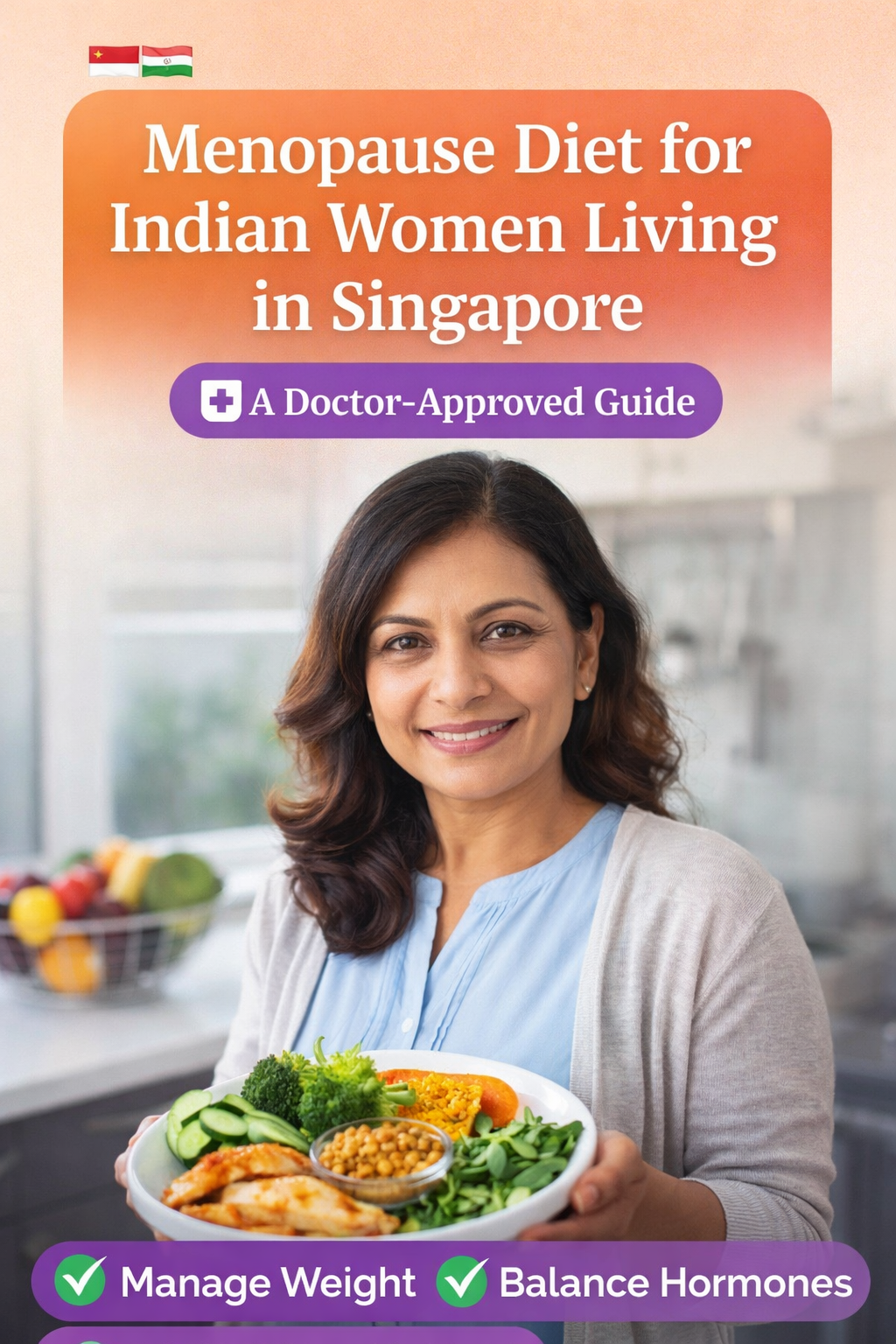
Menopause is not just the end of periods; it is a metabolic, hormonal, and inflammatory transition that affects weight, blood sugar, cholesterol, bones, sleep, and mental health.
For Indian women living in Singapore, this transition can feel even harder due to:
-
Sedentary work culture
-
High-carbohydrate Indian diets
-
Easy access to refined foods and hawker meals
-
Vitamin D deficiency despite sunny weather
-
Genetic insulin resistance is common in South Asians
This article explains exactly how Indian women in Singapore should eat during menopause, backed by science, not diet trends.
👉Hormone Therapy in Singapore: Benefits, Risks and What Your Doctor May Not Have Told You
Why Menopause Weight Gain Is Common in Indian Women 🧬
After menopause, falling estrogen levels lead to:
-
Reduced insulin sensitivity
-
Increased visceral (belly) fat
-
Loss of muscle mass
-
Slower resting metabolic rate
South Asian women already have higher body fat at lower BMI, making menopausal changes more pronounced.
Research shows that estrogen deficiency promotes central fat accumulation and insulin resistance, even without increased calorie intake.
📌 Key insight: Menopause weight gain is hormonal, not a willpower problem.
Unique Challenges for Indian Women Living in Singapore
1️⃣ High-Carb, Low-Protein Indian Meals
Traditional Indian meals often rely on rice, roti, dosa, or idlis, with limited protein.
Low protein intake accelerates muscle loss and worsens metabolic health in postmenopausal women.
2️⃣ Vitamin D & Bone Health Risk
Despite abundant sunlight, Vitamin D deficiency is extremely common among Indian women in Singapore, increasing osteoporosis risk.
Vitamin D deficiency is strongly linked to bone loss and fracture risk after menopause.
👉Menopause and Osteoporosis: Prevention Starts Earlier Than You Think
👉Bone Health for Indian Women: Preventing Osteoporosis Before It’s Too Late
3️⃣ Increased Risk of Diabetes & Heart Disease
Postmenopausal women experience:
-
Rising blood sugar
-
Higher LDL cholesterol
-
Increased cardiovascular risk
South Asian ethnicity further amplifies this risk
Core Principles of a Menopause Diet (Indian Context) 🥗
🟢 1. Protein Is the Cornerstone
Adequate protein:
-
Preserves muscle
-
Improves insulin sensitivity
-
Reduces belly fat
Higher protein diets improve body composition and metabolic health in postmenopausal women.
Indian protein sources:
-
Paneer (80–100 g)
-
Greek yoghurt / hung curd
-
Eggs
-
Dal + sprouts
-
Tofu / tempeh
-
Whey protein (if tolerated)
🟢 2. Choose Low-Glycaemic Carbohydrates
Refined carbs worsen insulin resistance and weight gain during menopause.
Low-glycaemic-index diets improve glucose control and cardiometabolic risk in postmenopausal women
Better Indian carb choices:
-
Jowar, bajra, ragi
-
Oats, barley
-
Lentils and beans
-
Small portions of red rice
🟢 3. Healthy Fats Support Hormonal Health 🫒
Healthy fats reduce inflammation and protect the heart.
Best fats:
-
Olive oil
-
Nuts & seeds
-
Coconut (moderation)
-
Fatty fish (if non-vegetarian)
🟢 4. Calcium + Vitamin D Are Non-Negotiable 🦴
Bone loss accelerates rapidly after menopause.
Exercise combined with nutrition significantly improves bone mineral density in postmenopausal women.
Indian calcium sources:
-
Curd, paneer
-
Sesame seeds
-
Ragi
-
Leafy greens
Sample Menopause-Friendly Indian Day (Singapore Lifestyle)
Breakfast
-
Moong dal chilla + Greek yogurt
Lunch
-
1 jowar roti
-
Paneer / dal
-
Vegetable sabzi + salad
Snack
-
Fruit + nuts or yoghurt
Dinner (early)
-
Vegetable soup
-
Grilled paneer/tofu
-
Stir-fried vegetables
📌 Portions must be personalised.
👉Menopause-Friendly Gut & Bone Health Diet and Lifestyle Plan
👉Hot Flashes and Food: What to Eat During Menopause
Foods to Limit During Menopause 🚫
-
Sugary drinks
-
Fruit juices
-
Fried snacks
-
Alcohol
-
Late-night meals
👉The Ultimate Guide to the Best Diet for Menopause: What to Eat (and to Avoid) to Thrive
Lifestyle Habits That Make the Diet Work ✨
-
Strength training 2–3×/week
-
Walking after meals
-
Stress management
-
7–8 hours of sleep
FAQs ❓
Q1. Should Indian women avoid rice after menopause?
No. Portion size, timing, and protein pairing matter more.
Q2. Is intermittent fasting safe during menopause?
It can help some women but worsen fatigue in others — personalisation is essential.
Q3. Do vegetarian Indian women get enough protein?
Usually not without careful planning or supplementation.
Q4. Can diet alone fix menopause weight gain?
Diet + resistance training + sleep optimisation works best.
Doctor’s Note 👩⚕️
Menopause is not a failure of discipline — it requires medical nutrition, not generic diet charts.
If you are an Indian woman living in Singapore (35–55 years) struggling with menopause-related weight gain, PCOS, thyroid issues, diabetes, or fatigue:
👉 Join my doctor-led menopause nutrition program, customised for Indian diets and Singapore lifestyles.
👉Book a consultation call (FREE)

Akanksha Sharma
Dr Akanksha Sharma (MBBS, MD) is a physician and women’s health nutrition specialist, and the founder of IYSA Nutrition. She provides evidence-based, doctor-led nutrition guidance for pregnancy, postpartum recovery, PCOS, child nutrition, and family health, helping women make calm, informed decisions about their health and their children’s well-being.