A doctor’s perspective on hidden insulin resistance, lifestyle triggers, and what actually helps
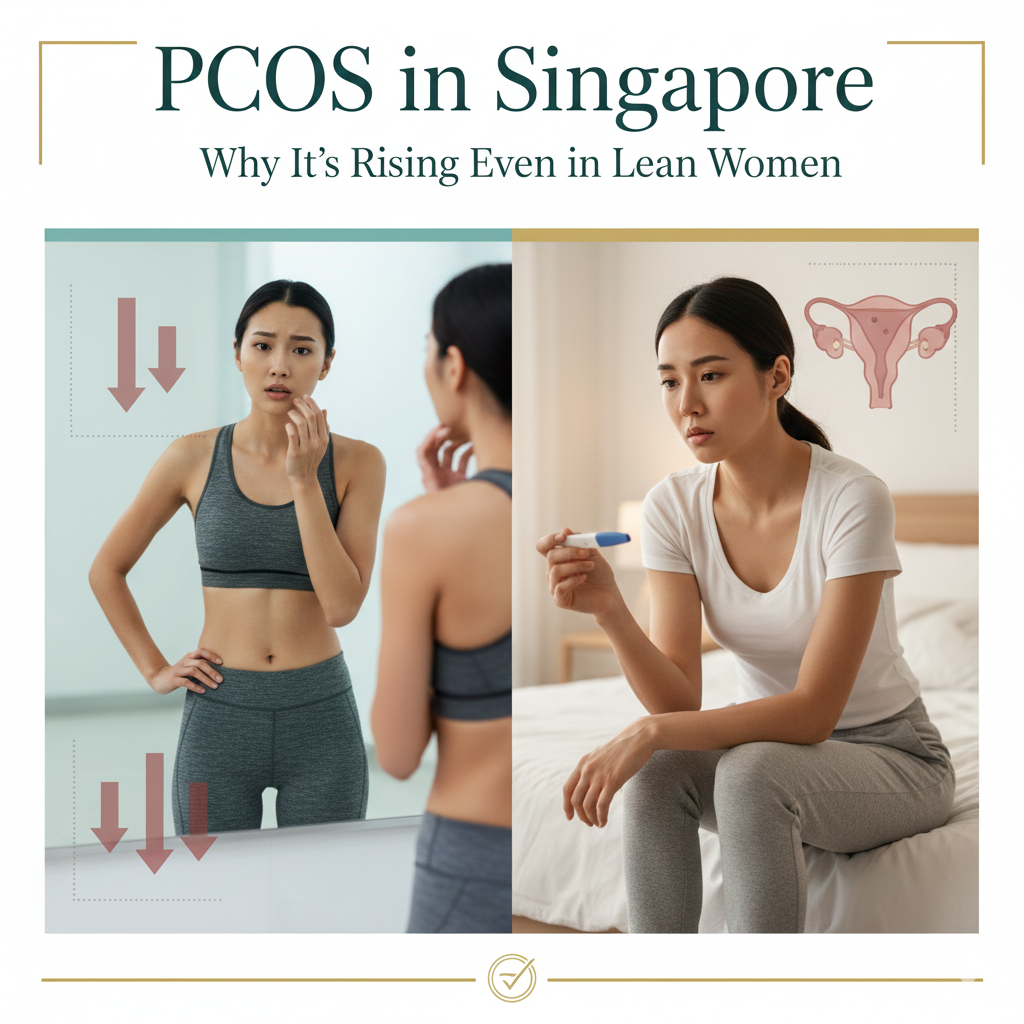
Polycystic Ovary Syndrome (PCOS) is no longer seen only in overweight women. In Singapore, I increasingly see lean, active, “healthy-looking” women struggling with irregular periods, acne, hair fall, infertility, or unexplained fatigue, only to be diagnosed with PCOS later.
So what’s happening?
👉 PCOS is rising even in lean women, and weight alone is no longer a reliable marker.
This article explains why PCOS is increasing in Singapore, the science behind lean PCOS, and what women can do—practically and safely.
👉PCOS and Hair Loss: Why It Happens and What to Eat
👉PCOS and Insulin Resistance in Singapore: What Works Beyond Metformin
PCOS in Singapore: a growing concern
PCOS is one of the most common endocrine disorders in women of reproductive age worldwide. Asian populations, including Singaporean women, appear to have:
-
Higher insulin resistance at lower BMI
-
Earlier metabolic risk despite being “lean”
-
Underdiagnosis due to normal weight masking symptoms
Many women are told: “Your weight is normal, so it can’t be PCOS.”
This is outdated and incorrect.
👉Navigating PCOS Diagnosis in Singapore: Polyclinic, KKH, or Private Specialist?
What is “Lean PCOS”? ⚖️
Lean PCOS refers to women who:
-
Have a normal or low BMI
-
Still meet PCOS diagnostic criteria (irregular cycles, hyperandrogenism, polycystic ovaries)
-
Often have hidden insulin resistance, inflammation, or hormonal dysregulation
Research confirms that insulin resistance is present even in lean PCOS, though it may be subtler than in obese PCOS.
Why PCOS is rising in lean women in Singapore 🧠
1️⃣ Hidden insulin resistance (even without weight gain)
Asian women tend to develop insulin resistance at lower BMI thresholds. Even when fasting glucose looks “normal,” post-meal spikes and hyperinsulinaemia may be present.
👉 This excess insulin drives:
-
Ovarian androgen production
-
Irregular ovulation
-
Acne and hair issues
2️⃣ Chronic stress & cortisol overload 😮💨
Singapore’s high-achievement culture, long work hours, and mental load contribute to chronically elevated cortisol.
Cortisol:
-
Worsens insulin resistance
-
Disrupts ovulation
👉Burnout in High-Achieving Singapore Mothers
3️⃣ Sleep deprivation & circadian disruption 🌙
Even lean women can develop metabolic dysfunction when sleep is compromised.
4️⃣ Ultra-processed diets despite “healthy eating” 🍪🥤
Many lean women:
-
Eat irregularly
-
Rely on refined carbs, snacks, sweetened drinks
-
Skip meals → overeat later
This pattern leads to repeated insulin spikes, not always weight gain.
👉Managing PCOS while eating at Singapore Hawker Centres
👉How to Eat Healthy While Living in Condos vs HDBs
5️⃣ Over-exercising + under-fuelling 🏃♀️
Excess cardio, inadequate protein, and chronic calorie restriction can:
-
Increase cortisol
-
Suppress ovulation
-
Worsen hormonal imbalance
Lean PCOS is often a fueling problem, not a fat-loss problem.
Key symptoms of lean PCOS (often missed) 🚩
-
Irregular or long cycles
-
Acne or hair thinning despite normal weight
-
Sugar cravings, energy crashes
-
Anxiety, poor sleep
-
Difficulty conceiving despite “healthy lifestyle”
If cycles are irregular, weight alone should never rule out PCOS.
👉Egg Freezing in Singapore: Optimizing Your Hormones for Success
How lean PCOS should be managed (Doctor-approved) ✅
❌ What doesn’t work
-
Extreme calorie restriction
-
Prolonged intermittent fasting
-
Excess cardio without strength training
-
Treating PCOS as “just a fertility issue”
📌Is Intermittent Fasting Right for Singaporean Women? A Doctor’s View
👉PCOS Diet Plan: What to Eat and Avoid, Indian & Singapore Foods
✅ What actually helps
1. Insulin-sensitising nutrition
-
Regular meals
-
Adequate protein (especially breakfast)
-
Fibre-rich carbs
-
Reduced sugar and refined flours
2. Strength training over excess cardio
-
Improves insulin sensitivity
-
Supports hormonal balance
3. Stress & sleep correction
-
Nervous system regulation is not optional in lean PCOS
4. Individualised approach
Lean PCOS ≠ obese PCOS. The strategy must differ.
👉PCOS Diet: What PCOS/ PMOS Women on Medication Must Eat
Printable PCOS Basics Checklist (Free)
PCOS Self-Reflection Checklist
(For awareness, not diagnosis)
Cycle & symptoms
☐ Irregular or missed periods
☐ Acne beyond teenage years
☐ Excess facial/body hair
☐ Hair thinning
Metabolic signs
☐ Sugar cravings
☐ Energy crashes
☐ Difficulty maintaining weight
☐ Family history of diabetes
Lifestyle
☐ Poor sleep quality
☐ High stress levels
☐ Irregular meal timing
☐ Low physical activity
📌 If multiple boxes are checked, personalised guidance can help clarify next steps.
Need clarity instead of conflicting information?
I offer doctor-led consultations and structured PCOS programs designed for Indian and Singaporean lifestyles—practical, sustainable, and evidence-based.
(Educational guidance only. Not a substitute for medical care.)
FAQs ❓
1. Can you have PCOS if you’re thin?
Yes. Many women with PCOS have normal BMI but underlying insulin resistance or hormonal imbalance.
2. Is lean PCOS less serious?
No. Lean PCOS still carries risks—fertility issues, metabolic dysfunction, and long-term health concerns.
3. Should lean women with PCOS lose weight?
Usually no. The focus should be on metabolic and hormonal regulation, not weight loss.
4. Does intermittent fasting help lean PCOS?
Often no. It may worsen stress hormones and cycle irregularity if not carefully personalised.
5. Can PCOS be reversed?
PCOS can be managed effectively and symptoms can go into remission with the right long-term strategy.
Key takeaway 🌱
PCOS in Singapore is no longer a “weight problem.”
It’s a metabolic–hormonal condition influenced by stress, sleep, nutrition, and insulin dynamics—even in lean women.
👉 Early recognition + the right approach can dramatically improve outcomes.
Struggling with irregular periods, acne, or PCOS symptoms despite being lean?
👉 Join my doctor-led PCOS Hormone Reset Program, designed specifically for Singaporean women, including lean PCOS.
You’ll get:
-
Personalised nutrition (not generic dieting)
-
Hormone-friendly routines
-
Stress & cycle-aware strategies
-
Practical plans you can actually sustain
📩 Book a consultation or explore the PCOS Program here!
PubMed References (external, indexed) 📚
-
Dunaif A. Insulin resistance and the polycystic ovary syndrome.
-
A Morciano, et al. Insulin resistance in lean women with PCOS.
Akanksha Sharma
Dr Akanksha Sharma (MBBS, MD) is a physician and women’s health nutrition specialist, and the founder of IYSA Nutrition. She provides evidence-based, doctor-led nutrition guidance for pregnancy, postpartum recovery, PCOS, child nutrition, and family health, helping women make calm, informed decisions about their health and their children’s well-being.