✍️ Written & reviewed by Dr Akanksha Sharma, MBBS MD (Preventive & Community Medicine) | Updated Dec 2025
😮💨 Why So Many Women Feel “Off” — But Are Told They’re Fine
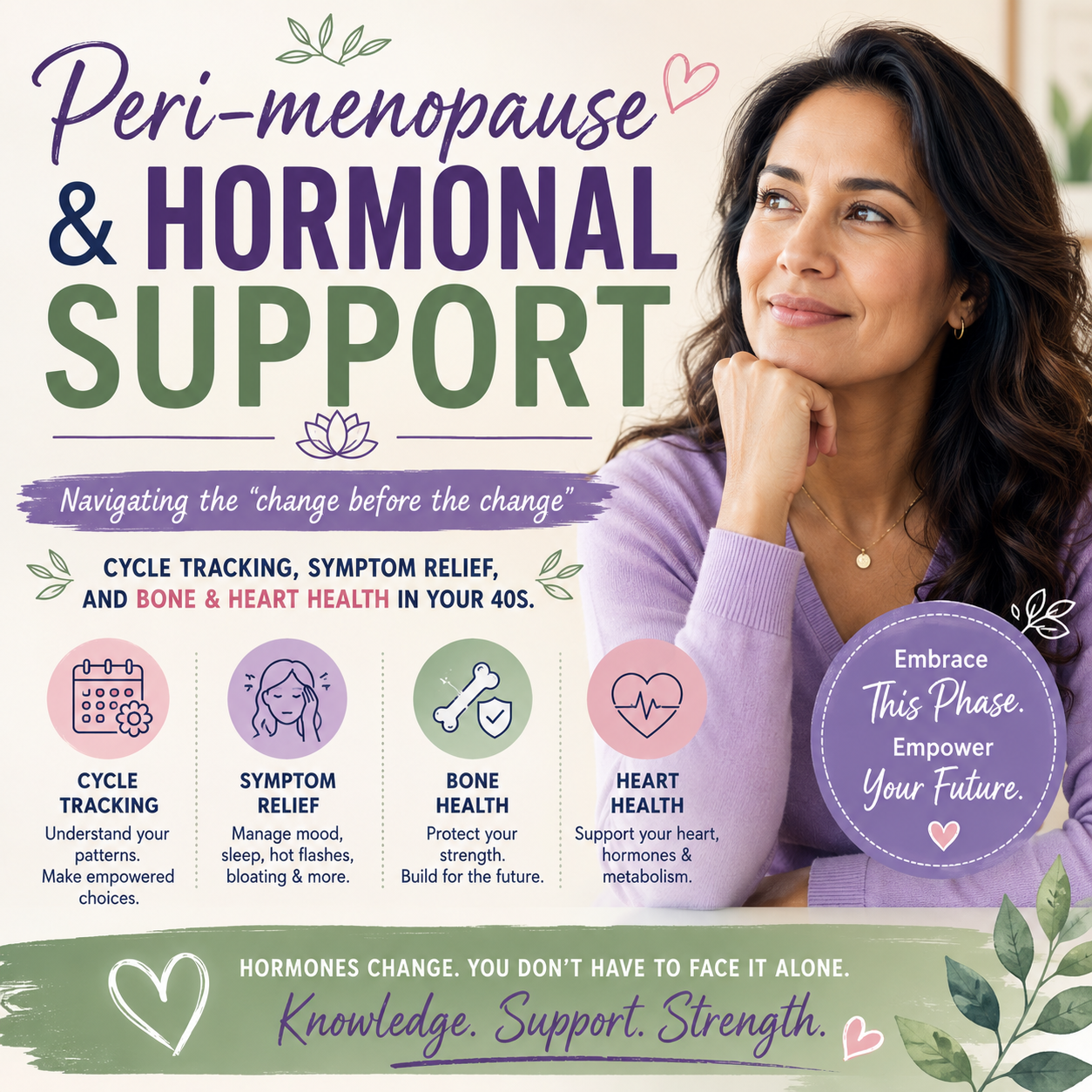
If you’re in your late 30s or 40s and feel like your body doesn’t respond the way it used to, you’re not imagining it. Many women experience:
- Weight gain despite “doing everything right”
- Poor sleep
- Mood swings or anxiety
- Fatigue and brain fog
- Heavier or irregular periods
This guide explains perimenopause — the hormonal transition phase before menopause — in a way that is scientifically accurate, practical, and reassuring. 💜
🔎 What Is Perimenopause?
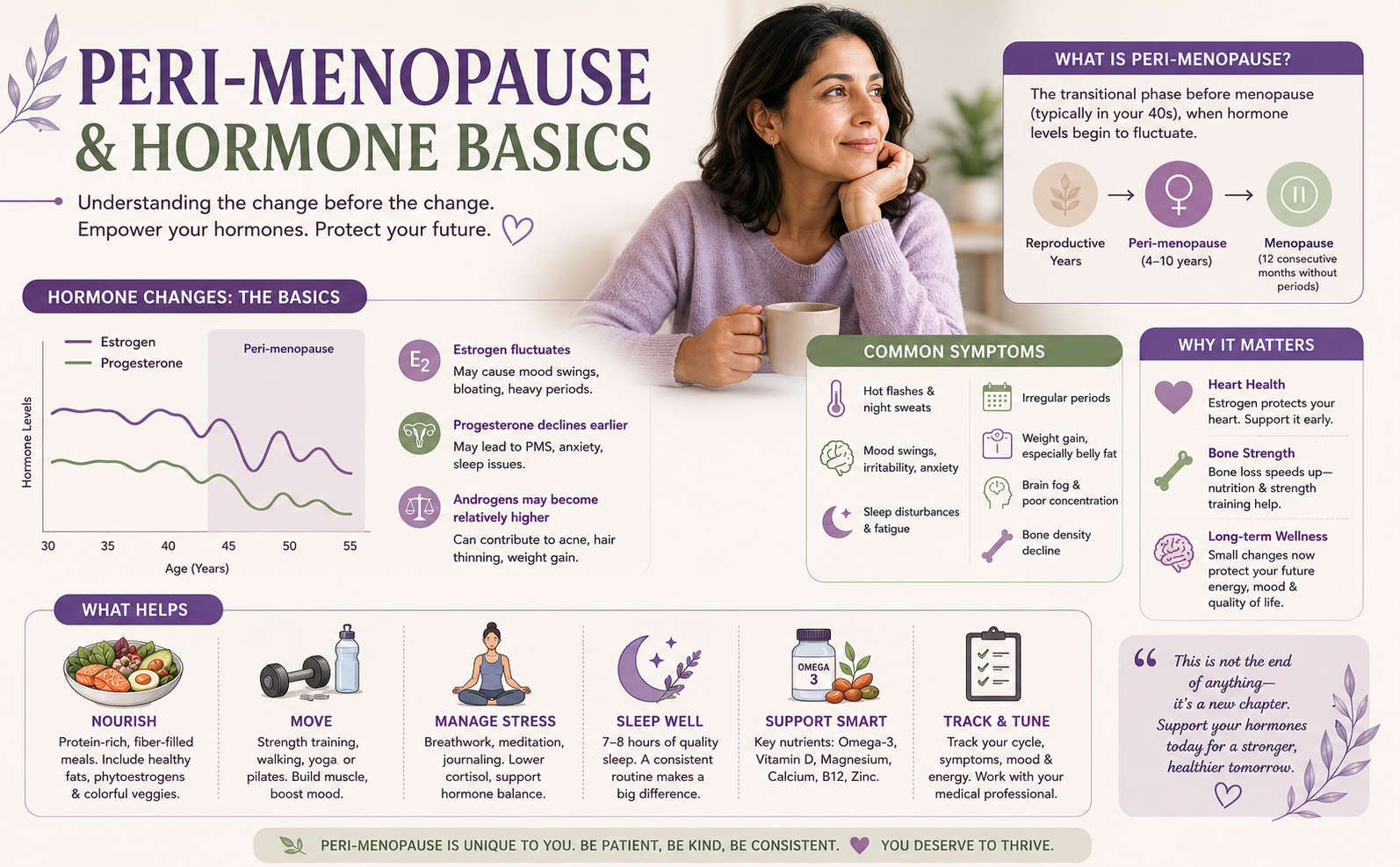
Perimenopause is the transition period before menopause, typically beginning between ages 35–45, and lasting anywhere from 4–10 years. During this phase:
- Ovaries still produce hormones
- But estrogen and progesterone fluctuate unpredictably
- Ovulation becomes inconsistent
- Metabolic and stress hormones become more influential
💡 This is why symptoms can appear years before periods stop.
👉 Navigating Perimenopause: Signs, Symptoms, and Strategies
📋 Common Symptoms (That Are Often Missed)
Perimenopause does not look the same in every woman.
🩸 Hormonal & Menstrual
- Shorter or longer cycles
- Heavier or lighter periods
- Missed ovulation
- Worsening PMS
⚖️ Metabolic Changes
- Central weight gain
- Reduced muscle mass
- Insulin resistance
- Higher cholesterol or HbA1c
🧠 Nervous System & Mood
- Anxiety
- Low mood or irritability
- Sleep disturbance
- Reduced stress tolerance
💪 Cognitive & Physical
- Brain fog
- Fatigue
- Joint aches
- Reduced exercise recovery
👉 A Doctor’s Natural Approaches for Perimenopause Symptom Relief
🩺 Why Blood Tests Often Look “Normal”
This is one of the most frustrating parts of perimenopause.
- Hormone levels fluctuate daily
- A single estrogen or FSH value may look “normal”
- Symptoms often reflect hormone variability, not deficiency
👉 Diagnosis is clinical, not lab-only. Labs help rule out other causes (thyroid, anemia, insulin resistance) — they do not always “confirm” perimenopause.
🔺 The Hormone–Metabolism–Stress Triangle
In perimenopause, three systems interact:
1️⃣ Ovarian hormones
(estrogen, progesterone)
2️⃣ Metabolic hormones
(insulin)
3️⃣ Stress hormones
(cortisol)
When estrogen fluctuates: insulin sensitivity worsens, cortisol effects increase, and sleep and recovery suffer.
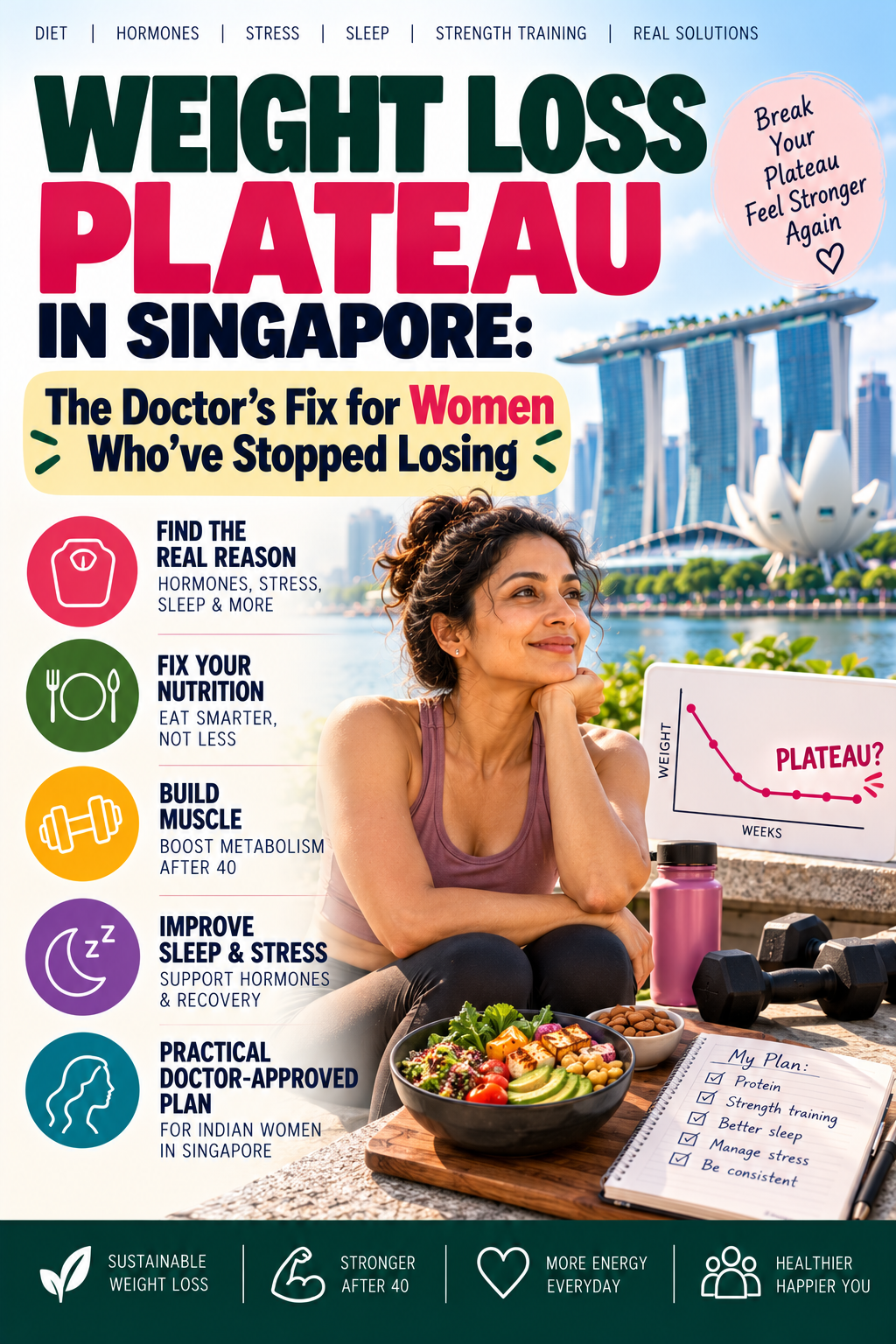
What worked for weight, energy, and mood in your 20s may no longer work.
👉 The Insulin Reset: A Women’s Guide
🥗 What Actually Helps (And What Often Doesn’t)
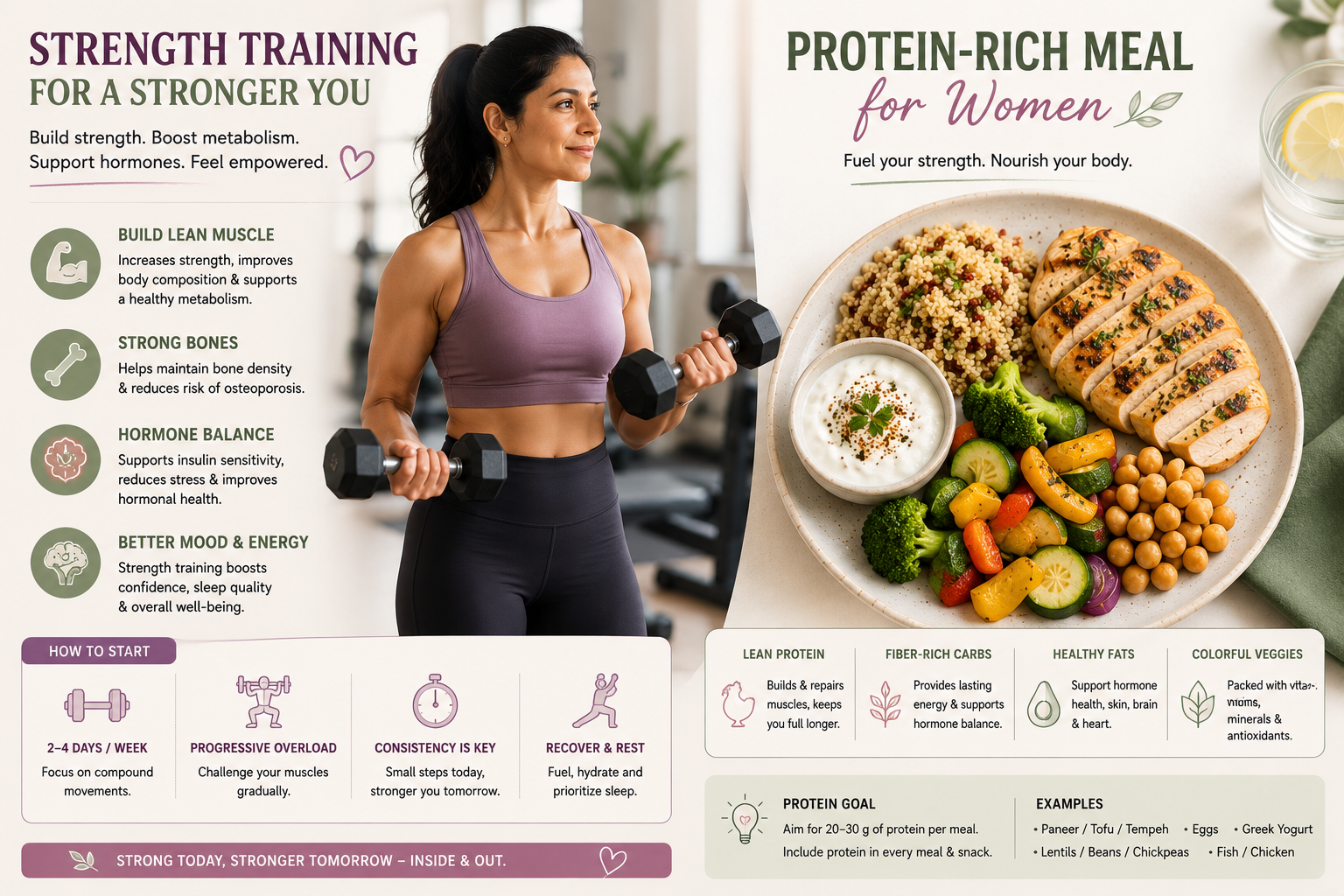
✔️ Helpful Strategies
- Protein-adequate, anti-inflammatory nutrition
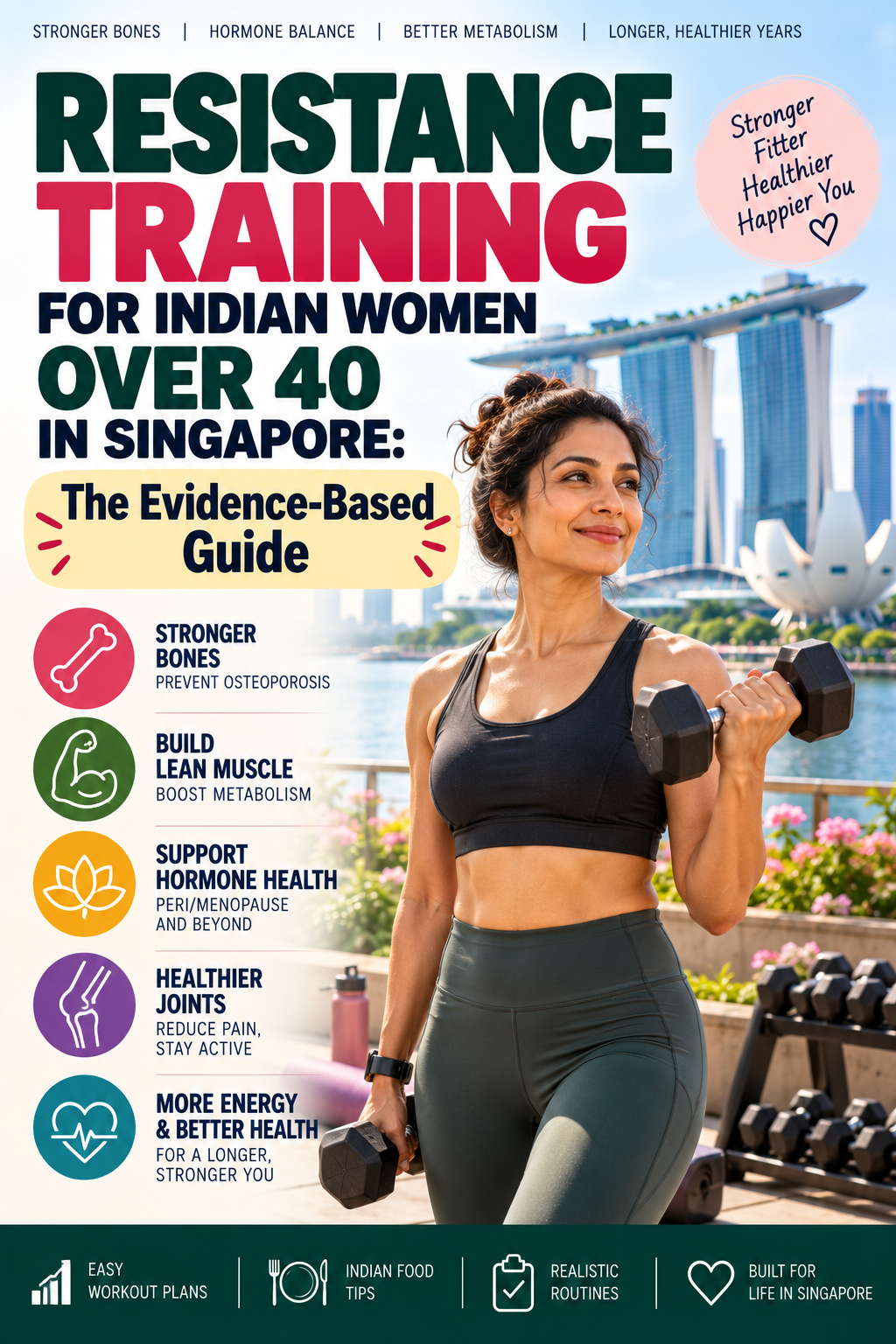
- Strength training (not excessive cardio)
- Sleep and circadian rhythm protection
- Stress-load reduction (not just “relax more”)
- Correcting iron, B12, vitamin D deficiencies
⚠️ Common Mistakes
- Very low-calorie diets
- Excessive fasting
- Over-exercise
- Blaming “lack of willpower”
⚖️ When Nutrition Alone Is Enough — And When It Isn’t
For some women, nutrition, sleep, and training optimisation bring significant relief. For others, persistent symptoms may need medical input, such as:
- Thyroid optimisation
- Progesterone support
- Iron or B12 correction
- Mental health support
Perimenopause is not a failure of lifestyle — it is a physiological transition. 🤍
🚩 When to Seek Professional Support
- Rapid weight gain despite consistency
- Severe PMS or mood changes
- Persistent fatigue or sleep disturbance
- Anxiety that feels “new” or disproportionate
- Brain fog affecting work or daily life
Struggling with hormone changes after 35? 🌼
Navigating hormone changes after 35 doesn’t have to feel confusing or isolating — a structured, evidence-based program for perimenopause and beyond.
❓ Frequently Asked Questions
Is perimenopause the same as menopause?
No. Perimenopause is the transition phase; menopause is defined as 12 months without periods.
Can I be perimenopausal if my periods are regular?
Yes. Many women have regular cycles but still experience hormonal symptoms.
Will I definitely gain weight?
Not inevitably — but body composition changes are common without targeted intervention.
Do I need hormone therapy?
Not everyone does. Decisions are individual and depend on symptoms, risks, and response to lifestyle measures.
Can perimenopause worsen PCOS or thyroid issues?
Yes. Existing metabolic or endocrine conditions often become more symptomatic during this phase.
📚 References
- Santoro N et al. Perimenopause: from research to practice. J Womens Health.
- Burger HG. The endocrinology of the menopause. J Steroid Biochem Mol Biol.
- Davis SR et al. Menopause Hormone Therapy. Lancet.
- El Khoudary SR. Age at menopause and cardiovascular risk. Nat Rev Cardiol.
- Thurston RC et al. Vasomotor symptoms and sleep. Sleep Med Clin.

Akanksha Sharma
Dr Akanksha Sharma (MBBS, MD) is a physician and women’s health nutrition specialist, and the founder of IYSA Nutrition. She provides evidence-based, doctor-led nutrition guidance for pregnancy, postpartum recovery, PCOS, child nutrition, and family health, helping women make calm, informed decisions about their health and their children’s well-being.