
✍️ Written & reviewed by Dr Akanksha Sharma, MBBS MD (Preventive & Community Medicine) | Updated Dec 2025
🤱 Why the Fourth Trimester Matters
The weeks after childbirth are often described as “happy but exhausting.” In reality, the fourth trimester (the first 12 weeks postpartum) is one of the most physiologically demanding periods in a woman’s life — marked by rapid hormonal shifts, tissue healing, sleep deprivation, emotional vulnerability, and the responsibility of caring for a newborn.
💗 Yet, medical care often drops off after delivery. This guide exists to fill that gap — with calm, practical, evidence-based guidance on what is normal, what needs attention, and when to seek help — for both mother and baby.
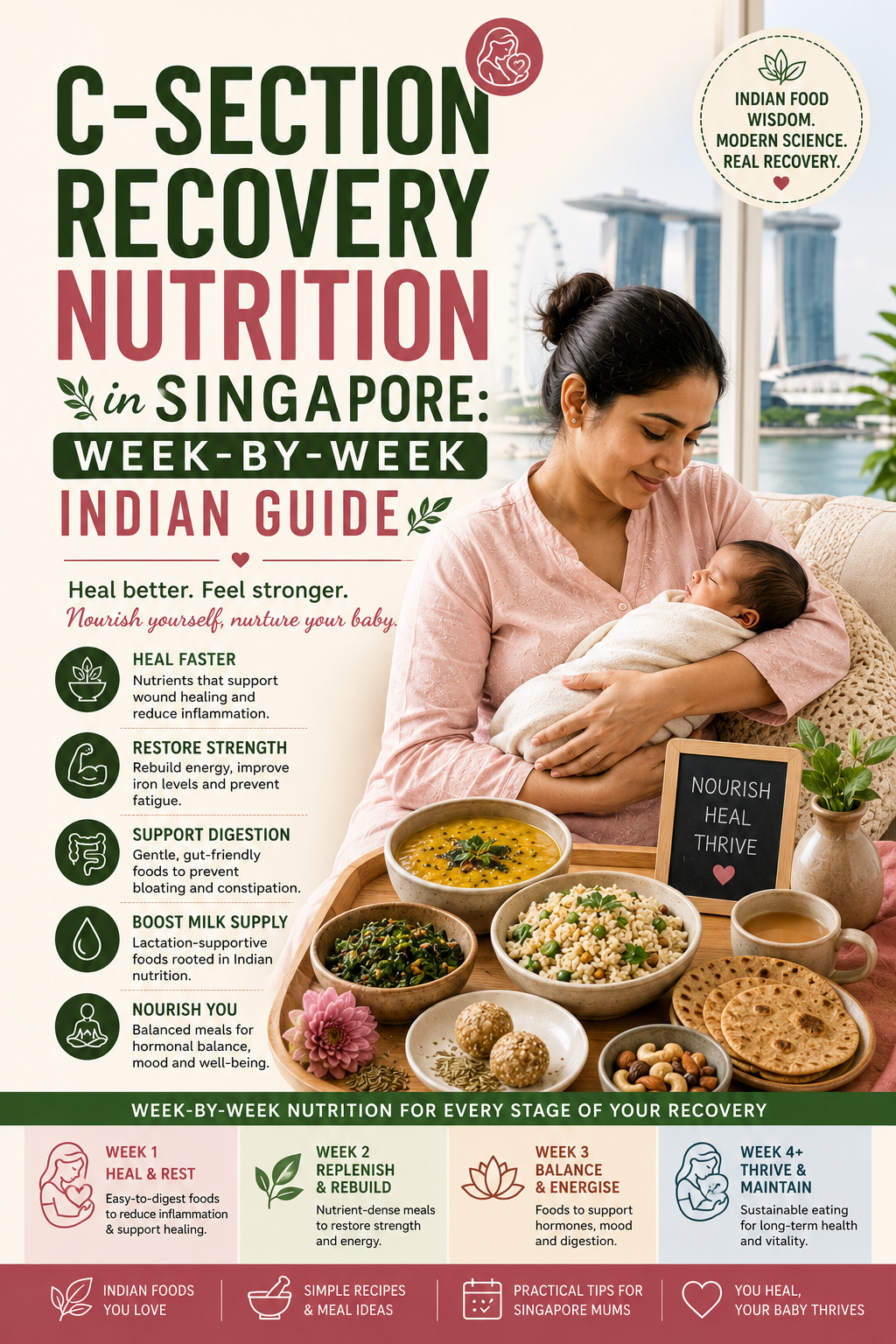
👉 C-Section Recovery Nutrition in Singapore: Week-by-Week Indian Guide
🔎 What Is the Fourth Trimester?
The fourth trimester refers to the first 12 weeks after childbirth, when:
- The uterus involutes
- Hormones shift dramatically (estrogen, progesterone, prolactin)
- Sleep deprivation peaks
- Breastfeeding or feeding routines establish
- Emotional regulation is fragile
- Babies transition from womb to world
This is not a “bounce-back” phase. It is a healing, adaptation, and stabilisation phase. 🌸
👉 Returning to Work After Maternity: How to Keep Up Nutrition
Explore the NURTURE: Mother & Baby Fourth Trimester Program — a doctor-led, evidence-based program supporting healing, feeding, and emotional recovery. 💜
🩹 PART 1: Mother’s Recovery — Normal vs Not
😌 Normal Physical Changes
- Vaginal bleeding that gradually tapers (lochia)
- Pelvic heaviness or soreness
- Fatigue disproportionate to activity
- Hair shedding (~6–12 weeks)
- Irregular appetite and thirst
- Mild mood swings in the first 10–14 days
🚩 Red Flags — Need Medical Review
- Heavy bleeding (soaking ≥1 pad/hour)
- Large clots or foul-smelling discharge
- Fever or severe abdominal pain
- Persistent dizziness or weakness
- Painful, red, hard breast lump with fever
- Worsening low mood beyond 2 weeks
🌷 New mom? Book a complimentary 20-minute support call
💭 PART 2: Baby Blues vs Postpartum Depression
Mood changes after birth are common — but not all emotional distress is “normal adjustment.”
🌤️ Baby Blues
- Starts day 3–5 postpartum
- Tearfulness, overwhelm
- Improves by 10–14 days
⚠️ PPD / Anxiety
- Persistent low mood or anxiety
- Sleep disturbance beyond baby’s pattern
- Difficulty bonding
- Feelings of guilt or hopelessness
Early screening using tools like EPDS helps identify women who need support — before symptoms escalate. Emotional health is a medical issue, not a personal failure. 🤍
👉 Post-partum Depression and the Baby Blues: Causes and Management
👉 Postpartum Hair Loss: The Nutritional Truth Nobody Tells You
🍼 PART 3: Feeding & Baby Growth
How clinicians assess feeding adequacy:
- Weight gain trends (WHO growth standards)
- Diaper output
- Feeding behaviour
- Baby’s alertness and hydration
Babies do not need to be chubby to be healthy. What matters is consistent growth along their own curve. 👶
When feeding support is needed:
- Poor weight gain
- Feeding distress
- Reflux impacting feeds
- Maternal exhaustion or pain
Feeding support may include latch optimisation, feeding rhythm adjustments, or temporary supplementation when medically indicated — always with breastfeeding protection where possible.
👉 Newborn Weight Gain: What’s Normal & When to Worry
👉 Breastfeeding vs Formula: Making Informed Decisions Without Guilt
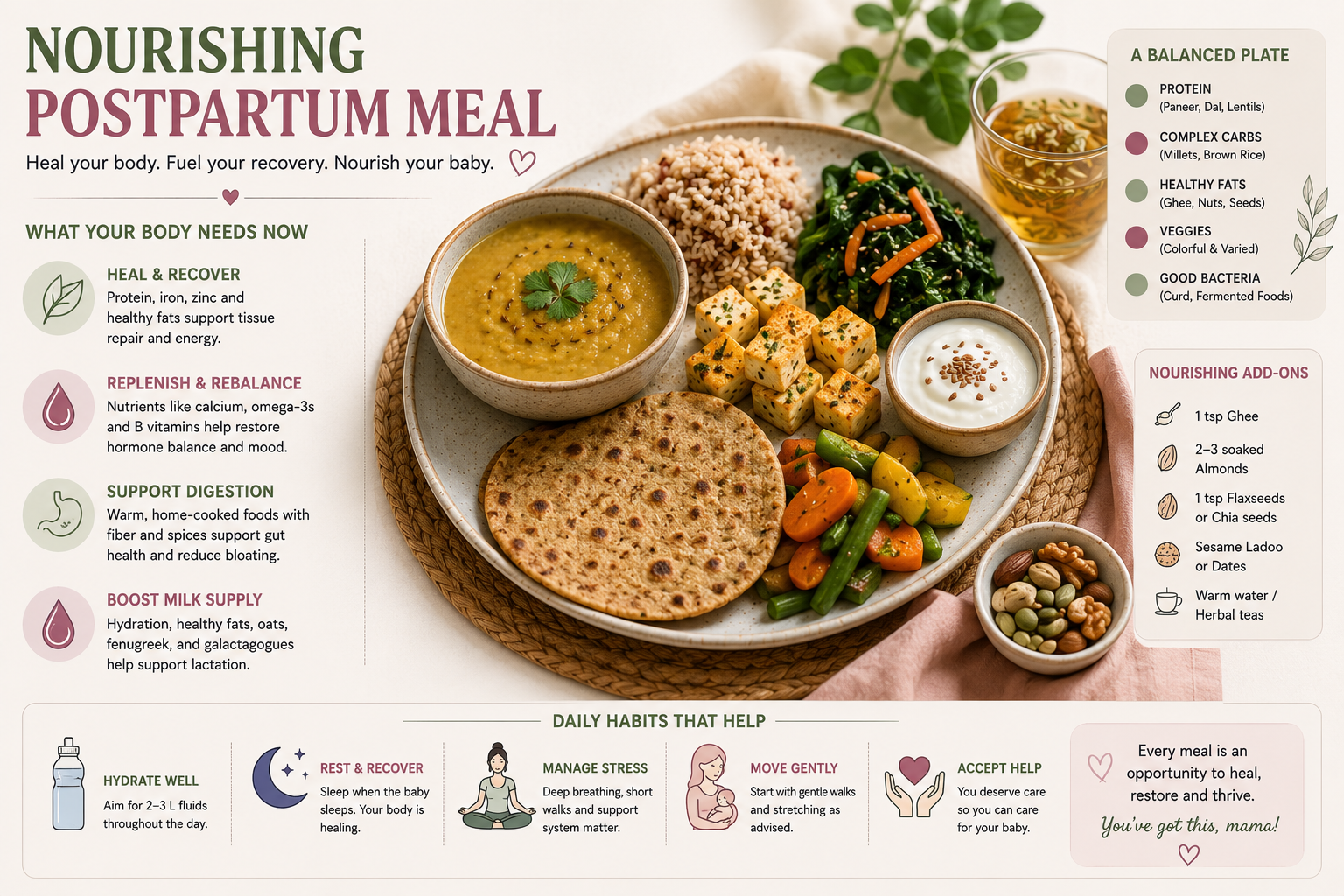
🥗 PART 4: Nutrition for Healing & Energy
Postpartum nutrition is not about weight loss. It is about repair, energy, and milk production.
🥩 Protein: tissue repair, muscle recovery, satiety
🩸 Iron & B12: blood loss recovery, fatigue prevention
🦴 Calcium & Vitamin D: bone and immune health
💧 Fluids: lactation and circulation support
Gentle, culturally realistic meals work better than restrictive plans. 🍲
👉 Confinement Food vs Medical Nutrition: What’s Best for Singapore Moms?
👉 Postpartum Nutrition: Doctor’s Insights for Optimal Recovery
👉 7-Day Meal Plan for Postpartum Recovery: Traditional Indian Diet
😴 PART 5: Sleep, Recovery & Daily Rhythm
Sleep deprivation is unavoidable — but sleep collapse is not.
- Protect at least one consolidated rest window
- Align feeding and rest where possible
- Gentle daylight exposure
- Lower evening cortisol with calming routines
Recovery happens in small, repeatable habits, not perfect routines. 🌙
🚩 When to Seek Help (For Mother or Baby)
- Persistent bleeding or fever
- Mood symptoms worsening after 2 weeks
- Baby feeding poorly or not gaining weight
- Extreme exhaustion that doesn’t improve with rest
- Gut feeling that “something isn’t right”
Trust that instinct. 💛
👉 What Postpartum Moms Should Know: A Comprehensive Guide
👉 Fourth Trimester Care in Singapore: What Hospitals Don’t Cover
🛟 How Structured Fourth Trimester Care Helps
A structured program provides:
- Medical safety checks
- Nutrition & lifestyle guidance
- Emotional health screening
- Feeding and growth monitoring
- Weekly check-ins during a vulnerable period
Need guided support through the fourth trimester? 🌸
A doctor-led, evidence-based program supporting healing, feeding, and emotional recovery.
❓ Frequently Asked Questions
Is it normal to feel overwhelmed even if the baby is healthy?
Yes. Hormonal shifts, sleep loss, and responsibility can overwhelm even well-supported mothers.
When should postpartum bleeding stop?
Bleeding typically tapers over 2–3 weeks. Sudden increases or heavy bleeding need review.
Do all mothers need supplements postpartum?
Not all — supplementation should be guided by symptoms and labs (iron, B12, vitamin D).
How soon can I think about weight loss?
Focus on recovery first. Gentle metabolic reset usually begins after 8–12 weeks.
Can emotional symptoms appear later?
Yes. Postpartum mood disorders can appear anytime within the first year.
📖 Suggested Readings
- Postpartum Nutrition: Doctor’s Insights for Optimal Recovery
- Post-partum Depression and the Baby Blues: Causes and Management
- Newborn Weight Gain: What’s Normal & When to Worry
- The NURTURE Fourth Trimester Program
- Breastfeeding Diet: What to Eat for Optimal Milk Supply
📚 Evidence-Based References (PubMed)
- O’Hara MW, McCabe JE. Postpartum depression: current status and future directions. Annu Rev Clin Psychol.
- Gunderson EP. Breastfeeding and maternal metabolic health. Curr Diab Rep.
- World Health Organization. Postnatal care of the mother and newborn.
- Kendall-Tackett K. The psychoneuroimmunology of postpartum depression. Clin Lactation.
- Victora CG et al. Breastfeeding in the 21st century: epidemiology and lifelong effect. Lancet.

Akanksha Sharma
Dr Akanksha Sharma (MBBS, MD) is a physician and women’s health nutrition specialist, and the founder of IYSA Nutrition. She provides evidence-based, doctor-led nutrition guidance for pregnancy, postpartum recovery, PCOS, child nutrition, and family health, helping women make calm, informed decisions about their health and their children’s well-being.