If you’re a parent in Singapore, you’ve probably heard both extremes:
-
“Kids today eat too much protein.”
-
“My child hardly eats—she must be protein deficient!”
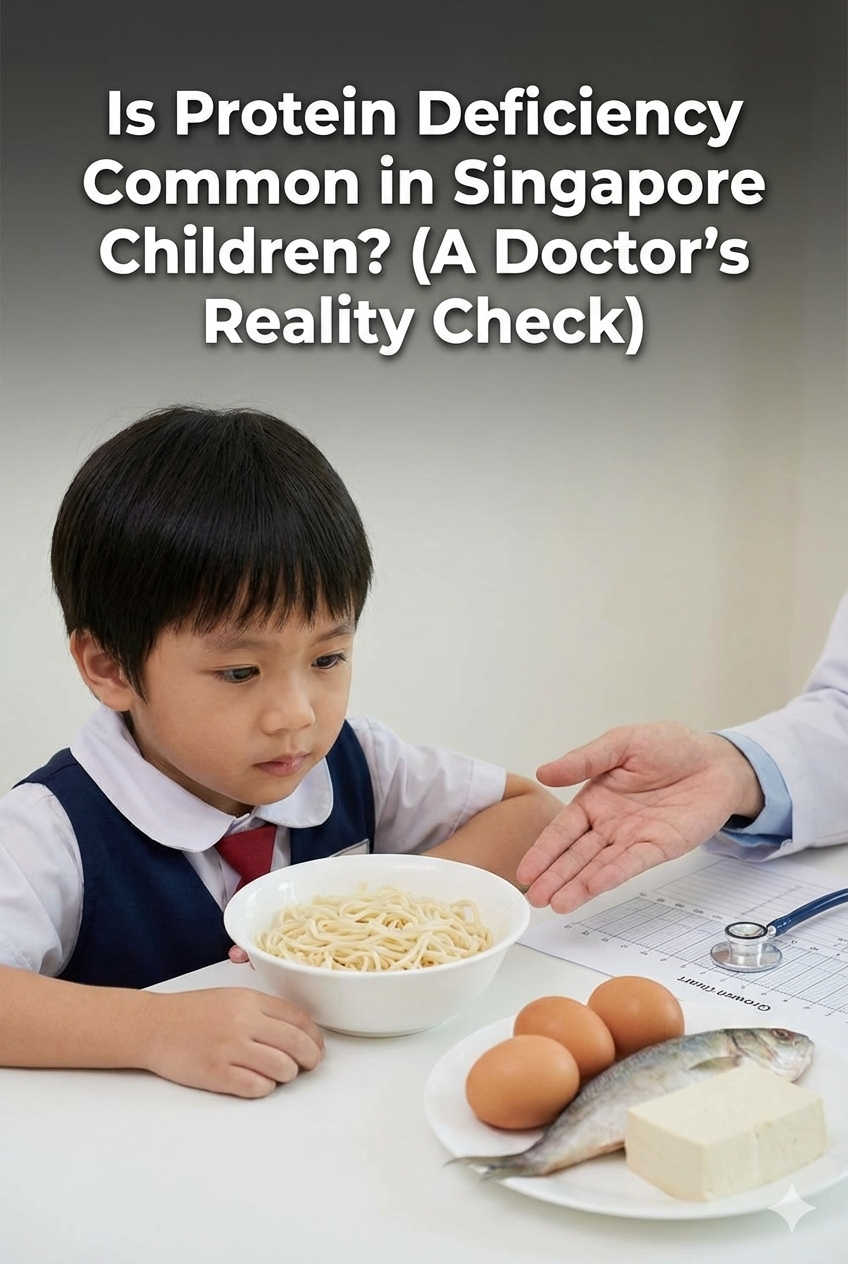
The truth is more nuanced. Severe protein-energy malnutrition is uncommon in Singapore, but suboptimal protein intake can still happen—especially in picky eaters, children who snack more than they meal, and those on restrictive diets.
First: What do we mean by “protein deficiency”? 🧠
Protein issues in children usually fall into 2 buckets:
1) True medical deficiency (rare in Singapore)
This is protein-energy malnutrition with poor growth, low weight-for-height, muscle wasting, and frequent illness.
Singapore’s Ministry of Health notes that overall nutritional deficiencies (including protein-energy malnutrition) make up <1% of total disease burden, but malnutrition contributes to ~4.5% of disease burden among those <20. MOH also cited that 7.6% of K1/K2 children were underweight or severely underweight (HPB School Health Services, 2017).
2) “Functional protein gap” (more common)
Not dramatic malnutrition—rather:
-
low protein at meals
-
reliance on refined carbs/snacks
-
picky eating with very limited variety
This can show up as poor satiety, low stamina, slow muscle gain, frequent colds, or a child who is “normal weight” but doesn’t grow well.
Why parents in Singapore feel protein deficiency is common 😅
Because of how kids eat here:
✅ Snacks replace meals
Between school, tuition, enrichment, and screen time, many kids end up grazing on:
-
buns/biscuits
-
sweetened yogurt drinks
-
bubble tea / sweet drinks
-
bread + spreads
These can be calorie-dense but protein-light.
✅ Many children don’t eat “healthfully” consistently
A Singapore cohort report highlighted that only ~56% of children had healthful diets, meaning a sizeable proportion still have room to improve diet quality.
✅ Protein is “present” but low-quality or too little per meal
Small amounts of processed meats or nuggets aren’t the same as a balanced protein portion with micronutrients.
When should parents worry? (Red flags) 🚩
If your child has 2 or more of these, it’s worth reviewing diet and growth:
-
Crossing down growth percentiles over time
-
Underweight or poor weight gain
-
Low appetite + very small meal portions
-
Constant fatigue / low stamina
-
Frequent infections / slow recovery
-
Hair thinning, brittle nails (non-specific but can co-exist)
-
Extremely selective diet (very few protein foods)
Protein matters not just for muscles—it supports growth, immune function, and recovery. A review on protein and amino acids in infant/young child nutrition discusses the role of protein quality and amino acids in growth pathways.
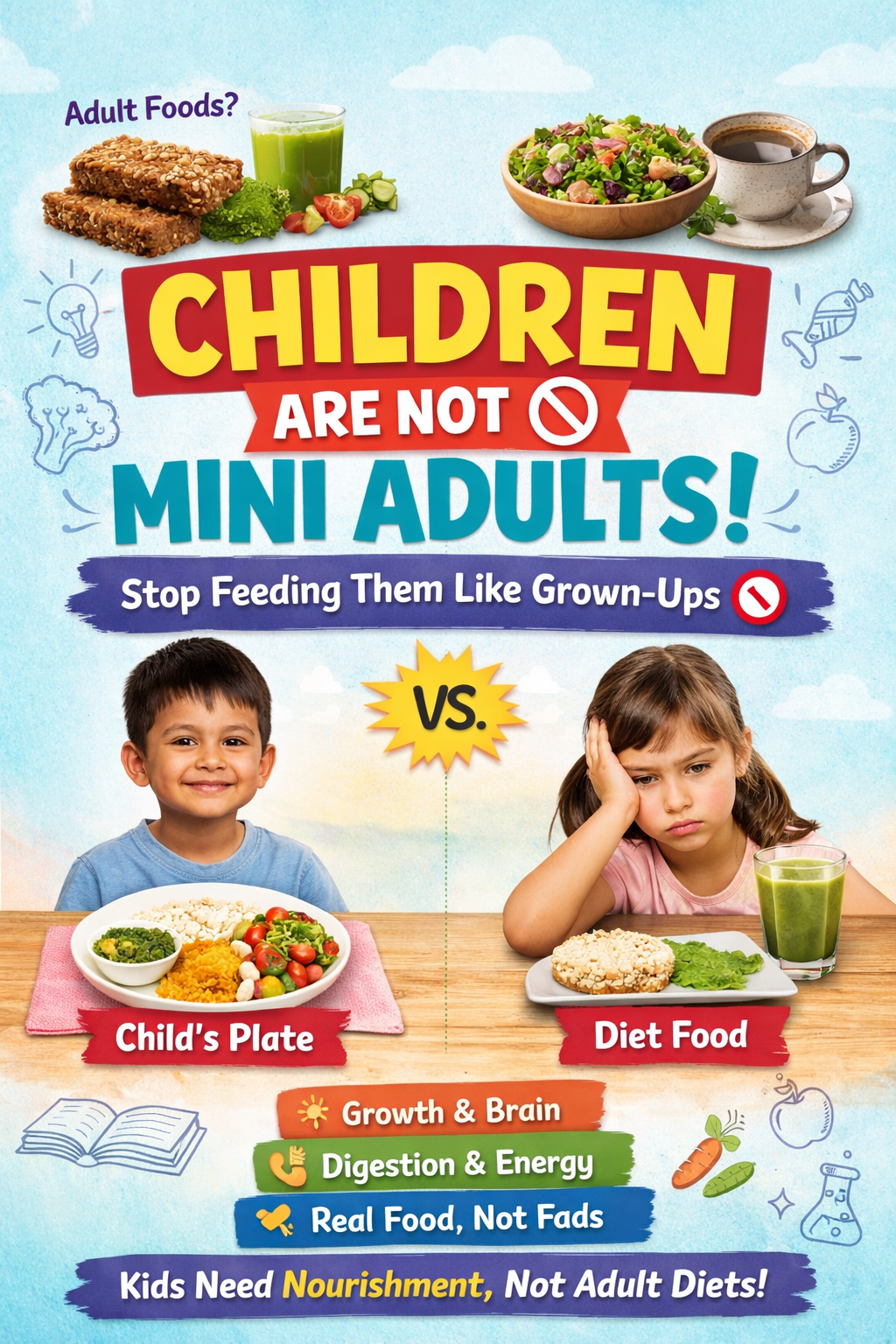
📌Why Are So Many Kids Becoming Fussy Eaters?
Is “high protein” always better for kids? Not necessarily ⚖️
Protein is essential, but excess—especially from certain sources—may be linked to higher weight gain in some settings.
A systematic review on protein intake in children examined links with growth and overweight risk.
Practical takeaway:
Aim for adequate protein spread across meals, not “mega protein shakes” for every child.
Lifestyle triggers in Singapore that reduce protein intake 🍜🏫
1) Picky eating (very common)
Picky eating is associated with poorer diet quality and lower intake of some nutrients, depending on food patterns.
2) “Carb-only breakfast”
Bread + jam or plain cereal often means kids start the day with low protein, leading to mid-morning hunger and more snacking.
3) Busy schedules (tuition culture)
Parents rely on convenient foods, and “proper meals” become irregular.
📌How to Pack A Nutritious and Fun Lunch Box for Your Kids
📌5 High-Protein & Delicious Snacks for Kids’ Lunch
Protein targets: how to think about it (without obsessing) ✅
Instead of counting grams daily, use this simple rule:
Goal: a protein source at every main meal
Singapore preschool meal guidelines emphasise serving food from wholegrains + vegetables + protein as part of a balanced plate (e.g., lunch).
Child-friendly protein portions (visual guide):
-
Preschooler: ~½ palm protein at meals
-
School-age: ~1 palm protein at meals
-
Teen: 1–1½ palms depending on growth/sports
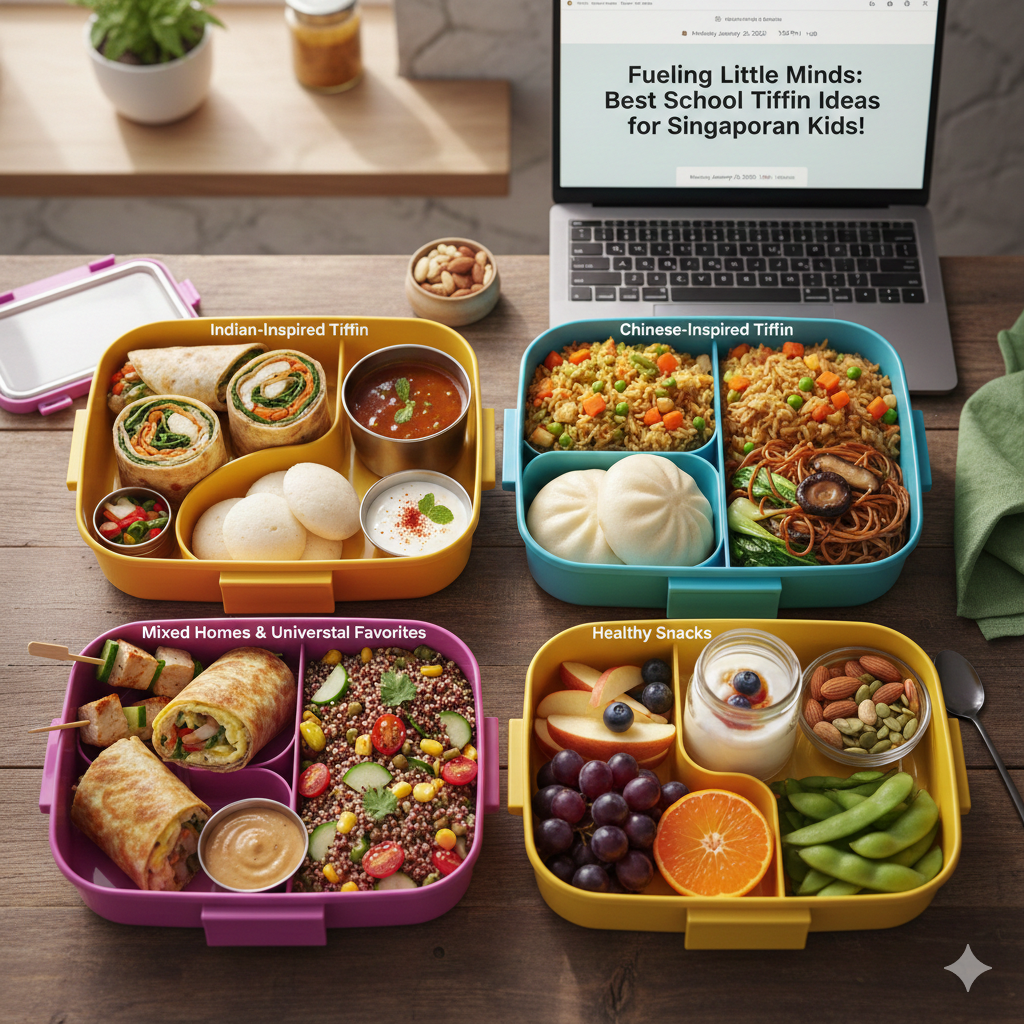
📌Fueling Little Minds: Best School Tiffin Ideas for Singaporean Kids!
Singapore-friendly protein sources (easy wins) 🍳🥣
Home (Indian + Chinese-friendly)
-
Eggs (omelette, egg curry, steamed egg)
-
Dhal + rice (add ghee/veg + curd for better balance)
-
Paneer/tofu bhurji
-
Greek yoghurt / unsweetened yoghurt + fruit
-
Chicken/fish soup (if non-veg)
-
Soy milk (unsweetened), edamame
Hawker / outside food (better picks)
-
Yong tau foo (choose more tofu/fishcake + add egg)
-
Chicken rice (request less rice, add egg, avoid skin)
-
Fish soup + rice
-
Thosai + egg/idli + sambar (add curd or egg)
-
Ban mian (add egg; avoid deep-fried sides)
👉 Download my Healthy Hawker Food Cheat Sheet
Quick “protein booster” recipes (busy-parent edition) ⏱️
1) 5-minute yoghurt protein bowl
Unsweetened Greek yogurt + banana + nuts/seeds + cinnamon 😋
2) Steamed egg (Chinese-style)
Egg + warm water + pinch salt → steam 8–10 min
Add minced chicken/tofu if needed.
3) Moong dal chilla (Indian)
Soaked moong blended + veggie + paneer/tofu filling.
Worried your child is eating “too little” or too selectively?
👉 Book a child nutrition consult (Singapore-friendly, practical, doable meal plans).
FAQs 🙋♀️🙋♂️
1) Can a chubby child still be protein-deficient?
Yes—if the diet is high in refined carbs/sugary snacks but low in quality protein, the child may have a “functional protein gap” despite normal or high weight.
2) Is dairy necessary for protein?
No. Dairy helps, but kids can meet protein needs with eggs, legumes, tofu, fish/chicken, and balanced meals.
3) Are protein powders safe for children?
Usually not needed for most healthy children. Consider only if advised by a clinician (e.g., poor growth, special needs, illness).
4) Does protein help immunity?
Protein supports immune function and recovery. Protein quality and essential amino acids are important for growth and health.
5) What about very picky eaters?
Picky eating is linked with poorer dietary intake patterns in school-aged children.
If picky eating is severe and affects growth, get help early.
💛 Want structured guidance?
👉 Explore my programs:
-
Little Legends: The Doctor-Designed Growth & Strength Plan for Kids (ideal for malnourished kids and picky-eaters)
- Teen Fuel: Doctor-Guided Nutrition & Routine Reset for Teenagers (Ages 12–19)
🔗 You May Also Find These Readings Helpful:
- [How to Know If Your Child Is Getting Enough Protein!]
- [Screen-Free Meals: How Ditching Distractions Can Help Your Child Overcome Fussy Eating]
PubMed references used (external links)
-
Protein intake & child growth/overweight risk (systematic review)
-
Role of protein/amino acids in infant & young child nutrition
-
Animal-source foods/essential amino acids and child growth (review)

Akanksha Sharma
Dr Akanksha Sharma (MBBS, MD) is a physician and women’s health nutrition specialist, and the founder of IYSA Nutrition. She provides evidence-based, doctor-led nutrition guidance for pregnancy, postpartum recovery, PCOS, child nutrition, and family health, helping women make calm, informed decisions about their health and their children’s well-being.