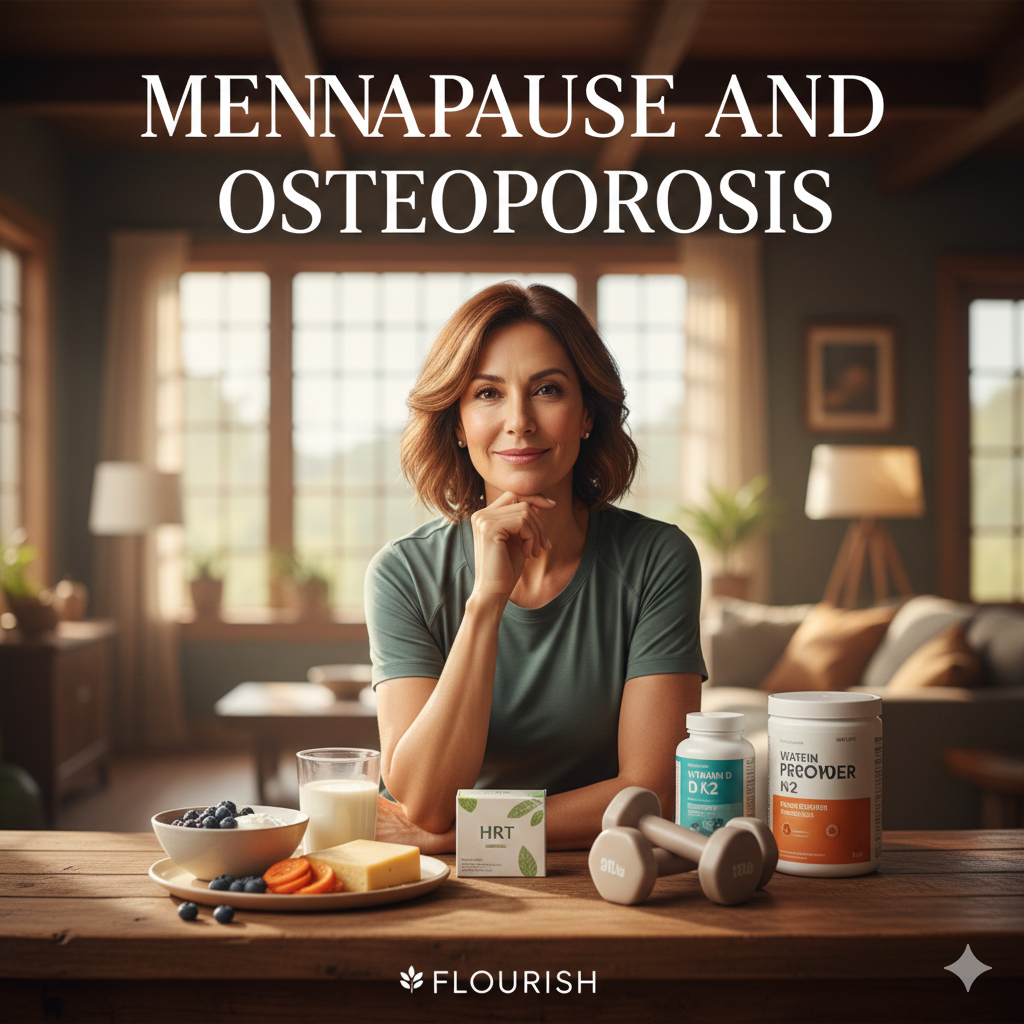
When we think of bone health, we often picture the elderly. However, for women, the most critical window for protecting our skeletal integrity happens much earlier, during the transition into menopause.
If you are in your 40s or early 50s, the health of your bones is being decided right now. In this post, we’re exploring why menopause and osteoporosis are so closely linked and the scientific steps you can take today to stay strong for decades to come.
The Estrogen-Bone Connection: Why Menopause Changes Everything
Estrogen isn’t just a reproductive hormone; it is a powerful protector of bone density. It works by keeping “osteoclasts” (cells that break down bone) in check while supporting “osteoblasts” (cells that build bone).
As estrogen levels plummet during menopause, the balance shifts. Women can lose up to 20% of their bone density in the five to seven years following menopause. This rapid decline is why menopause is the primary risk factor for developing osteoporosis. 📉
1. The Silent Decline
Osteoporosis is often called a “silent disease” because you cannot feel your bones getting weaker. For many, the first symptom is a fracture from a minor fall. Research indicates that one in two postmenopausal women will sustain an osteoporosis-related fracture in their lifetime.
2. Inflammation and Bone Loss (Inflamm-aging)
Menopause is also a state of increased systemic inflammation. Higher levels of pro-inflammatory cytokines (like IL-1 and TNF-alpha) during this transition have been shown to accelerate bone resorption, making anti-inflammatory lifestyle choices a cornerstone of prevention. This phenomenon, often called “inflamm-aging,” suggests that managing your systemic inflammation is just as important as your calcium intake.
👉Menopause Care in Singapore: A Doctor Explains Your Treatment & Support Options
The “Window of Opportunity”: Why Perimenopause is Key
Many women wait until they are postmenopausal to focus on bone health, but the “accelerated phase” of bone loss actually begins in late perimenopause. By the time a woman reaches her final menstrual period, significant density may have already been lost.
Early intervention during perimenopause can effectively “level off” the decline, ensuring you enter postmenopause with a higher bone-mineral “savings account.” Here is the full strategy for the perimenopausal window:
The Proactive Testing Strategy
Don’t wait for a fracture to assess your risk. In perimenopause, you should:
- Establish a Baseline: If you have risk factors (early menopause, family history, or low body weight), request a DEXA scan early to know your starting point.
- Track Bone Turnover: Advanced testing can look at markers like NTx or CTx (bone resorption markers) to see how fast you are currently losing bone.
- Hormone Profiling: Monitoring the erratic swings of estrogen and progesterone can help determine when the bone-loss acceleration is beginning.
The “Anabolic” Nutrition Roadmap
In perimenopause, your body needs the raw materials to keep the bone-building “machinery” running.
- Protein Pacing: Aim for 1.2–1.6g of protein per kg of body weight. Bone is roughly 50% protein by volume; without it, the mineral matrix cannot stay intact.
- Micronutrient Load: Beyond Calcium, focus on Magnesium (to activate Vitamin D) and Boron, which plays a critical role in bone metabolism.
- Alkalizing the Diet: High-acid diets (heavy in processed sugars and refined grains) can lead to minor calcium leaching. Increasing leafy greens provides the Vitamin K and alkaline environment bones love.
Struggling with Muscle Loss too? Read our latest guide on Protein Requirements During Menopause to learn how to fuel your frame and protect your metabolism.
Strategic Mechanical Loading
This is the time to shift from “cardio-only” routines to specific bone-loading protocols.
- Resistance Training: Lifting weights that are at least 60-70% of your one-rep max is required to stimulate bone growth.
- Impact Training: If your joints allow, short bursts of high-impact movement (like jumping or sprinting) send a signal to the hip and spine to strengthen their density.
Targeted Supplementation & HRT
Hormone optimisation and nutritional strategies during this window are highly effective.
- Hormone Replacement Therapy (HRT): When started in perimenopause, low-dose estrogen can prevent the steep drop-off in density that otherwise occurs at the final menstrual period.
- K2-MK7 Integration: Start supplementing with Vitamin K2 now to ensure calcium is directed into the bone matrix rather than soft tissues.
Prevention Strategy: Beyond Just Calcium 🥛⚖️
While calcium is the building block, it is only one piece of the puzzle. To truly address menopause and osteoporosis, we must look at a synergistic approach that includes mechanical loading and micronutrient co-factors.
1. The Power of Resistance Training & Osteogenic Loading 🏋️♀️
Bones are living tissue that respond to stress, a principle known as Wolff’s Law. High-impact exercise and heavy resistance training are scientifically proven to increase bone mineral density in postmenopausal women. Specifically, “osteogenic loading” (lifting weights heavy enough to trigger bone growth) is essential. Walking is great for the heart, but it isn’t enough to build bone; you need to lift.
2. The Vitamin D, K2, and Magnesium Synergy
Calcium cannot find its way into your bones without help.
- Vitamin D: Facilitates calcium absorption in the gut.
- Vitamin K2: Acts as the “traffic cop,” activating osteocalcin to ensure calcium goes into your bones and not your arteries (calcification).
- Magnesium: Converts Vitamin D into its active form. Without magnesium, your Vitamin D remains “stored” and unusable.
3. Gut Health and the Gut-Bone Axis
Emerging research into the “Gut-Bone Axis” shows that a healthy microbiome can improve calcium absorption and regulate the immune cells that control bone remodeling. A diet rich in fermented foods and fibre can literally strengthen your skeleton.
👉The Ultimate Guide to the Best Diet for Menopause: What to Eat (and to Avoid) to Thrive
👉Menopause-Friendly Gut & Bone Health Diet and Lifestyle Plan
FAQs: Menopause & Osteoporosis ❓
Q: Is it too late to start if I’m already postmenopausal? A: Never! While the most rapid loss occurs early on, lifestyle interventions and medical management can still significantly increase bone strength and prevent fractures at any age. Strength training has been shown to improve bone density even in women in their 80s.
Q: Do I need a DEXA scan? A: Most guidelines recommend a baseline scan at 65, but if you have risk factors (smoking, early menopause, or family history), your doctor may recommend one as early as perimenopause. Knowing your T-score early allows for more aggressive prevention.
Q: Does HRT help with osteoporosis? A: Yes. Hormone Replacement Therapy (HRT) is one of the most effective ways to prevent bone loss because it addresses the root cause: estrogen deficiency. It has been shown to reduce fracture risk by up to 50%.
Q: Are there “bone-sapping” foods I should avoid? A: High sodium intake and excessive caffeine can lead to calcium excretion in the urine. Additionally, excessive alcohol consumption interferes with the balance of calcium and the production of bone-building hormones.
Summary Checklist for Bone Longevity ✅
- Prioritize Protein: Your bones are 50% protein! Ensure you hit 1.2-1.5 g/kg daily to provide the collagen matrix bones need.
- Lift Heavy: Aim for 2-3 sessions of strength training per week, focusing on compound movements like squats and deadlifts.
- Monitor Micronutrients: Don’t just guess; test your levels of Vitamin D and ensure you are supplementing with K2 (MK-7) and Magnesium.
- Gut Support: Incorporate prebiotics and probiotics to support the gut-bone axis and reduce systemic inflammation.
References
- Menopause and Bone Loss Pathophysiology
- Epidemiology of Osteoporotic Fractures
- Inflammation and Bone Resorption
- Nutrition and peri-menopause
- HRT
- Resistance training in postmenopausal women
- Vitamin K2 and Bone Health
- The Gut-Bone Axis
- HRT and Fracture Prevention
Ready to Protect Your Future Self? 🌸
Bone health is a long game, and the decisions you make today will determine your mobility and independence in the future.
In our Flourish: Women’s Hormone & Metabolic Health Program, we incorporate bone-density preservation into every personalized protocol, combining medical oversight with targeted nutrition and strength coaching.
👉 Book your discovery call for the Flourish Program
Worried about your bone health? Comment “BONE HEALTH” below to receive our free guide on the Top 5 Bone-Building Foods for Menopause! 📥

Akanksha Sharma
Dr Akanksha Sharma (MBBS, MD) is a physician and women’s health nutrition specialist, and the founder of IYSA Nutrition. She provides evidence-based, doctor-led nutrition guidance for pregnancy, postpartum recovery, PCOS, child nutrition, and family health, helping women make calm, informed decisions about their health and their children’s well-being.